Steady Vs Unsteady flow over a cylinder
Aim : Simulate the flow over a cylinder and explain the phenomenon of Karman vortex street.
PART-I
- Simulate the flow with the steady and unsteady case and calculate the Strouhal Number for Re= 100.
PART-II
- Calculate the coefficient of drag and lift over a cylinder by setting the Reynolds number to 10,100,1000,10000 & 100000. (Run with steady solver)
- Discuss the effect of Reynolds number on the coefficient of drag. [ Results should be validated with any standard literature and error should be within 5 %]
Theory :
In Fluid Dynamics, a vortex is a region in a fluid in which the flow revolves around an axis line, which may be straight or curved.Vortices form in stirred fluids, and may be observed in smoke rings, whirlpools in the wake of a boat, and the winds surrounding a tropical cyclone, tornado or dust devil.
Vortices are a major component of turbulent flow. The distribution of velocity, vorticity (the curl of the flow velocity), as well as the concept of circulation are used to characterize vortices. In most vortices, the fluid flow velocity is greatest next to its axis and decreases in inverse proportion to the distance from the axis.
In the absence of external forces, viscous friction within the fluid tends to organize the flow into a collection of irrotational vortices, possibly superimposed to larger-scale flows, including larger-scale vortices. Once formed, vortices can move, stretch, twist, and interact in complex ways. A moving vortex carries with it some angular and linear momentum, energy, and mass.
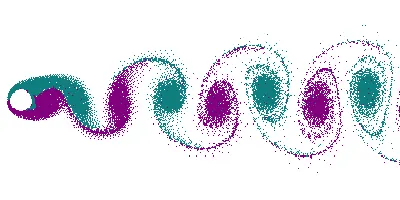
In Fluid Dynamics, Vortex Shedding is an oscillating flow that takes place when a fluid such as air or water flows past a bluff (as opposed to streamlined) body at certain velocities, depending on the size and shape of the body. In this flow, vortices are created at the back of the body and detach periodically from either side of the body forming a Von Karman vortex street. The fluid flow past the object creates alternating low-pressure vortices on the downstream side of the object. The object will tend to move toward the low-pressure zone.
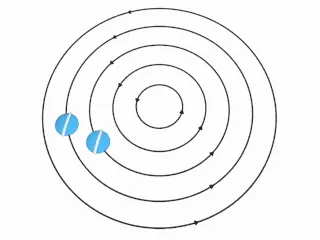
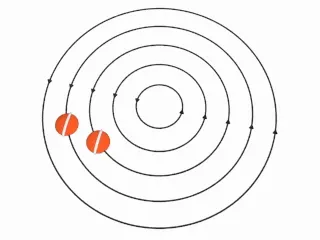
Rotational Vortex Irrotational Vortex
Governing equation
The frequency at which vortex shedding takes place for an infinite cylinder is related to the Strouhal number by the following equation:
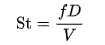
Where,  = Dimensionless Strouhal number,
 = Vortex shedding frequency
 = Diameter of the Cylinder
 = Flow Velocity.
The Strouhal number depends on the Reynolds number  , but a value of 0.22 is commonly used. Over four orders of magnitude in Reynolds number, from 100 to 100000, the Strouhal number varies only between 0.18 and 0.22.
Geometry and Mesh Generation :
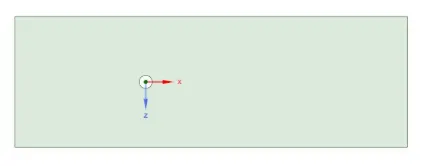
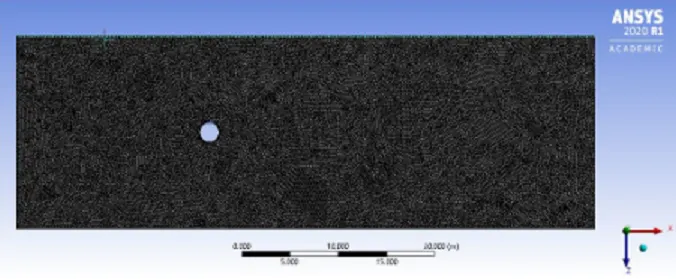
Diameter of the Cylinder wall = 2 m
Area Computational Volume = 10D * 30D
PART-I Simulate the flow with the steady and unsteady case and calculate the Strouhal Number for Re= 100.
Steady Flow with Re=100
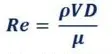 ==============> Velocity of Fluid = 2.5 m/s
Density of Fluid = 1 kg/m^3
Fluid Dynamic Viscosity = 0.05 kg/m.s
Reynolds Number = 100
Diameter of Cylinder = 2 m

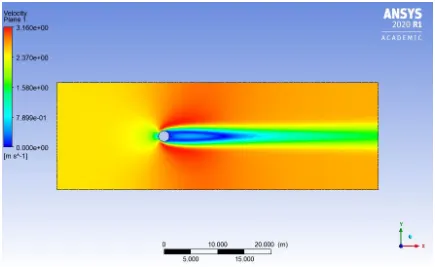
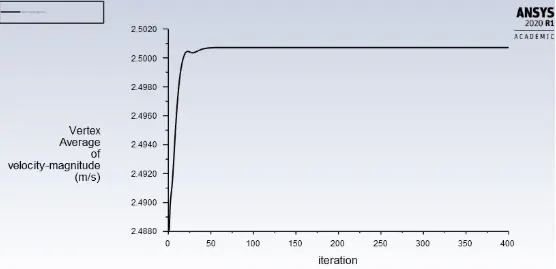
Flow get converged at around 20 to 35 iterations.
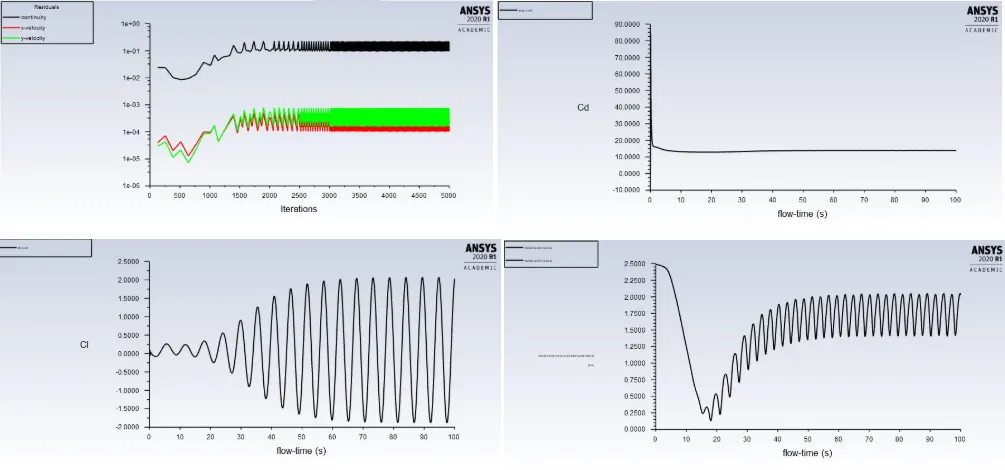
Unsteady Flow with Re=100
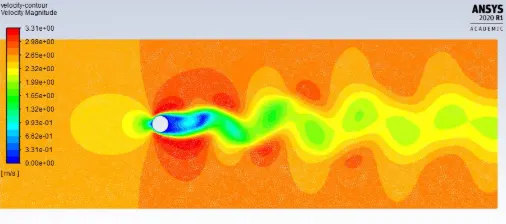
Velocity Contour :
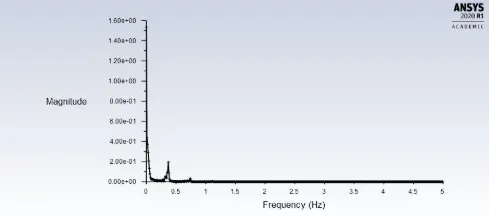
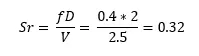
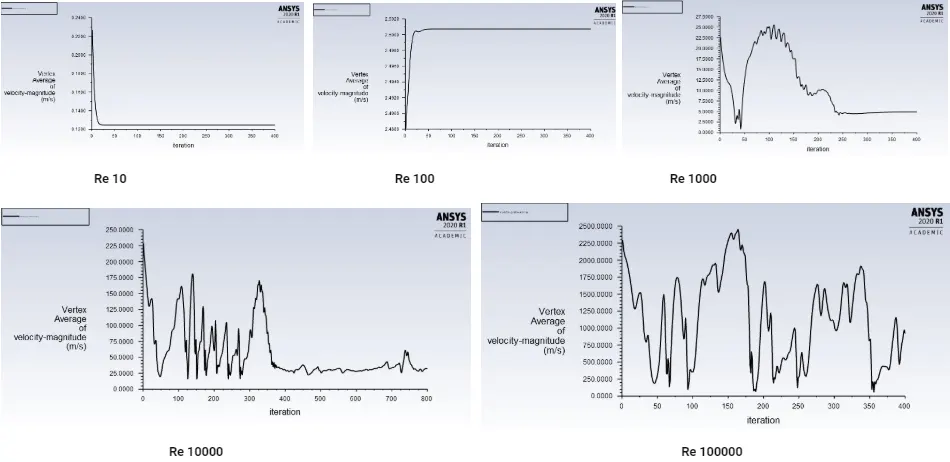
From the above plot, Vortex shedding frequency is 0.4 Hz.
Calculation of Strouhal Number :
PART-II Calculate the coefficient of drag and lift over a cylinder by setting the Reynolds number to 10,100,1000,10000 & 100000. (Run with steady solver)
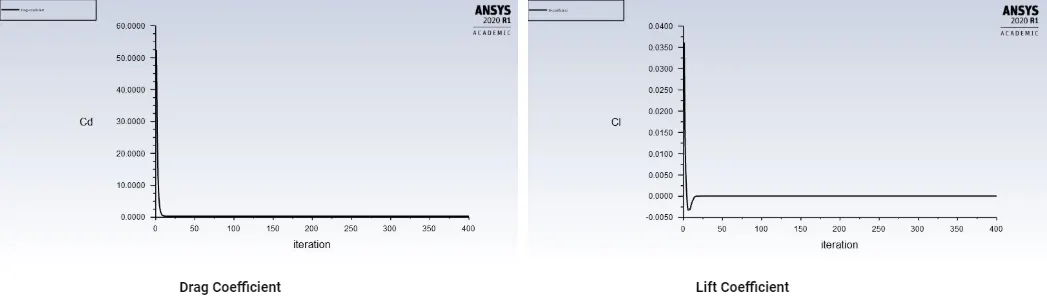
Steady Flow Re 10 :
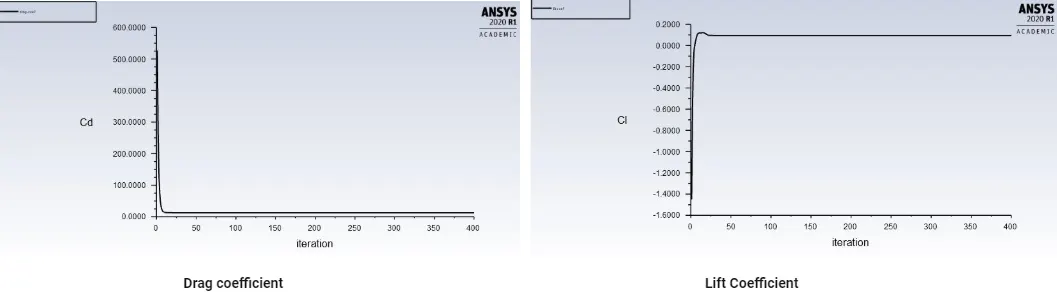
Steady Flow Re 100 :
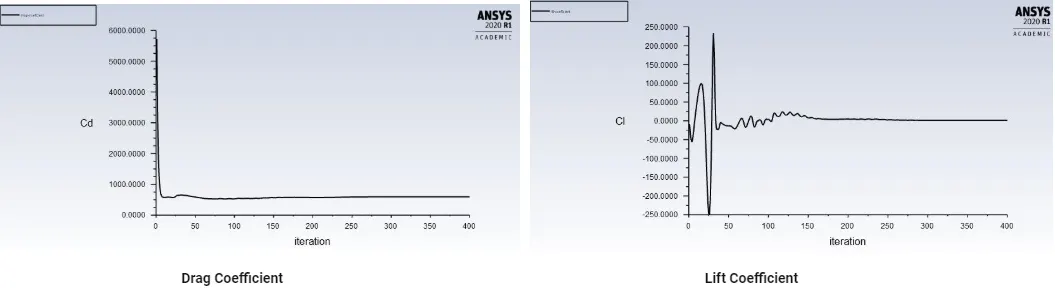
Steady Flow Re 1000 :
Steady Flow Re 10000 :
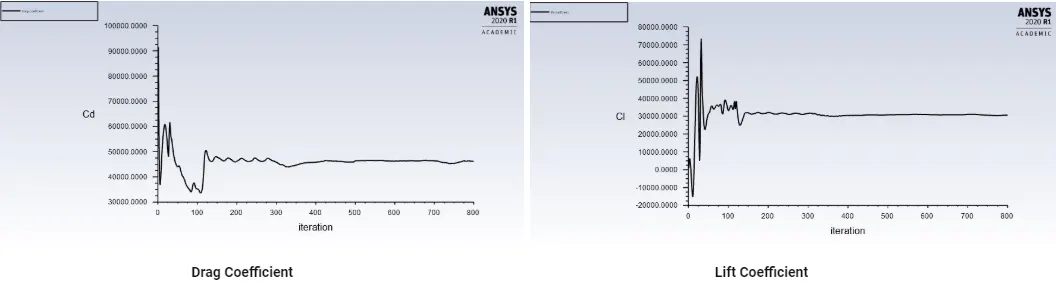
Steady Flow Re 100000 :
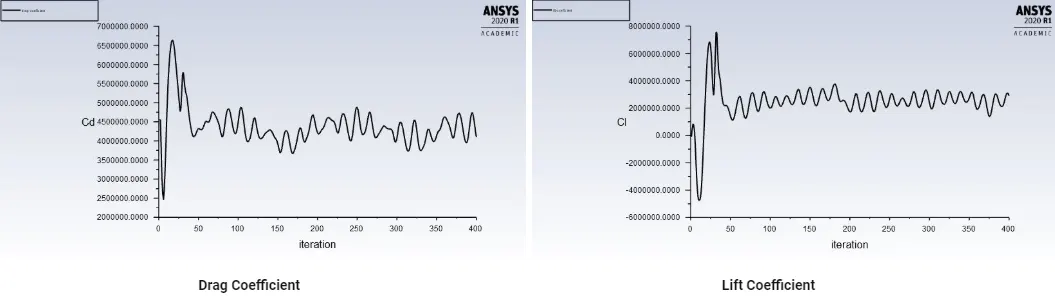
Vortex Shedding for Re - 10, 100, 1000, 10000, 100000
Drag Coefficient :
In fluid dynamics, the drag coefficient is a dimentionless quantity that is used to quantify the drag or resistance of an object in a fluid environment, such as air or water. It is used in the drag equation in which a lower drag coefficient indicates the object will have less aerodynamic or hydrodynamic drag. The drag coefficient is always associated with a particular surface area.
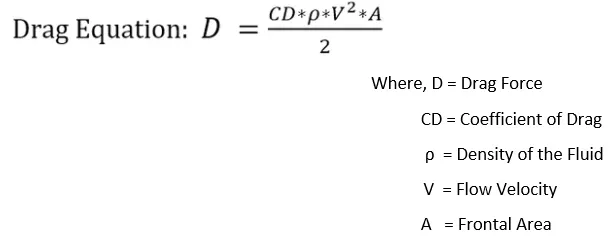
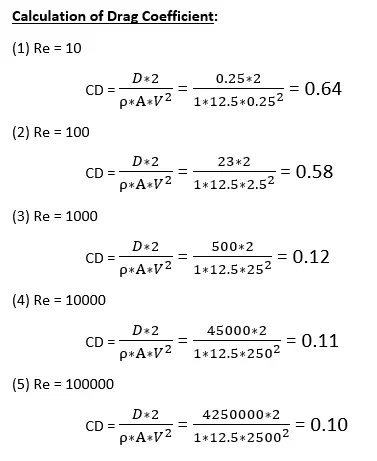
Drag Coefficient decreases as the increase in Reynolds number.
Lift Coefficient :
The lift coefficient is a dimensionless coefficient that relates the lift generated by a lifting body to the fluid density around the body, the fluid velocity and an associated reference area.
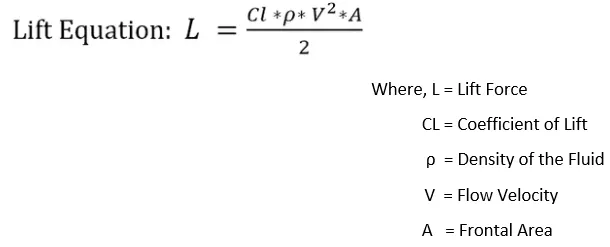
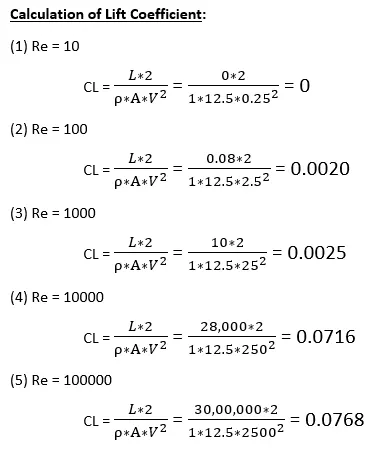
Lift Coefficient increases as the increase in Reynolds number.
Conclusion :
Reynolds Number Drag Coefficient Lift Coefficient
10 0.64 0
100 0.58 0.0020
1000 0.12 0.0025
10000 0.11 0.0716
100000 0.10 0.0768
We can see that Drag Coefficient decreases and Lift Coefficient increases with increase in Reynolds Number.