SIMULINK MODEL EVALUATION FOR WORK DONE BY SHAPING MACHINE, EQUATION SOLVER AND COMPARISON OF SPRING MASS DAMPER SYSTEM
AIM:
EVALUATION USING SIMULINK, WORK DONE BY SHAPING MACHINE, EQUATION SOLVER WITH MULTIPLE VARIABLES AND COMPARISON ON SPRING MASS DAMPER SYSTEM
OBJECTIVES:
1) Evaluate and plot the work done by shaping machine
2) Creating Simulink model for multiple variable equation
3) Comparison of spring mass damper system by using Simulink and Simscape
SIMULINK MODEL-1: EVALUATION OF WORK DONE BY SHAPING MACHINE
Principle: The cutting take place during forward stroke of the ram, the movement of shaping machine is obtained by ‘Quick return mechanism’. The depth of the cut is obtained by moving tool downward towards the work piece.
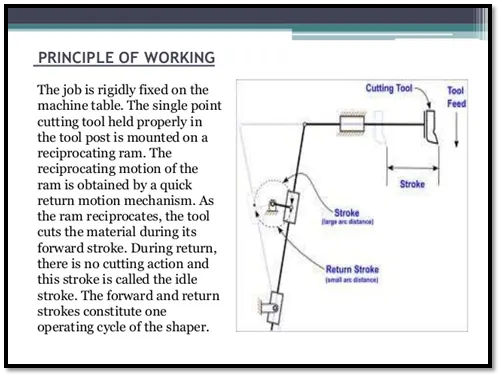
Fig.1. Working Principle
GIVEN DATA:
|
Distance (mm) |
0 |
20 |
40 |
60 |
80 |
100 |
|
Force (KN) |
60 |
72 |
65 |
53 |
44 |
50 |
Work done = Force * Displacement
`W = int F(x). d(x)`
where,
W – Work Done
F(x) – Force (N)
d(x) - Distance (mm)
x – Time Interval
MODEL:
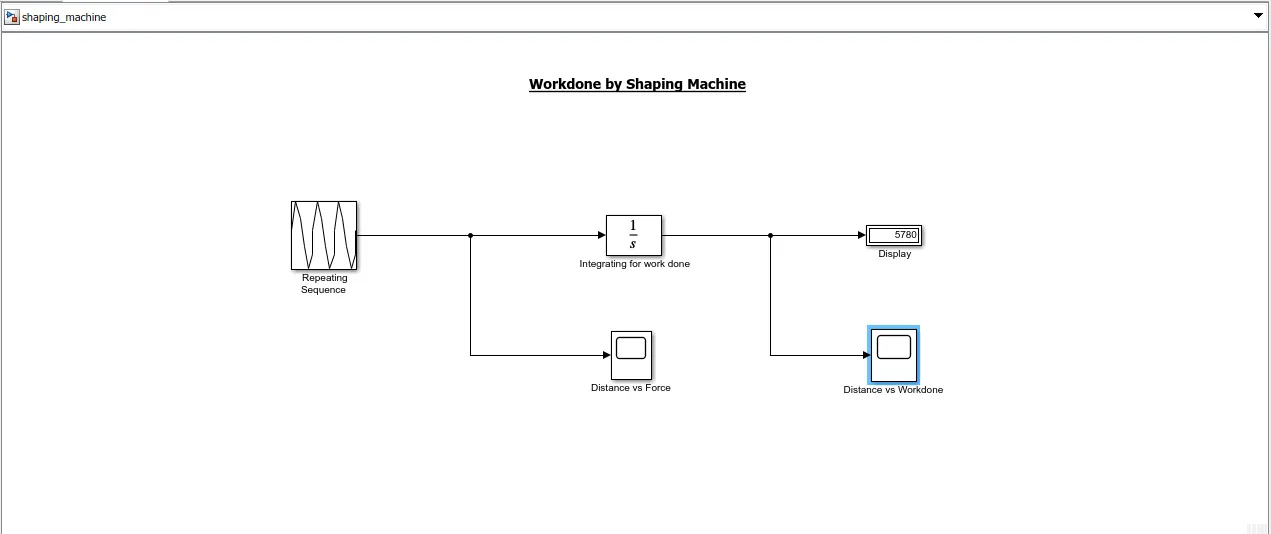
BLOCKS USED IN THE MODEL:
a. Repeating Sequence – For sending force and distance signal values
b. Integration – For integrating force and distance value
c. Display – To show the evaluated value
d. Scope – For plotting distance vs force and distance vs workdone
PROCESS EXPLANATION:
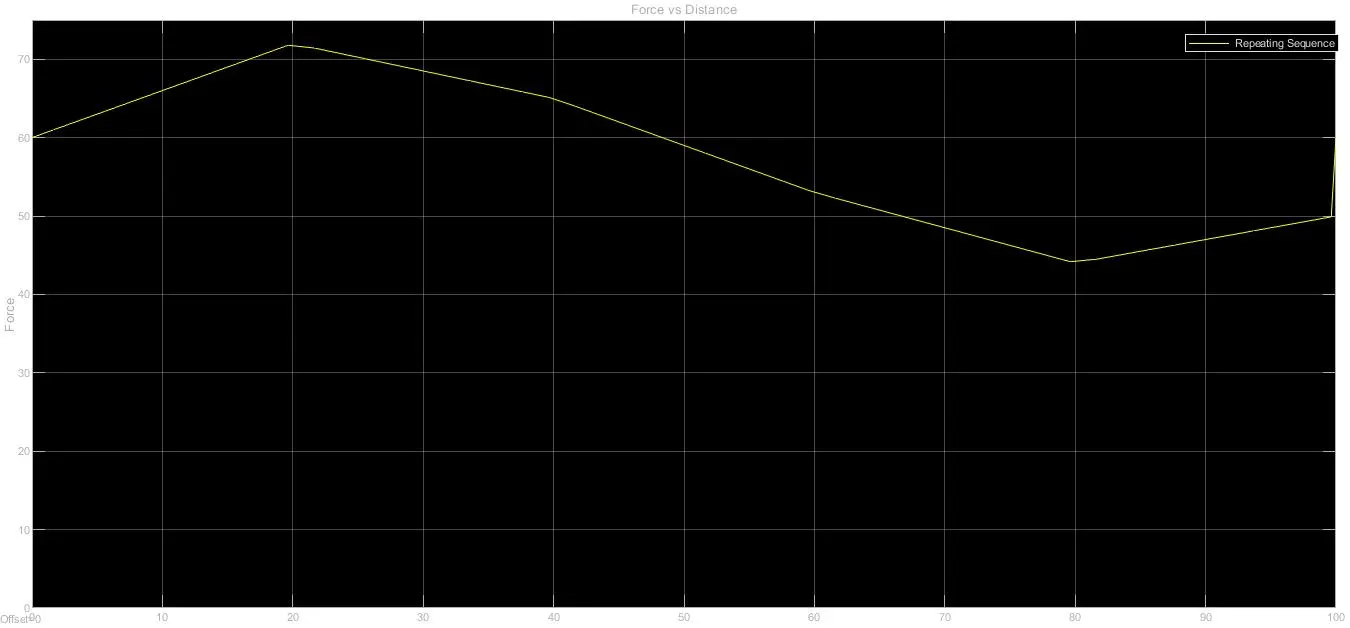
a. Distance and force signals are sent by the repeating signal block and the graph is plotted between the input values.
b. The signal values are integrated inside integration block for getting work done
c. The work done vs distance is plotted and shown in scope
OUTPUT:
1) FORCE vs DISTANCE
2) WORKDONE vs DISTANCE
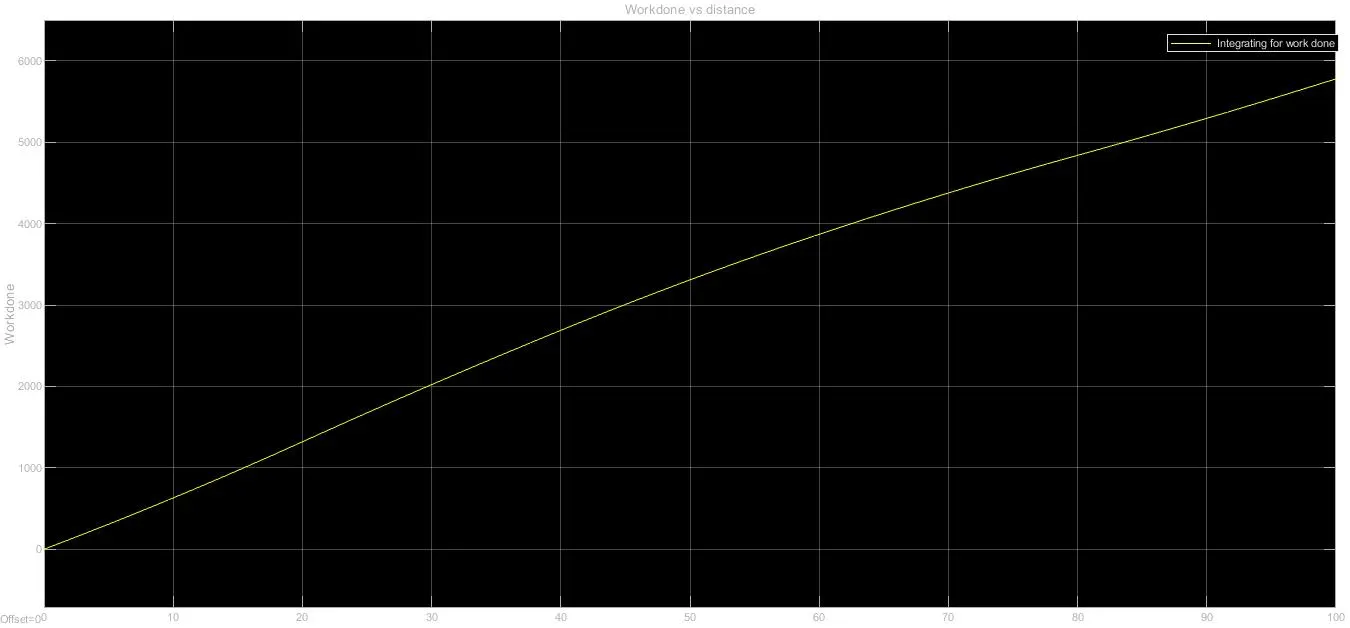
CONCLUSION: WORK DONE BY SHAPING MACHINE FOR GIVEN DATA SET IS EVALUATED AND PLOTTED OVER A DISTANCE 100 mm IS '5780'.
SIMULINK MODEL-2: EVALUATION OF EQUATION SOLVER WITH MULTIPLE VARIABLE
GIVEN DATA:
`z = 3x^2-5y+18`
|
X |
22 |
3 |
55.6 |
9 |
12 |
10 |
|
Y |
5 |
31 |
95 |
56.3 |
77 |
61 |
MODEL:
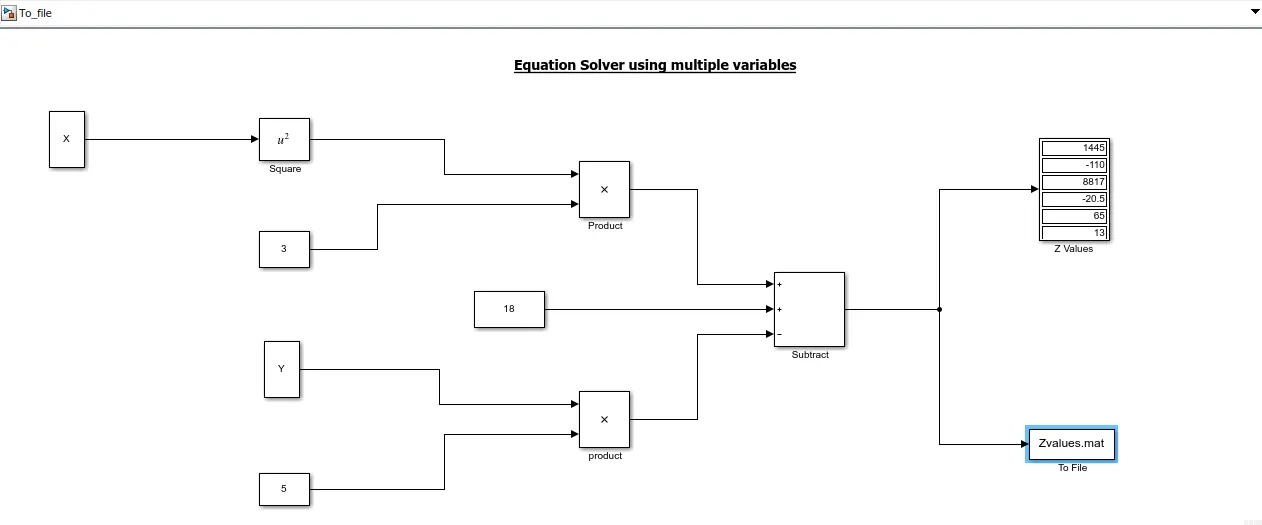
BLOCKS USED IN THE MODEL:
a. Constant - Representing the values 3,5 & 10
b. Square - For squaring the equation
c. Subtract - For solving the equation
d. Product - For evaluating and genrating the function output
e. Display - To show the evaluated value
f. To File - For saving the evaluated value w.r.t time interval
PROCESS EXPLANATION:
a. From the given data set we assign input values for x and y in workspace
b. X value from dataset is squared and multiplied by 3 to get `3x^2`
c. Y value from the data set is multiplied by 5 to get `5y`
d. The constant value 18 is added to the equation
e. The equation obtained now is solved and displayed on display block
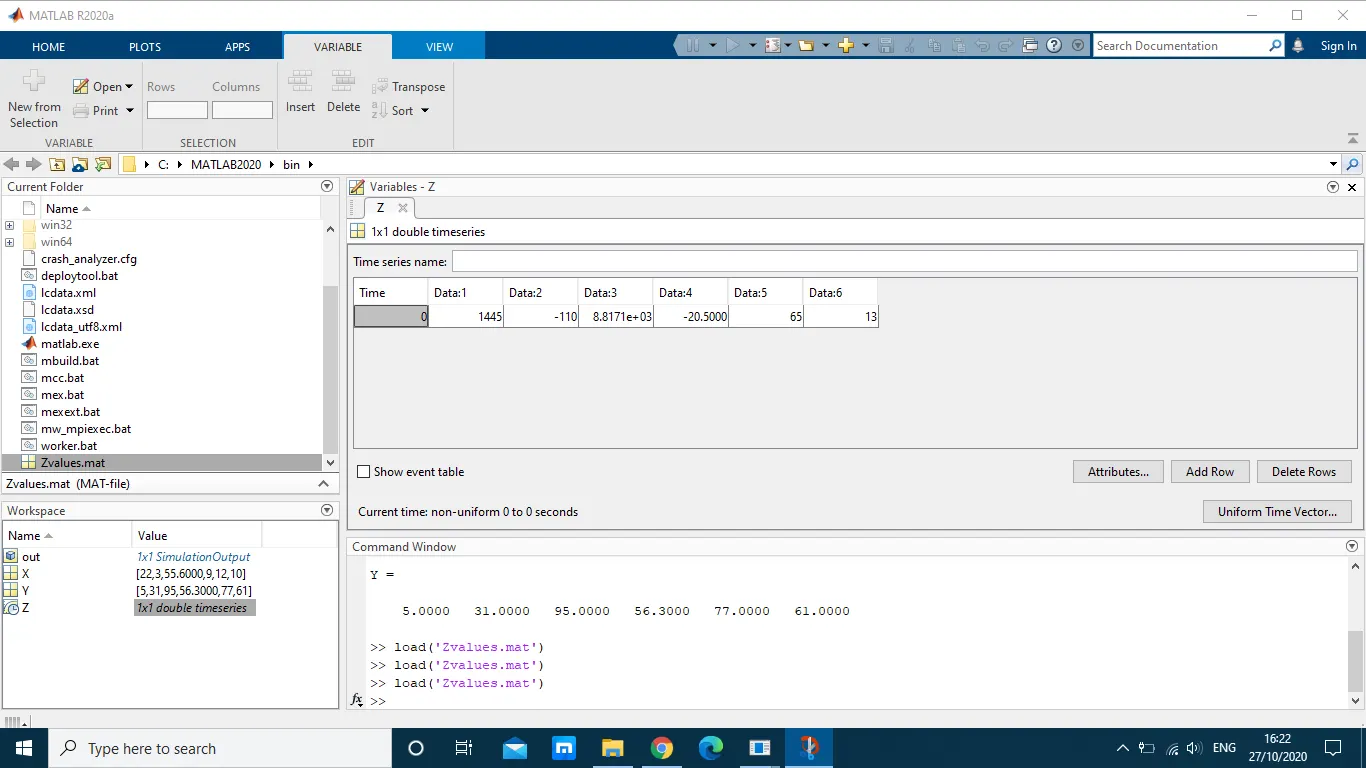
f. From the solved equation the obtained value is now saved and stored in Zvalues.mat file
RESULT:
SIMULINK MODEL-3: COMPARISON OF SPRING MASS DAMPER SYSTEM
Simulink:
Graphical programming environment for modelling, analyzing and stimulating multidomain dynamic systems. It uses block diagram approach and the signal flow in uidirectional.
Simscape:
A tool box in simulink's library, it contains tools which are required for stimulation of physical systems modelling approach (real time environment). The signal flow is bidirectional.
MODEL:
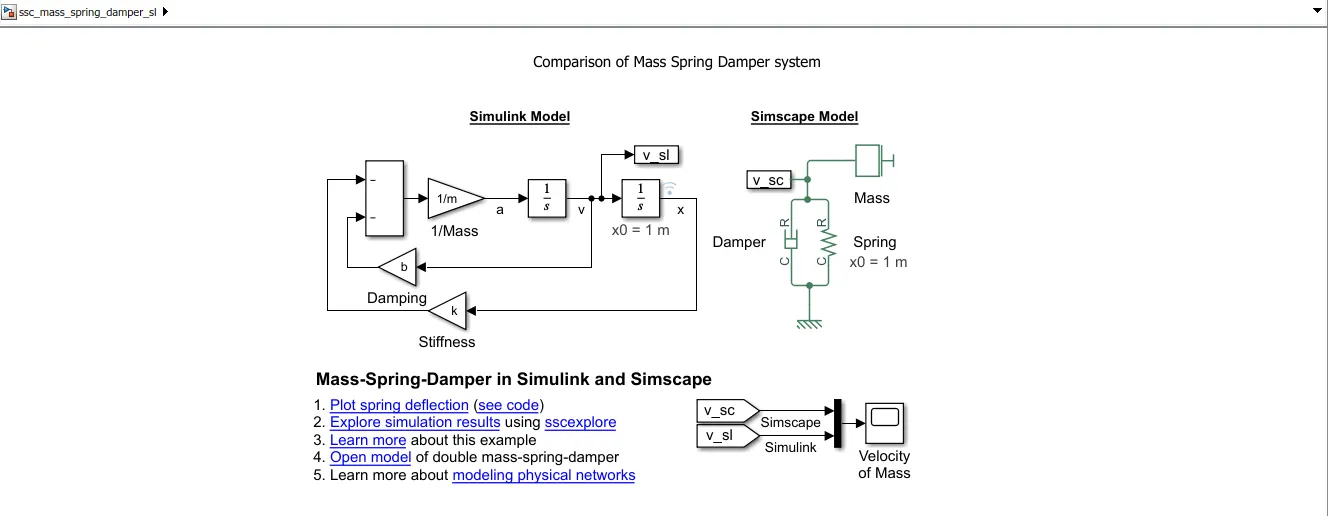
BLOCKS USED IN THE MODEL:
a. Subtract - For solving the equation
b. Gain - For multiplying with constant value to given input
c. Integrator - To integrate the given velocity and distance value
d. Goto - For sending the signal from any subsystem to main model or to any any place
e. From - To recive the sent signal from Goto block
f. Damper, Spring, Mass - For modelling spring mass damper system
g. Ideal transltion motion sensor - For sensing the velocity of the system
h. Solver configuration - It specifies the solver parameter before starting the stimulation
i. Mechanical Refrence - To make surre that all the component are clamped to the ground
PROCESS EXPLANATION:
a. The mass(m), spring constant(k), damping coefficient(b) and spring displacement (x0 = 1) are inputted from workplace of MATLAB
b. The damping force is genrated from dampinng coefficient and velocity
`F = b(dx/dt)`
c. The spring restoration force is genrated from sprinng constant(k) and distance(x)
`F = kx`
d. Then both the forces are subtracted beccause it's in opposite direction
`F = -b(dx/dt)`
e. Acceleration is calculated in `m/s^2`
`a = F/m`
f. The velocity is calculated by integrating,
`v = intads`
`v = dx/dt`
g. The process remains same, the output is changed by changing the value (b,k,m)
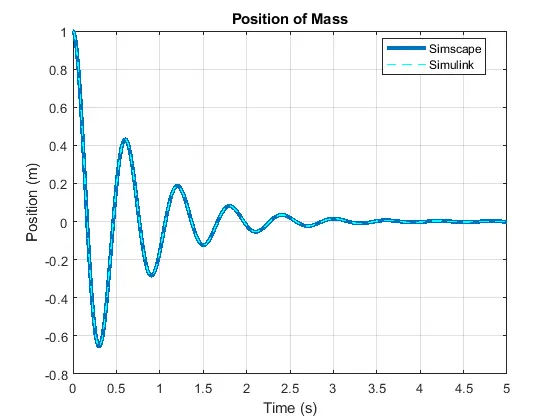
OUTPUT:
No changes in the parameters of the system.
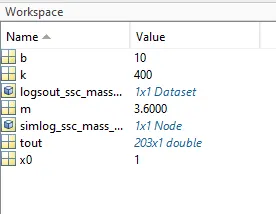
Fig.2. Original parameters of the mass spring damper system
Part-1: Derivation of governing equation
We are using spring mass damper system with simple harmonic motion.
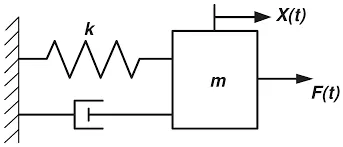
Fig.3. Spring mass damper system
From newton's second law of motion,
`a = F/m`
`F = m/a`
The restoration force of spring, reeturning to equlibrium position,
`F = -kx`
Damping force in the system
`F = -c(dx/dt)`
For Velocity i.e change in position w.r.t time,
From acceleration,
`a = (dv)/dt`
We can write ,
`a = (d/dt)v`
`a = (d/dt)(dx/dt)`
`a = (d^2t)/dt^2`
Force,
`F = ma`
`-kx-c(dx/dt) = m(d^2t)/dt^2`
`m(d^2t)/dt^2+kx+cdx/dt = 0`
where,
m - mass
`dx/dt` - velocity in m/s
k - spring constant
c - damping coefficient
x - distance from refrencing point
`(d^2x)/dt^2` - Acceleration in m/s^2
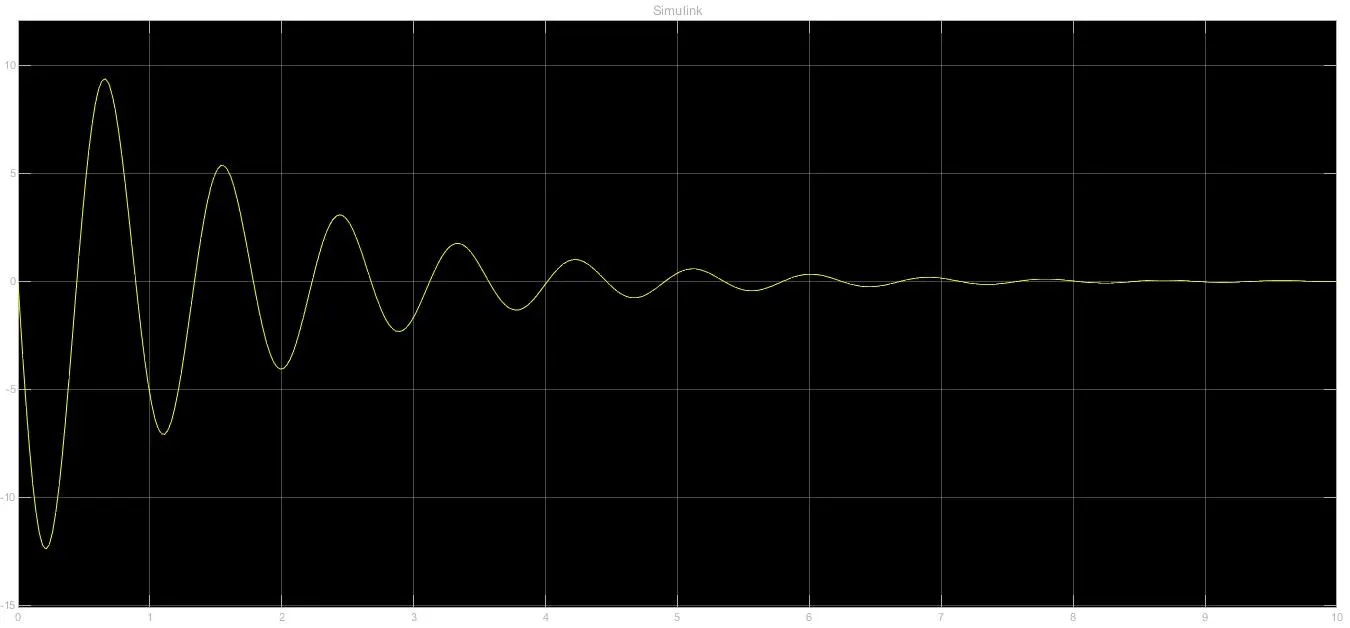
Part-2: Changing the parameter in simulink model
GIVEN DATA:
Change the value of mass(m) and initial spring position X0 = 2 in simulink model
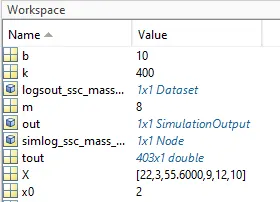
Fig.3. Changed parameter for simulink model
MODEL:
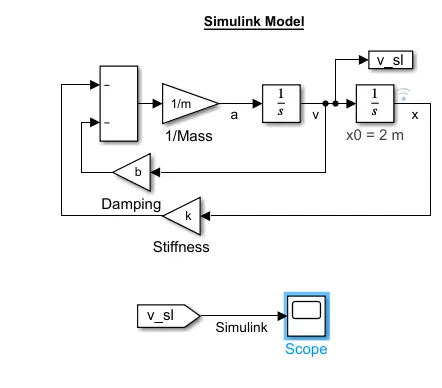
OUTPUT:
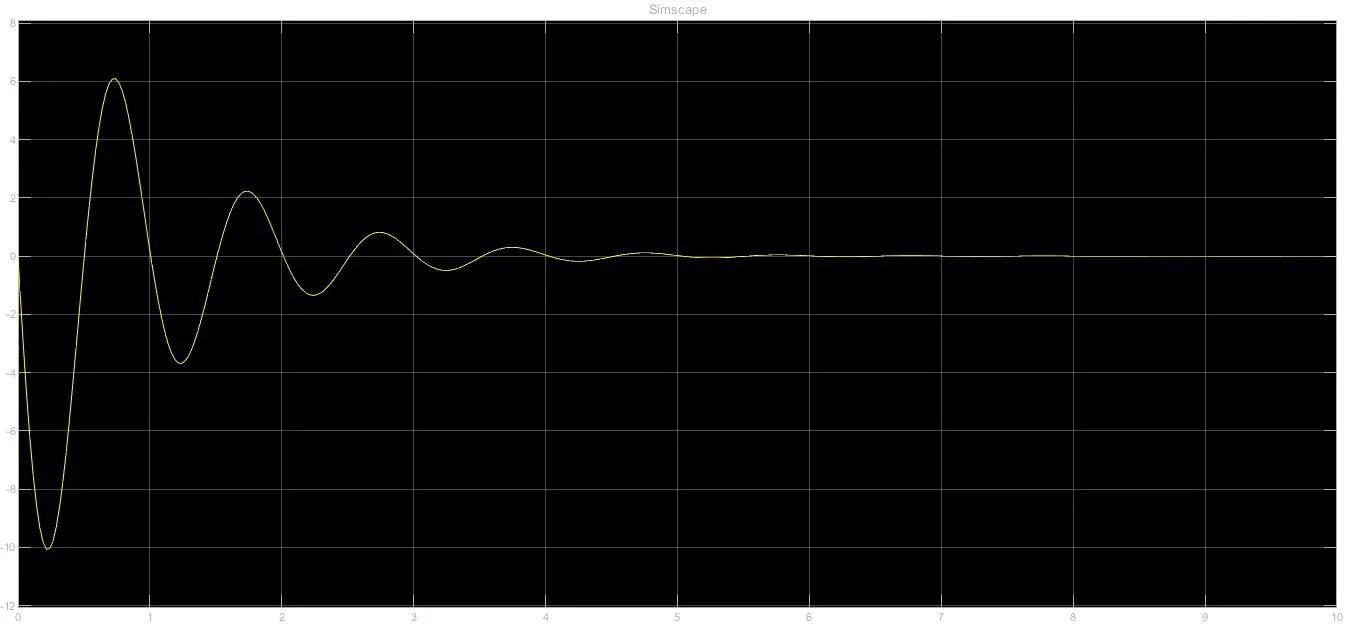
Part-3: Changing the parameter in simscape model and showing the response in separate display
GIVEN DATA:
Change the value of mass(m), damper(b) and initial spring position(x0) in simscape model
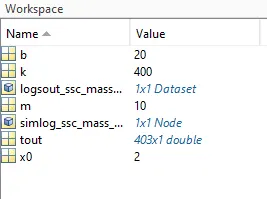
Fig.4. Changed parameter for simscape model
MODEL:
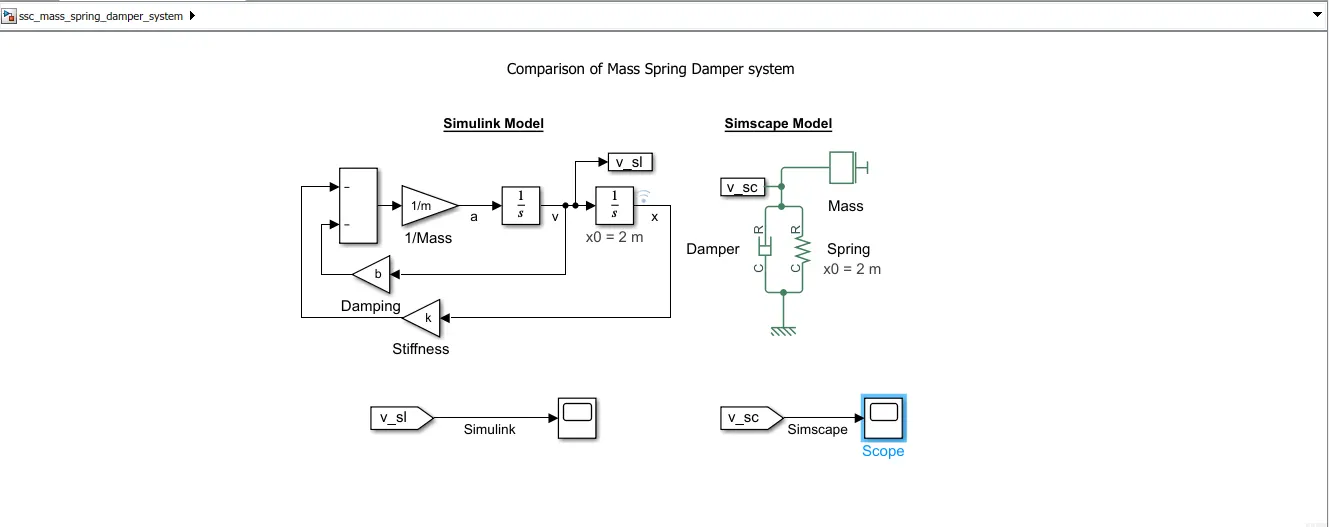
OUTPUT:
CONCLUSION: WE HAVE SUCCESSFULLY STUDIED AND EVALUATED WORKDONE BY SHAPING MACHINE, EQUATION WITH WITH MULTIPLE VARIABLES AND THE COMPARISON OF MASS SPRING DAMPER SYSTEM IN SIMULINK AND SIMSCAPE.
MODEL FILE:
1) https://drive.google.com/file/d/17hHG-m8y82GJcEUalZaWCQCUllQSs7nj/view?usp=sharing
2) https://drive.google.com/file/d/1U5POsHYeMGoB-_cl7LpqiqqU-axdw34o/view?usp=sharing
3) https://drive.google.com/file/d/1vcyPpnN867uO0uE1IQdB0Q-n7yEOg0P3/view?usp=sharing
REFRENCES:
http://www.sharetechnote.com/html/DE_Modeling_Example_SpringMass.html