Simulating flow over an airfoil using Converge CFD
Aim- To study the flow characteristics over an airfoil at different angles of attack and see the pressure, velocity contours.
Governing equation- The equation used to solve this case is Navier-Stokes Unsteady equations. It comprises of 5 equations continuity, x-momentum, y-momentum, z-momentum, and energy equation. But for this case, the energy equation is not used since there is no gain or loss of energy and the temperature is constant throughout the simulation.
Objective- The objective of this problem is to simulate flow over an airfoil (E1098) at different angles of attack and see how the CD, CL coefficients vary with it.
Description- First the geometry to be simulated is imported in Converge Studio and then the geometry is checked for any errors. The geometry is grouped into faces so that respective boundary conditions can be assigned and then the case setup is done. For this project, we will be running a transient simulation with end time 2s. It is an external aerodynamic simulation hence k-w SST turbulence model is selected. A mesh size of 5e-3m is given throughout the geometry with the fixed embedding of scale 2 is used on the airfoil boundary.
Material- Air
Boundary Condition- inlet - 15.6 m/s since Re=200000 and airfoil chord lenght=0.2m
outlet - Pressure=101325 Pa
Top-bottom - No silp wall boundary
airfoil - log law boundary
side walls - TWOD
Initial Condition- Pressure=101325 Pa and temperature=300K
Mesh- Mesh size:5e-3m with embed scale 2
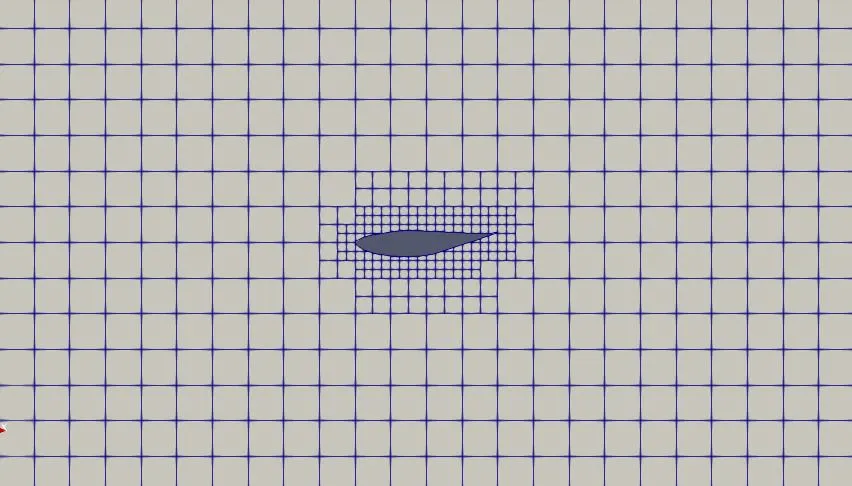
Results
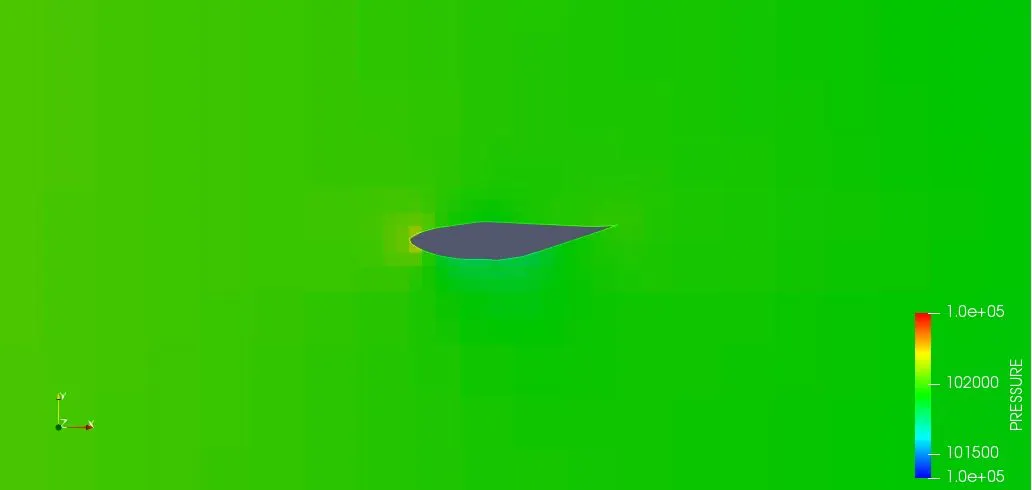
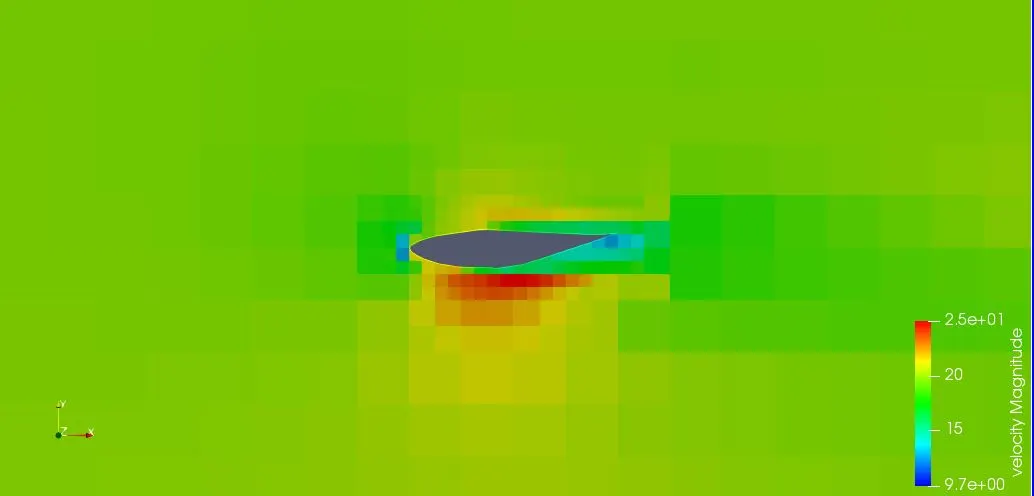
AoA 0deg
Pressure
Velocity
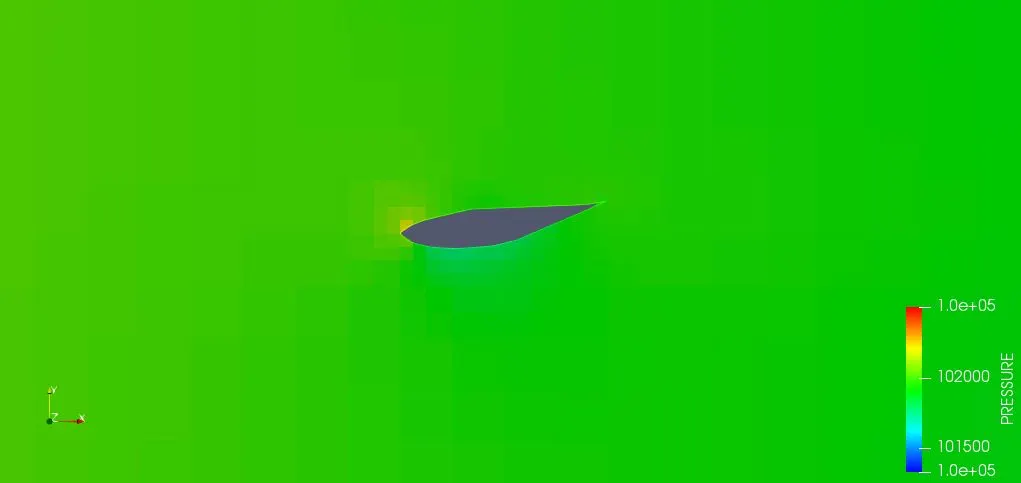
AoA 5deg
Pressure
Velocity
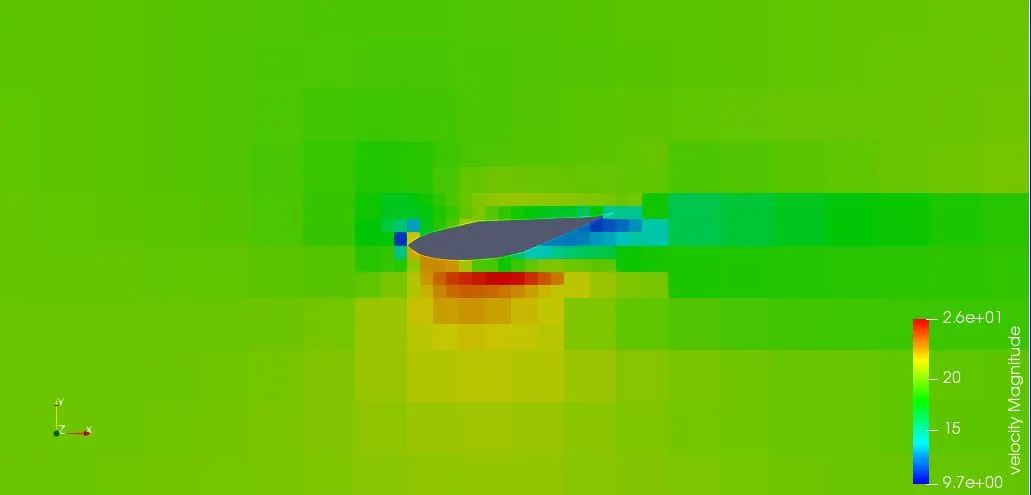
AoA 10deg
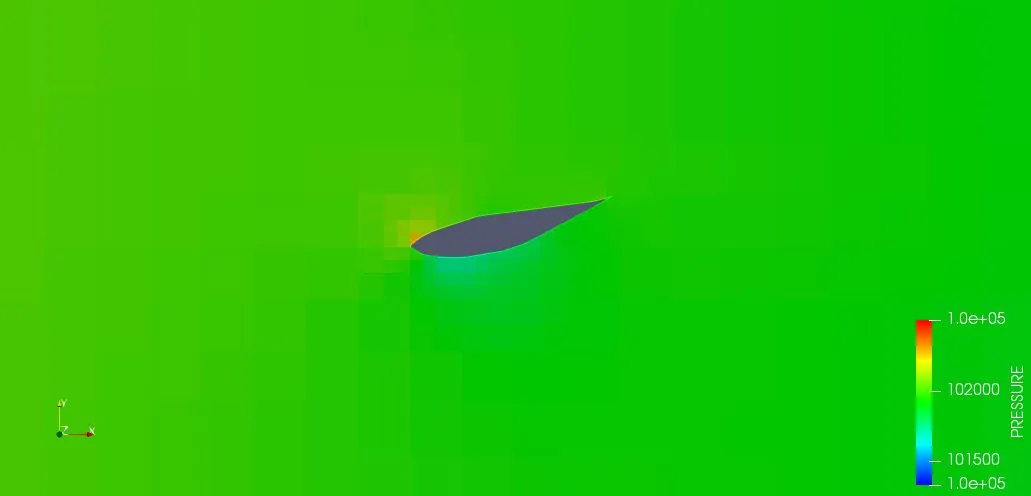
Pressure
Velocity
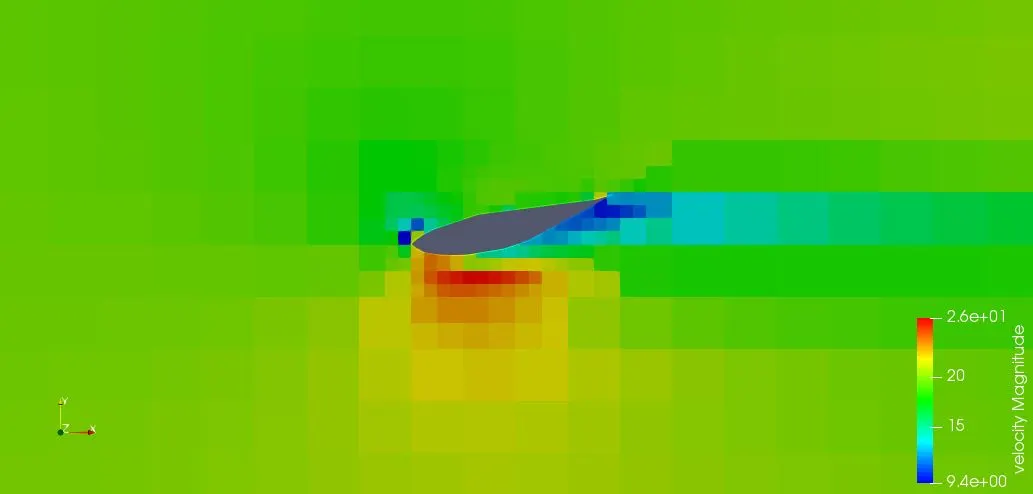
AoA 15deg
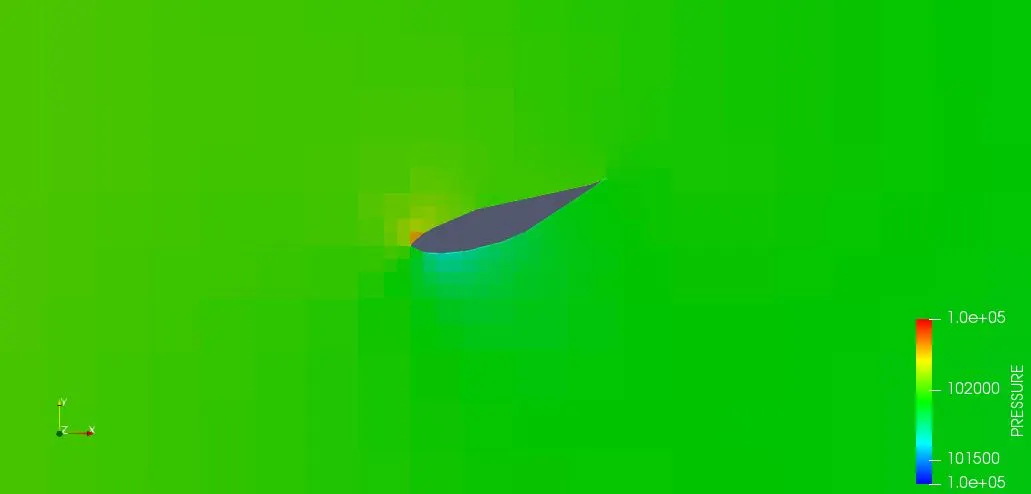
Pressure
Velocity
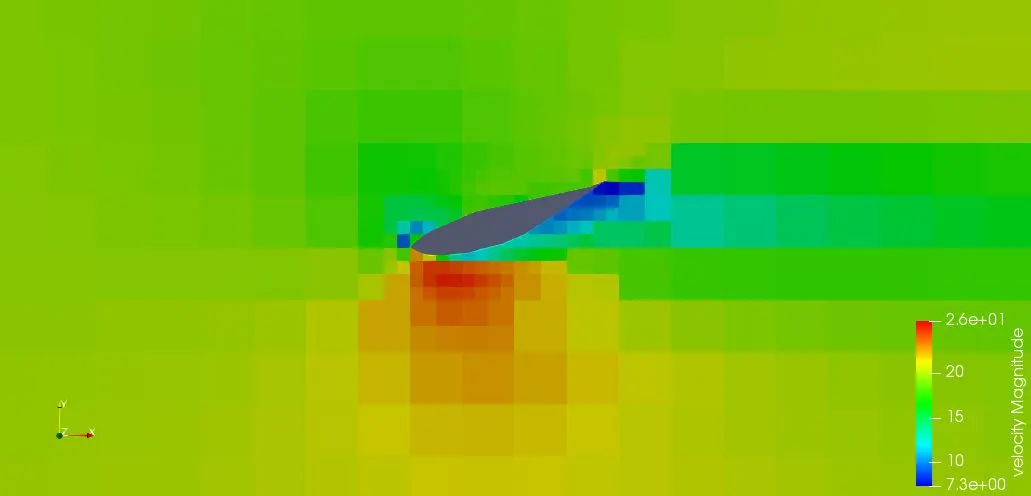
The link to pressure animation is attached below
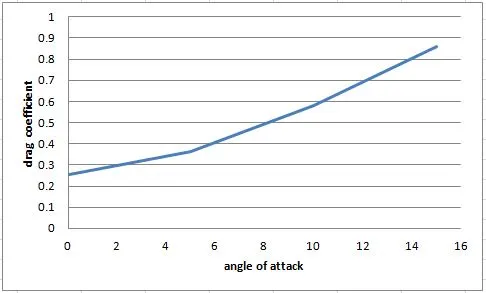
Coefficient of Drag graph
Coefficient of Lift graph
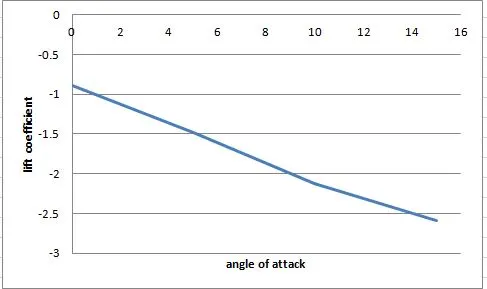
The lift is negative because the airfoil is inverted and simulation is done.
Conclusion
From the pressure plots, we can see that as the angle of attack increases the pressure in front of airfoil increases, and the pressure behind the airfoil reduces this is because the flow separation occurs behind the airfoil and hence the drag force also increases which is evident from the graph above.
As per the airfoil tools database for E1098 airfoil, the stagnation point at which the lift coefficient reduces reaches around 20deg hence that's why the lift coefficient is still increasing even until 15deg.