Section Modulus calculation and optimization
Section modulus
Section modulus is a geometric property for a given cross-section used in the design of beams or flexural members. Other geometric properties used in design include area for tension and shear, radius of gyration for compression, and moment of inertia and polar moment of inertia for stiffness. Any relationship between these properties is highly dependent on the shape in question. Equations for the section moduli of common shapes are given below. There are two types of section moduli, the elastic section modulus and the plastic section modulus. The section moduli of different profiles can also be found as numerical values for common profiles in tables listing properties of such
Section modulus is the property of the cross-section that is used while the design of beams.
The section modulus is classified into two types:-
1] Elastic section modulus:- The elastic section modulus is applicable up to the yield point of material.It is used in most engineering applications.
2] Plastic section modulus:- The plastic section modulus is generally used for material in which plastic behavior is observed.
Elastic section modulus is the ratio of moment of inertia about a neutral axis(
Elastic section modulus equation:-
The formula of elastic section modulus is given by,
Where,
I = Moment of inertia (m^4)
Y = Distance between neutral axes and outermost fiber (m)
Steps to calculate elastic section modulus:-
- Step 1:- Find location of centroid of given cross section.
- Step 2:- Find moment of inertia about neutral axis (
I N A - Step 3:- Find
Y max - Step 4:- Find elastic section modulus using the formula provided above.
Elastic section modulus of different sections:-
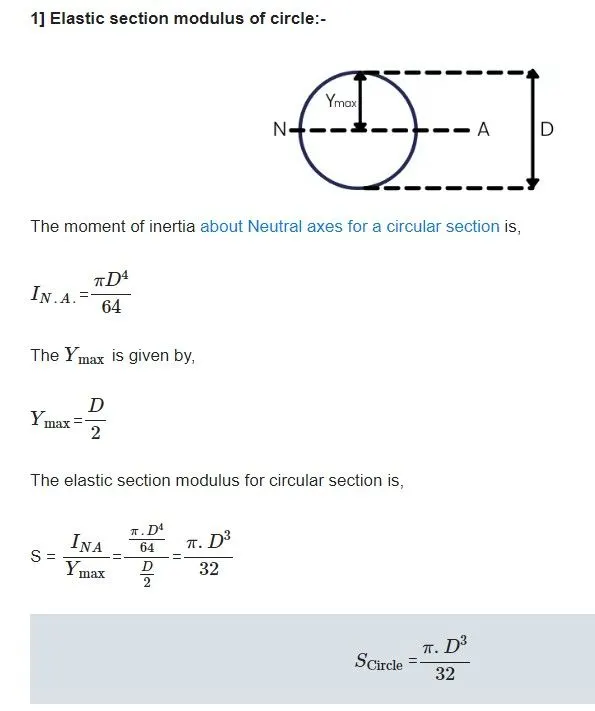
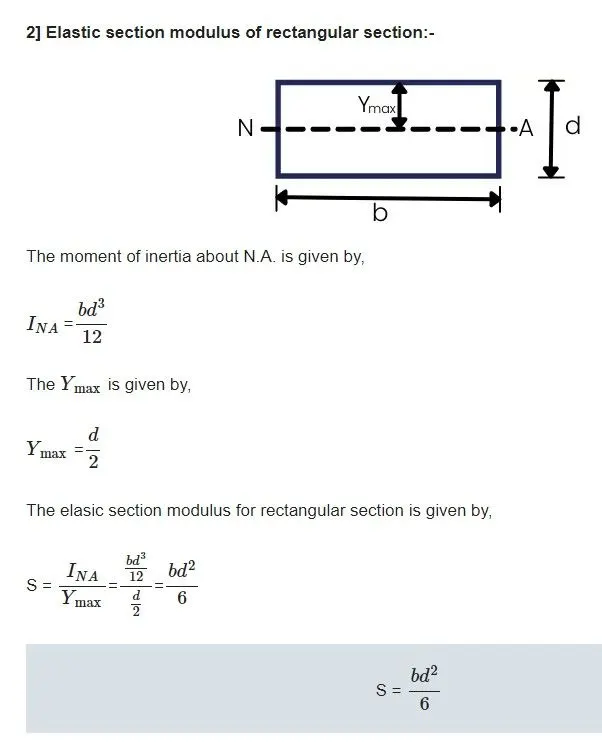
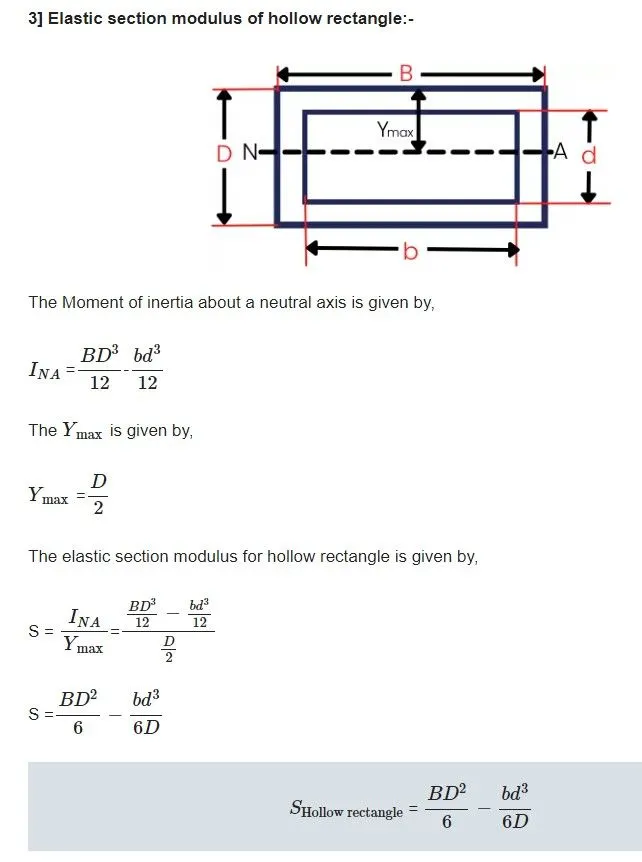
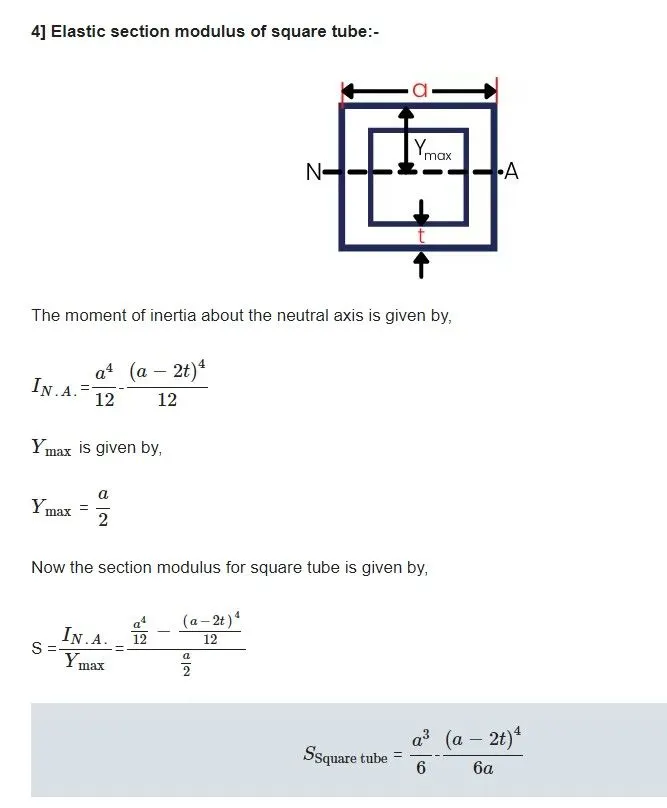
Plastic section modulus:
The plastic section modulus is necessary to calculate plastic moment capacity of the section.
The plastic section modulus is the addition of moment of area of area under compression about PNA (plastic neutral axis) and the moment of area of area under tensile stress.
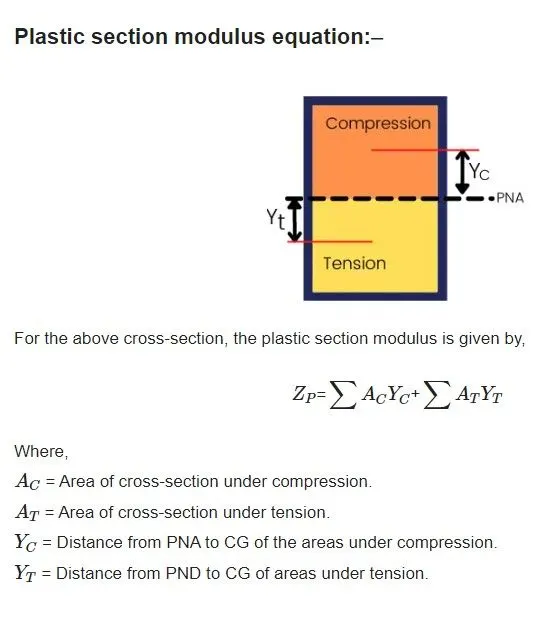
Steps to calculate plastic section modulus:–
Step 1. Locate the plastic neutral axis.
At the neutral axis, the Area under compression is equal to the area under tension.
By using this relation, we can find the position of the plastic neutral axis.
Step 2. Find the summation of the product of area of section undergoing compression and the distance of its CG from PNA that is
Step 3. Find the summation of the product of the area of cross-section undergoing tension and distance between CG of that area from PNA that is
Step 4. Find the plastic section modulus using the formula.
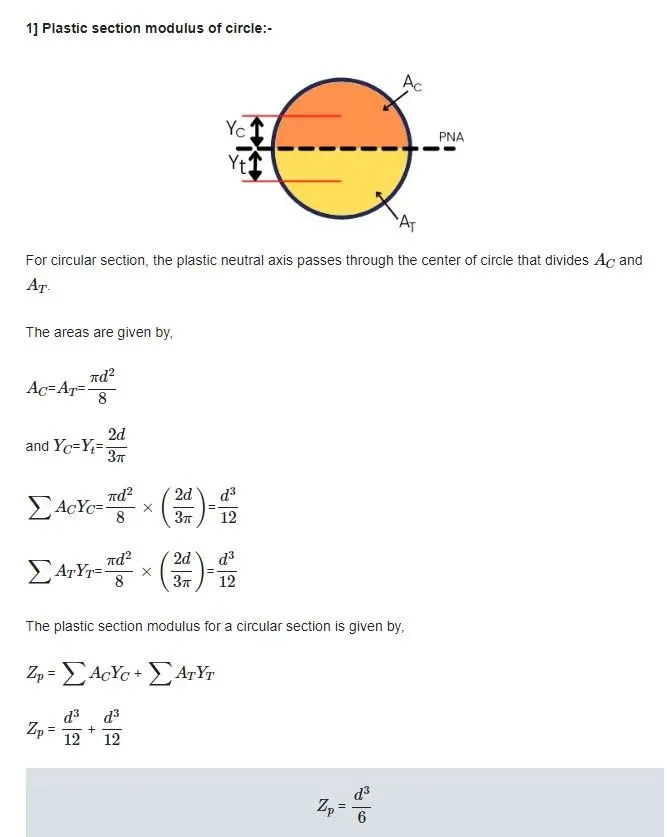
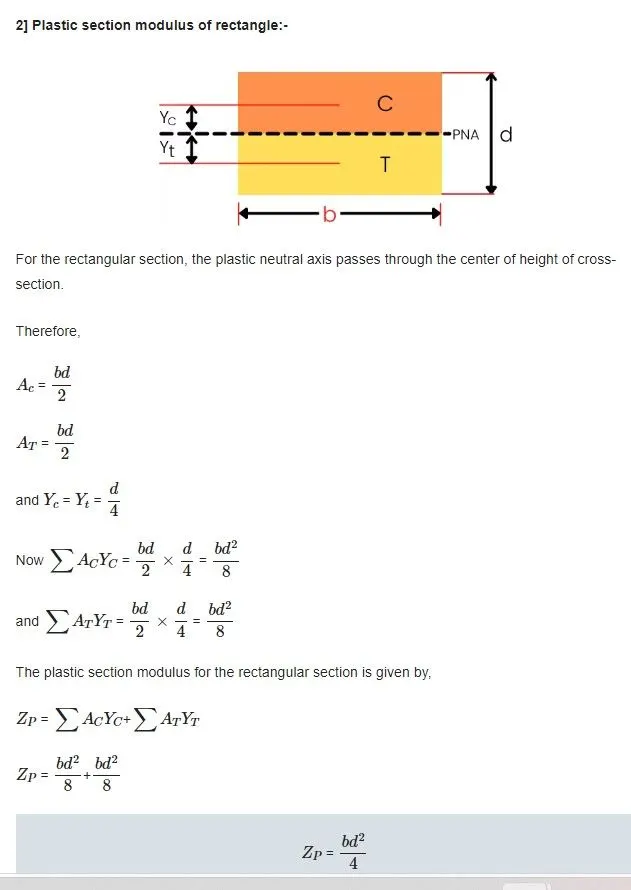
The unit for section modulus is the same for the plastic section modulus and for elastic section modulus.
The unit of section modulus is given by,
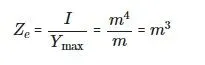
In the SI system, the unit of section modulus is m³. In the FPS system, the unit of section modulus is ft³.
Calculating the section modulus for designed hood.
The formula for section modulus is
S=I/Y m^3
I – moment of inertia about neutral axis
Y- distance to extreme fibre of hood from neutral axis.
I & Y are calculated from the designed hood.
Calculation of I in siemens NX software:
- The designed hood assembly by the command (intersection curve) making the design to a section (half cut side view).This is done by selection of plain and selection of whole body in intersection curve tool.
- Hiding the all components of hood inner panel, outer panel, hinges, striker.
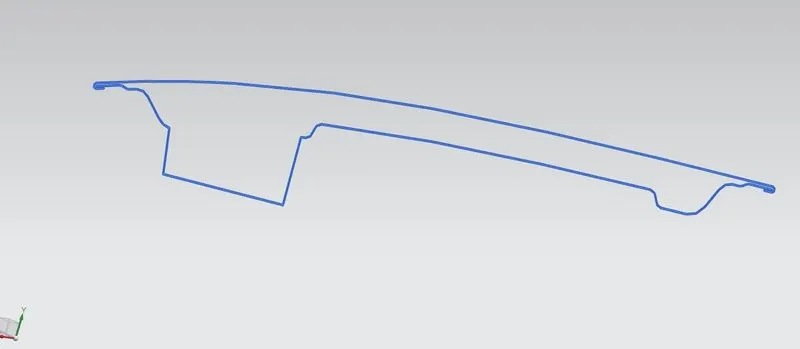
- Creating a sketch and project the hood cross-sectional curves, to make the curves editable. Intersection image is haided
- Now editing the projected curves, to analysis we want a closed image and single line, so trimming the inner line on the image, after trimming the section has gaps filling the gaps by line extend ,or making line.
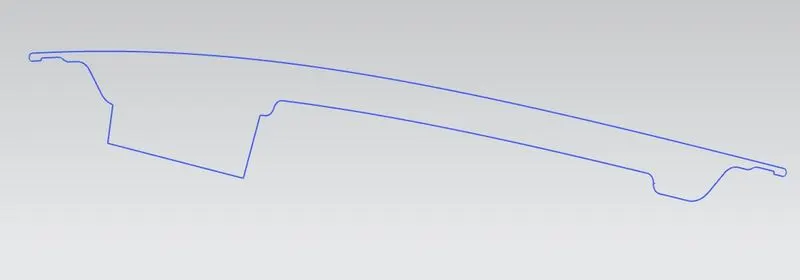
- Now the section was closed loop by section inertia analysis calculating inertia (I)value.
- CALCULATING Value: distance from neutral axis to hood extreme point, measuring of distance one end to another end and dividing it to two parts, the one part length is Y.
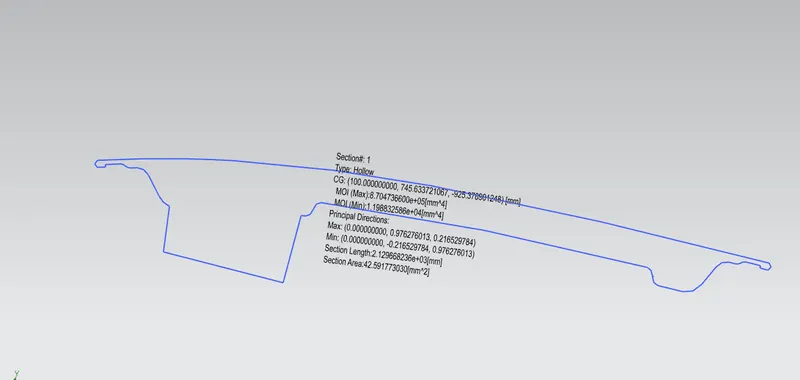
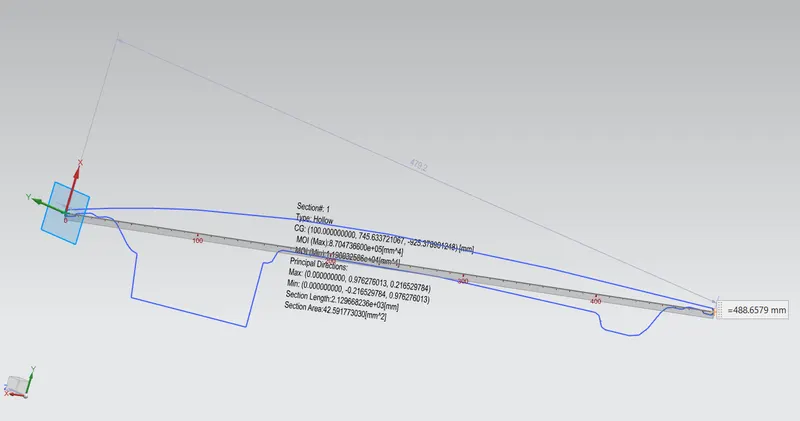
CASE1: INITIAL HOOD DESIGN
I max = 8.704736600e+05
I min = 1.198832586e+04
Y = length of section /2 =488.6597/2=244.32895mm.
S= I min/Y = 1.198832586e e+03/244.32895 = 11988.32586/244.32895 =49.0663m^3
s= 49.0663m^3
CASE2: OPTIMISED HOOD DESIGN
Optimisation is the restructuring in the strength or design or ability of the component to for getting greater result.
The initial sketch is modified at certsin points like in inner panel emmboses ,striker ,if the area of the these was incressed by offsetting the inner penal in sketch by 6mm and resketching the hood .
Trim all initial curves of offset and fill gaps and finish the sketch.
Now again calculate the moment of inertia of new mobified section and we get
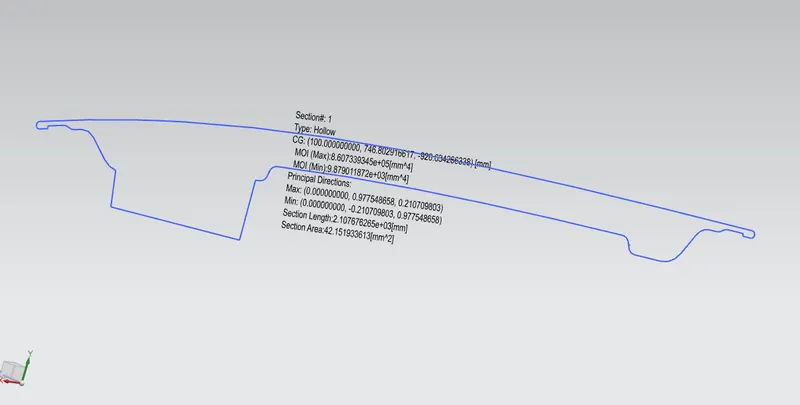
I max = 8.607339345e+05
I min = 9.879011872e+03
Y = length of section /2 =488.6597/2=244.32895mm.
S= I min/Y = 9.879011872e+03/244.32895 = 9879.011872/244.32895 =40.4332m^3
s=40.4332m^3
Here I reduced the area of hood so the section modules are reduced.
Conclusion:
The section modules of any section is depends upon the area, if the area increased the section modules increases and the area is decreased the section modules decrees.
The section modules is related to strength, SM is higher while increasing area and SM is lower while decreasing the area.