Section Modulus calculation and optimization
REPORT:
Section modulus is a geometric property for a given cross-section used in the design of beams or flexural members. Other geometric properties used in the design are the area for tension and shear, the radius of gyration for compression, and the moment of inertia and polar moment of inertia for stiffness. Any relationship between these properties is highly dependent on the shape in question.
section modulus is defined as
S = I / y
Where I am a moment of inertia
and y denotes the distance between the neutral axis and extreme end
Moment of Inertia
It is the resistance offered by the body against bending.
The more inertia that an object has, the more strength that it has. A more massive object has a greater tendency to resist changes in its state of motion.
Section modulus analysis for different sections
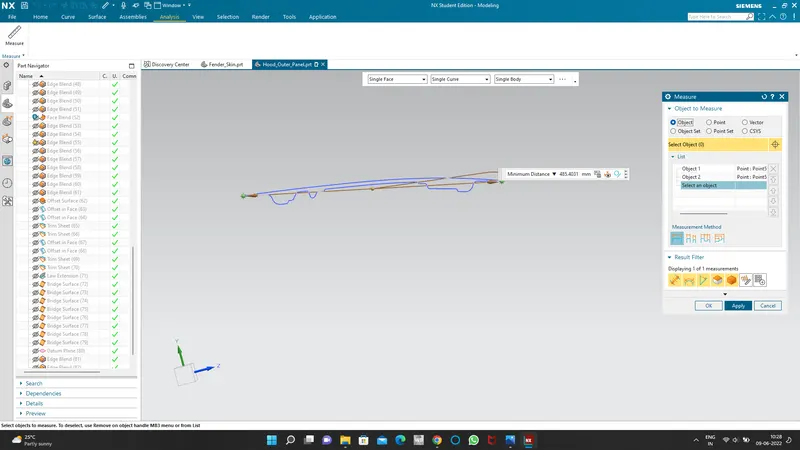
y=485.403 mm
1. section 1
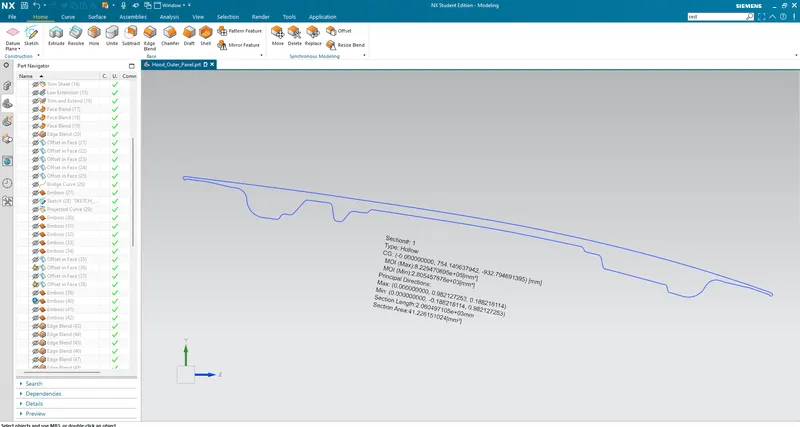
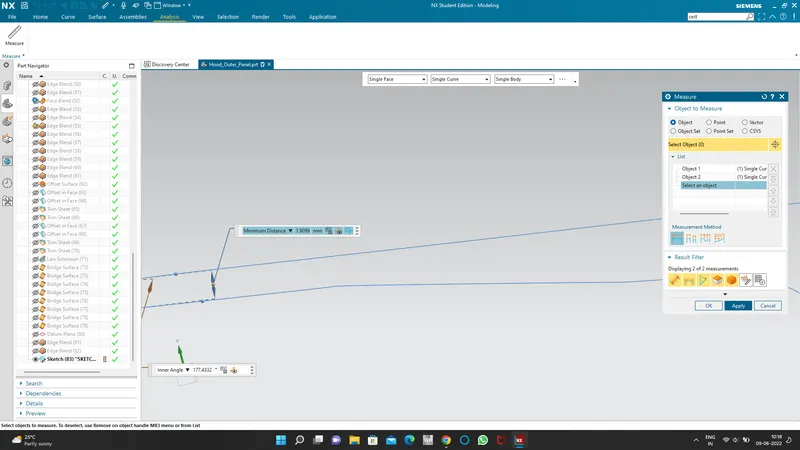
From the data, we can see that
Max moment of inertia=8.2436e5 mm^4
Min moment of inertia=2.8616e3 mm^4
Section area is found to be=41.241 mm^2
S=I/y
Taking min MOI
S=2.8616e3/485.403
S=5.89 mm3
2.section 2
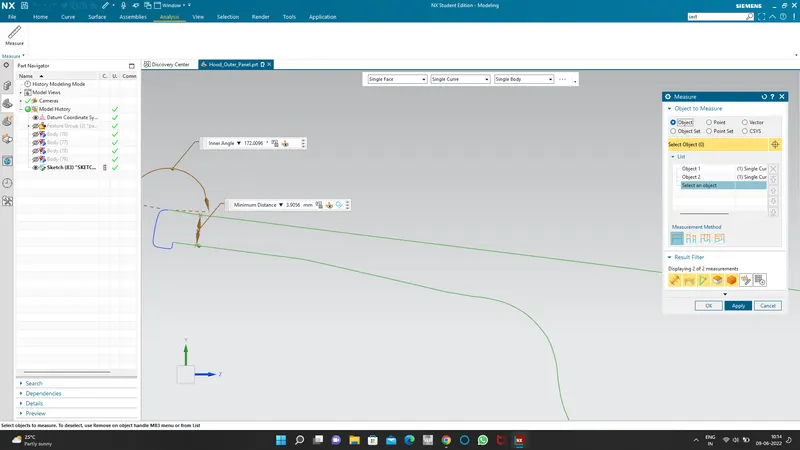
The distance between the outer and inner panels is increased by 2 mm more than the previous one.
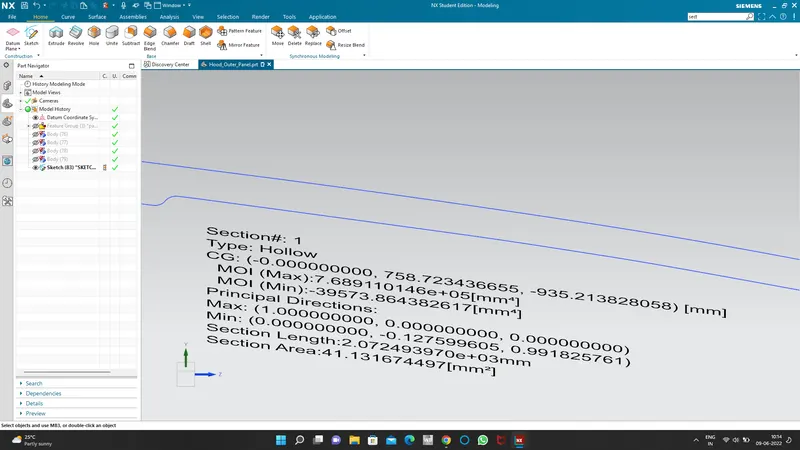
Max MOI= 7.6891e5 mm4
Min MOI=-3.95e3 mm4
Section area=41.131 mm2
S=-3.95e3/485.403
S= -8.137 mm3
Conclusion
More the section area more is the section modulus.
More the moment of inertia more is the strength.