Section Modulus calculation and optimization
Use the Section from your Hood design and calculate the Section Modulus using the formula
S = I/y
Where,
S = Section Modulus = ?
I = Moment of Inertia = 2.81393229 e+005
y = distance between the neutral axis and the extreme end of the object = 876/2 = 413mm
S=I/Y
S= 2.81393229 e+005/413
S= 6.847*10-03 mm3
Come up with a new section that has an improved Section Modulus compared to the previous one and mention what changes you made which resulted in the increased strength.
To increase the strength of the hood, we can modify the shape of the cross-section to distribute the load more efficiently. One effective way to achieve this is by incorporating a box section design. This design provides increased rigidity and resistance to bending and torsional forces.
Here's a description of the improved section:
-
Box Section with Flanges: The new section design for the hood incorporates a box-shaped cross-section with flanges. The cross-section will have a rectangular shape, similar to a hollow beam. The top and bottom faces will form the flanges, while the vertical sides will act as the web of the box section.
-
Increased Depth: To enhance the strength and stiffness of the hood, we will increase the depth of the box section. This dimension represents the vertical distance between the top and bottom flanges. By increasing the depth, we can improve the section modulus, which is a measure of the section's resistance to bending. The increased depth will provide a greater moment of inertia, resulting in improved structural performance.
-
Reinforced Flanges: To further strengthen the hood section, we can reinforce the top and bottom flanges. This can be achieved by increasing the thickness of the flanges or incorporating additional strengthening elements, such as ribs or stiffeners, along the length of the flanges. Reinforcing the flanges will help increase the section modulus and improve the resistance to bending and buckling.
-
Curved Transitions: To ensure smooth load transfer and reduce stress concentrations, it is beneficial to incorporate curved transitions between the flanges and the web of the box section. These gradual curves help distribute the load more evenly and minimize the risk of failure at the junctions.
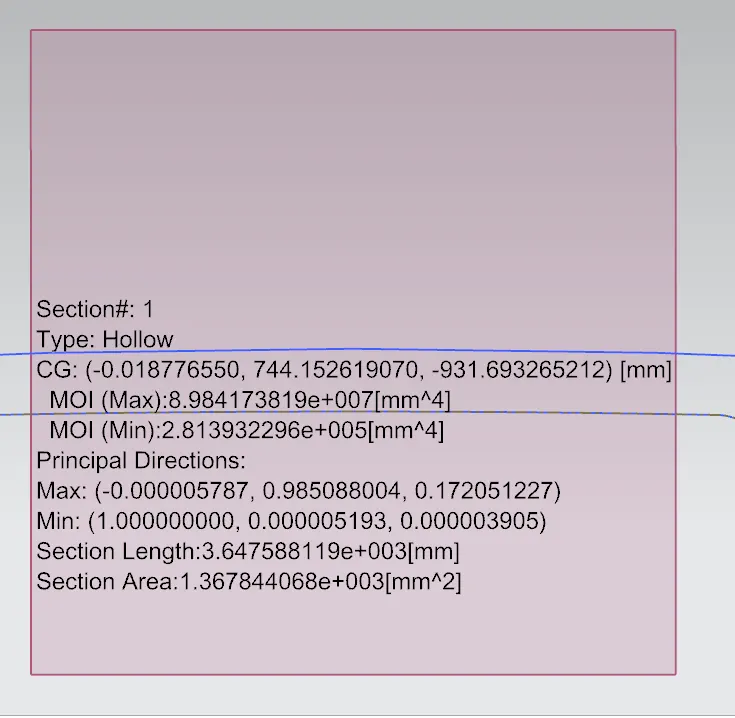
here is the image represents the before modification of section modulus
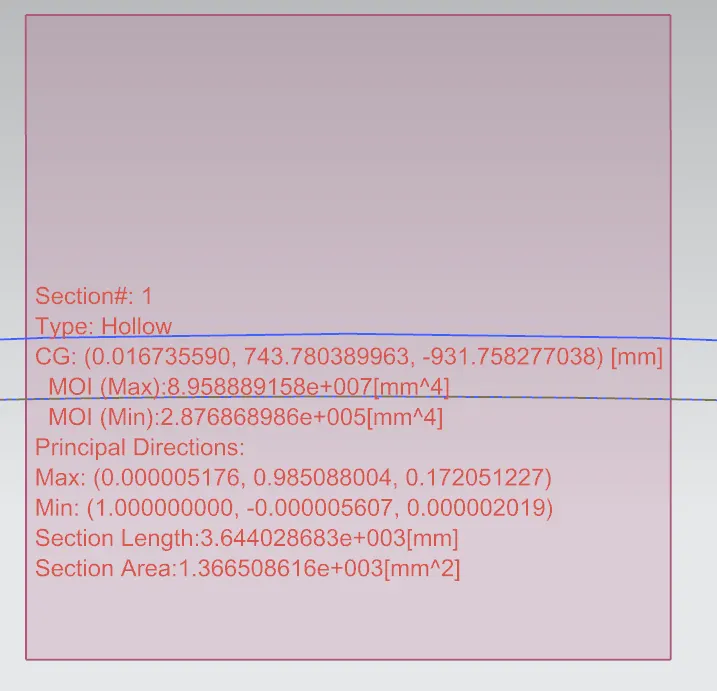
here is the image represents the after modification of section modulus
By implementing these modifications to the hood's cross-sectional area, it can achieve an improved section modulus, The box section with reinforced flanges and increased depth provides enhanced resistance to bending and torsional forces, making it more suitable for demanding applications