Section Modulus calculation and optimization

Section modulus is a geometric property for a given cross-section used in the design of beams or flexural members. There are two types of section moduli, the elastic section modulus and the plastic section modulus.
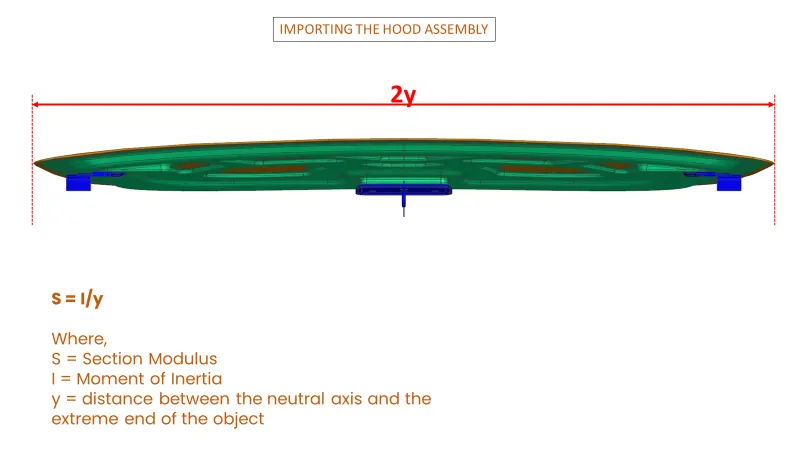
Section modulus is the ratio of moment of inertia about neutral axis upon the farthest point
of section from neutral axis.
A beam/object that has a larger section modulus than another will be stronger and capable of
supporting greater loads, The section modulus is denoted by S. To calculate S, the distance
(y) to the extreme structure of boundary from the centroid (or neutral axis) must be found as that is where
the maximum stress could cause failure.
SIGNIFICANCE OF SECTION MODULUS:
- Section modulus is the important factor for design of beam and flexural member design.
- More the section modulus, more the member is resistant to bending of the beam.
- It is easier to calculate stresses in beam and an exact measure of strength of steel.
- If two beams are made of same material and comparing the “section modulus” of two
beams, the beam with bigger section modulus will be tougher and more capable to
withstand larger loads.
ROLE OF CROSS SECTION IN SECTION MODULUS:
- Section modulus depends only on the cross section shape of the beam. Cross section shapes like rectangular, square, circular, I section and T, composite section etc.
- For symmetric sections, the value of “section modulus” is for both above and below of centroid of the fiber.
- An asymmetric section has two values for top and bottom of the fiber due to different distance from centroid to the top and bottom of the material, the maximum “section modulus” is S max and the minimum section modulus is S min.
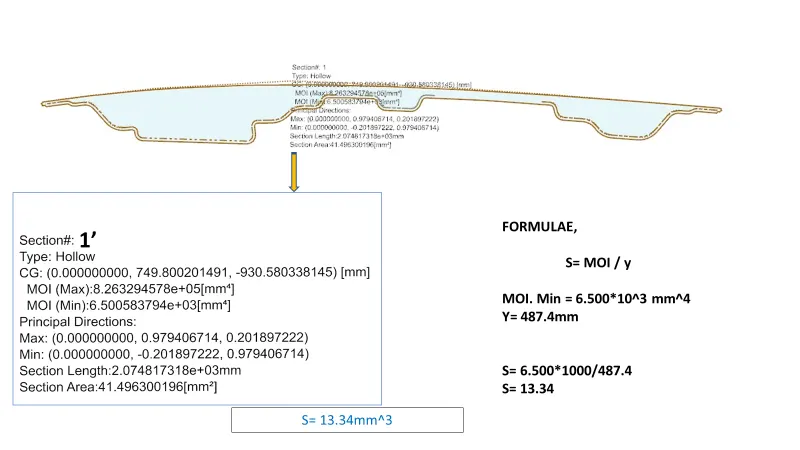
FORMULAE,
S= MOI / y
Where, S = Section Modulus(mm^3),
MOI = Area Moment Of Inertia (mm^4),
y = Distance from Neutral Axis to end of object(mm).
As we absorb above equation of Section modulus,
Section modulus is directly proportional to Moment of Inertia(MOI)
S α I
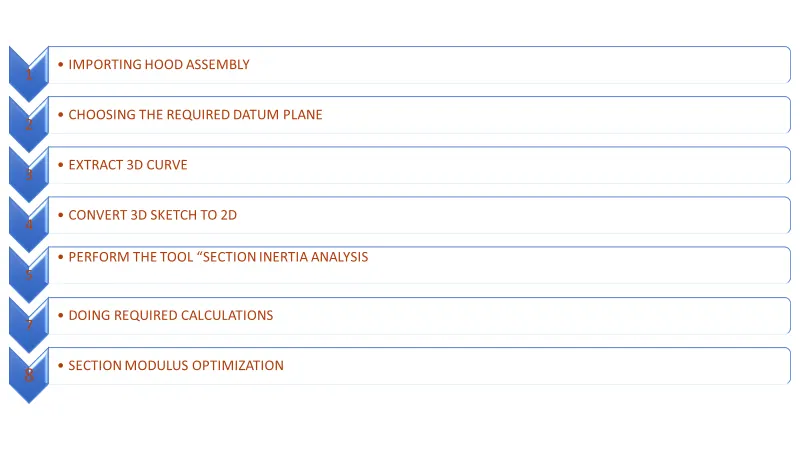
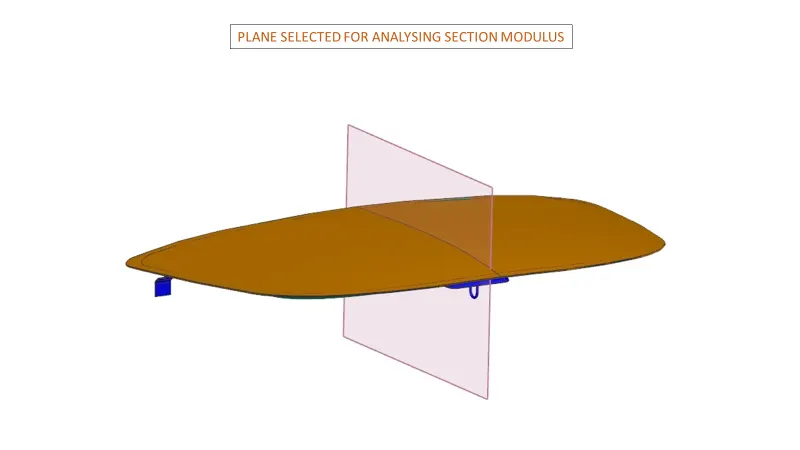
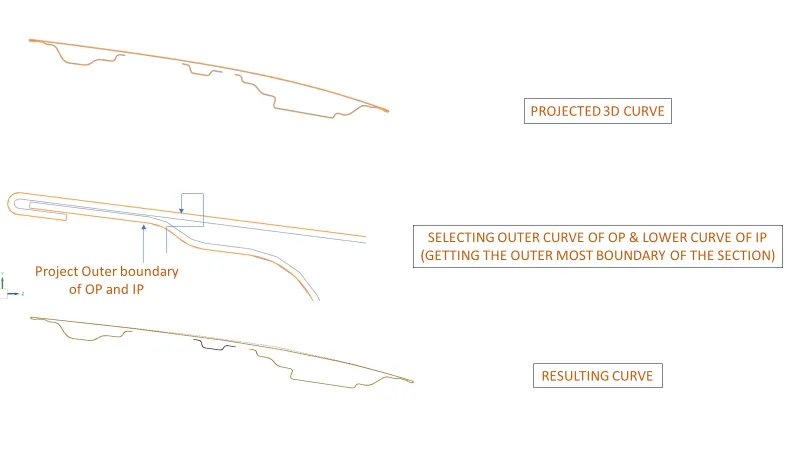
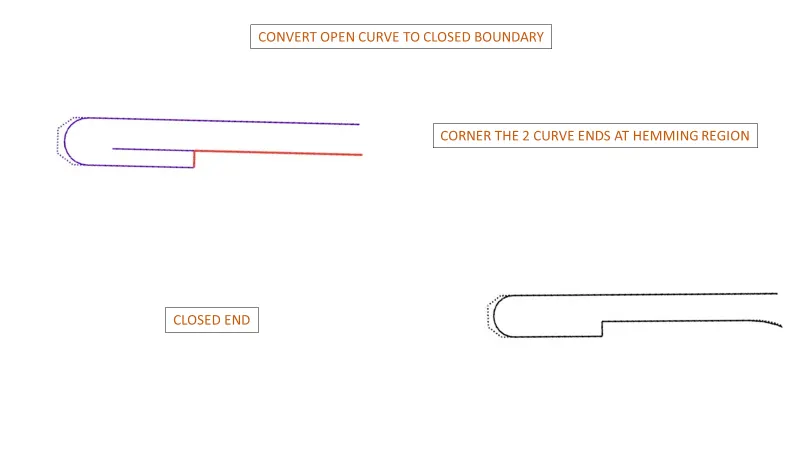
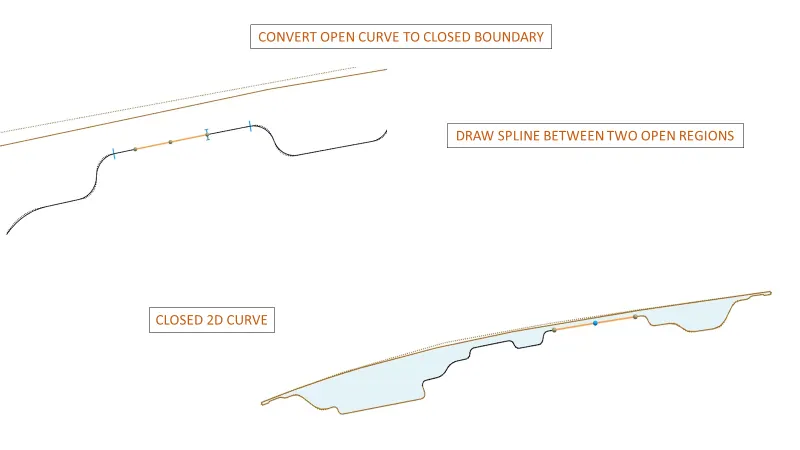
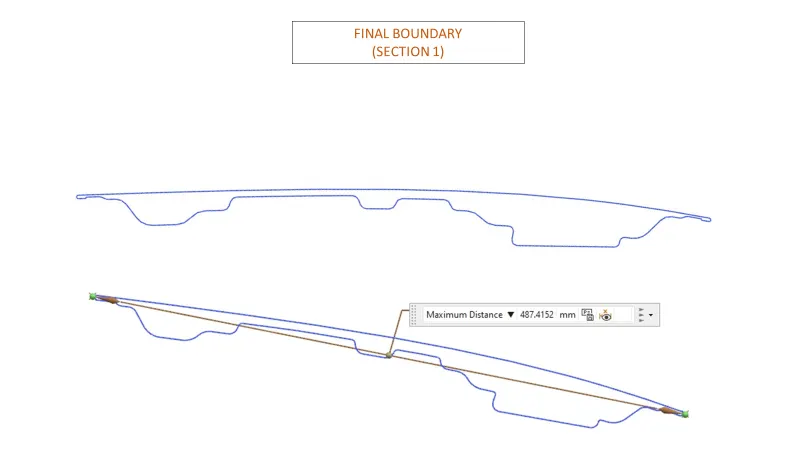
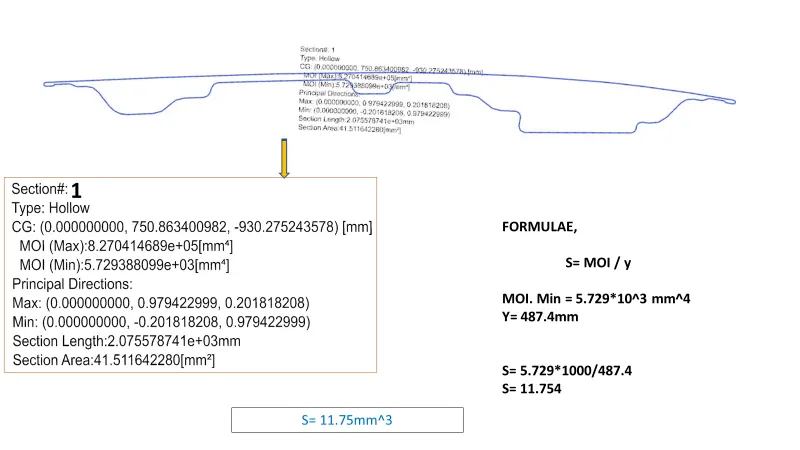
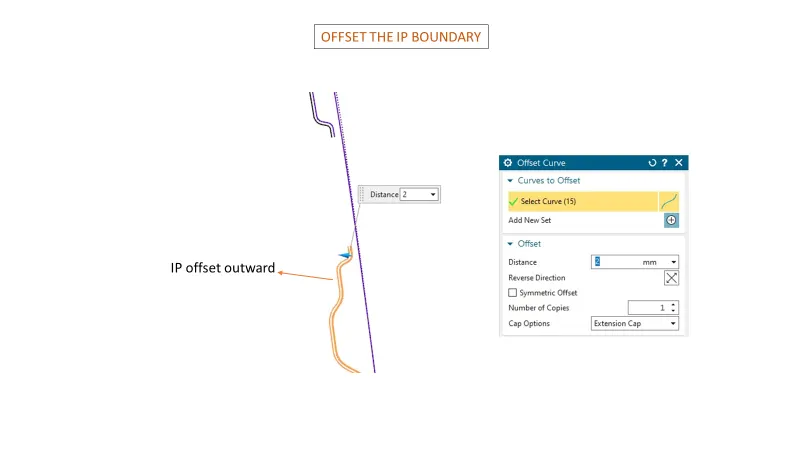
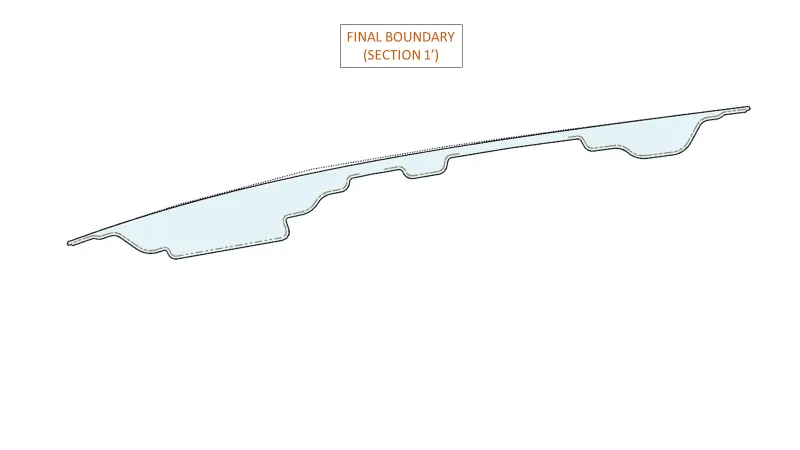
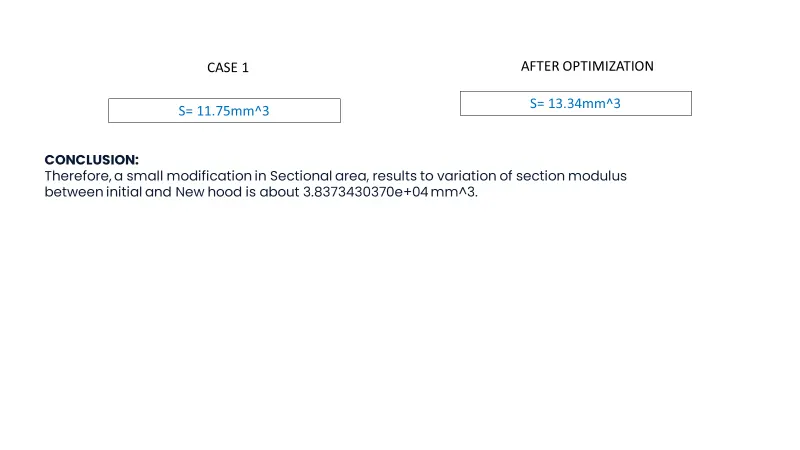
SECTION MODULUD OPTIMIZATION: This can be done by increasing the Area of Momentum or decreasing the y value, since the y is fixed for a component the Area MOI has to be increased, which is possible by increasing the gap/ distance between IP & OP, Since the IP is obtained from the Class A surface it cannot be modified. Hence, to achieve the purpose the IP is to be offset 2mm outside and this can be considered, Furthermore follow the same steps as done for section 1 and call this section as 1’ (section one prime) and calculate the SM for the same.