Section Modulus calculation and optimization
section modulus calculation of HOOD DESIGN
AIM:-
to calculate the section modules of the previous designed hood for analyzing its strength and also optimazing the design the difference in the bending strength of the hood.
section modulus :-
section modulus is a geometrical property for a given section used in the design of beams or flexural members. other geomertic properties used in design include area moment of inertia,that will exprience deflection due to an applied bending moment.
They are two types of section modules:-
1. elastic section modulus and
2. plastic section modulus
elastic section modulus is appiles to designs that are with in elastic limit of the material, which is the most common case. often," elastic section modulus" is referred to as simply "section modules".
plastic section module is the sum of the areas of the cross section on each side of the PNA (which may or may not be equal) multiplied by the distance from the local centroids of the two areas to the PNA: The Plastic Section Modulus is not the 'First moment of area'
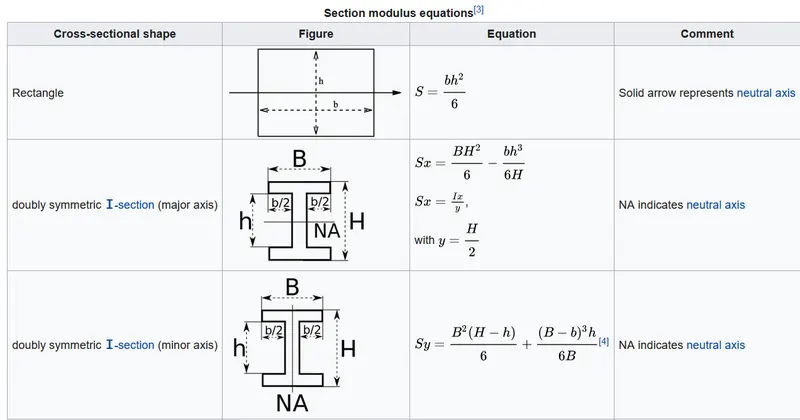
S=i/y
where as,
s= section modulus,
i= moment of inertia and (unit mm 4)
y= distance from neutral axis to the extreme end (unit in mm)
Area moment of inertia :-
also know as second area of moment or 2nd moment of area is property of a two- dimensional plane shape where it shows how its point are dispersed in an arbitary axis in the cross sectional plane. This property basicall characterizes the deflection of the plane under some load.
where
M = Bending moment,
I = Area moment of Inertia,
E = Youngs modulus,
R = Radius of gyration,
neutralaxis:-
when beam is subjected to the bending the top most fiber of the beam are subjected to maximum compression, while the bottom most fiber of the beam are subjected to maximum tension.
material data : stainless steel AlSl 302 - cold rolled
where yeiled stress of stainless steel is 520 = 520 N/MM^2
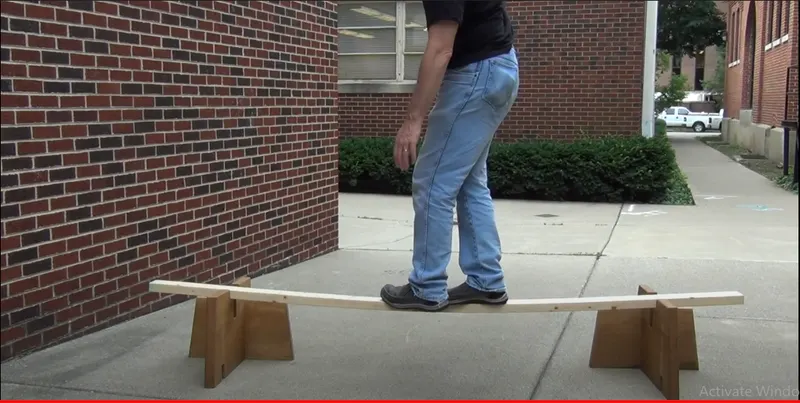
Changing the position can be show the difference in bending which is because of centriod distance from extreme fiberend.
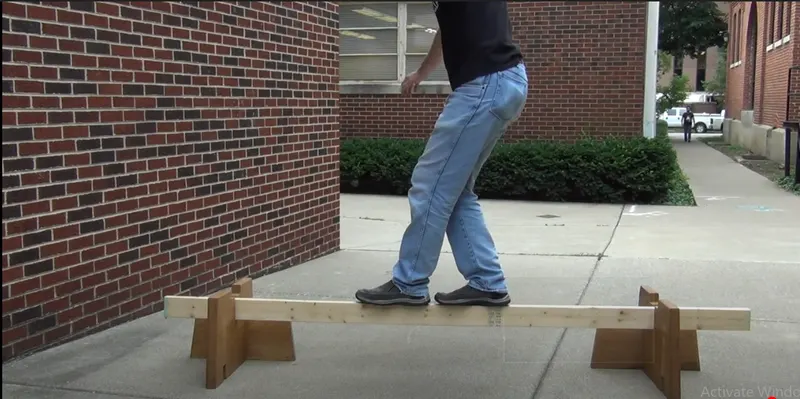
In layman's terms, in this postion is more material from axis to the spacific direction, to the resist the load which makes less bend and improve the strength.
CALCULATION :-
CASE 1: BEFORE OPTIMIZATION
The Hood ehich has alredy created is impoted and the section interia analysis is done.
We have to make sure that curve obtained is single/ closed curve.
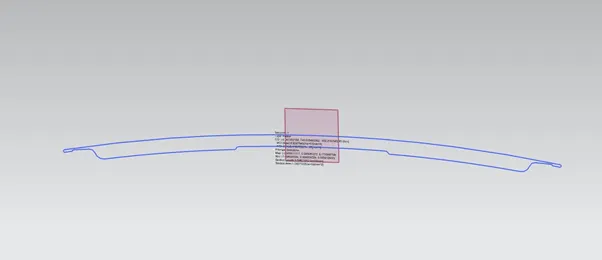
fig 1.1
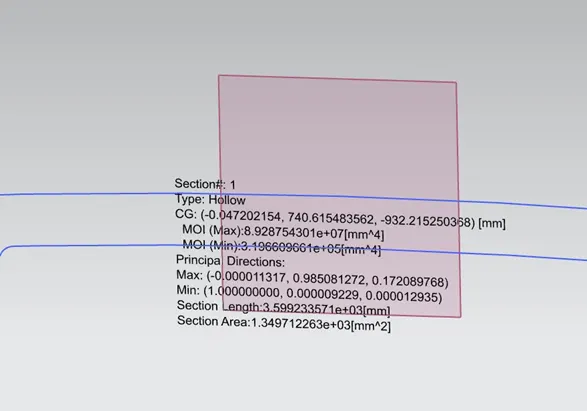
fig 1.2
MOl (max) = 8.928754301e+07 (mm^4)
MOl (min) = 3.196609661e+05 (mm^4)
As per the section modulus equation,
S=l/Y
l = MOl (min) value is consider
y= total distance /2, total distance
= 875.5680/2
Y= 875.5680/2
= 437.784 mm
Therefore, S= 3.9660.966mm^4/437.784mm
S= 730.179mm^3
CASE 2: AFTER OPTIMIZATION
The Hood inner pannel's curve is offset by 0.5mm outwards and section inertia analysis is done same as case 1 for a closed curve.
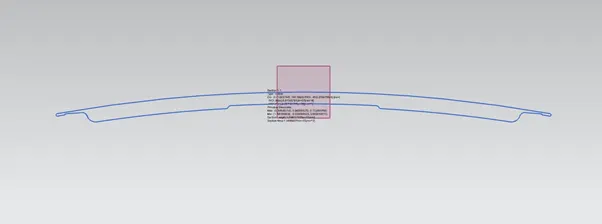
fig 1.3
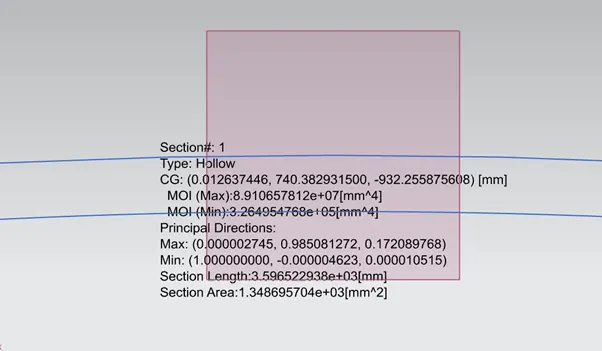
fig 1.4
MOl (max)= 8.910657812e^07mm^4
MOl (min)= 3.264954768e^05mm^4
As per section modulus equation,
S=l/y
l= MOl (min) value is consider
Y = Total distance /2,
Total distance =875.5680mm
Y = 837.5680/2
= 437.784mm
Therefore,S=326495.4768mm^4 / 437.784mm
S = 745.792mm^3
CONCLUSION:-
Hence when comparing case 1 & 2,
1.The section modulus value of case 2 is higher than the case1.
2.As we increase the section area, the moment of inertia & section modulus increased which means strength and load material also increase.