Roof Design
ROOF
Introduction – The car roof is a crucial part of a vehicle and performs more than merely protect the occupants from the weather. It is essential to the overall driving experience, vehicle aerodynamics, and aesthetics. This article seeks to give a thorough overview of different types, developments, and materials used in automobile roofs.
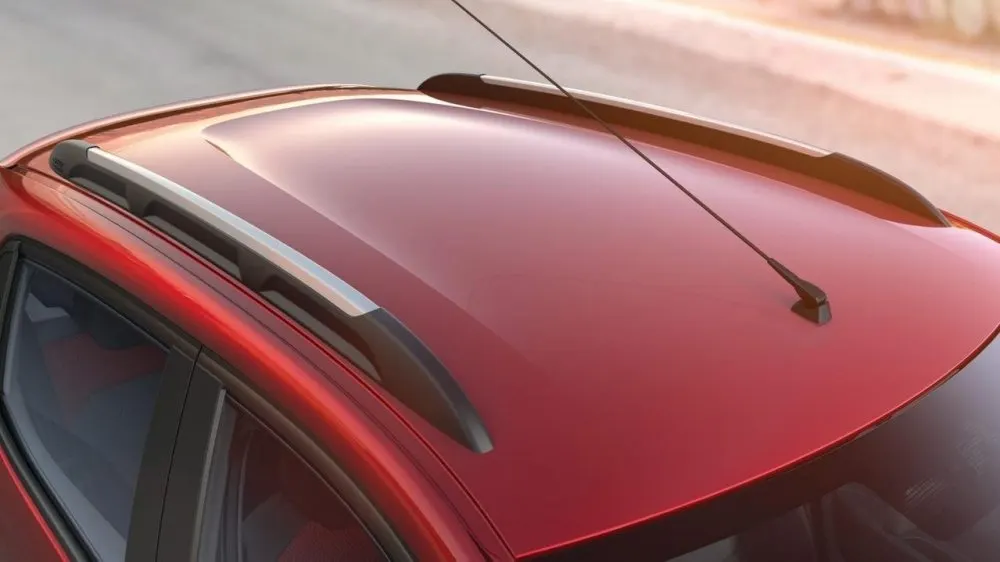
Types of Car Roofs – In the automobile business, there are numerous varieties of car roofs that are frequently seen:
<!-- [if !supportLists]-->a. <!--[endif]-->hardtop roof : hardtop roof offers good structural integrity and noise isolation. It is composed of metal or composite materials. Like sunroofs, they can be either fixed or retractable.
<!-- [if !supportLists]-->b. <!--[endif]--> Soft Top Roof: Vinyl or cloth are often used to construct soft tops, which are frequently seen on convertible cars. The driver can enjoy driving in the open air by lowering or raising them.
<!-- [if !supportLists]-->c. <!--[endif]-->Targa Roof: A hybrid design, a targa roof often has a part that can be removed over the driver and front passenger seats, leaving the central roof panel in place.
<!-- [if !supportLists]-->d. <!--[endif]-->Sunroof/Moonroof: These are fixed or retractable roof-mounted panels that provide light and air into the car's interior. They are available in a variety of styles, including pop-up, sliding, and panoramic sunroofs.
<!-- [if !supportLists]-->e. <!--[endif]-->Retractable hardtop roof: Retractable hardtop roofs, which are frequently found in contemporary convertibles and may be automatically folded away when not in use, are made of metal or composite materials.
ROOF_RAILS :-
A crucial part of an automobile's structural construction, the car roof front rail gives the car stability, safety, and functionality. In-depth knowledge of car roof front rails, including their design, purpose, and importance in the manufacturing of vehicles, is the goal of this paper.
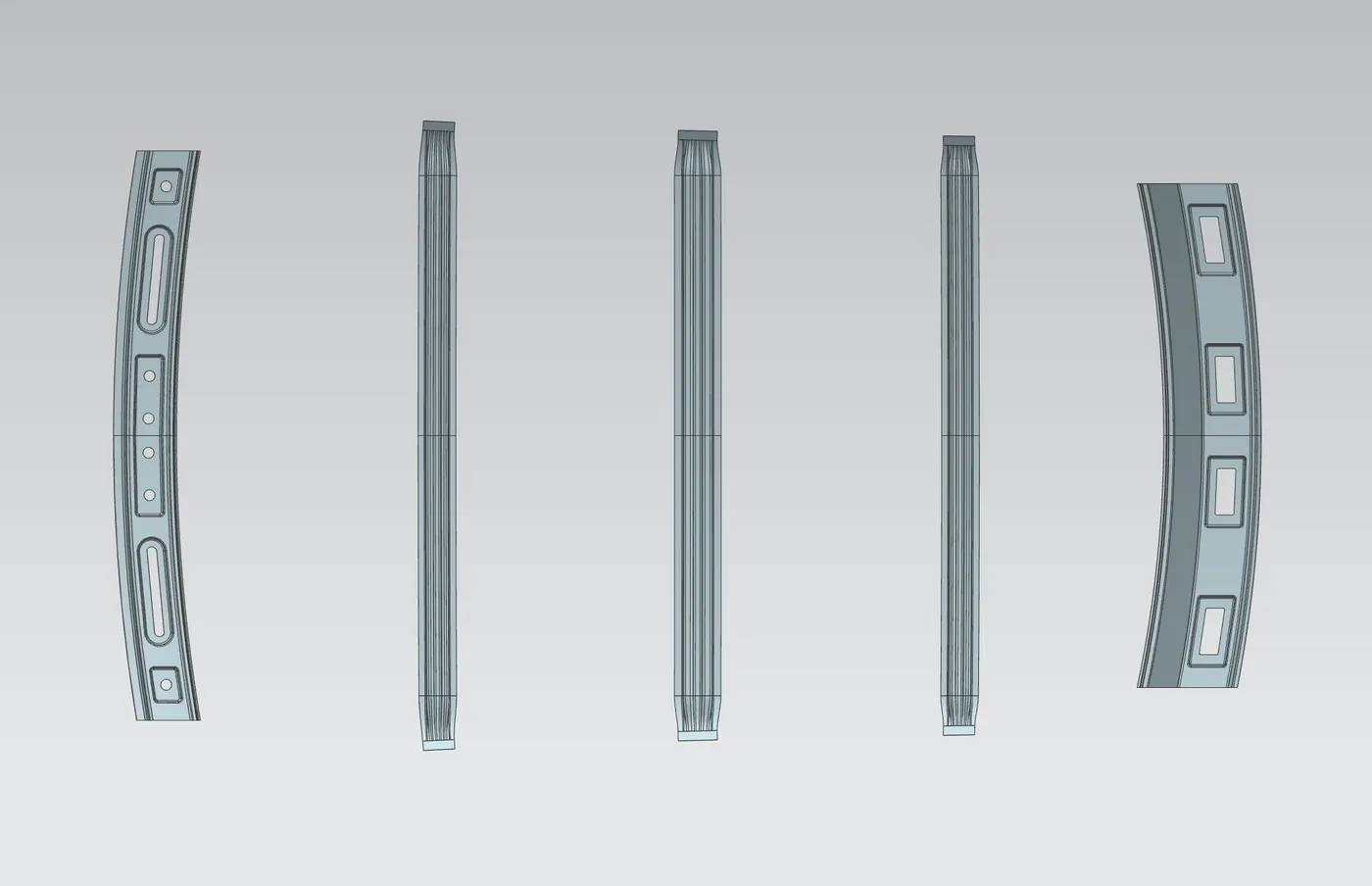
Design and Construction
The structural components that make up a car's front rails are often composed of high-strength steel or other cutting-edge materials. They are a crucial component of the body-in-white of the car, acting as the main load-bearing components for the front portion of the roof. Roof front rails come in a variety of designs and materials depending on the vehicle type and manufacturer, but they all have the following elements in common:
Material: Due to its outstanding tensile strength and capacity to absorb impact forces during collisions, high-strength steel is frequently used to make roof front rails. To minimize weight while preserving strength, producers will occasionally use cutting-edge materials like composites or aluminum.
Shape: Roof front rails are frequently made in the form of boxes or tubes, which add structural strength and aid in the even distribution of stresses in the case of a collision.
Attachment Points: They are firmly fastened to the car's windshield header and A-pillars, assuring structural strength and proper alignment.
Function and Significance
A vehicle's front roof rail performs a number of vital tasks:
Structural Support: Roof front rails are essential for supporting the vehicle's roof, which helps preserve its structural integrity and shape. They are essential for maintaining the safety of the passenger compartment in rollover and side-impact collisions.
Safety Improvement: Roof front rails are made to disperse and absorb impact forces in the event of a collision, reducing the possibility of passenger compartment intrusion. This improves the security of car occupants.
Attachment places: They act as places of attachment for a variety of car parts, such as the windshield, sunroof, roof cross-members, and security features like side curtain airbags.
Weight Distribution: Roof front rails also help distribute the vehicle's weight in a way that improves stability and handling.
Manufacturing and Testing
To guarantee the sturdiness and integrity of roof front rails, manufacturers employ cutting-edge engineering and production procedures. Important procedures and testing consist of:
Material selection: To ensure that the front rail satisfies performance and safety regulations, manufacturers select materials depending on their strength-to-weight ratio.
Precision Manufacturing: The exact dimensions and structural integrity of the front rail are guaranteed by computer-controlled cutting, bending, and welding procedures.
Crash Testing: To evaluate the effectiveness of front roof rails in actual accident scenarios, car manufacturers conduct thorough crash tests, including frontal and side-impact tests.
Quality Control: To guarantee that front roof rails satisfy stringent safety regulations, thorough quality control procedures are in place throughout manufacture.
ROOF_DESIGN
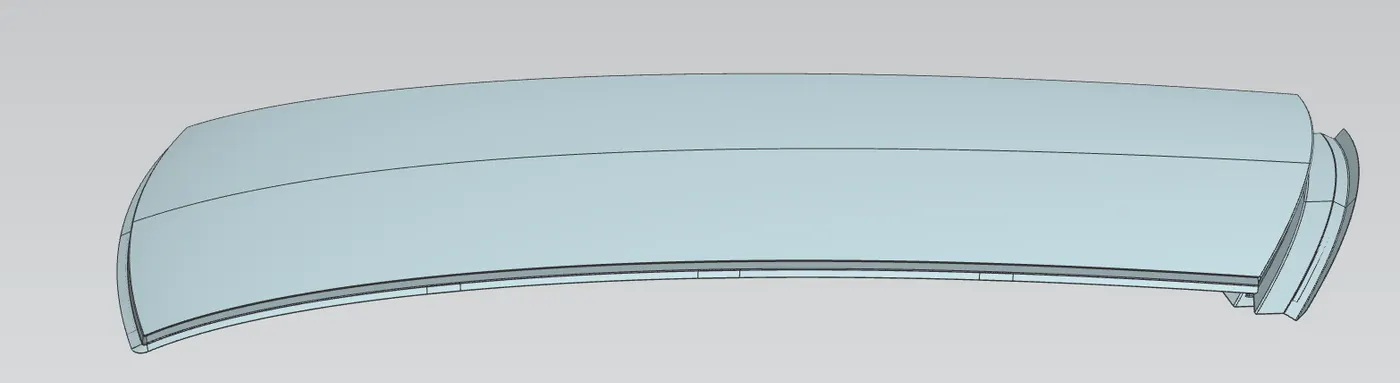
FRONT_ROOF_RAIL
To strengthen that portion of the roof, a front roof rail is installed at the front of the structure. However, while constructing this component, it was important to maintain headroom and visibility. The front roof rail is strengthened with embosses.
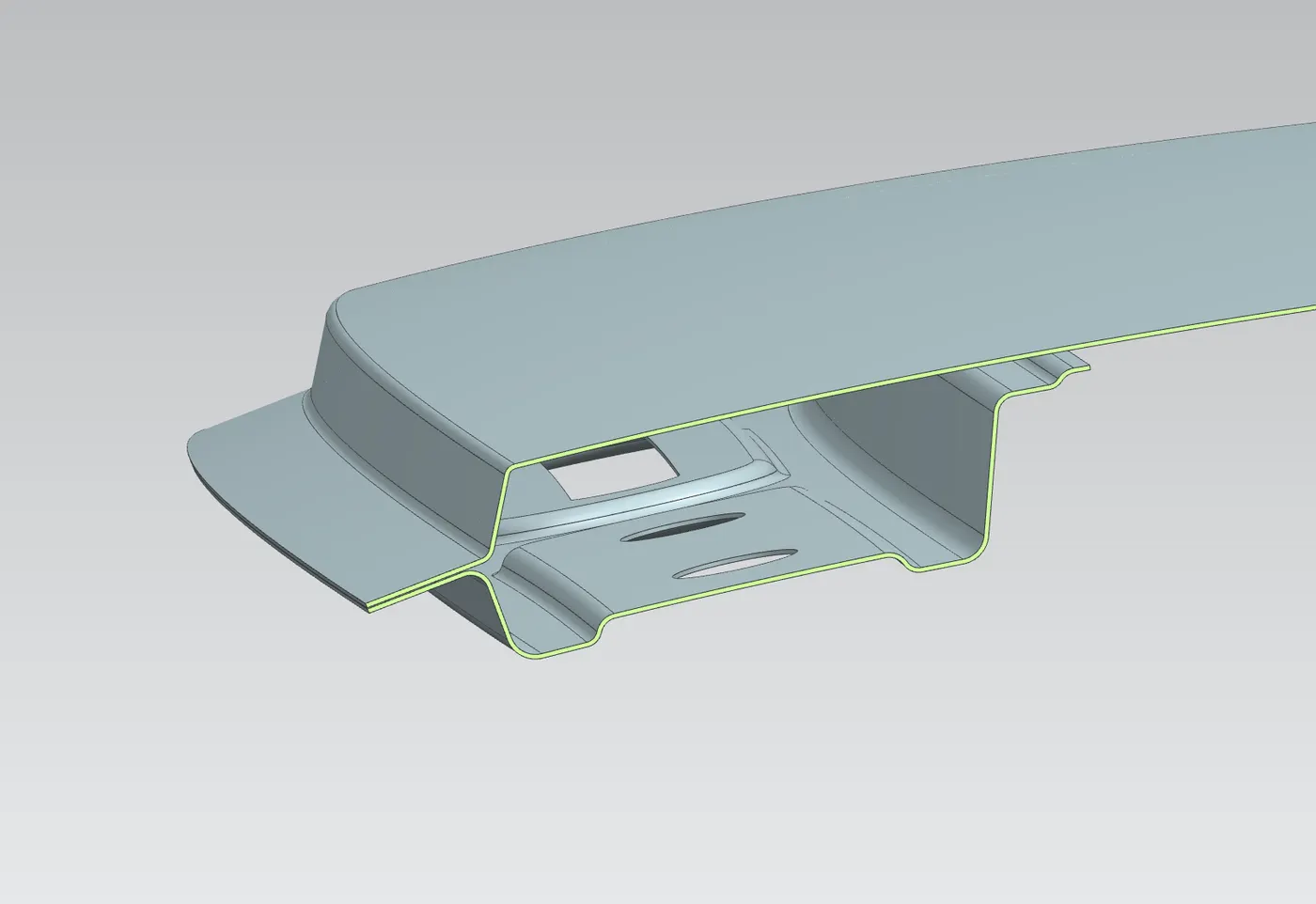
1st_BOW_ROOF
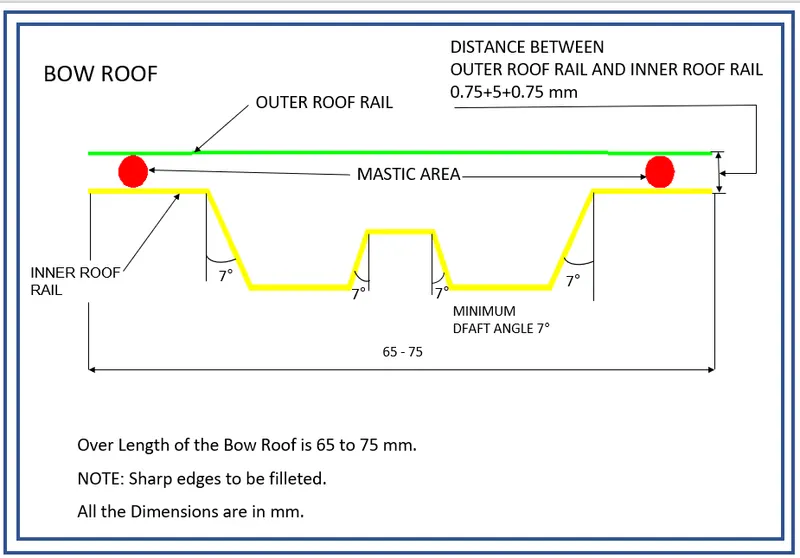
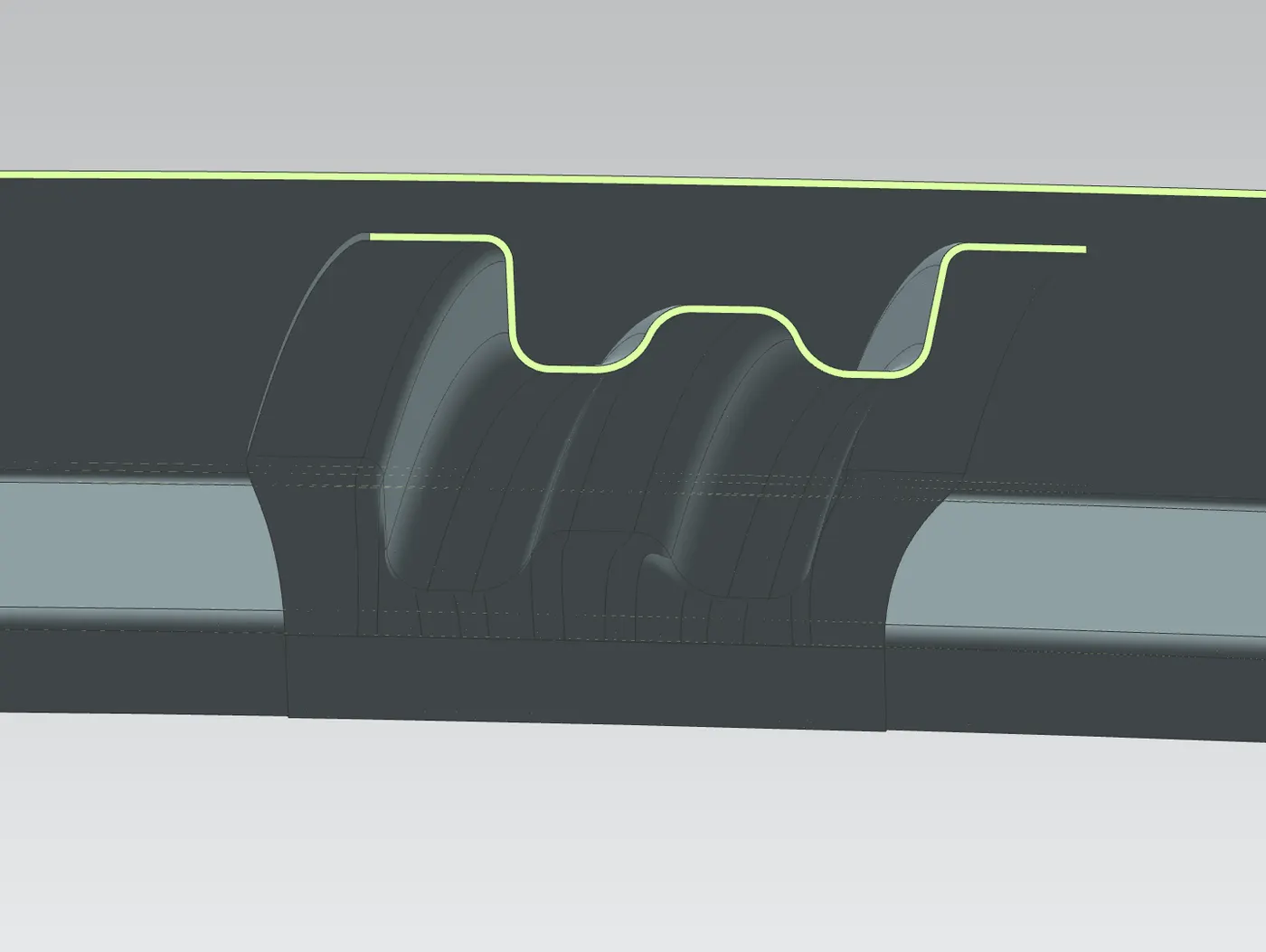
CENTER_BOW_ROOF
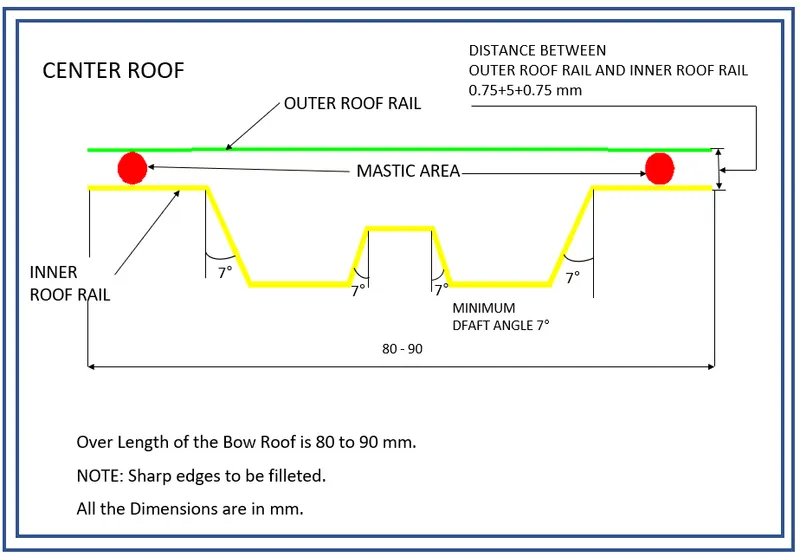
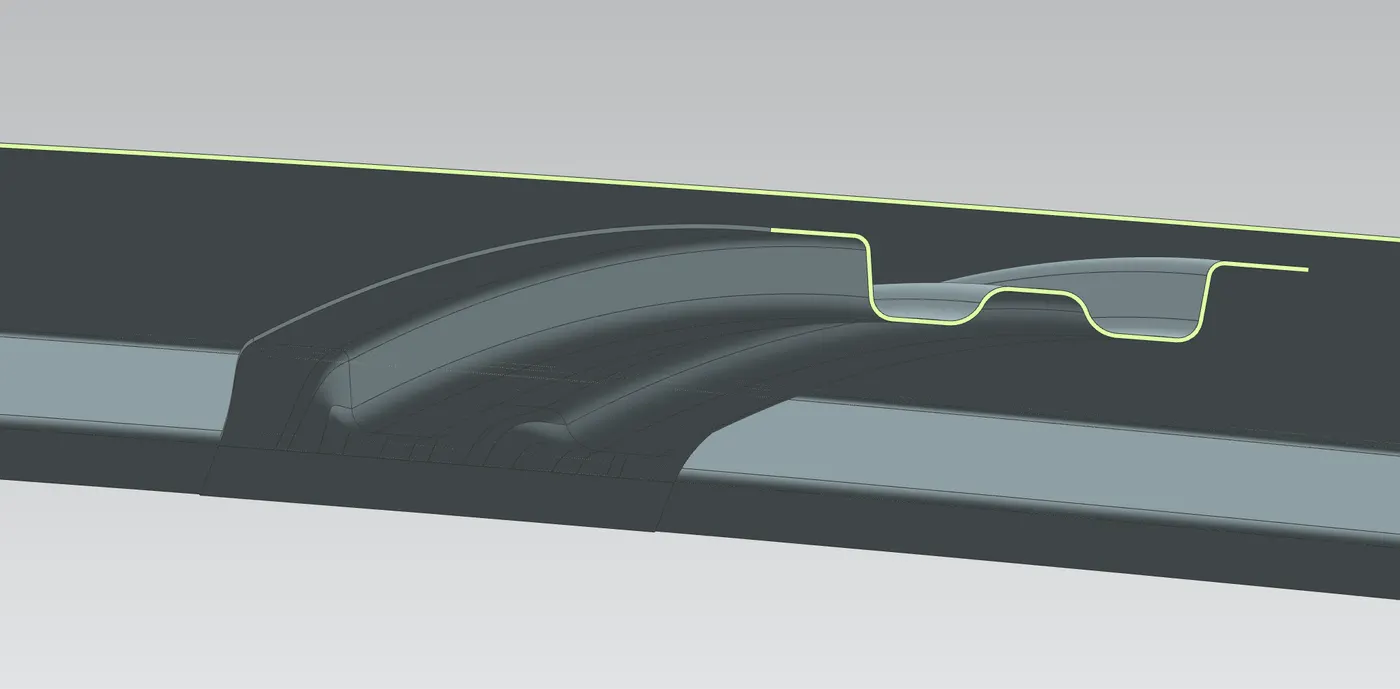
2ND_BOW_ROOF
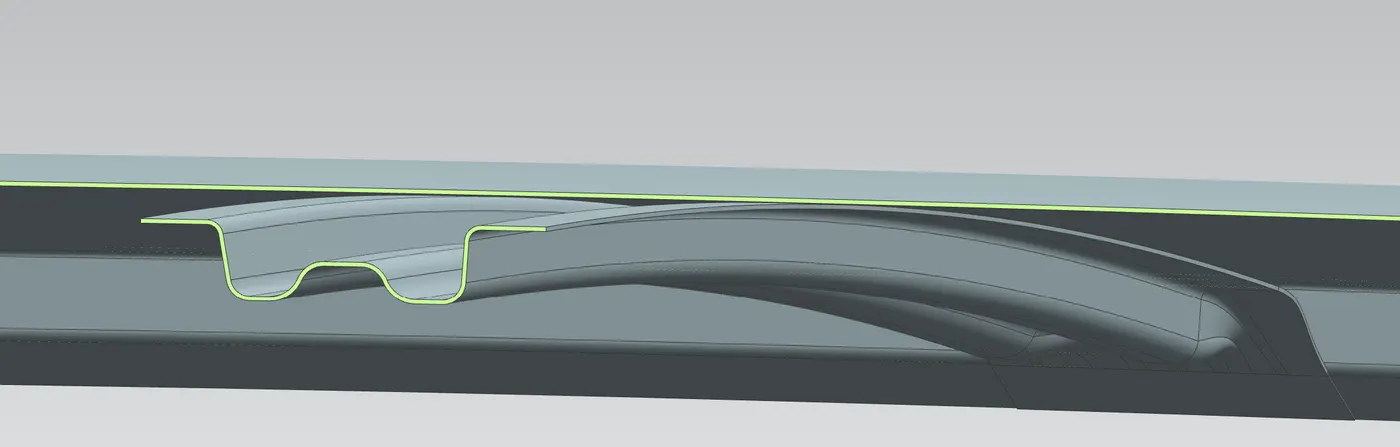
REAR_ROOF_RAIL
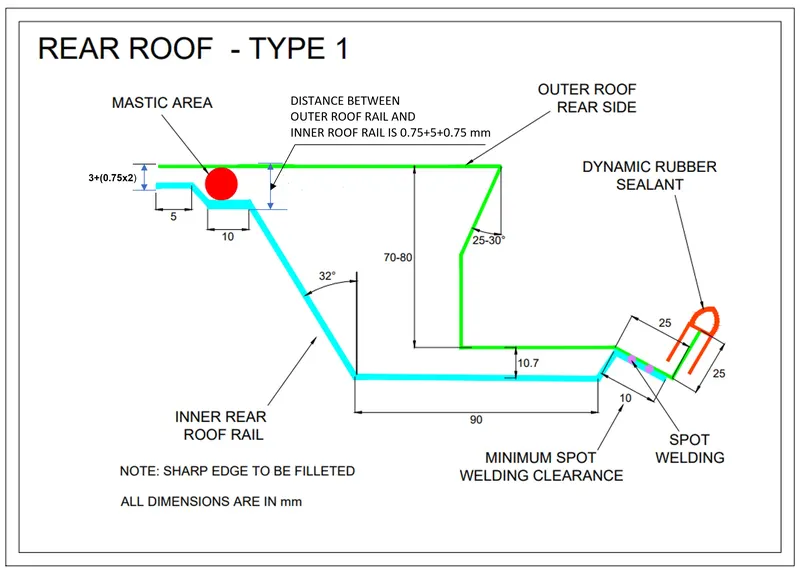
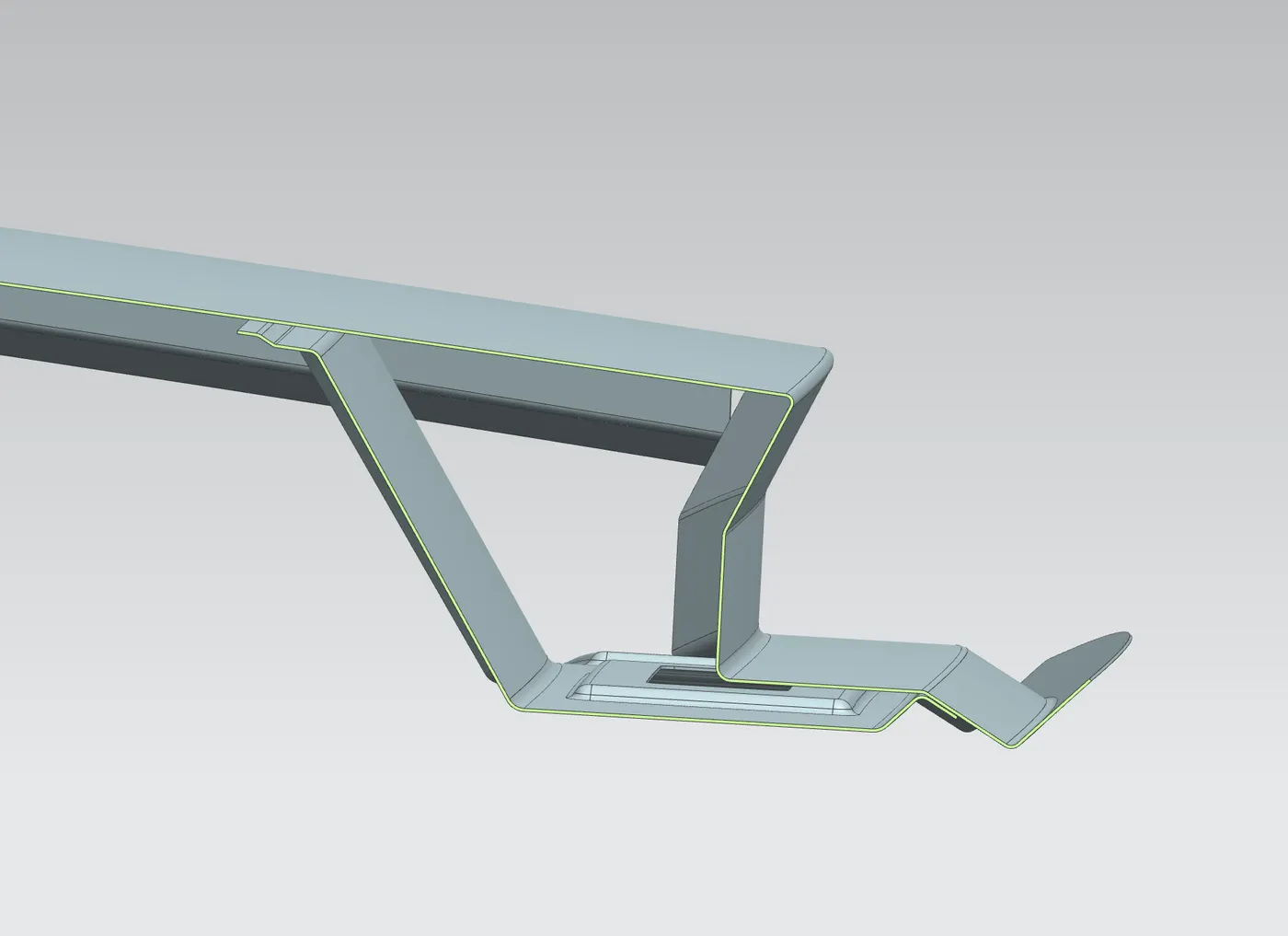
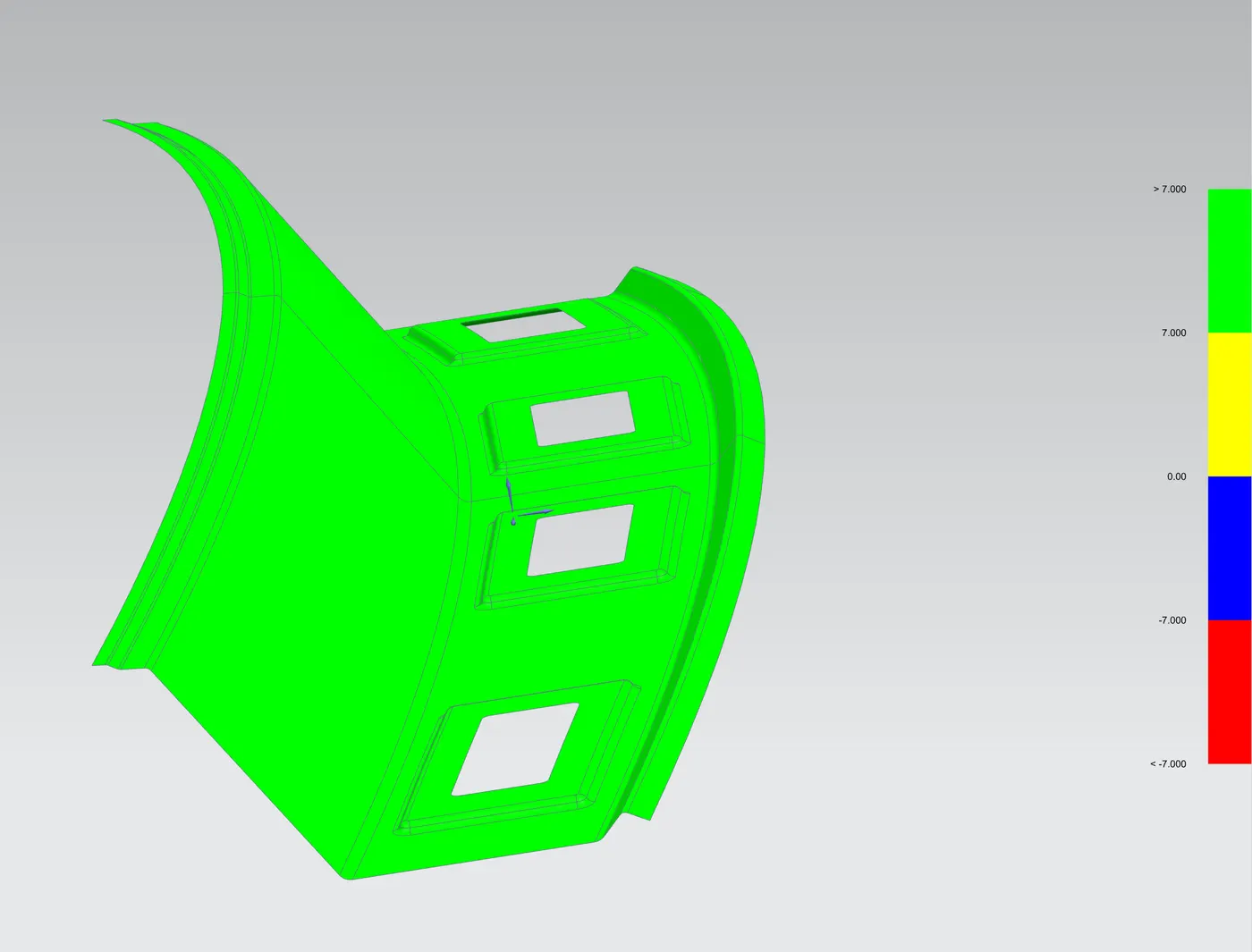
DRAFT ANALYSIS
FRONT_ROOF_RAIL
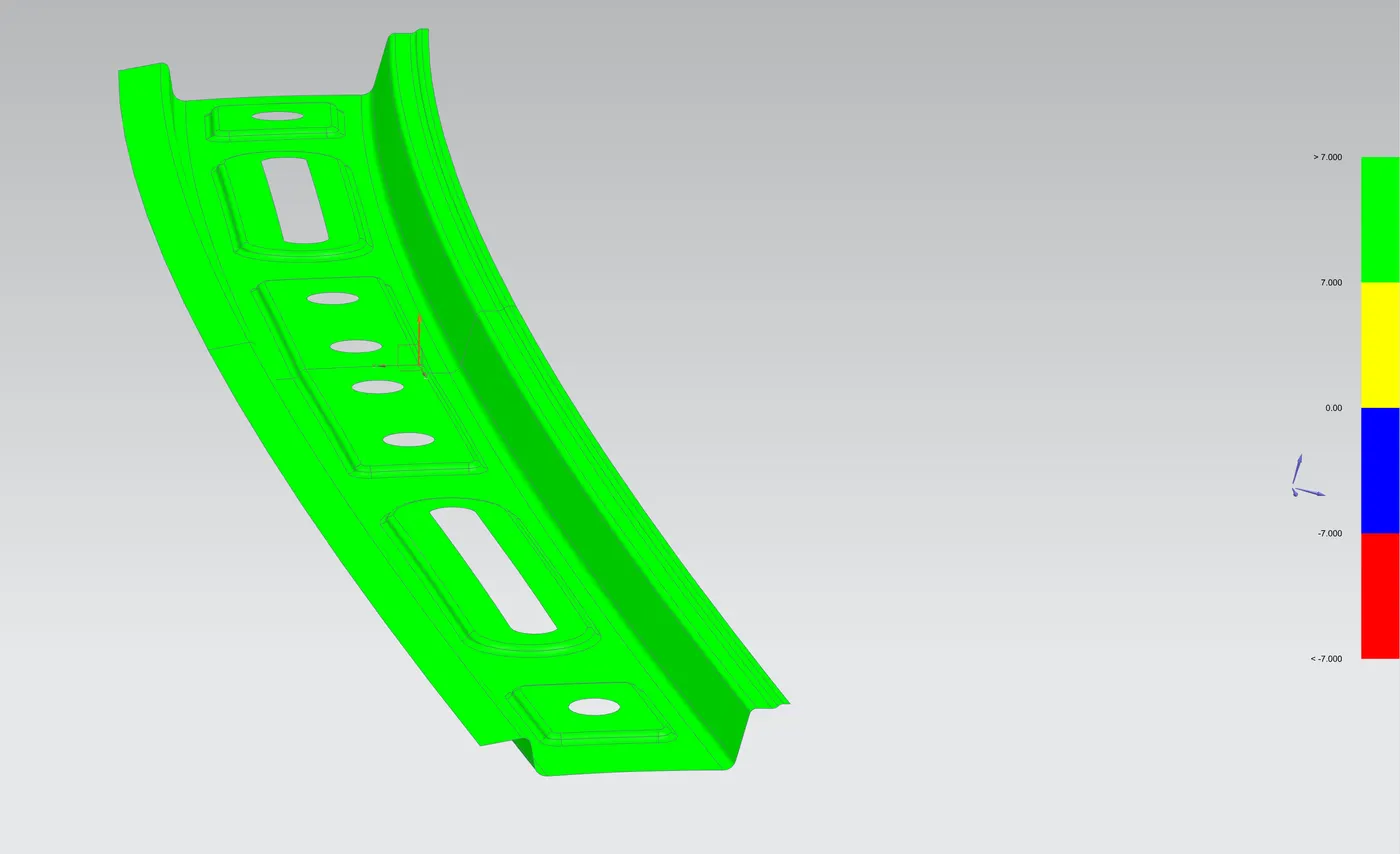
1ST_BOW_ROOF
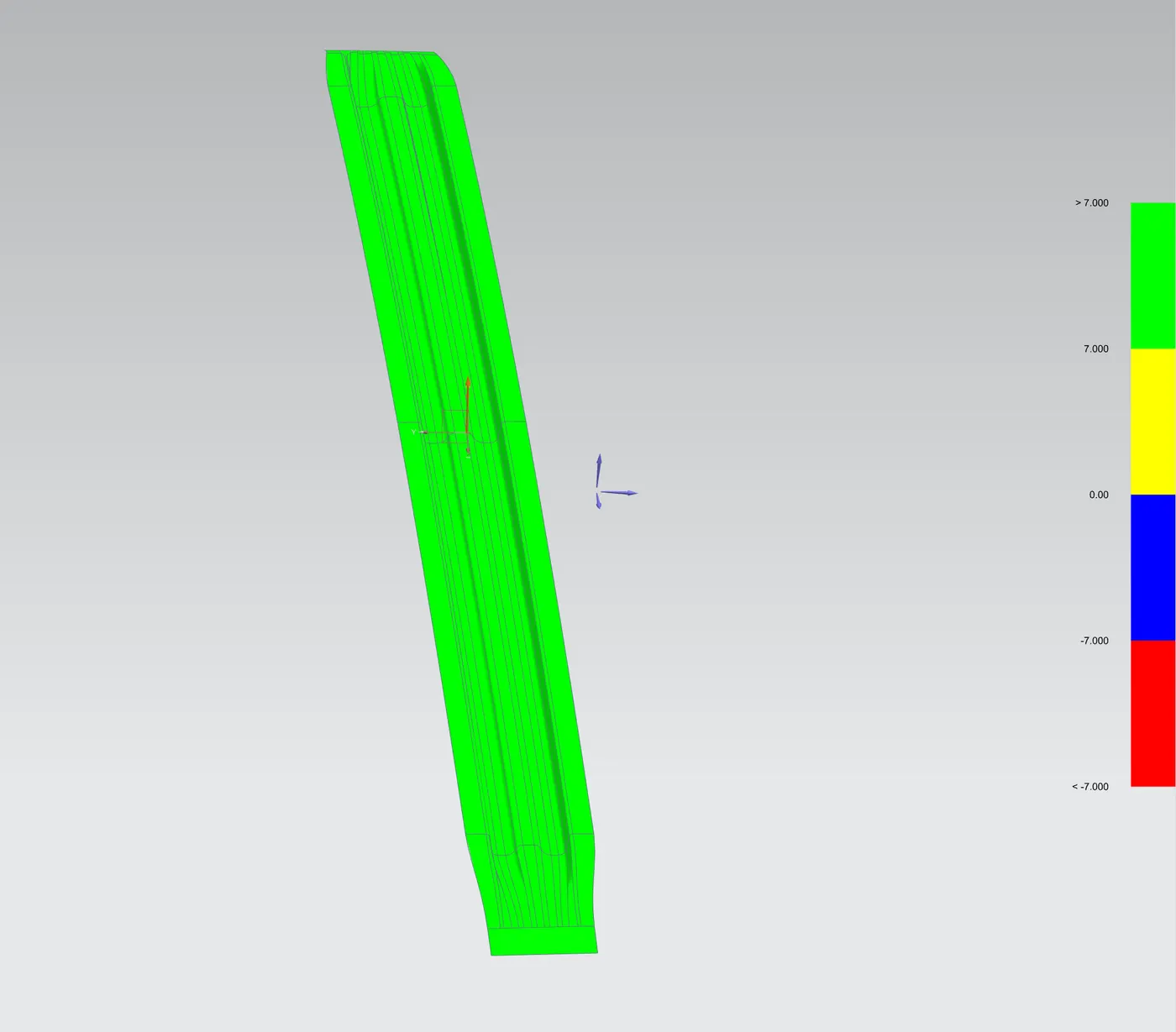
CENTER_BOW_ROOF
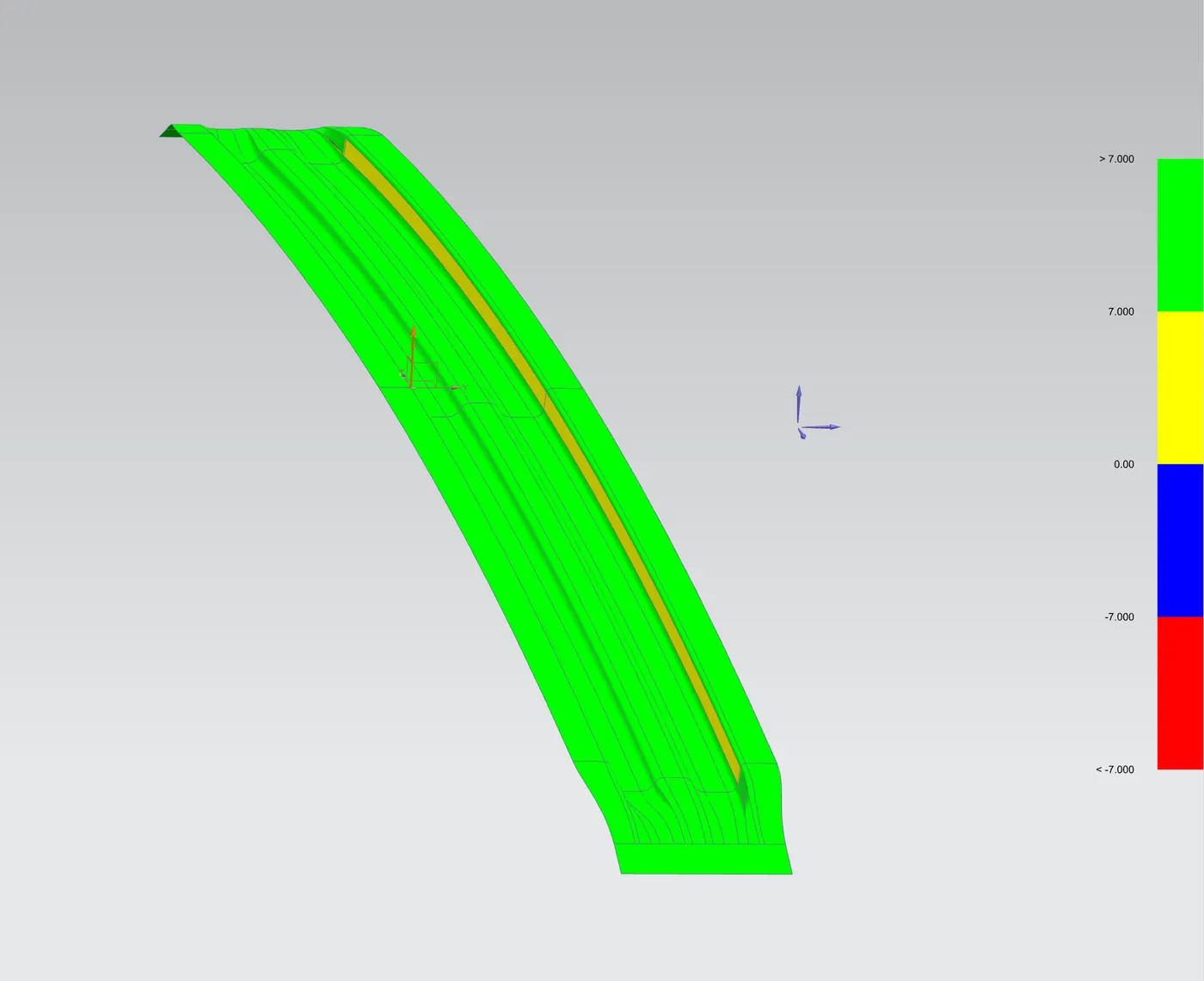
2ND_BOW_ROOF
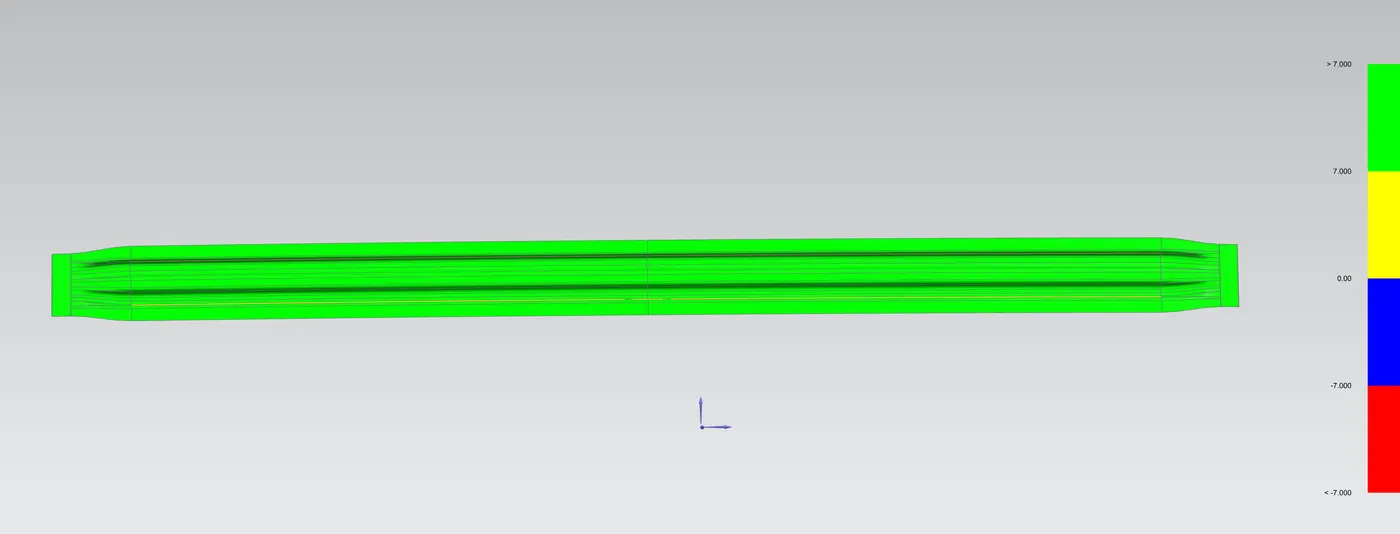
REAR_ROOF_RAIL
ROOF DESIGN CALCULATIONS
Heat Distortion Criteria:
The metal softens and deforms under a certain load at a temperature known as the heat distortion temperature.
With regard to the placement of the reinforcements that add to improved strength, this study examines the roof's capacity to tolerate high temperatures.
Heat distortion from the sun's heat is possible in areas where summer temperatures are high. The risk of the roof of your car hanging is increased in that location due to some thermal expansion that takes place when the sun's radiation hits the shape of your car, and the roof of your car weakens there as a result.
W = [1.73 x 10^(-3) x L] + [1.85 x 10^(-8) x (R^2)/t] + [1.10x10^(-3) x l] - 2.68
Judge mental Condition: OK< 2>
Were,
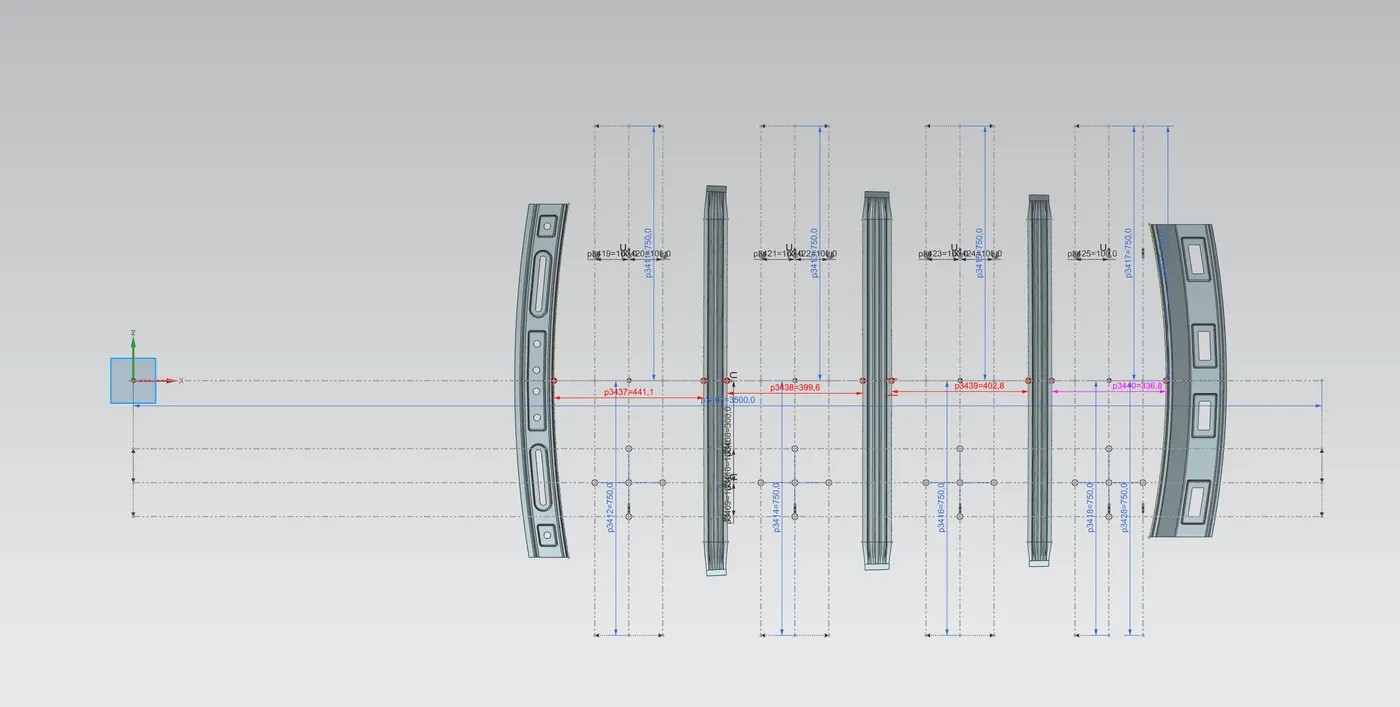
L = Roof Length in X-Direction[mm](Roof dimension in 0-Y)
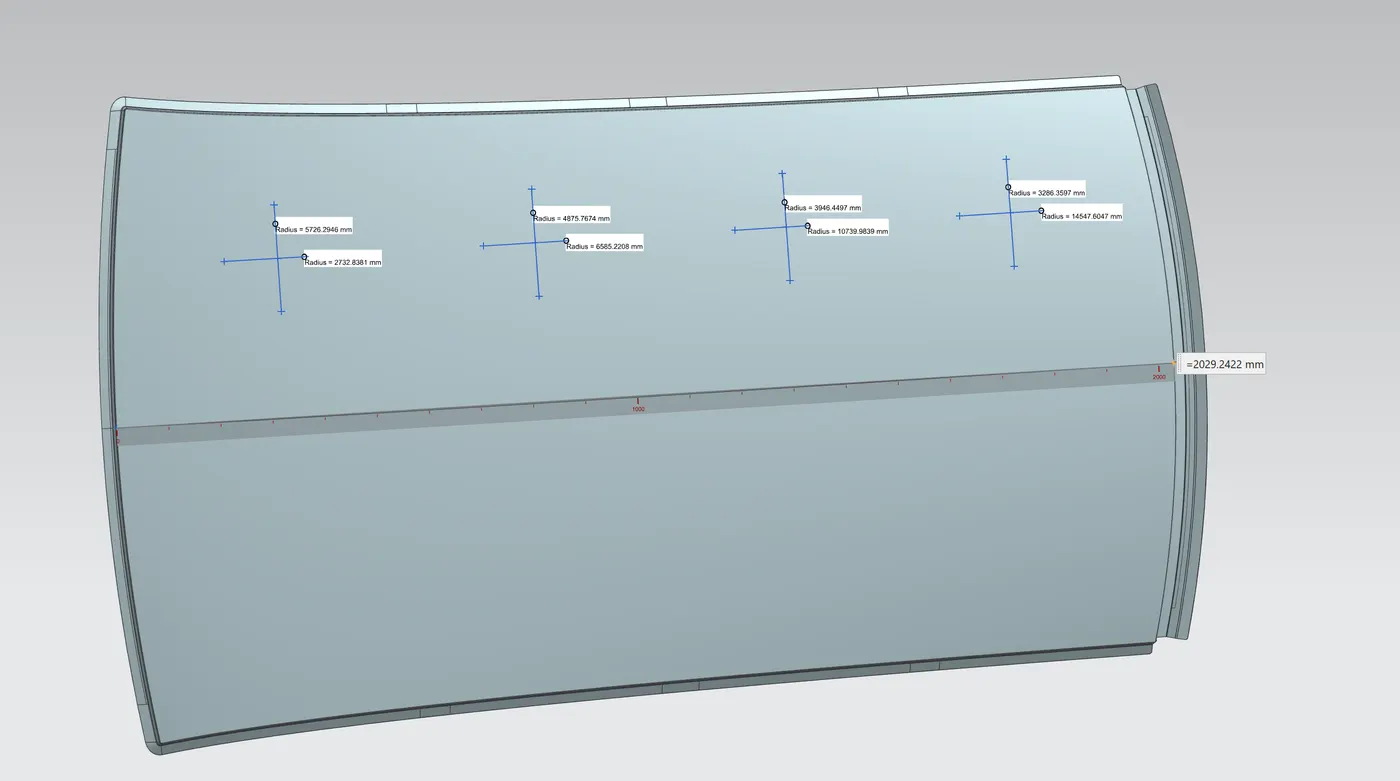
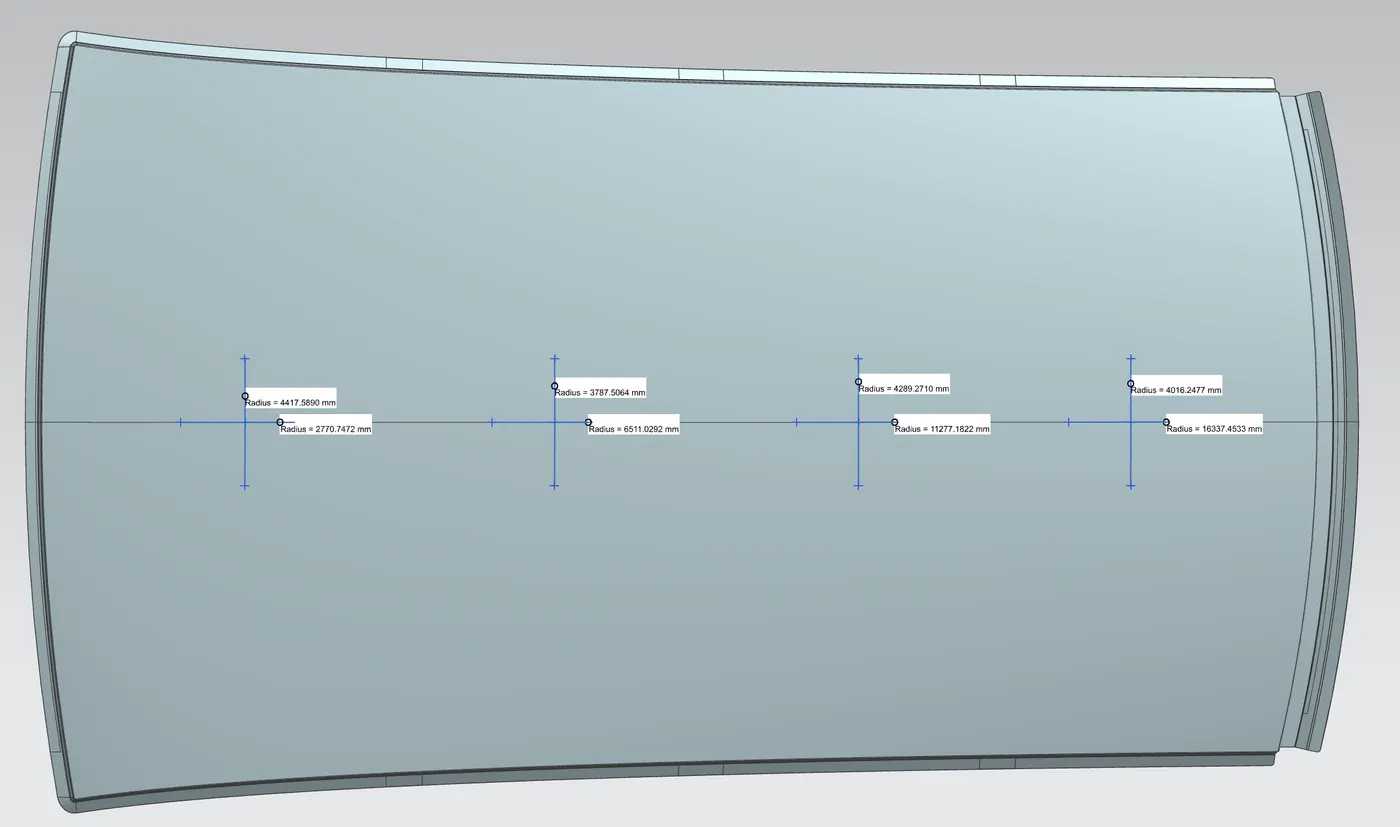
R = Roof curvature
R = 2(Rx*Ry)/(Rx+Ry)
Rx = X curvature
Ry = Y curvature
t = Roof plate thickness [mm]
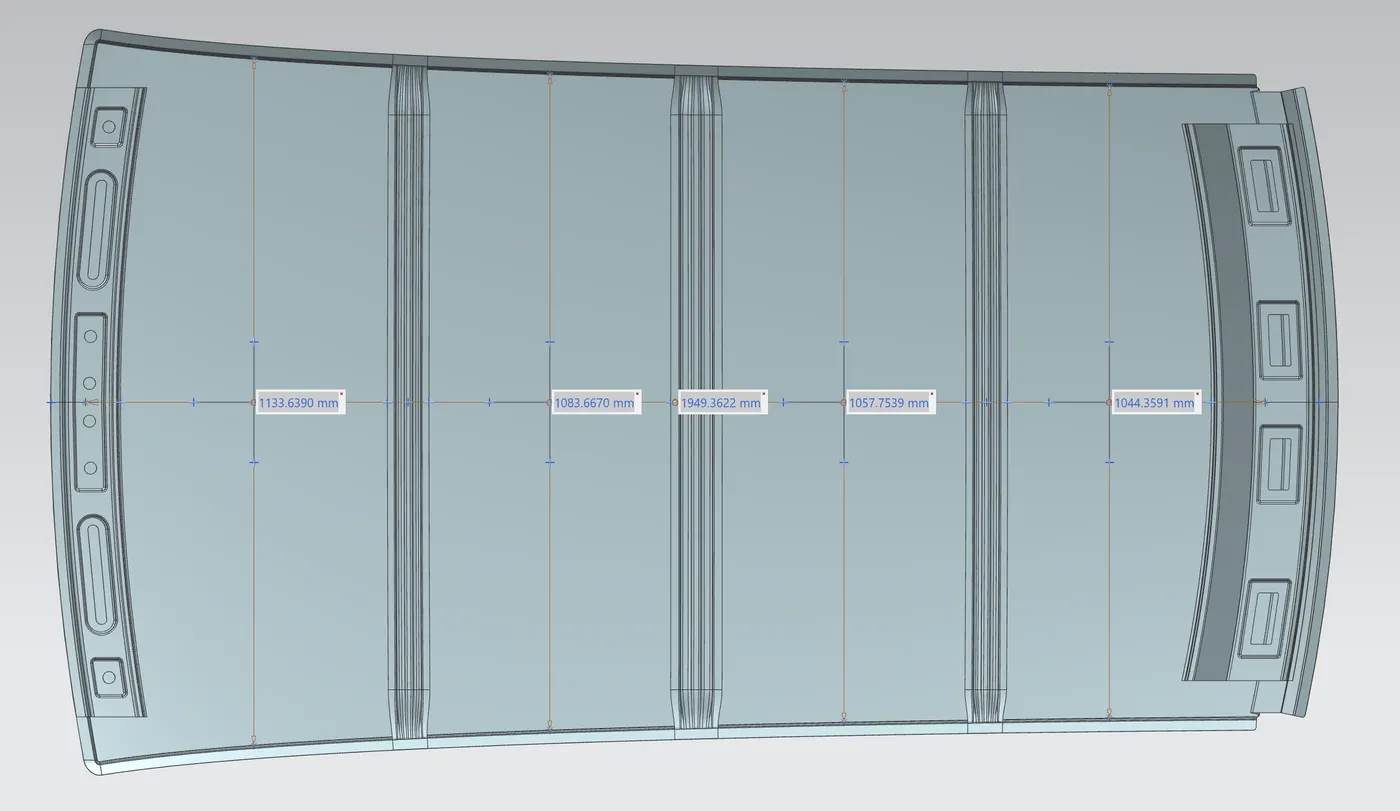
l = Bow Roof Span [mm]

Snow Load Criteria:
When snow loads over the roof during the winter in places with heavy snowfall, a study called Snow Load Criteria is conducted to see how well the building can take the load. This study will examine the roof's potential for irreversible deformation following snow removal. that although it might flex, it needs to be repositioned after being bounced.
These calculations must be run on the roof design to ensure that it has enough stiffness to bear the load caused by snow buildup on the roof.
Qr = [Iy x t2] / [α x s x [(Rx + Ry)/2]2 x 10-8]
Where
α = My x Lx2 x 10-12 , My = Y(Ly-Y)
Judgement condition = Qr ≥ 3.1
t = Roof plate thickness [mm]
Ly = Distance between the front and rear roof Rails on the Vehicle along with 0Y[mm]
Length of Roof panel with the center point between Roof rail Front /Rear as the front and rear reference point.
Lx = Distance between the Left and Right end of the roof on the Roof BOW [mm]
Width of the roof panel exposed on the surface.
Y = Distance front Front Roof Rail to Roof BOW[mm]
s = Distance for which Roof BOW bears divided load [mm]
s = L1/2 + L2/2
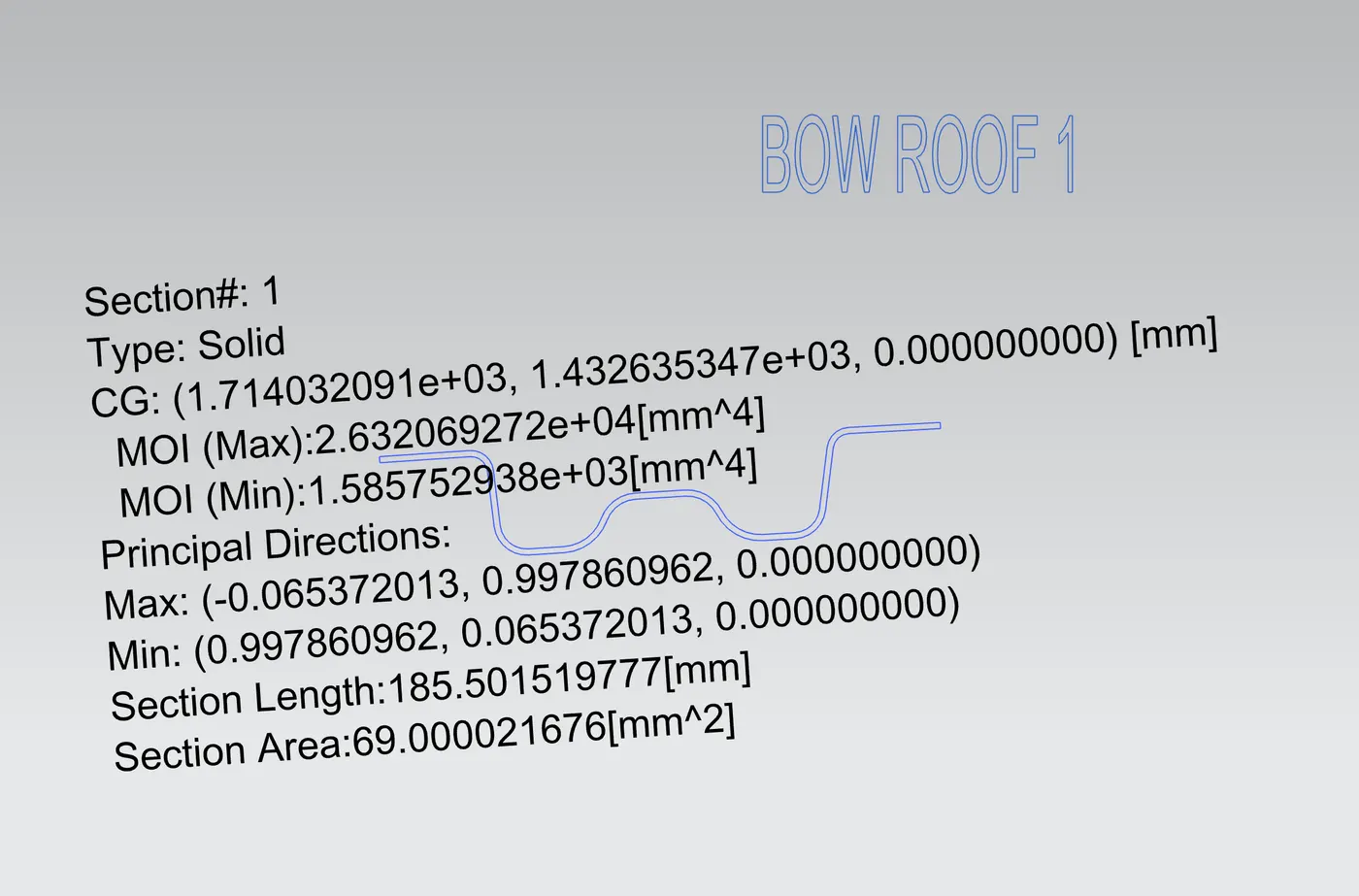
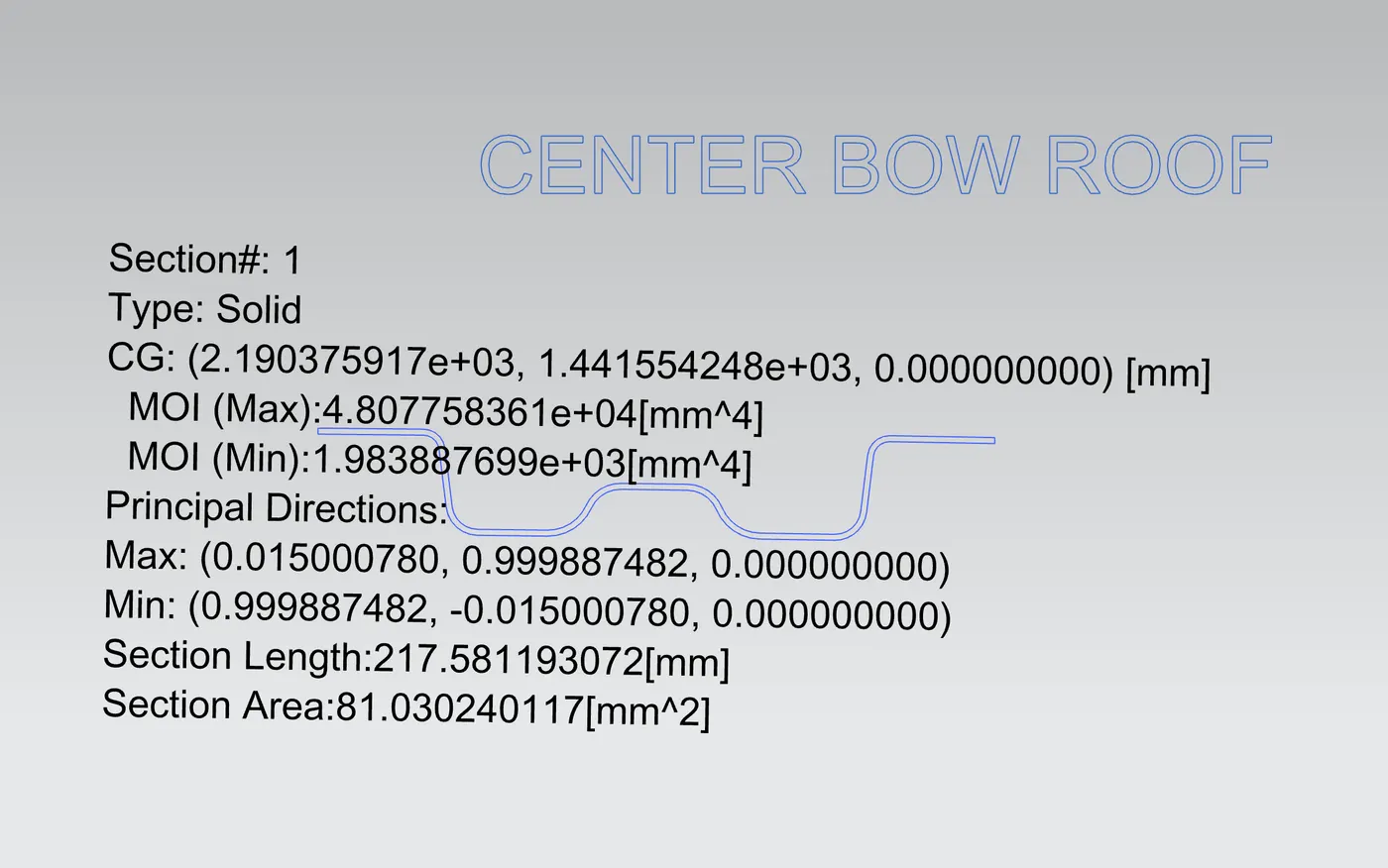
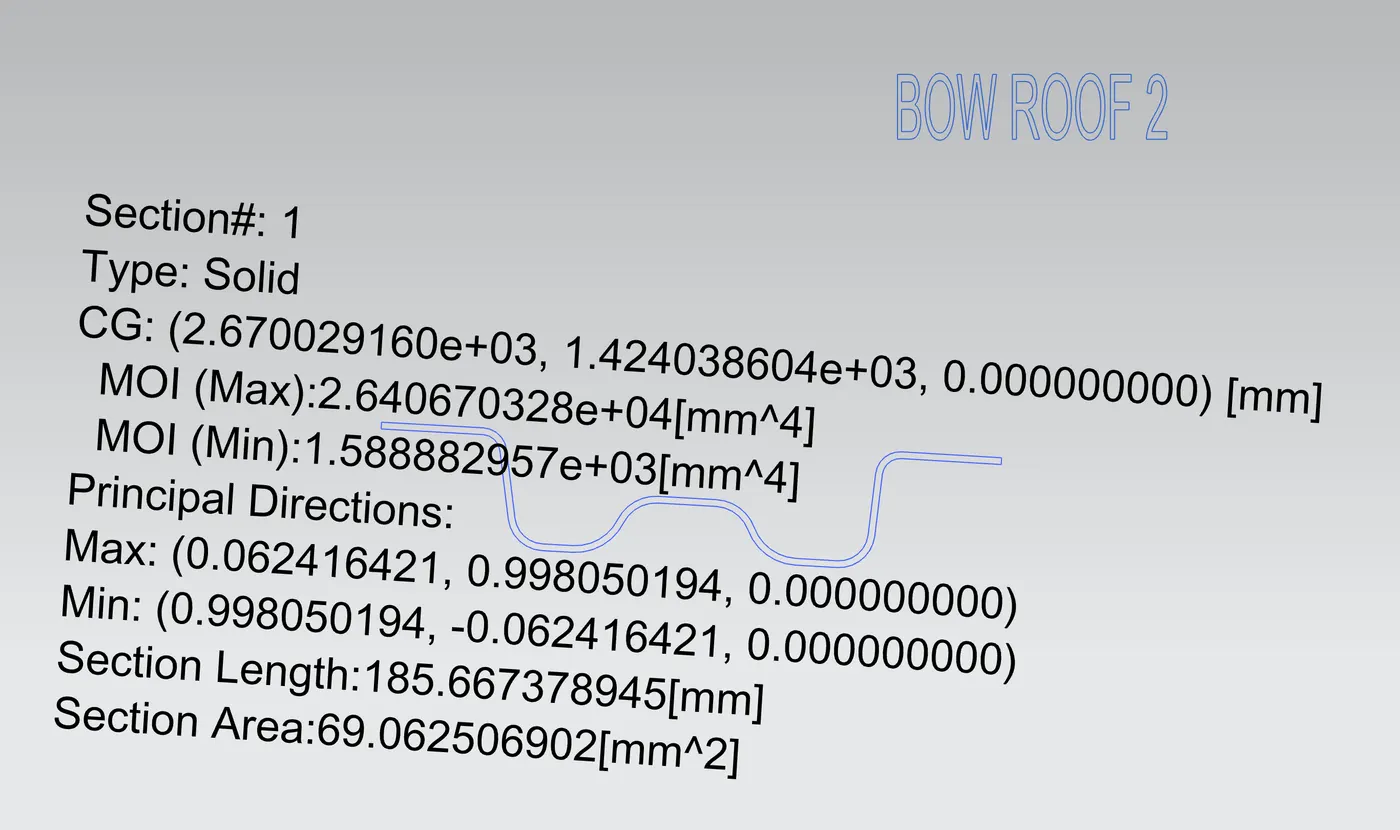
Iy = Geometrical moment of inertia of Roof BOW (Y cross-section )[mm4]
Rx = Lateral direction curvature radius of roof panel Y cross-section on Roof BOW [mm]
Roof panel curvature Radius of the Length Lx in Front view
Ry = Longitudinal Direction curvature radius of the Roof panel X cross-section on Roof BOW [mm]
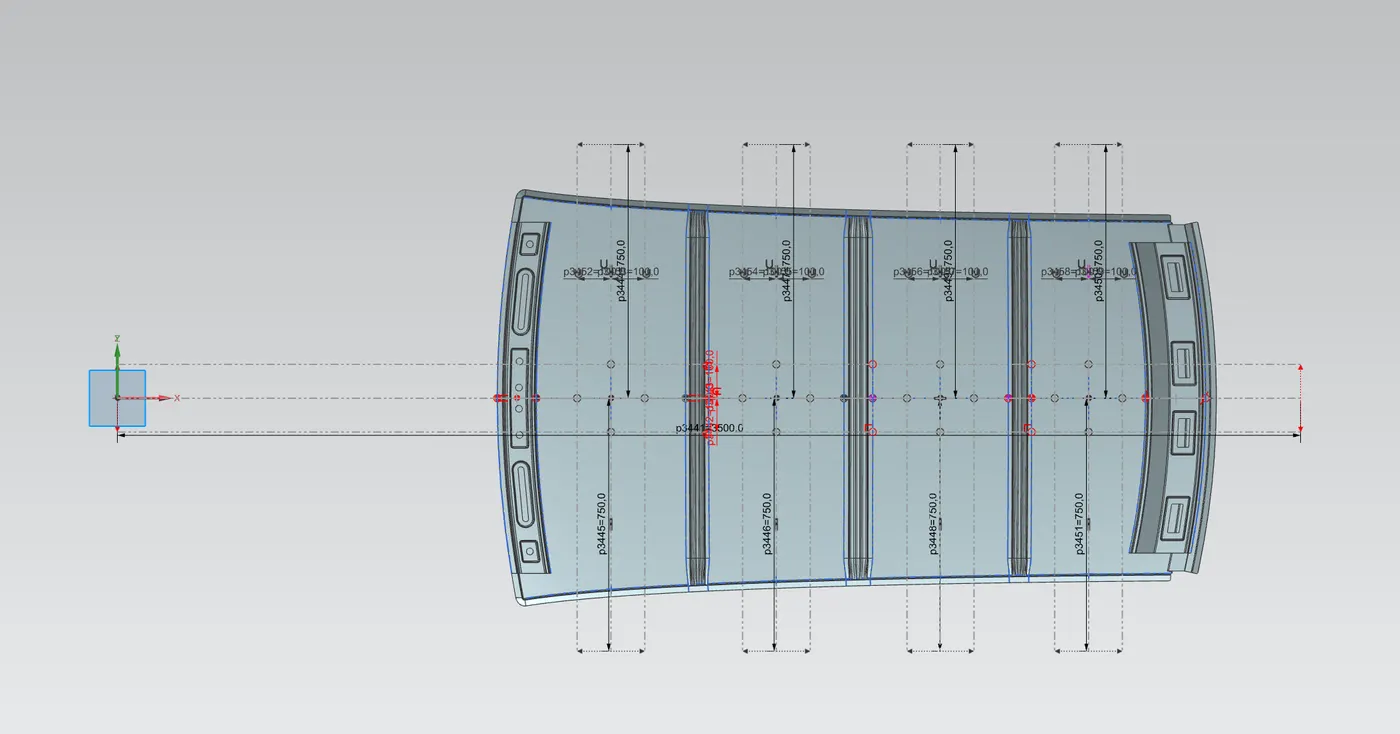
SECTION INERTIA

Conclusion:
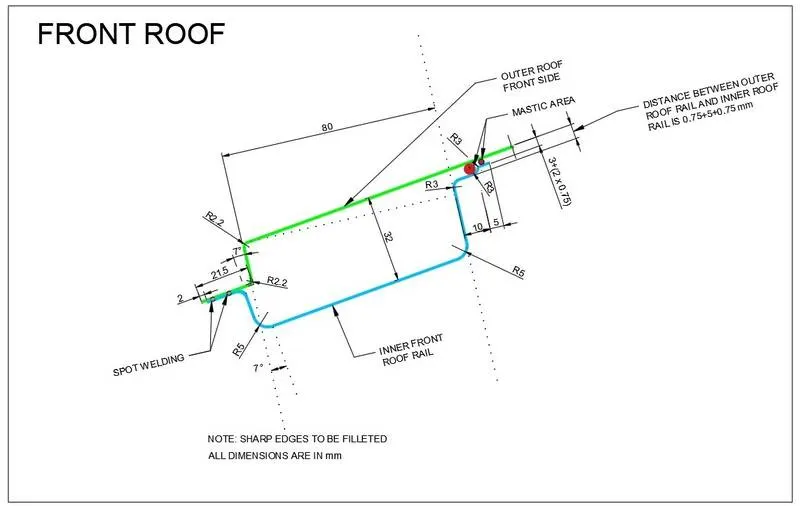
Bow roofs, front roof rails, center roof rails, rear roof rails, and ditch areas were designed as roof reinforcements according to the master sections.
analyzed each draft for every reinforcement
section inertia analysis was carried out
Curvature analysis was performed, and heat distortion and snow load criteria were calculated.
I learned and created roof reinforcements by carrying out all of these actions.