Fender Design
Fender
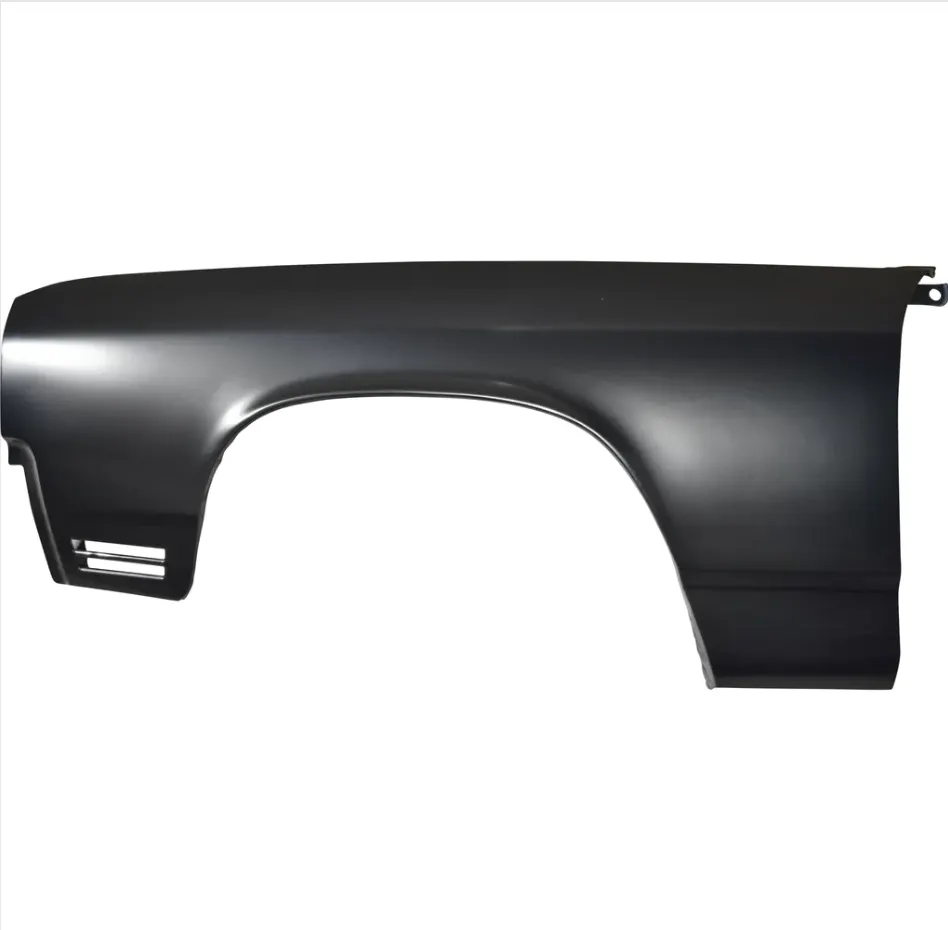
Car fenders, which act as protective panels above the wheels, are an essential component of an automobile's body structure.
They are essential for protecting the exterior of the car from road grime, mud, water, and other corrosive substances.
They also give an extra layer of protection in case of an accident. In order to improve automotive safety, this research examines the design, usage, and significance of car fenders.
Car Fender Design: Aesthetics and utility are both taken into consideration while designing car fenders. Usually, they are constructed out of plastic composites, sheet metal, or a combination of the two.
To provide optimum performance, the design process takes into account elements including aerodynamics, aesthetics, and structural integrity
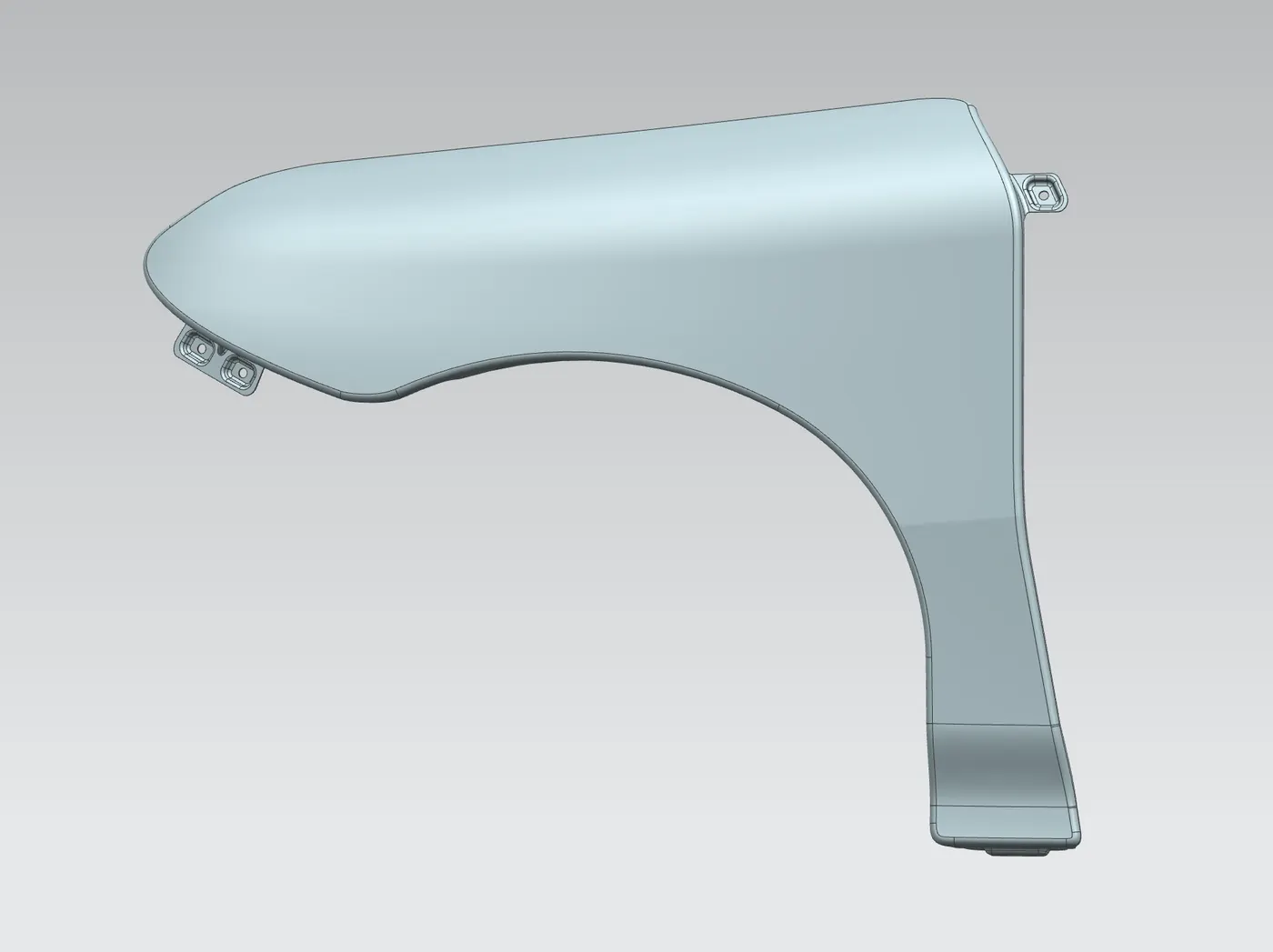
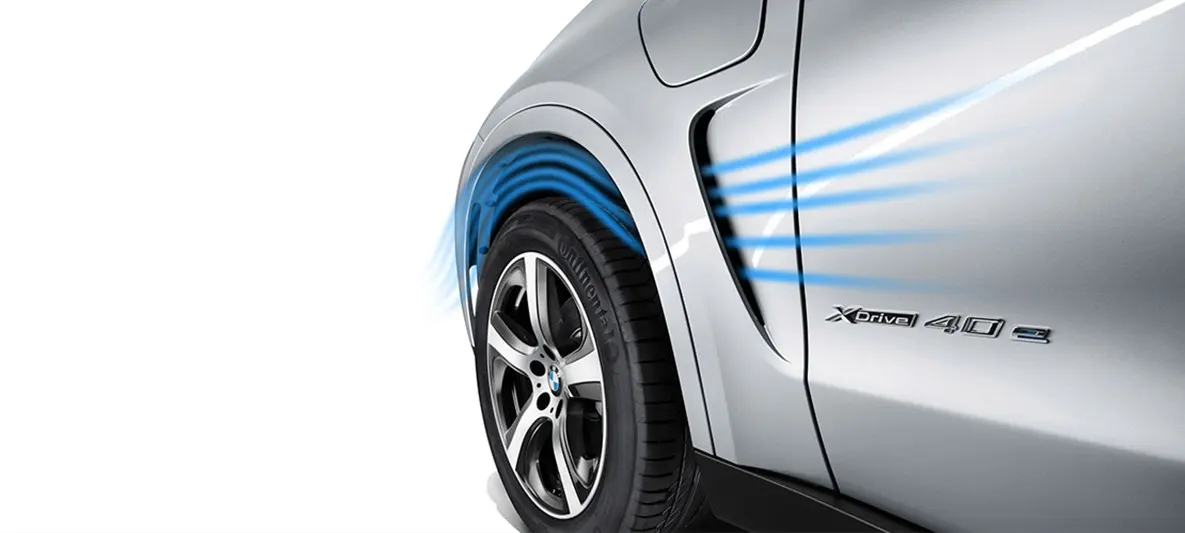
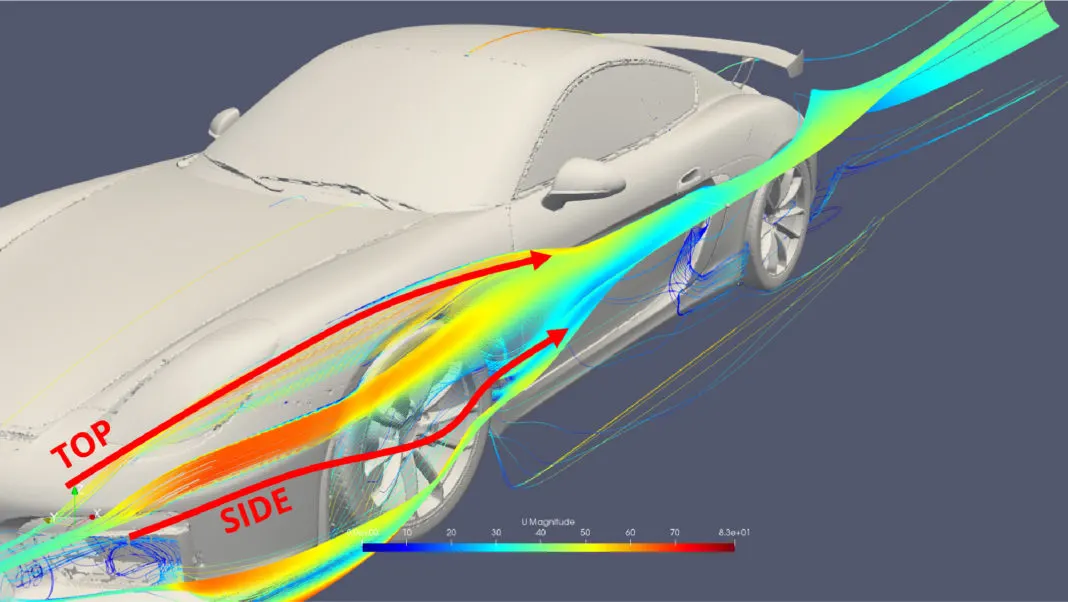
Aerodynamics: Fenders are designed to reduce air resistance and increase the vehicle's aerodynamic efficiency, which improves fuel economy and overall performance.
Styling: Car fenders are made to blend in with the vehicle's general design, adding to its appeal and brand recognition.

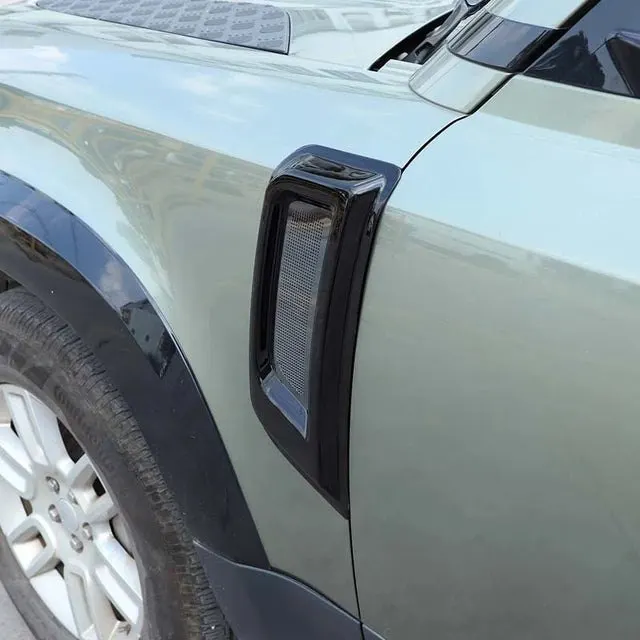
Structural Integrity: The fender design incorporates reinforcing spots and shapes that give it structural strength to withstand collisions and safeguard the car's parts.
Types of Car Fenders: There are various kinds of car fenders regularly used in the vehicle industry:
Regular Fenders: Those are the most common fenders found on regular passenger vehicles. They cover the wheel wells and shield the sides of the car from small collisions and road debris.

Widebody Fenders: Widebody fenders are broader and more noticeable than regular fenders, and they are frequently found on high-performance and sports cars.
They accommodate larger wheels and tires and create a more aggressive appearance.

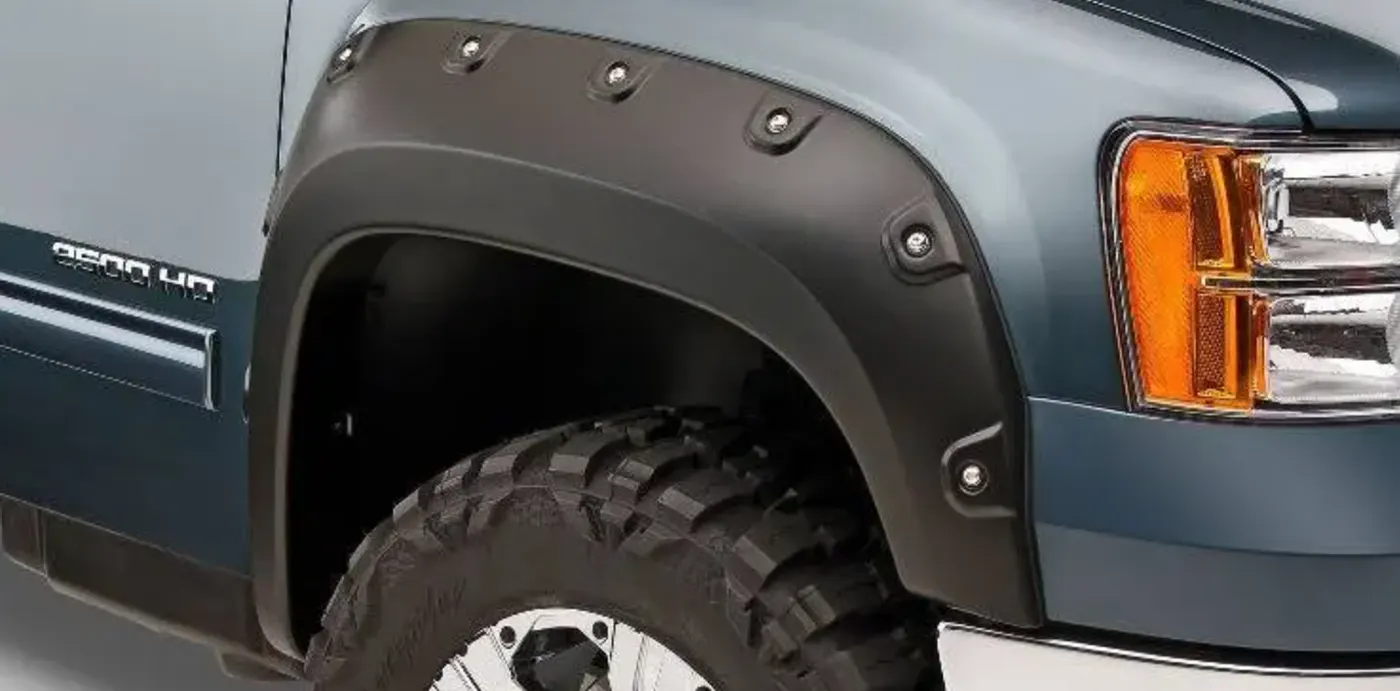
Flare Fenders: Extending past the original bodyline, flare fenders give the car a tough, off-road-ready appearance. They are common in trucks and SUVs built for off-road driving.
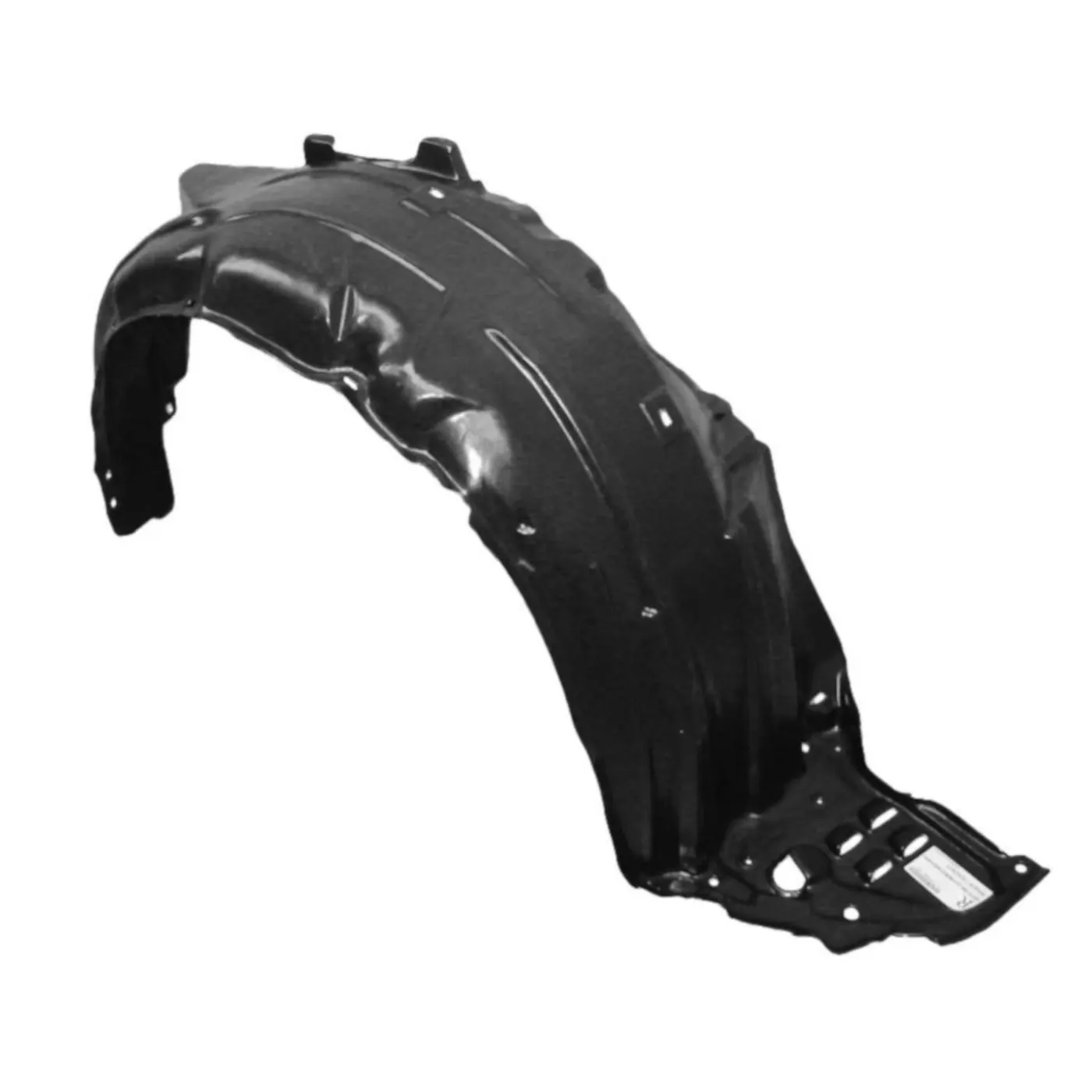
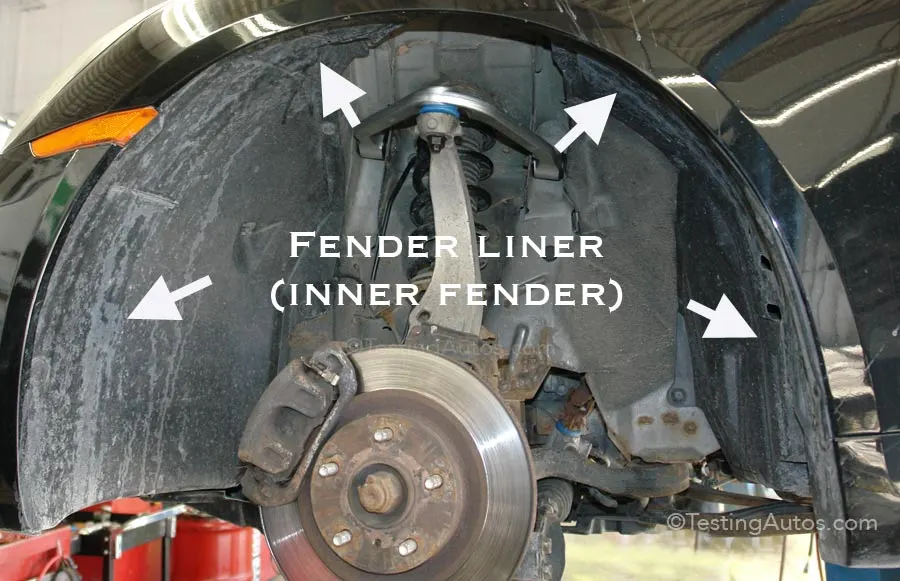
Fender Liners: Inside the fenders are safety panels called fender liners that protect the engine compartment and other important parts from dirt, moisture, and debris.
Importance in Automotive Safety:
Car fenders are important for improving vehicular safety in a number of ways, including:
Impact Absorption: automobile fenders absorb and distribute the force of an impact during a low-speed collision or small accident, protecting the body of the automobile and limiting damage to other parts.
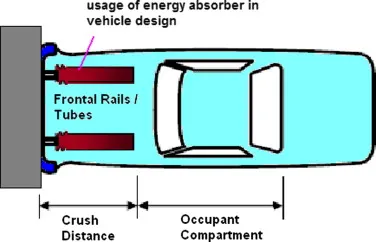
Pedestrian Safety: Fenders are made with the safety of pedestrians in mind, reducing the risk of injuries in the unfortunate case of a pedestrian impact.

Protection from Road Debris: Fenders protect the vehicle's body and windshield from damage caused by road debris by acting as a barrier to rocks, gravel, and other objects thrown up by rotating wheels.
Corrosion Prevention: Fenders reduce the risk of corrosion and rust by shielding exposed sections of the vehicle's body from moisture and road salt.
cheaper Insurance Costs: Well-designed fenders can reduce repair costs in the event of small collisions, which may result in cheaper insurance premiums.
Drip mounting:- "Drip" mounting, also known as "drip rail" mounting or "channel" mounting,
The fender is specially made for the drip mounting system with a lip or flange that fits into the drip rail. This lip creates a secure and weather-resistant attachment by conforming to the shape of the drip rail channel.
The flange of the fender must be in line with the matching drip rail on the car's body in order to be mounted using the drip technique.
The flange is then cautiously positioned and forced into the drip rail channel until it firmly locks in place.
The fenders flow into the body of the vehicle without any obvious bolts or screws, giving the drip mounting system a neat and integrated appearance.
It also contributes to the car's increased watertightness, preventing water from leaking into undesirable places.
Drip-mounted fenders, however, might be trickier to put on and take off than bolt-on fenders. Professional installation could be necessary due to the precise alignment needed for a suitable fit.
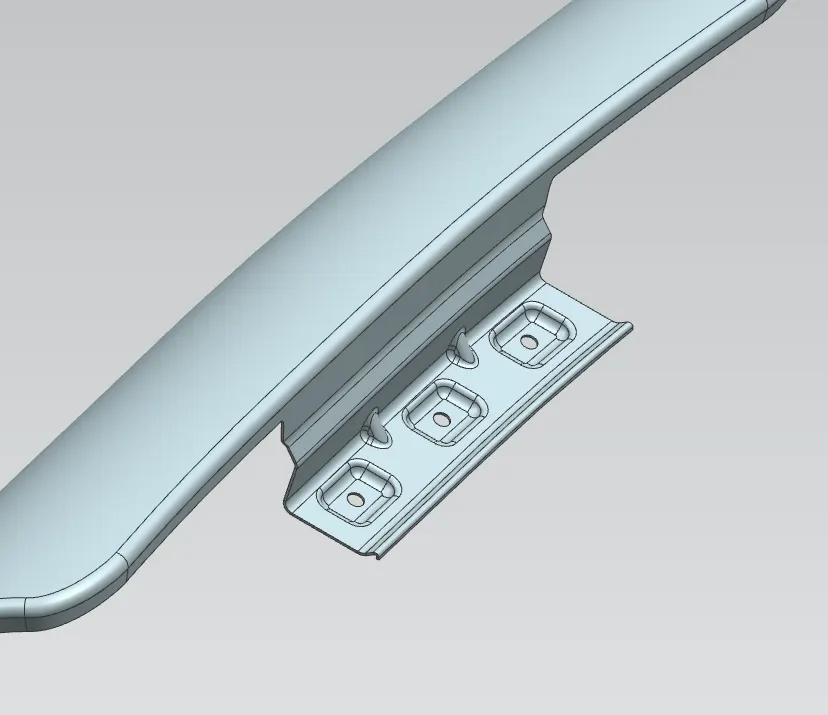
In close proximity to the car's engine compartment lies this mounting place. It is situated between the Cowl/A-Pillar and the Front Side/Headlamp at a distance of 200 to 300 mm, and at a distance of 150 mm.
Between the drop area within the fender and the engine compartment, a space of at least 10 mm must be maintained. It should not exceed 40mm in height or length combined.
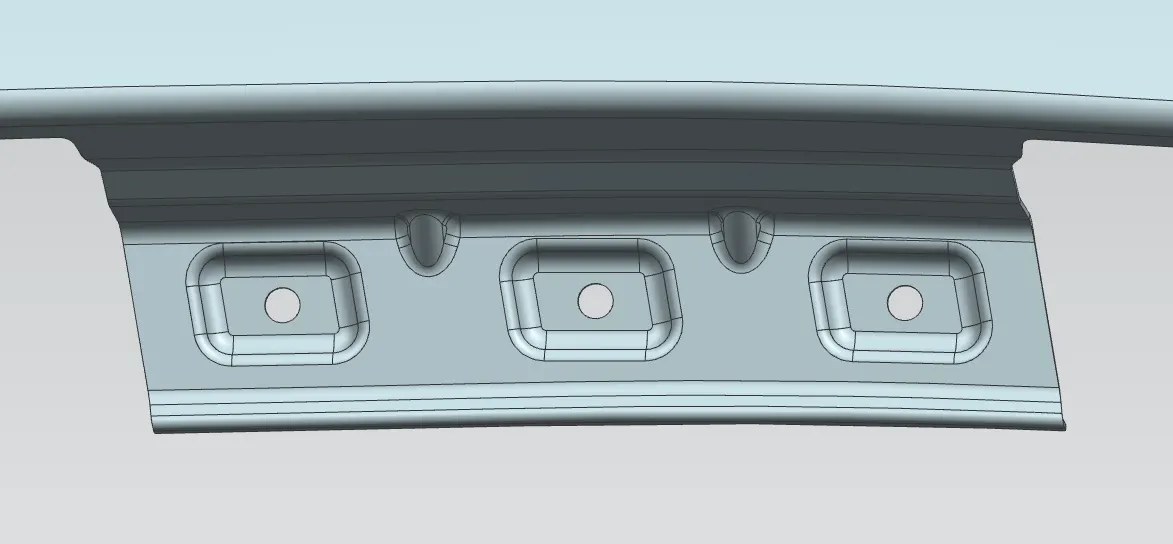
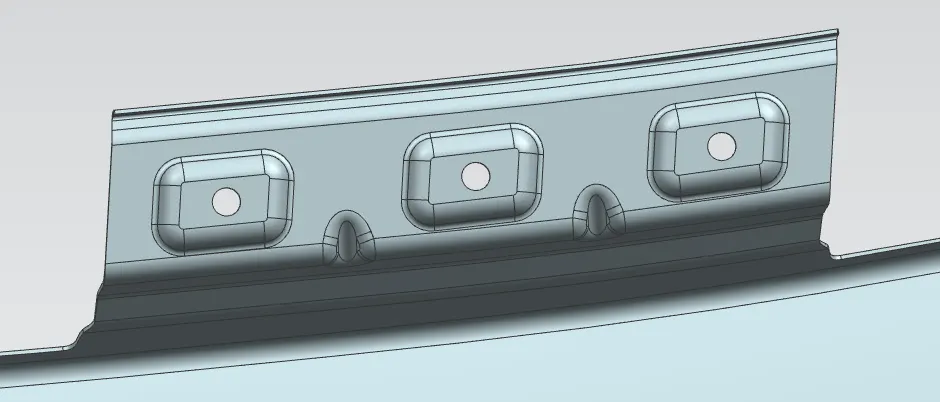
In order to avoid any issues with the headlight mounting location, the drip area is 150 mm away from the front.
The drip area is 200 mm apart when viewed from the rear.
Maintaining a distance of at least 10 mm from the engine compartment.
Using the Law Extension option, the drip section is built using the master section's measurements and an angle of 3, 5, and 40 degrees.
Using the Emboss option, Embosses are produced as the Drip mounting region.
Using the Trim Sheet option, 5 mm holes are given in the mounting zone.
The Edge Blend option is used to apply edge blends with a radius of 3 mm to the corners and edges of the embosses.
When using the Dart option, two darts are offered to strengthen the Drip mount.
According to the master section, edge blends of radius 3 mm and 6 mm were placed between the remaining surfaces using the Edge Blend option.
The Trim Sheet option is used to remove any remaining extraneous parts.
A-Pillar :- This is where the fender is mounted in relation to the A-pillar. The A-pillar of the car determines how the A-pillar area is mounted.
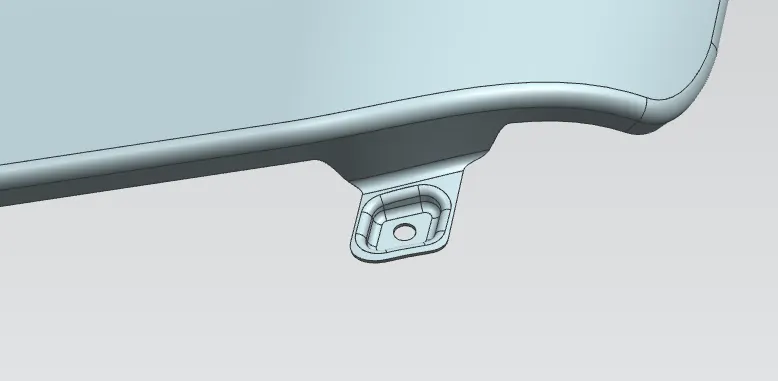
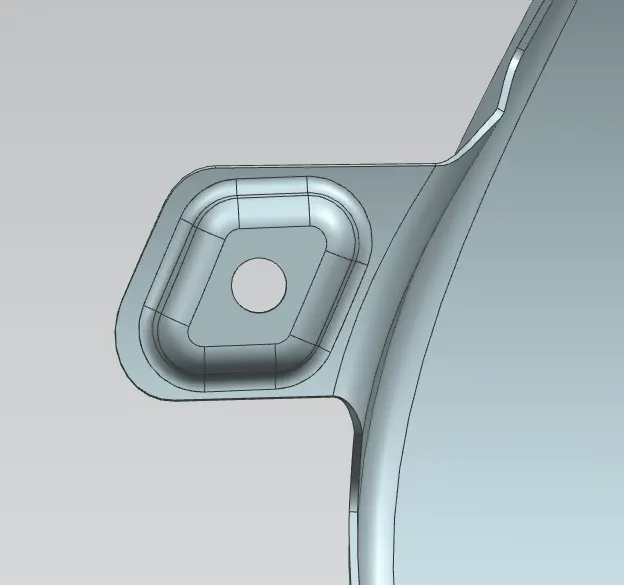
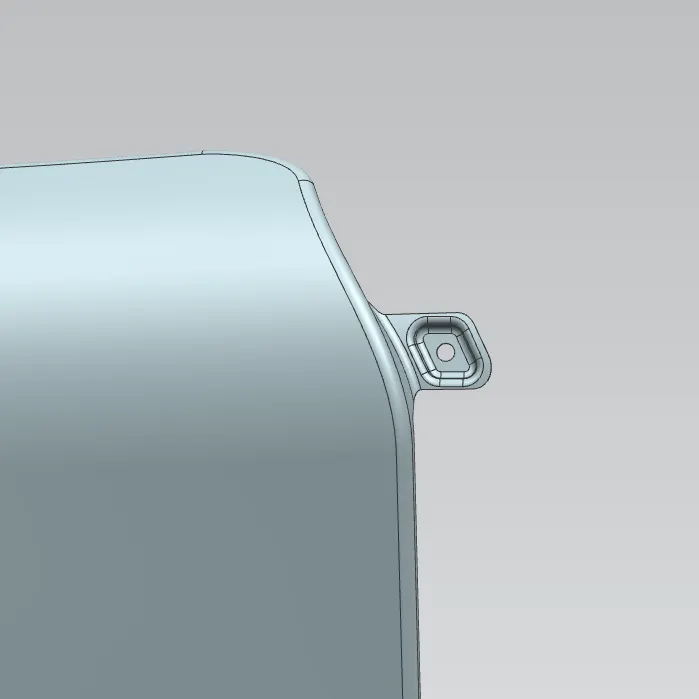
The Law Extension option extends the sheet by around 25 mm.
When employing the emboss option, a flat emboss surface is constructed using a Datum Plane for the A-Pillar mounting region.
Using the Trim Sheet option, a 5 mm hole is created in the mounting zone.
The Edge Blend option is used to apply edge blends with a radius of 2 mm to the corners and edges of the embosses.
The remaining unused areas are removed using the Trim Sheet option and the Bridge Curve option.
Sill :- This is the mounting point that connects the fender to the car's Sill and is located on the bottom of the fender.
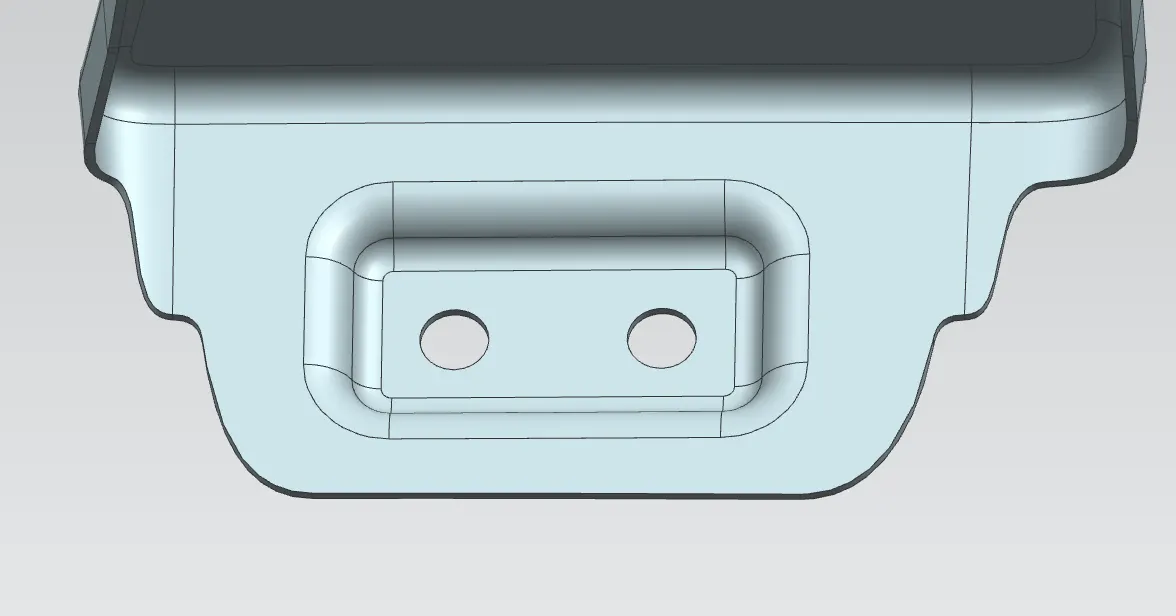
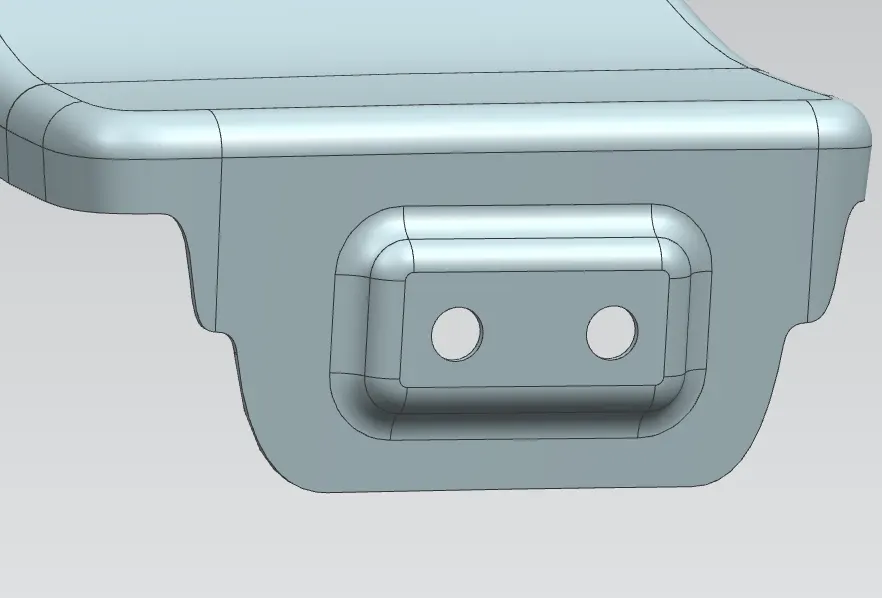
Using the Extend Sheet option, the sheet is expanded by around 15 mm.
When employing the emboss option, a flat emboss surface is constructed using a Datum Plane for the Sill mounting region.
Using the Trim Sheet option, 5 mm holes are given in the mounting zone.
The Edge Blend option is used to apply edge blends with a radius of 3 mm to the corners and edges of the embosses.
Bumper :- The fender's mounting point, where it connects to the bumper, is located here.
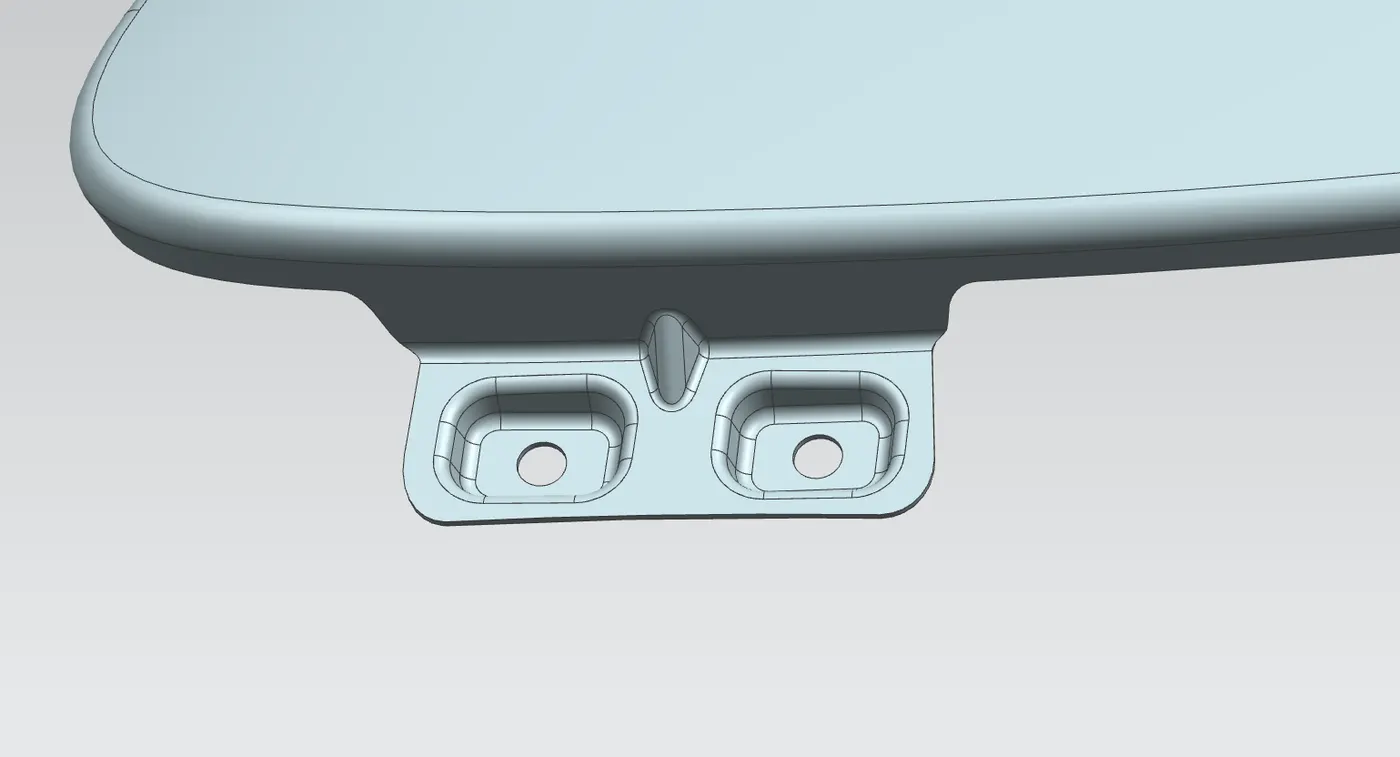
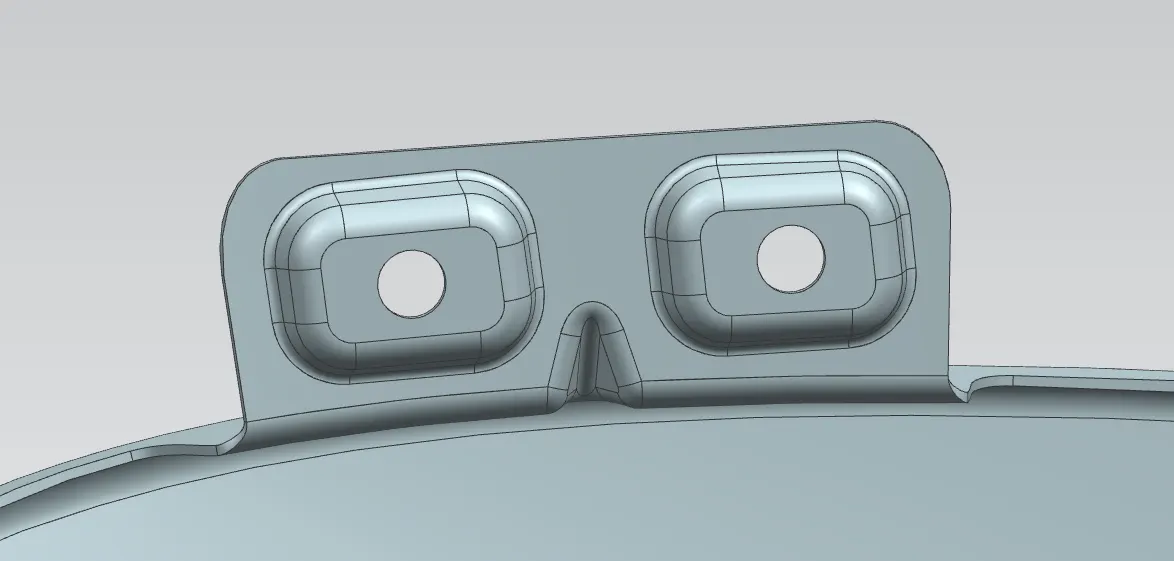
The Law Extension option extends the sheet by around 20 mm.
When selecting the Emboss option, embosses are made using a Datum Plane to produce a flat emboss surface for the bumper mounting zone.
Using the Trim Sheet option, 5 mm holes are given in the mounting zone.
The Edge Blend option is used to apply edge blends with a radius of 1.5 mm to the corners and edges of the embosses.
The Dart option is offered to strengthen the Bumper mount.
Baffle :- The fender's attachment point to the mudguard splash is located here.
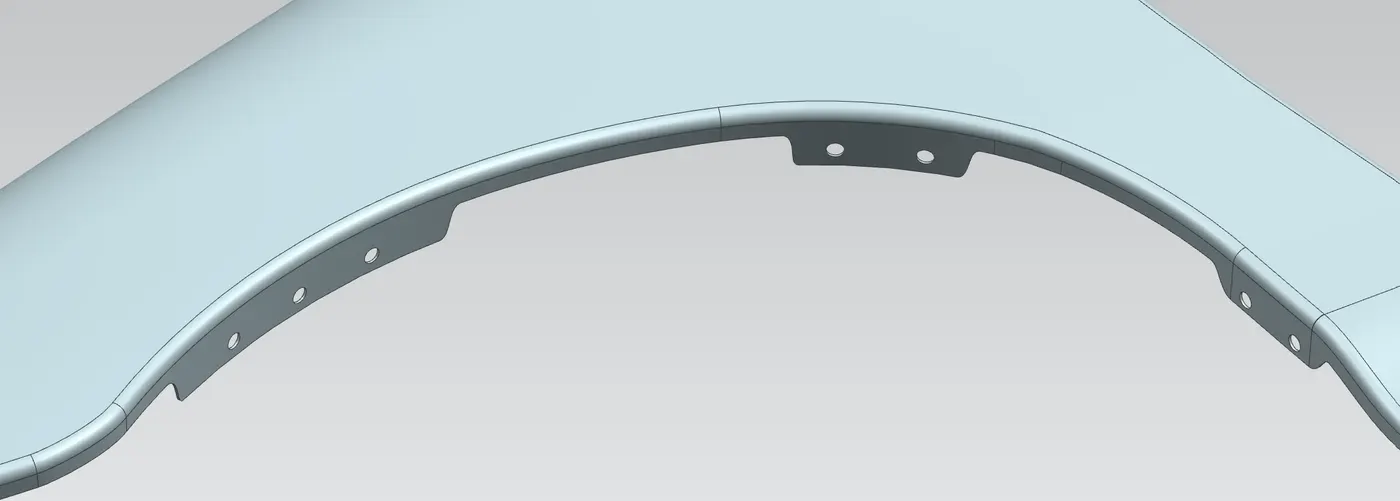
As a drawing reference for these surfaces, a Datum Plane is made.
Each sketch contains five 5 mm holes that represent holes.
Using the Trim Sheet option, 5 mm holes are provided in each mounting zone.
The Trim Sheet option is used to remove any remaining unwanted parts.
manufacturing process and its design parameters:-
Car Fender Manufacturing Process:
Car fenders are made utilizing a multi-step process that commonly uses metal stamping or plastic molding techniques. The general production process is described below:
Material Selection: Picking the right material for the automobile fender is the first step. Steel, aluminum, or a mix of the two are often used materials in the construction of metal fenders.
Thermoplastics or high-strength composite materials are typically used to create plastic fenders.
Metal Stamping: The chosen sheet metal for metal fenders is cut into the desired shape using blanking, laser cutting, or other cutting techniques.
After being blanked, the metal sheets are put into a press where different dies and punches are used to create the desired shape. To produce intricate shapes and flanges, many stamping operations could be necessary.
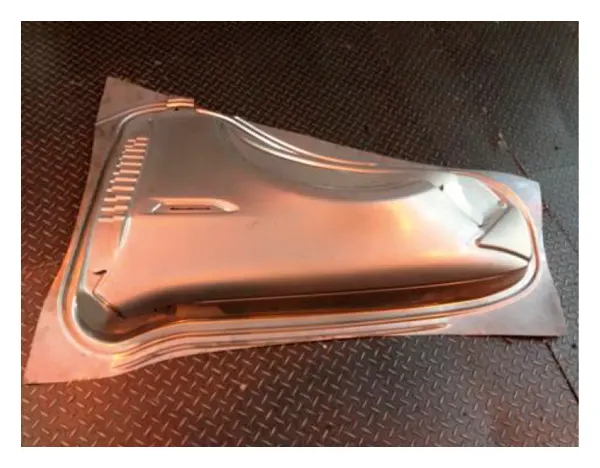
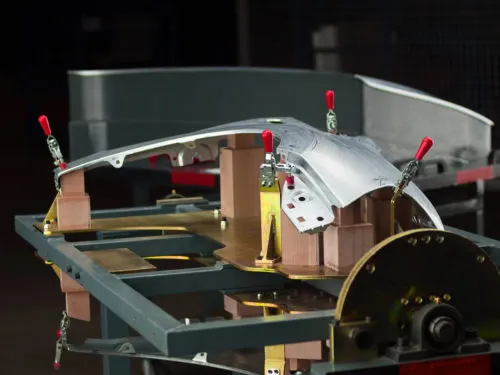
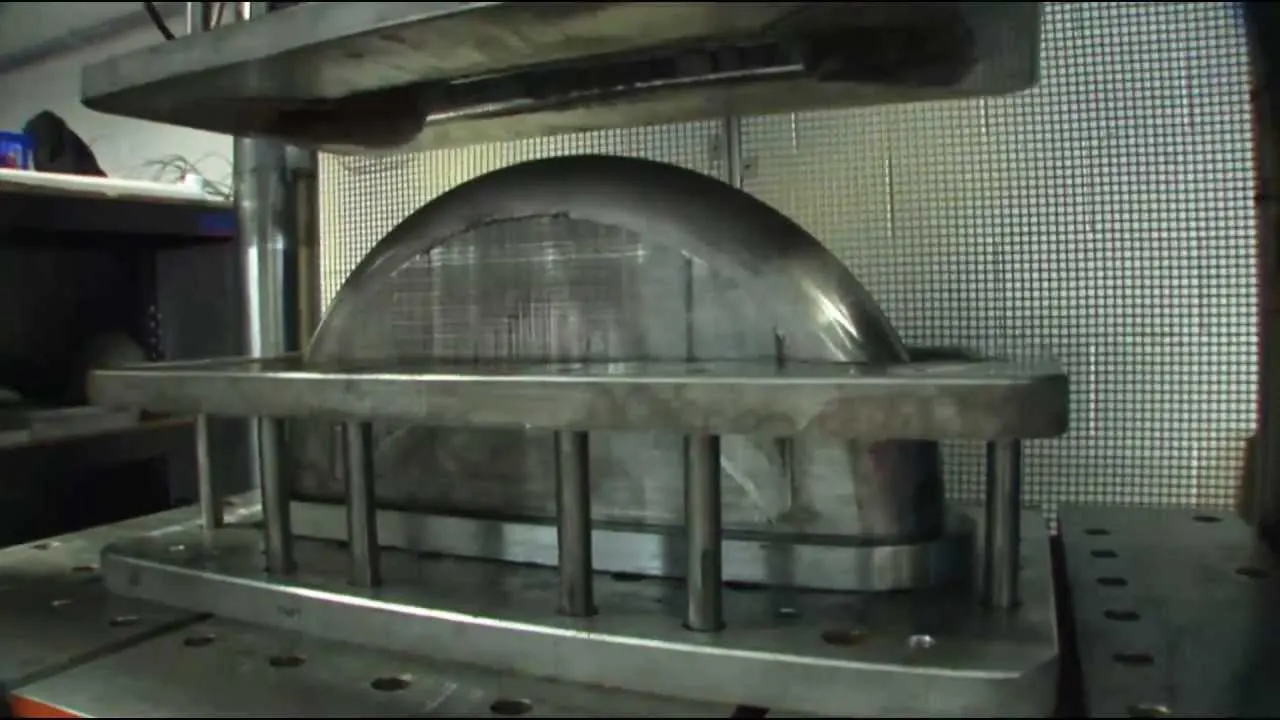
Plastic Molding: Injection molding or compression molding techniques are used to make plastic fenders.
Melted plastic is pumped into a mold cavity during injection molding to create the shape of the fender. In compression molding, plastic material that has been heated up is put within a mold and compressed to shape the fender.
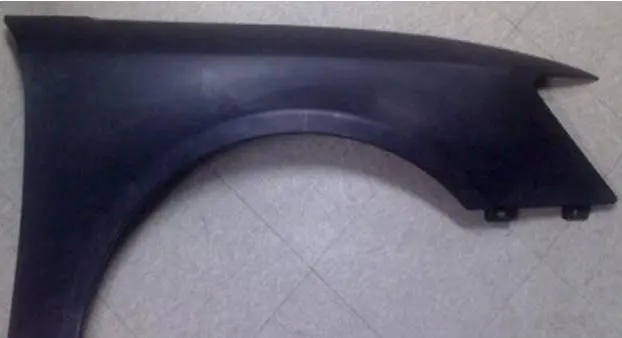
Attachments and reinforcements:
To increase structural strength, metal fenders may need extra reinforcements like brackets or braces.
Fenders made of plastic often contain mounting elements or integrated attachment points molded right into the item.
Surface completing:
The fenders go through surface finishing procedures once they are manufactured, which may include cleaning, deburring, polishing, painting, or coating.
Surface treatment improves the fenders' look and offers corrosion and wear resistance.
Quality Assurance:
To guarantee that the manufactured fenders adhere to design specifications and safety norms, thorough quality control examinations are carried out.
Dimensional accuracy, structural soundness, and surface finish quality are examined for the fenders.
Car Fender Design Parameters:
To get the best performance and usefulness, engineers must take into account certain aspects while designing car fenders. Here are a few significant design criteria:
Impact Absorption: Fenders must be made to absorb and dissipate impact energy during crashes, safeguarding the body and vital parts of the car and reducing the risk of injury to passengers.
Material Selection: The proper material must be selected in order to achieve the desired strength, weight, and corrosion resistance.
The fenders' overall performance, robustness, and cost-effectiveness are impacted by the material choice.
Geometry and Contours: The aerodynamics and aesthetics of the fender are influenced by its shape, contours, and curvature.
The aerodynamic performance and aesthetic appeal of the vehicle can both be enhanced by properly designed curves.
Wheel Clearance and Fitment: Fenders must fit the wheel and tire diameters of the vehicle without obstructing suspension motion.
Proper wheel clearance prevents rubbing or tire contact during turns and guarantees a smooth ride.
Manufacturing Feasibility: Designers must take the manufacturing process into account when choosing a design, ensuring that the fender can be produced quickly and affordably.
Corrosion Resistance: For metal fenders, corrosion resistance is essential to preserving the fender's integrity and look over the course of the vehicle.
Rust and corrosion can be resisted with the use of suitable coating or finishing treatments.
Weight Optimization: To increase fuel efficiency and all-around vehicle performance, the fender's weight must be reduced without sacrificing strength.
Safety Requirements: To ensure occupant protection during crashes, fenders must adhere to safety requirements and standards established by automobile safety authorities..
Engineers may design car fenders that adhere to safety regulations, improve vehicle performance, and harmonize with the car's overall design by carefully taking into account these design criteria during the development process.