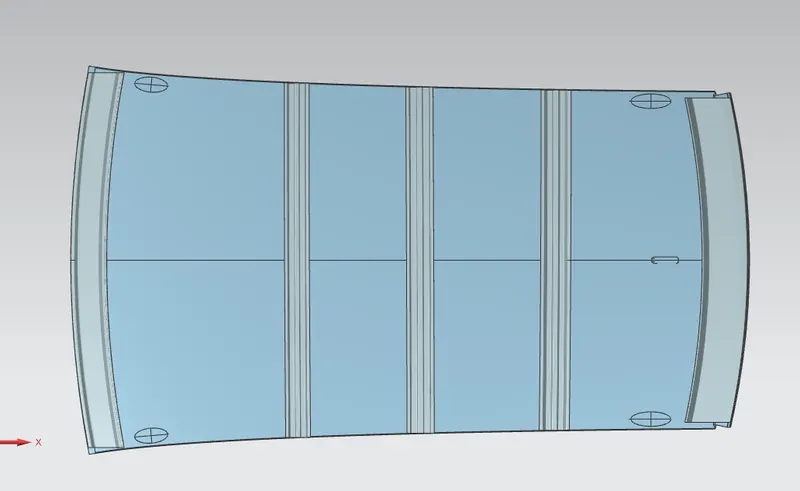
Roof Design
ROOF ASSEMBLY
The conventional task of the roof panel is that of compartment shielding, passenger protection and connection of body sides, front and roof cross members. In case of roll over, compartment integrity is provided by the compartment frames, whilst the roof target is only to avoid the ejection of passengers, providing protection against hard local contact.
Correspondingly a wide selection of suitable materials are available: Steel, aluminium, thermosetting plastic sheet, glass. In case of steel grade . the usual thickness is in the range of 0.65 to .85 mm. In all cases, any roof panel matireals requires braces to prevent panel flexing and vertical waviness, commonly known as oil canning: for this purpose light steel bows are introduced, which are welded or riveted or screwed to the body side and bounded to roof panel by smooth flexible adhesives such as butyl mastic (in order to avoid sink marks on roof surface), mainly providing a damping effect.
Another task of roof bows is to support the interior roof liner which requires a number of fittings both in central and boundary areas to avoid deflections and vibrations. Fittings are usually plastic clips or velcro strips. Some roof liners, mostly on less expensive vehicles are bonded directly to roof panel.
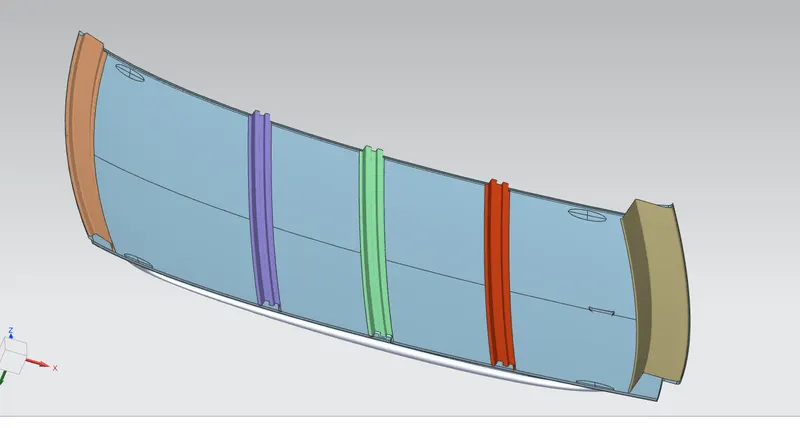
ROOF DESIGN
An automobile roof or car top is the portion of an automobile that sits above the passenger compartment, protecting the vehicle occupants from sun, wind, rain, and other external elements.
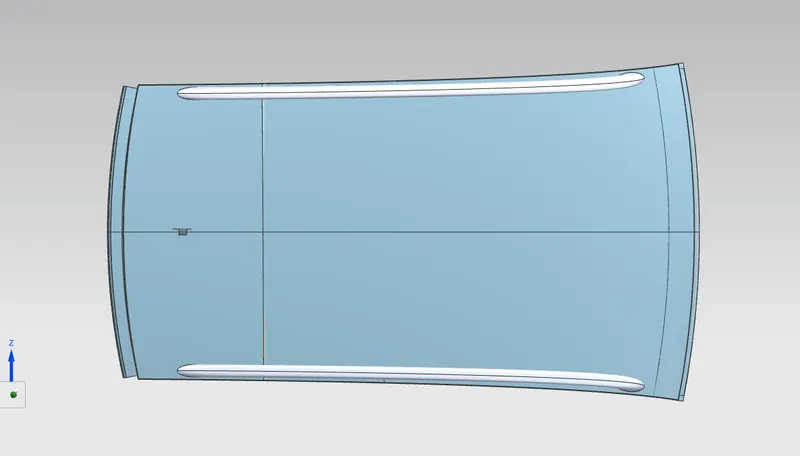
DESIGN OF ROOFRAILS
roof rails are giving stregth to outer surface of roof its design is very imortant
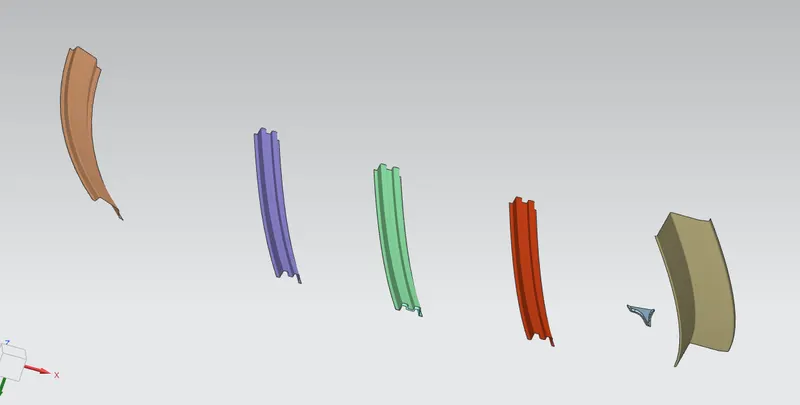
front roof rail Bow roof rail 1 centere roof rail bow roof rail 2 back roof rail
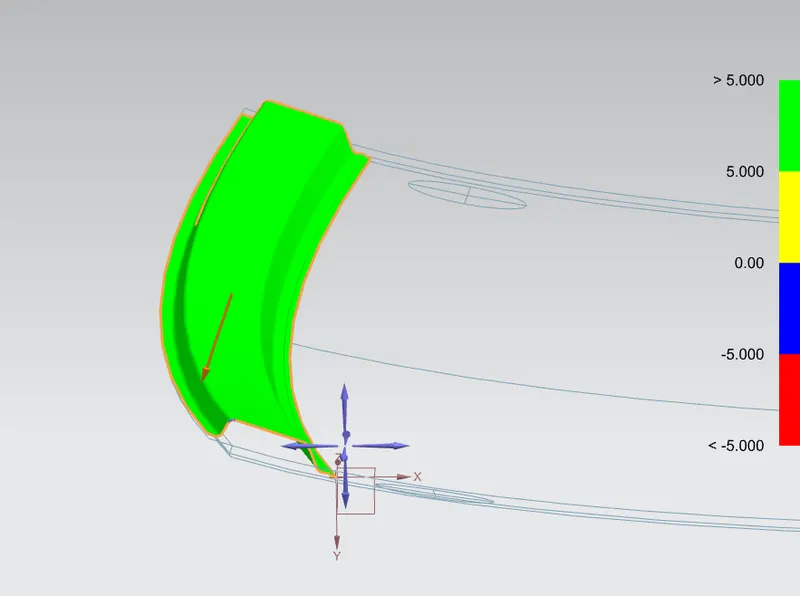
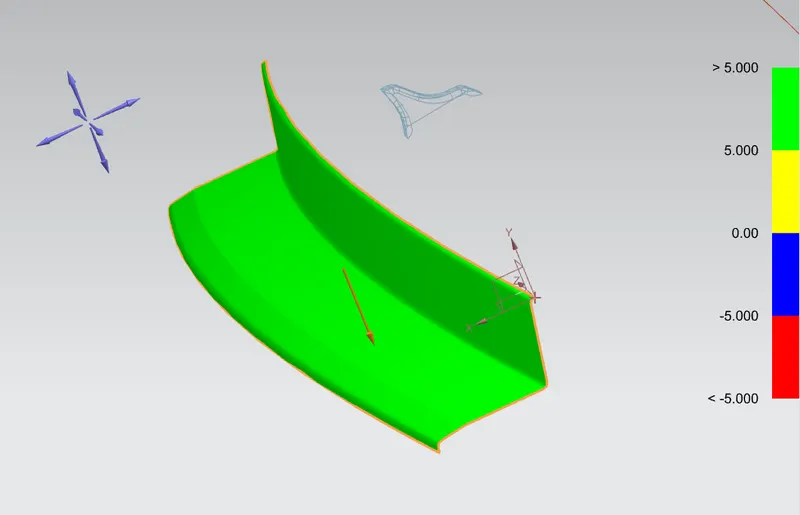
Draft analaysis
front roof rail
bow roof rail 1
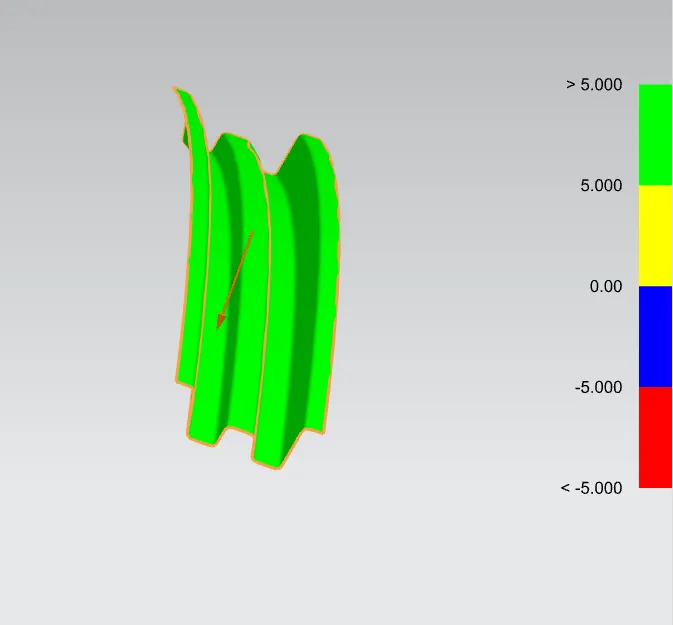
roof rail 2
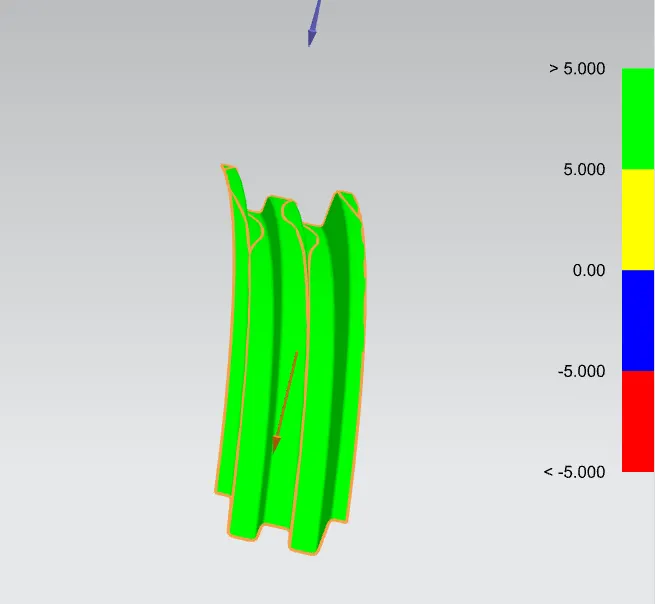
center roof rail
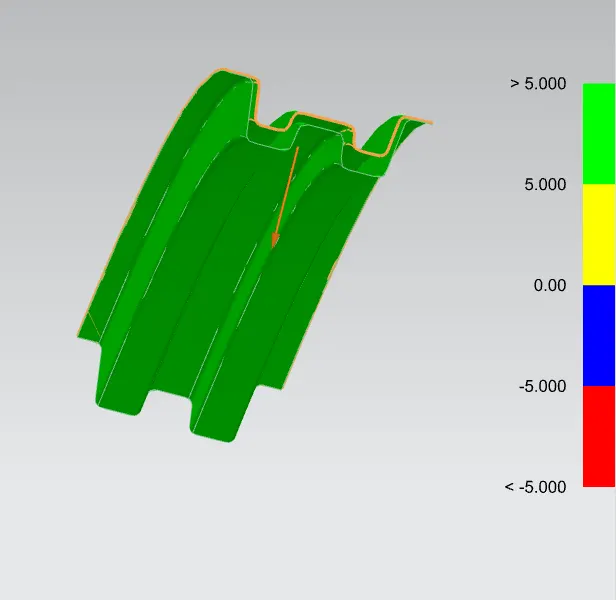
Back roof rail
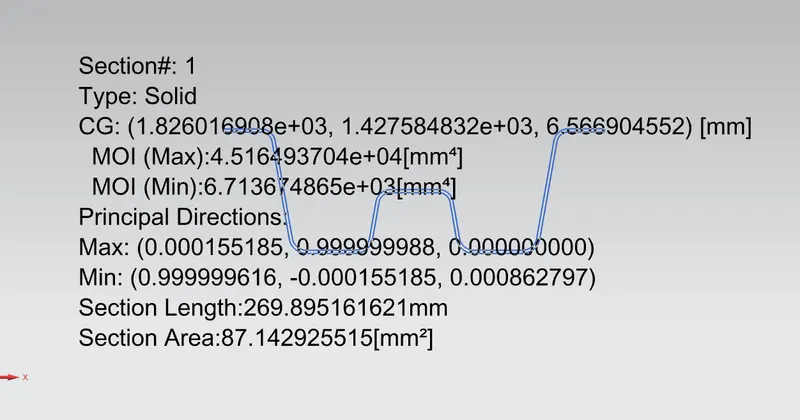
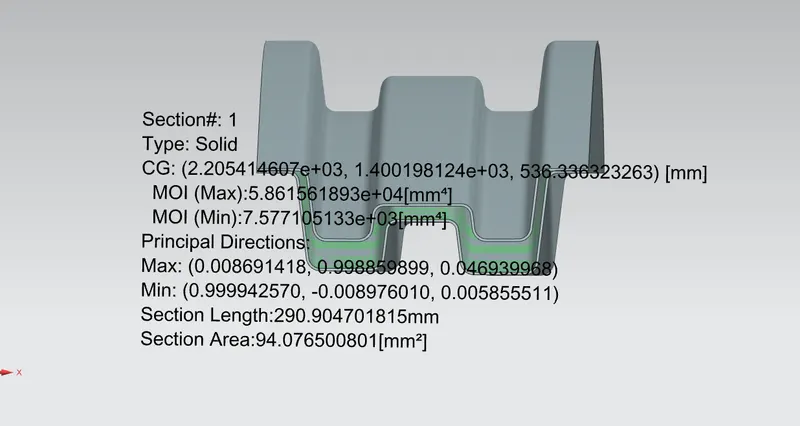
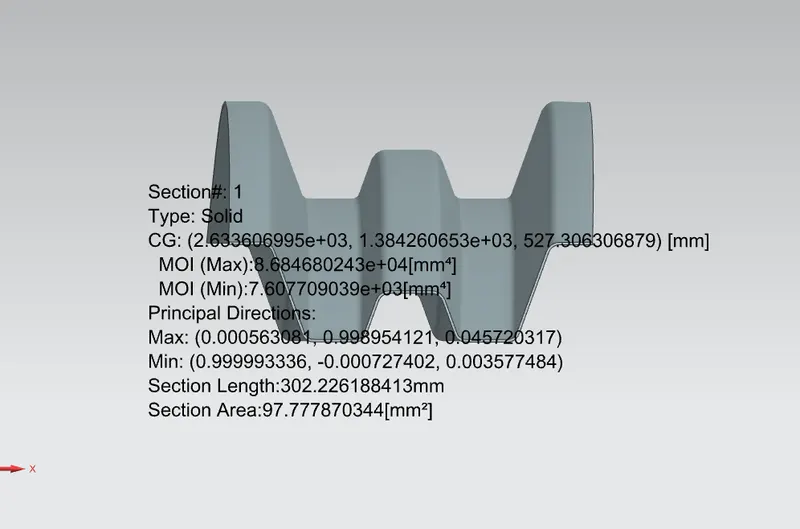
SECTION INERTIA ANALYSIS
after thickeing surface to 0.65mm
bow roof rail 1
center roof rail
bow roof rail 2
The delivery tests specified for roof assembly are static, dynamic and impact. The purpose of static testing is to verify that roof assembly exhibits no permanent deflection due to distributed load representing snow load and due to heat distortion.
Heat distortion test is a type of static load test which plays an important role in maintaining roof strength. Heat distortion temperature is the temperature at which metal softens and deforms under a specified load. From Heat distortion criteria, roof strength can be enhanced by appropriate positioning of bow roof rails.
The snow load test is a type of static load test used to verify that roof assembly exhibits no permanent deflection due to a distributed load representing snow load: the distributed pressure applied is in the range