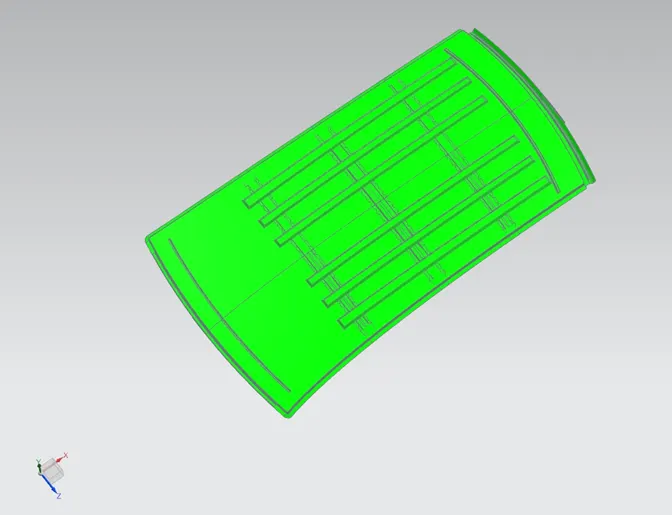
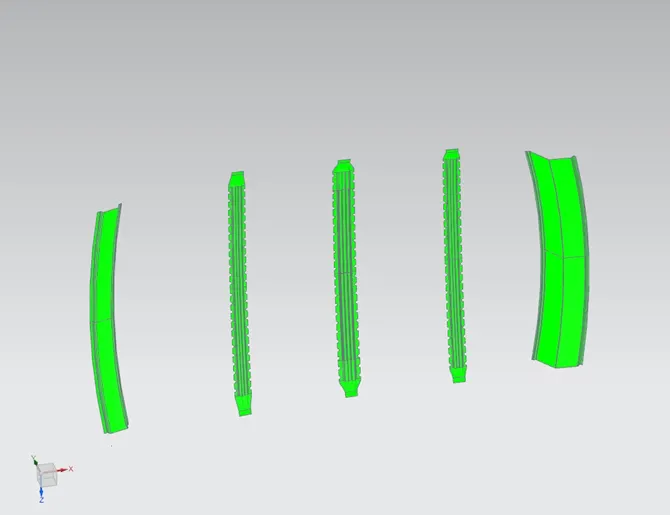
Roof Design
#7 ROOF DESIGN
INTRODUCTION OF ROOF
An automobile roof or car top is the portion of an automobile that sits above the passenger compartment, protecting the vehicle occupants from sun, wind, rain, and other external elements.
OBJECTIVE
To Design the Front roof rail, Rear roof Rail, Bow roof and Center roof from the given Outer roof by styling Team. Design under Requirements and safety standards were derived and given the section Drawing of Roof rails.
DESIGN CONSIDERATION:
- VISIBILITY CRITERIA
- HEAD CLEARENCE
- DRAFT ANALYSIS
- CURVATURE STUDY
- HEAT DISTORTION AND SNOW LOAD CRITERIA
- MATERIAL THICKNESS
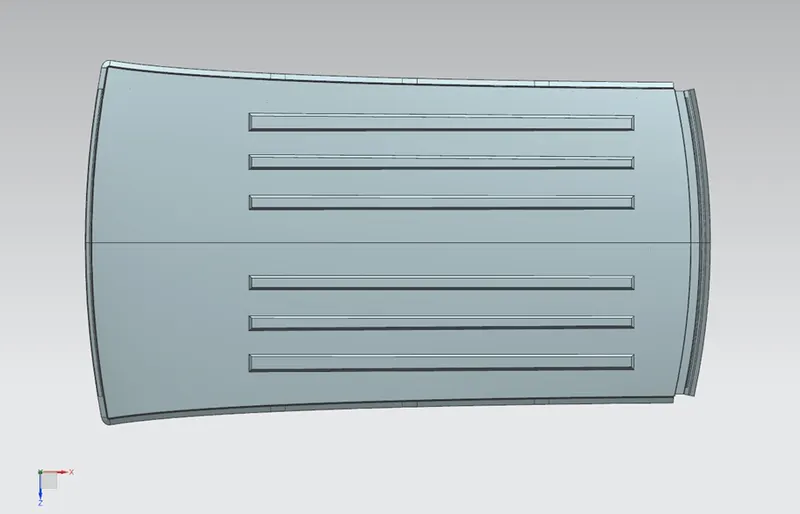 .
.
Different Types of Roof Rails
- Front Roof
- Bow Roof
- Center Roof and Reinforcement Roof
- Rear Roof
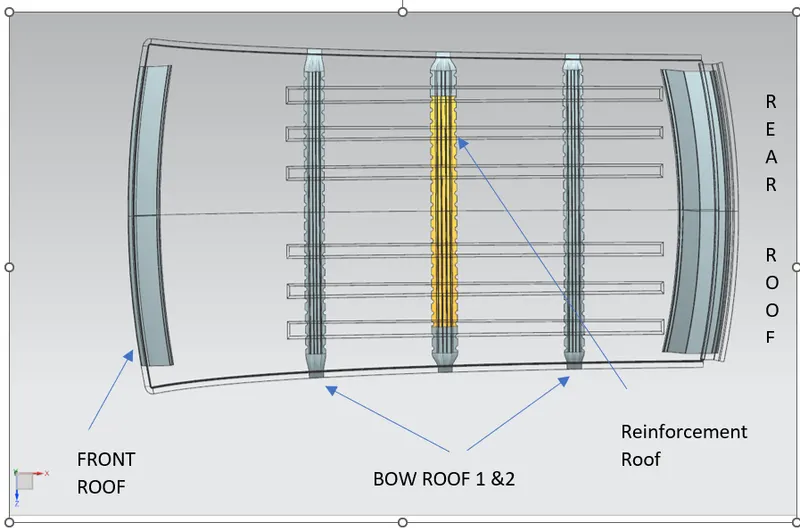
Front Roof
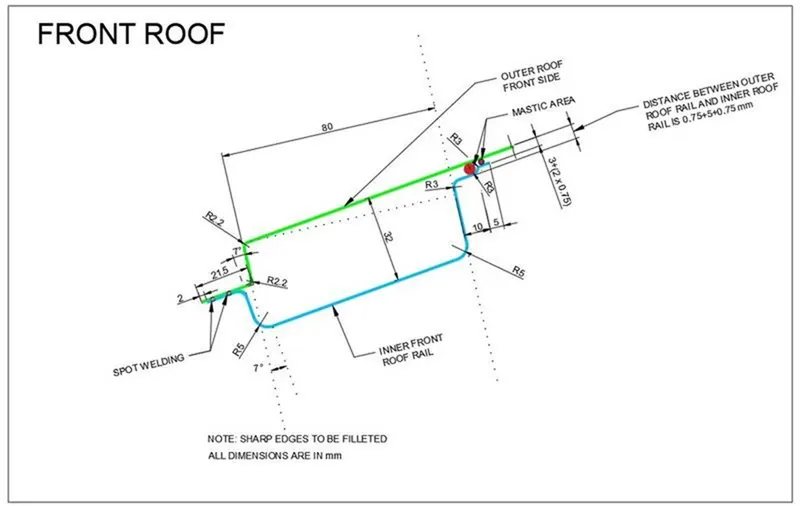
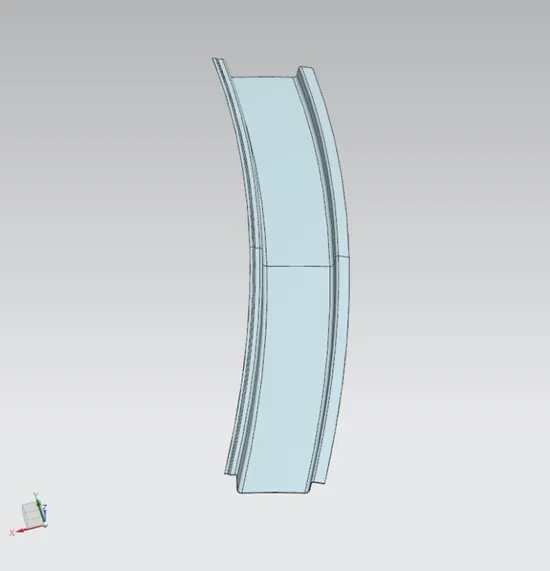
The front roof rail is decided in such a way that there should be enough headroom clearance between the head of the driver and the end surface of the roof rail to avoid injuries to the person.
At the front side we are doing spot welding and on the rear side of the front roof rail, we are using mastic points to join it with the roof surface.
Bow Roof
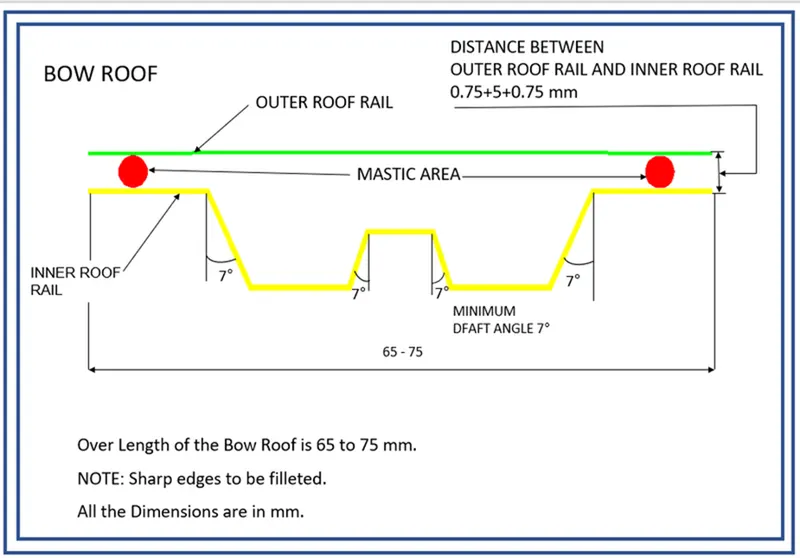
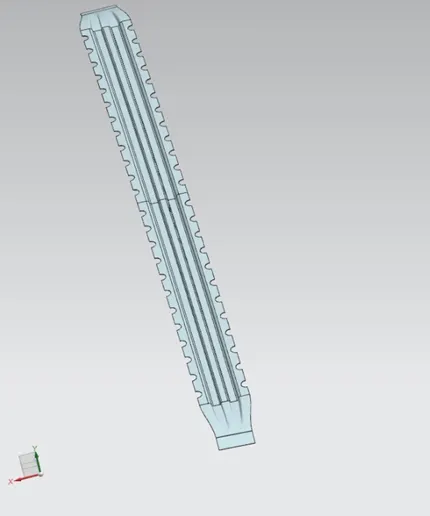
Bow roof is connected to the Outer Roof by Mastic Regions. Bow roof as we provided two bow roofs, one is from (Front roof to Center roof) and another bow is provided from (Center Roof to Rear Roof). Bow is supporting and Resist of Outer roof.
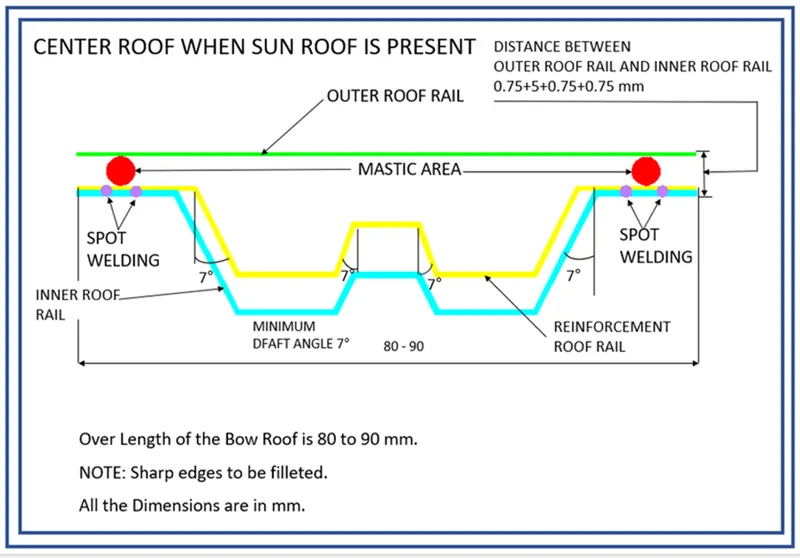
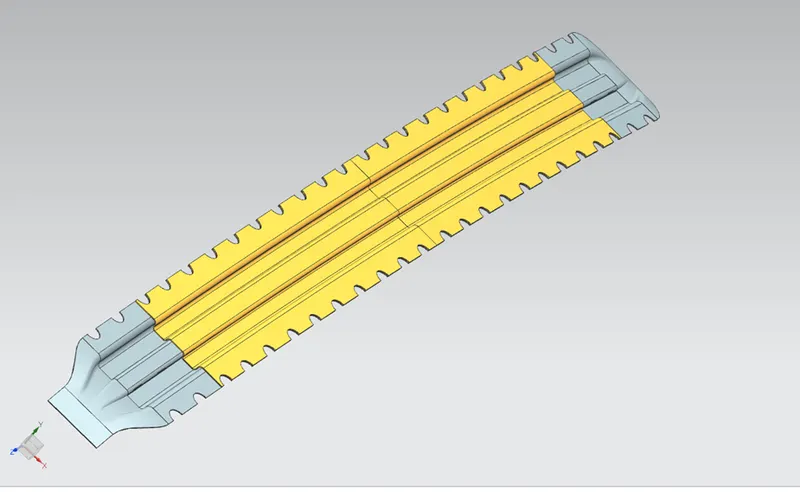
Center Roof and Reinforcement Roof
The reinforcement centre is used as a cross member between bodyside LH & RH respectively. the reinforcement centre is not joined with the roof and it is made to join in both roof and bodyside. The reinforcement centre and BOW roof are joined either spot weld or by mastic sealants.
Rear Roof
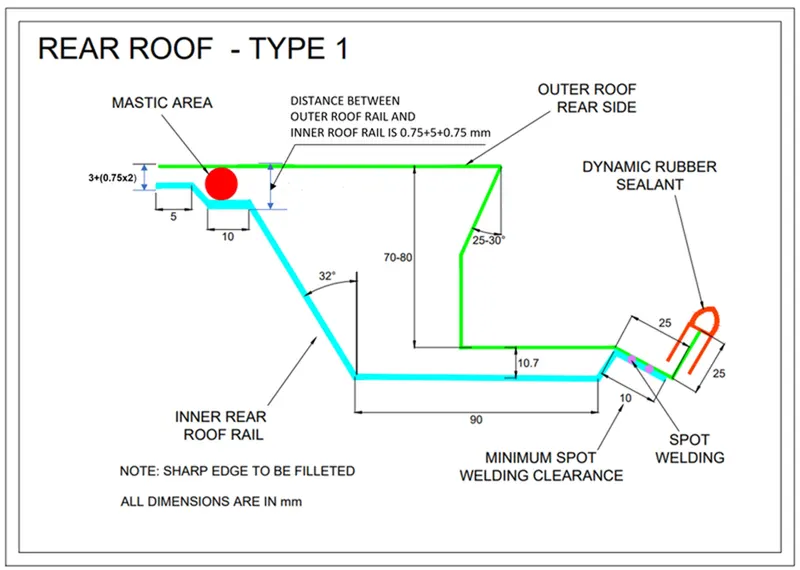
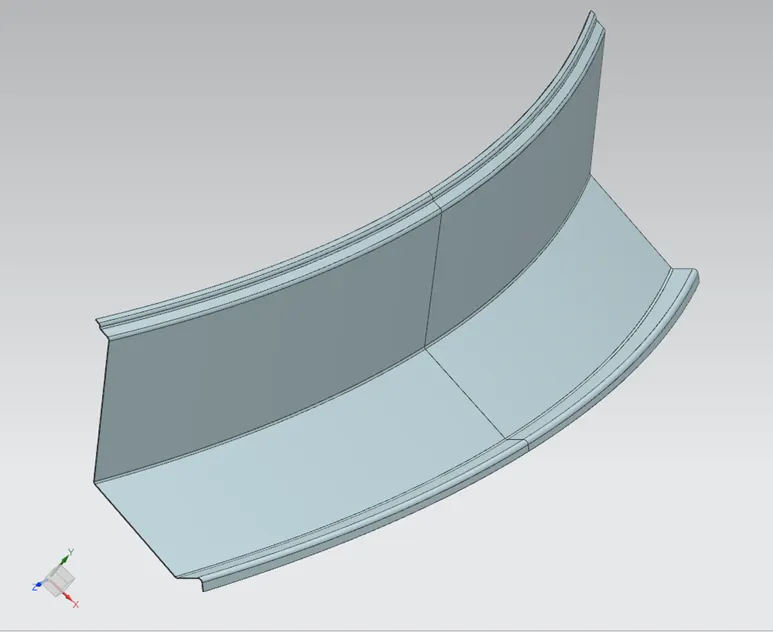
The rear roof rail is the one of the important components of roof assembly which is used for the back door mounting. Similar to front roof rail important design consideration include rear passenger head clearance rear visibility of the vehicle.
Heat Distortion Criteria
Heat distortion study play an important role in sheet metal usage. Heat distortion temperature is a temperature limit above which the material cannot be used for structural applications.
This study is used to predict the heat distortion temperature at where the material starts to soften when exposed to a fixed load at elevated temperature. In order to avoid bending/damages on roof, based on heat distortion temperature, this study will predict the bow roof position on the roof to strengthen the roof.
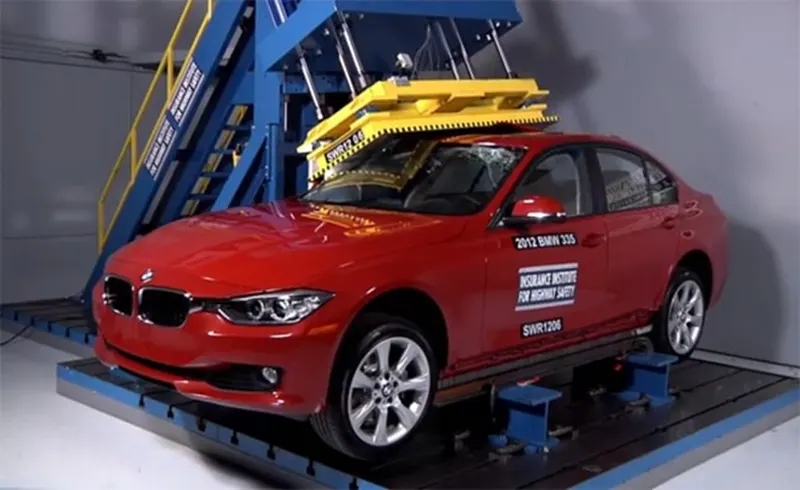
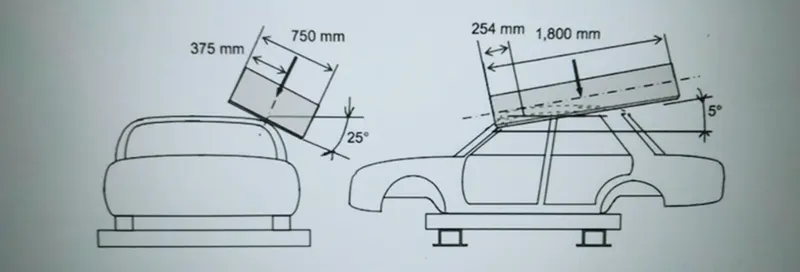
Roof crush Test
Bow–Roof Prediction Formula
W = [1.73 x 10^ (-3) x L] + [1.85 x 10^ (-8) x (R^2)/t] + [ 1.10x10^ (-3) x l] - 2.68
Where,
L = Roof Length in X-Direction[mm](Roof dimension in 0-Y)
R = Roof curvature
R = 2(Rx*Ry)/(Rx+Ry)
Rx = X curvature
Ry = Y curvature
t = Roof plate thickness [mm]
l = Bow Roof Span [mm]
Judgment Condition
OK< 2.7
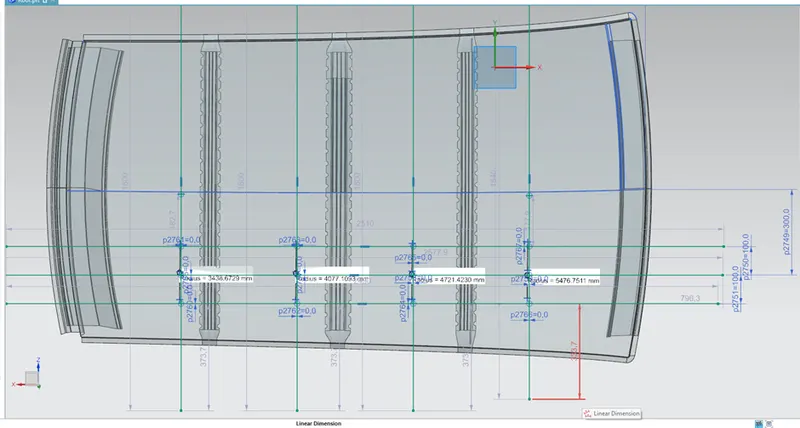
Rx and Ry is a radius being between -3Y axis, both sides 100mm distance as be considered.
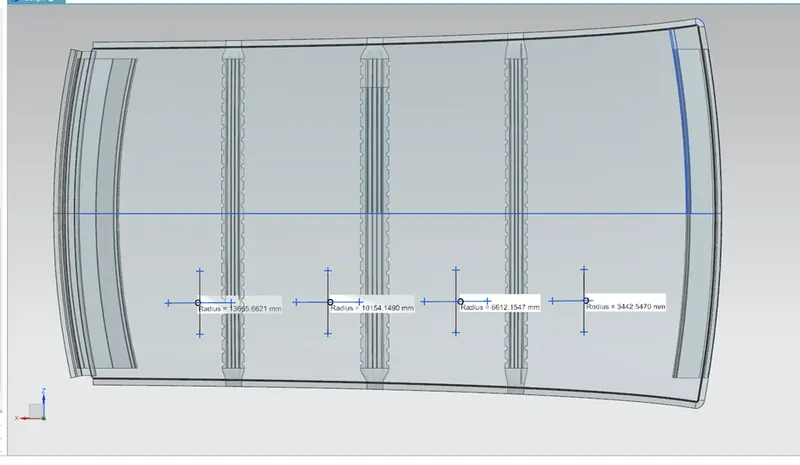
Calculation Tabular

SNOWED CRITERIA
This evalution is performed in cold regions where snow occurs.roof design must pass through these calculations to ensure that it has sufficent stiffness to withstand the load due to accomalation of snow over the roof.
Qr =[Iy x t^2] / [α x s x [(Rx + Ry)/2]2 x 10^-8]
Note: The Qr value given over here is correct. There was a typo error in the formula given in the video.
Where
α = My x Lx2 x 10-12 , My = Y(Ly-Y)
Judgement condition = Qr ≥ 3.1
Geometrical Moment of Inertia of roof Bow,Iy
Bow Roof 1
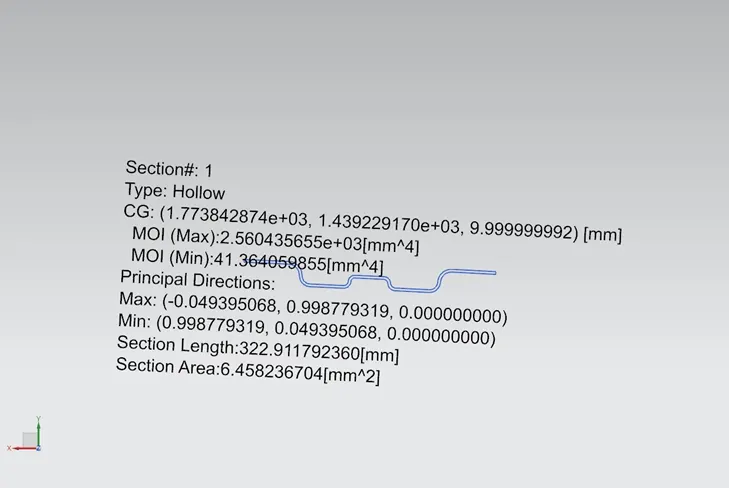
Centre roof and reinforcement roof
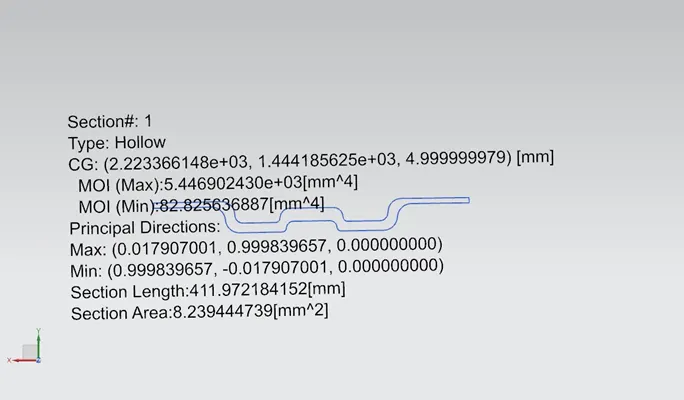
Bow roof 2
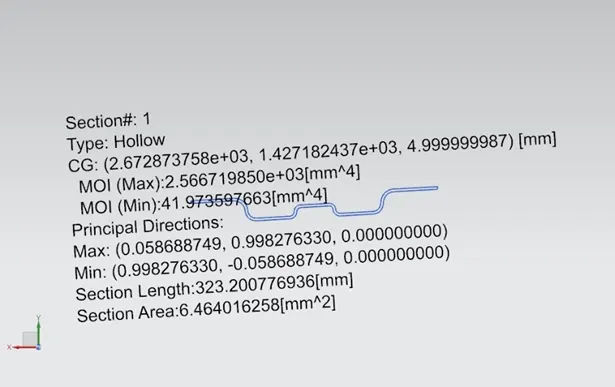
Calculation Tabular

As we determined the Heat distortion criteria and Snowed criteria is resultant as OK for the Roof.
Draft Analysis of the Roof