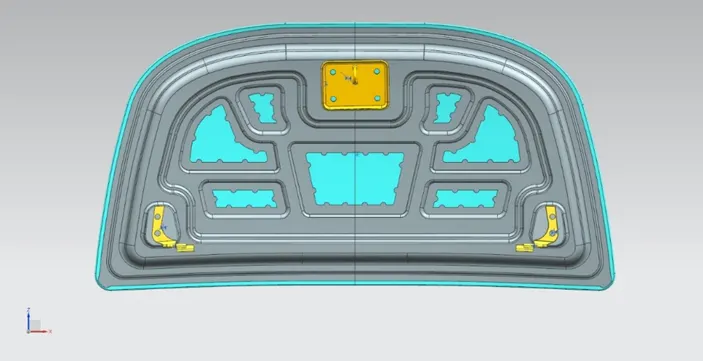
Hood design-Week 2
#3 Hood Design
OBJECTIVE
Design the car Hood or Boot Panel, Develop the Inner Hood from the Outer Hood and Hemming the Outer Hood with Inner Hood. Then assemble the Hinge and Striker in Proper Manner of Design Standards.
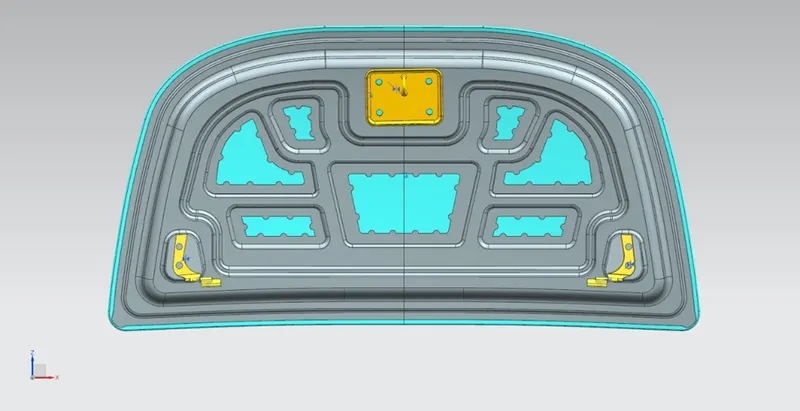
HOOD
Hood is Most important Component of a car. Is Closing and Protection of Engine, Radiator, Battery area. Hood should be Design under Pedestrian Safety standard and Easy to access Engine Compartment area for serviceability. Hood Design in an Aerodynamics Approach.
Master Sectional Drawing
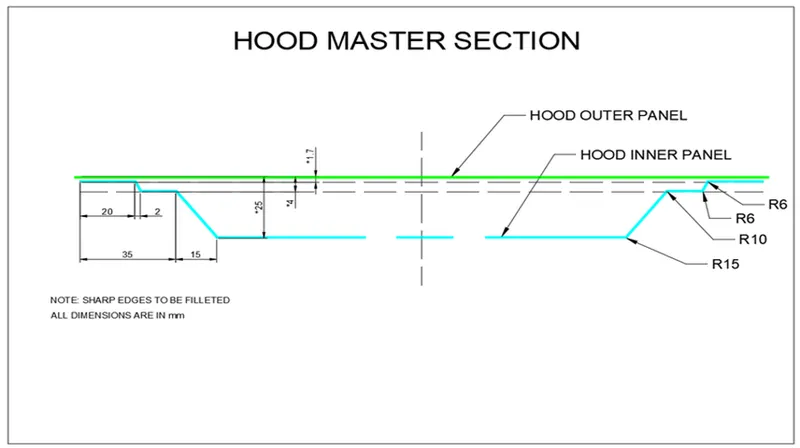
Design the Hood as per Master sketch Dimensions
Outer Hood Thickness - 0.75 mm
Inner Hood Thickness – 0.75 mm
Hinge assembly and Stricker Area
Reinforcement – 1.5mm
Outer Hood or Panel
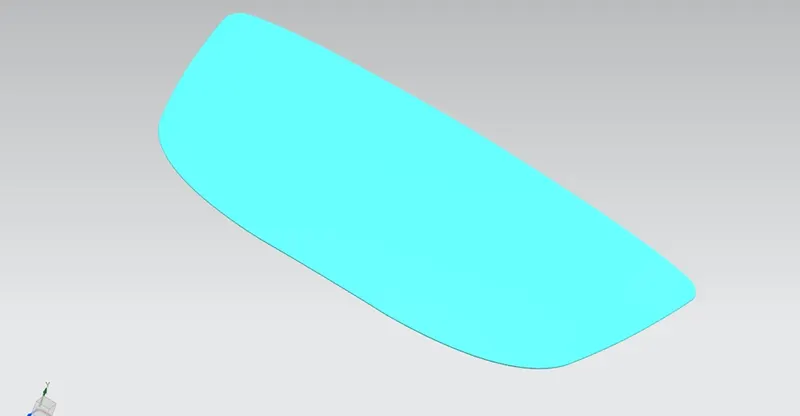
Outer Hood or Panel is Outer appearance of the car, it should be more styling and Aerodynamic Design. Its Provide by Styling Deployment team, Shape and size of the Outer panel should meet Pedestrian safety standard. Outer Panel is Hemming with the Inner panel and also cornering Relief curve should be provided.
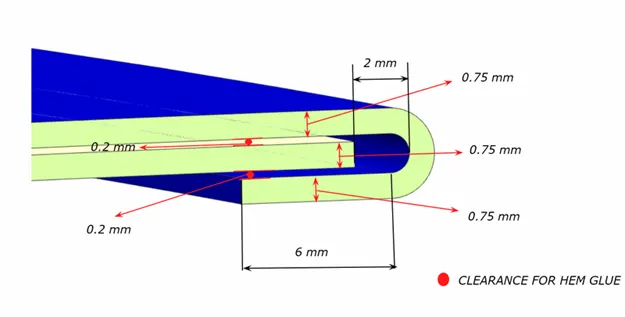
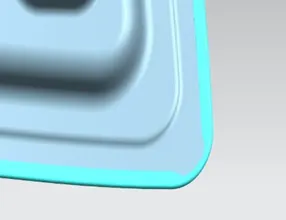
Hemming is a forming operation in which the edges of the sheet are folded over another part in order to achieve a tight fit. hemming is used in assembly as a secondary operation after deep drawing, trimming and flanging operations to join two sheet metal parts (outer and inner) together. Typical parts for this type of assembly are hoods, doors, trunk lids and fenders.
Hemming process is more accuracy to folded the sheet because of Outer panel surface should be good in appearance and Quality. Material Deformation is occur while in Hemming process. It’s can be affected in Dimensional variation. Material overlap also may occur on the Corners of the Hood. So, that’s why we provide Relief to the corners.
Types of Hemming
- Conventional Die Hemming
- Roll Hemming
Inner Hood or Inner panel
 .
.
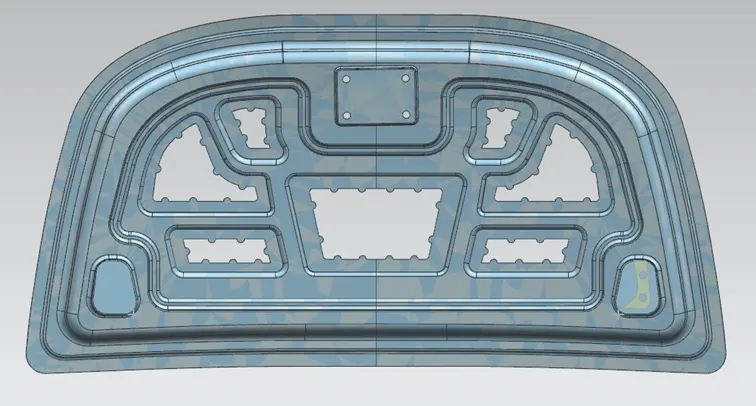
Inner Hood or Panel is Develop in the Outer panel design. Inner Panel is most important to make rigidity of the Outer Hood. Inner Hood is embossing the Latch and Hinge area is to Assemble or fix the Components.
DEEP Drawing
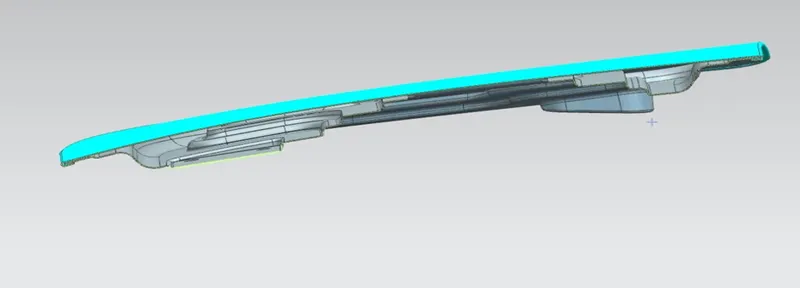
Deep drawing is a Sheet metal forming process in which a sheet metal blank is radially drawn into a forming die by the mechanical action of a punch. It is thus a shape transformation process with material retention. The process is considered "deep" drawing when the depth of the drawn part exceeds its diameter. This is achieved by redrawing the part through a series of dies. The flange region (sheet metal in the die shoulder area)experiences a radial drawing stress and a tangential compressive stress due to the material retention property. These compressive stresses result in flange wrinkles (wrinkles of the first order). Wrinkles can be prevented by using a blank holder, the function of which is to facilitate controlled material flow into the die radius. Deep drawing presses, especially in the Aerospace and Medical industries, require unparalleled accuracy and precision. sheet hydroforming presses for complex draw work. Bed size, tonnage, stroke, speed, and more can be tailored to your specific draw forming application.
Mastic Regions
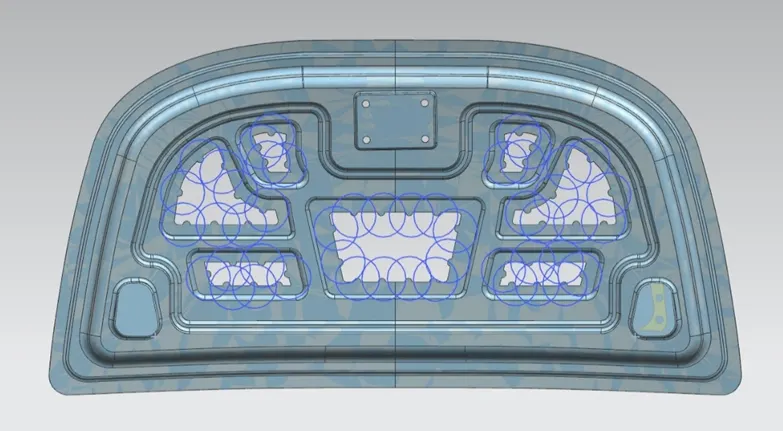
Hood is large panel is to combine by Hemming process is only for corner Boundaries of Outer and Inner Panel. We Cannot Joined the panel by Welding, Riveting is appeared mark on the Outer Hood and be spoil the look. So, Mastic or gluing sealant is Filled in the Mastic Region of 80mm diameter around is effect to bond between two Panels. Mastic Sealant is an Elastic compound is behaved like a rubber.
Latch Trajectory
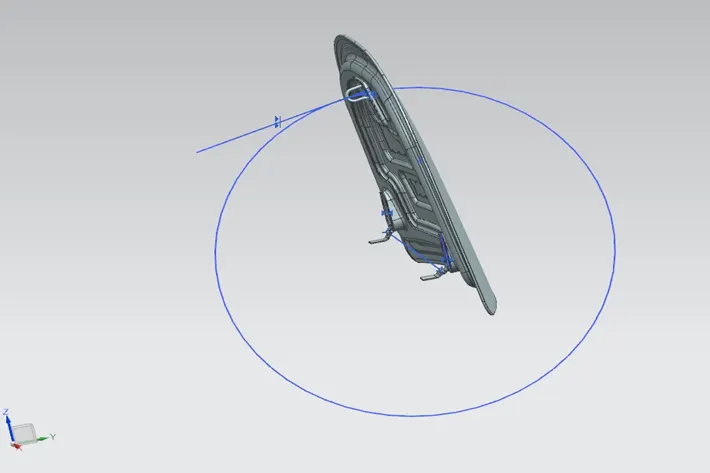
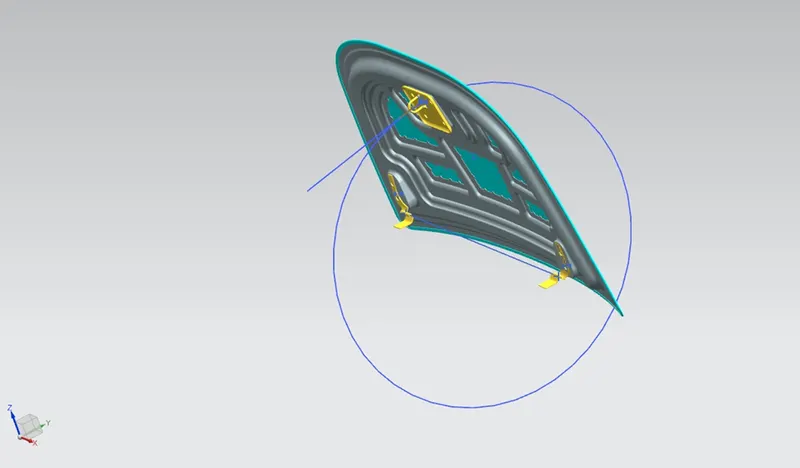
Trajectory circle is drawn in the center of two Hinge parallel axis. On the Trajectory circle Tangent Line is plot to joint to the striker Hook Center line by Align geometry in Assemble constraints, then Striker is assembled to the Inner Panel. Of this method, should arrange or assemble the Striker. So, that Striker is move at the Trajectory path.
Final Assembly of Hood