Roof Design
Aim:
- Design of the front roof rail, rear roof rail, and bow roof for the roof of the vehicles with the help of the given skin data of the roof according to snow load condition and hear distortion criteria.
OBJECTIVE:
1.Main objective of the project is to create the Roof Sheetmetal design in NX cad, and also designing Front roof rail, rear roof rail, bow roof front, bow roof rear, center roof rail and Reinforcement are creating to build the strong roof.
2.Do curvature study on Roof and performance calculations for Heat distortion and Snow load criteria to determine the position of the Bow roofs.
3.Finding the moment of inertia and section modulus for Bow-roofs and center roof rail.
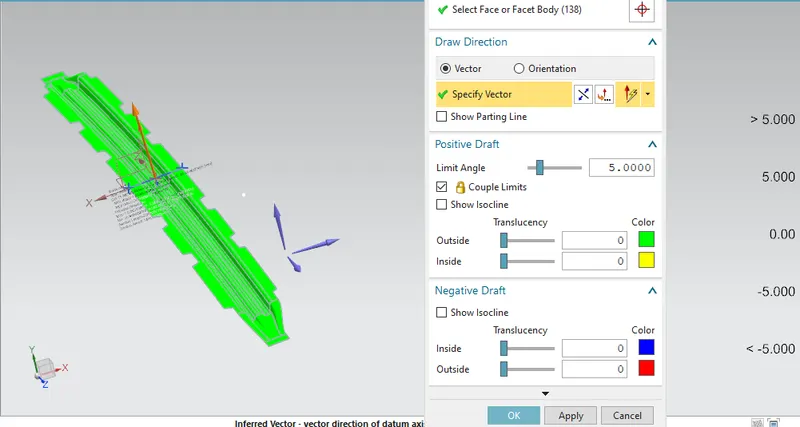
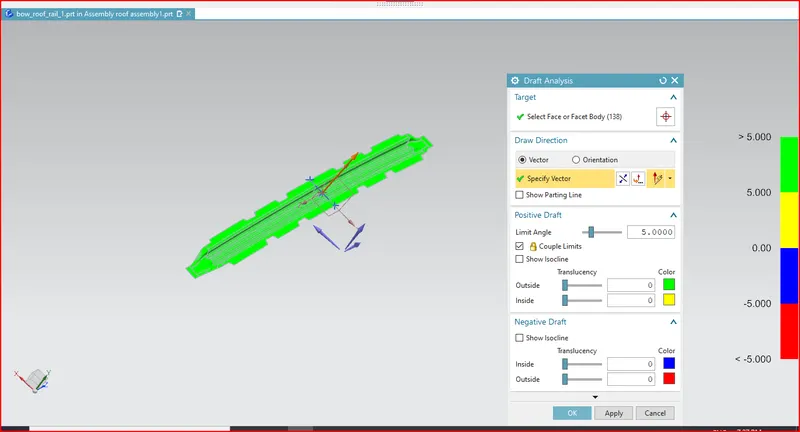
4.And, also finding the Draft Analysis of each part.
SOFTWARE USED: NX 12.0
- To design the Sheetmetal ROOF in NX by using some Solid/Surface features.
- NX Software is a flexible and powerful integrated solution that helps you deliver the products faster and efficiently.
- NX Cad software is widely used automotive, aerospace, thermal power station. Because of it is having modelling, drafting and manufacturing platform.
INTRODUCTION:
- An automobile roof or car top is the portion of an automobile that sits above the passenger compartment, protecting the vehicle occupants from sun, wind, rain, and other external elements.
- When it is seeing from outside of the car, it is just closing the top portion. But in design point of view, it is hard to create the design. Because of you have to create no of support rails for enough strength to withstand the load. Bow roofs are primarily fixed in flatter region to enhance strength.
- Front roof and rear roof rails are fixed to the ditch area using spot weld operation. But front, rear bow roof and center roof rails are fixed to roof using mastic sealants. We don’t want so much gap between roof rails and bow roof area. So, we reducing the NVH issues.
DESIGN CONSIDERATION OF ROOF:
- Visibility criteria
- Head room clearance
- Bow roof position
- Heat distortion and Snow load criteria
- Draft analysis
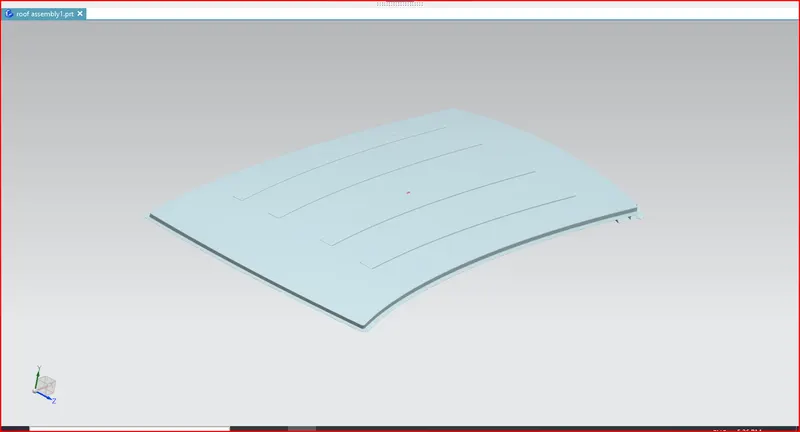
Design Consideration and criteria:
1.Roof:
- We are making the hardtop type of roof from the given master section so we are not adding any reinforcement for the central roof rail.
- We are adding the flanges to all sides of the roof for spot welding of the front roof rail, central roof rail, rear roof rail, and bows.
- The length and angle of the flange are decided based on the visibility criteria and according to the draw angle required for manufacturing the sheet metal.
- The thickness of the roof is decided 0.75mm
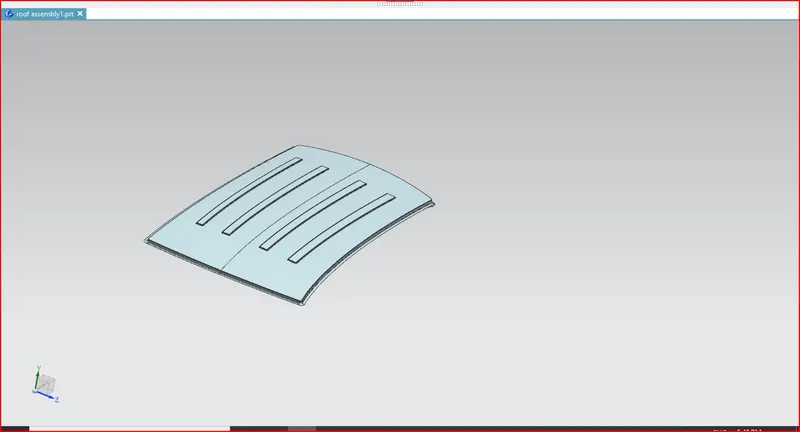
2.Front roof rail:
- The front roof rail is used as the reinforcement to the roof surface to increase the strength and also used to mount the brackets for some features such as room lamp or map lamp and rear mirror.
- The depth of the front roof rail is decided based on the visibility criteria line decided for the driver visibility.
- The width of the front roof rail is decided in such a way that there should be enough headroom clearance between the head of the driver and the end surface of the roof rail to avoid injuries to the person.
- At the front side we are doing spot welding and on the rear side of the front roof rail, we are using mastic points to join it with the roof surface.
- The minimum radius for the fillet at edges is 3.75mm
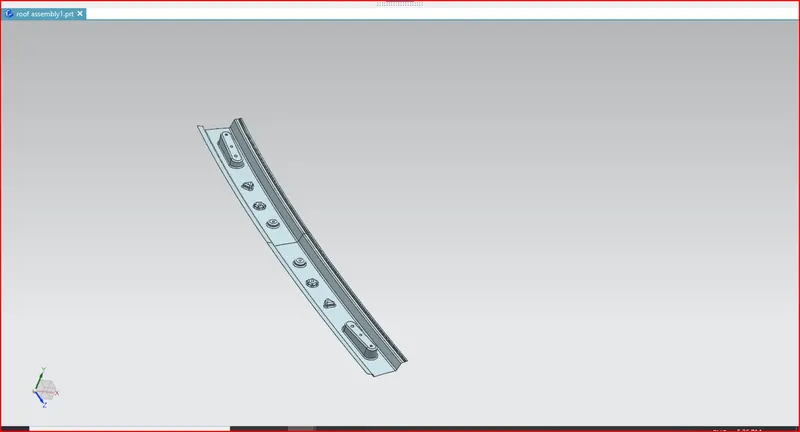
3.Rear roof rail:
- The rear roof rail is used as the reinforcement to the roof surface at the rear side.
- The joining method used for this rail is the same as that of the front roof rail.
- The minimum radius for the fillet is 3.75mm.
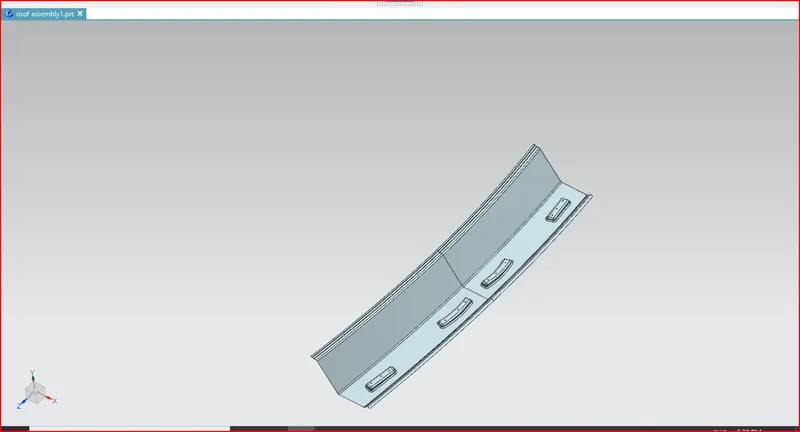
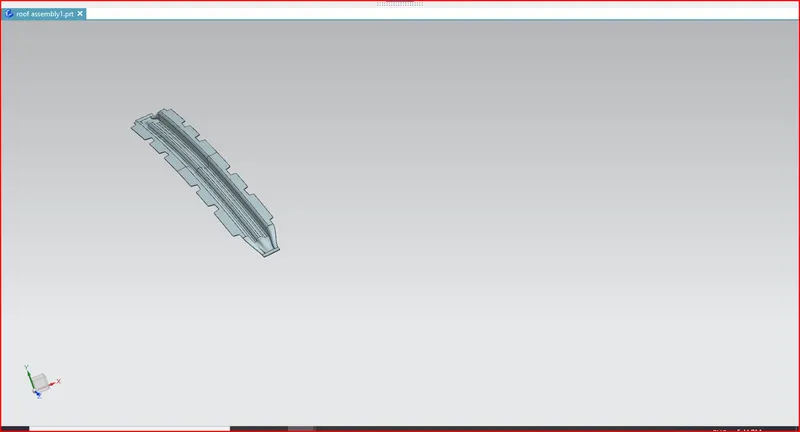
4.Bows front roof :
- We ar e making two bows one is in between the front roof rail and central roof rail and another is in between the central roof rail and rear roof rail.
- Both ends of the bow are joined to the roof outer flanges by the spot welding and the inner sides of the bow are joined to the inner surface of the roof with the help of mastic points.
- The minimum radius of the fillet is 3.75mm.
- The cross-section of the bow is made in such a way that we should get the maximum value of the minimum moment of inertia at which the bow fails.
BOW ROOF REAR:
- It is also same to the Front bow roof but the positioning bow roof only change. The bow roofs are given to the improve the torsional stiffness and load bearing capacity of the roof structure. When number of bow roofs are given by the roof dimension. Longer the roof area we have to give the more bow roof to the structure.
- But, remember we place bow roof in flatter region for enhance strength of the roof.
CENTER ROOF RAIL:
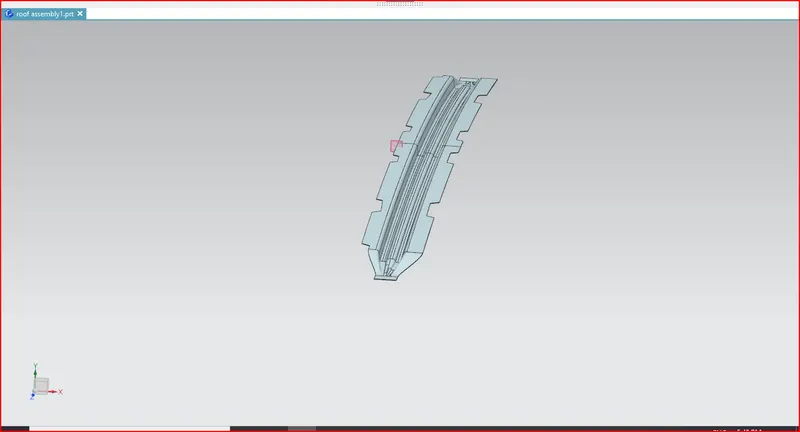
- Reinforcement Center roof rail is effective support to the flat area structure roof. Because of center area of roof is more susceptible to failure under action of load. Usually, Reinforcement center roof rails are fixed at the center of the roof for connecting to the B – Pillar support structure, it will used for roll-over test.
- Center bow roof and reinforcements are placed at the center of the roof structure. They two are connecting to help of spot - welding operation. Thickness of the Reinforcement center roof rail is 0.75mm.
CURVATURE STUDY ON THE ROOF:
- Heat Distortion
- Snow Load
HEAT DISTORTION:
The heat distortion study the plays an important role in Sheetmetal application. Heat distortion is temperature limit above which material cannot be used for structural application. This study is useful to fin the where the material starts to soften when exposed to a fixed load at elevated temperature. In order to avoid the bending, damage to the roof based on the heat distortion temperature. This study will provide the which position of the bow roof give enough strengthen to roof.
Bow Roof Prediction Formula:
HEAT DISTORTION CRITERIA:
W = [1.73 x 10^(-3) x L] + [1.85 x 10^(-8) x (R^2)/2] + [1.10 x 10^(-3) x I]-2.68
Judgement Condition: OK<2.7>3.1
Where,
L= Roof Length in X- direction [mm](Roof Dimension in 0-Y)
R = Roof curvature
R = 2(RX*RY)/(RX+RY)
RX = X Curvature
RY = Y Curvature
t = Roof plate thickness [mm]
I = Bow roof span [mm]
Thickness for the Roof(t):
Roof Outer Panel, t= 0.75mm
Front Roof Rail, t = 0.75mm
Rear Roof Rail, t = 0.75mm
Bow Roof Rail Front, t = 0.75mm
Bow Roof Rail Rear, t = 0.75mm
center roof rail, t = 0.75mm
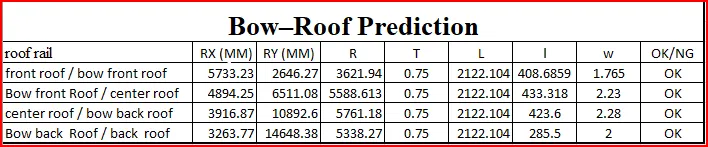
- From the above table we, conclude that all the values are of W< 2.7 and also W> 3.1. So, that all bow roofs areas are placed at the right place.
SNOW LOAD:
- Snow load criteria study is used to check the durability of the roof to withstand the snow fall on the roof and reflex it is original shape without any permanent deformation after load being removed.
SNOW LOAD CRITERIA:
Qr = [IY x t2] / [α x s x [(RX + RY)/2]2 x 10-8]
Where,
α = My x LX2 x10-12, My = Y(Ly–Y)
Judgement condition = Qr > 3.1
250 < s < 380
t = Roof plate thickness[mm]
LY = Distance between the front and rear roof rails on the vehicle along with 0Y[MM],
Length of roof panel with the center point between roof rails front/ rear as the front and rear reference point.
LX= Distance between the left and right end of the roof on the roof bow[mm],
With of the roof panel exposed on the surface.
Y = Distance between Front roof rails to roof bow [mm],
s = Distance for which roof bow bears divided load [mm],
s = L1/2 + L2/2
Iy = Geometrical moment of inertia of roof bow (Y cross – section) [mm4],
RX = Lateral direction curvature radius of roof panel Y cross section on roof bow [mm4],
Roof panel curvature radius of the length LX in front view.
RY = Longitudinal direction curvature radius of the roof panel X cross section on roof bow[mm4],
Roof panel X curvature radius of length s in side view.

- this center roof and bow back roof snow load predicton is fail so i implement case 1 that is creat in emboss in roof so that improve my strenth that thing doing this
Draft analysis-
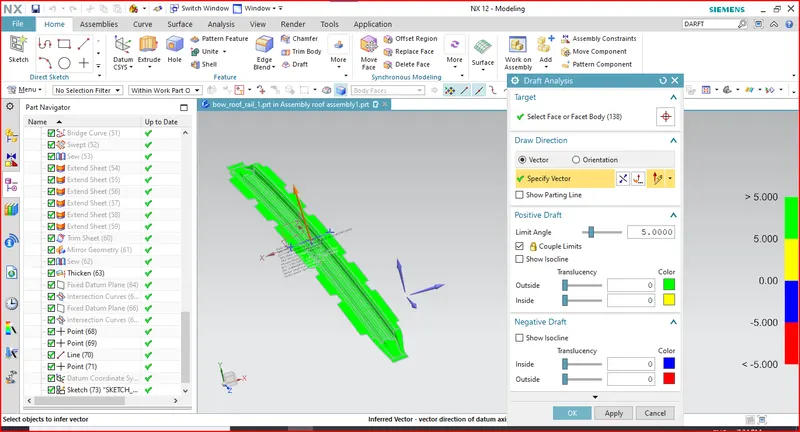
Before we give the part for manufacturing we have to some analysis ourself to check all the constraints and to check if we have any negative draft on a part .
We have a tool called draft analysis in NX Cad to check the following.
bow front roof
center roof rail
bow rear roof
Conclusion:
- So from this project, we learned types of roofs and reinforcement used to increases the strength of roof and design the roof according to the heat distortion criteria and snow load conditions and how to join the front roof rail, central roof rail, rear roof rail and Bows to the roof.Learned to position the bows so that we can pass the judgemental conditions of the snow load condition and hear distortion criteria.