Roof Design
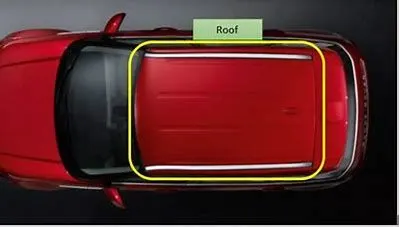
Roof- An automobile roof or car top is the portion of an automobile that sits above the passenger compartment, protecting the vehicle occupants from sun, wind, rain, and other external elements.
A sunroof is typically a solid body-colored panel that can manually tilt up or be removed. A sunroof is an opaque metal panel, and you can’t see through it. From the outside, it looks like a body-colored metal panel.
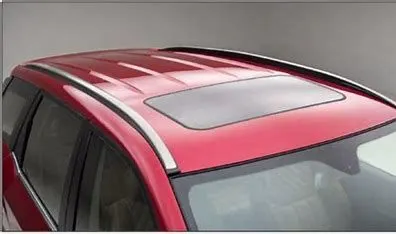
A moonroof is a type of sunroof, except that it’s a transparent, sliding, tinted glass panel. This panel is not removable. More recently, the panoramic style of moonroof has become popular, in which most of the roof of the car is made of glass, but only the panel over the two front seats will slide or open — the roof glass over the rear seats stays fixed. The interior of the car is then shielded by a retractable shade in the headliner; sometimes it’s an electric one, sometimes a manual one.
Steel roof panel thickness for current automobiles should be 0.7 mm to 1.5 mm, and the steel would be a low-strength grade such as the 5 defined in SAE J2329 Categorization and Properties of Low Carbon Automotive Sheet Steels or maybe a dent-resistant type according to SAE J2340
And it is enhance vehicle apperance but is also used to carry bulky cargo for the roof strength & roof strength test means that the vehicle can support up to four times its own weight before collapsing. This means that a single person, or even a couple can probably sit on the roof of a car without breaking it.
Main Parts Of Roof
- The roof has an outer panel which is the styling part.
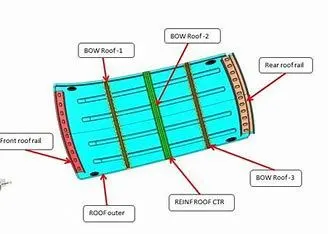
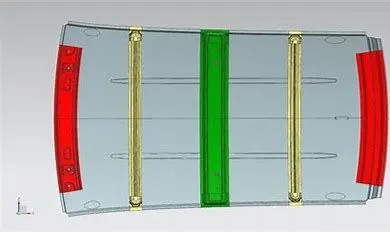
- Strengthening parts are present below an outer panel of a roof, which are front roof rail, Bow roof, Centre roof rail, and Rear roof rail.
- The front roof rail provides provision for the windshield glasses. Visibility criteria and headroom clearance have to be followed while designing the front roof rail. Provision for windshield mounting and inside rearview mirror is provided on the front roof rail.
- The Rear roof rail has hinge mounting for the back door. It is attached at the portion where the back door meets with the roof.
- Bow roofs are provided in between the front roof rail and center roof rail as well as the Rear roof rail and center roof rail. They are provided to enhance the localized strength of the roof and are attached directly to the bottom of the roof with either spot welding or with the help of Mastics.
- Reinforcement center or center roof rail is used as a cross member between Left hand and right-hand bodysides.
- Both the front roof rail and rear roof rail are provided with the Master section for the design.
The below image shows the location and Material used for all the strengthening parts.
TESTING OF ROOF-
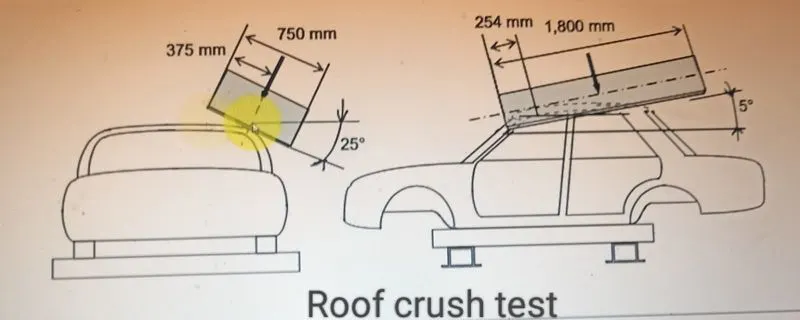
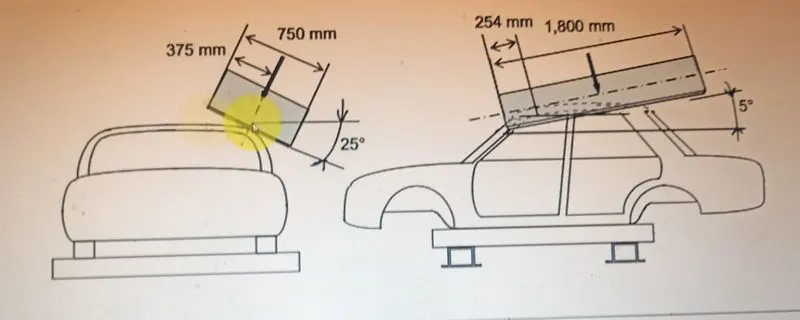
DESCRIPTION- DESIGN CONSIDERATION
while design the roof we have to consider some criteria
1.Head room clearnce
2.Visibility criteria
3.Curvature study
4.Head disirtion and snow load criteria
5.Draft analysis
Components of Roof-
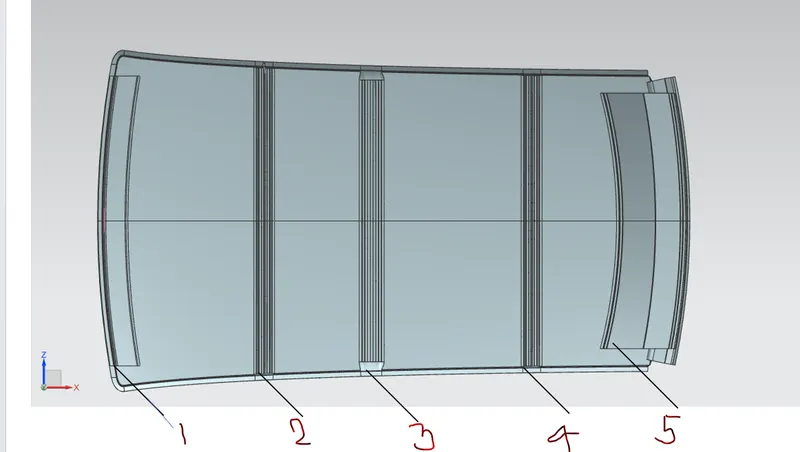
1.Front roof rail
2.Front bow roof rail
3.Centre bow roof rail
4.Rear bow roof rail
5.Rear roof rail
Car roof rails not just enhance your vehicle's appearance but are also useful to carry bulky cargo or sporting equipment. Special roof mounts can be fixed to these car roof rails to take heavy items on your road trips. When on a road trip with friends, you require space to carry your luggage
Front roof rail-
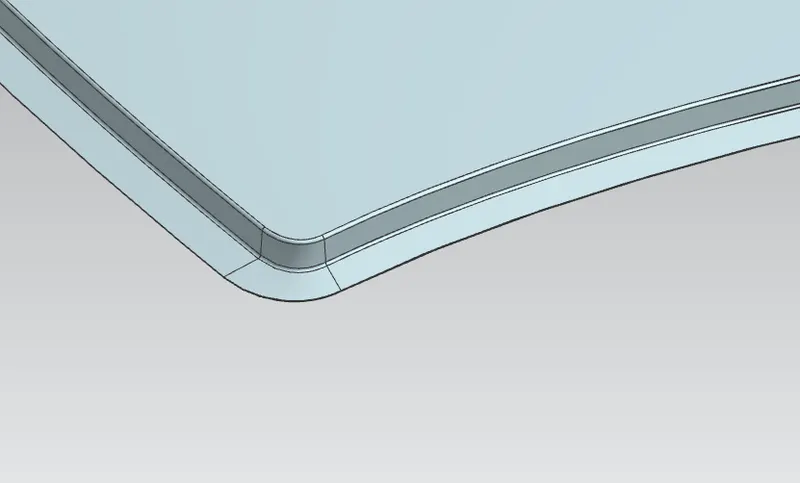
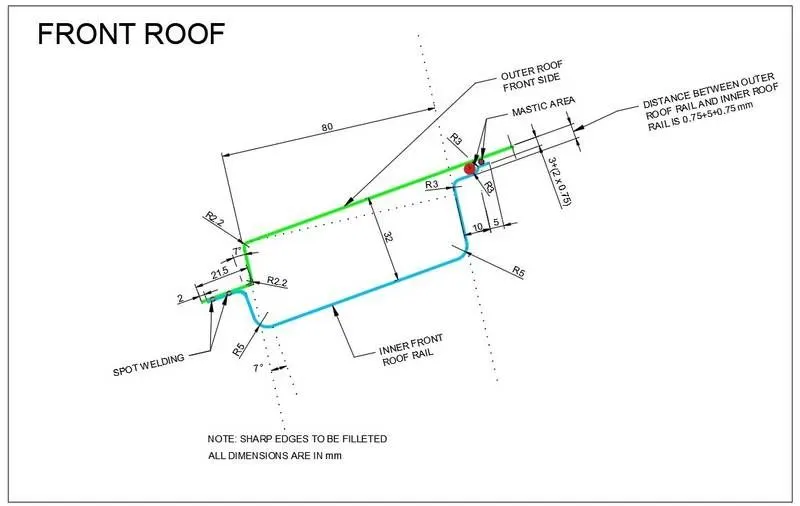
The Front roof rail is locatedon the front of the roof where wind shield joins with the roof . The visibility criteria and head room clearance of the passenger are taken into considertion for the bottom flange .One end of the rail is joined using spot weldind while the other end is joined with the roof using mastic sealants for increased strengths.
When considering the parameters of roof rail, give them 60-80mm length, proper draft angle and also using the embosses for increasing the strength. Front section of front roof rails spot welded to the front ditch area and other end is fixed with help of mastic sealants.
Sheetmetal thickness t = 0.75mm
Master section for front roof rail is given
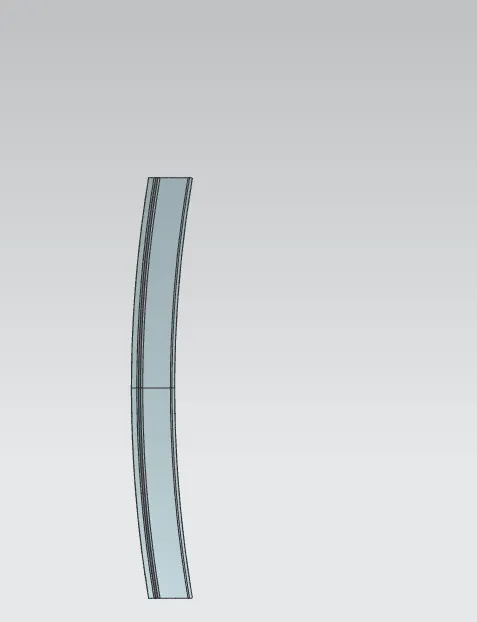
As per the master section, we create a front roof rail.
2.FRONT BOW ROOF RAIL
Bow roof is an additional siffening member for the roof to increase its strength and so that it can satisfy the norms. Both ends are joined together using mastic sealants to increase strenght and also since this would not affect the styling of the roof.
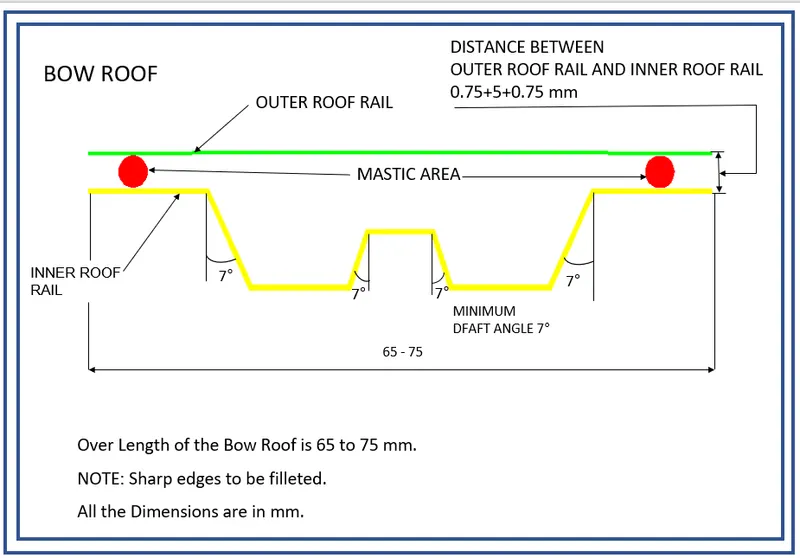
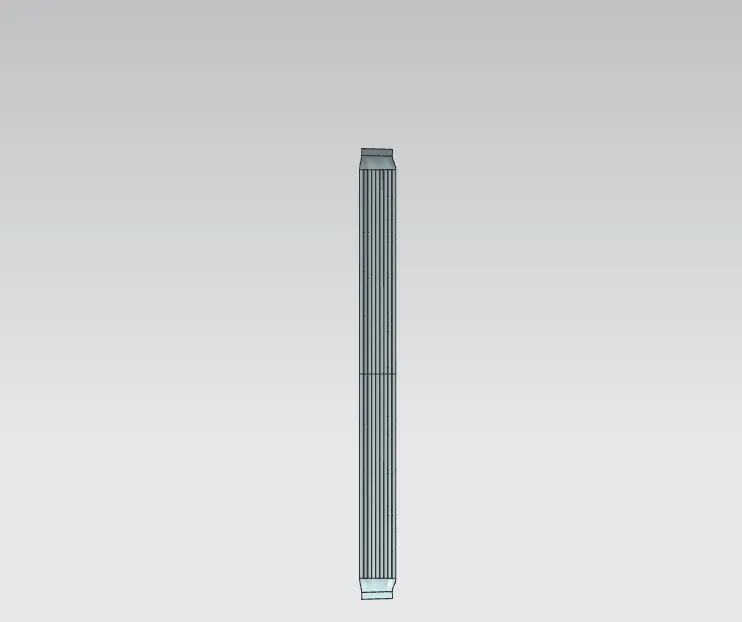
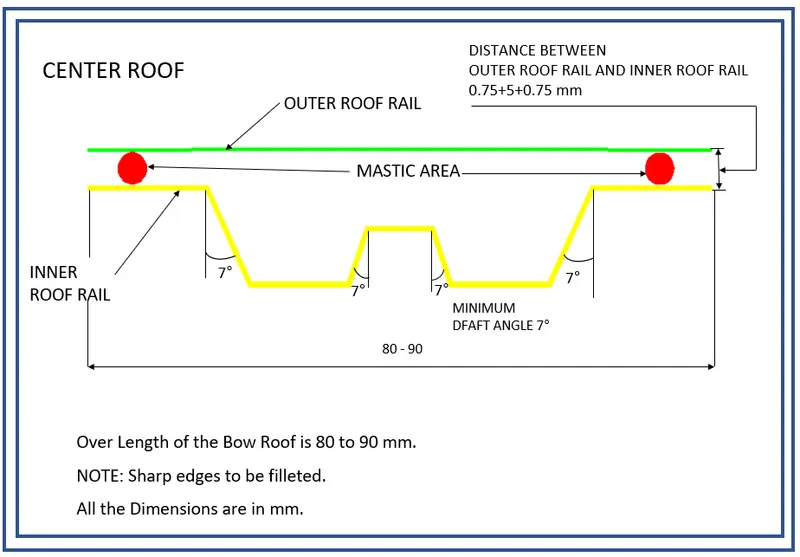
3.CENTER BOW ROOF RAIL- Centre Roof rail or the reinforcement centre is located at the centre of the roof . The cross section of this is more since it needs to provide more strength to the roof. Here both are ends are joined together using mastic sealants at 80-90 mm.
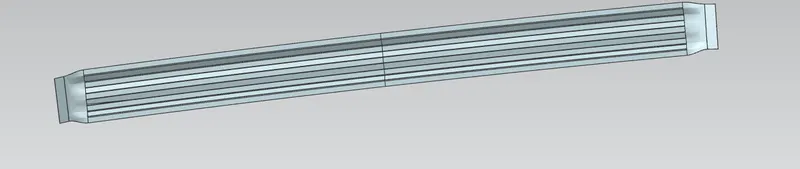
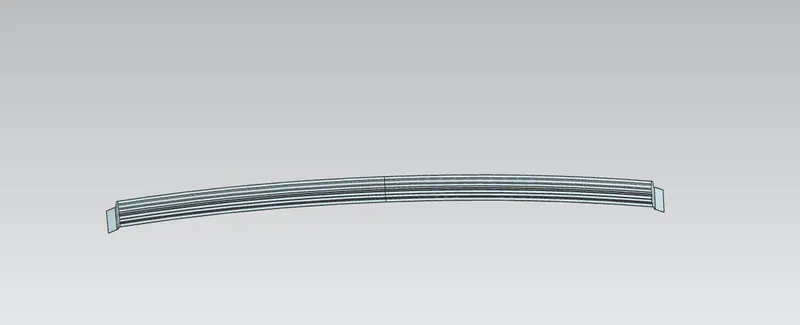
4.REAR BOW ROOF RAIL- Rea bow roof also have the same purpose as that of the first one. This one is located between the center bow roof and the rear roof rail.
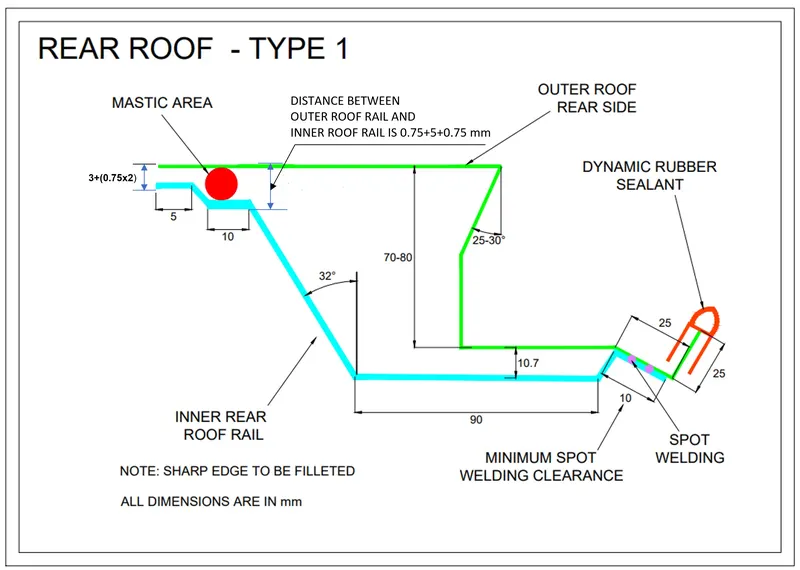
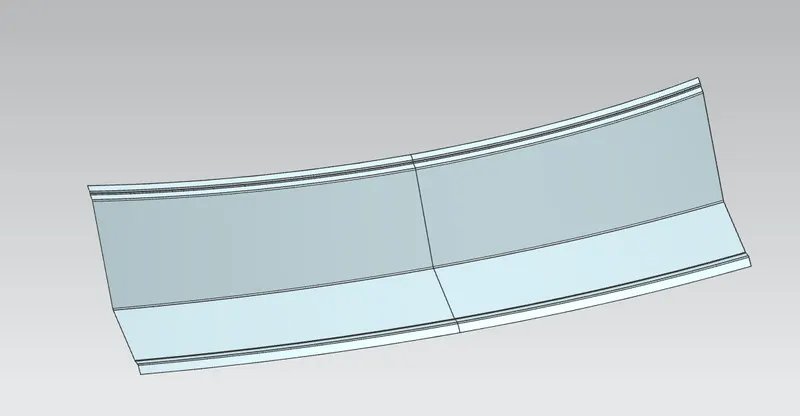
5.REAR ROOF RAIL- This roof rail joins with the back door and the roof. Inputs from the backdoor are taken into consideration for designing this roof rail.
Here one end is joined using spot welding while the other end is joined using mastic sealants.
CALCULATION
Design consideration-
Factors which is considered before creating ditch area
1.Head room cleareance
2.Visibility criteria
3.Backdoor assembly
4.Windshield Assembly
HEAT DISTORTION CURVATURE STUDY-
This study is used to find out and predict the heat distortion temperature at where the material starts to soften when exposed to a fixed load. So in order to avoid bending or damage of the roof based on this calculation we will decide the position on the roof bows on the roof.
Bow–Roof Prediction Formula
W = [1.73 x 10^(-3) x L] + [1.85 x 10^(-8) x (R^2)/t] + [ 1.10x10^(-3) x l] - 2.68
Where,
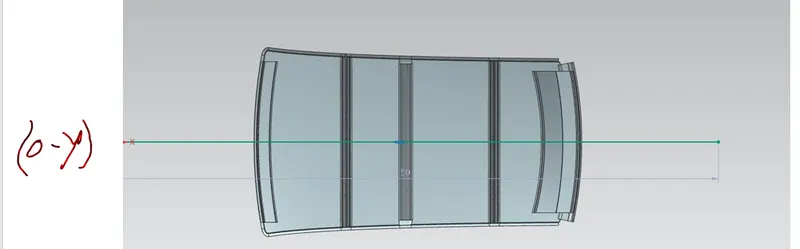
L = Roof Length in X-Direction[mm](Roof dimension in 0-Y)
R = Roof curvature
R = 2(Rx*Ry)/(Rx+Ry)
Rx = X curvature
Ry = Y curvature
t = Roof plate thickness [mm]
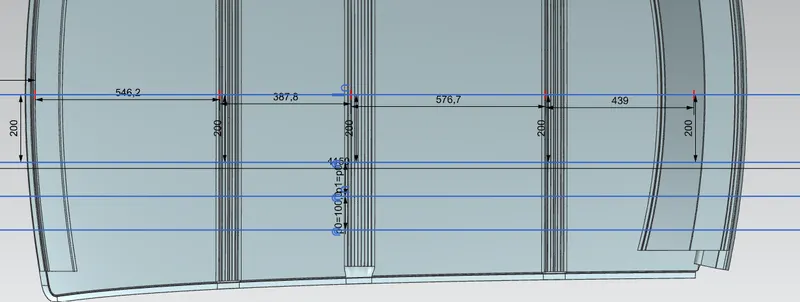
l = Bow Roof Span [mm]
First we create a mid section line and offset it at 300,100,100 mm as per shown and by using point command we create a mid section point for components
| RX | Ry | R | L | l | t | W | Result=OK< 2.7 |
| Rx1=5729.476547 | 2685.2588648 | 3656.7109 | 1974.8 | 454.34 | 0.75 | 1.519299 | ok |
| 4936.22722 | 633802879 | 5550.076 | 1947.8 | 305.24 | 0.75 | 1.785274 | ok |
| 4002.6922878 | 10447.92102 | 5787.964 | 1947.8 | 494.20 | 0.75 | 2.05966 | ok |
| 3238.9126116 | 14215.78390 | 5275.792 | 1947..8 | 268.8 | 0.75 | 1.671945 | ok |
Snow Load Prediction Formula
Qr = [Iy x t2] / [α x s x [(Rx + Ry)/2]2 x 10-8]
Note: The Qr value given over here is correct. There was a typo error in the formula given in the video.
Where,
α = My x Lx2 x 10-12 , My = Y(Ly-Y)
t = Roof plate thickness [mm]
Ly = Distance between the front and rear roof Rails on the Vehicle along with 0Y[mm]
Length of Roof panel with the center point between Roof rail Front /Rear as the front and rear reference point.
Lx = Distance between the Left and Right end of the roof on the Roof BOW [mm]
The width of the roof panel is exposed on the surface.
Y = Distance Front Roof Rail to Roof BOW[mm]
s = Distance for which Roof BOW bears divided load [mm]
s = L1/2 + L2/2
Iy = Geometrical moment of inertia of Roof BOW (Y cross-section )[mm4]
Rx = Lateral direction curvature radius of roof panel Y cross-section on Roof BOW [mm]
Roof panel curvature Radius of the Length Lx in Front view
Ry = Longitudinal Direction curvature radius of the Roof panel X cross-section on Roof BOW [mm]
Roof panel X curvature radius of length s in Side view
Judgment condition
Qr ≥ 3.1
My=Y(Ly-Y)
| Ly=1947.8 | 544.9 | 764440.2 |
|
1947.8 |
932.7 | 946783.8 |
| 1947.8 | 1509.2 | 661935.1 |
| 1947.8 | 1947.8 | 0 |
For @ calculation
For s calcultion
| L1=544.9 | L1/2=272.45 | s=738.8 | ||
| L2=932.7 | L2/2=466.35 | 1220.95 | ||
| L3=1509.2 | L3/2=754.6 | 1728.5 | ||
| L4=1947.8 | L4/2=973.9 | 973.9 |
@1=0.98956
@2=1.113325
@3=0.740106
Moment of inertia
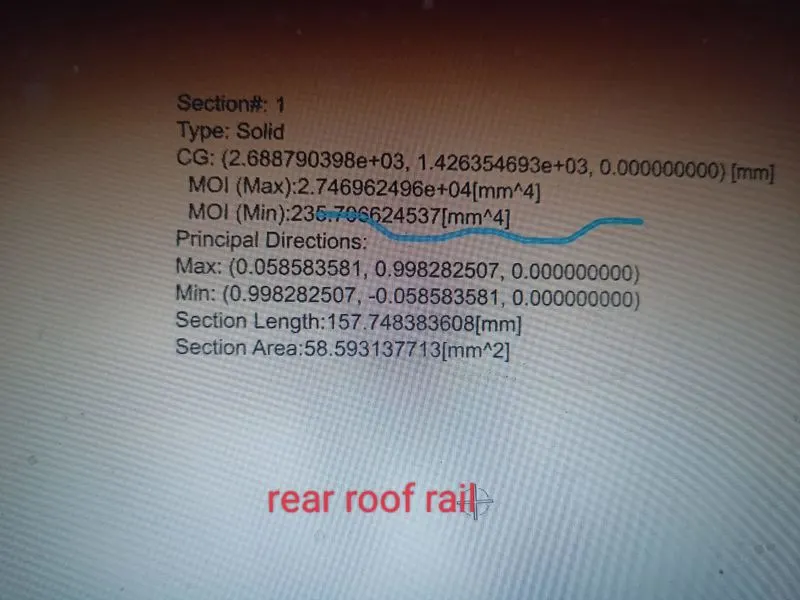
MOI of bow rear=235.406624537 Iy3=0.5625*235.406624537=132.41622630206
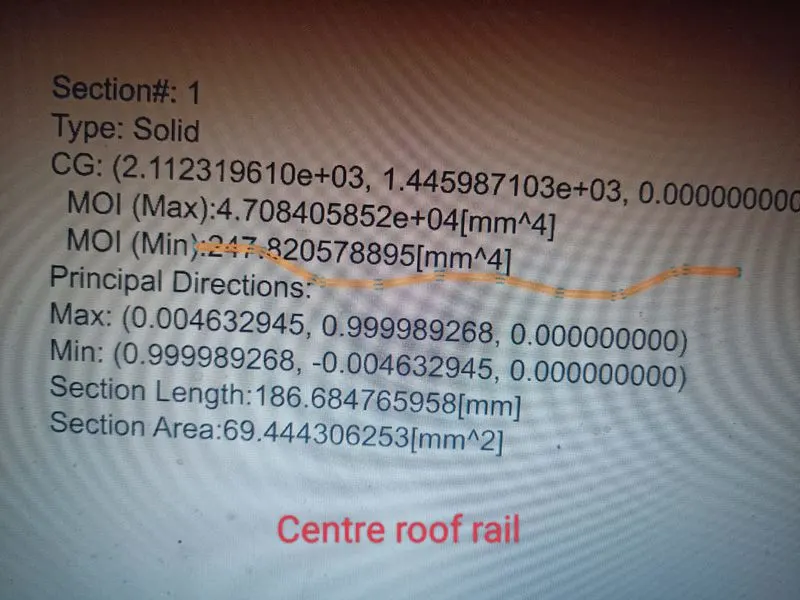
MOI for centre roof rail=247.820578895 Iy2=0.5625*247.820578895=139.39907562843
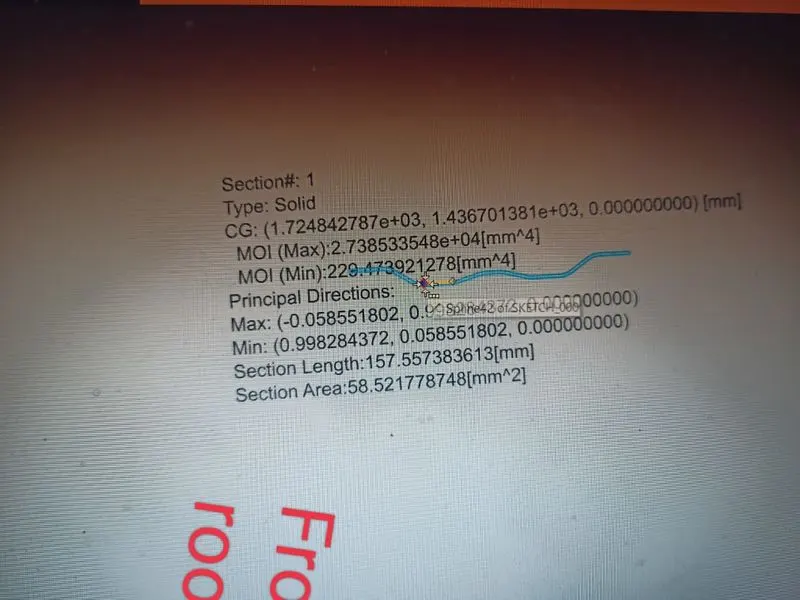
MOI FOR front bow =229.0473921278 Iy1=229.0473921278*075*0.75=128.83911
| Iy | t^2 | (Rx+Ry/2)^2*10^-8 | Iy*t^2 | s | @ | Qr | Result |
| 229.4739 | 0.5625 | 12924025*10^-8 | 128.83 | 738.8 | 0.98 | 1.488 | NG |
| 247.820 | 0.5625 | 25110121*10^-8 | 138.7792 | 1220.9 | 1.113325 | 0.410 | NG |
| 235.706 | 0.5625 | 1.07 | 131.8 | 1728 | 0.74 | 0.095 | NG |
Now since we these values for the snow load values it does not satisfy the condition.So to make the roof stronger we create embossses on the roof to strengthen the roof.
Draft analysis-Before we give the part for manufacturing we have to some analysis ourself to check all the constraints and to check if we have any negative draft on a part .
We have a tool called draft analysis in NX Cad to check the following
For roof
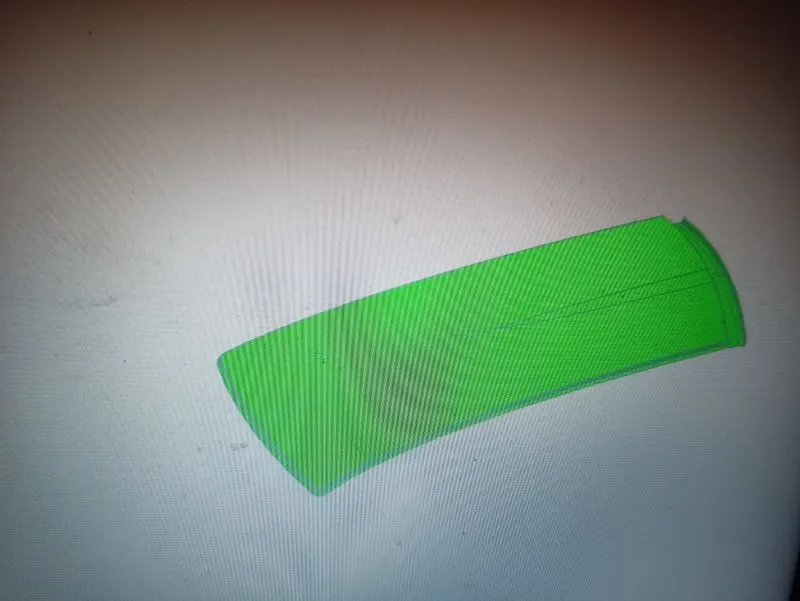
For Center bow roof 1
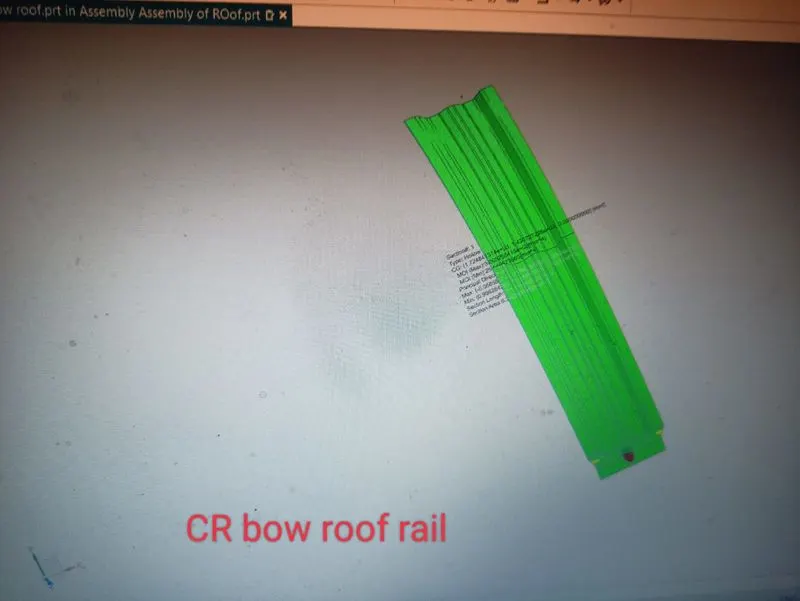
For Rear bow roof
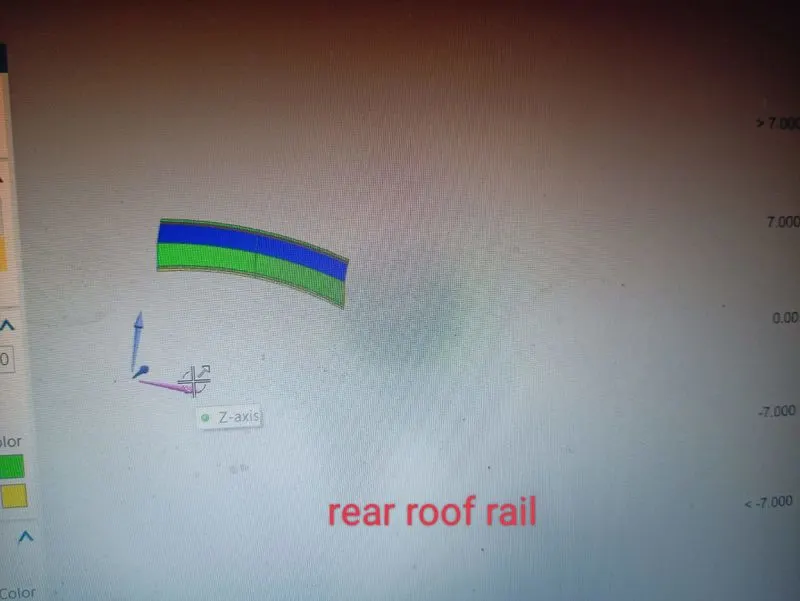
For Front roof
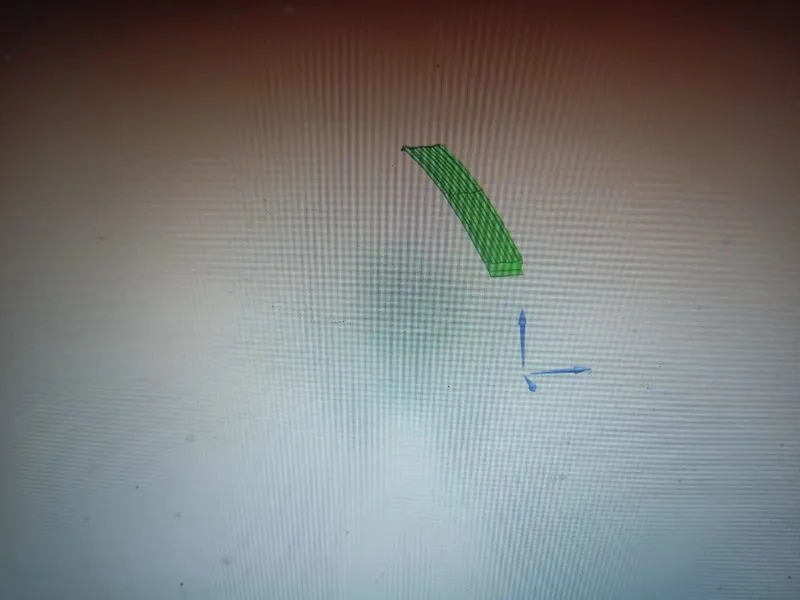
For rear rail
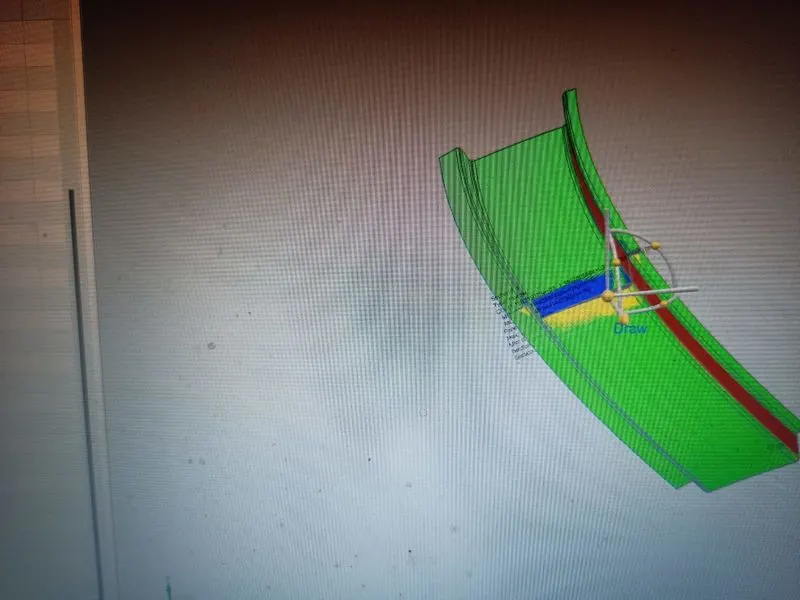
We gave a limit angle of 7.0 degree.
When the colour is green it means it has a positive draft it means area which are more than 3 degree is shown as green. If it is shwn in yellow that means it has less then 3 degrees and if in blue or red then it means it has negative draft.
Conclusion-
We were successfully able to design the roof with all the roof rails for better support and strength. We designed it so as to satisfy the norms and regulations by calculating the heat distortion criteria and the snow load critera. While doing this we also understood about the methodology behind designing the roof of the car and what all we take into consideration while designing so.