Roof challenge
Aim:
To design a Car Roof and to do the curvature study to resist Heat distortion & snow load condition of the same.
Intoduction:
An automobile roof or car top is the portion of an automobile that sits above the passenger compartment, protecting the vehicle occupants from sun, wind, rain, and other external elements. Because the earliest automobiles were designed in an era of horse-drawn carriages, early automobile roofs used similar materials and designs.
Different types of car roofs are :
- Convertible roofs.
- Hardtops
- Sunroofs
- T-tops.
- Targa tops.
- Vinyl roofs.
Some roofs have a window on them and are called sunroofs, while convertibles have special mechanisms that allow the roof to be retracted and be stowed away through a wide array of methods depending on the design.
The roof of the car is made up of multiple parts that provide support and strength to the roof component. The actual roof sheet and the roof rails support the roof sheet. There are 3 primary roof rails in a car the front, the center, and the rear, while additional roof rails are called Bow roof rails. The number of bow roof rails depends on the size of the roof. Headroom, visibility criteria, and target region also play a key role in roof design.
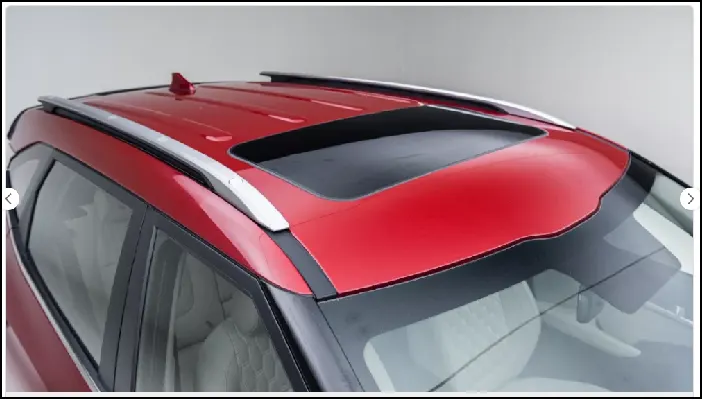
Vehicle roof structure
A roof structure for a vehicle body includes a roof opening defined by a pair of spaced apart side rails, each having a flange extending inwardly and being vertically offset below the roof surface, and by front and rear headers, each having a flange defining a window opening. A roof panel assembly includes a roof outer panel and a pair of inverted hat-shaped reinforcement rails which underlie the outer side edges of the roof outer panel and include inwardly and outwardly directed legs abutting the underside of the roof outer panel. The outermost portion of the side edges of the roof outer panel are hem flanged over the outwardly directed flanges of the reinforcement rails so that the roof outer panel and the reinforcement rails define the roof panel assembly. The roof outer panel has fore and aft end flanges which overlie the flanges of the front and rear headers and are spot welded thereto. A bead of adhesive is placed on the inwardly extending flanges of the side rails and the roof panel assembly is lowered into the roof opening with the base wall of the reinforcement rails pressed onto the adhesive to attach the roof panel assembly to the vehicle body. The subsequent installation of the front and rear windows hides the spot welds.
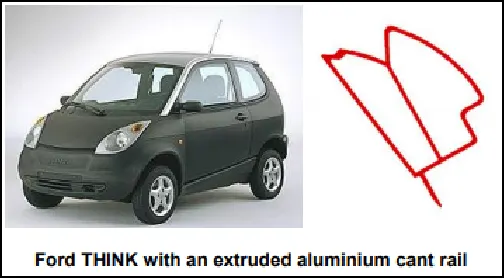
The integration of structural aluminium components into the roof of a steel car body was first attempted in the Ford THINK, a small electric city car. The cant rail of this vehicle, i.e. the structural member which runs over the top of the doors, is designed as a visible aluminium component. The extruded aluminium profile (alloy EN AW-6060) includes the A pillar and ends at the top rear end. The length of the beam is about 2.2 m, the profile has a hollow cross section with flanges and it is 3-dimensionally formed. The beam upper face is exposed to the atmosphere and the surface is untreated.
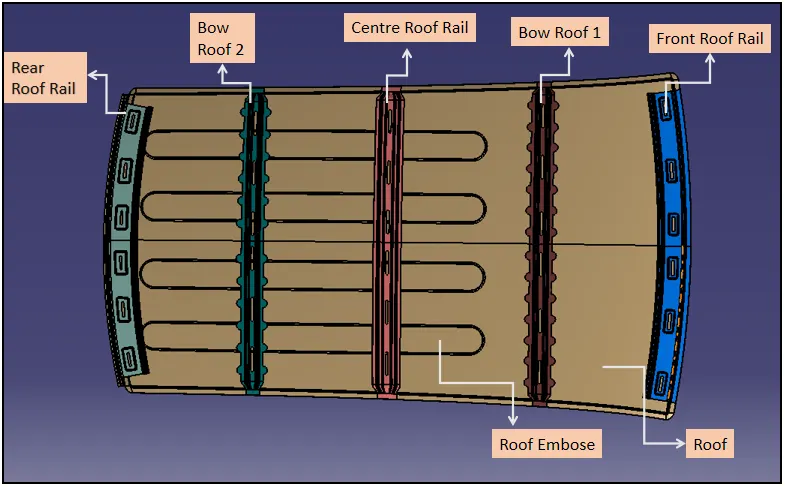
The roof is an assembly of many parts like Front roof rail, Bow roof, Bow roof center, and reinforcement center. The number of bow roofs is based on the length of the roof and sometimes even the bow roof center is avoided in cases like small cars. The roof is attached to the body of the car using mastic sealants provided between bow roofs and the front and rear rails.
Different components of Car Roof:
- Roof
- Front Roof Rail
- Centre Roof Rail
- Rear Roof Rail
- Bow Roof 1
- Bow Roof 2
ROOF:
An automobile roof or car top is the portion of an automobile that sits above the Passenger compartment, protecting the vehicle occupants from sun, wind, rain, and other external elements. Because the earliest automobiles were designed in an era of horse-drawn carriages, early automobile roofs used similar materials and designs.
 ROOF
ROOF
FRONT ROOF RAIL:
Front roof rails are used in the assembly of a roof in which it provides mounting provisions to windshield glasses and the changes in the front roof rail influences the frontal visibility of the passenger. The major design factor considered is the headroom clearance. The front roof rail also provides provisions for mounting the inside rea view mirror.
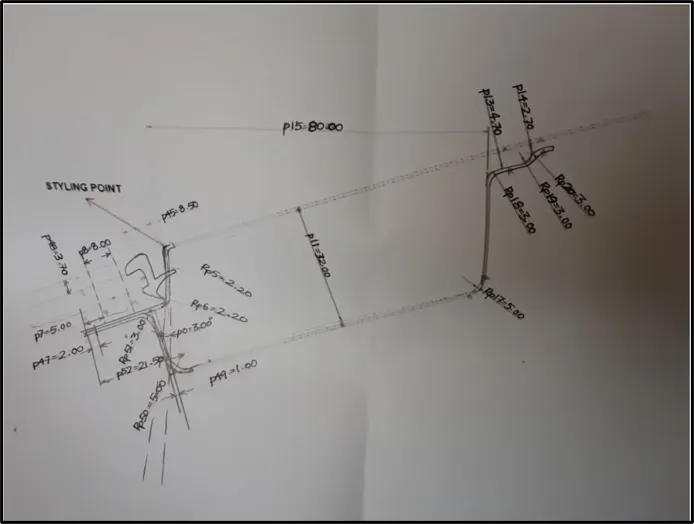
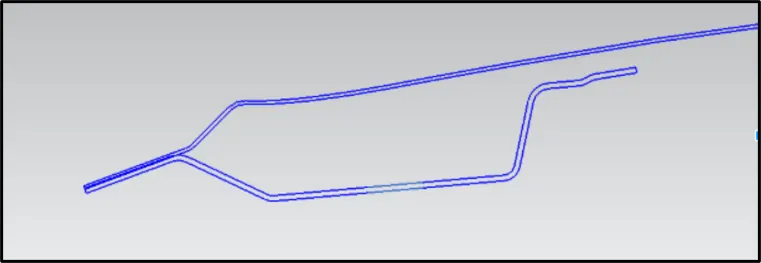 Master section of front roof rail
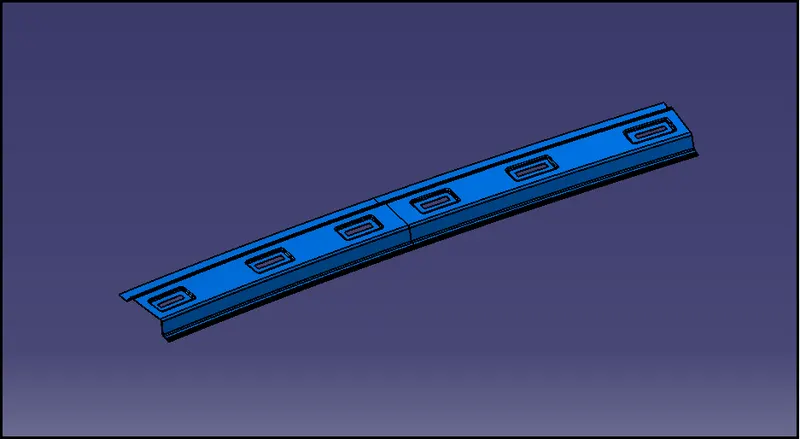 FRONT ROOF RAIL
REAR ROOF RAIL:
The rear roof rail is the one of the important components of roof assembly which is used for the back door mounting. Similar to front roof rail important design consideration includes rear passenger head clearance rear visibility of the vehicle.
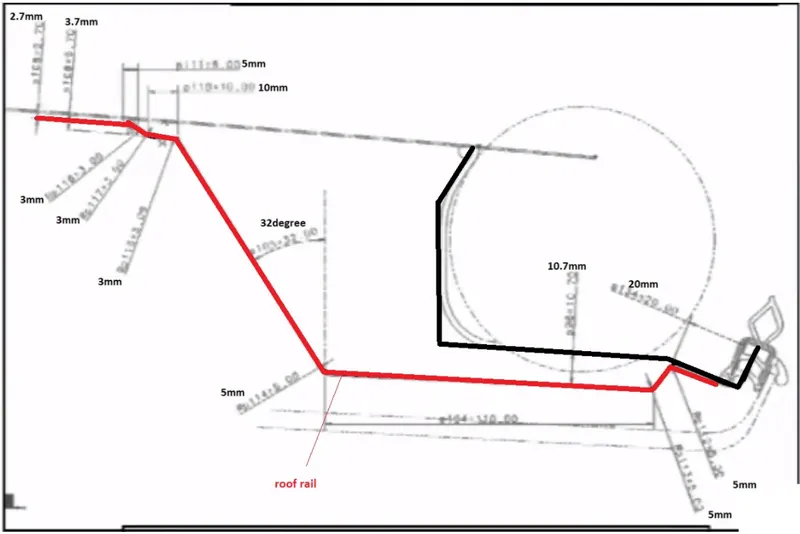
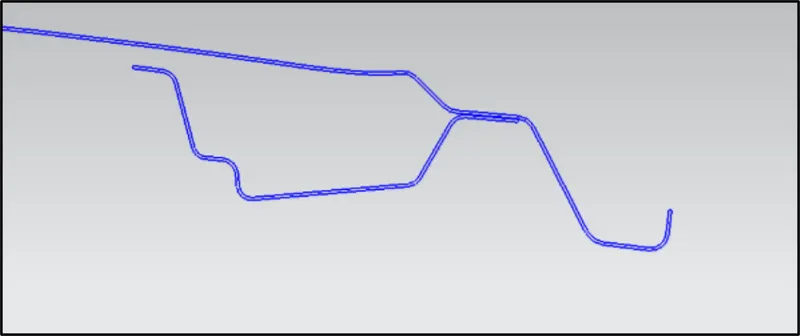 Master section of rear roof rail
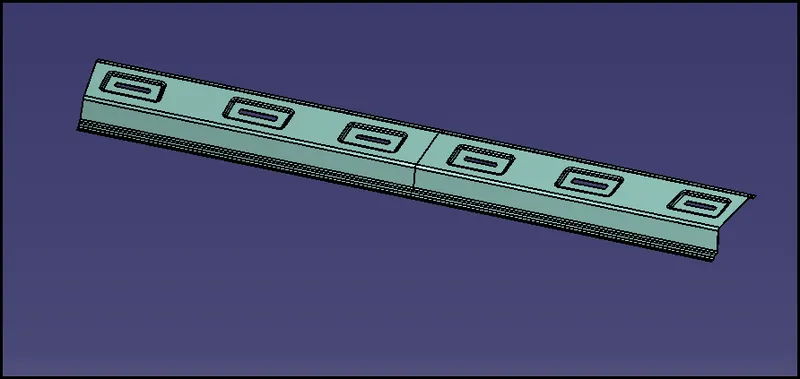 REAR ROOF RAIL
CENTER ROOF RAIL (REINFORCEMENT CENTRE):
The reinforcement center is used as a cross member between bodyside LH & RH respectively. In some cases, the reinforcement center is not joined with the roof and in some other cases, it is made to join in both roof and bodyside. The reinforcement center and bow roof are joined either spot weld or by mastic sealants and provisions for the same are given.
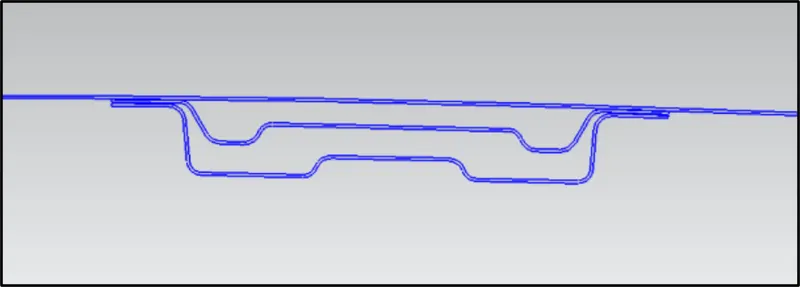 Master section of reinforcement center
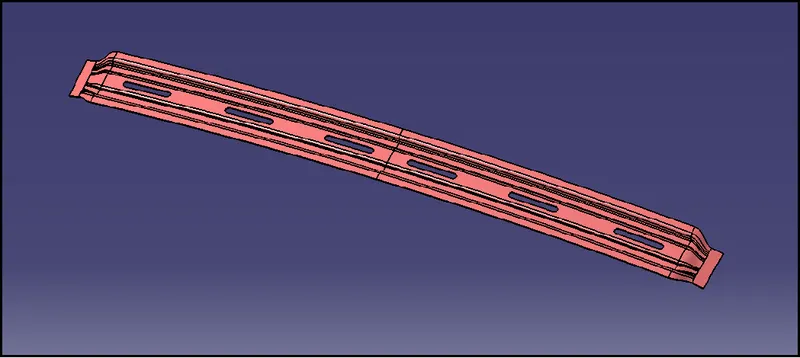 CENTER ROOF RAIL
BOW ROOF:
It is an additional stiffening member used in the roof assembly for the localised strength improvement and it is joined directly to roof itself with several spot welding or even with the mastic sealant.
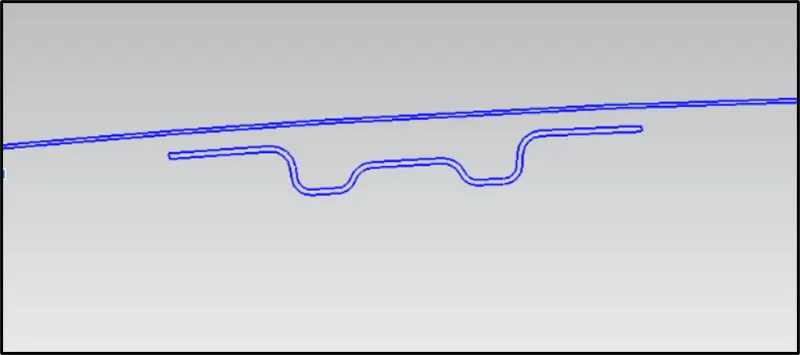 Master section of bow roof
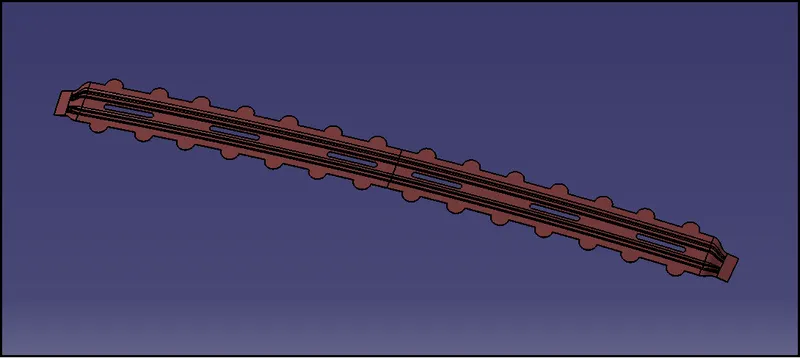 BOW ROOF 1
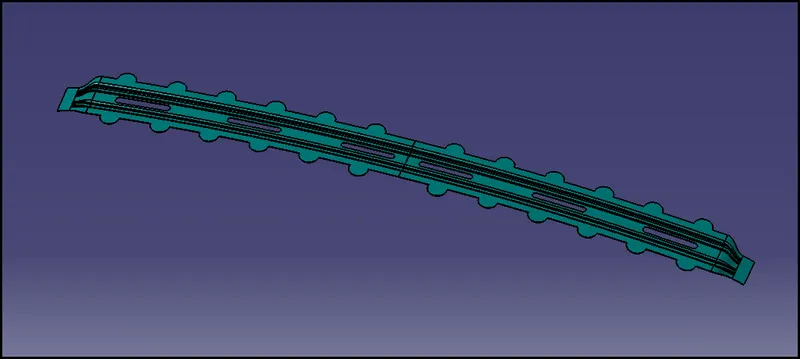 BOW ROOF 2
Draft Analysis:
Parts Cannot be ejected from the tool if it is at 90-degree for this reason, a small draft is to be provided for each surface of the component in order to easily remove the component from the mould without any defects. Draft is the angle in which the part is tapered to allow it to release. Most of the sheet metal part require minimum 7degree to 10 degree however 7 degrees are widely accepted in sheet metal component design.
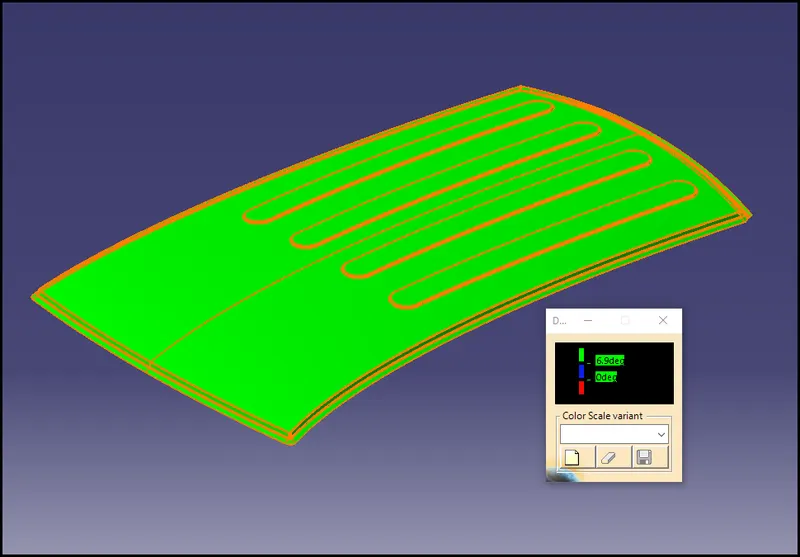 Roof
Roof
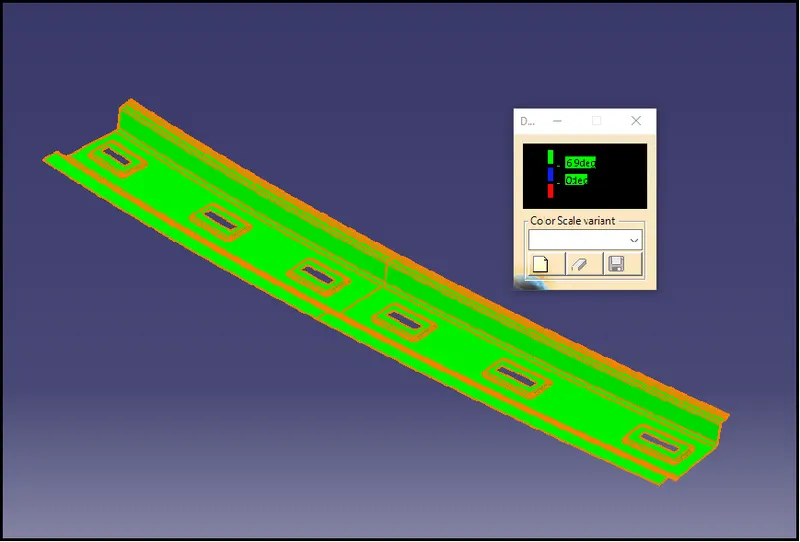 Front Roof Rail
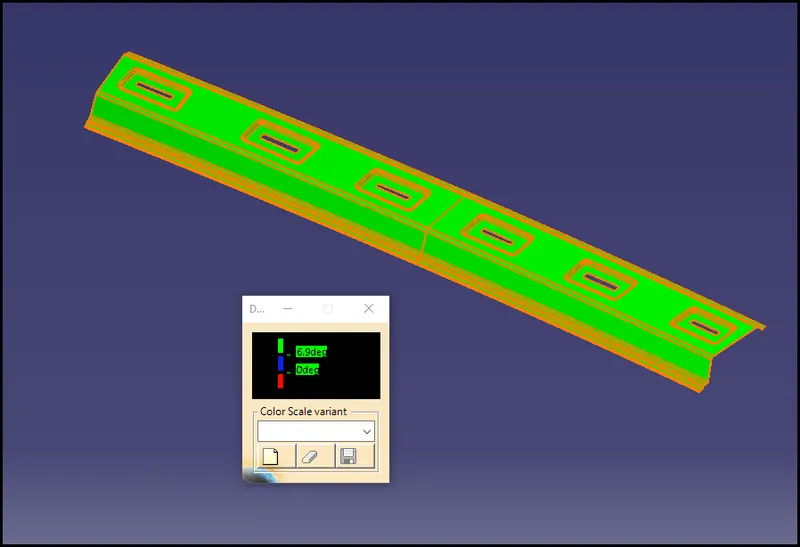 Back Roof Rail
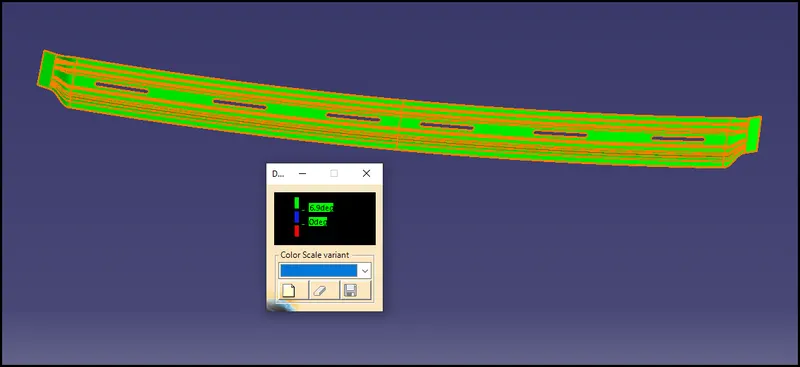 Center Roof Rail
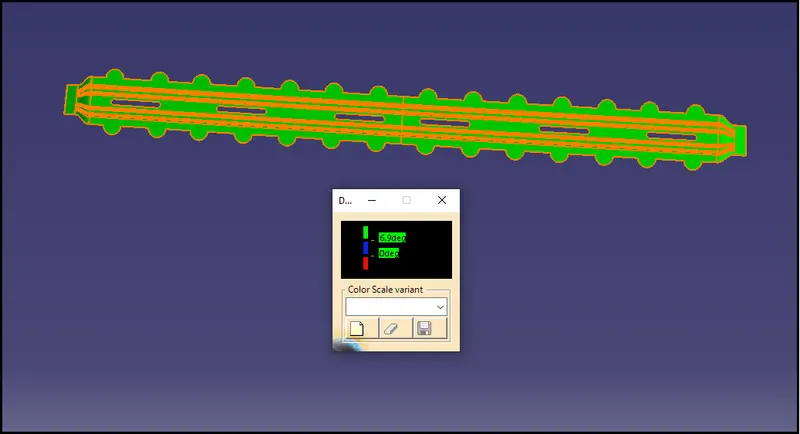 Bow Roof 1
Heat Distortion criteria:
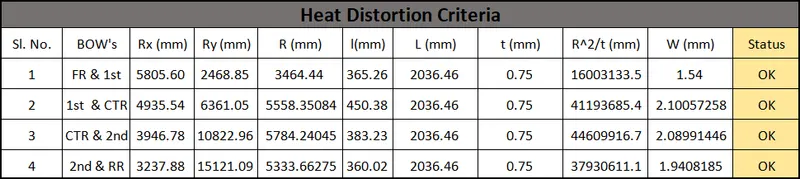
Heat distortion temperature is the temperature at which metal softens and deforms under a specified load. From Heat distortion criteria, roof strength can be enhanced by appropriate positioning of bow roof rails.
Predicting heat distortion for the roof is important since it is exposed to heat for a long time and high temperature will affect the roof structure therefore we have to determine the positions of bow roofs in such a way that it should provide strength to the roof to avoid bending or deformation of the roof due to bending.
It is calculated by the formula,
W = [1.73 x 10^(-3) x L] + [1.85 x 10^(-8) x (R^2)/t] + [ 1.10x10^(-3) x l] - 2.68
Judgement Condition : OK< 2.7> 3.1
Where
L = Roof Length in X-Direction[mm](Roof dimension in 0-Y)
R = Roof curvature
R = 2(Rx*Ry)/(Rx+Ry)
Rx = X curvature
Ry = Y curvature
t = Roof plate thickness [mm]
l = Bow Roof Span [mm]
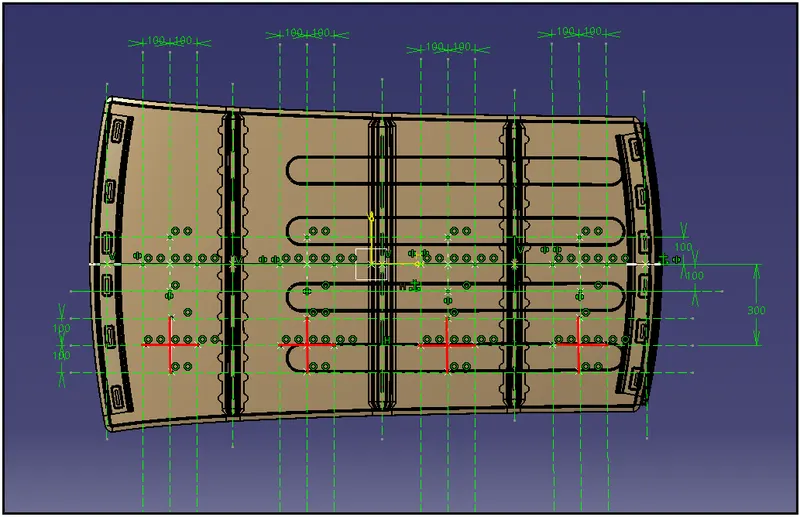 Heat Distortion Calculation Point
Snow load Prediction :
This evalution is performed in cold regions where snow occurs.roof design must pass through these calculations to ensure that it has sufficent stiffness to withstand the load due to accomalation of snow over the roof.
Snow load Prediction formula
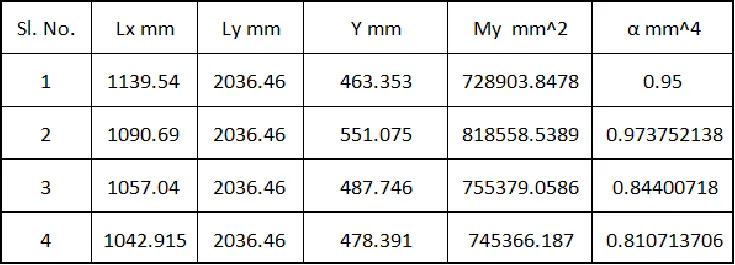
Qr = [Iy x t2] / [α x s x [(Rx + Ry)/2]2 x 10-8]
Where
α = My x Lx2 x 10-12 , My = Y(Ly-Y)
Judgement condition = Qr ≥ 3.1
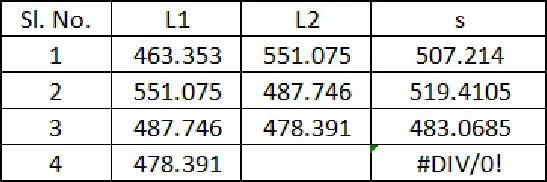
250 ≤ s ≤ 380
t = Roof plate thickness [mm]
Ly = Distance between the front and rear roof Rails on the Vehicle along with 0Y[mm]
Length of Roof panel with the center point between Roof rail Front /Rear as the reference point of the front and the rear.
Lx = Distance between the Left and Right end of the roof on the Roof BOW [mm]
Width of the roof panel exposed on the surface.
Y = Distance front Front Roof Rail to Roof BOW[mm]
s = Distance for which Roof BOW bears divided load [mm]
s = L1/2 + L2/2
Iy = Geometrical moment of inertia of Roof BOW (Y cross-section )[mm4]
Rx = Lateral direction curvature radius of roof panel Y cross-section on Roof BOW [mm]
Roof panel curvature Radius of the Length Lx in Front view
Ry = Longitudinal Direction curvature radius of the Roof panel X cross-section on Roof BOW [mm]
Roof panel X curvature radius of length s in Side view
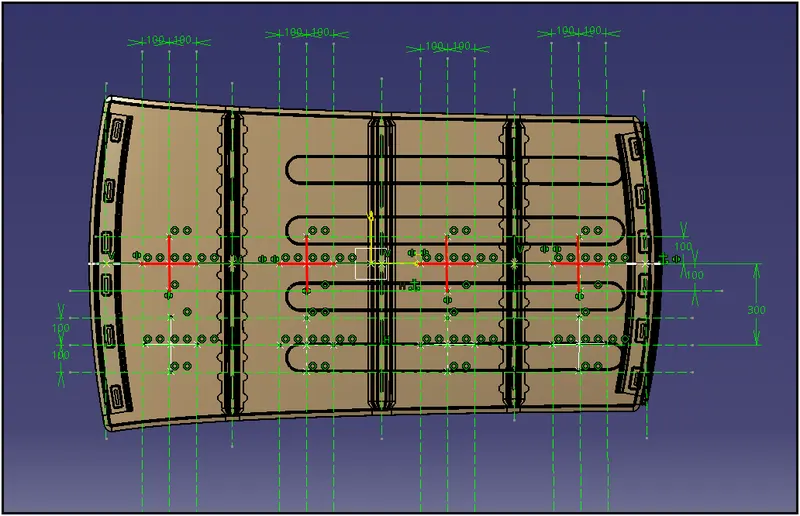 Snow Load Calculation Point
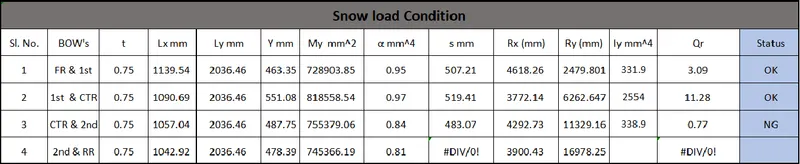
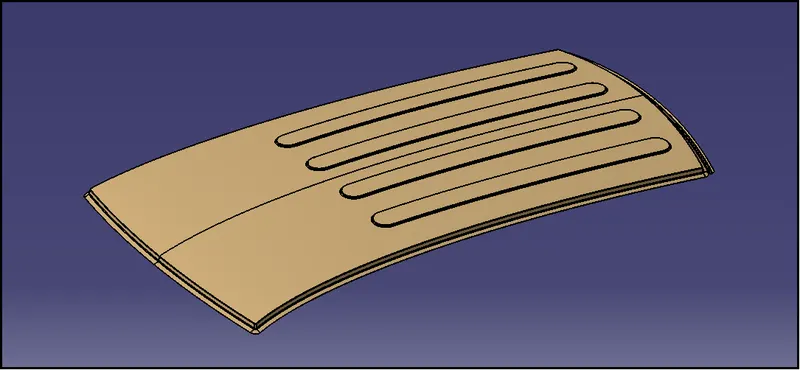
In the third condition the snow load condition is not satisfied, hence roof embose is provided to strenghten the roof.
Result:
The Car Roof was designed taking into account all the design parameters and the curvature study to resist Heat distortion & snow load condition was done.