Roof challenge
AUTOMOTIVE ROOF DESIGN
INTRODUCTION
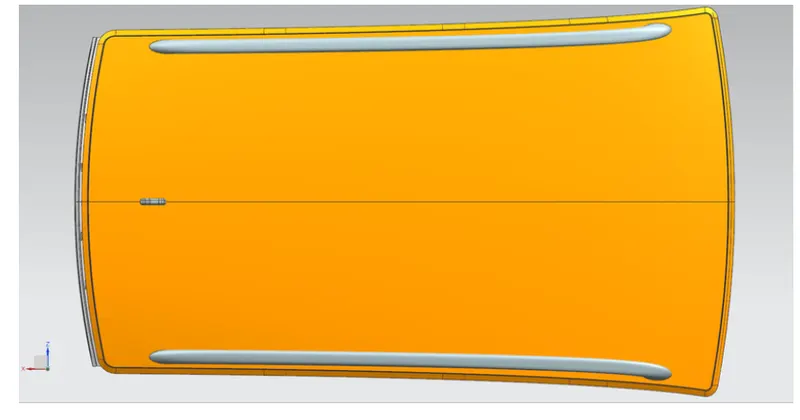
Automotive roof plays an important role in aerodynamics and internal strength of vehicle. The roof's BIW influences the aftermath effects of crush load, snow load and heat distortion criteria. The roof has internal structures like front roof rail,rear roof rail,bow roof l,bow roof 2,rear roof rail and reinforcement roof rail. In this project these structures were designed accordingly.Their position were also justified with the required criteria.Generally roofs are given a curvature along Xe and Ye. But some places of roof have flatness compared to other section,mostly while approaching the trailing edge of roof the roof becomes flat relatively. Sometimes this flatness is intentionally given to reduce the creation of a wake region while moving faster. The roof is like building a house. The house needs pillars, similarly the roof needs the above quoted internal structure to ensure safety and performance.The roof has to perform good in roll over test. The outer panelof roof is considered as class A surface,so there cannot be any spot welds or any visible fastening. Mastics plays major role in engaging the roof panel and the internal BIW parts.
SOFTWARE USED :SIEMENS NX12
AUTOMOTIVE ROOF
They act as a passenger cabin and protects from sun,rain,wind,dust, etc.
Roof variations
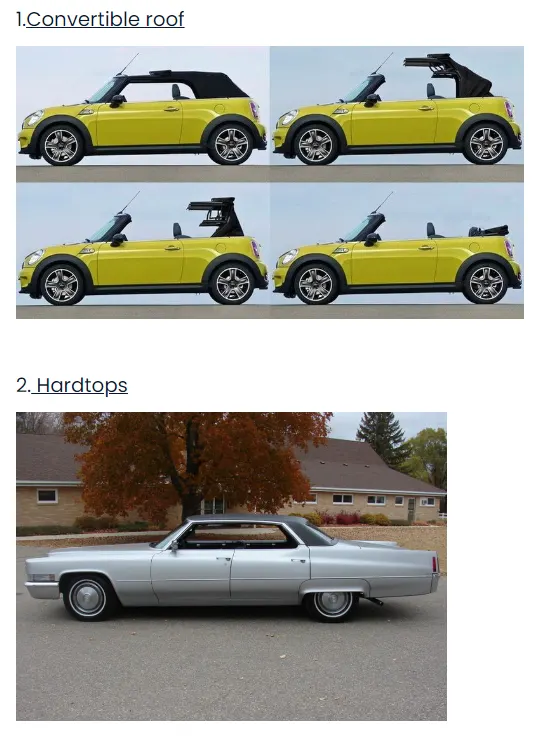
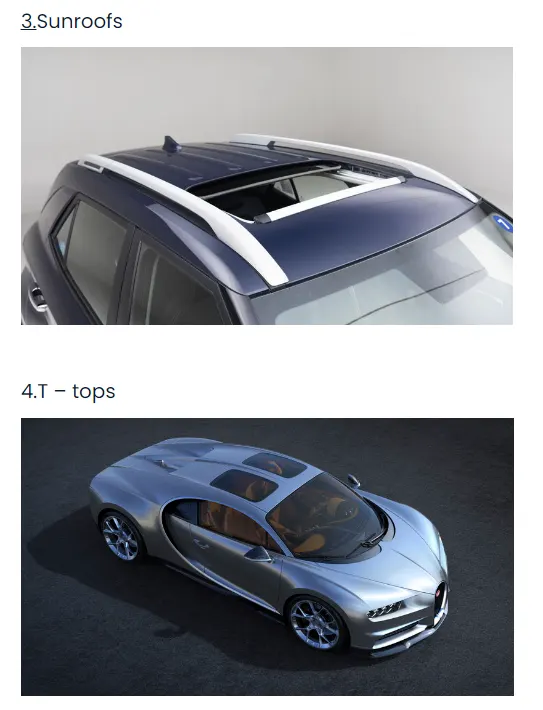
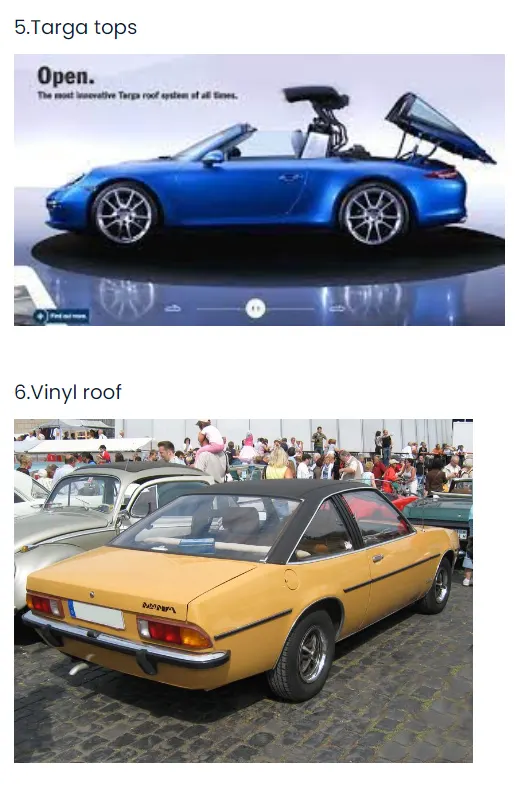
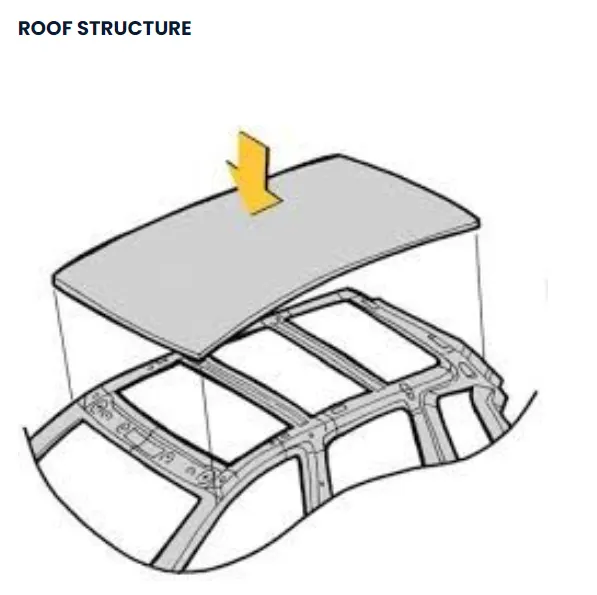
Apart from aerodynamic shape of roof it has to withstand the induced drag force on surfaces.To make the roof more structurally rigid and to improve its local strength the BIW parts designed.The internal components of roof are
- Front roof rail
- Rear roof rail
- Reinforcement roof rail
- Bow roofs
These structures also facilitates for cabin amenities like lighting and some other electrical electronic instruments.
FRONT ROOF RAIL
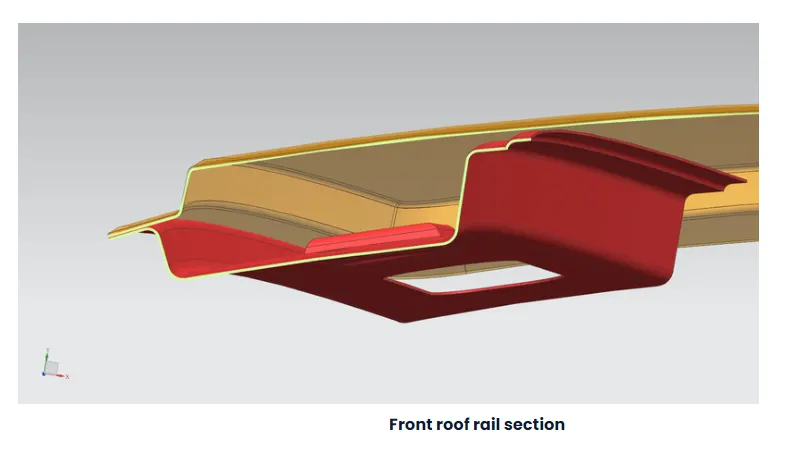
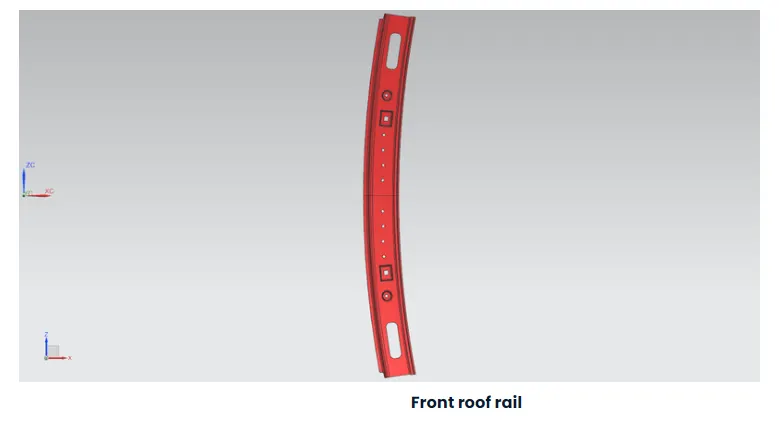
This part joins the windshield glass and the body side outer. The front roof is designed as per the available master sketch.
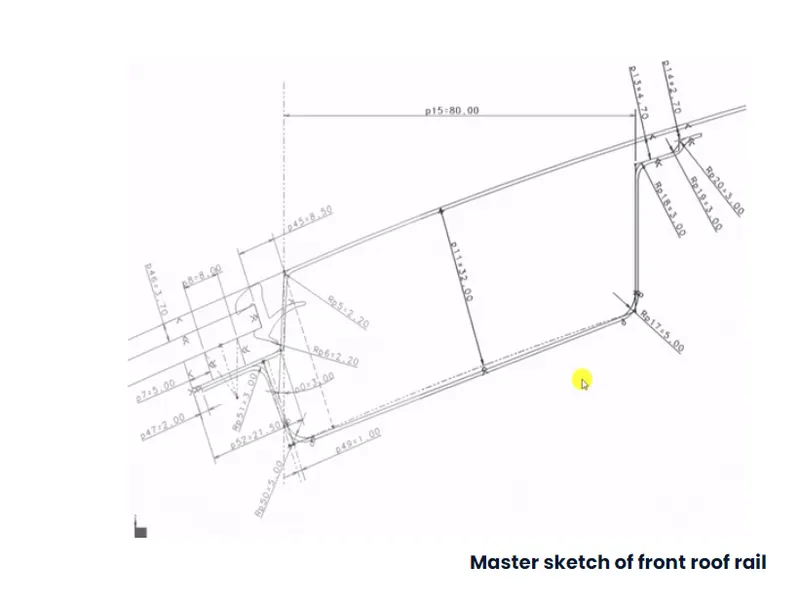
The master sketch has all the geometrica l details tor front roof.A space tor about 21 mm is provided tor windshield,rubber lining and mastic. The drawing angle is kept open for about 3degrees.The sealant requires at least of minimum 5mm gap.Whenever the inclination were provided for flanges the visibility criteria and the drawability has to be considered.The offset surface distance 32mm depends on the visibility of driver and enough head room clearance.The 80mm length depends on surface match with outer paneland also provides enough cabin clearance.On the right side of roof rail a clearance of about 3mm is given tor mastic. Corner relief are given to deviate the stress concentration point.
REAR ROOF RAIL
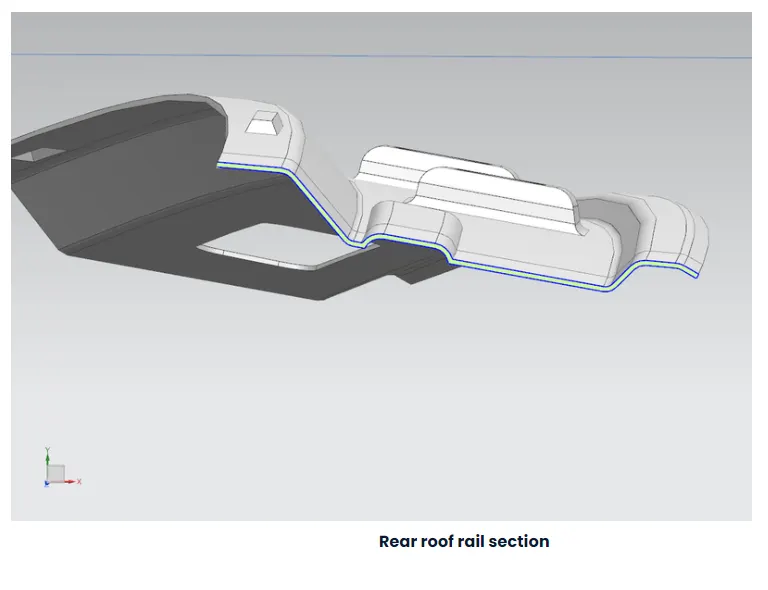
This part joins the back door and the body side outer. The rear roof provides enough space for back door hinge placement. The field of vision and head room clearance are to be considered while dimensioning.
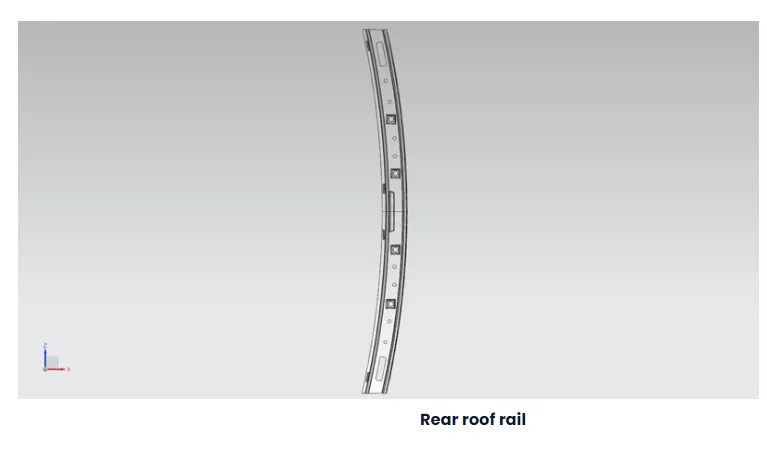
BOW ROOF RAIL
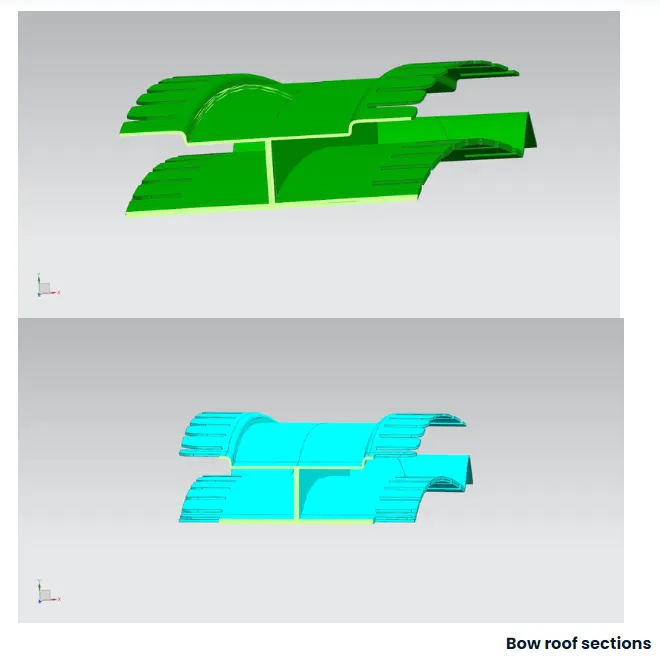
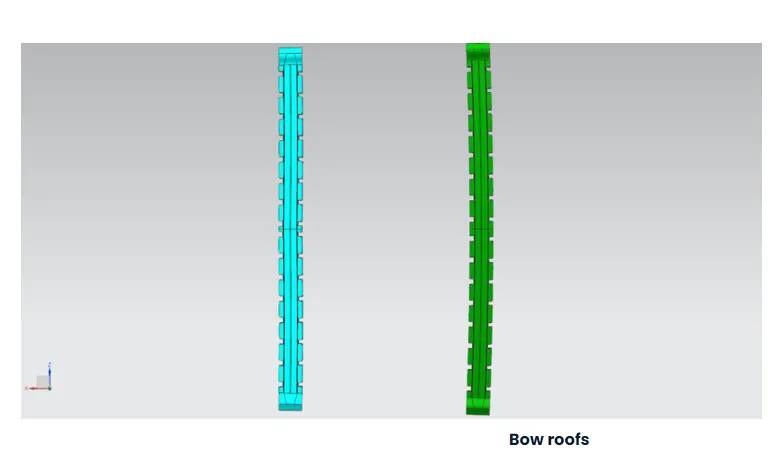
The cottages were built with the bow roofs to fac ilitate enough flexural stability while in case of strong winds. The similar situation is happening in the automotive roof. To control strong induced current of winds the bow roofs were introduced. These bow roof's shape decides their resistance towards the bending load. I have given Isection shape to the bow roofs to resist bending moments created along the length of bow. Since the web section will not allow the flanges to bend during the snow load or roll over scenarios.
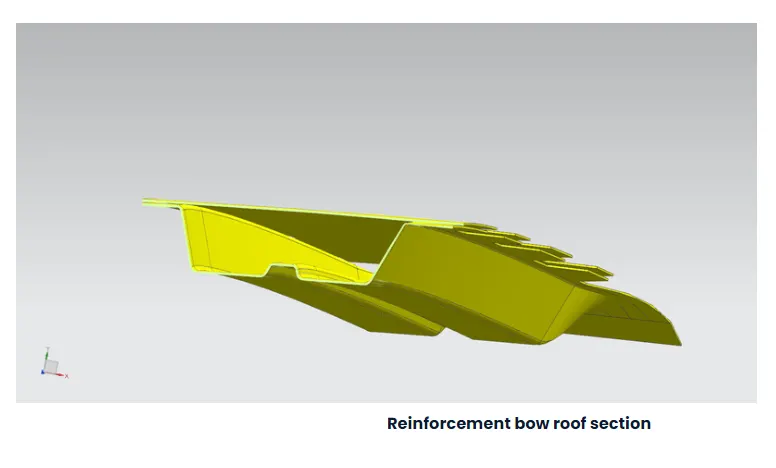
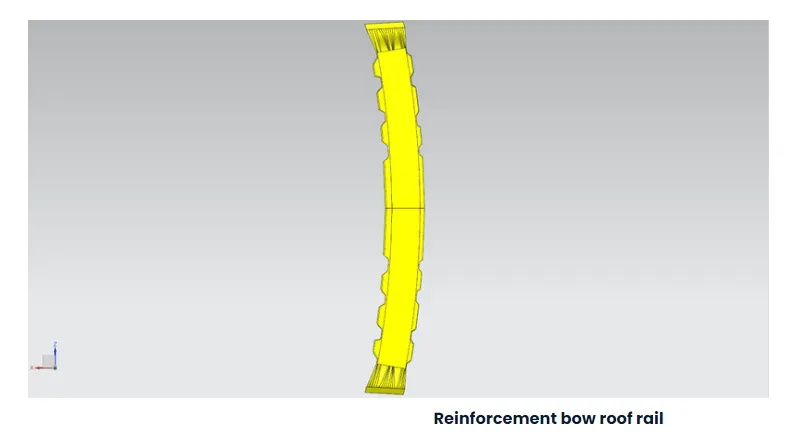
REINFORCEMENT BOW ROOF
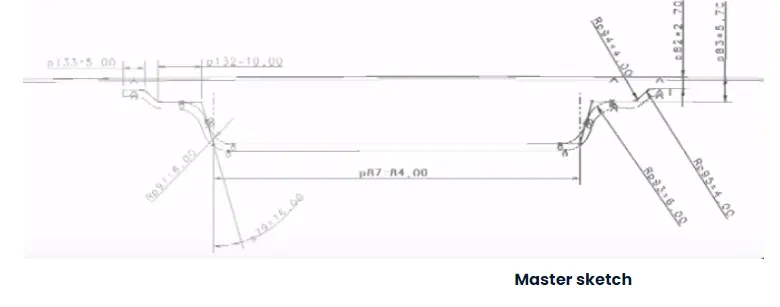
This is the master sketch of the reinforcement roof rail. I haven't follow the exact dimensioning,I have just maintained the shape and slightly changes the dimension according to my design features.
ROOF MASTIC POINTS
The roof rails were jo ined with the outer panel using mastic sealants this makes the part to be increased in strength locally.
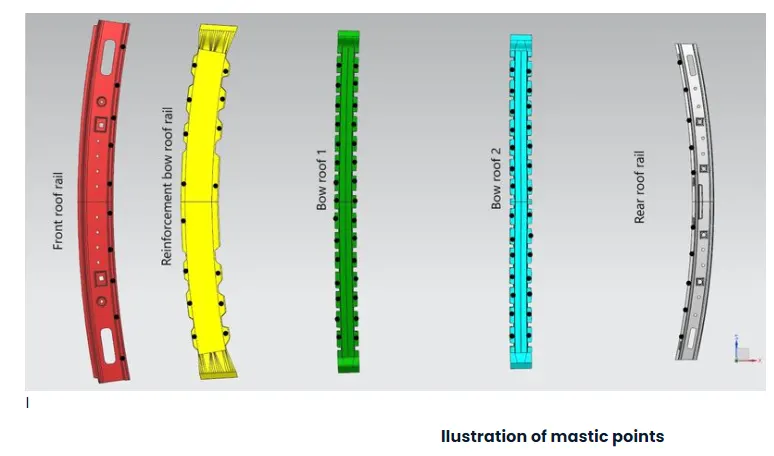
The mastic points have an influencing vicinity of about 80mm. there are totally 96 mastic nos.
SPOT WELD POINTS
These spot weld joins the roof rails with the assembly.
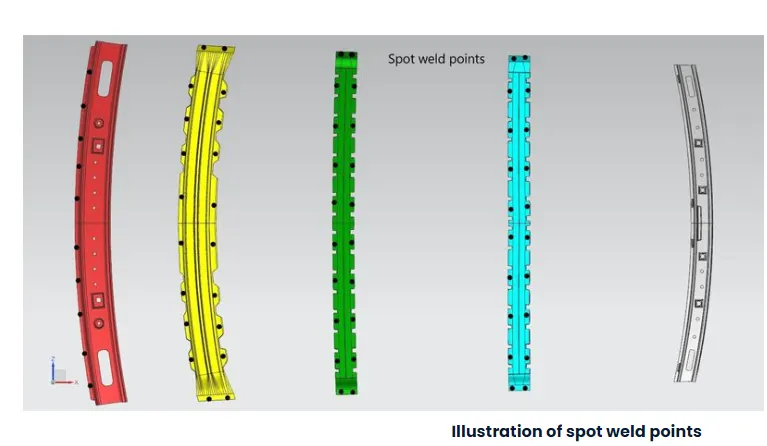
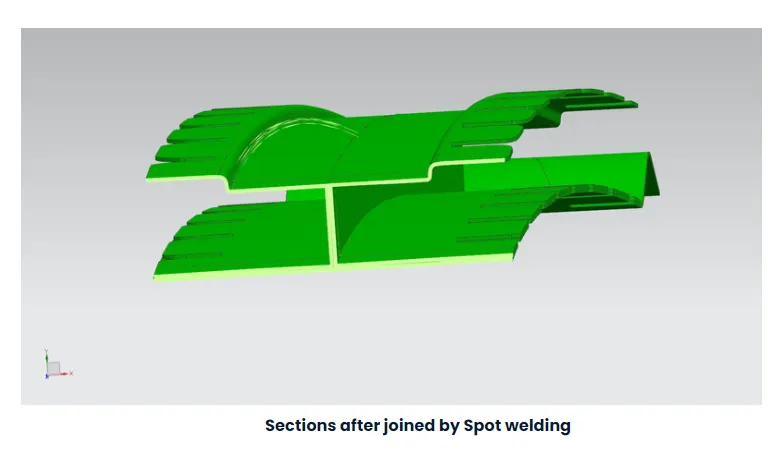
In the bow roof I - section the top flanges are joi ned with the outer panel of roof with the help of mastic sealants whereas the bottom flanges are joined with the assembly using spot welds.Totally there are 42 no's of spot welds.
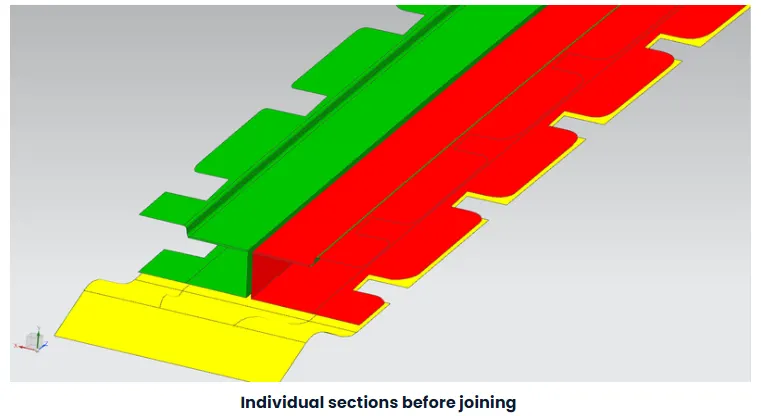
These individual sections can be produced by simple bending operations. The individual section of Ican be joi ned by either seam weld ing along the web of Isection or by spot
welding acording to the manufacturing flexibility. After joining web sections the I section is jo ined with the bottom f lange using spot welds to make as one unit of assembly.
ROOF CRUSH TEST
In this test the vehicle roll over strength is evaluated by giving induced force to the roof of automotive.The roof has to be much elastic to recover from deformation,which gives good rating. The distance of protrusion inside the vehicle due to crush load increases the fatality rate of passengers.
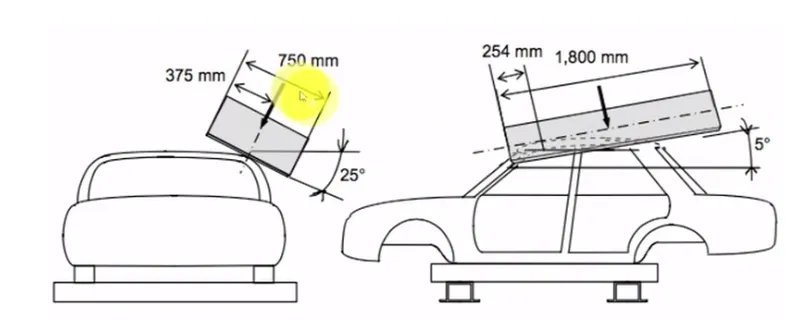
The displacement of load applied is 127mm generally. The load is given with Xe and Ye inclinations of about 25 degrees, 5 degrees respectively. The crush speed of load applied is 13mm/sec .Time taken for complet ion of test is 120 seconds.
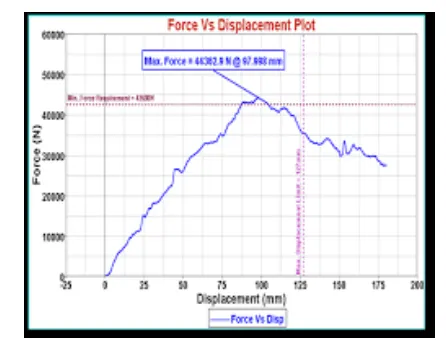
This is an example of force vs displacement graph. The peak point illustrates the maximum load bearing capacity of roof. If the displacement is not within the acceptable range the strength of roof has to be improved.The roof strength can be improved by increasing the thickness of bow roof, by increasing the no's of mastic points and spot weld points or else we can prefer for a new material selection.
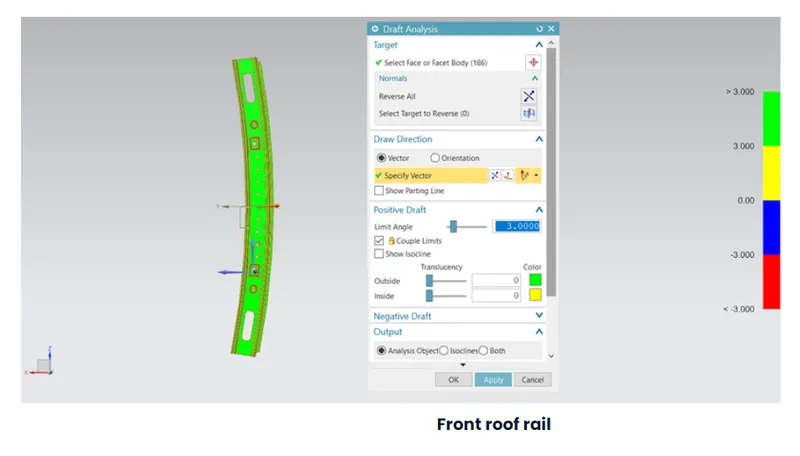
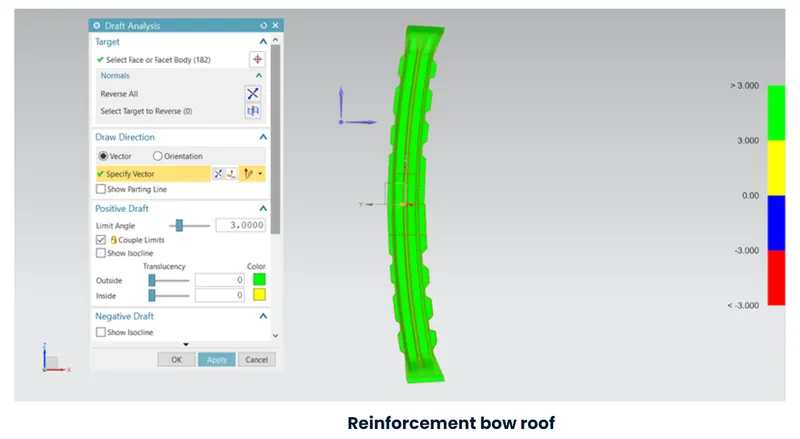
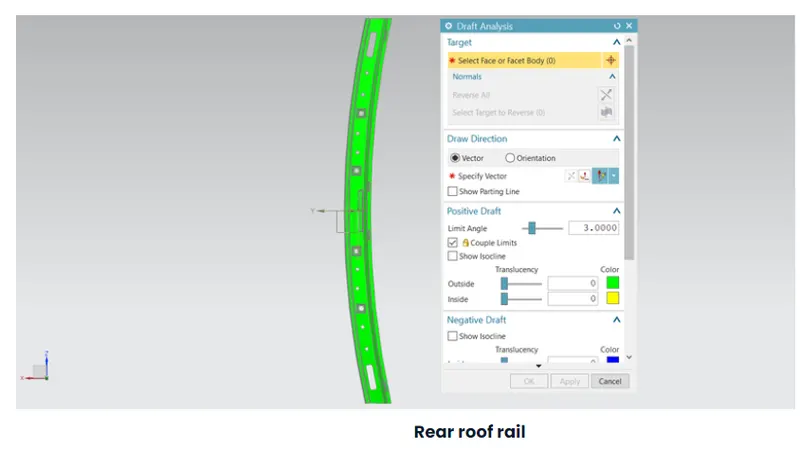
DRAFT ANALYSIS OF ROOF RAILS
Draft analysis is done to check whether the part has any negative drafts which is miserable for manufacturing. The limiting angle of negative is 5 degrees.
POSITIONING THE BOW ROOF RAILS
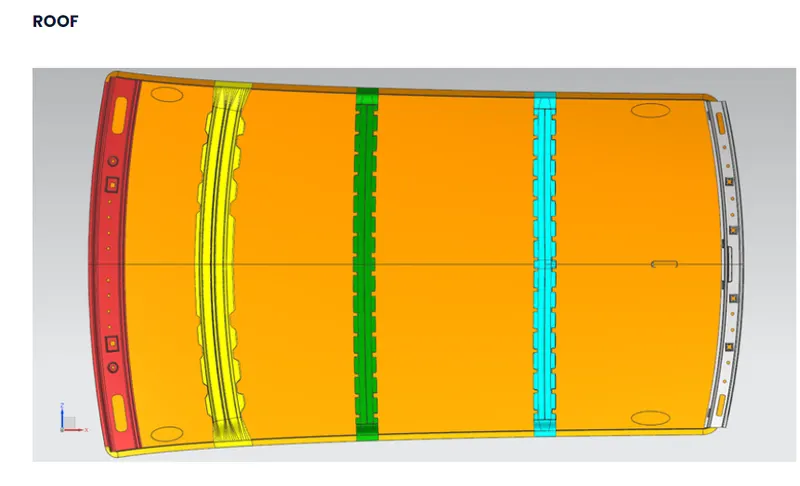
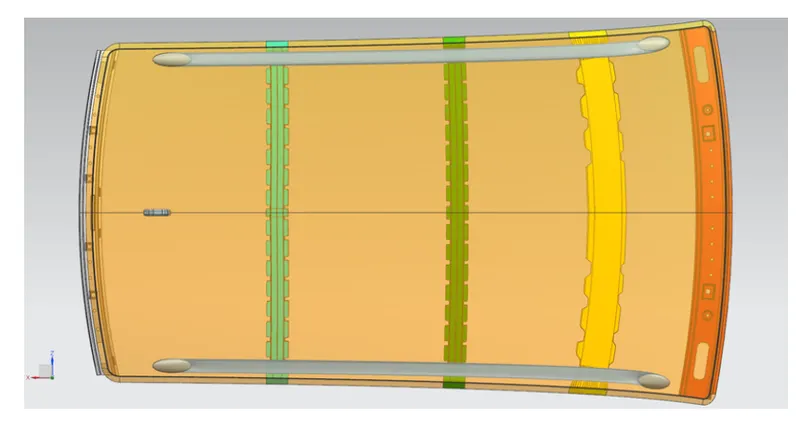
Bow roofs and the reinforcement railhas to be placed at appropriate locations to counteract and bear imparted load. Their position is justified by heat distortion criteria, snow load criteria and crush test analysis. Before entering into analysis stage we can justify the position by heat distortion criteria and snow load criteria.
REASON FOR ROOF RAIL ORDER
I have positioned the reinforcement rail former and then followed by bow roofs. The logic of bow roof is to strengthen the flat surface.By considering it the roof outer panel has more flatness while approaching the trailing edge realtively with leading edge. So i have decided to position the two bow roofs in the later half section of outer panel.
HEAT DISTORTION CRITERIA
The material softens under increased temperature conditions. While applying load at this state makes the material much vulnerable to static loads. So to formulate this scenar io the heat distortion criteria is introduced.The formula for heat distortion criteria is
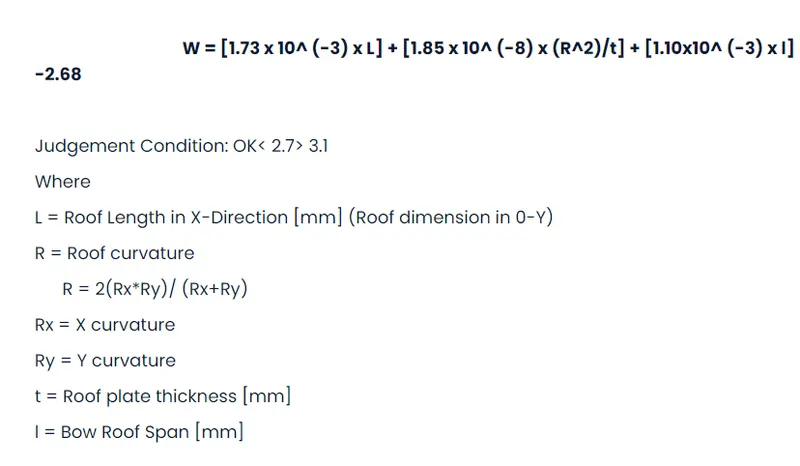
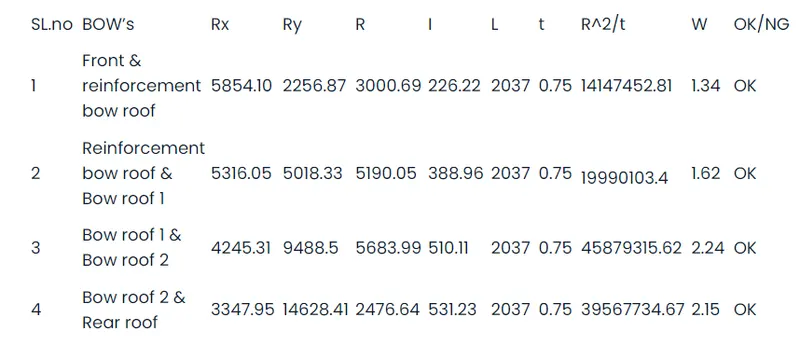
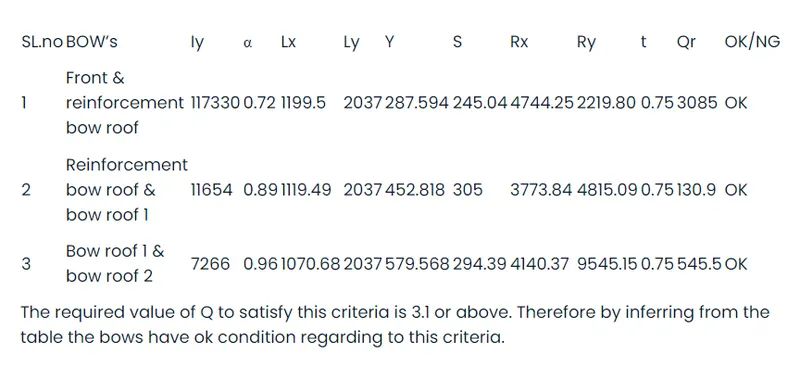
The optimum range needed to fulf ill this criteria is less than 2.7 or to the maximum 3.5. So by inferring from the above calculated values the W seems to be in good optimum range. Hence all the bow roofs and rails OK to proceed.
SNOW LOAD CRITERIA
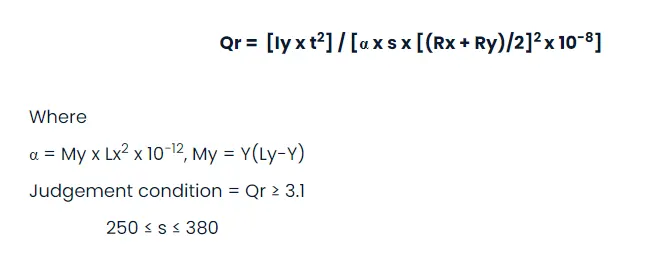
t = Roof plate thickness [mm]
Ly = Distance between the front and rear roof Rails on the Veh icle along with OY [mm]
Length of Roof panel with the center point between Roof rails Front /Rear as the reference point of the front and the rear.
Lx = Distance between the Left and Right end of the roof on the Roof BOW [mm] Width of the roof panel exposed on the surface.
Y = Distance from Front Roof Rail to Roof BOW [mm]
s = Distance for which Roof BOW bears divided load [mm]
s = L1/2 + L2/2
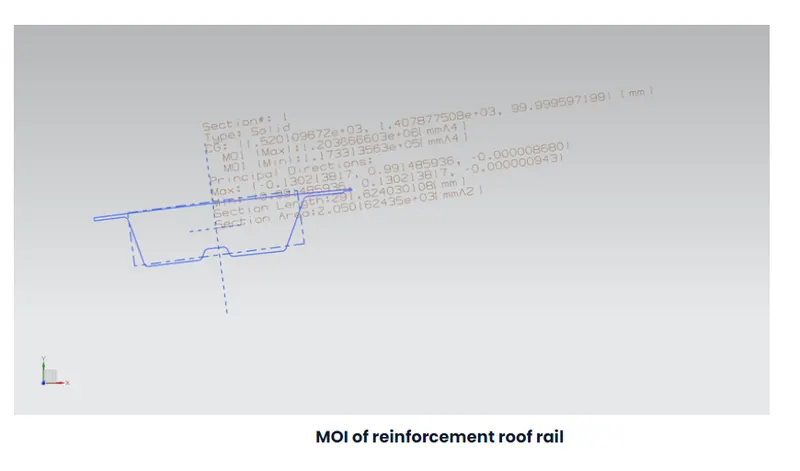
ly = Geometrical moment of inertia of Roof BOW (Y cross-sect ion) [mm4 ]
Rx = Lateral direction curvature radius of roof panel Y cross-section on Roof BOW [mm] Roof panel curvature Radius of the Length Lx in Front view
Ry = Longitudinal Direction curvature radius of the Roof panel X cross-section on Roof BOW [mm]
Roof panel X curvature radius of length s in Side view
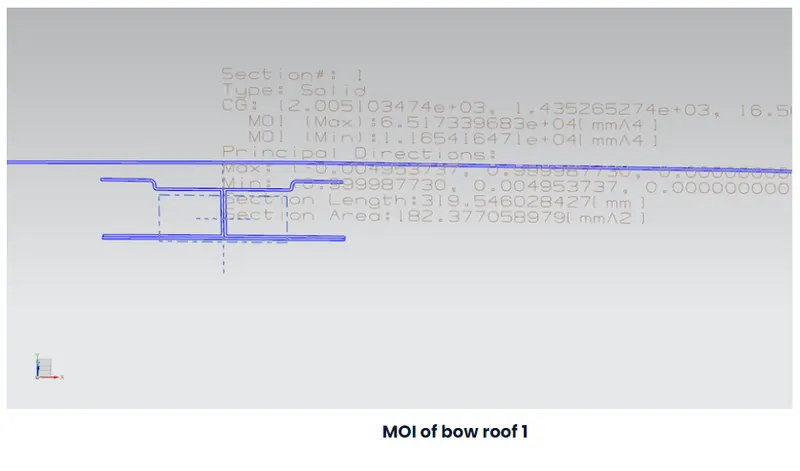
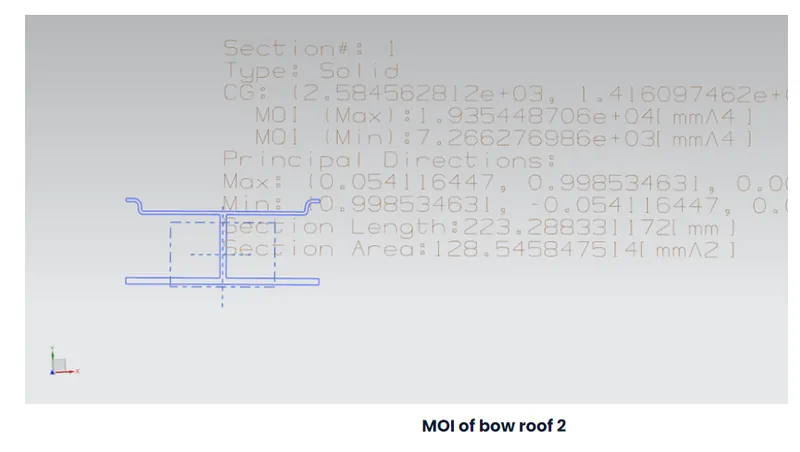
Moment of inertia of sections
CONCLUSION
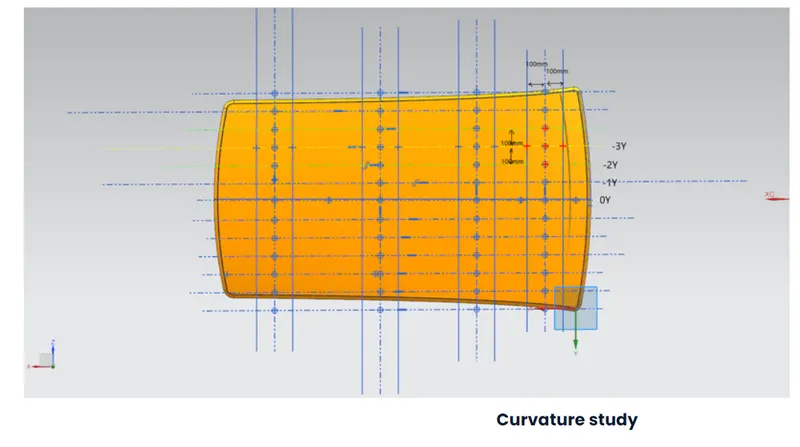
The automotive roof is designed and the curvature study in done on the outer panel of roof.