Roof challenge
AIM:
To Design a Car Roof and to do the curvature study to resist Heat distortion and snow load condition of the same.
INTRODUCTION:
An automobile roof or car top is the portion of an automobile that sits above the passenger compartment, protecting the vehicle occupants from sun, wind, rain, and other external elements. Because the earliest automobiles were designed in an era of horse-drawn carriage, early automobile roofs used similar materials and designs.
Different types of Car Roofs are:
- Convertible roofs
- Hardtops
- Sunroofs
- T-tops
- Targa tops
- Vinyl roofs
The roof of the cars is made up of multiple parts that provide support and strength to the roof components. The actual roof sheet and the roof rails in a car the front, the center and the rear, While in additional roof rails are called bow roof rails. The number of bow roof rails depends on the size of the roof. Headroom, visibility criteria, and target region also play a key role in roof design.
Different components of Car Roof:
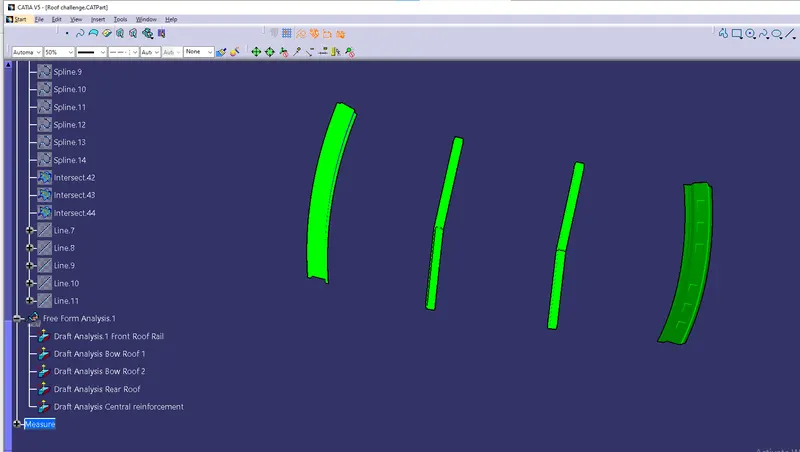
Front Roof Rail
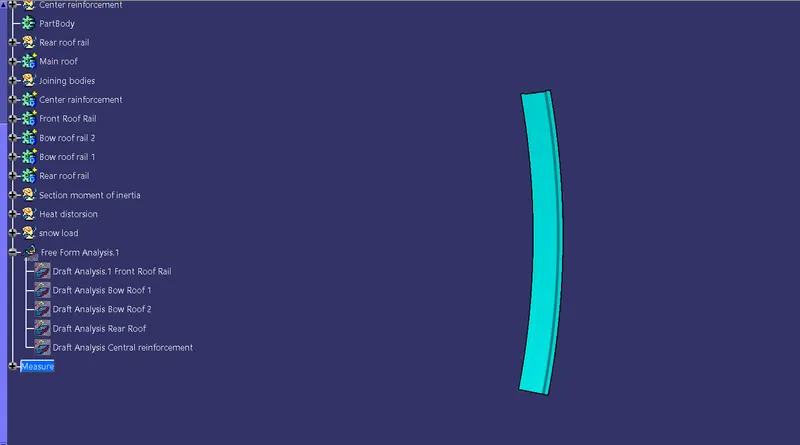
Center Roof Rail
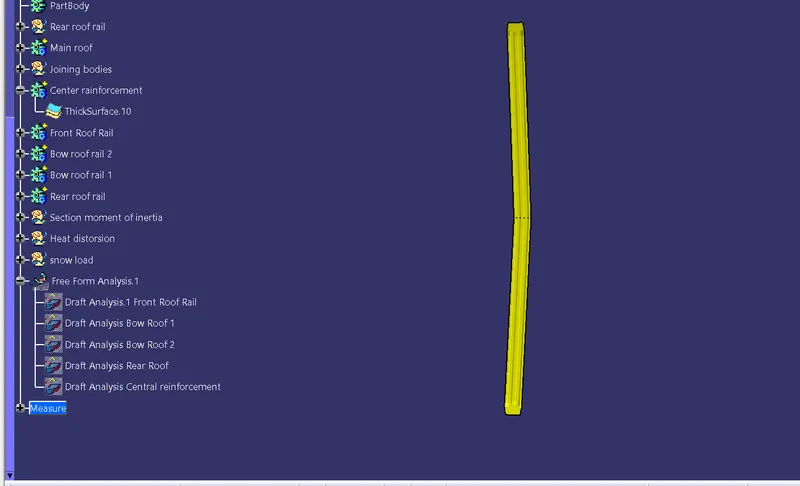
Rear Roof Rail
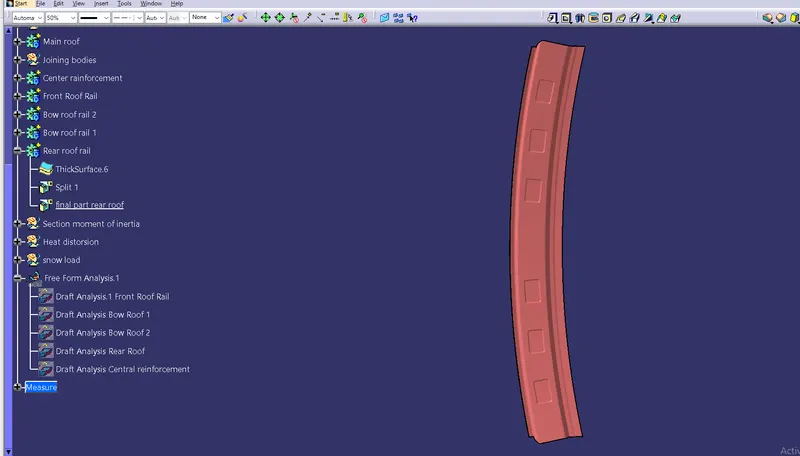
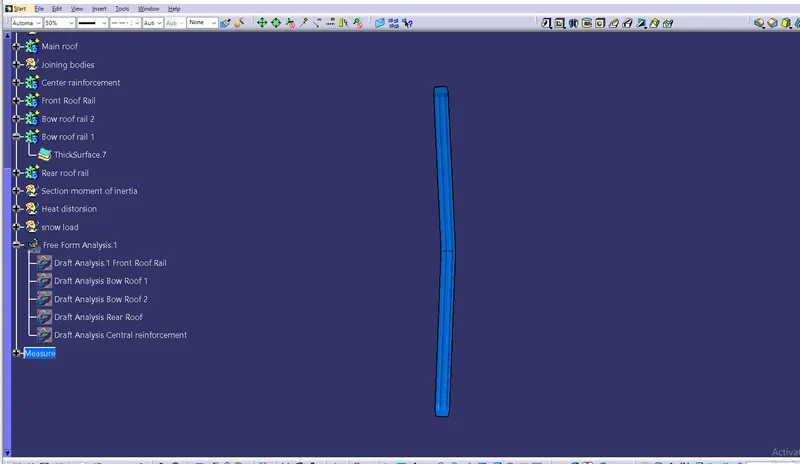
Bow Roof 1
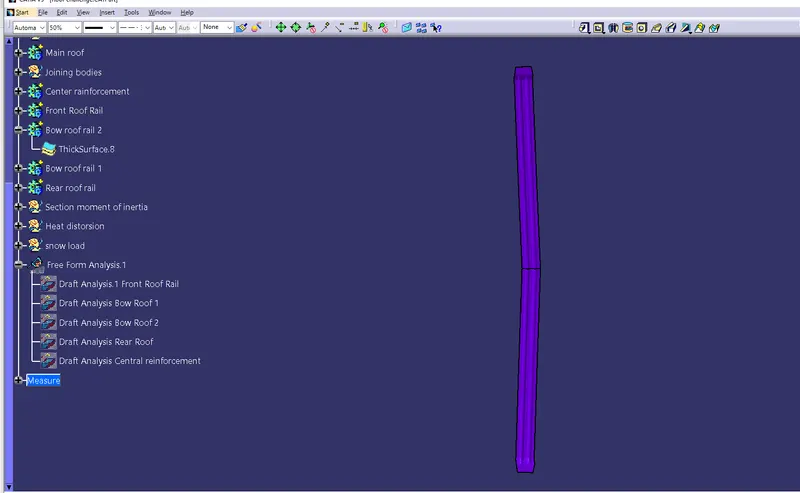
Bow Roof 2
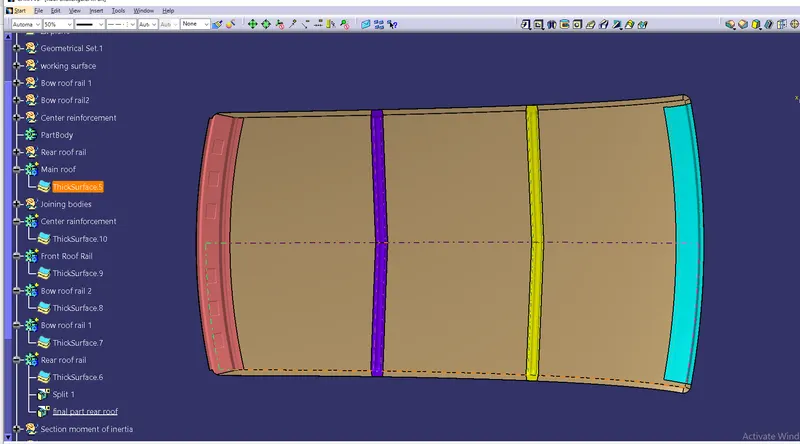
FINAL PART
Section modulus:
Section modulus formula
S = I/y
S = Section Modulus
I = Moment of Inertia
y = distance between the neutral axis and the extreme end of the object
Front Roof Rail:
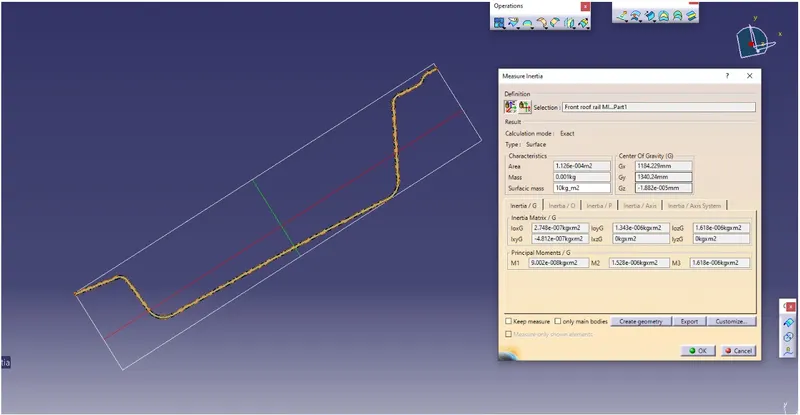
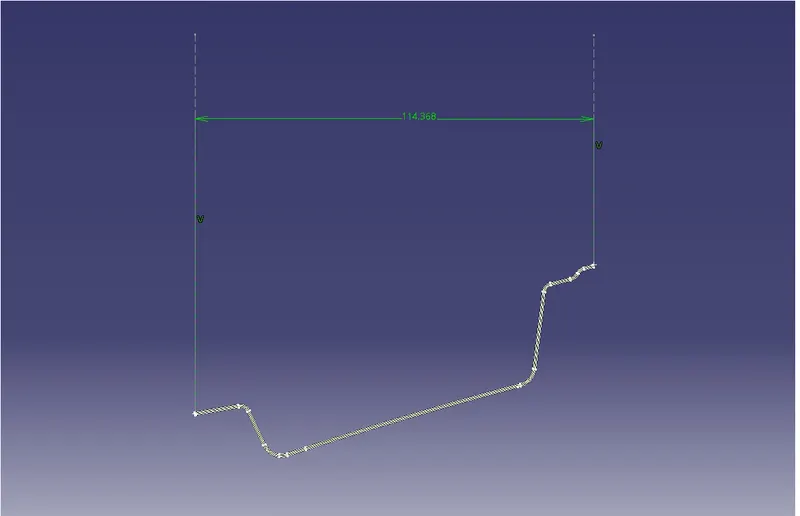
By taking the minimum value from the two value
Unit is converted from meter to millimeter
M1 = 1528000mm^4
Y =114.368/2
Y=57.184
S =I/Y
S =152800/57.184
S = 2672.0761mm^3
Bow Roof -1
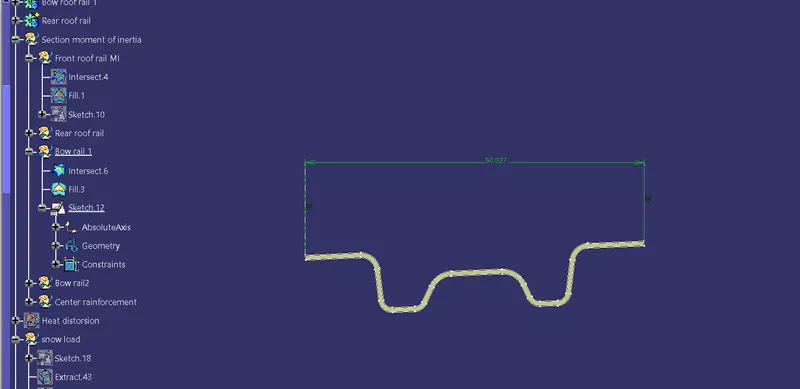
By taking the minimum value from the two value
Unit is converted from meter to millimeter
M1 =985299.99 mm^4
Y =50.027/2
Y=25.0135
S =I/Y
S =985299.99/25.0135
S = 39390.7286mm^3
Bow roof 2
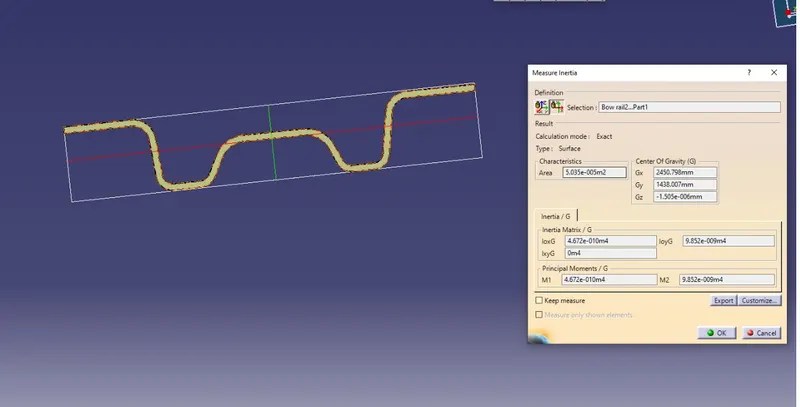
By taking the minimum value from the two value
Unit is converted from meter to millimeter
M1 =9852 mm^4
Y =50.005/2
Y=25.0025
S =I/Y
S =9852/25.0025
S = 394.0405mm^3
Center rainforcement
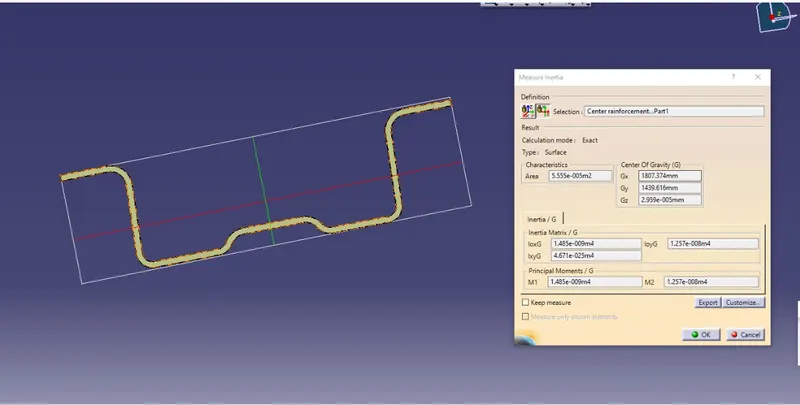
By taking the minimum value from the two value
Unit is converted from meter to millimeter
M1 =12570 mm^4
Y =50.028/2
Y=20.014
S =I/Y
S =12570/20.014
S = 628.060mm^3
Rear roof rail
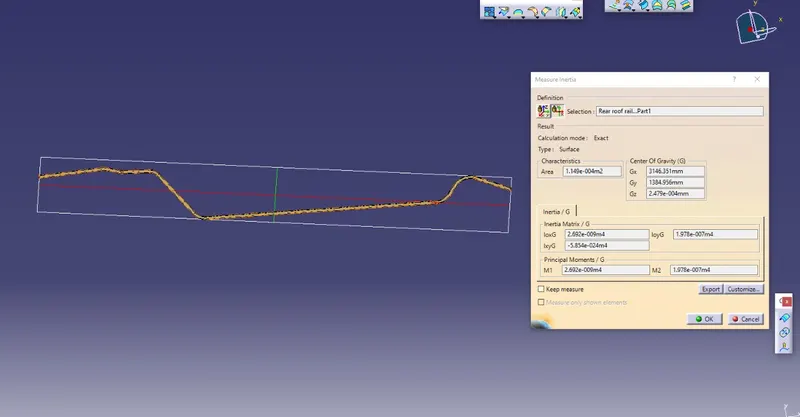
By taking the minimum value from the two value
Unit is converted from meter to millimeter
M1 = 197800mm^4
Y =139.79/2
Y=69.89
S =I/Y
S =197800/69.89
S = 2830.1616mm^3\
Curvature study on the Roof:
After getting the final body it has to be checked and justify that it passes the standards.
Analysis:
It is done to justify the position of the bow roofs.
1.Roof crash test.
2.Snow load test.
3.Heat distortion criteria
Heat distortion criteria:
Heat distortion temperature is a temperature at which the metal softens and deform under a specific load. This study is done to check the ability of the roof to withstand high temperature with respect to the position of the reinforcement which contribute to the increase strength.
- To calculate the heat distortion criteria by the bow roof position formula,
- We need to create a sketch, draw a line on the center of the roof on OY axis (mid horizontal axis)
- Next draw a line from the center line by a 300mm distance
- After that draw a line from 100mm distance on both sides of the 300mm line
- Then draw a line between the center of roof rails and draw the lines from the center line by the distance of 100mm on both sides.
- At last make an intersection on these lines from a coincident line to get points.
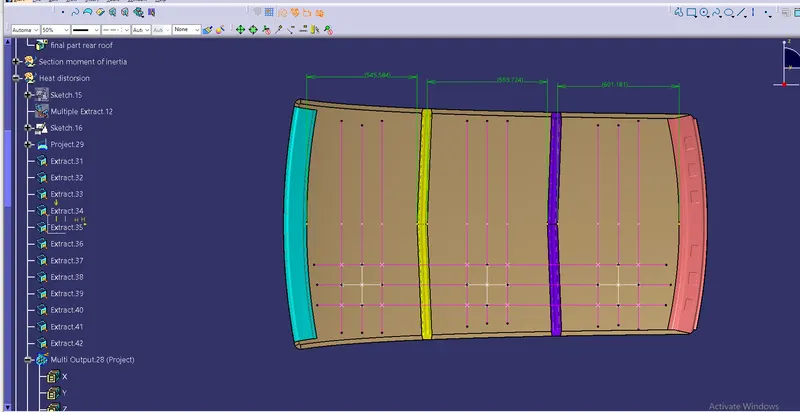
W = [1.73 x 10^(-3) x L] + [1.85 x 10^(-8) x (R^2)/t] + [ 1.10x10^(-3) x l] - 2.68
Judgement Condition : OK< 2.7> 3.1
Where
L = Roof Length in X-Direction[mm](Roof dimension in 0-Y)
R = Roof curvature
R = 2(Rx*Ry)/(Rx+Ry)
Rx = X curvature
Ry = Y curvature
t = Roof plate thickness [mm]
l = Bow Roof Span [mm]
| BOW | L | Rx | Ry | R=2(Rx*Ry)/(Rx+Ry) | t | l | R^2/t | W | OK/Not |
| Front roof rail to Bow 1 |
2033.705 | 5679.807 | 3094.144 | 4005.98 | 0.75 | 545.584 | 21397167.68 | 1.73 | OK |
| Bow 1 to Bow 2 |
2033.705 | 4504.209 | 8104.039 | 5790.22 | 0.75 | 593.724 | 44702196.86 | 2.31 | OK |
| Bow 2 to Rear roof rail |
2033.705 | 3416.998 | 13703.002 | 5469.99 | 0.75 | 601.181 | 39894387.466 | 2.23 | OK |
Snow load criteria
Snow load criteria study is done to check the ability of the to withstand snowfall and bounce back to its original shape without any permanent deformation once the load is removed.
• To calculate the snow load condition, we have a snow load formula
• To measure the required values
• Created a sketch and draw a line on OY axis from the center of the roof
• From that line draw a parallel line distance of 100mm on both sides
• Then make intersection points of these lines and draw a three-point arc
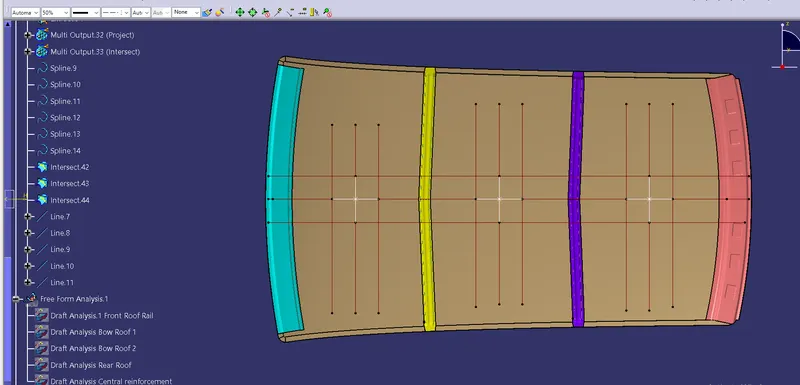
Qr = [Iy x t2] / [α x s x [(Rx + Ry)/2]2 x 10-8]
Where,
α = My x Lx x 10 , My = Y(Ly-Y)
Judgement condition = Qr ≥ 3.1
250 ≤ s ≤ 380
t = Roof plate thickness [mm]Ly = Distance between the front and rear roof Rails on the Vehicle along with 0Y[mm]
Length of Roof panel with the center point between Roof rail Front /Rear as the front and rear reference point.
Lx = Distance between the Left and Right end of the roof on the Roof BOW [mm]
Width of the roof panel is exposed on the surface.
Y = Distance front Front Roof Rail to Roof BOW[mm]
s = Distance for which Roof BOW bears divided load [mm]
s = L1/2 + L2/2
Iy = Geometrical moment of inertia of Roof BOW (Y cross-section )[mm4]
Rx = Lateral direction curvature radius of roof panel Y cross-section on Roof BOW [mm]
Ry = Longitudinal Direction curvature radius of the Roof panel X cross-section on Roof BOW [mm]
| BOW | ly | My=y(ly-y) | α | s | Rx | Ry | Qr |
| Front roof rail to Bow rail 1 |
985299.99 | 861348.33 | 1.017 | 301.176 | 4232.59 | 3099.65 | 13.4 |
| Bow rail-1 to Bow rail-2 |
9852 | 854273.50 | 1.009 | 297.01 | 3960.17 | 8173.66 | 50.69 |
| Bow rail-2 to Rear rail |
197800 | 822559.42 | 0.97 | 0.97 | 4188.705 | 15168.95 | 43.83 |
Draft Analysis
It is done to check if the features designed clear the minimum draft 5 degree for manufacturabililty. This type of analysis is performed based on color ranges identifying zones on the analyzed element where the deviation from the draft direction at any point; corresponds to specified values.