Roof challenge
Aim: To design a car roof with all its members like the front, rear, reinforcement, and bow roof rails. Also, calculate the heat distortion and snow load conditions and determine whether the designed roof satisfies the conditions.
Theory:
Roof
An automobile roof or car top is the portion of an automobile that sits above the passenger compartment, protecting the vehicle occupants from sun, wind, rain, and other external elements.
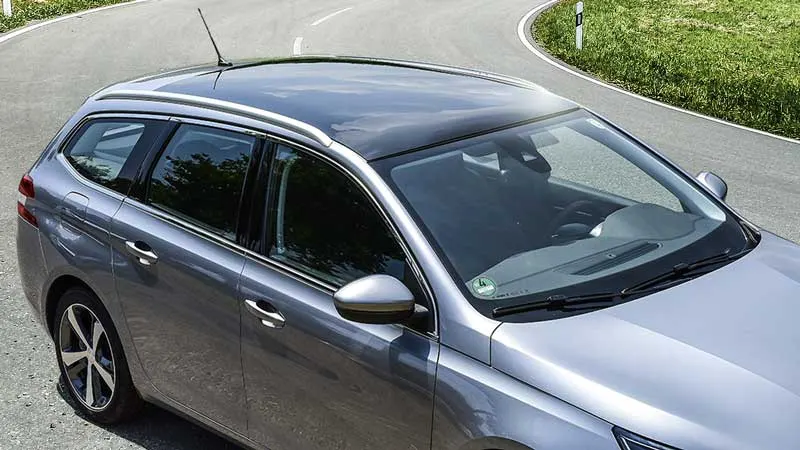
Parts of a Roof
Typically, the roof of a car will have 4 major components; the front roof rail, rear roof rail, reinforcement roof rail, and bow roof rails. The number of bow roof rails varies according to the size of the roof and other factors like existence of sunroof/panaromic sunroof etc.
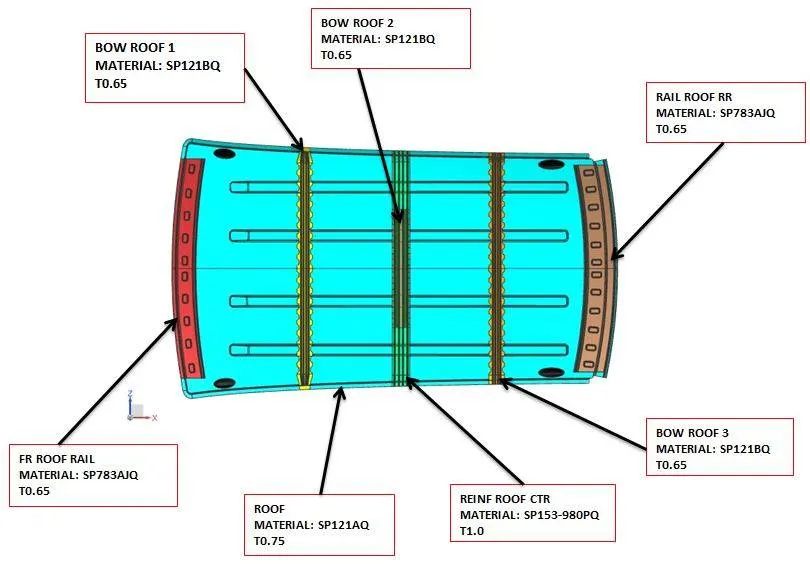
Challenge:
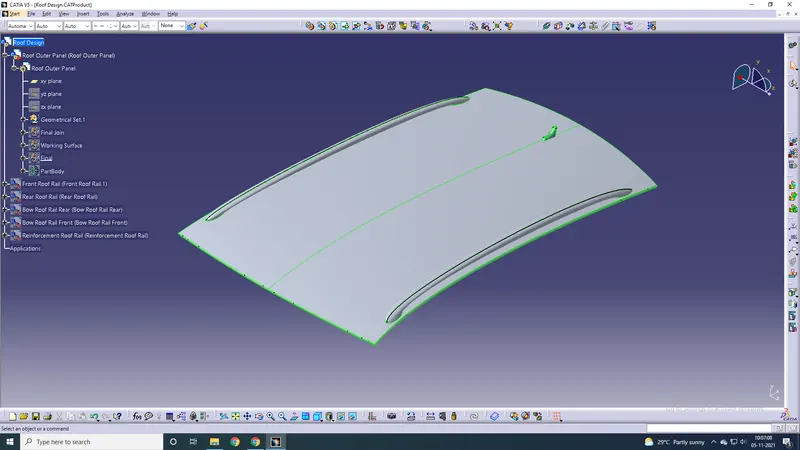
Given class A skin
Front roof rail outer and inner master section
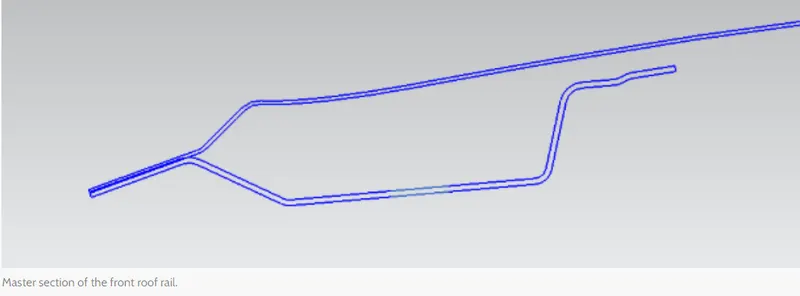
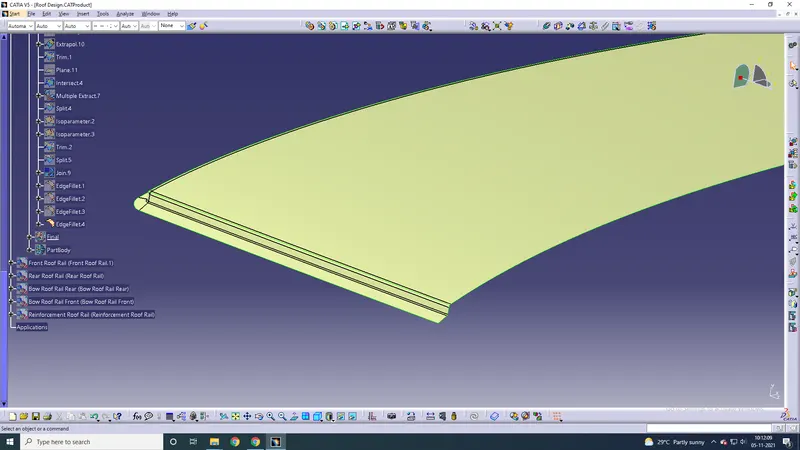
Front roof rail outer has been made
Rear roof rail outer and inner master section
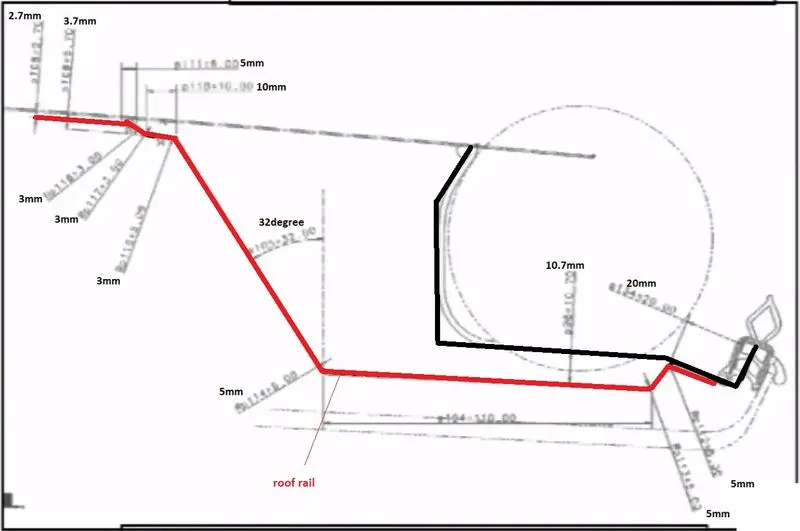
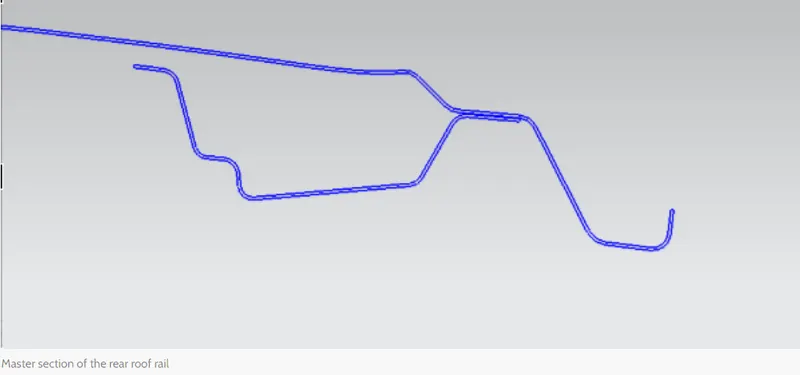
Rear roof rail outer has been made
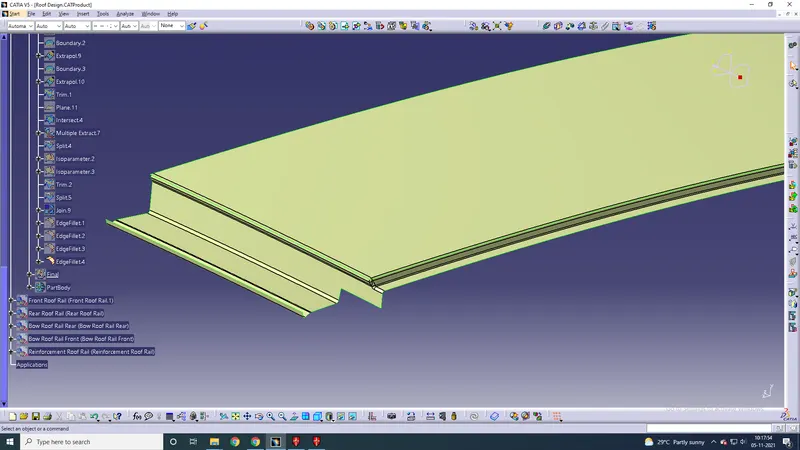
Front roof rail
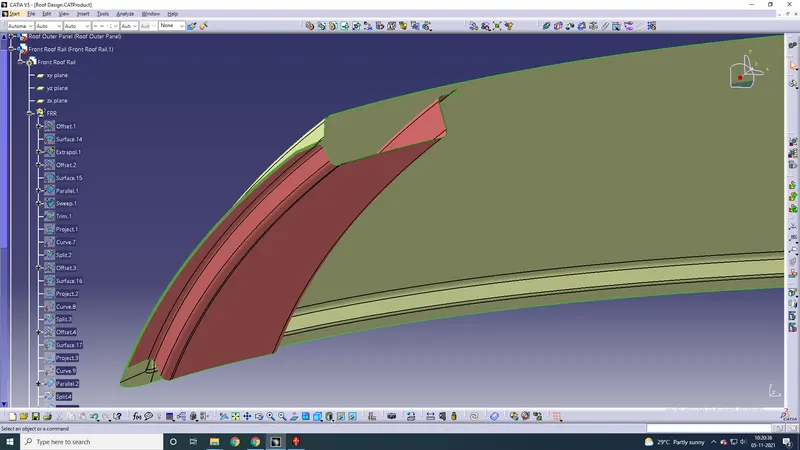
Rear roof rail
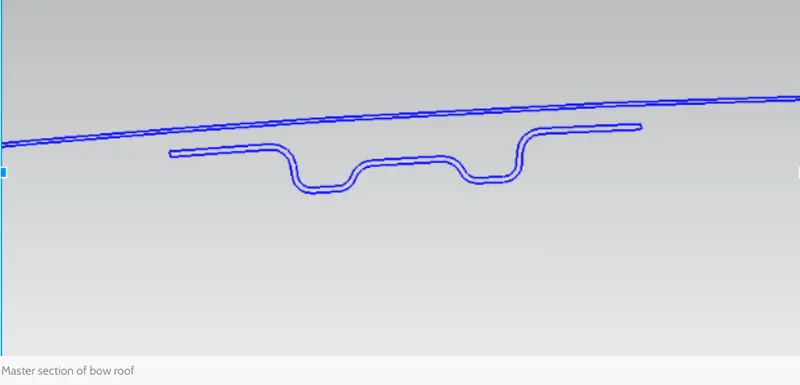
Bow roof rail master section
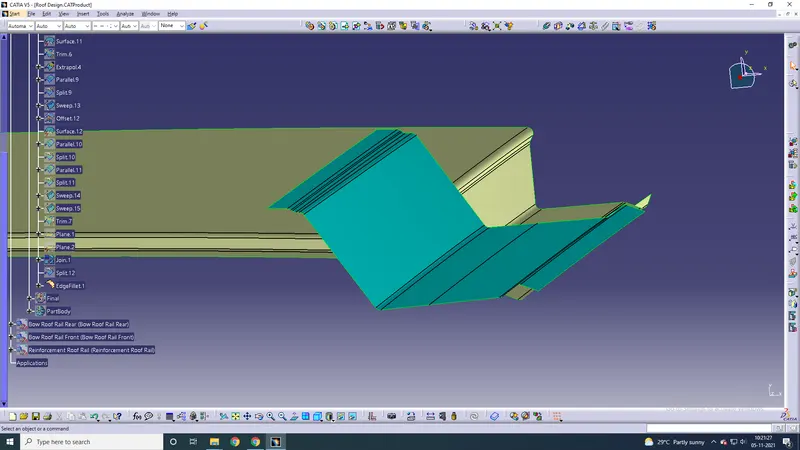
Bow roof rail (rear)
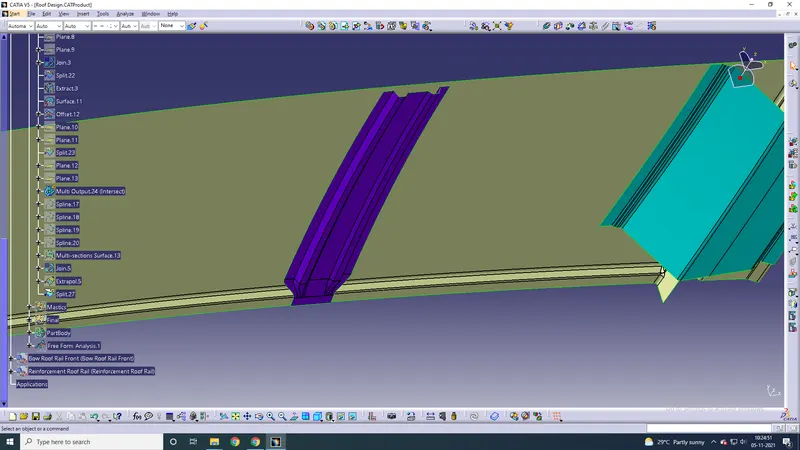
Providing mastic points
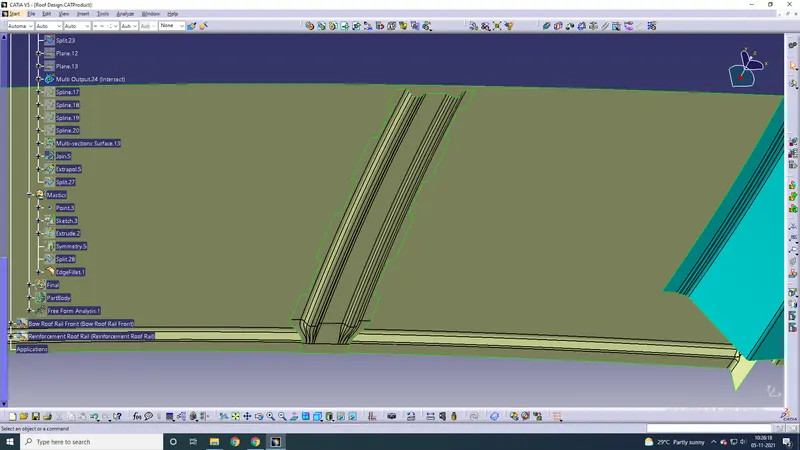
Bow roof rail (front) with mastic points
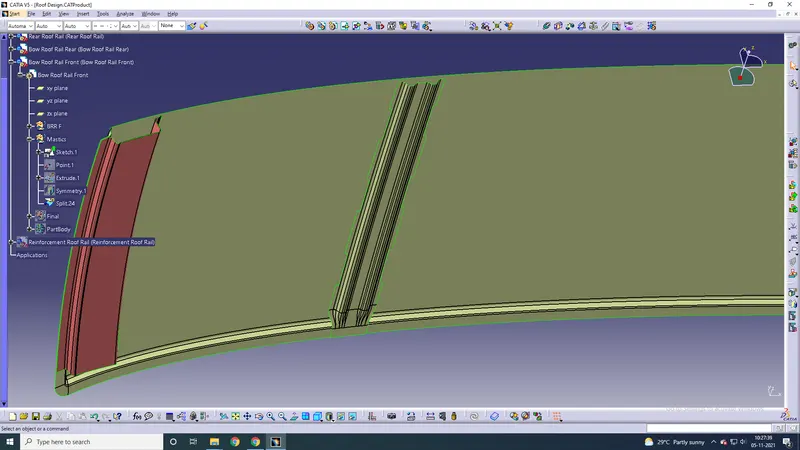
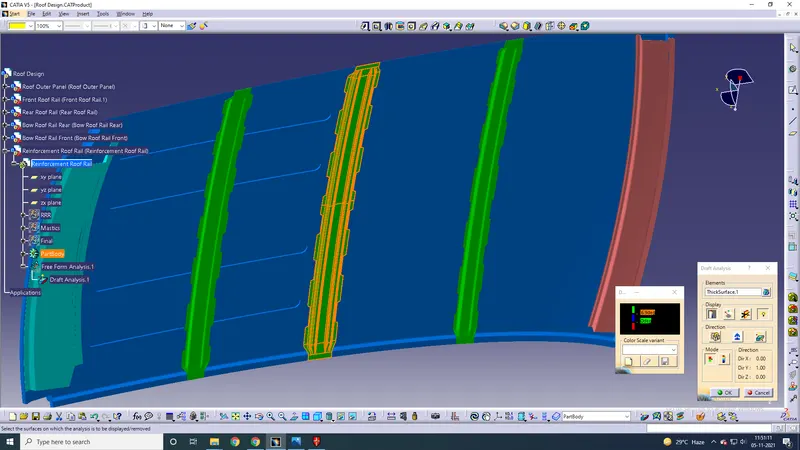
Reinforcement roof rail
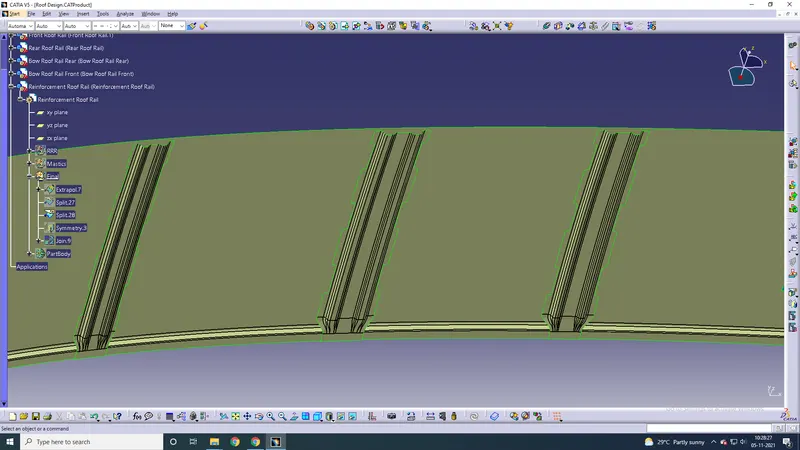
Finally doing symmetry and making everything a solid body (0.75mm thickness)
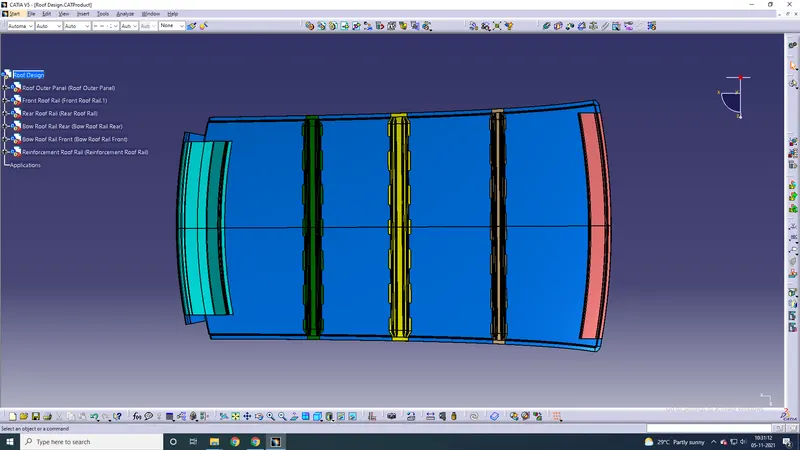
Making embossings on the rooftop for extra rigidity and strength
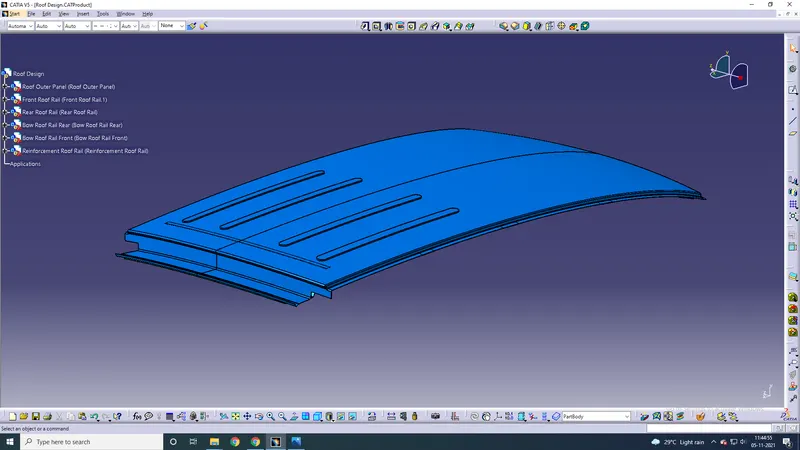
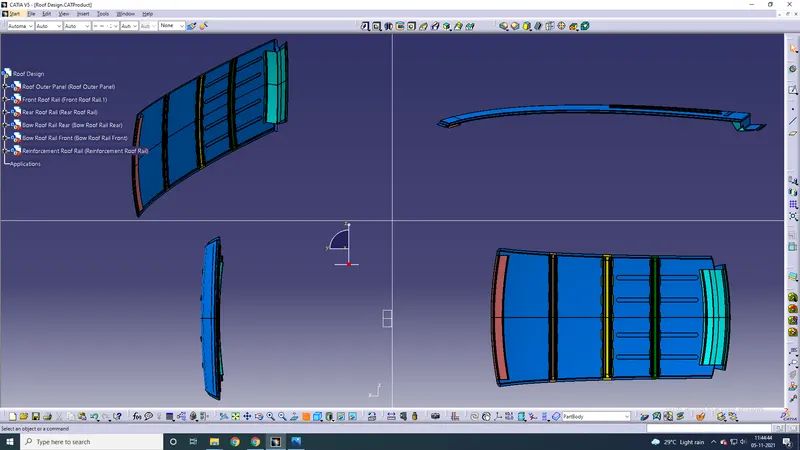
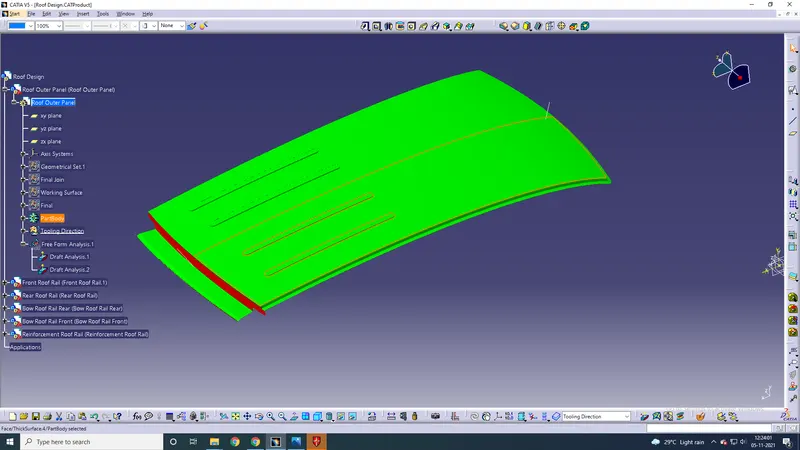
Final Design
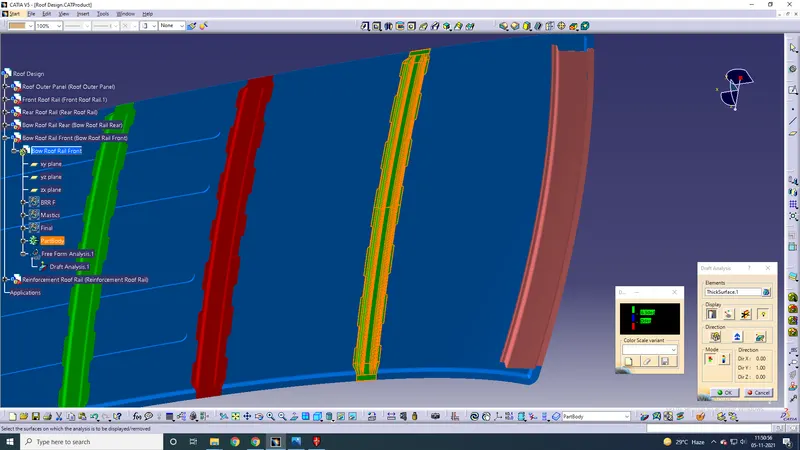
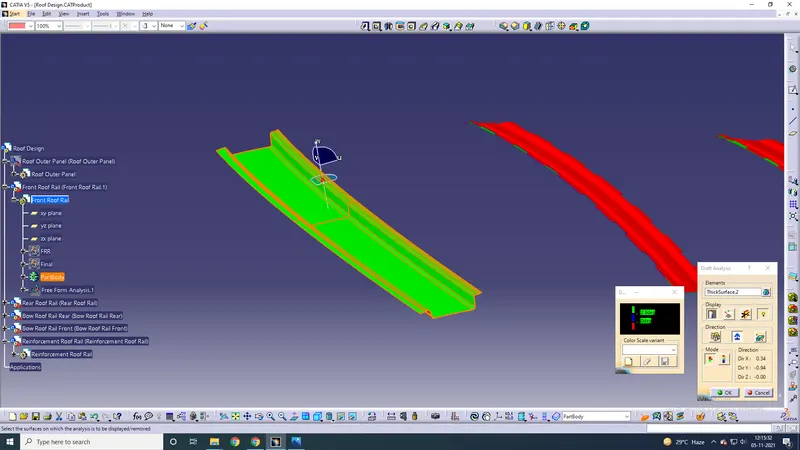
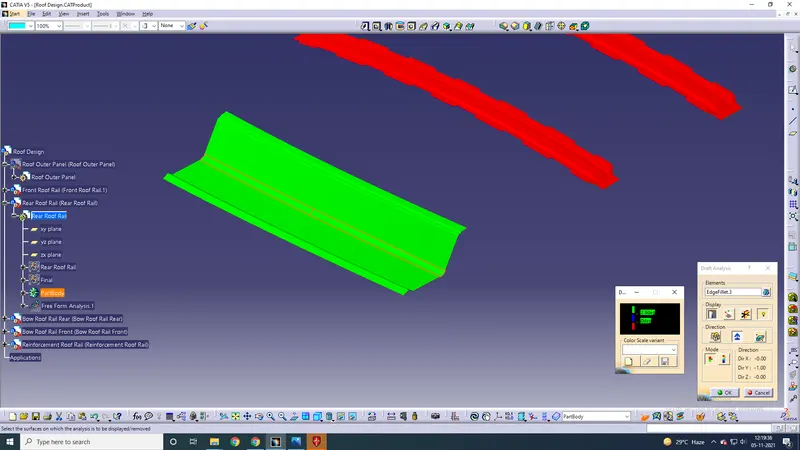
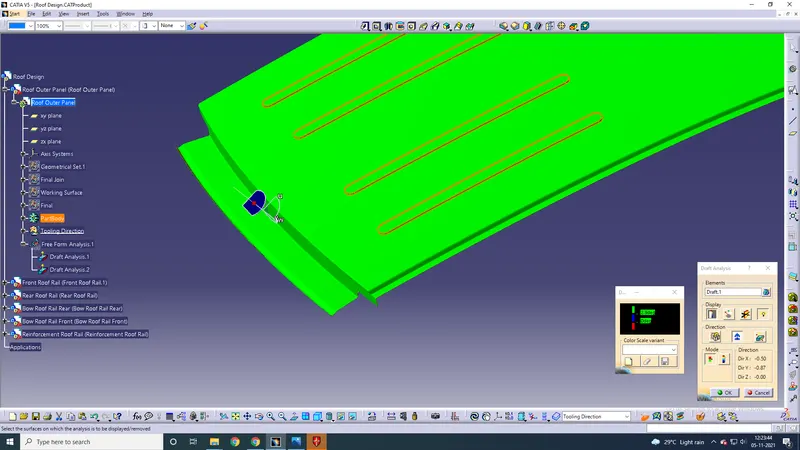
Draft Analysis
BRR (rear)
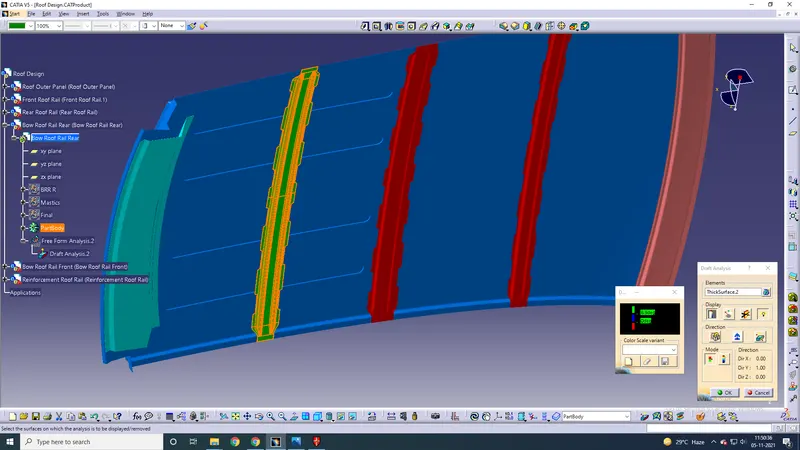
BRR (front)
RRR
Front Roof Rail
Rear roof rail
Rooftop
Calculations:
Heat Distortion
Formula
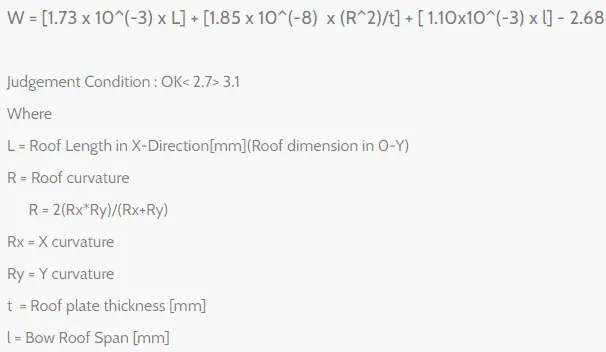
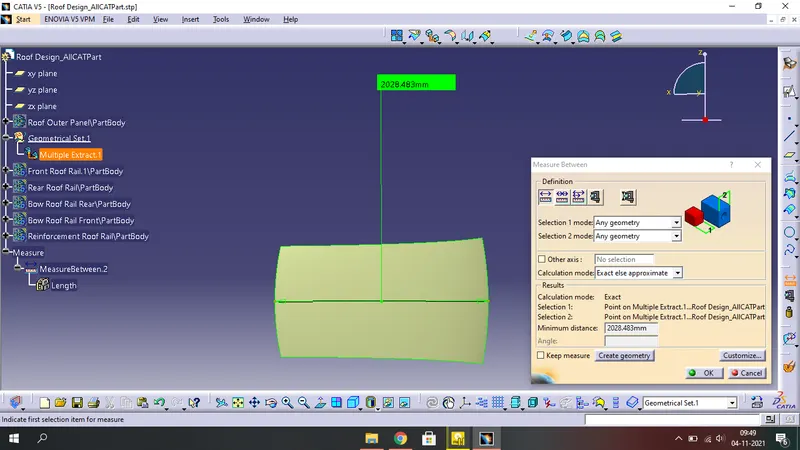
Roof length in 0-Y direction (L) came to be 2028.483 mm
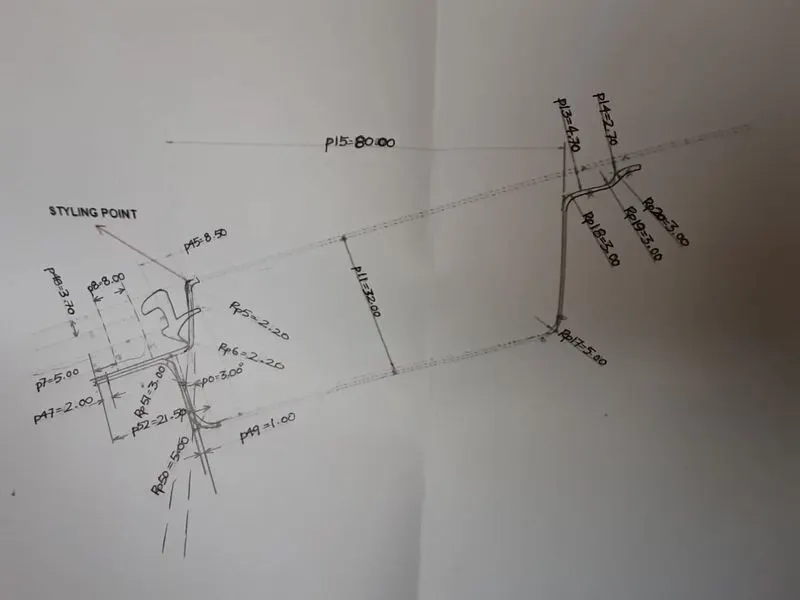
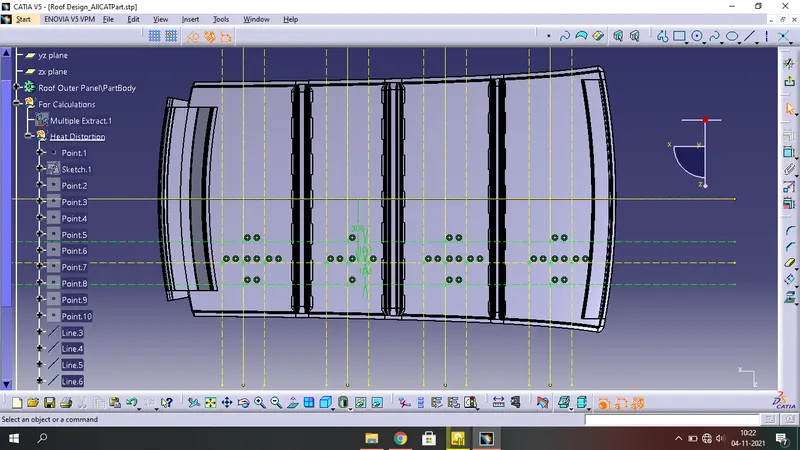
Sketch for plotting points to find Rx and Ry values
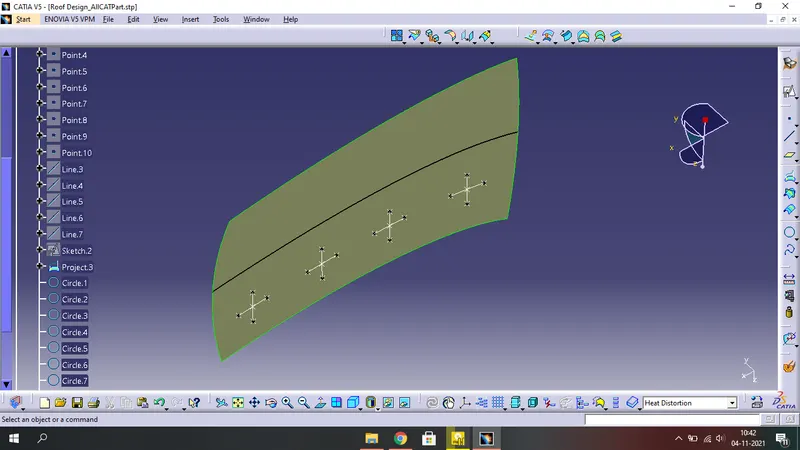
Projection the points onto the styling surface and connecting them with curves
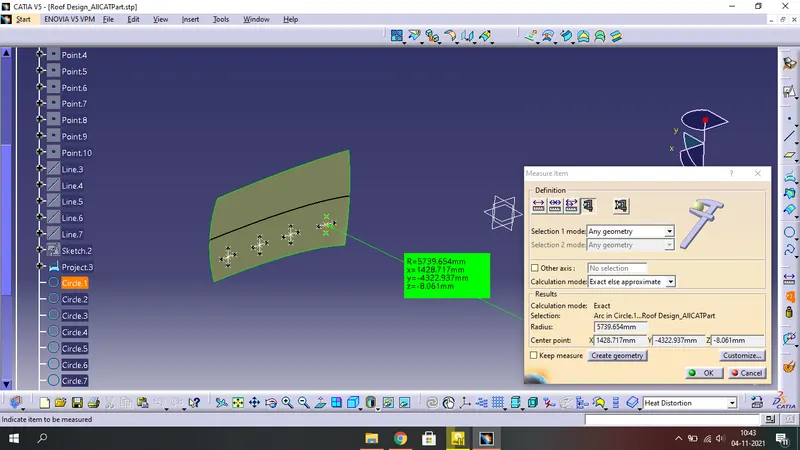
Find Rx and Ry values
Rx
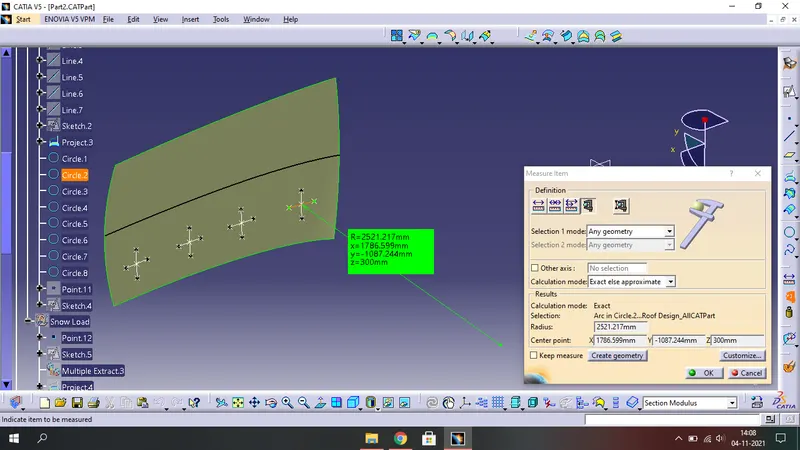
Ry
Find 'l' values
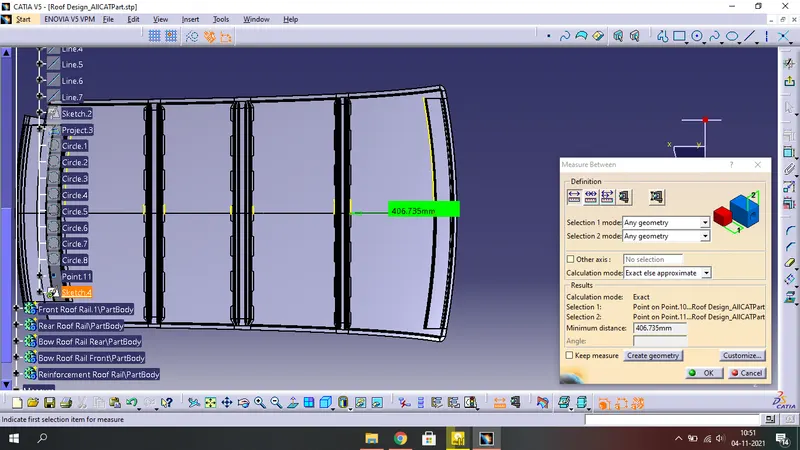
Calculated W values with the help of Excel sheet

We find that all values of W satisfy the condition of OK<2.7>3.1
Snow Load
Formula
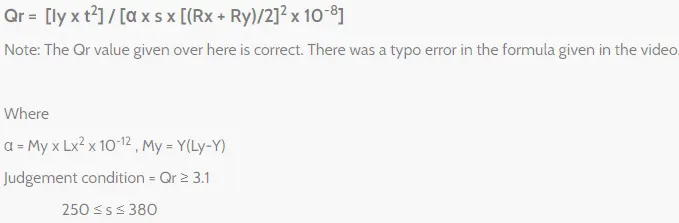
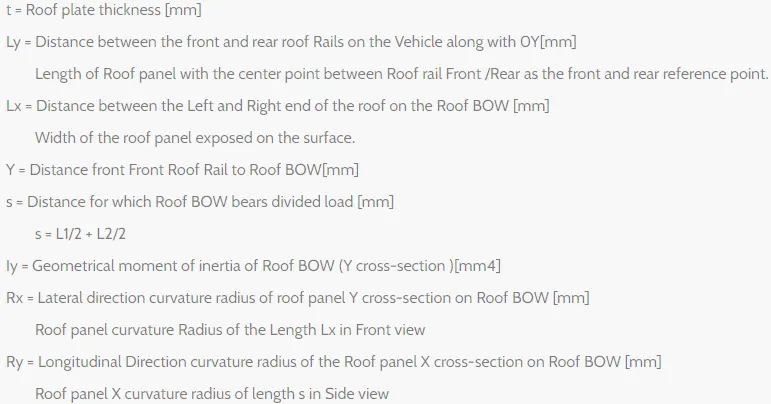
Plotting points
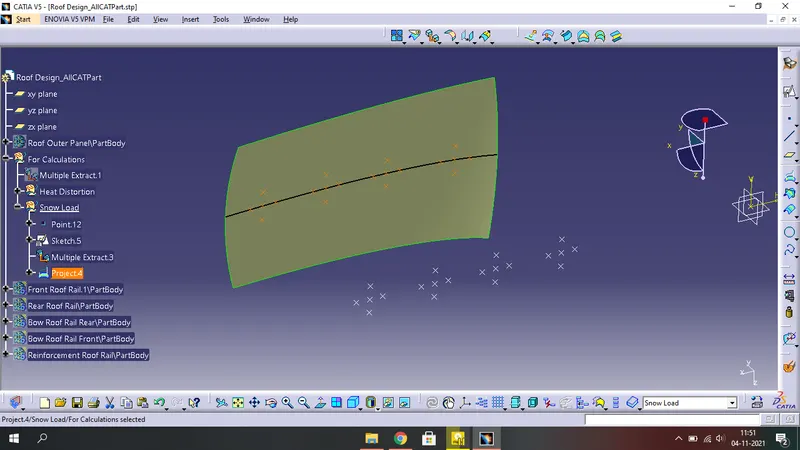
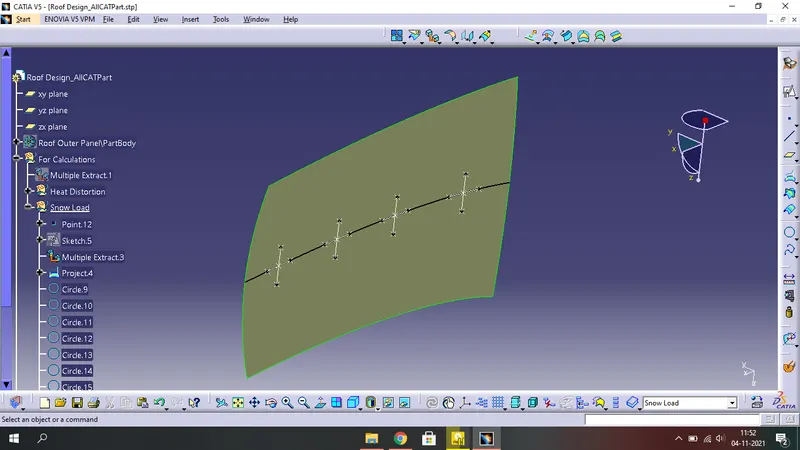
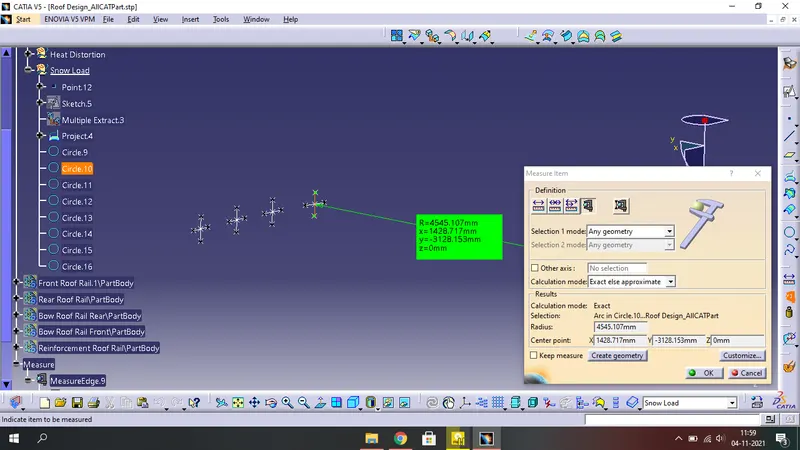
Finding Rx and Ry values
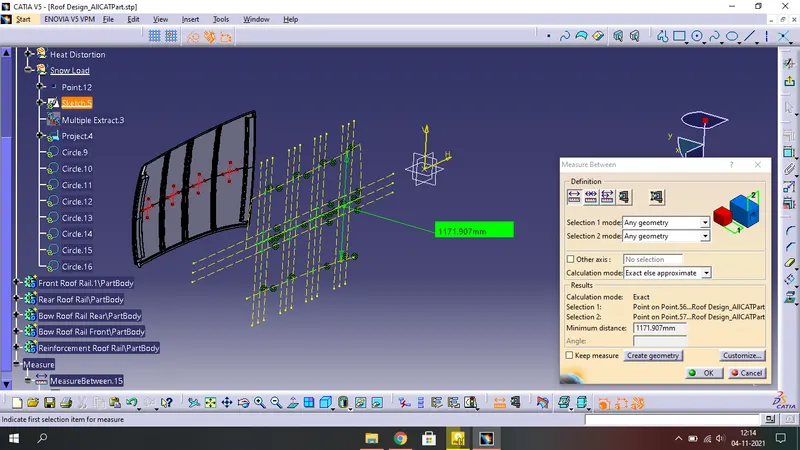
Finding Lx values (vertical distance of the rail)
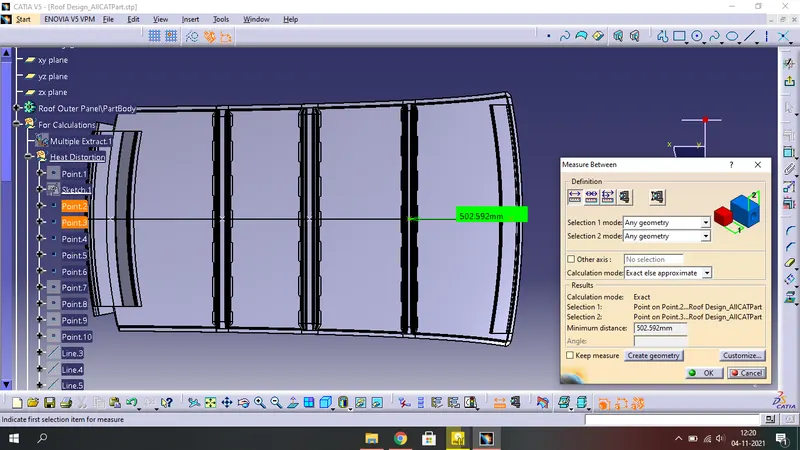
Y values (distance b/w the midpoints of the rails)
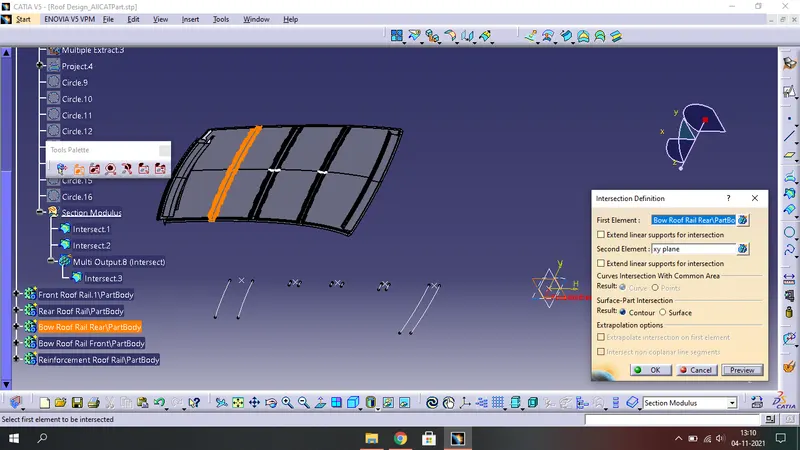
To find section modulus of the 3 rails
Making intersection
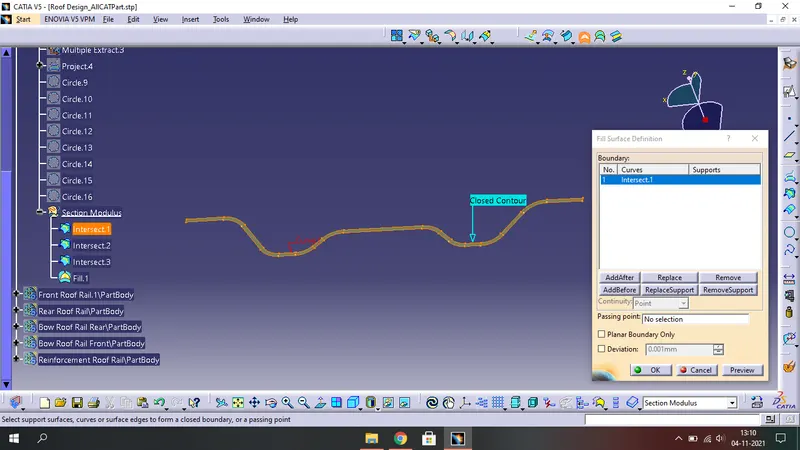
Filling the intersection
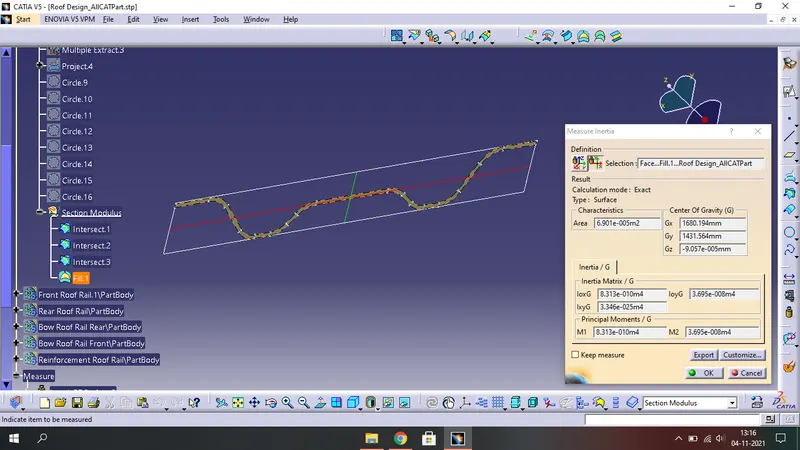
Finding section modulus using "measure inertia" tool. Take the lower value of M (which is M1 here).
Finally calculating Qr using Excel sheet

We find that one of the areas does not satisfy the Qr condition of Qr >= 3.1.
Conclusion:
Therefore, we can conclude that the roof that we have designed does well to satisfy the heat distortion criterion but fails in the case of snow load. Therefore this roof is not suitable for application.