Radar Mast & Final Assembly of Yacht
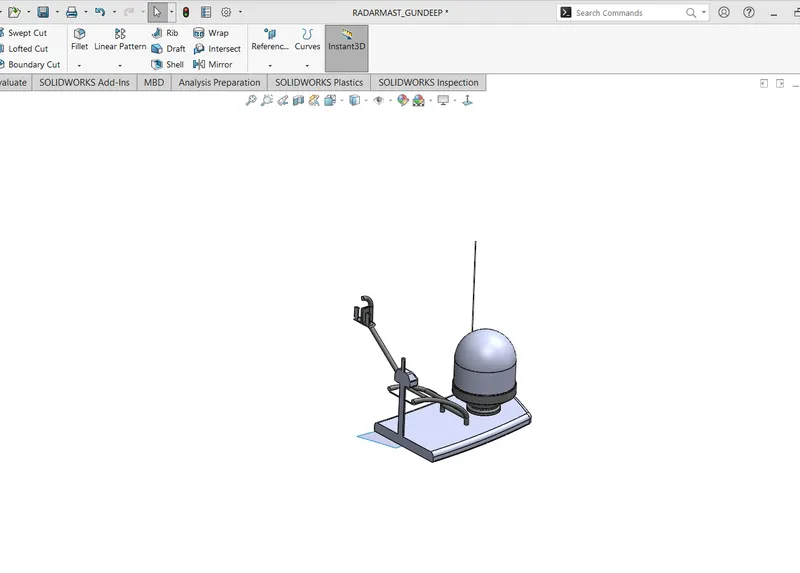
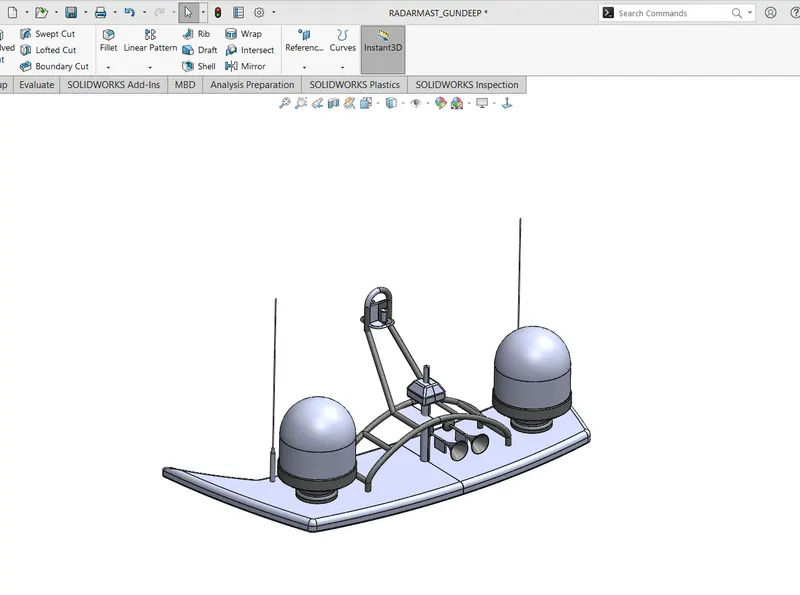
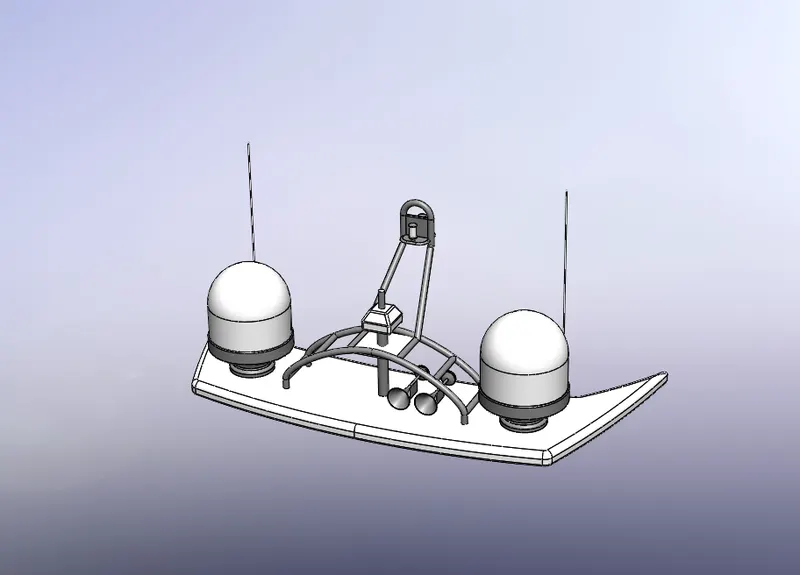
1. Radar Mast
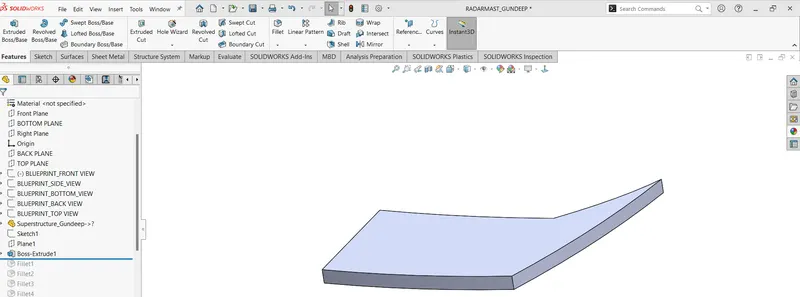
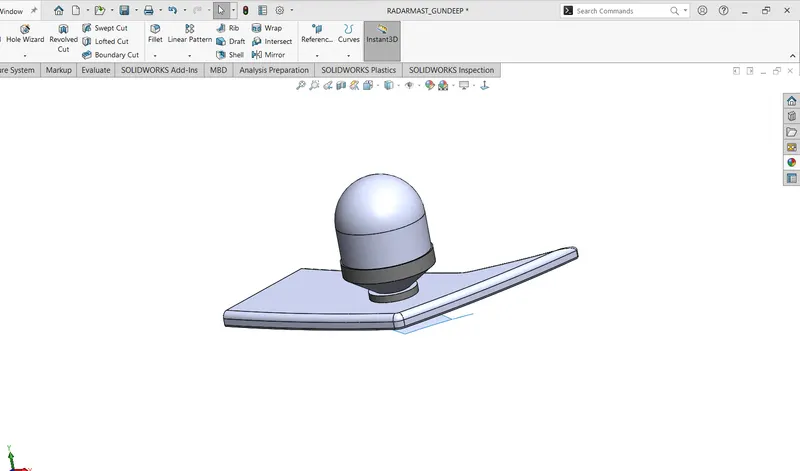
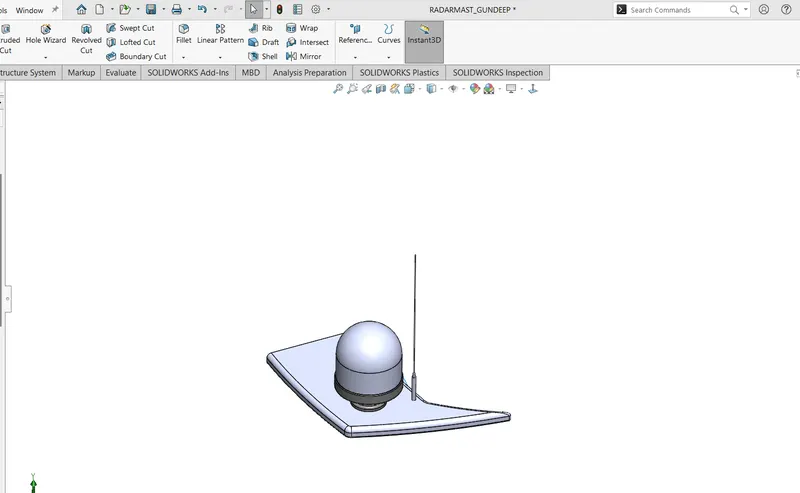
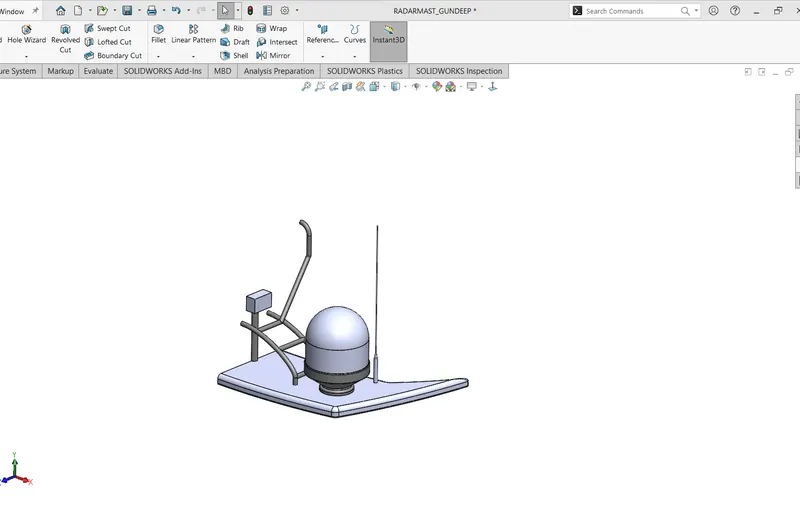
Steps with pictures:
2. Yacht Assembly :
OBJECTIVE :
- Use SolidWorks Part to model the individual parts of a yacht.
- Use SolidWorks Assembly to assemble the individual parts into a complete yacht.
- Use SolidWorks Visualize or PhotoView 360 to render the yacht in a realistic and attractive way.
INTRODUCTION :
A yacht is a recreational watercraft. This means that it is not used for commercial purposes, such as fishing or transportation. It is typically used for pleasure, cruising, or racing. This means that it is used for activities that are done for enjoyment, such as sightseeing, swimming, or waterskiing. There is no strict definition of what makes a yacht a yacht. This is because the term has evolved over time and can mean different things to different people. However, there are some general characteristics that are typically associated with yachts. Yachts are typically at least 33 feet (10 m) long. This is because they need to be large enough to accommodate a cabin with amenities that allow for overnight use. Yachts may be powered by sails or by engines. Sailboats are powered by the wind, while motor yachts are powered by engines. Yachts can be quite luxurious or relatively simple. Some yachts are equipped with all the latest amenities, such as hot tubs, swimming pools, and helipads. Others are more basic and are designed for cruising and fishing. Some yachts are designed for racing, while others are designed for comfort and relaxation. Racing yachts are typically very fast and are designed to win competitions. Comfort yachts are designed to provide a luxurious and relaxing experience for their passengers. No matter what their purpose, yachts are always a sight to behold. Yachts are often very large and impressive vessels, and they can be a great way to enjoy the water.
DESIGN METHODOLOGY :
A detailed flowchart that shows all the steps involved:
* Gather requirements
* What are the specifications of the yacht?
* What are the desired features?
* What is the budget?
* Create design
* Sketch out the yacht's overall design
* Create detailed drawings of the individual parts
* Model individual parts
* Use CAD software to create 3D models of the yacht's parts
* Assemble parts
* Use CAD software to assemble the individual parts into a complete yacht
* Render yacht
* Use rendering software to create photorealistic images of the yacht
* Finish
* Review the yacht's design and make any necessary changes
DESCRIPTION :
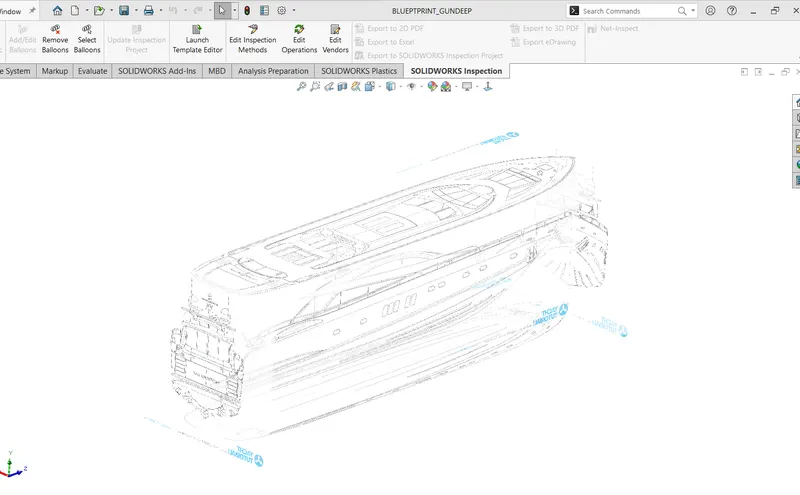
1. Setting up the Blueprints :
2. Add Yacht Hull :
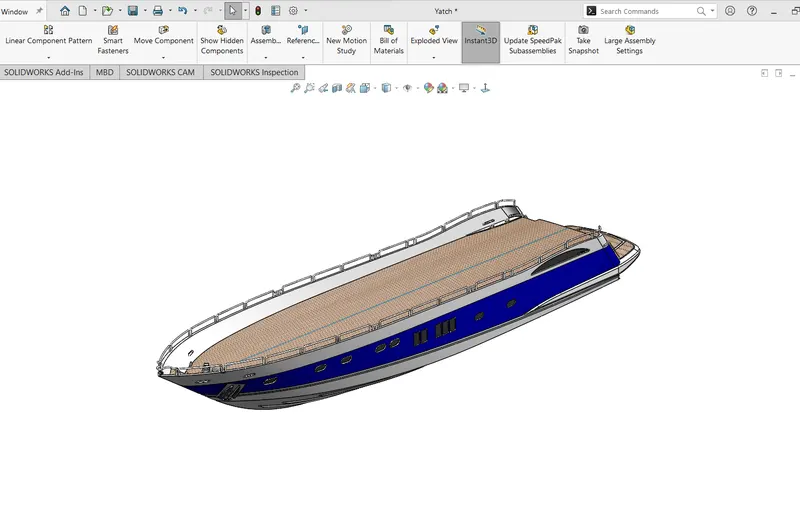
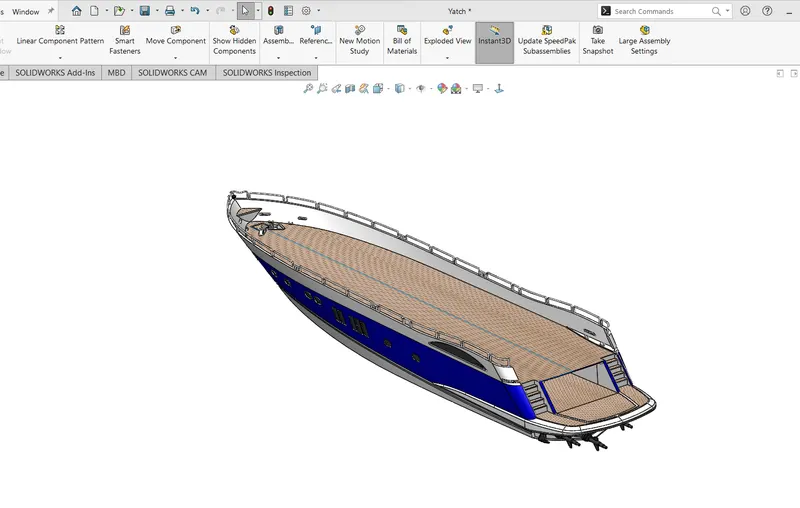
The hull of a yacht is the watertight body of the boat. It may be open at the top or fully or
partially covered with a deck.The hull is modeled using surface modeling techniques.
The outer surfaces of the hull are created using the Project Curve feature and other sketch tools.
These curves are then used to create lofted surfaces, boundary surfaces, extruded surfaces, and trimmed surfaces.
The portholes are modeled using swept boss/base features, and the railing is modeled using projected curves and swept boss/base features.
Fillet features are used to round off sharp edges. The anchor is modeled as a solid using extruded boss/base and extruded cut features.
The two symmetric halves of the hull are knitted together using the knit surface feature.
The create solid option is enabled to fill the inside of the hull.
Decals are added to the deck and stair surfaces for a more realistic appearance.
Since the hull is symmetric, only half of it is modeled and the other half is mirrored.
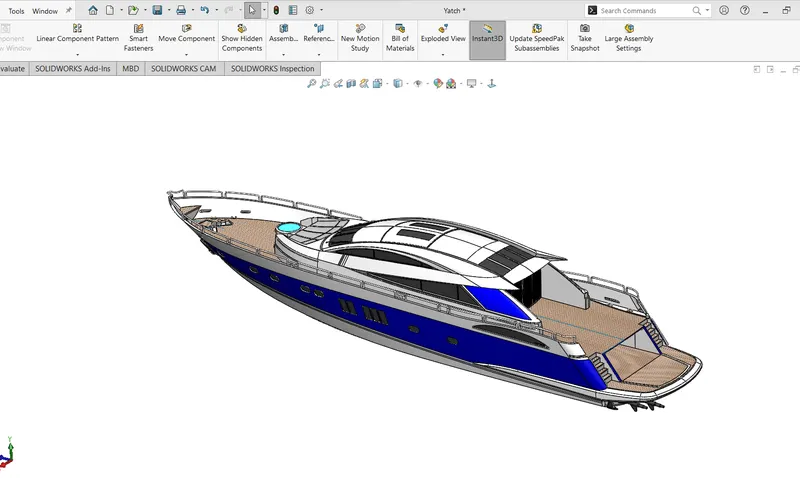
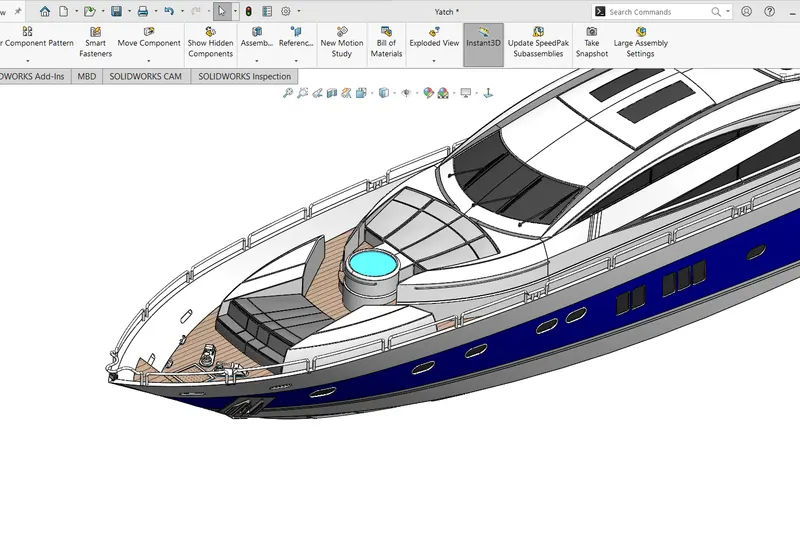
2. Add SuperStructure :The superstructure of a watercraft is the part of the boat that projects above the main deck. It does not usually include the masts or any armament turrets. The superstructure of a yacht is modeled by creating the outer surfaces first, just as we did in the case of the hull. These surfaces are then mirrored using the Mirror command and then knitted together properly with the Knit Surface feature. The railings are modeled using the Swept Boss/Base feature, just as they were in the case of the hull. The Jacuzzi is simply a cutout with a surface at the top to represent the water level. The surface is given a transparent appearance for this purpose. The window edges are blended using the Fillet feature to give a smooth appearance. The vipers (stairs) are modeled using solid features such as Extruded Boss/Base, Extruded Cut, Swept Boss/Base, etc., along with appropriate chamfers and fillets.
V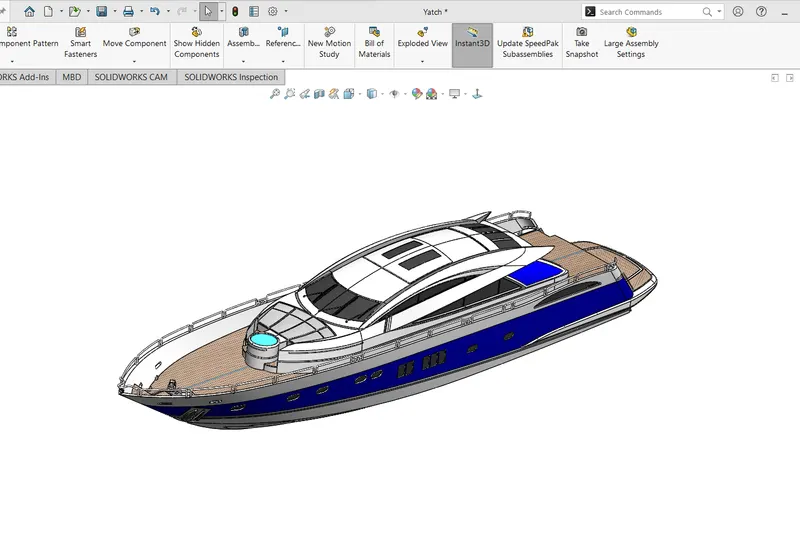
3. Insert Radar Mast :
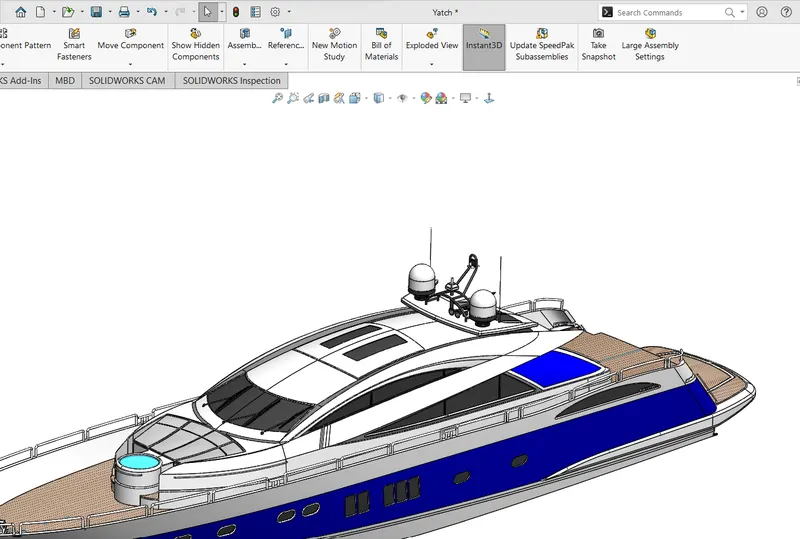
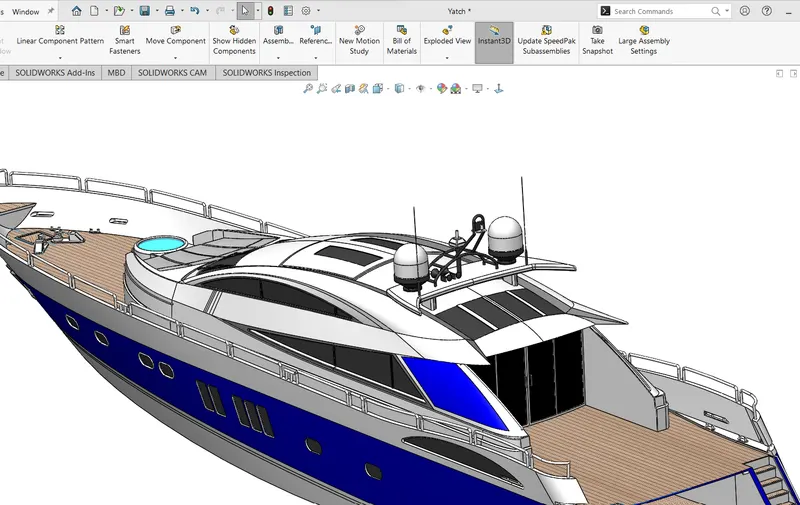
The mast of a sailing vessel is a tall pole that is erected on the centerline of a ship or boat. It is used to carry sails, spars, and derricks, and to provide a high vantage point for navigation lights, lookouts, and other equipment. Large ships often have multiple masts, with the size and configuration depending on the type of ship.
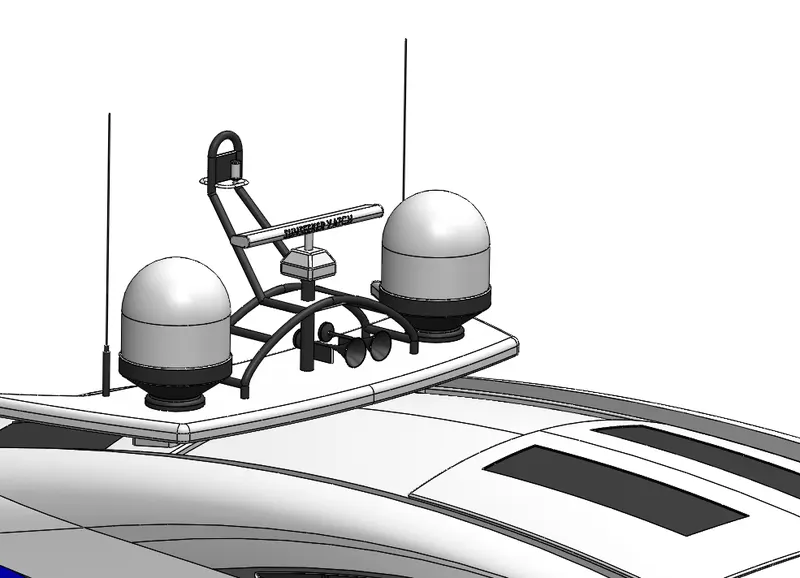
The mast in this model consists of two light bulbs and two antennas. It is modeled using solid features such as extruded boss/base, revolved boss/base, and swept boss/base. The horns (the curved parts at the top of the mast) are modeled using the shell feature, which removes the inside material from a solid part, making it hollow. The mirror feature is used to mirror-symmetric entities.
4. Insert Front , middle and rear seats:
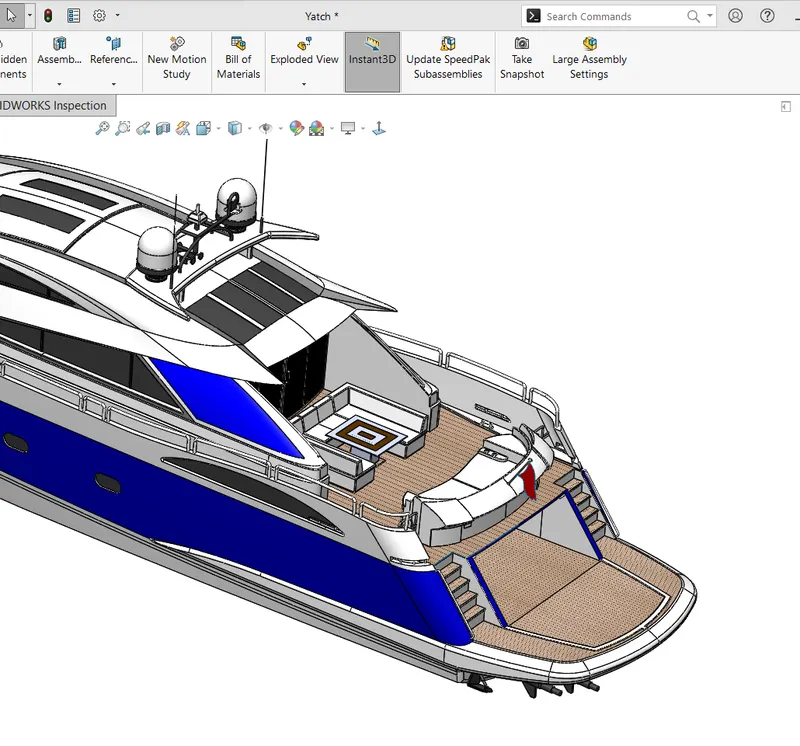
Seats can be modeled using either solid features or surface features.
The yacht model has three seats: front, middle, and rear. The front and rear seats are modeled using surface features.
First, the outer surfaces of the seats are created using the features in the Surface tab.
Then, the surfaces are knitted together using the Knit Surface feature to create a solid.
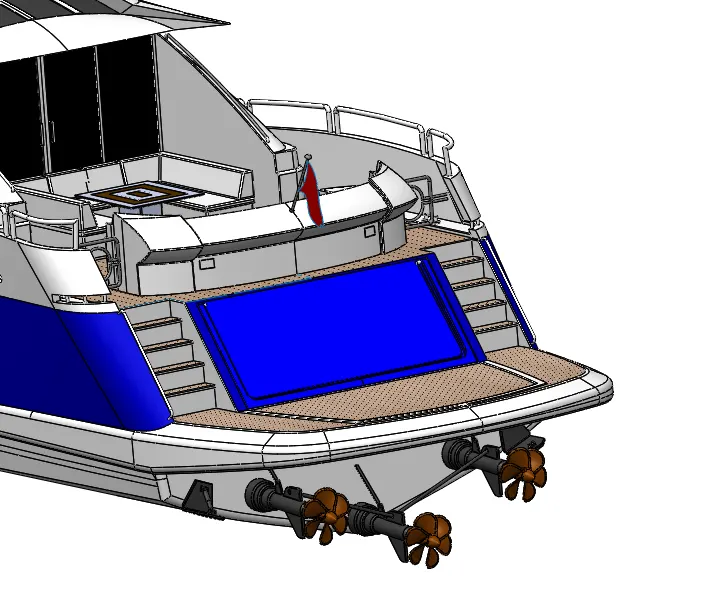
5. InserT Garage door, propeller and radar:
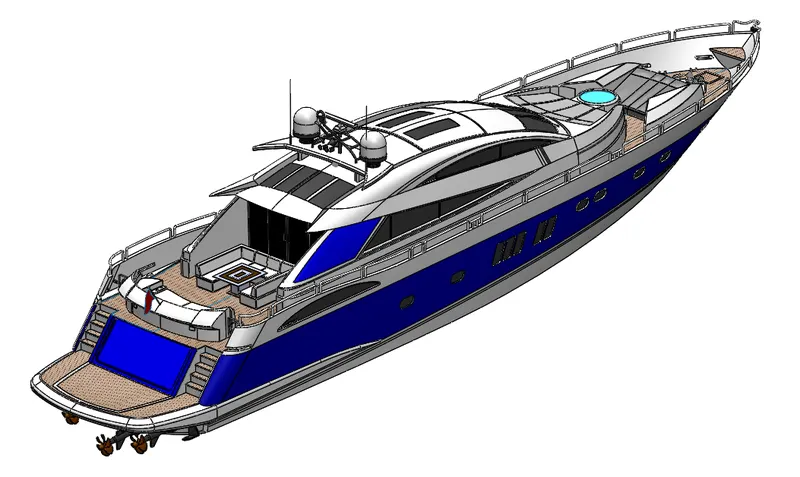
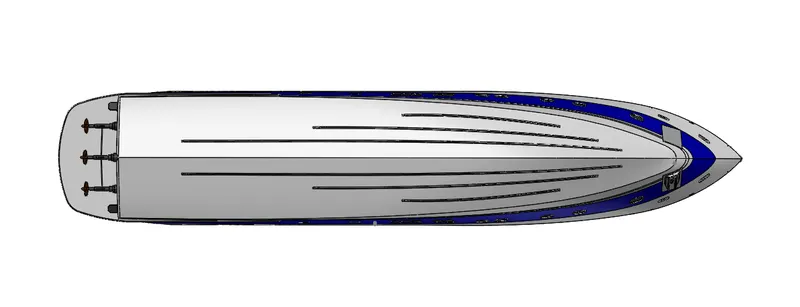
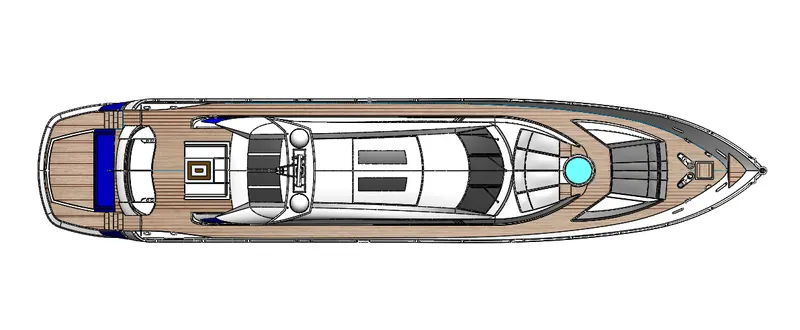
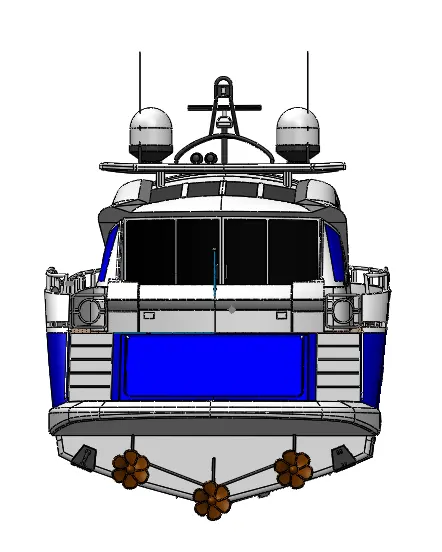
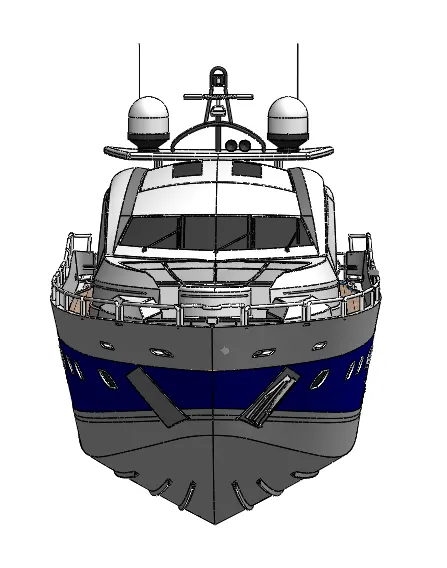
Final Assembly:
Conclusion:
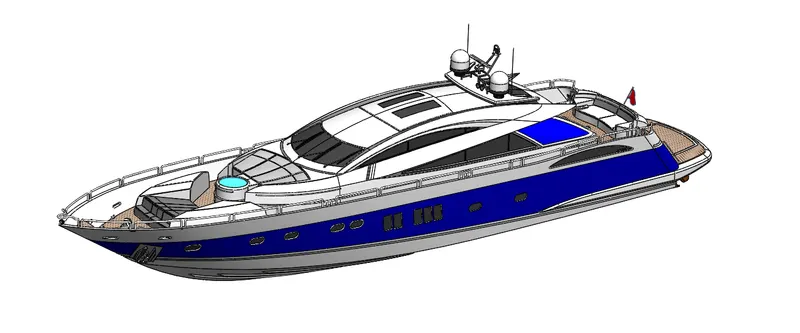
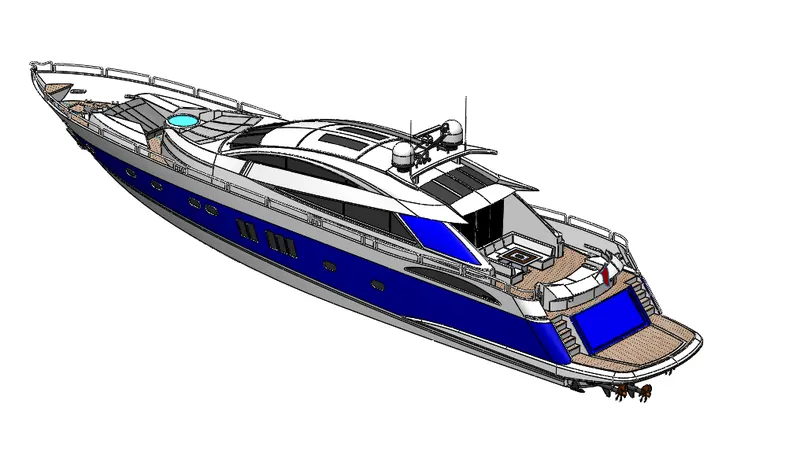
The exterior body parts of a Sunseeker Predator Yacht are modeled in SolidWorks Part files, then assembled in SolidWorks Assembly files, and finally rendered in SolidWorks Visualize.
In SolidWorks Part files, individual components of the yacht, such as the hull, superstructure, mast, and seats, are created. The SolidWorks Assembly file is used to combine these individual components into a single model. The SolidWorks Visualize software is used to render the assembly, creating a realistic image of the yacht.
This process allows engineers and designers to create a detailed and realistic model of the yacht, which can be used for various purposes, such as marketing, sales, and engineering analysis.