Radar Mast & Final Assembly of Yacht
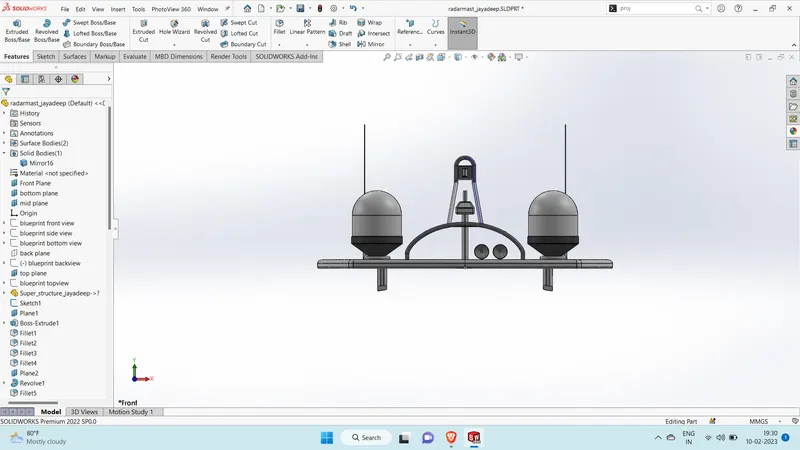
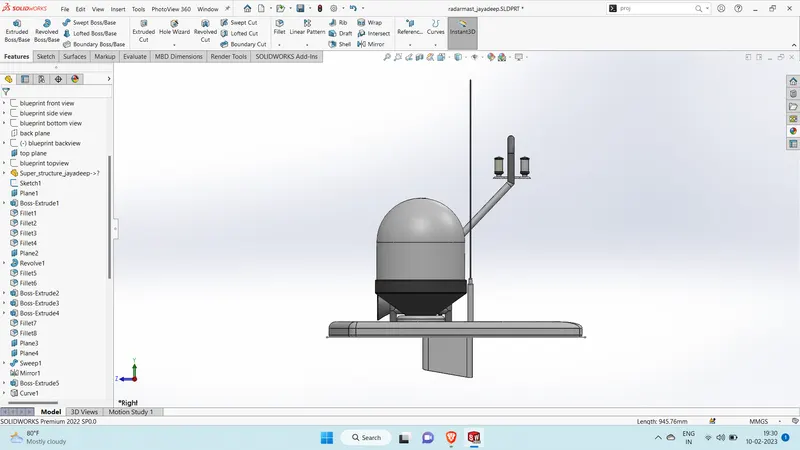
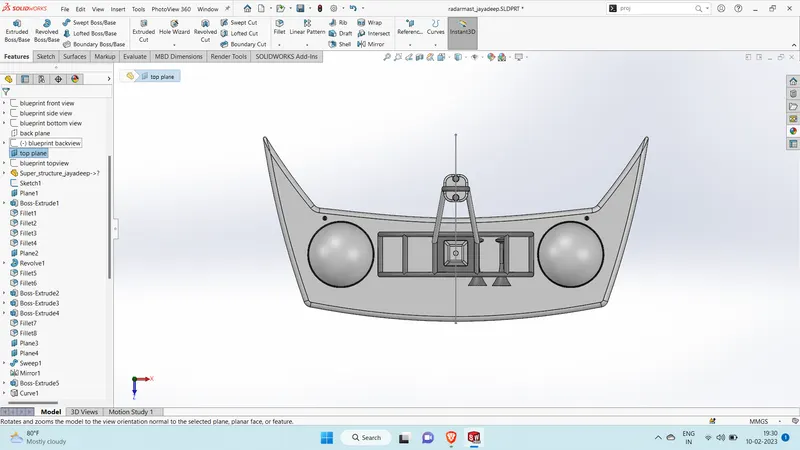
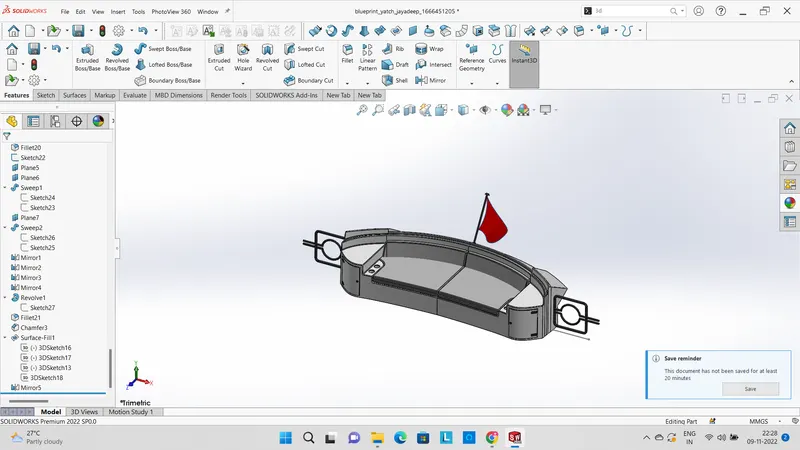
RADARMAST
views:
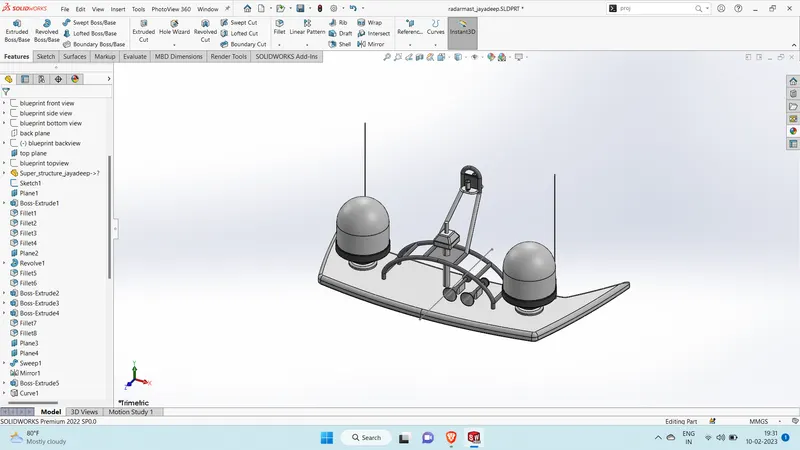
feature tree:
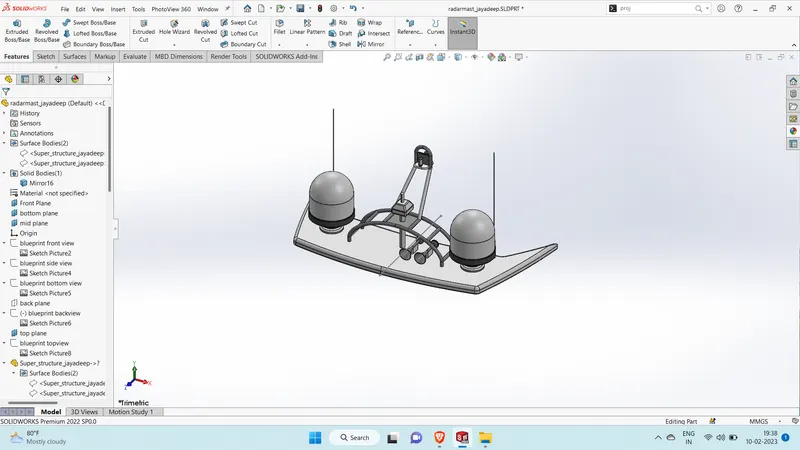
DESIGN AND ASSEMBLY OF YATCH
AIM: To design the individual parts of yatch and assemble them together
PARTS TO BE DESIGNED: The following are the parts of yatch
- Propeller
- Hull
- superstructure
- Front seat
- Middle seat
- Rear seat
- radar
- radarmast
- garage door
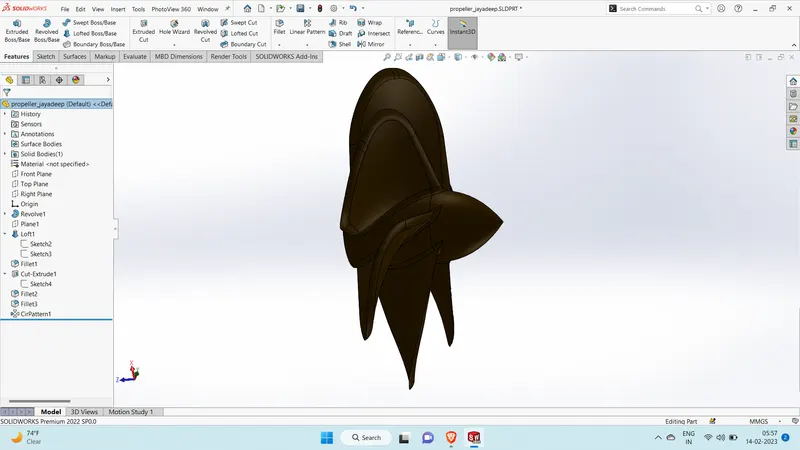
propeller: propeller is a device that consists of a central hub with radiating blades placed and twisted so that each forms part of a helical surface and that is used to propel a vehicle (such as a ship or airplane)
features used
revolve: here we create the hub of propeller by drawing a profile and revolving it about an axis
loft: one of the fan blade of propeller is created by loft feature using two sketches
circularpattern: it is used here to copy features fan blade about the circular reference of hub
fillet: it is given to sharp edges to enable smooth transistion
HULL :
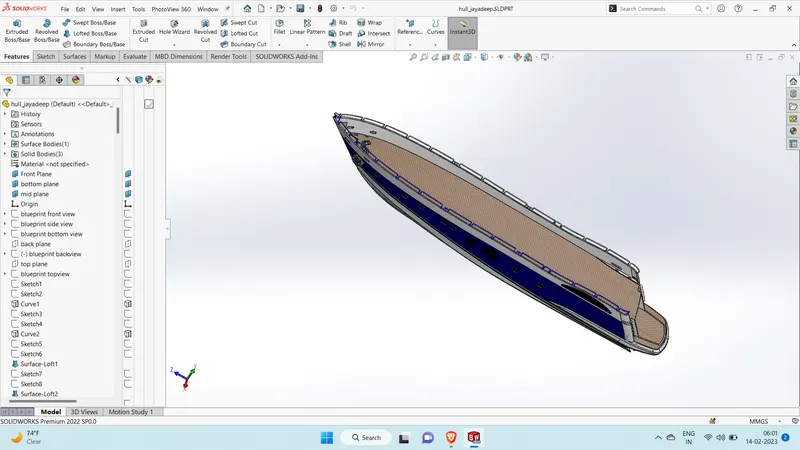
A hull is the water tight body of ship or boat. The hull may open at the top (such as a dinghy), or it may be fully or partially covered with a deck. Atop the deck may be a deckhouse and other superstructures, such as a funnel, derrick, or mast . The line where the hull meets the water surface is called the waterline.
features used
3D sketch : this is used to draw a sketch in space and on the surface.
Curve Projection : this is used for the projection of the curves made in different planes to create an intersected curve.
Surface Extrude : this is used where the extuded surface has to be very thin thickness.(i.e line thickness)
Surface Loft : It is used to create a surface using profile and guide curves.
Sweep : It helps to create tube like structure by following the required path line.
Helix/ Spiral : It helps to create the structure like spring with the following inputs of Pitch or Height and revolutions.
Surface Knit : It is used to join the multiple surfaces to form single surface and convert it into solid.
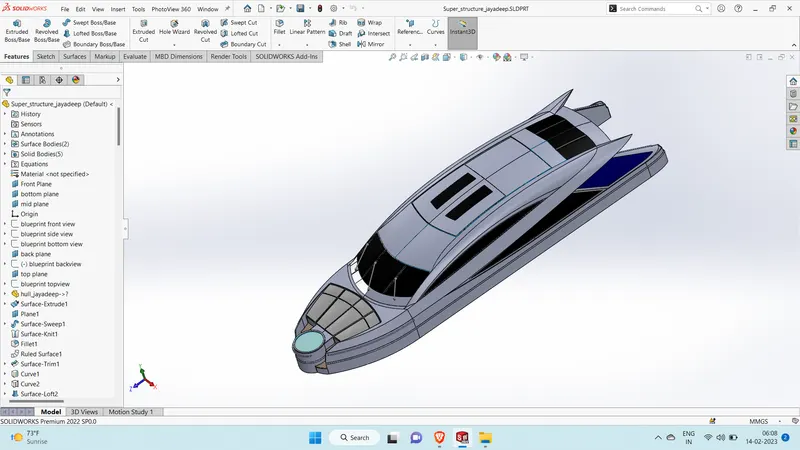
superstructure:
A superstructure is a decked structure on the freeboard deck, extending from side to side of the ship.a superstructure can also be said as a place where people can stay.
features used
Ruled surface :it is used to obtain the extruded surface perpendicular to the plane and can be titled in certain angle.
Surface Trim : It is used to keep or remove the surface area of the intersecting surfaces.
Extend Surface : It is used to Extend the edge of the surface with the distance or selection edge provided.
Seats(Front,Rear,Middle):
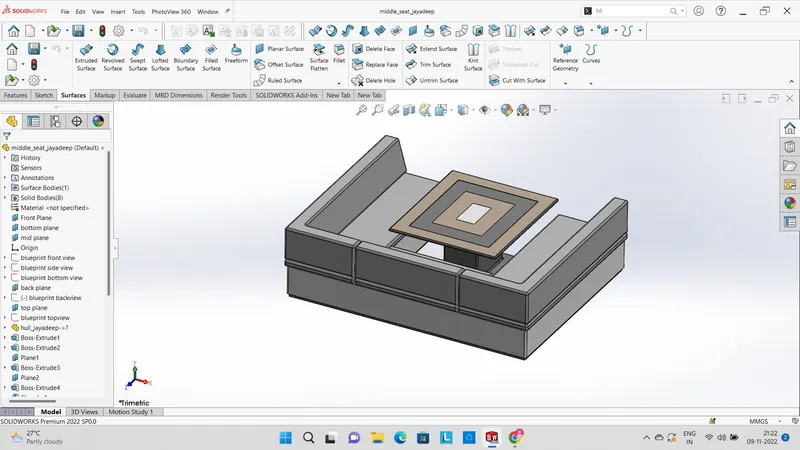
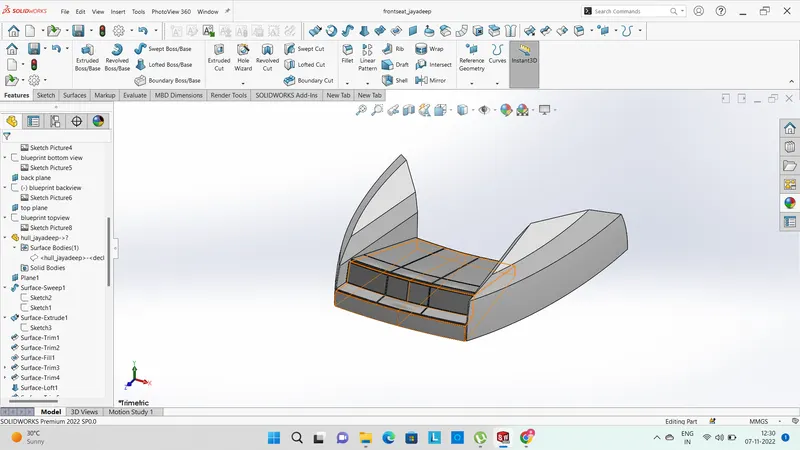
it a chair like thing which allows us to rest on it
we create three seats here in yatch design
middle seat:
frontseat
rear seat:
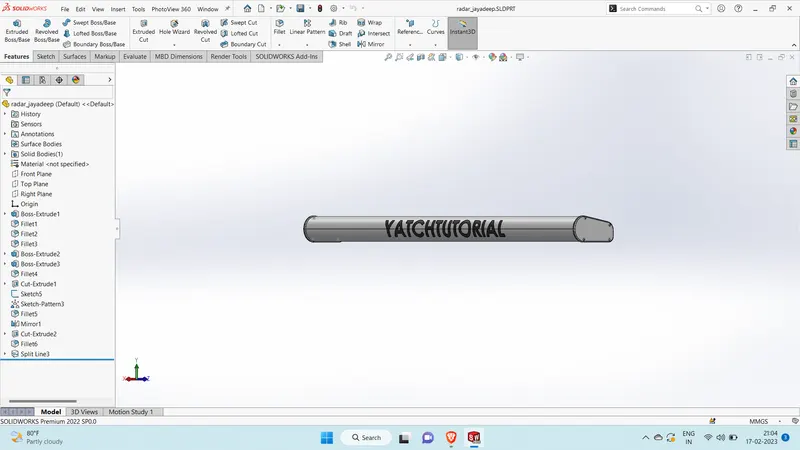
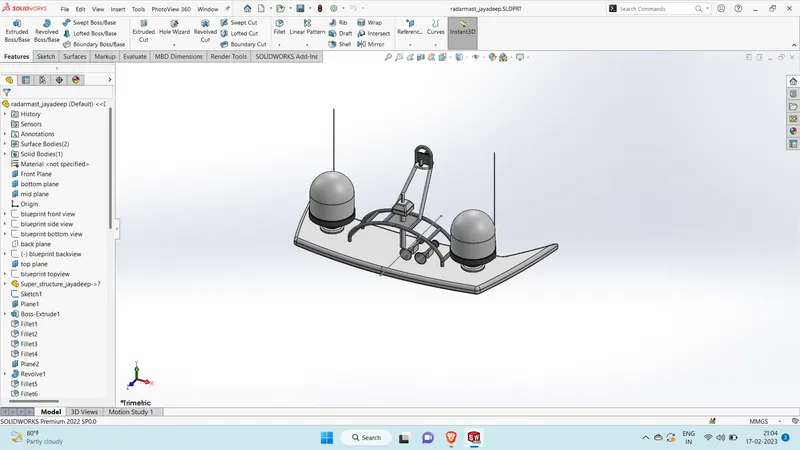
radar and radarmast:
Radar is a detection system that uses radio waves to determine the range, angle, or velocity of objects. It can be used to detect aircraft, ships, guided missles, motor vehicles, weather formations and terrains . A radar system consists of a transmitter producing electro magnetic waves in the radio or micro waves domain, a transmitting antenna , a receiving antenna (often the same antenna is used for transmitting and receiving) and a reciever and processor to determine properties of the object(s). Radio waves (pulsed or continuous) from the transmitter reflect off the object and return to the receiver, giving information about the object's location and speed.
features used:
swept boss base: used to create tube like structure by means of two sketches one for guide and other for profile
revolve: used to create a circular shaft about a reference axis by means of sketch profile.
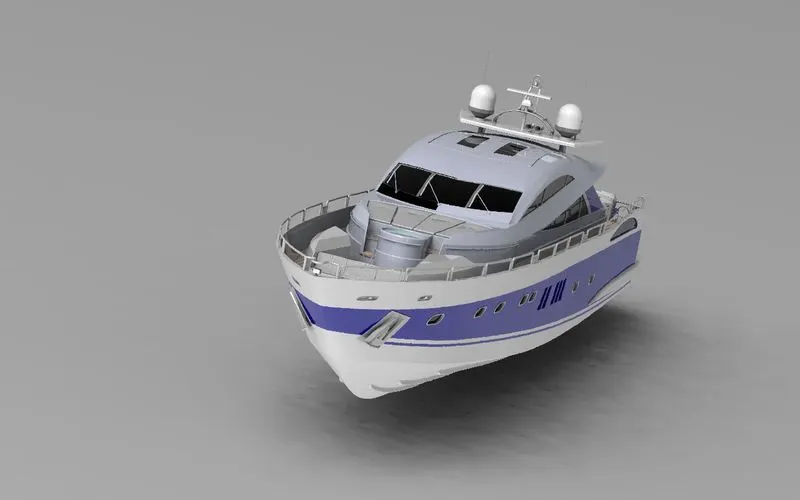
YATCH ASSEMBLY : here we assemble all the individual parts we created in a assembly workbench.we assemble the parts by using MATES option ,there are lots of mates options we need to select based on geometry of our mating parts and also considering the degrees of freedom.
the final assembly of yatch:
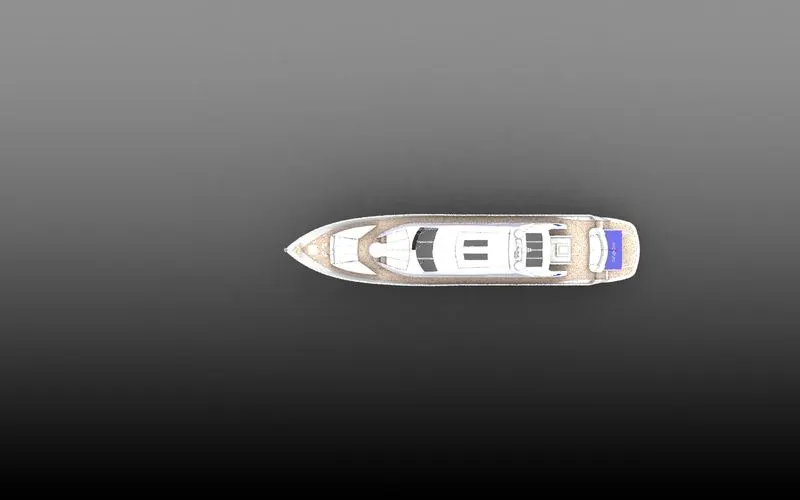
views
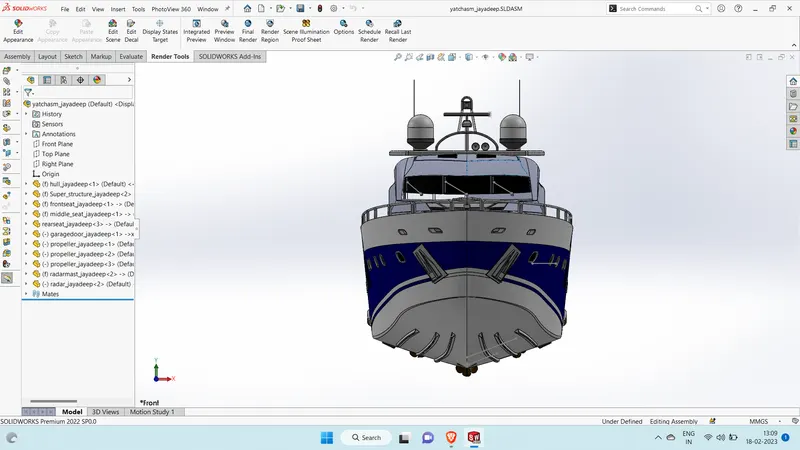
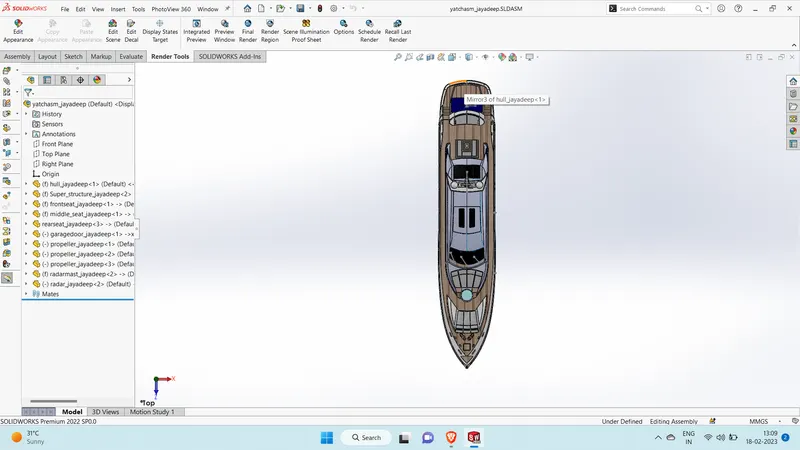
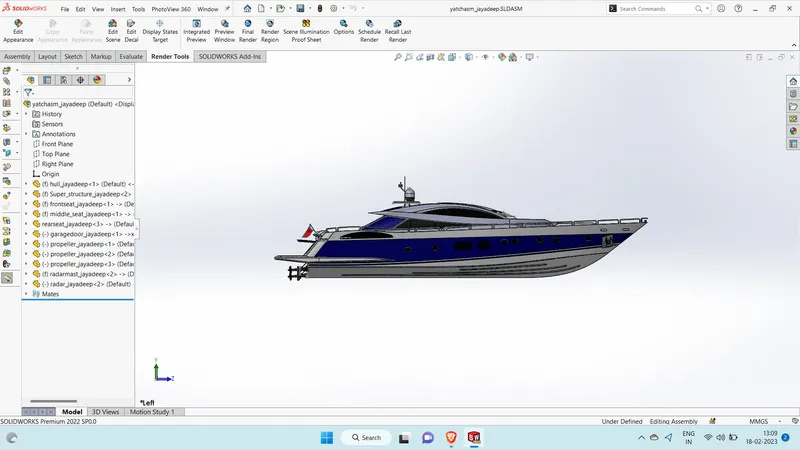
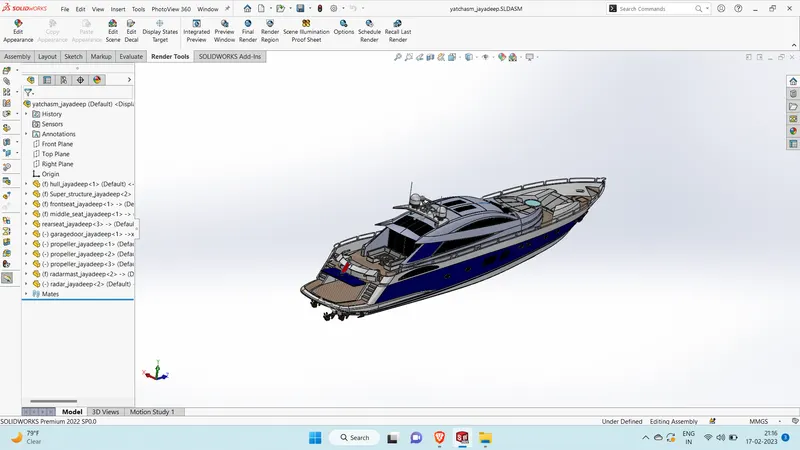
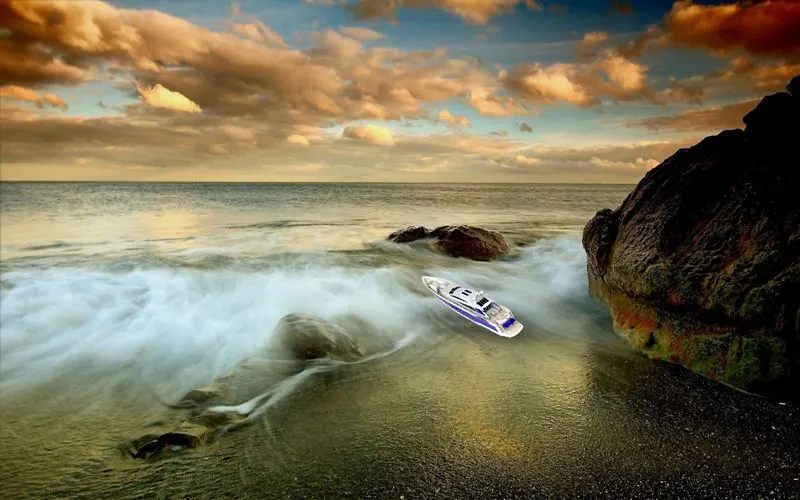
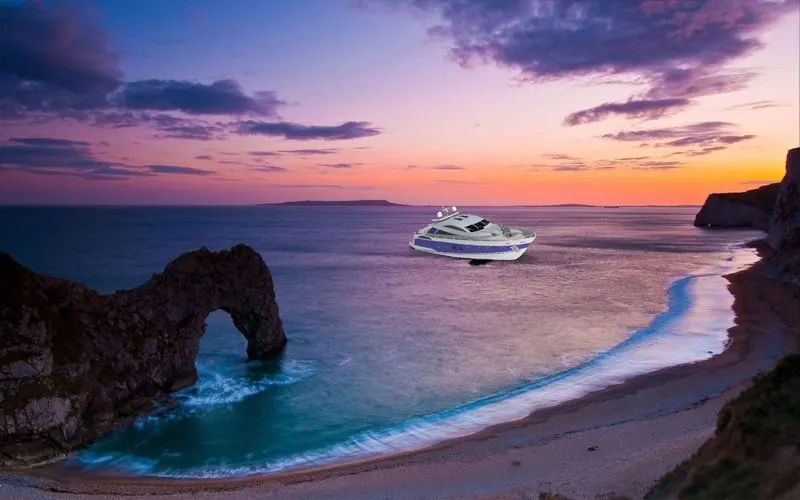
photo realistic rendering: it gives realistic appearance to our model .. and how it looks in real time and real environment