Project - Design a Hospital Management system
Project :-Hospital Management system
CONTENTS
Chapter One ...................................................................................................................................1
Introduction ..................................................................................................................................1
1.1 Problem Statement..............................................................................................................1
1.2 Objective.............................................................................................................................2
1.3 Scope ..................................................................................................................................2
Chapter Two ...................................................................................................................................3
Project Management .....................................................................................................................3
2.1 Project planning and scheduling .........................................................................................3
2.1.1 Methodology ...............................................................................................................3
2.1.2 Project Management Life Cycle .................................................................................4
2.1.3 Project Plan .................................................................................................................5
2.1.4 Schedule Representation .............................................................................................5
2.2 Risk Management ...............................................................................................................6
Chapter Three ................................................................................................................................7
System Analysis ...........................................................................................................................7
3.1 Background Study ..............................................................................................................7
3.2 Software system attributes ..................................................................................................7
3.2.1 Reliability ....................................................................................................................7
3.2.2 Availability .................................................................................................................7
3.3.3 Security .......................................................................................................................7
3.3 Scope of working ................................................................................................................7
3.4 Feasibility study ..................................................................................................................8
3.4.1 Technical Feasibility ...................................................................................................8
3.4.1 Operational Feasibility ................................................................................................8
3.4.3 Economic Feasibility ..................................................................................................
3.4.4 Management Feasibility ..............................................................................................8
3.4.5 Social Feasibility .........................................................................................................9
Chapter Four ................................................................................................................................10
System Design ............................................................................................................................10
4.1 Database Design...........................................................................................................10
4.2 E-R Diagram of Hospital Management System...........................................................10
4.3 Database schema of Hospital Management System ....................................................12
4.4 Data Flow Diagram of Hospital Management System ................................................13
4.5 User Interface ...............................................................................................................15
4.5.1 Home Page ................................................................................................................15
4.5.2 Admin Login page ....................................................................................................16
4.5.3 Admin user details page ............................................................................................17
4.5.4 Appointment History page ........................................................................................18
4.5.5 User (Patient) log in page .........................................................................................19
4.5.6 User account create page ..........................................................................................20
4.5.7 User details page .......................................................................................................21
4.5.8 Doctor Login page ....................................................................................................22
Chapter Five .................................................................................................................................23
System Implementation ..............................................................................................................23
5.1 Implementation ............................................................................................................23
5.2 Implementation Environment ......................................................................................23
5.3 Functional Requirement ...............................................................................................24
6.9 Advantages ...................................................................................................................26
Chapter Seven ..............................................................................................................................27
Conclusion ..................................................................................................................................27
7.1 Conclusions ..................................................................................................................27
7.2 Limitations of the system .............................................................................................27
7.3 Future plan ...................................................................................................................27
REFERENCES ........................................................................................................................................ 28
Chapter One
Introduction
Human Body is a very complex and sophisticated structure and comprises of millions of functions. All these complicated functions have been understood by man him, part-by-part their research and experiments. As science and technology progressed, medicine became an integral part of the research. Gradually, medical science became an entirely new branch of science. As of today, the Health Sector comprises of Medical institutions i.e. Hospitals, HOSPITALs etc. research and development institutions and medical colleges. Thus the Health sector aims at providing the best medical facilities to the common man
1.1 Problem Statement
Since Hospital is associated with the lives of common people and their day-to-day routines so I decided to work on this project. The manual handling of the record is time consuming and highly prone to error. The purpose of this project is to automate or make online, the process of day-to-day activities like Room activities, Admission of New Patient, Discharge of Patient, Assign a Doctor, and finally compute the bill etc. I have tried my best to make the complicated process Hospital Management System as simple as possible using Structured & Modular technique & Menu oriented interface. I have tried to design the software in such a way that user may not have any difficulty in using this package & further expansion is possible without much effort. Even though I cannot claim that this work to be entirely exhaustive, the main purpose of my exercise is perform each Hospital’s activity in computerized way rather than manually which is time consuming. I am confident that this software package can be readily used by non-programming personal avoiding human handled chance of error.
Chapter Two
Project Management
2.1 Project planning and scheduling
Project planning is part of project management, which relates to the use of schedules such as Gantt charts to plan and subsequently report progress within the project environment. Initially, the project scope is defined and the appropriate methods for completing the project are determined. Following this step, the durations for the various tasks necessary to complete the work are listed and grouped into a work breakdown structure. The logical dependencies between tasks are defined using an activity network diagram that enables identification of the critical path.
2.1.1 Methodology
We have used Iterative and Incremental Development model (IID) for our project development. This
development approach is also referred to as Iterative Waterfall Development approach. Iterative and
Incremental Development is a software development process developed in response to the more
traditional waterfall model. This model is designed to take care of such big project. The large and
complicate project chiefly demand better development and testing procedure. The waterfall model is
well known for its repeated testing process. Hence I choose the waterfall model for developing my
software.
2.1.2 Project Management Life Cycle
The Project Management Life Cycle has four phases. Each project life cycle phase is described along
with the tasks need to complete it
The four phases is
1. Initiation
2. Planning
3. Execution
4. Closure.
2.1.3 Project Plan:
Once we examine that the project is feasible, I undertake project planning. The table below describes
Table 2.1 Project Plan
1 Task Name Duration Start Finish
2 Planning 31 days 12/01/18 12/02/18
3 Design 28 days 13/02/18 13/03/18
4 Coding 29 days 14/03/18 12/04/18
5 Delivery 8 days 13/04/18 20/04/18
2.1.4 Schedule Representation
Scheduling the project tasks is an important project planning activity. It involves deciding which tasks would be taken up when. In order to schedule the project activities, a software project manager needs to do the following this rules.
2.2 Risk Management
Software Risk Management is a proactive approach for minimizing the uncertainty and potential loss associated with a project. Some categories of risk include product size, business impact, customerrelated, process, technology, development environment, staffing (size and experience), schedule, and cost. Risk Management is a practice with processes, methods, and tools for managing risks in a
project.
Risk identification is a systematic attempt to specify threats to the project plan. By identifying known and predictable risks, we can take a first step toward avoiding them when possible and controlling them when necessary. To perform the risk identification, we categorized the risk into different categories as:
1. Project Risk
2. Technical Risk
3. Business Risk
4. Known Risk
5. Predictable Risk
6. Unpredictable
Chapter Three
System Analysis
3.1 Background Study
System Analysis is a separation of a substance into parts for study and their implementation and detailed examination.
Before designing any system it is important that the nature of the business and the way it currently operates are clearly understood. The detailed examination provides the specific data required during designing in order to ensure that all the client's requirements are fulfilled. The investigation or the study conducted during the analysis phase is largely based on the feasibility study. Rather it would not be wrong to say that the analysis and feasibility phases overlap. High-level analysis begins during the feasibility study. Though analysis is represented as one phase of the system development life cycle (SDLC), this is not true. Analysis begins with system initialization and continues until its maintenance. Even after successful implementation of the system, analysis may play its role for periodic maintenance and up gradation of the system. One of the main causes of project failures is inadequate understanding, and one of the main causes of inadequate understanding of the requirements is the poor planning of system analysis.
3.2 Software system attributes
3.2.1 Reliability: This application is a reliable product that produces fast & verified output of all its process.
3.2.2 Availability: This application will be available to use and help them to carry their operationsconveniently.
3.2.3 Security: This application will be designed in a maintainable manner. It will be easy to incorporate new requirements in the individual modules.
3.3 Scope of working:
The proposed software product is the Hospital Management system (HMS). The system will be used in any hospital, clinic, dispensary or pathology labs. Clinic, dispensary or pathology to get the information from the patients and then storing that data for future usages. The current system in use is a paper based system. It is too slow and cannot provide updated lists of patients within reasonable
timeframe. The intention of the system is to reduce over-time pay and increase the number of patients that can be treated accurately. Requirement statements in these documents are both functional and non-functional
3.4 Feasibility study
3.4.1 Technical Feasibility: This is concerned with specifying equipment and software that will successfully satisfy the user requirement; the technical needs of the system may vary considerably,but might include:
The facility to produce outputs in a given time:
1. Response time under conditions.
2. Ability to process a certain volume of transaction at a particular seep.
3. Facility to communicate data to distant location.
3.4.2 Operational Feasibility: It is mainly related to human organization and political aspects. The points to be considered are:
1. What changes will be brought with the system?
2. What organizational structures are distributed?
3. What new skills will be required? Do the existing staff members have these skills? If not, can
then the trained due course of time
3.4.3 Economic Feasibility: Economic analysis is the most frequently used technique for evaluating
the effectiveness of a proposed system. More frequently known as cost/benefit system and compare
them with costs. If benefits outweigh costs, a decision is taken to design and implement the system.
3.4.4 Management Feasibility: It is a determination of whether a proposed project will be
acceptable to management. If does not accept a project of gives a negligible support to it; the analyst
will tend to view the project as a no feasible one.
3.4.5 Social Feasibility: Social feasibility is a determination of whether the project will be
acceptable to the people or not. This determination typically examines the probability of the project
accepted by the group directly affected by the proposed system change.
Chapter Four
System Design
4.1 Database Design
Database design is the process of producing a detailed data model of database. This data model contains all the need logical and physical design choices and physical storage parameters needed to generate a design in a data definition language, which can then be used to create a database. A fully attributed data model contains detailed attributes for each entity. The term database design can be used to describe many different part of the design of an overall database system. Principally, and most correctly, it can be thought of as the logical design of the base data structure used to store the data. In the relational model these are the tables and views. In an object database the entities and relationships map directly to object classes and named relationships. However, the term database design could also be used to apply to the overall process of designing, not just the base data structure, but also the forms and queries used as part of the overall database application within the database management system.
4.2 E-R Diagram of Hospital Management System An entity-relationship diagram (ERD) is an abstract and conceptual representation of data. Entityrelationship modeling is a database modeling method, used to produce a type of conceptual schema or semantic data model of a system, often a relational database, and its requirements in a top-down fashion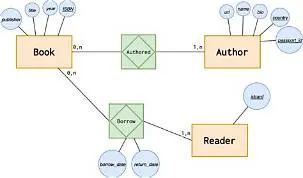
Fig. 4.1: E-R Diagram of Online Marketplace
A database schema is the skeleton structure that represents the logical view of the entire database. It defines how the data is organized and how the relations among them are associated. It formulates all the constraints that are to be applied on the data. A database schema can be divided broadly into two categories − Physical Database Schema: This schema pertains to the actual storage of data and its form of storage like files, indices, etc. It defines how the data will be stored in a secondary storage. Logical Database Schema: This schema defines all the logical constraints that need to be applied on the data stored. It defines tables, views, and integrity constraints.
List of table:
1. admin
2. Users
3. Patients
4. Physician
5. Services
6. Transactions
7. user_details
8. Room
9. Discounts
10. Appointment
11. Doctors
12. Doctor specialization.
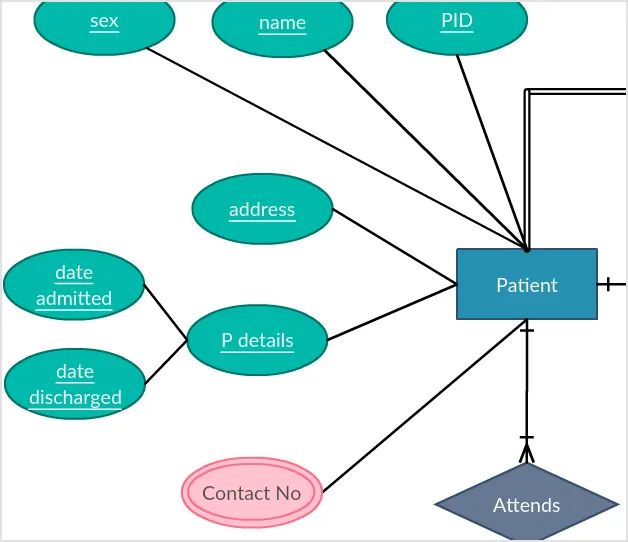
Fig.4.2: Database schema of Online Marketplace
4.4 Data Flow Diagram of Hospital Management System
The context diagram is the most abstract data flow representation of a system. It represents the entire
system as a single bubble and. The various external entities with which the system interacts and the
data flows occurring between the system and the external entities are also represented. The name
context diagram is well justified because it represents the context in which the system is to exist i.e.
the external entities (users) that would interact with the system and specific data items they would be
receiving from the system.
Fig. 4.3: Data flow diagram of online marketplace
Chapter Five
System Implementation
5.1Implementation
Implementation is the process of having system personal check out and provides new equipment’s into use, train the user to install a new application and construct any files of data needed to use it. There are three types of implementation. Implementation of computer system to replace a manual system. To problem encountered are covering files, training user, creating accurate files and verifying print outs for integrity. Implementation of a new computer system to replace an existing one. This is usually difficult conversion. If not properly planned, there can be many problems. So large computer system many take as long as a year to convert. Implementation of a modified application to replace the existing one using the same computer. This type of conversing is relatively easy to handle, usually there are no major change in the file. Our project is yet to be implemented.
5.2 Implementation Environment
The implementation view of software requirement presents the real world manifestation of processing functions and information structures. This computerized system is specified in a manner that dictates accommodation of certain implementation details.
The implementation environment of the developed system facilitates multiple users to use this system simultaneously. The user interfaces are designed keeping in mind that the users of this system are familiar to using GUI-based systems. Thus, we restricted ourselves to developing a GUI-based system so that it becomes easier for the end user to get acquainted to the developed system.
5.3 Functional Requirement
This system interface is divided into two section
1. Administrator interface.
2. Users interface.
5.3.1 Administrator Interface
1. Administrator can delete any post.
2. Administrator can verified user account.
5.3.2 User Interface
1. User can browse all ads without any account.
2. For post an ad needs to create an account
3. User can update/edit their own account.
4. Log in and Log out system.
5. To create a new account user must be needs to verify his email with verification code.
6. If any user forget his/her password he/she can recovery his account with verify his email and
create a new password.
Chapter Six
System Testing
6.1 Integration Testing
Integration testing done before, during and after integration of a new module into the main software package. This involves testing of each individual code module. One piece of software can contain several modules which are often created by several different programmers. It is crucial to test each modules effect on the entire program model. After integration testing the project works successfully.
6.2 Unit Testing
Unit testing performed on each module or block of code during development. Unit testing is normally done by the programmer who writes the code.
6.3 System Testing
System testing done by a professional testing agent on the completed software product before it is introduced to the market.
6.4 Acceptance Testing
Acceptance testing is a beta testing of the product done by the actual end user.
6.5 Recovery Testing
Recovery testing is done to demonstrate a software salutation is reliable, trustworthy and can successfully recoup form possible crashes.
6.6 Functional Testing
Functional Testing also known as functional completeness testing. Functional Testing involves trying to think of any possible missing functions. Testers might make a list of additional functionalities that a product could to improve it during functional testing.
6.7 Hardware/Software Testing
IBM refers to Hardware/Software testing as “HW/SW Testing”. This is when the tester focuses his/her attention on the interactions between the hardware and software during system testing.
6.8 Security Testing
Security Testing is a variant of Software Testing which ensures, that system and applications in an organization, are free from any loopholes that may cause a big loss. Security testing of any system is about finding all possible loopholes and weaknesses of the system which might result into a loss of information at the hands of the employees or outsiders of the Organization
6.9 Advantages
The software helps to handle the entire administration of hospitals and healthcare facilities. Typically, such a software includes various modules that help doctors manage their assignments and schedules, carry out patient registration, maintain store inventory records, keep track of medicine, administration, maintain blood bank (with available blood type) details, individual record of patients with their test reports, nursing and housekeeping service details, financial information, including final billing & payments, insurance details and much more. After the customized software is implemented and integrated into the system, patient care and hospital administration becomes an easy job.
Chapter Seven
Conclusion
7.1 Conclusions
This project has been a rewarding experience in more than one way. The entire project work has enlightened us in the following areas.
a) We have gained an insight into the working of the HOSPITAL. This represents a typical real
world situation.
b) Our understanding of database design has been strengthened this is because in order to generate
the final reports of database designing has to be properly followed.
c) Scheduling a project and adhering to that schedule creates a strong sense of time management.
d) Sense of teamwork has developed and confidence of handling real life project has increased to a
great extent.
e) Initially, there were problem with the validation but with discussions, we were to implement
validations.
7.2 Limitations of the system
o Online payment is not available at this version.
o Data delete & edit system is not available for all section.
o User account not verified by Mobile SMS not available in this system.
o Loss of data due to mismanagement.
7.3 Future plan
o Diagnostics billing system.
References
[1] Deepak Thomas ͞”Beginning PHP 4 Databases”, Wrox Press Ltd. Paperback-17, October,
2002.70-130 pp.
[2] Matt Doyle, “Beginning PHP 5.3, 2ndedition”, October 2009. 150-270 pp.
[3] Luke Welling, Laura Thomson. Sams ͞PHP and MySQL Web Development, 2nd edition,
Paperback- 20 February, 2003. 105-209 pp.
[4] W. Jason Gilmore “Beginning PHP 5 and MySQL 5 from Novice to Professional SECOND
EDITION”, Jul 9, 2008.100-150 pp.
[5] Abraham Silberschatz, Henry F. Korth and S. Sudarshan “Sixth Edition Database System
Conceptsreleased”, January 28, 2010. 206-253 pp.
[6] Server-Side Scriptinghttp://php.net/manual/en/index.php, Last accessed on 12/15/2017at
2:33pm
[7] HTML &CSS https://www.w3schools.com/, Last accessed on 10/21/2017at 1:33pm.
[8] Bootstraphttp://getbootstrap.com/, last accessed on 09/30/2017at 10:10pm.
[9] https://stackoverflow.com/, last accessed on 11/07/2017 at 2:20am.