Project
Atv:
An all -terrain vehicle (atv) refers to a motorized single -seated tri or quadricycle bike and buggy that is designed for off -road travel and activities.the vehicle consists of handlebars and low-pressure tires that have deep-threaded structures,which assist in driving over muddy,rocky,wetlands and dune topolgies.in comparsion to other utility vehicles (UTVS),ATVS Offer exccellent off-road capabilities and can carry heavy equipment over long distance and customized for high-performance riding,owing to which they extensive application across various industries, including sports,entertainment,agriculture ,military and defence.
| TYPE | APPLICATION | ENGINE TYPE |
NO.OF WHEELS |
DRIVE TYPE | FUEL TYPE | SEATING CAPACITY |
| utility ATV | sports | below 400cc |
three wheels |
2wd |
gasoline ATV |
One Seat |
| spot atv | entertainment | 400-800cc |
four wheels |
4wd | electric ATV | two or more seats |
| Others | Milkitry&defense |
CTV:
A CVT or continuosly variable transmission is an automatic,single speed,and gerlesss transmission that can shift through an infinite number of gear ratio.
A continuously variable transmission (ctv)is a transmission that operators on an ingenious pully system that automatically. vriable the trans mission ratio,allowing an infinite variability ratio ,allowing an lowest gears with nodiscrete steps or shifts.CVTs provide more useable power better fuel economy and smoother driving experience than traditional transmissins that use gearboxes with fixed numbers of gear sets.
solution:
1.1 without dashboard
A simulink model for the BAJA ATV model is shown flow
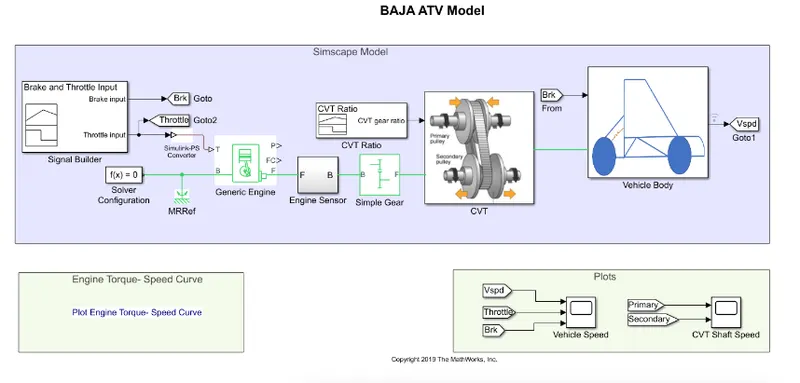
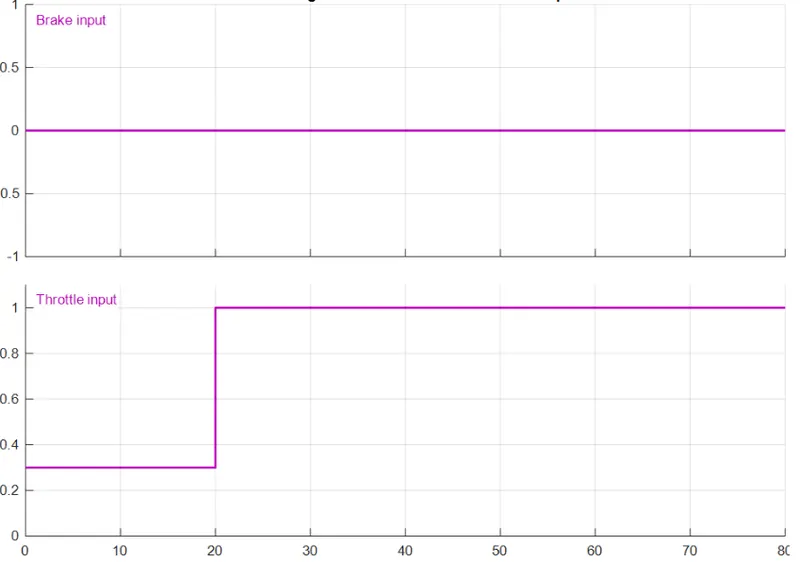
SIGNAL BUILDER:
The builder block alllows you to create interchangeable groups of piecewise linear signal sources and use them in a model.you can quickly switch the signal groups into and out of a mode tofacilititate testing.
GENERIC ENGINE:
Represents a system-level model of sprak -ignition and diesel engines suitable for use at initial .Ostages of modelling when only thhe basic parameters are avilable , Optoional idle speed and red line controllers are included.
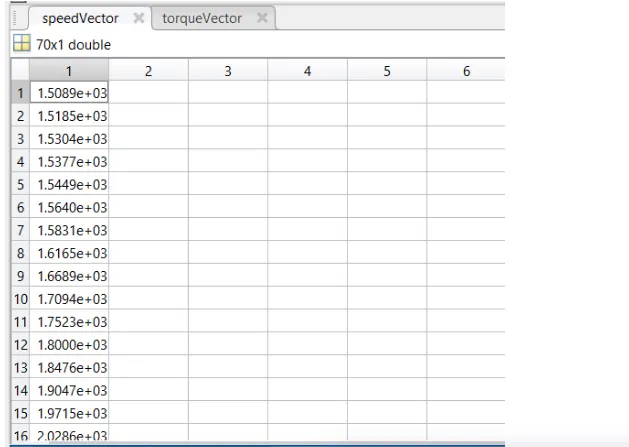
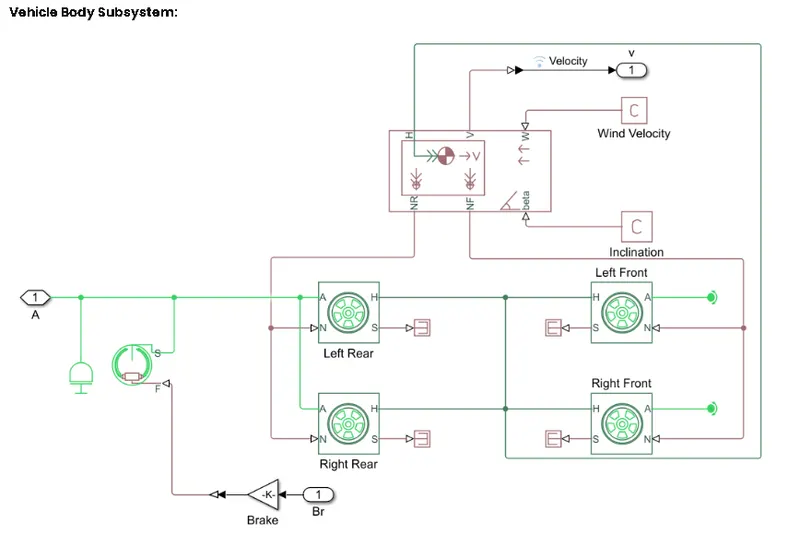
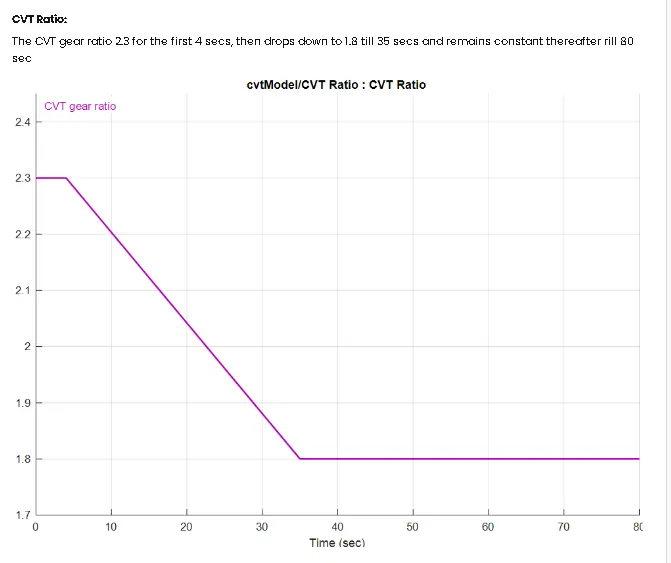
CVT ratio vs vehicle speed:
0 to 20km/hr,the CVT ratio is constant at 23
20 to 30 km/hr the CVT ratio drops down to2.03
30 to 50 km/hr the CVT ratio drops down to 1.8
50km/hr onwards,the cvt ratio is constant at 1.8
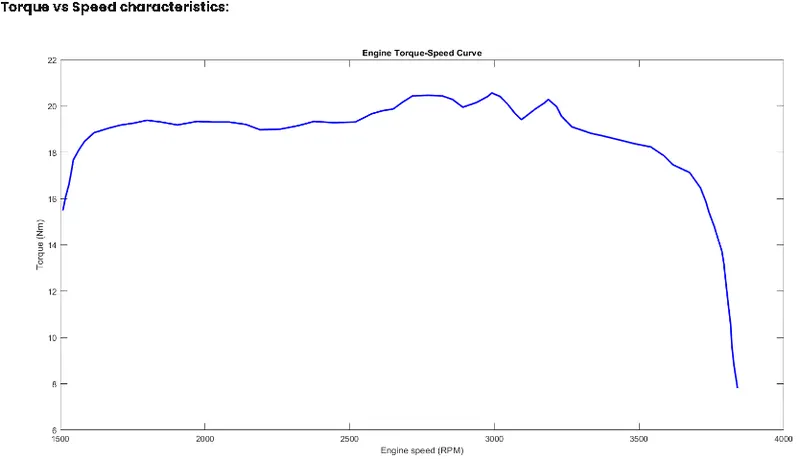
conclusion:
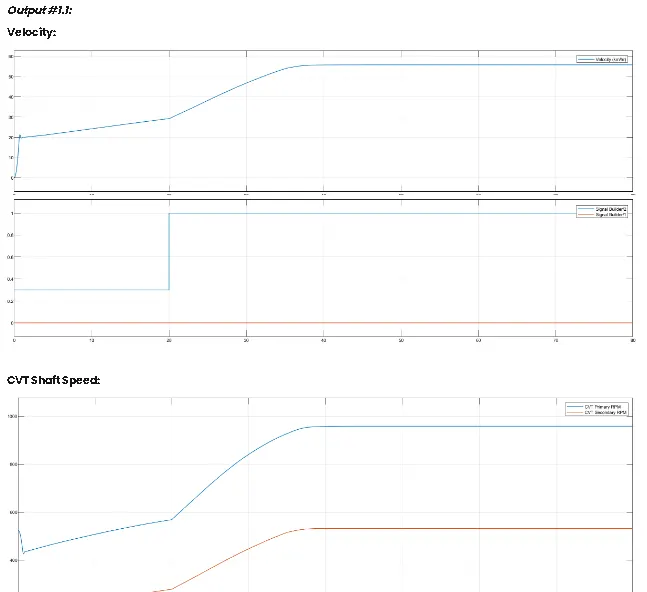
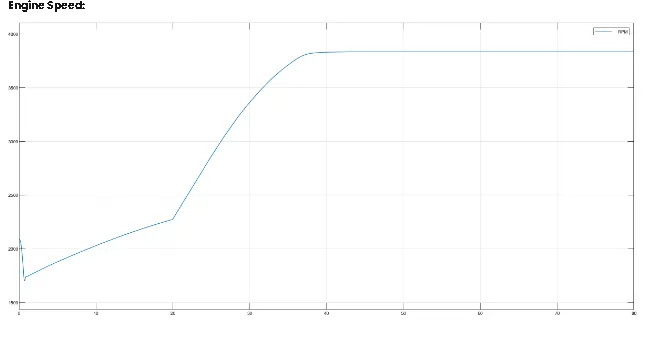
- Velocity ,CVT Shaft speed and speed and engine speed are directly proportional to the throttle input and inversely proportional to the brake input.
- CVT ratio is directly proportional to torque and inversely proportional to the throttle input.
- CVT primary speed is greater than CVT secondary speed as they are directly proportional to their shaft diameter.
- The speed might get null at a particular braking resistance.