Project
AIM: To Run a system-level simulation of an all-terrain vehicle. PRAVEEN KUMAR E
Objective:
To prepare a technical report on BAJA ATV explaining model
- without using lookup table
- with using lookup table
ATV:
All terrain vehicle is a vehicle that travels on low-pressure tires, with a seat that is straddled by the operator, along with handlebars for steering control. As the name implies, it is designed to handle a wider variety of terrain than most other vehicles.
CVT:
A CVT or continous variable Transmission is an automatic,single,speed,and gearless transmission that cab shift through infinite niumber of gear ratios.
A CVT is used in this ATV simulink.
The CVT corresponding block is shown below.
Variable gear ratio is used in this CVT with gear ratio 4 which gives a continous variable operation even in high rpm.
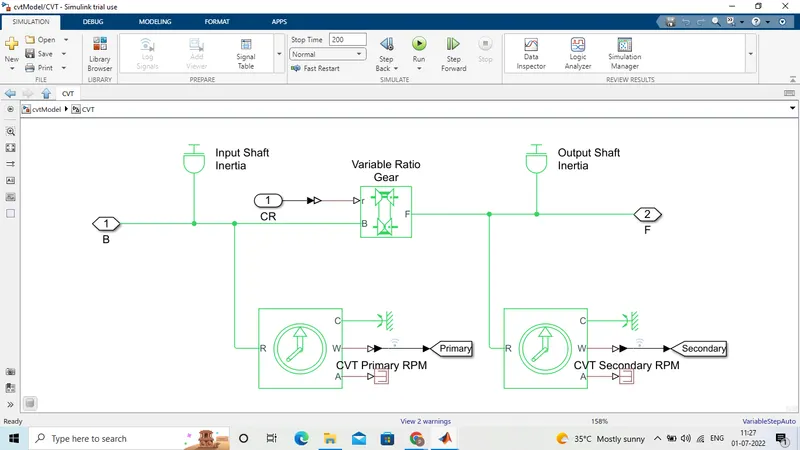
If the variator of primary pulley moves outward speed reduction occurs.
If the variator of primary pully moves inward overdrive occurs.
Blocks used in simulation:
1.without Dashboard
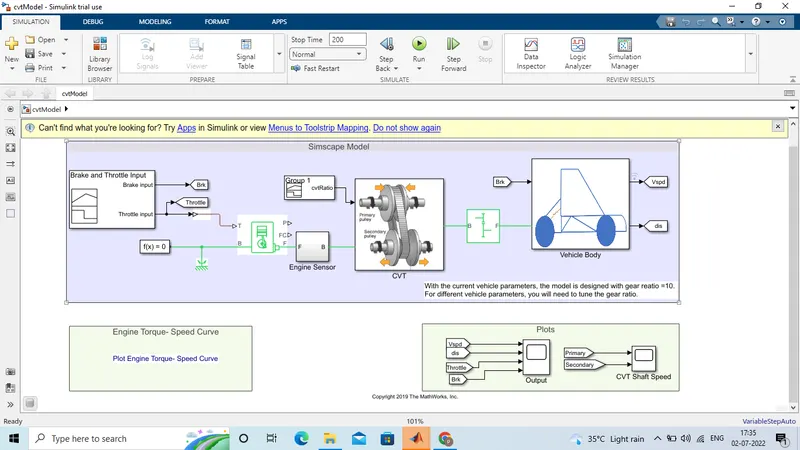
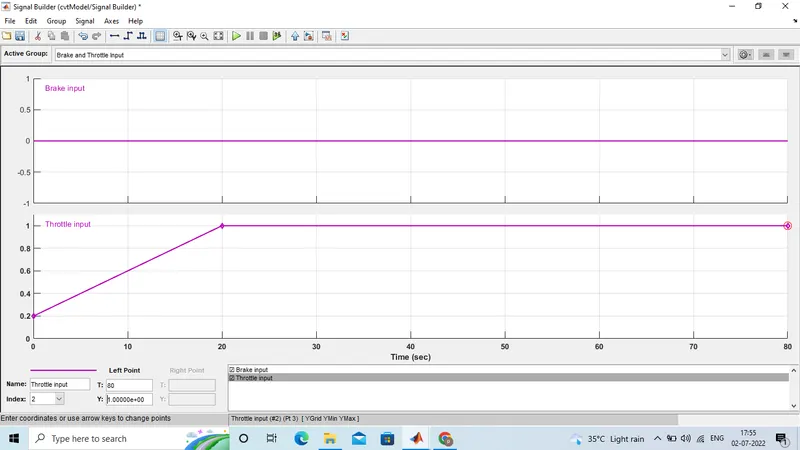
Signal buider: The signal builder blow allows you to create interchangeable groups of piecewise linear signal sources and use them in a model. You can quickly switch the signal groups into and out of a model to facilitate testing.
Generic engine:
Represents a system-level model of spark-ignition and diesel engines suitable for use at initial stages of modeling when only the basic parameters are available. Optional idle speed and red line controllers are included.
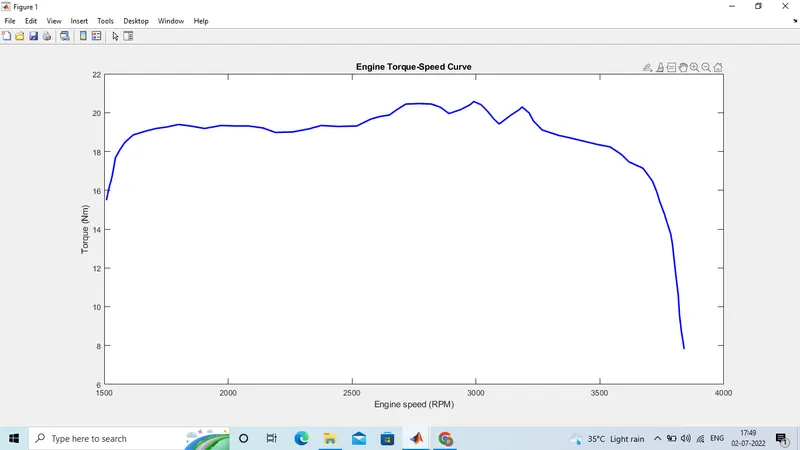
The throttle input signal T lies between zero and one and specifies the torque demanded from the engine as a fraction of the maximum possible torque. If the engine speed falls below the Stall speed, the engine torque is blended to zero. If the engine speed exceeds the Maximum speed, the simulation stops and issues an error message.
Speed vector and Torque vector are the assinged parameter.
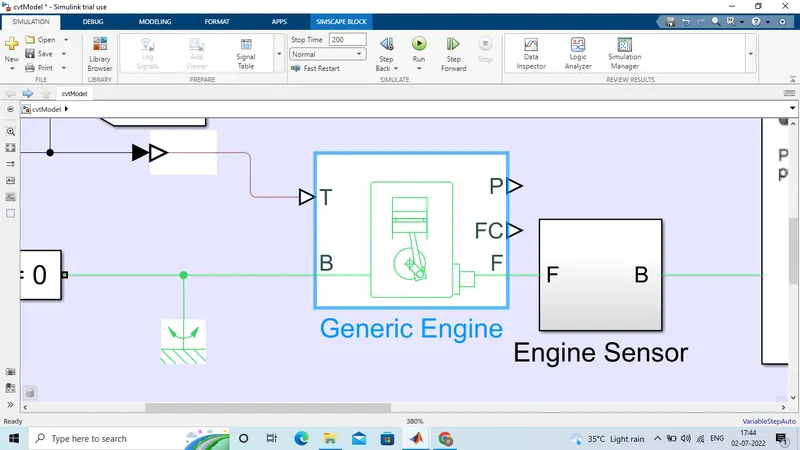
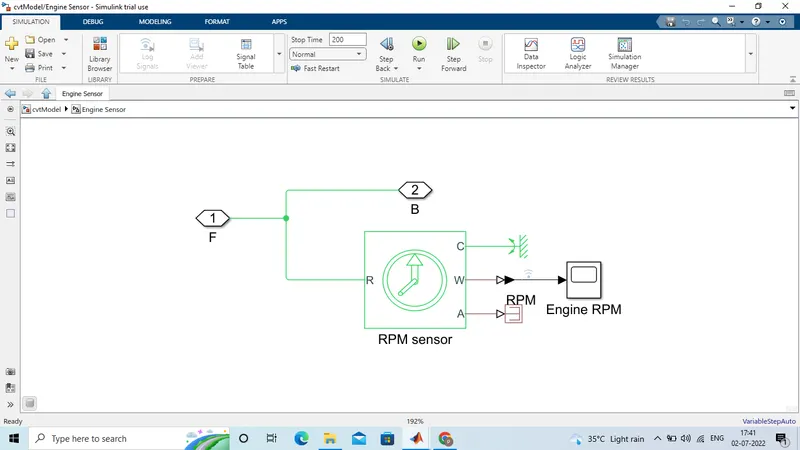
Engine sensor: The block represent an ideal mechanical motion sensor,that is, a device that converts an across variable measured between two mechanical rotational nodes into a control signal proportinal to angular velocity or angle.The sensor is ideal since it does not account for inertia,friction,delays,energy consumption,and so on.
Vehicle body subsystem:
The vehicle body substem represent a two axle vehicle body in longitudinal motion.
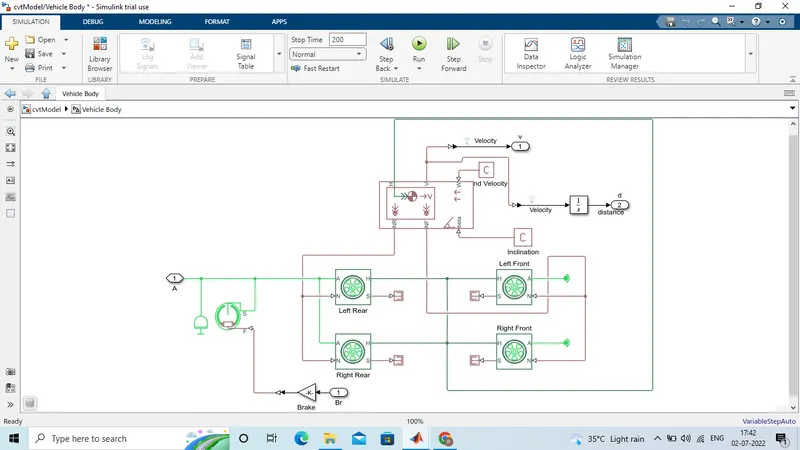
The parameters are:
Mass:250kg
No.of.wheels per axle:2
Horizontal distance from CG to front axle:1m
Horizontal distance from CG to rear axle:0.35m
CG height obove groung:0.7m
Gravitional acceleration:9081m/^2
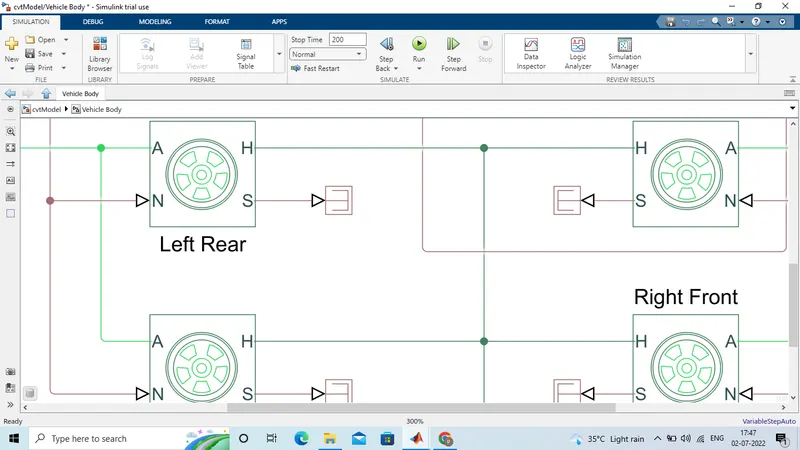
Tire:
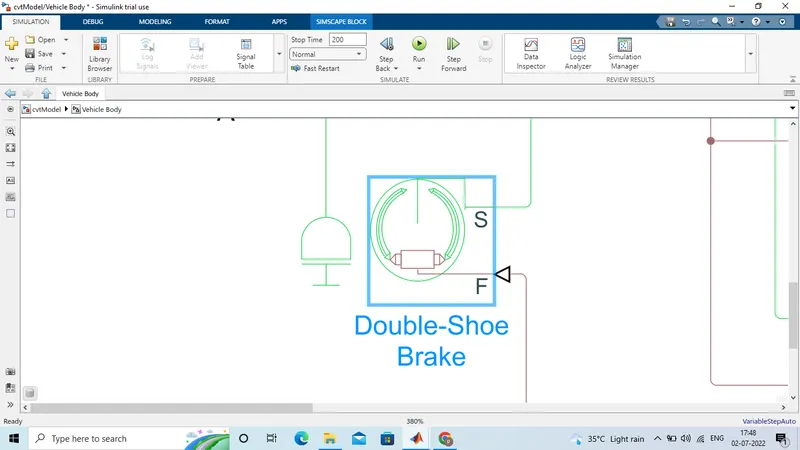
Double shoe brake:
Torque vs speed characteristics:
Input:
Brake input is constant throught the time 80 sec.
Throttle input is 0.3 for first 20 sec,
accelerates to 1 at the same and remains to 1 at the same and remains constant throughout the remaining time till 80 sec.
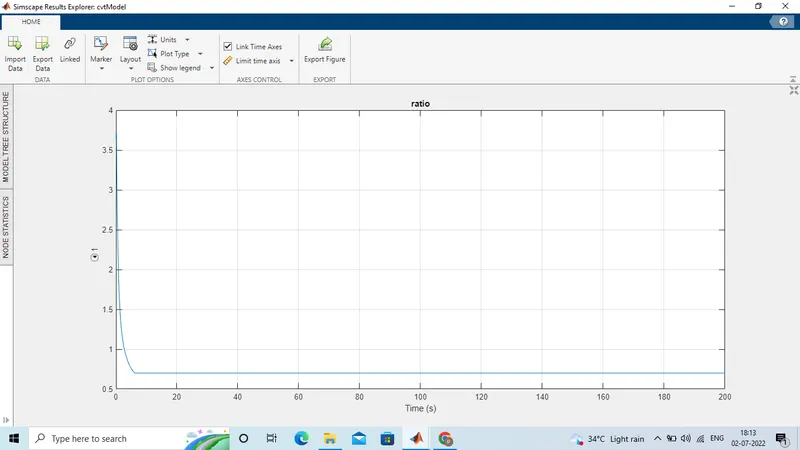
CVT Ratio:
Output:
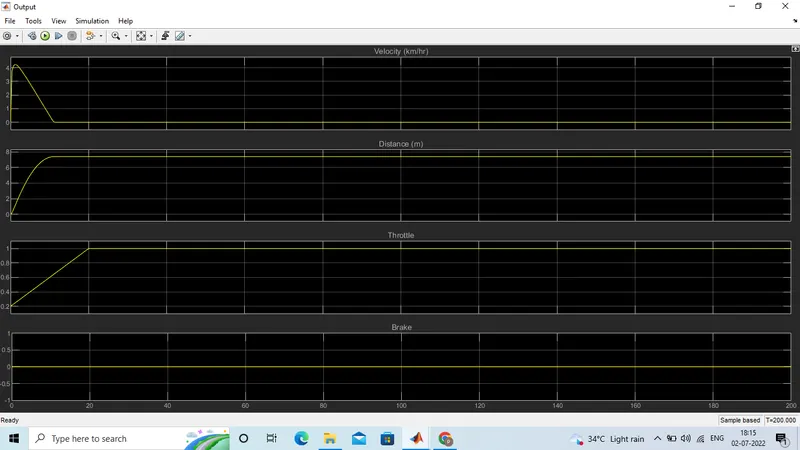
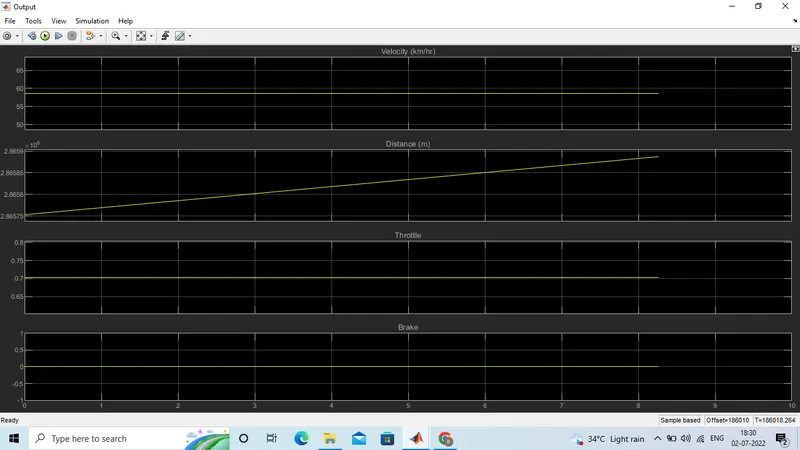
velocity: The velocity increases at 10 sec and comes down at 20 sec after that velocity is constant shich represent smooth operation
Throttle: Throttle increases upto 20 sec which we given throttle input for 20 sec which replicates in the system as well
Brake: We didnt apply brake in the iput so it remains 0.
2.With Dashboard:
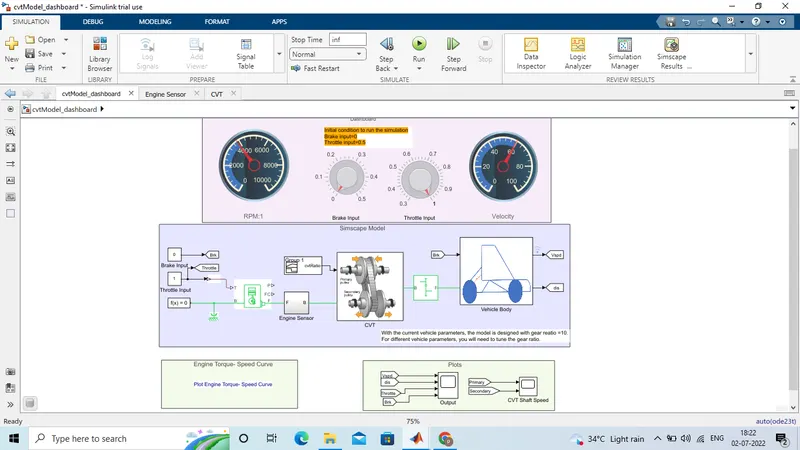
The CVT model with dashboard simulink model is shown above
As u can see Throttle and Brake input is included in the dashboard we can vary the range after simulation to see the real time output
Output:
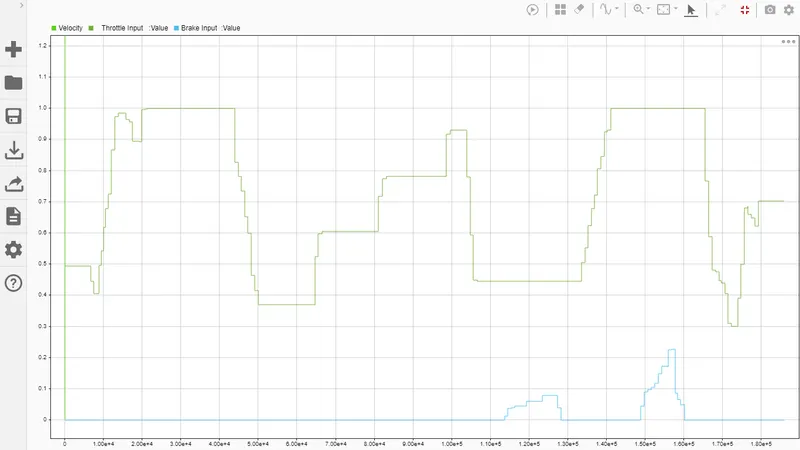
So the rsult of varying the throttle and brake in time interval output is shown below
The throttle input and brake input is shown below
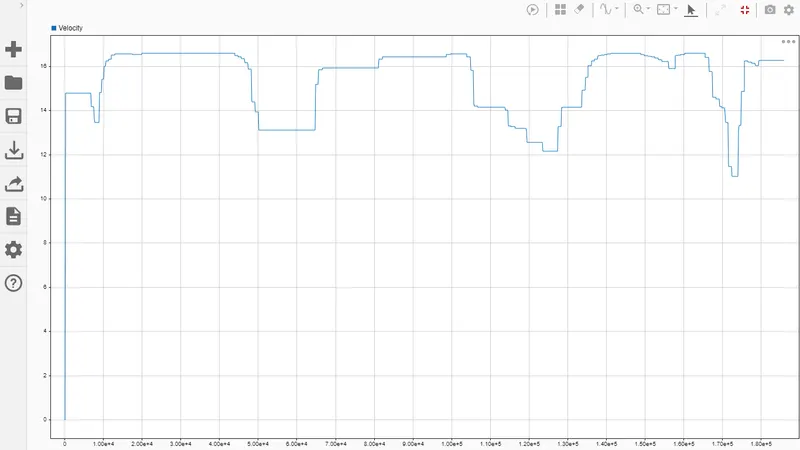
Velocity
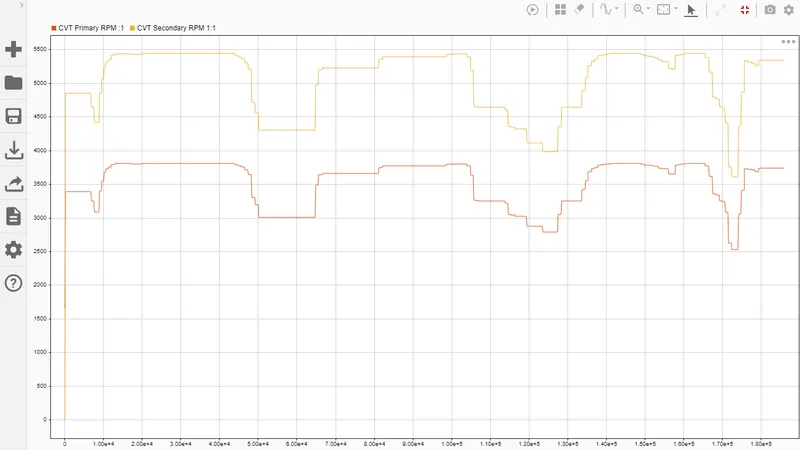
Engine rpm
Conclussion:
The given BAJA ATV model simulated successfully and the above result shows with and without dashboard
From the simulation,
Velocity,CVT shaft speed and engine speed are directly propotional to the Throttle input.
CVT primary is greater than CVT secondary as their directly proportional to the shaft diameter.
CVT ratio is directly propotional to torque and inversely propotional to the throttle input
Reference:
BAJA ATV Model file.