Project
Subject: Study of system-level simulation of an all-terrain vehicle.
CVT Model (Simulink):
1. Brake & Throttle Input: Signal Builder block gives brake and throttle to the vehicle. The throttle signal serves as an input to a generic engine. Signals serving as inputs are:
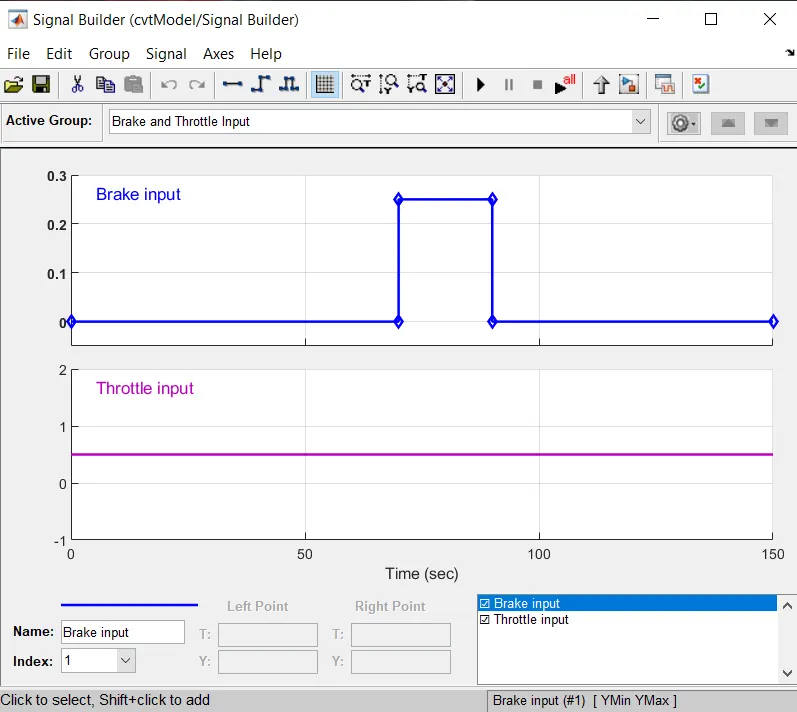
2. Generic Engine Block:
The Generic Engine Block represents a general internal combustion engine in a Simulink model.
3. CVT Subsystem:
The CVT is an automatic transmission that uses two pulleys with a steel belt running between them. To vary its gear ratios continuously, the CVT simultaneously adjusts the "drive pulley" diameter that transmits torque from the engine and the "driven pulley" that transfers torque to the wheels.
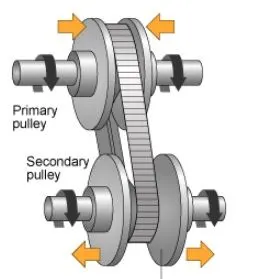
A CVT system is simulated in Simulink as follows:
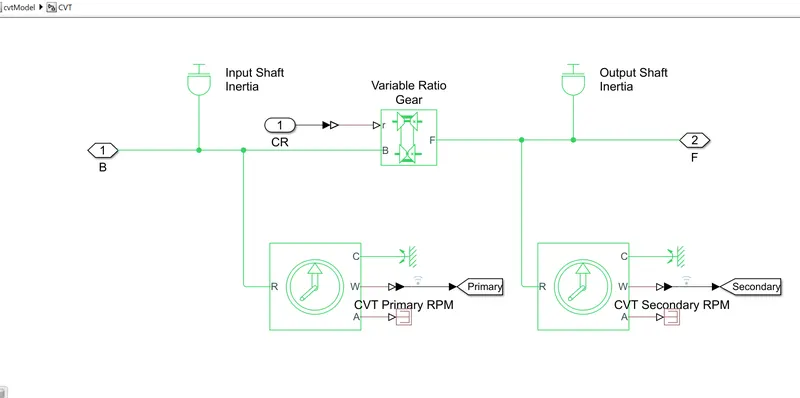
Input and Output shaft inertia blocks are used to simulate the physical model inertias of the pulleys. Variable Ratio Gear block takes two inputs: a pre-defined CVT ratio relative to the vehicle's speed (for testing time can also be used as a base parameter) and the second as the mechanical rotational conserving port from the generic engine, and outputs mechanical rotation from output pulley. The rotational motion sensors give input and output rpm.
4. Simple Gear Block:
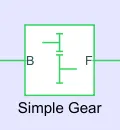 It helps prevent the system from running at Over RPMs.
5. Vehicle Body Subsystem:
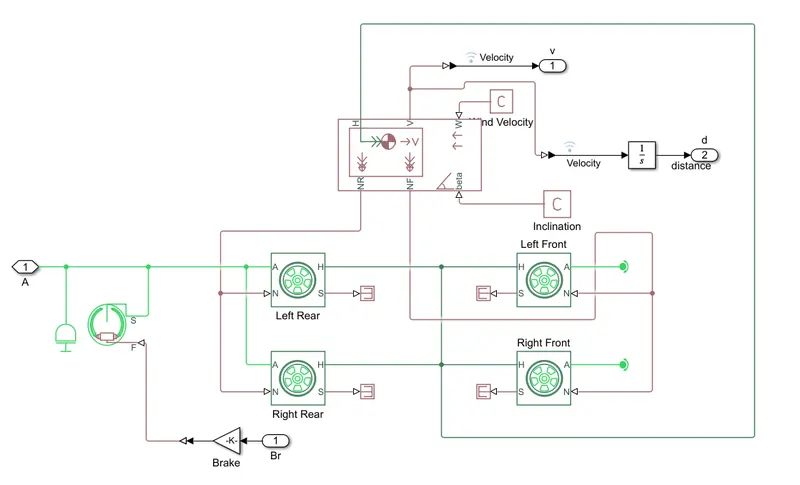
It consists of a vehicle body block with parameters for the normal reaction from the front and rear wheels, horizontal translation, wind velocity, and road inclination. The inertia block represents shaft inertia. The axle of the rear wheels is connected to the shaft, whereas those of the front are connected to free rotation ends. After multiplying with a constant gain, Brake input serves as an input to a double shoe brake connected to the shaft.
I. ATV Model (CVT ratio vs Time):
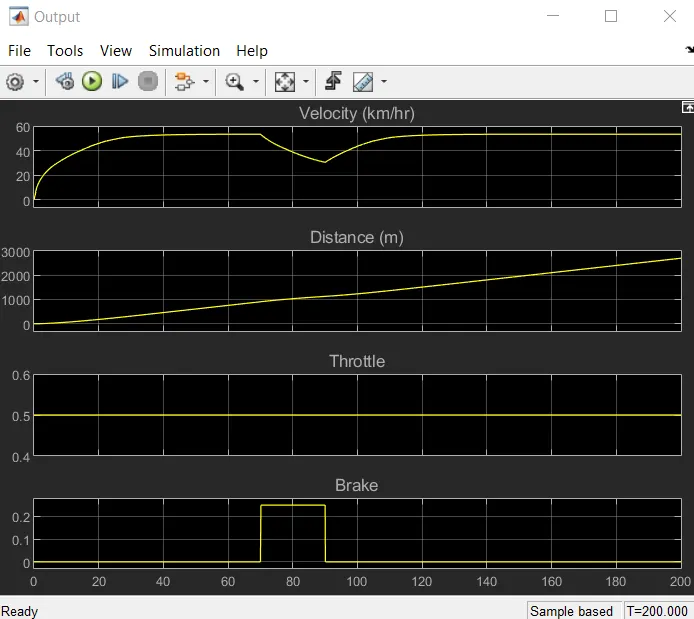
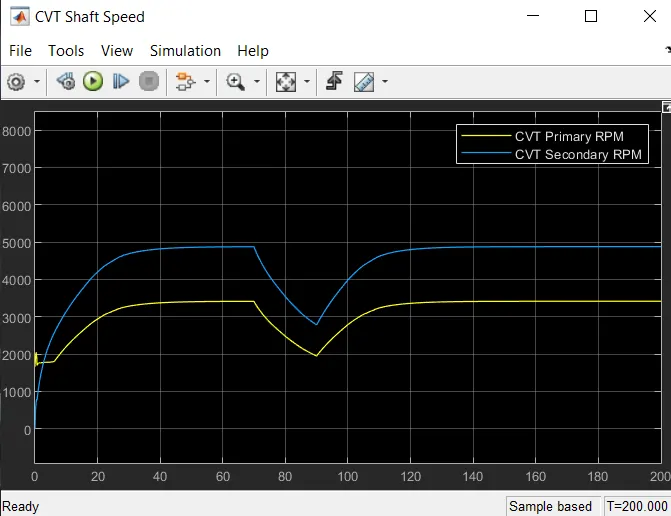
A pre-defined CVT ratio with respect to time serves as an input to the ratio parameter of the variable gear ratio block in the CVT subsystem. The response of the vehicle to brake and throttle input is as shown below:
1. Velocity and Distance -
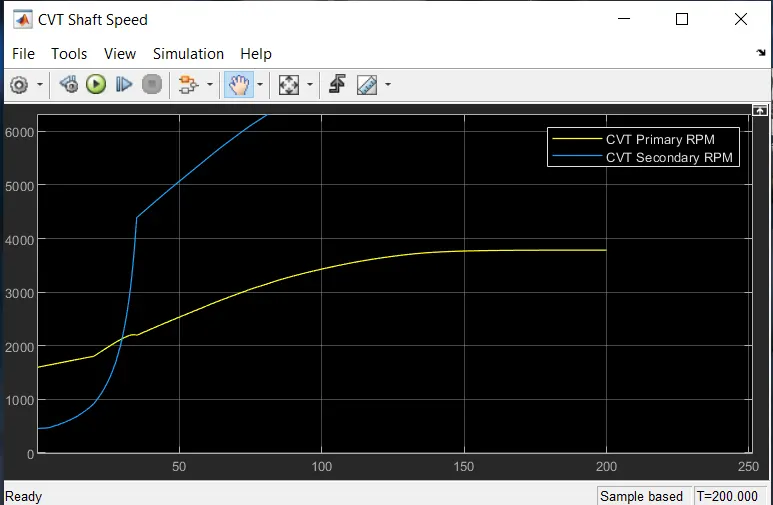
2. Primary & Secondary pulley rpm -
II. ATV Model (Velocity as Feedback):
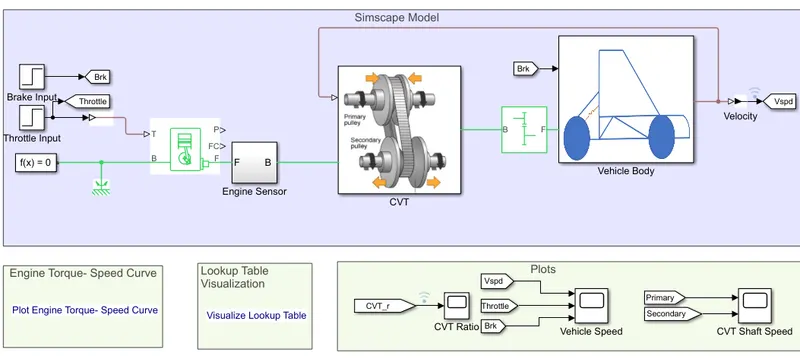
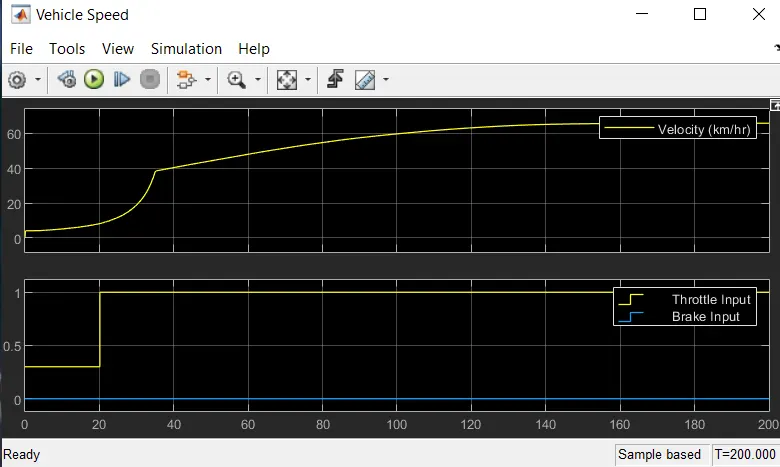
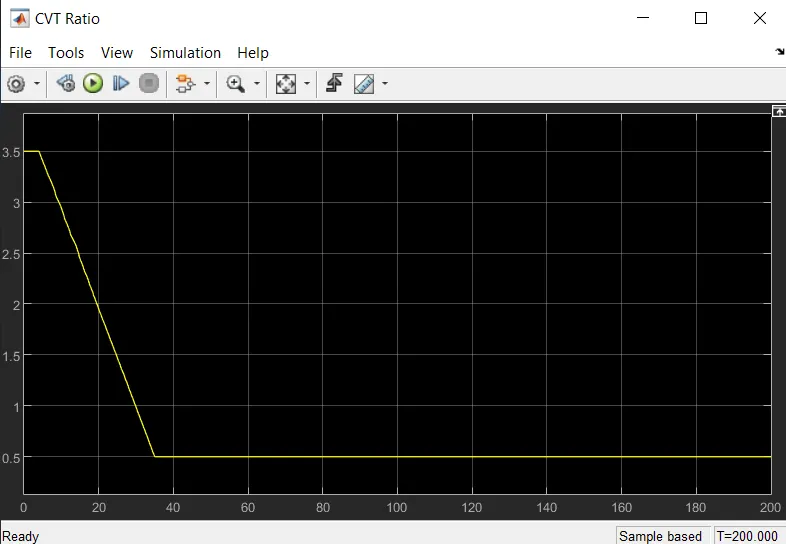
The instantaneous vehicle velocity serves as feedback to the CVT subsystem, which decides the CVT ratio based on a lookup table derived from physical testing serving as an input to the variable drive block. The response of the vehicle and the inputs given are as shown below:
1. Vehicle Speed -
2. CVT ratio -
3. CVT Shaft Speed -