Project
AIM:- To prepare a technical report of simulation of BAJA all-Terrain vehicle (ATV) under different conditions.
OBJECTIVES:- Carry out a system-level simulation of an all-terrain vehicle and prepare a technical report explaining the model
properties & comments on the results.
ALL-TERRAIN VEHICLE:- An all-terrain vehicle (AVT) is defined as a motorized off-highway vehicle designed to travel on four low-pressure or non-penumatic tires,having a seat designed to be straddled by the operator and handlebarsfor steering control.
Here we need to do the following study:
- BAJA ATV model without Dashboard
- BAJA ATV model with Dashboard
- BAJA ATV model using the lookup table without a dashboard
- BAJA ATV model using the lookup table with a dashboard
CASE:- 1
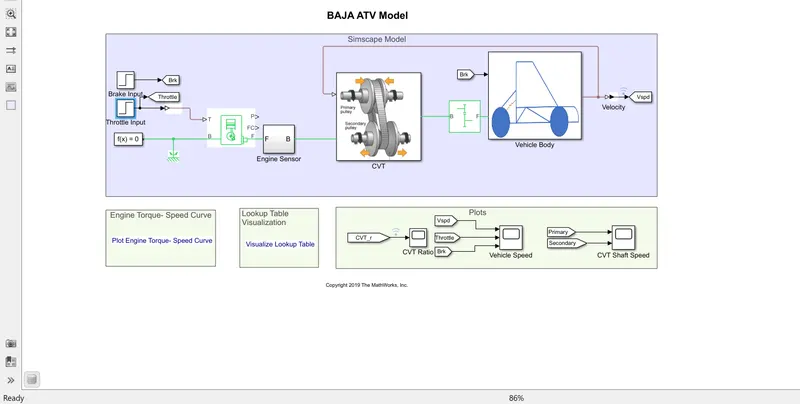
SIMULINK MODEL FOR BAJA ATV WITH CVT :- The study based on the BAJA ATV model with CVT consists of signal builder with a throttle and brake input for a driver,generic engine, motion sensors, simple gear, vehicle transmission, vehicle body with the tire and slover configuration blocks as shown in the figure below.
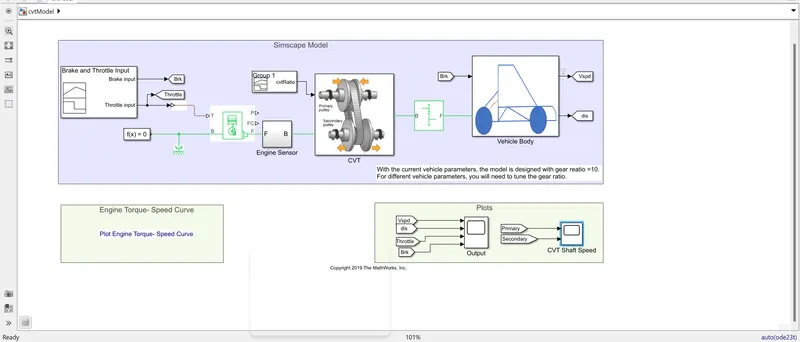
Major Components in the model:
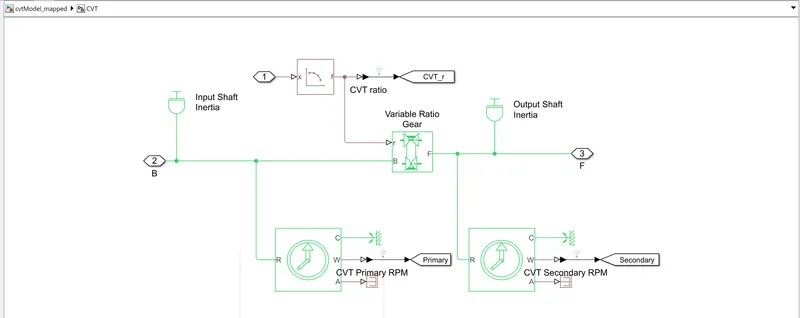
it is better to have more gears in a transmission,since it can optimize engine speed in a variety of driving conditions. that means low gears can provide better acceleration white higher gears can maximize fuel economy.CVTs differ from traditional automatic transmissions in that they don't have gears that provide "steps" between low and high speed operations.instead,the majority of them work via a pair of variable-diameter,cone-shaped pulleys connected by a steel or a composite belt. the halves of each pulley are aligned with the pointed ends of the cones touching.these from a V-shaped groove in which the connecting belt rides.one side of the pulley is fixed,and the other side is a movable,actuated by a hydraulic cylinder.the cylinder can increase or decrease the amount of space between the two sides of the pulley.this allows the belt to ride lower or higher along the walls of the pulley,depending on driving conditions,thereby changing the "gear" ratio.
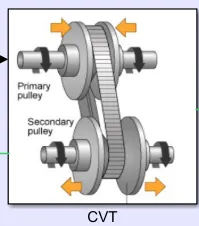
CVT BLOCK:-
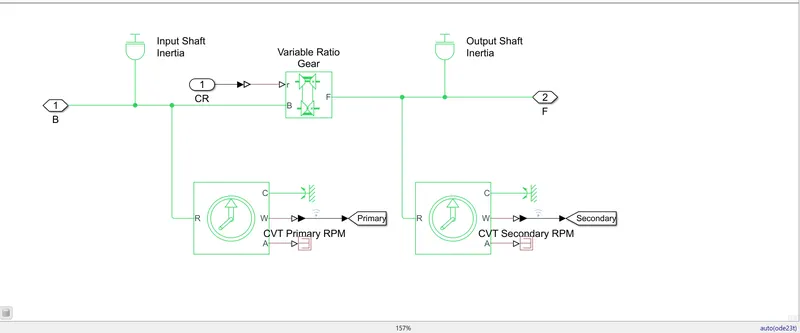
VARIABLE TRANSMISSION RATIO:-
Represents a variable ratio gearbox such as implemented by mechanical belt CVT,electric,or hydraulic transmissions.the physical signal input defines the ratio of input to output angular shaft velocity.
connections B (base) and F (follower) are mechanical rotational conserving ports.specify the relation between base and follower rotation directions with the output shaft rotates paremeter.
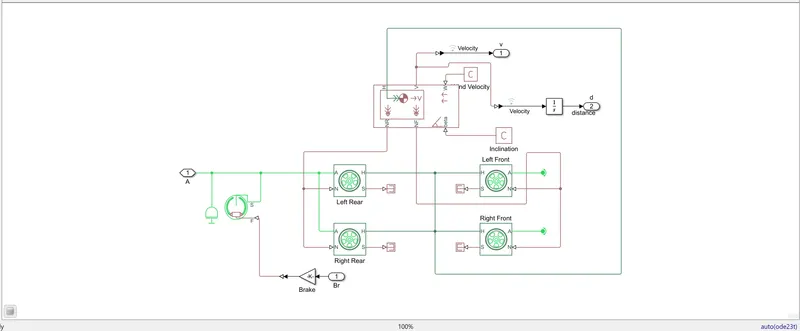
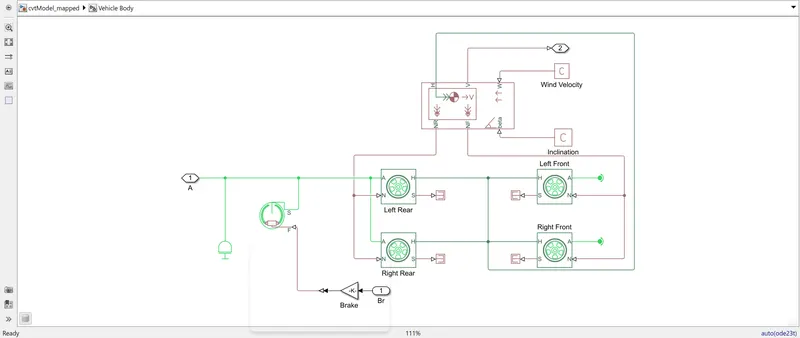
VEHICLE BODY:-
the vehicle body sub systems includes vehicle body block, double drum brake and tires.
Initial engine rpm:- 2100 rpm
Mechanical rotation for driven and driver pulley:- 0.8 and 0.7
Mass of the vehicle:- 250 kg
front and rear axle with 4 wheels
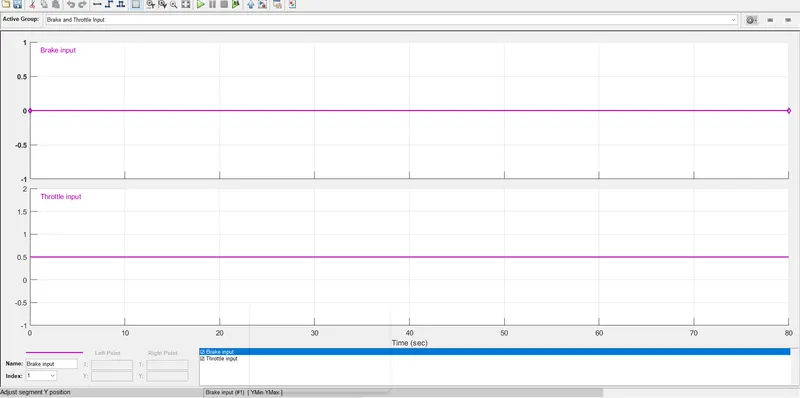
INPUT SIGNAL:- The input is provided using the signal builder for brake, throttle, and gear ratio.
brake input is taken as 0 and throttle value is given 0.5 sec. the all simulation time is 200 sec.
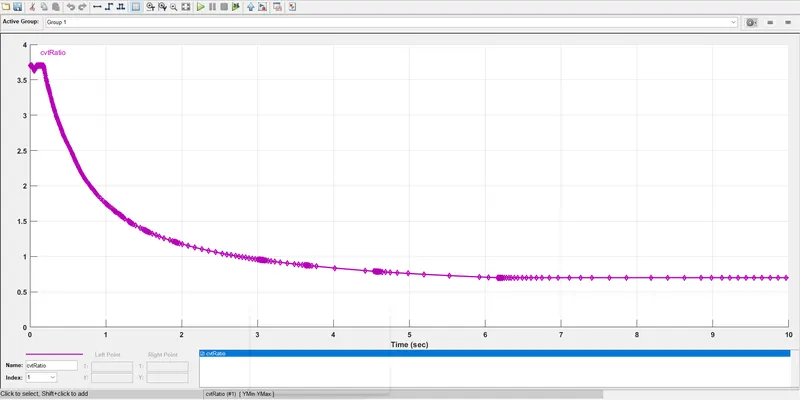
CVT RATIO:-
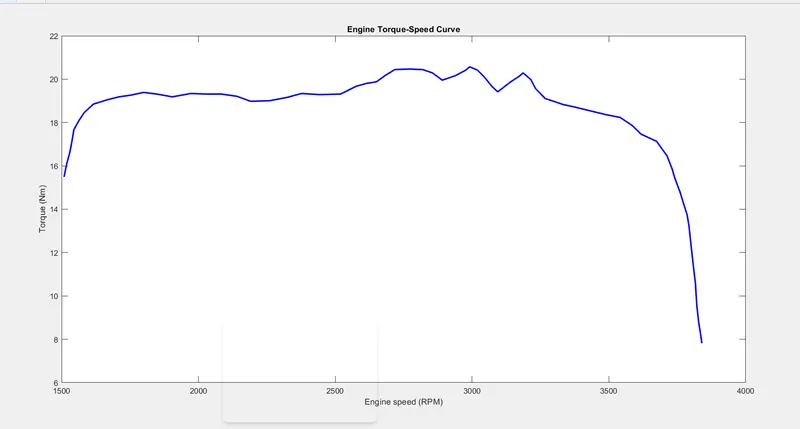
TORQUE VS ENGINE SPEED CURVE:-
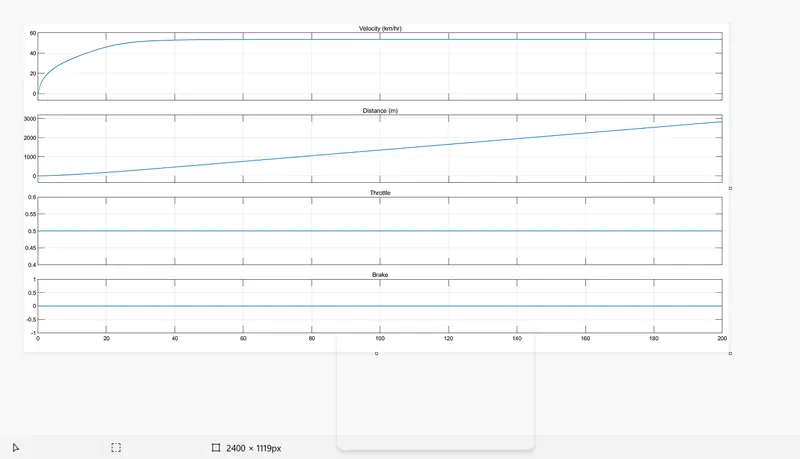
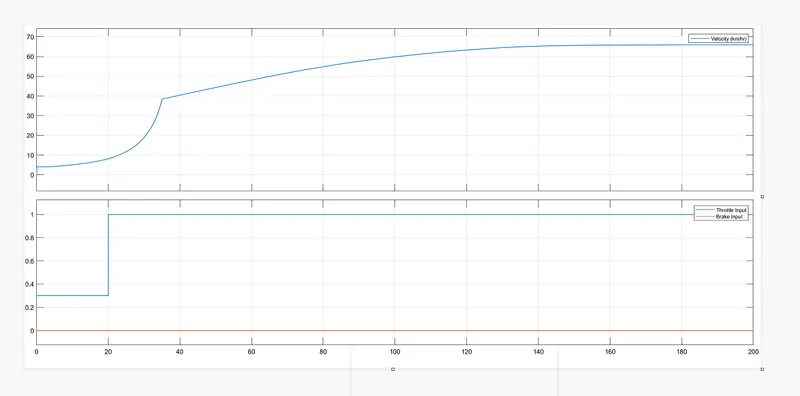
OUTPUT:- CASE (1)
Velocity,distance,throttle,break
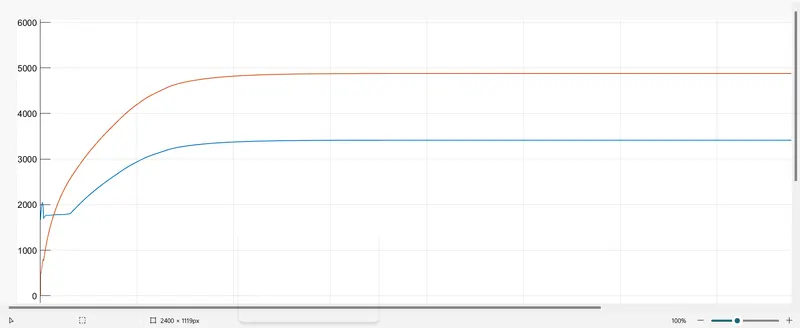
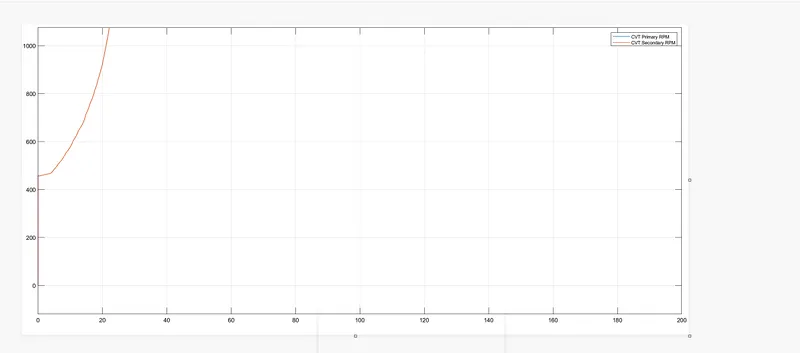
CVT SHAFT SPEED:- OUTPUT (CASE 1)
it is present to the primary and secondary CVT shaft speed. these graphs are shows the variation in agular velocites of input and output shafts of the variable gear transmission system.these values differ with respect to the gear ratio.
CASE:- 2
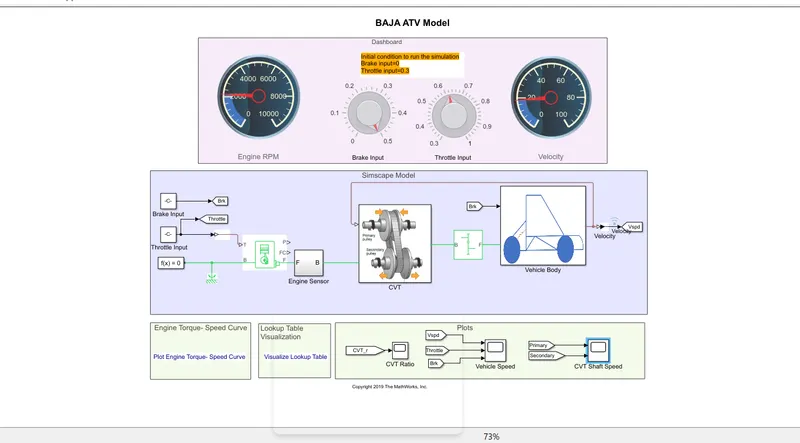
SIMULINK MODEL FOR BAJA ATV WITH CVT USING DASHBOARD :-
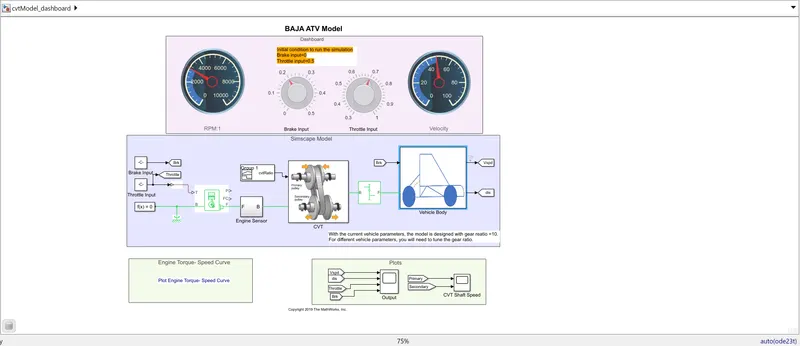
in this model we have a dashboard which contains knobs to control the inputs.in this case,the inputs-'Throttle & Brake ' are not provided signal builder. A knob is provided to control both the paremeters in real-time for the user.
OUTPUT OF CASE :- 2
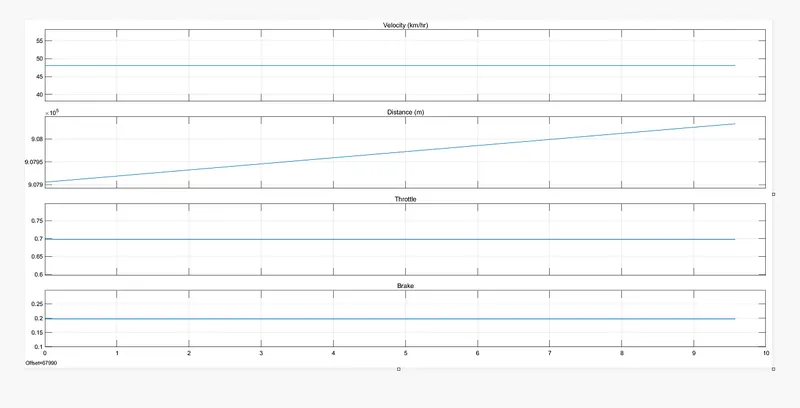
VEHICLE SPEED:
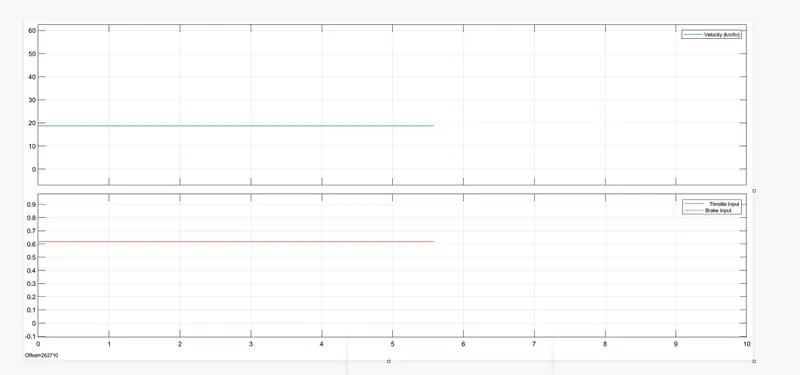
It can be observed from the graph that the velocity of the vehicle increases directily from 0 to 50kmph when throttle value is 0.7 and brake input is 0.2 .
it is the observe and explain the direct relation of vehicle velocity with respect to throttle and brake inputs.
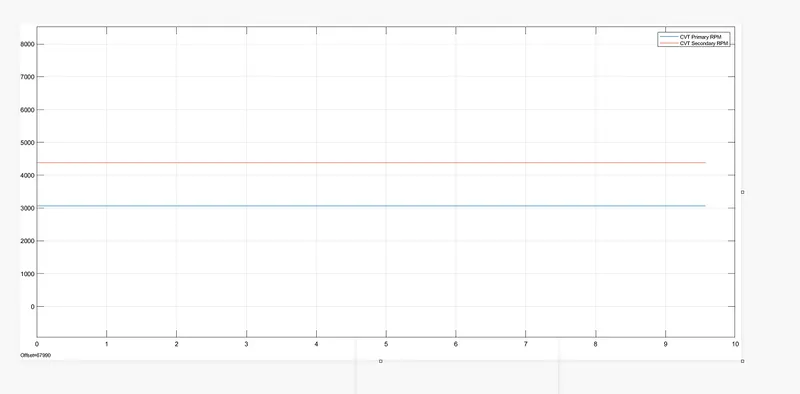
OUTPUT:- CASE 2
CASE:-3
BAJA ATV model using the lookup table without a dashboard
CVT model:-
Vehicle body:-
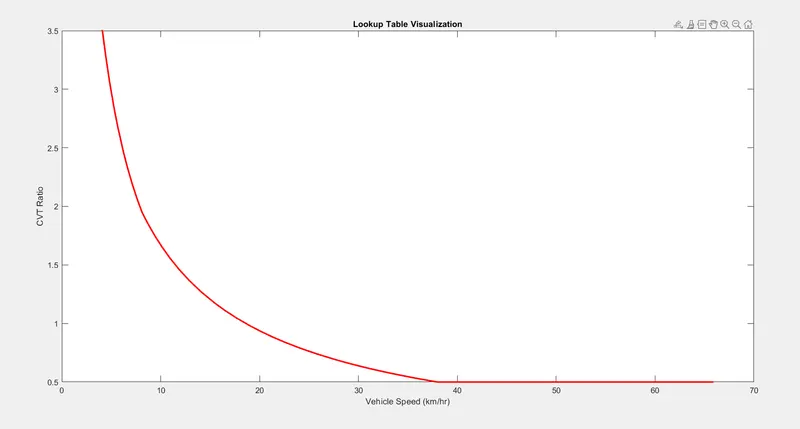
visulation:-
OUTPUT:- CASE 3
vehicle speed:-
shaft speed:-
CASE:- 4
BAJA ATV model using the lookup table with a dashboard
OUTPUT:- CASE 4
VEHICLE SPEED:-
SHAFT SPEED:-
CONCLUSION:- System-level simulation of a BAJA-ATV model with and without dashboard and Lookup-Table has been carried out and a detailed study report of the model has been submitted.