Project
FINAL PROJECT
AIM : To study and analyze the BAJA ALL-TERRAIN VEHICLE (ATV) using Matlab Simulink .
OBJECTIVE : To prepare a technical report explaining the model properties " BAJA ATV MODEL " & also the explain the result.
INTRODUCTION :
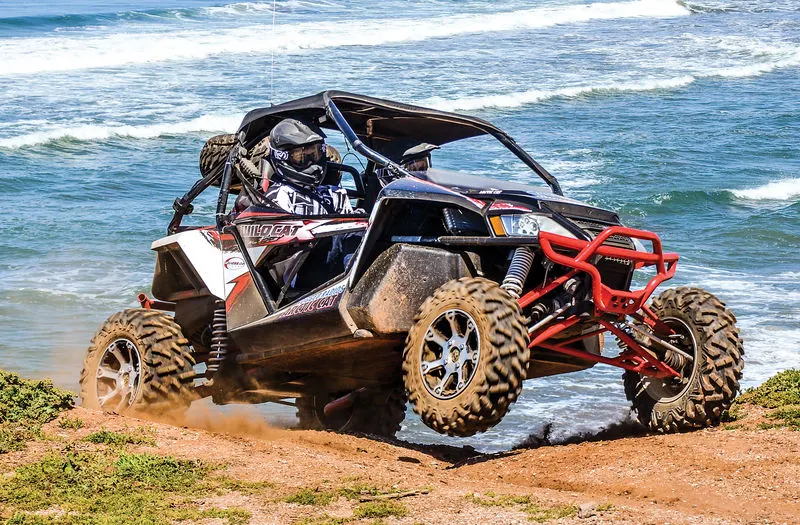
An all terrain vehicle(ATV),also known as a quad ,three -wheeler,four-track.four-wheeler or quadricycle,as defined by an ANSI is avehicle that travels in alow pressure tires,with aseat that is straddled by the operator ,along with handlebars of steering control.
The all have engine of the same specifications .As of 2009 , the engine has an unmodified Briggs &stratton intek 20 single cylinder with a displacement of 300cc and a power output of approx 10 bhp(7.5kW).
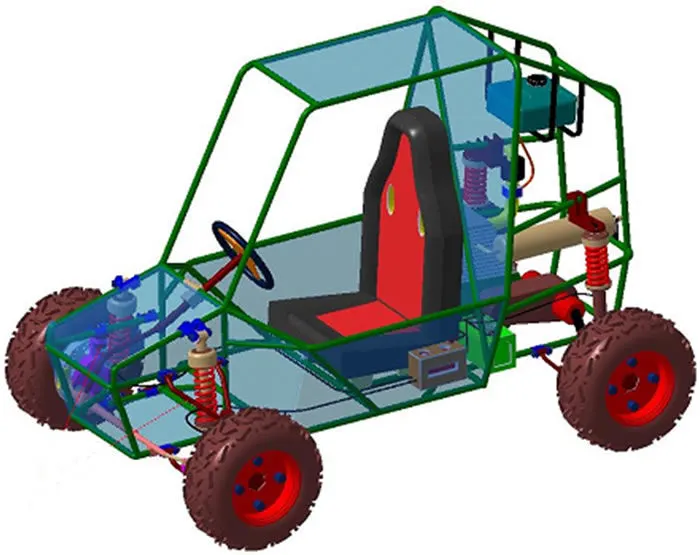
SOME MAJOR AND CRUCIAL COMPONENTS :
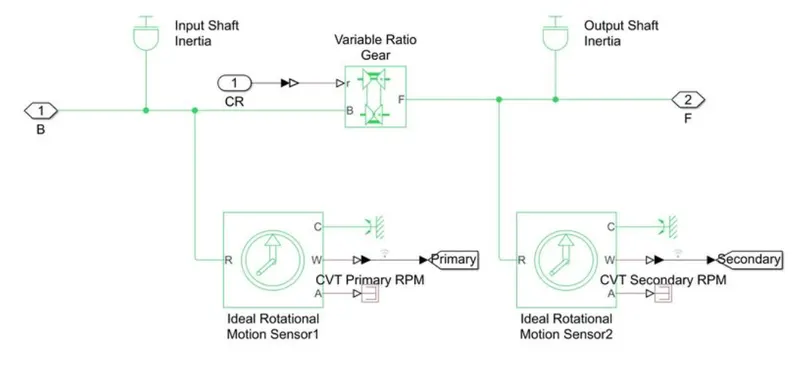
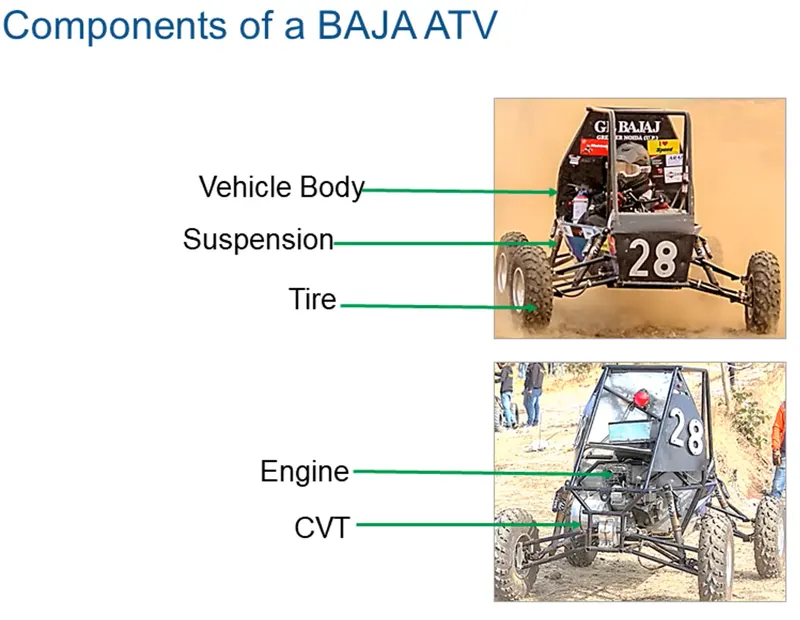 CVT : The meaning of the abbreviation CVT is Continuously variable Transmission and it is the type of single speed automatic gear box.The CVT gear box has been used in various cars.It is compact size and simplicity and construction mean it is more cost effictive to used a small car then a conventional automatic gear box . A CVT is anautomatic ,single speed and gearless transmission that can shift through an infinite number of gear ratio ,allowing an infinite variability between highest and lowest gear with no discrete steps or shifts.
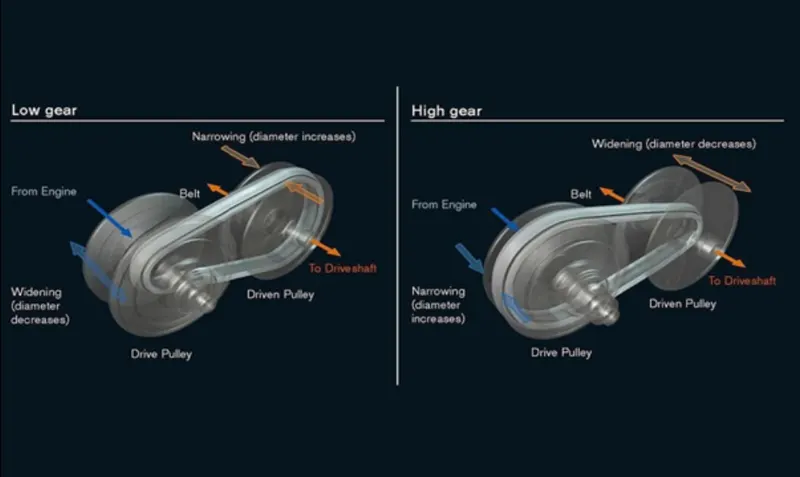
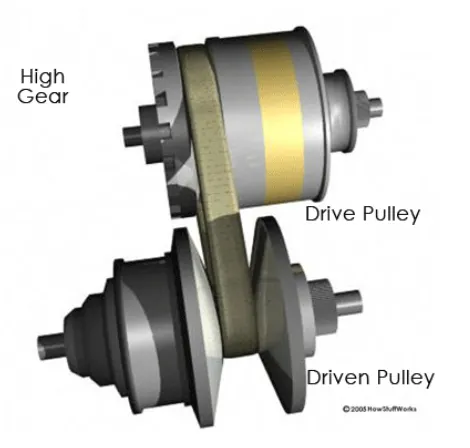
variable Gear arrangements of CVT in this model is represented by the variable ratio Gear Block :
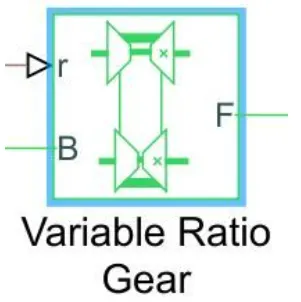
Where ,
B - Base pully or Drive Pully
F -Follower pulley or Driven pully
r - Variable Trasmission Ratio (input).
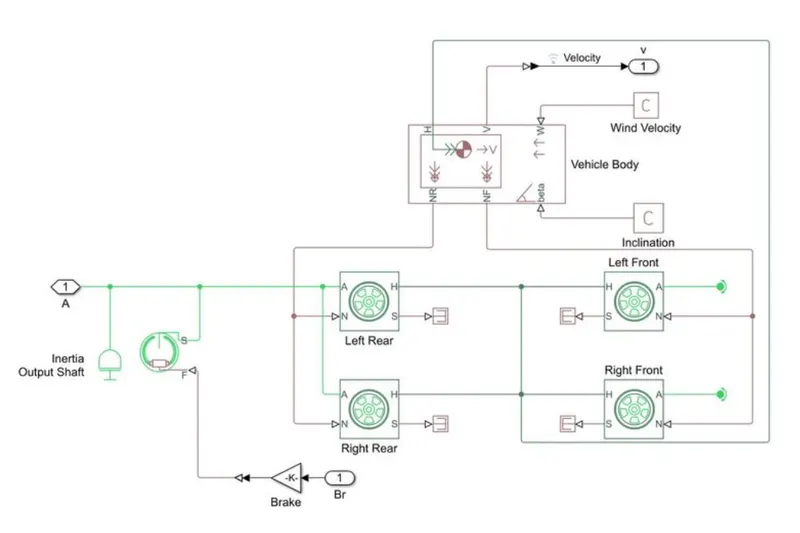
VEHICLE BODY :
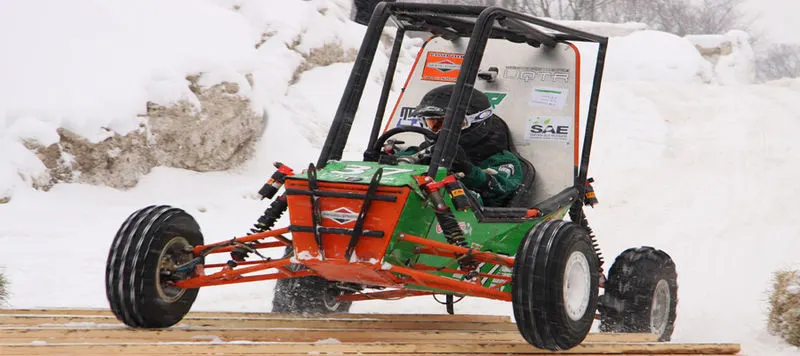
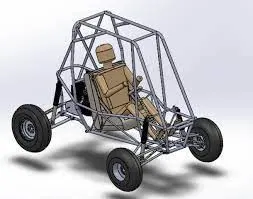
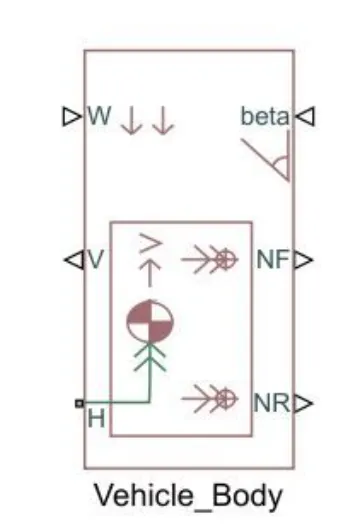
where,
NR - Rear Axle
NF - Front Axle
Beta -Road
v - Longitudinal
w- Head Wind
H-Horizontal [ Normal Force(N)
Normal Force(N)
Incline Angle(rad)
Velocity(m/s)
speed(m/s) ]
GENERIC ENGINE :
The Generic Engine block represents a general internal Comustion (IC) engine which is the type of compression ignition or spark ignition .The speed torque and speed power parameter are provided by designer.
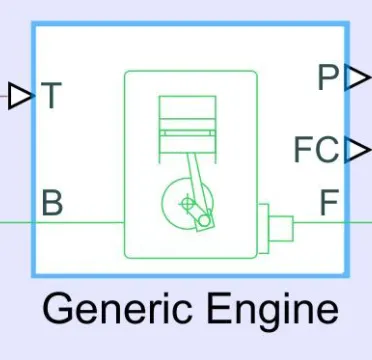
where,
B - Rotational Conservation port representing the Engine block
F - Rotational conserving port representing the engine Crankshaft
T - Physical signal input port specifing the normalize engine throttle level
P - physical signal output port FC - physical signal output port reporting the fuel consumption rate,in kg/s
Simple Gear :
The simple gear is a combination of a driven gear where the speed is reduced by the gear ratio .
Gear Ratio =`(follower Gear speed )/(Base Gear speed)`
simulink block is :
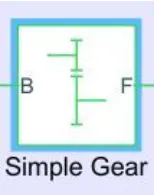
where, B -Base Gear
F -Follower gear
Tires and Brakes :
The vehicle body is connection to 4 tires each per axle to move the vehicle according to the power input to the axle. 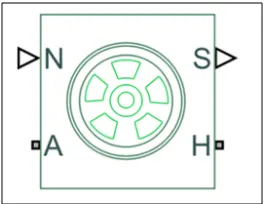 where ,N = Normal Force
S - Tire Slip
A - Axle
H - Mechanical translation port associated with the wheel hub that transmits then the thrust generatated by the tire to the remainder of the remainder of the vehicle .
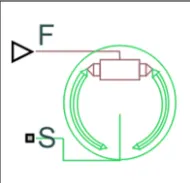
S - Rotational conserving port associated with the roatating drum shaft .
F - Physical signal input port associated with the applied actuating force.
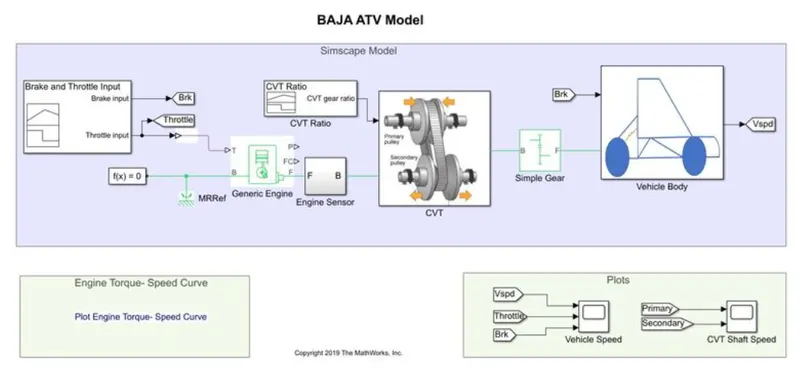
Study the Baja ATV model without a dashboard :
Simulink Model :
CTV Set-up Block :
Vehicle Body :
Throttle and Brake :
Input :
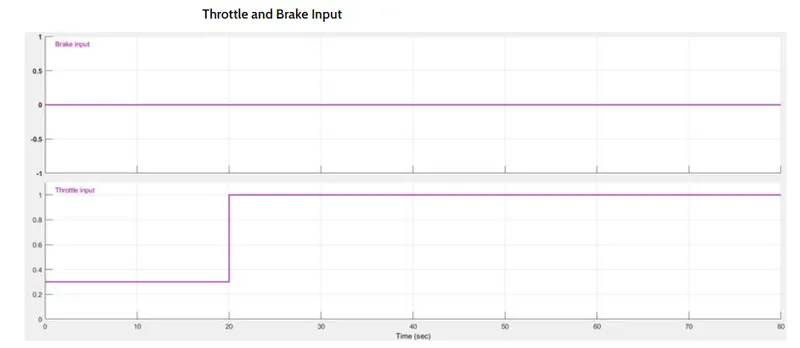
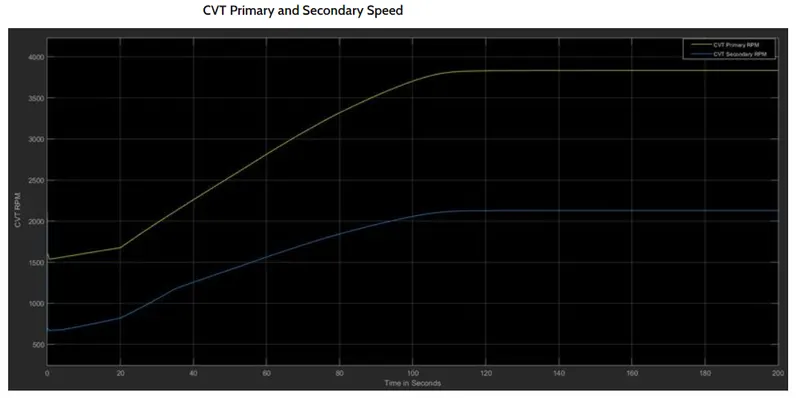
The Brake input remained at Zero Value for the entire simulation .The initial throttle was given 0.3 value and after 20 sec it was given value 1.
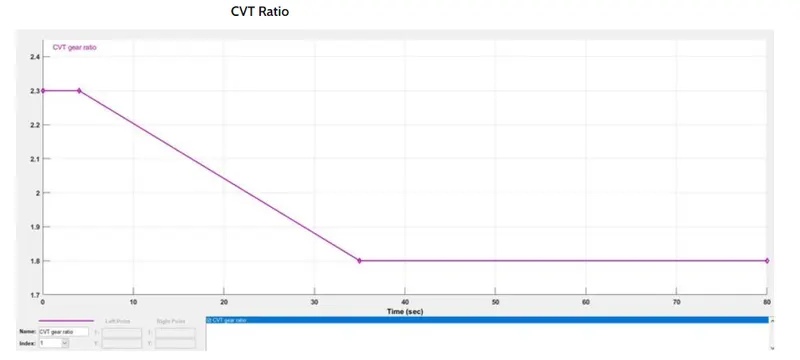
CTV ratio has been varied over a range of value 2.3 to 18 throughout the simulation .
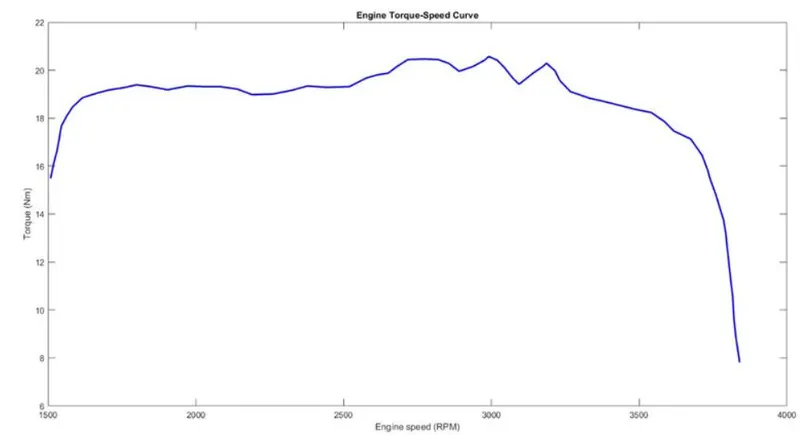
Output Results :
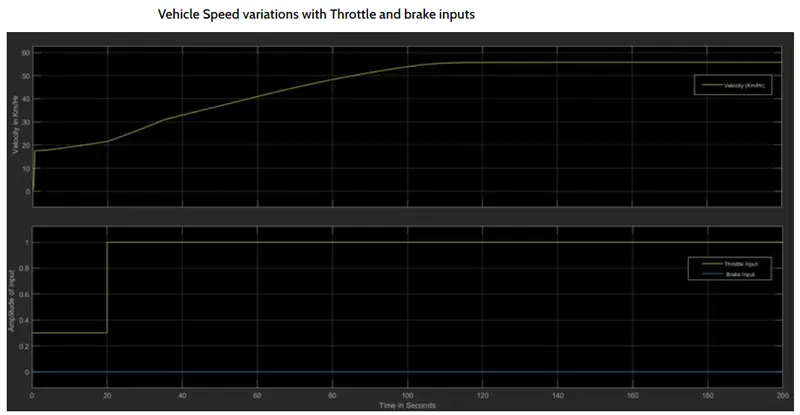
Max speed of 55Km/Hr at full throttle =1;at 120 th seond and then the speed remains constant The brake input value is Zero .
Conclusions :
In above discussed paper designing of ATV is completed. The design is made to meet the requirements of Driver comfort keeping it as simple and safe. Suspension are designed so as to give greater ride comfort. Maximum possible weight reduction is achieved in the designing of brake rotor for lesser unsprung weight. An overall vehicle is made to sustain the requirement of all possible terrines. Maximum weight reduction is attain for above described configuration of sub systems.
REFERENCES :
[1]. Thomas Gillespie, “Fundamentals of Vehicle Dynamics”, published by SAE.
[2]. The Federal Motor Vehicle Safety Standards Journals.
[3]. Rudolf limpert “Brake design and safety”.
[4]. Jason taxis “2013 Bearcats Baja - Braking System The University of Cincinnati”.
[5]. David A Crolla “Automotive engineering”.
[6]. John C Dixson “Suspension Geometry & Computation”.
[7]. Dr. Kirpal Singh, “Automobile Engineering Vol I and Vol II”.