Project
AIM:
to prepare a technical report of simulink of BAJA ALL terrain vehicle under different conditions.
STUDY1:
CASE1:
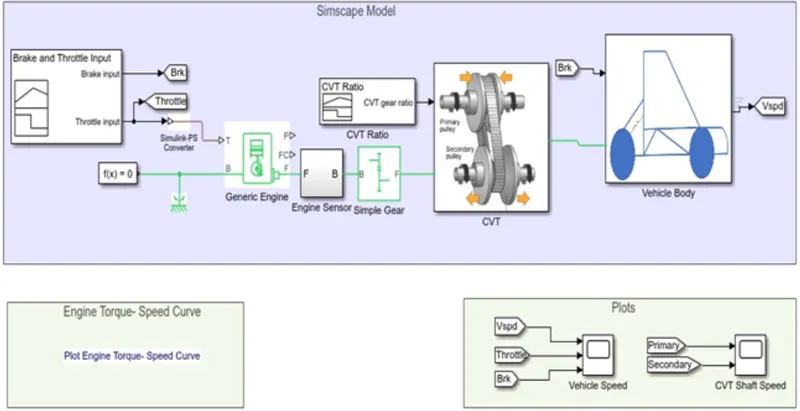
SIMULINK MODEL FOR BAJA AVT WITH CVT:
MODEL:
A new interest in the field of dynamic response analysis is expanding as the number of
accidents involving the all-terrain vehicles (ATV) are increasing in daily life. All-terrain vehicles
are four wheeled motorbikes made for off-road utilities and recreation. The vehicle safety is an
important feature to the public and automotive industry. Accident statistics show that deaths have
been increasing year after year for this category of ATV accidents. This is due to several factors
including, unsupervised and careless driving habits of the human beings and tendency of these
vehicles to undergo unsafe dynamics. Rollover and Frontal flips are two of the table toppers in this
category of injuries.
The aim of this thesis is to reconstruct the dynamic response of an all-terrain vehicle and
its driver in typical crashes. First the dynamics of the vehicle on an uneven road is examined. Next,
among all the crash causes, two types of crash simulations; i.e., side rollover and frontal flip are
considered. These simulations are carried out using the multibody dynamics simulation tool MSCADAMS
and the occupant safety design analyzing tool MADYMO. The primary tasks of this
thesis are (i) creating an ATV computer model, (ii) creating three different tracks for uneven road
performance, roll over and frontal flip simulations (iii) including a hybrid III 50th percentile
dummy to analyze the potential injuries and fatalities in these events. The results are analyzed and
compared with the awareness of various specifications. Overall the study indicates that the ATV
accidents could pose significant potential for injury and fatality to the driver
INPUT SIGNAL:
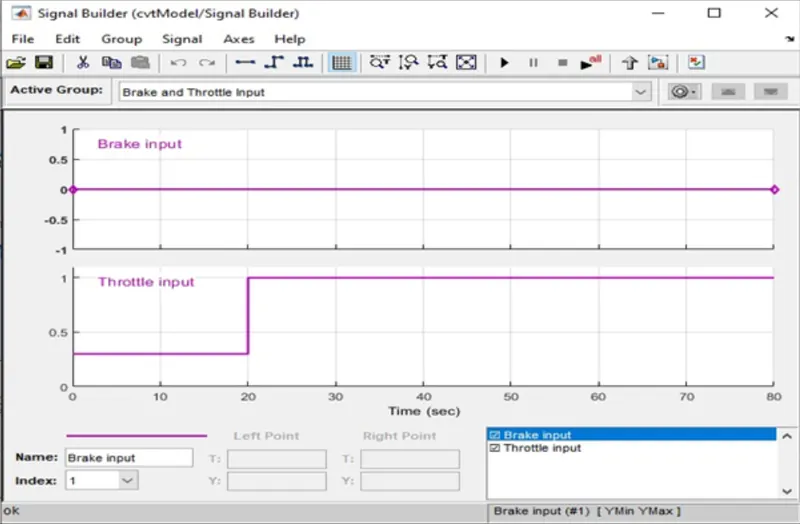
A signal bilder is used to signals for brake and throttle.
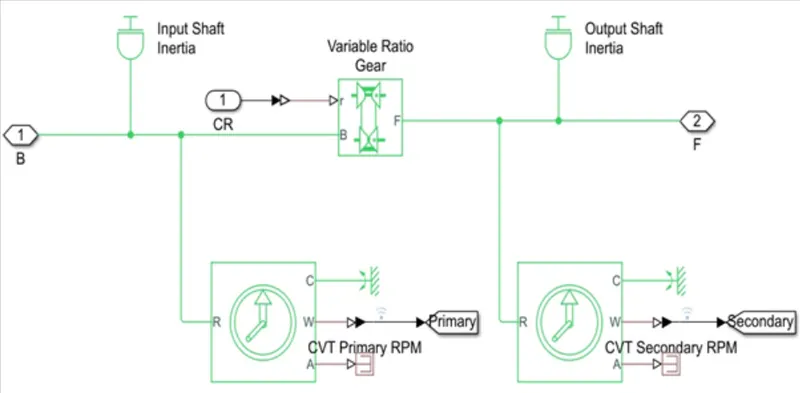
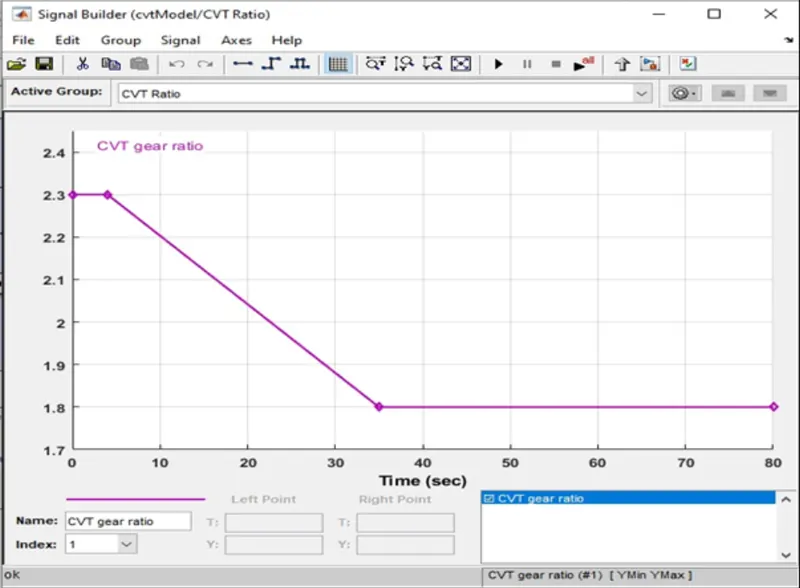
CVT gear ratio input :
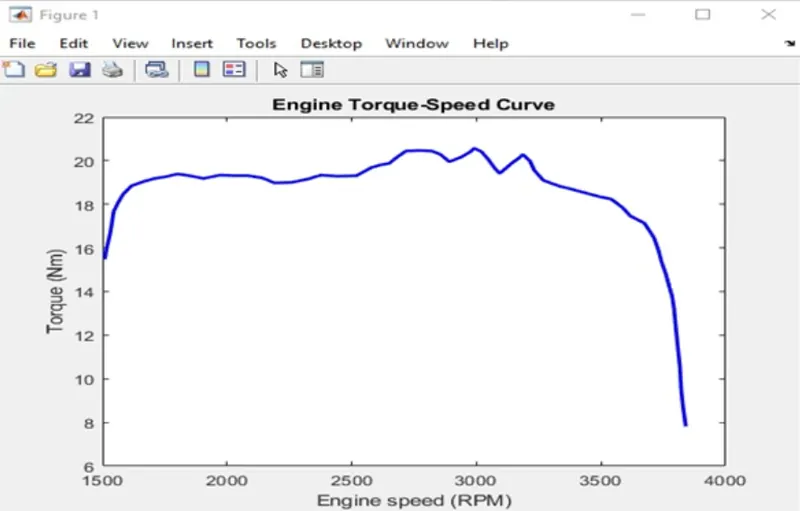
Torque vs engine speed input:
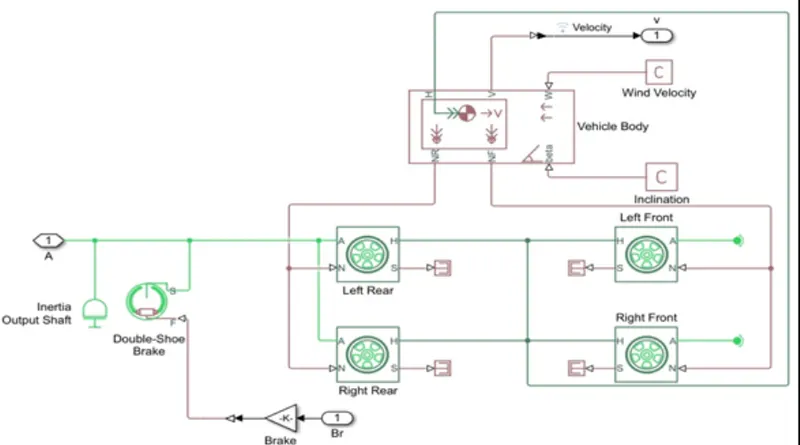
VEHICLE BODY:
OUTPUT FOR CASE 1:
VEHICLE SPEED:
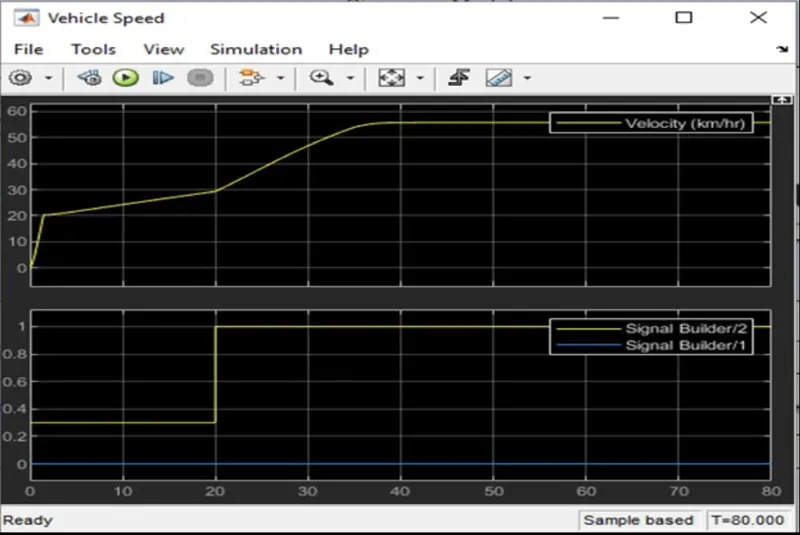
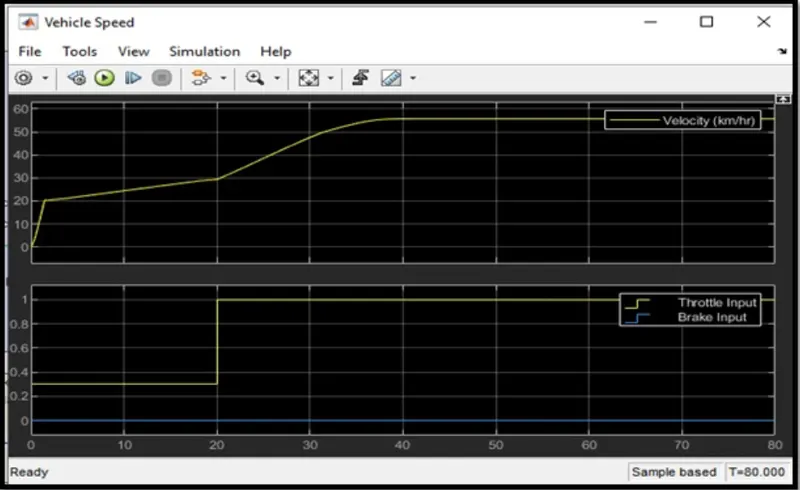
IT CLEAR from the graphthat the vehicle attains its maximum speed (v=55km/hr) at full trottle=1 after 30sec and
then remains constant.The brake input is zero,hence it has no effect on velocity.
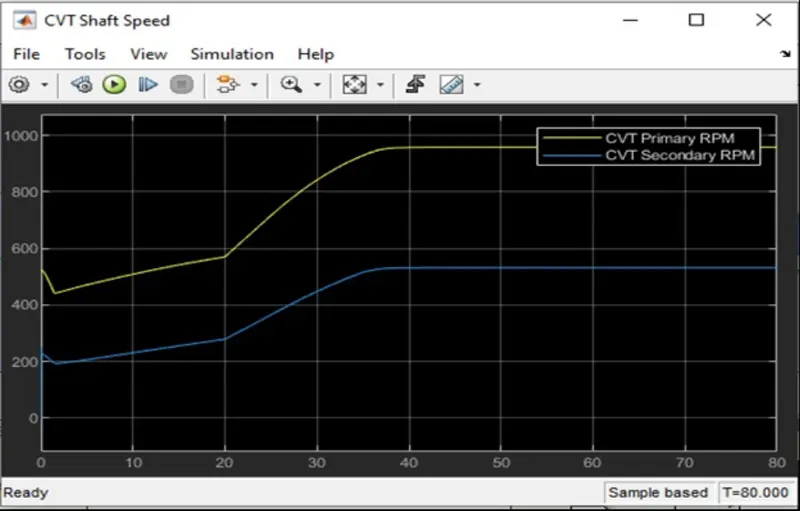
CVT SHAFT RPM:
STUDY1:
CASE2:
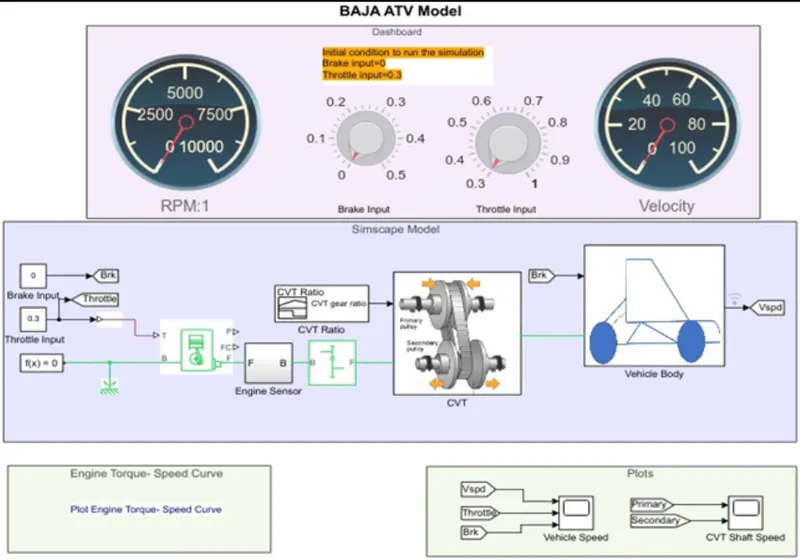
SIMULINK MODEL FOR BAJA ATV WITH CVT USING DASHBOARD:
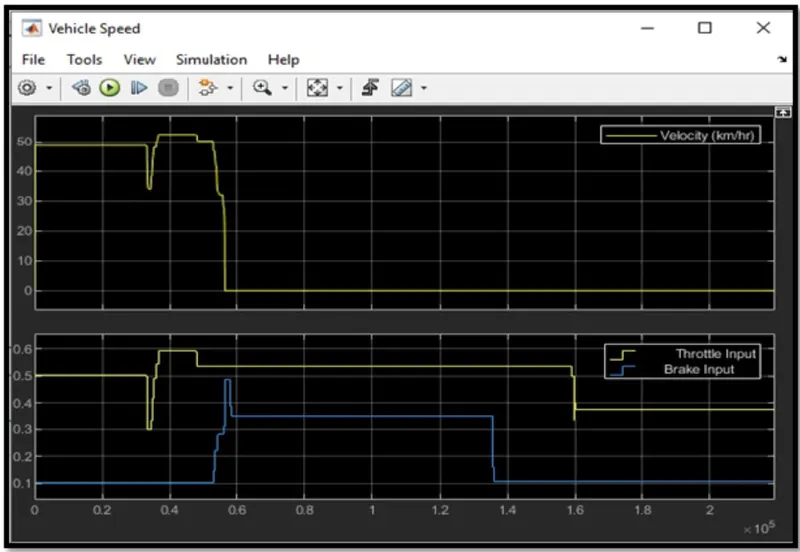
OUTPUT FOR CASE2:
VEHICLE SPEED:
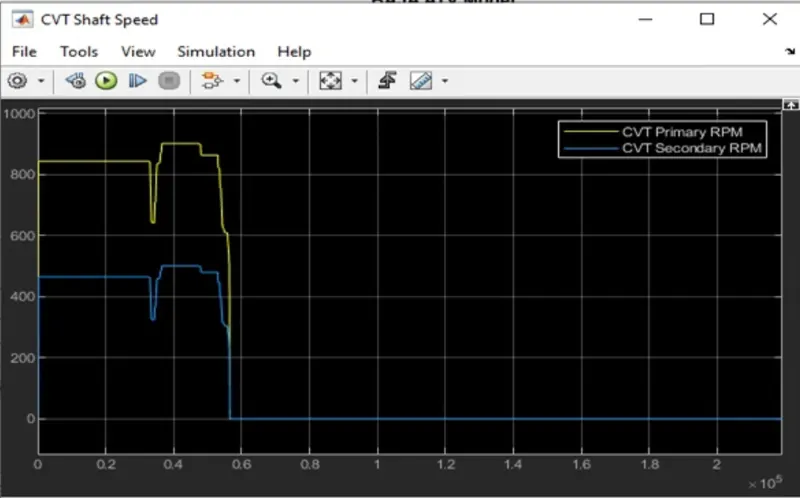
CVT SHAFT RPM:
STUDY2
CASE 1:
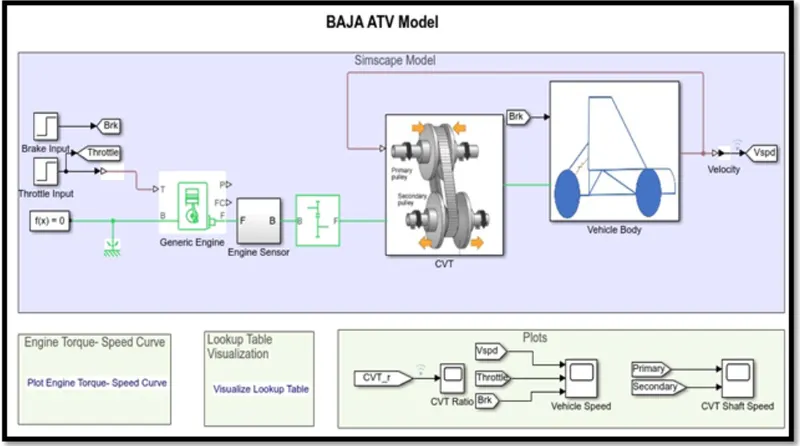
SIMULINK MODEL FOR BAJA ATV WITH CVT USING LOOKUP TABLE:
CTV BLOCK:
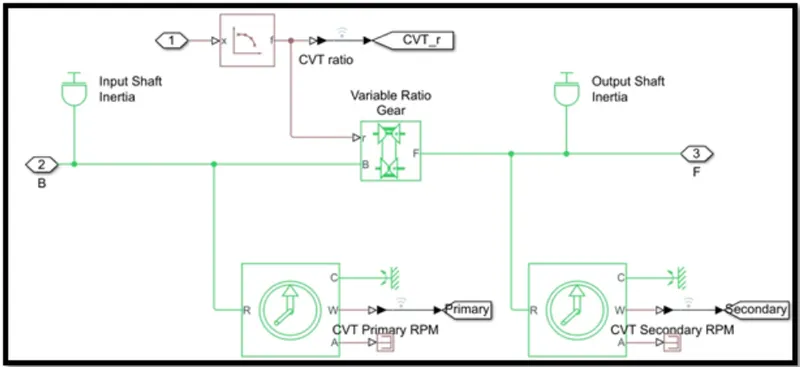
The only difference between this model and first model and first model is that in this model, the gear ratio input
to cvt is providing using lookup table.
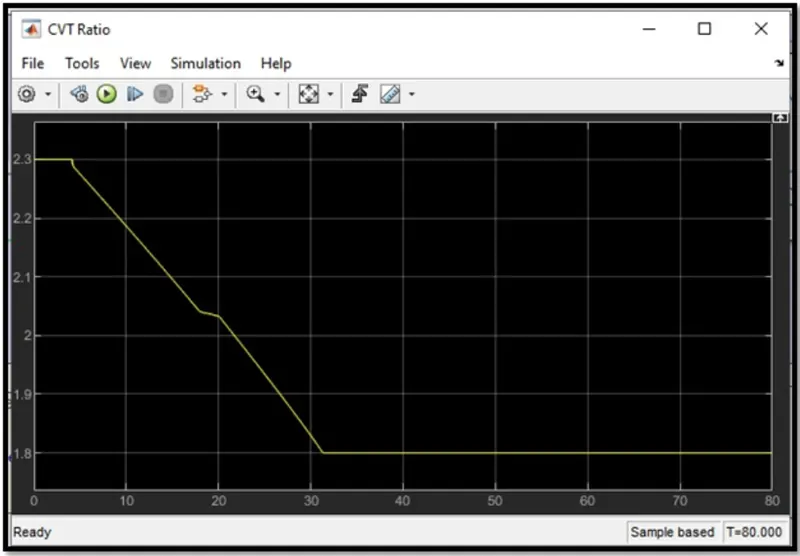
LOOKUP TABLE VISUALISATION:
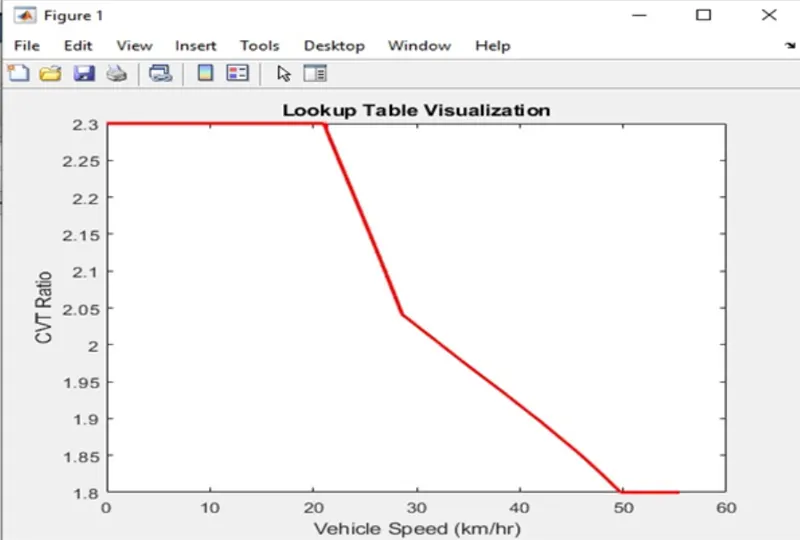
OUTPUT FOR CASE 1:
VEHICLE SPEED:
CTV SHAFT RPM:
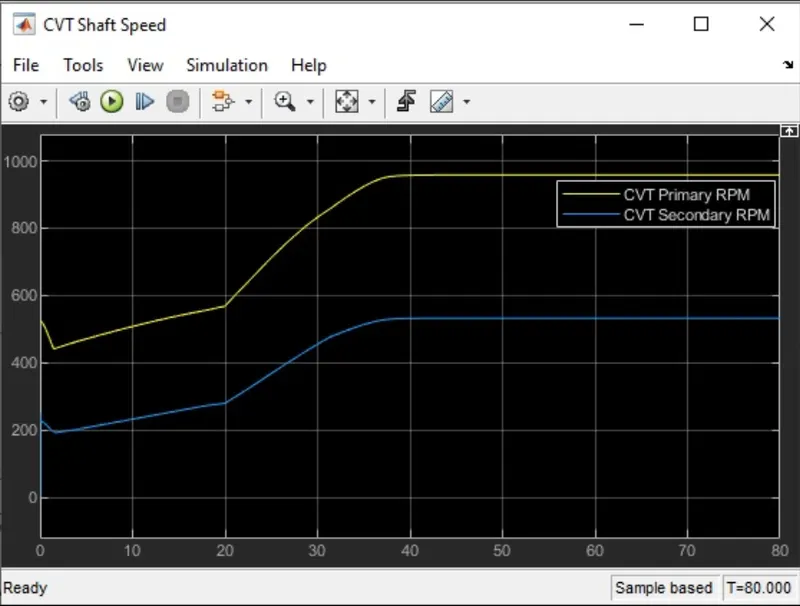
BOTH resultsare same as that of the first case : simulink model for BAJA ATV WITH CTV since the input parameters
are same .
STUDY2:
CASE 2:
SIMULINK MODEL FOR BAJA ATV WITH CTV USING LOOKUP TABLE AND DASHBORD:
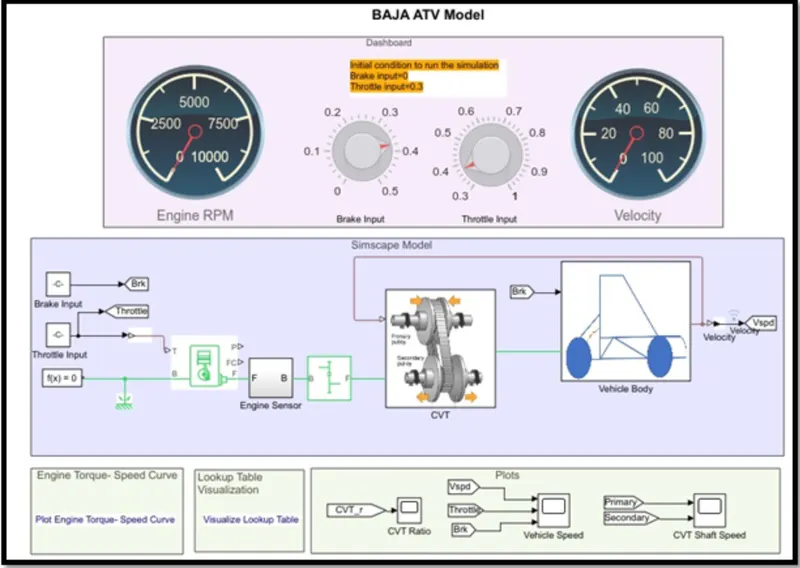
in this modle a dashboard is used to control the input = throttle and brake
OUTPUT FOR CASE2:
VEHICLE SPEED:
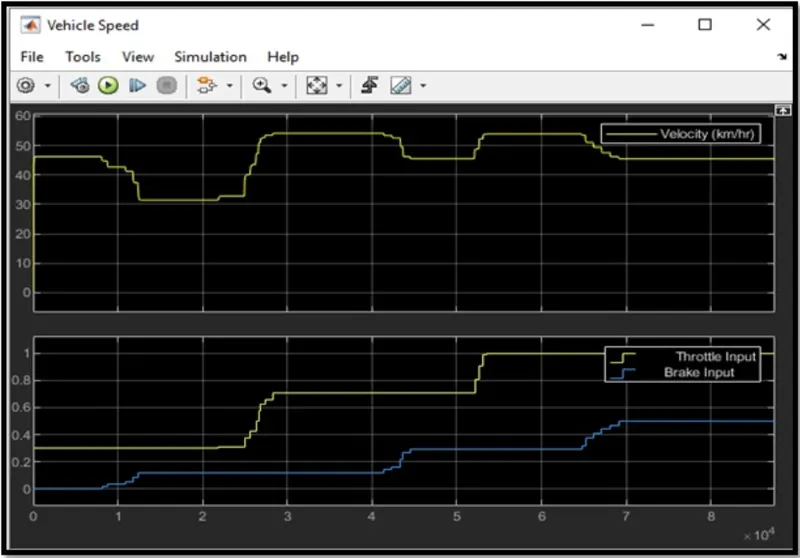
this ghaph is simular to thatof CTV dashbord case. the variation in vahicle velocity can be observe with change in
throttle and brake input value, the speed of vahicle decreases.
CVT SHAFT RPM:
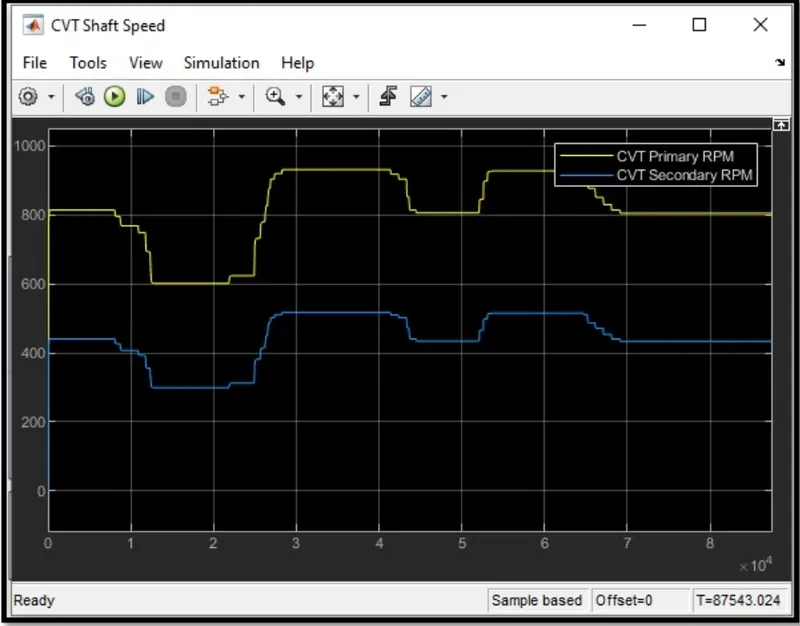
The graph indicater the variation in rpm primary and secondary shafts with respect to input paramerter.
CONCLUSION:
THUS we have successfully analysed 4 different modles of JAVA ATV WITH CTV and recorded the output : vehicle velocity
and CTV shaft rpm with respect variation in input throttle and brake.