Project
A. An alternative material to natural rubber that can be used in HVAC units is Ethylene Propylene Diene Monomer. EPDM offers several advantages over natural rubber in this context:
-
EPDM has excellent resistance to high and low temperatures, making it suitable for HVAC applications ranging from -50°C to 150°C.
-
EPDM is highly resistant to UV radiation and weathering, making it ideal for outdoor HVAC units.
-
EPDM exhibits excellent resistance to a wide range of chemicals, including acids, alkalis, and ozone.
-
EPDM has low moisture absorption properties, making it resistant to swelling or degradation in humid environments.
-
EPDM offers good flexibility and elasticity, allowing it to accommodate movements, vibrations, and thermal expansion/contraction common in HVAC units.
-
EPDM is an excellent electrical insulator, providing electrical safety and insulation properties in HVAC units.
-
EPDM is known for its long service life and durability. It has excellent resistance to aging, compression set, and mechanical wear, ensuring HVAC units can operate reliably for extended periods without frequent maintenance or replacement.
B.
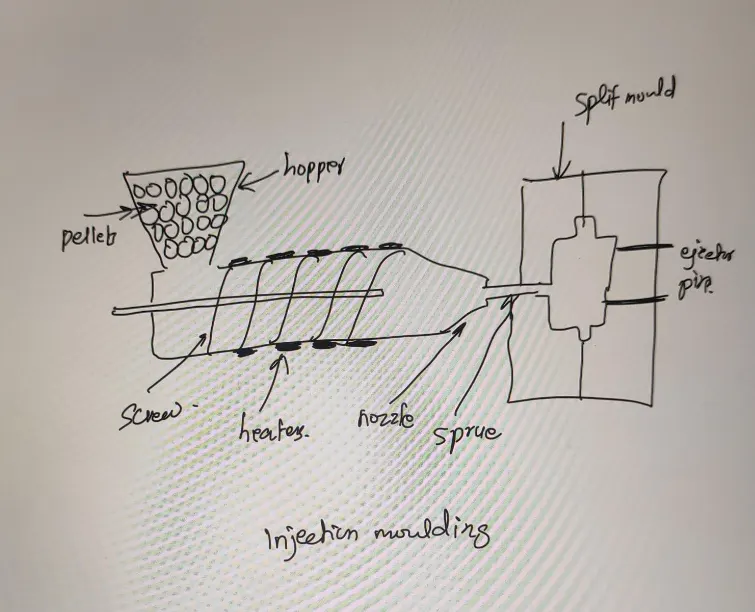
Injection molding involves injecting molten plastic material into a mold cavity under high pressure, allowing it to cool and solidify into the desired shape. Here's a step-by-step description of the injection molding process:
-
Mold Preparation: A mold, typically made of steel or aluminum, is prepared for the injection molding process.
-
Plastic Material Melting: Thermoplastic resin pellets or granules are fed into a heated barrel of an injection molding machine. Inside the barrel, the plastic material is heated to its melting point, becoming a molten liquid.
-
Injection: Once the plastic material reaches the appropriate melting temperature, a screw mechanism within the injection molding machine pushes the molten plastic through a nozzle and into the mold cavity. The high pressure exerted during this stage ensures the mold cavity is filled completely and accurately.
-
Cooling and Solidification: After the molten plastic is injected into the mold cavity, it starts to cool down and solidify. The mold's temperature is carefully controlled to ensure the plastic solidifies uniformly and with the desired properties. Cooling can be accelerated using water channels within the mold.
-
Mold Opening and Ejection: Once the plastic part has solidified and cooled sufficiently, the mold is opened, separating the two halves. The ejector system within the mold helps push or eject the solidified part out of the cavity. The part is usually attached to runners or sprues, which are removed through additional trimming or cutting processes.
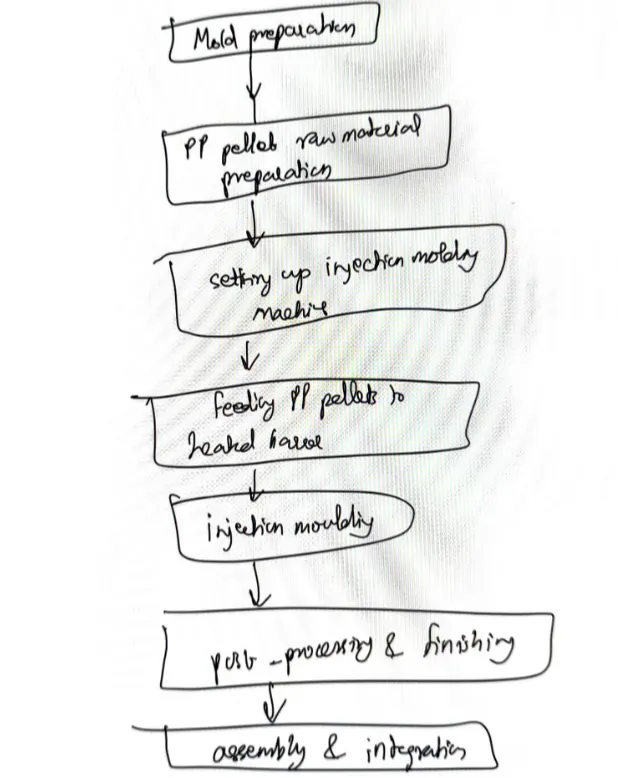
C. One common plastic material used in automotive applications is Polypropylene (PP). Following is the manufacturing process flowchart of PP.
D. The key differences between elastomers and plastics are:
1. Elastomers are characterized by their high elasticity and flexibility. Plastics have lower elasticity and flexibility compared to elastomers.
2. Elastomers possess excellent resilience, which means they can absorb and store mechanical energy upon deformation and release it when the force is removed. Plastics generally have lower resilience and tear resistance compared to elastomers.
3. Elastomers are typically processed using methods such as vulcanization or cross-linking, which improves their resistance to deformation. Plastics can be processed using a variety of methods, including injection molding, extrusion, blow molding, and thermoforming. These processes involve heating and melting the plastic material, shaping it, and allowing it to cool and solidify in the desired form.
4. Elastomers generally have better resistance to high and low temperatures compared to most plastics. Plastics have a wide range of temperature resistance depending on the specific type and formulation. While some plastics can withstand high temperatures, others may have lower resistance and can soften or deform under elevated temperatures.
5. Elastomers find applications in products that require elasticity, flexibility, and sealing properties. Common uses include rubber seals, gaskets, tires, conveyor belts, vibration isolators, and various automotive components. Plastics are utilized in a wide range of applications due to their versatility and ability to be molded into complex shapes. They are used in packaging, consumer goods, automotive parts, electronics, construction materials, and more.