Project 2 Thermal modeling of battery pack
For a 10 cell series lithium ion battery model, simulate the thermal effects and compare life cycle performance at various temperatures, charge & discharge rates using MATLAB.
The Lithium-ion batteries are widely used as energy sources in different hybrid systems, however, the operation characteristics of the battery in such systems are strongly dependent on the operation temperature and therefore, with purpose to improve these characteristics a good thermal control system should be utilized.
Battery pack is one of the most important components of electrical vehicles(EV). The safety, aging and life of battery packs are significantly related to its thermal behavior. This work concerns with thermal behavior of an EV battery pack for realistic engineering applications.
Battery Pack Thermal Modelling :
The battery pack, as one of the most important components of electrical vehicles (EVs), is sensitive to operating temperature on its performance. To be specific, when batteries are working in the condition of high or low temperature or battery cells are present with unbalanced temperature, it will lead to accelerated battery aging, decreased discharging performance and even worse, serious battery safety issues, e.g., thermal runaway and propagation, fire or explosion. Therefore, thermal management analysis is crucial for studying thermal behavior of battery packs.
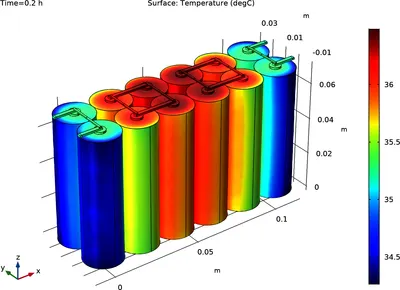
The above figure is just the representation of the heat generation in the cells how the cell turns red as the temperature rises.
Thermal Modelling using Matlab Simulink :
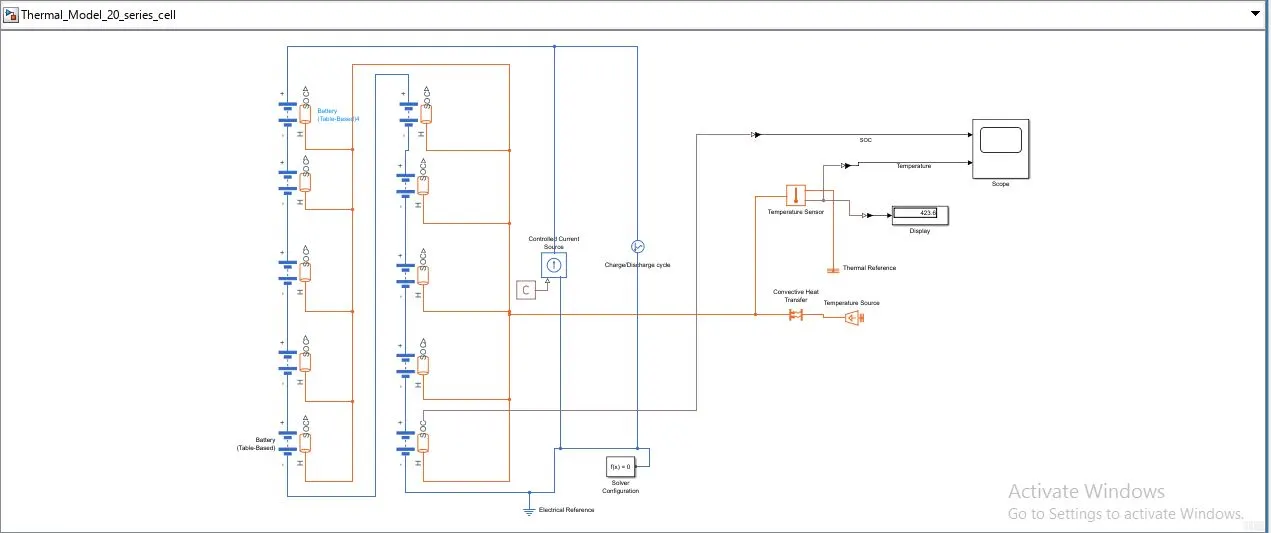
Here in this Simulink model 10 Table based batteries with SOC port is arranged in series Configurtion.
Table Based Battery :
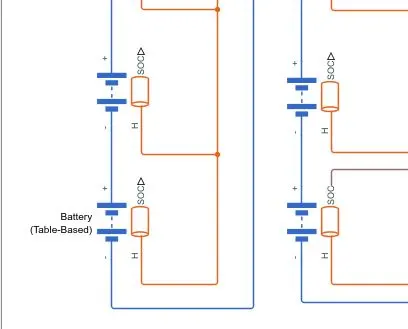
This block models the electro-thermal dynamics of a battery by using electrical circuit elements with variable characteristics and a zero-dimensional lumped-mass thermal heat equation. Lookup tables or empirical relationships can be used to model cycling (fade) and calendar aging of the battery. The block tabulates the variable characteristics of the electrical circuit elements as functions of the state of charge of the battery and, optionally, temperature.
Controlled Current Source :
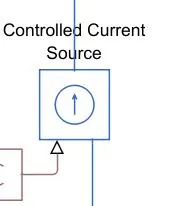
The block represents an ideal current source that is powerful enough to maintain the specified current through it regardless of the voltage across it. The output current is I = Is, where Is is the numerical value presented at the physical signal port.
AC Current Source block :
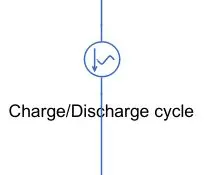
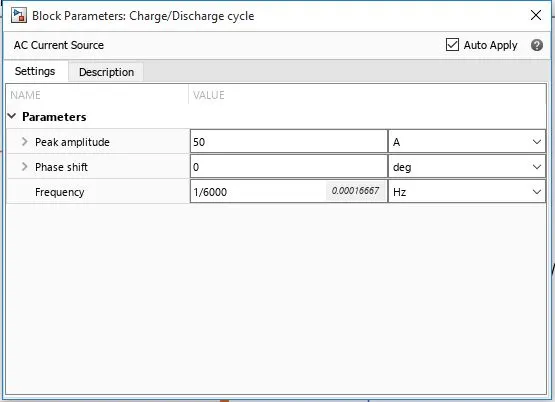
An AC source has been connected to analyse the cyclic charge and discharge performance. The positive cycle will charge the battery and negative cycle will discharge the battery. Peak Amplitude is given as 50.
Convection Heat Transfer
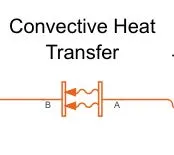
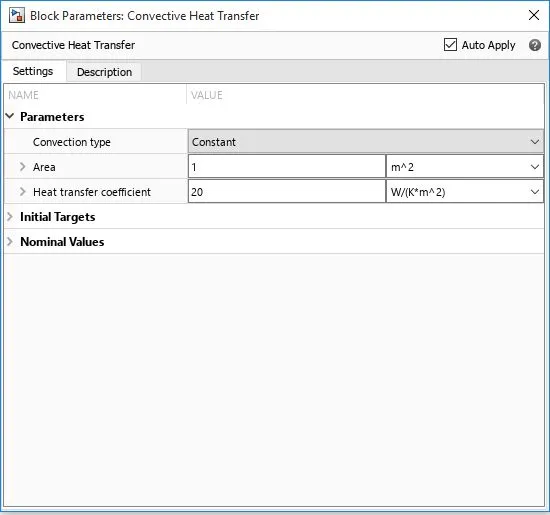
This block models heat transfer in a thermal network by convection due to fluid motion. The rate of heat transfer is proportional to the temperature difference, heat transfer coefficient, and surface area in contact with the fluid. The heat transfer coefficient can be either constant or variable. When the heat transfer coefficient is variable, specify it using the physical input signal at port K. If the heat transfer coefficient is variable, it remains at the Minimum heat transfer coefficient if the physical signal falls below this value.
Temperature Source
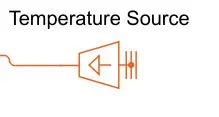
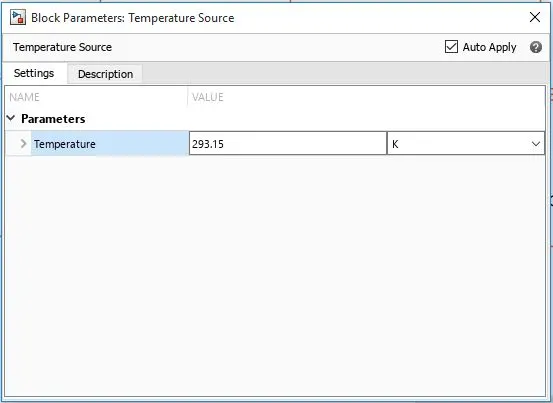
This block represents an ideal energy source in a thermal network that can maintain a constant absolute temperature at the port regardless of the heat flow rate.
Temperature Sensor
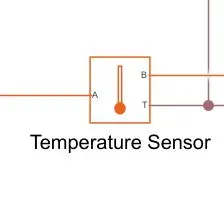
This block measures temperature in a thermal network. There is no heat flow through the sensor. The physical signal port T reports the temperature difference across the sensor. The measurement is positive when the temperature at port A is greater than the temperature at port B.
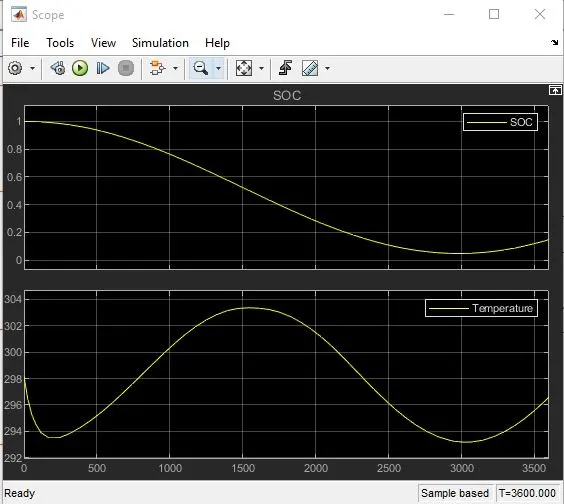
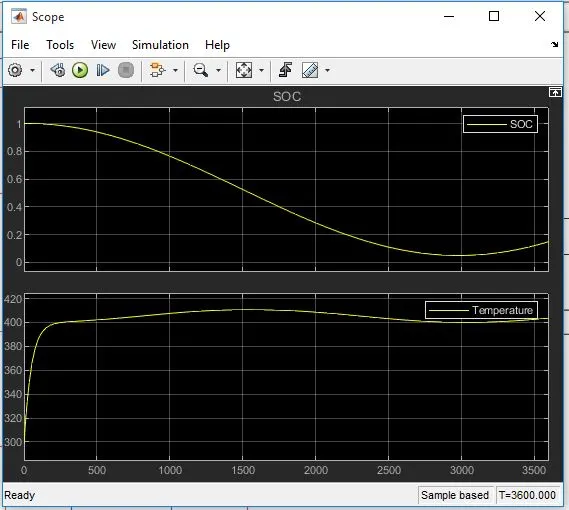
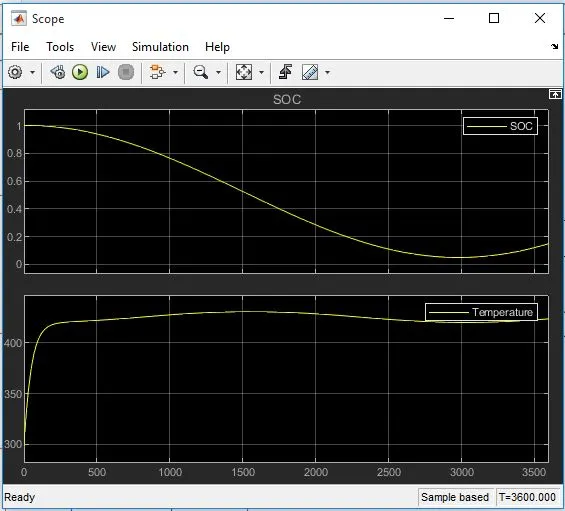
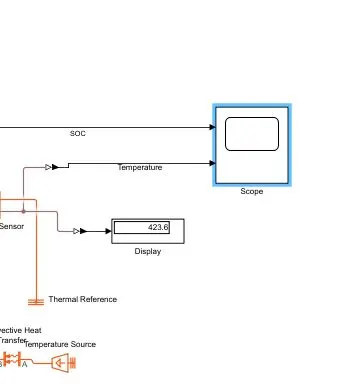
A Display is attached with the Temperature Sensor So that we can get the Temperature Difference. Also SOC and Temperature are connected with the scope for the analysis results.
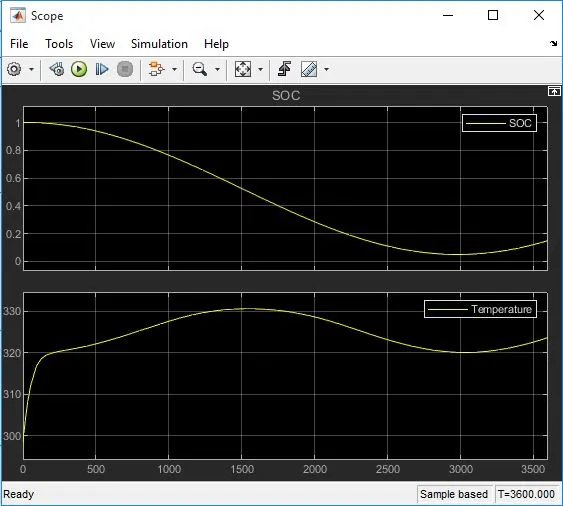
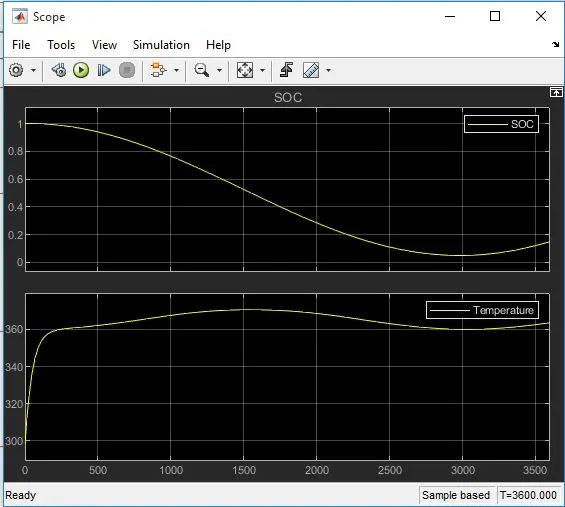
The model is run for 3600sec. with an area of 1m2. for all the Temperature selected.
Here, the Model is run for five different temperatures 293.15, 320, 360, 400, 420K.
for 293.15K , Scope results
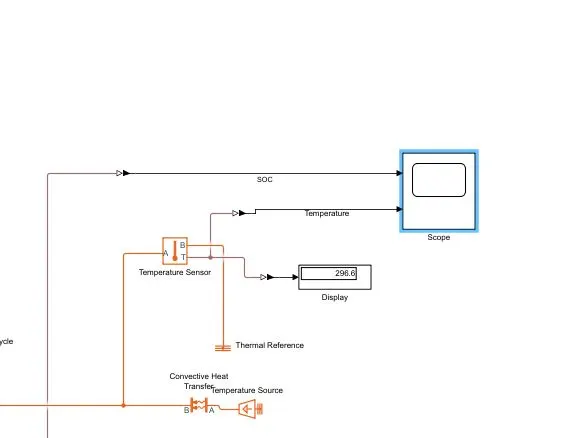
For 320K
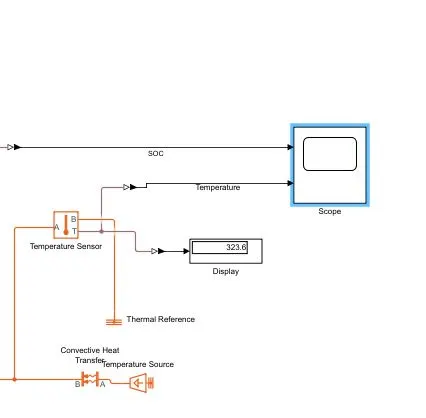
For 360K
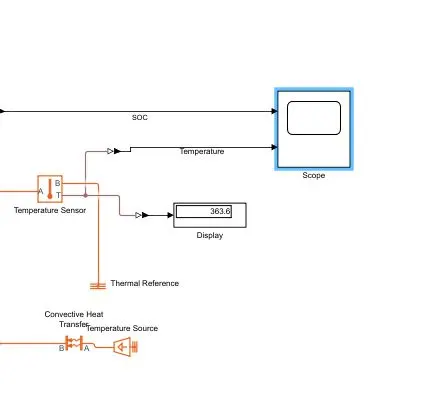
For 400K
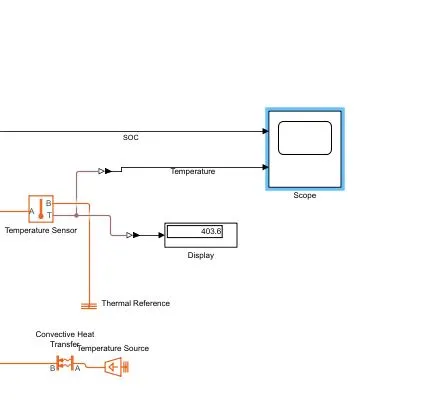
For 420K
Conclusion :
The thermal model of the battery pack provides a comprehensive simulation of temperature behavior in a series battery configuration. By integrating electrical and thermal domains, the model effectively evaluates heat generation, convective heat dissipation, and battery temperature monitoring. The inclusion of temperature sensors and a convective heat transfer source highlights the importance of thermal management in preventing overheating and ensuring optimal battery performance.
If we take a look on the results its visible that as the SOC also gets decreasing with an increase in temperature from the initial temperature. For such a reason a Battery Management System is required so that the rising temperature can be controlled which leads in preventing of life cycle, battery performance, Aging etc.
Reference :
https://in.mathworks.com/help/simscape/ug/lithium-ion-battery-pack-with-fault.html