Project 2 Thermal modeling of battery pack
Aim: To model and simulate 10 cells in a series lithium-ion battery pack, analyze the thermal effects and compare its life cycle performance at various temperatures, charge & discharge rates using MATLAB.
Lithium-ion battery
A lithium-ion battery or Li-ion battery is a type of rechargeable battery. Lithium-ion batteries are commonly used for portable electronics and electric vehicles and are growing in popularity for military and aerospace applications.
In the batteries, lithium ions move from the negative electrode through an electrolyte to the positive electrode during discharge, and back when charging. Li-ion batteries use an intercalated lithium compound as the material at the positive electrode and typically graphite at the negative electrode. The batteries have a high energy density, no memory effect (other than LFP cells), and low self-discharge. They can however be a safety hazard since they contain flammable electrolytes, and if damaged or incorrectly charged can lead to explosions and fires. Samsung was forced to recall Galaxy Note 7 handsets following lithium-ion fires, and there have been several incidents involving batteries on Boeing 787s.
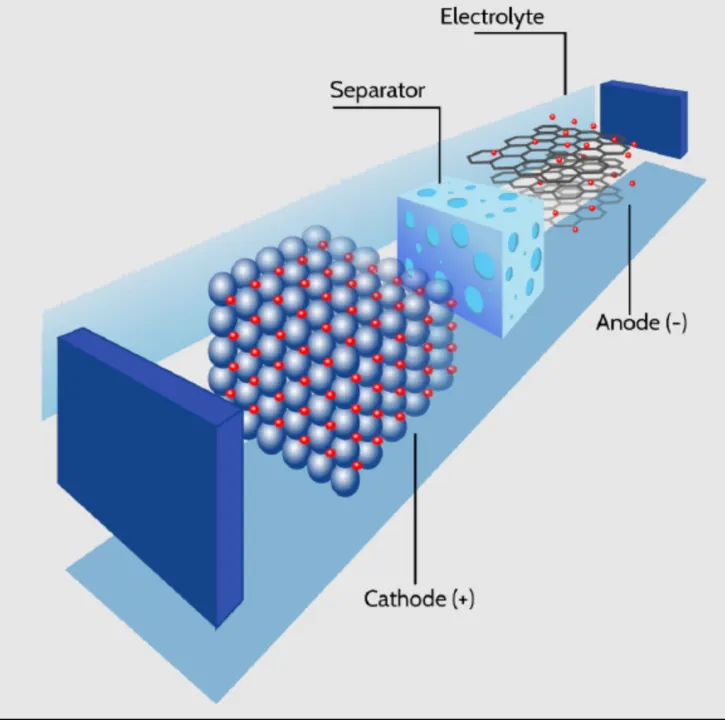
A battery is made up of an anode, cathode, separator, electrolyte, and two current collectors (positive and negative). The anode and cathode store lithium. The electrolyte carries positively charged lithium ions from the anode to the cathode and vice versa through the separator. The movement of the lithium ions creates free electrons in the anode which creates a charge at the positive current collector. The electrical current then flows from the current collector through a device being powered (cell phone, computer, etc.) to the negative current collector. The separator blocks the flow of electrons inside the battery.
MATLAB SIMULINK MODEL
The following figure (taken and modified from MATLAB model) shows the Simulink model of a 10-cell series lithium-ion battery using an AC Current source providing cyclic charge/discharge profile.
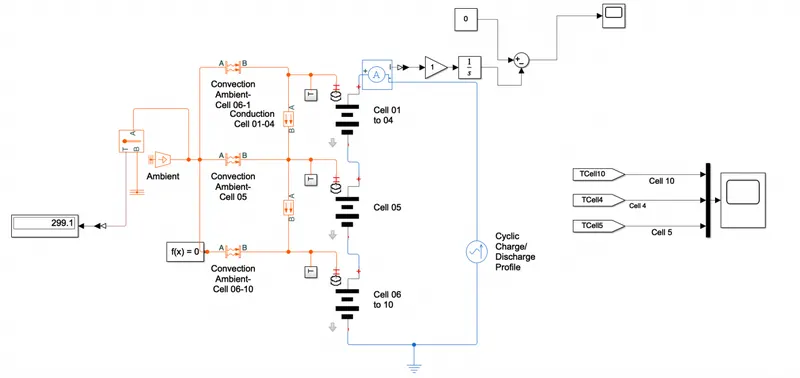
The fundamental blocks used in this model are as follows
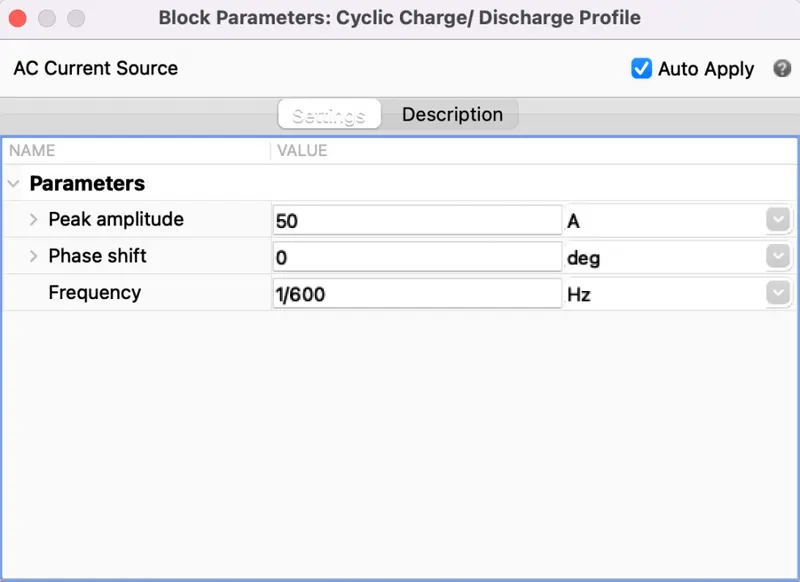
- AC Current Source: The AC Current Source block represents an ideal current source that maintains the sinusoidal current through it, independent of the voltage across its terminals.
The output current is defined by the following equation:
I=I0.sin(2π.f.t+ψ)
This block has two electrical conserving ports associated with its terminals.
- Current Sensor: The Current Sensor block represents an ideal current sensor, that is, a device that converts current measured in any electrical branch into a physical signal proportional to the current.
Connections '+' and '–' are electrical conserving ports through which the sensor is inserted into the circuit. The connection 'I' is a physical signal port that outputs the measurement result.
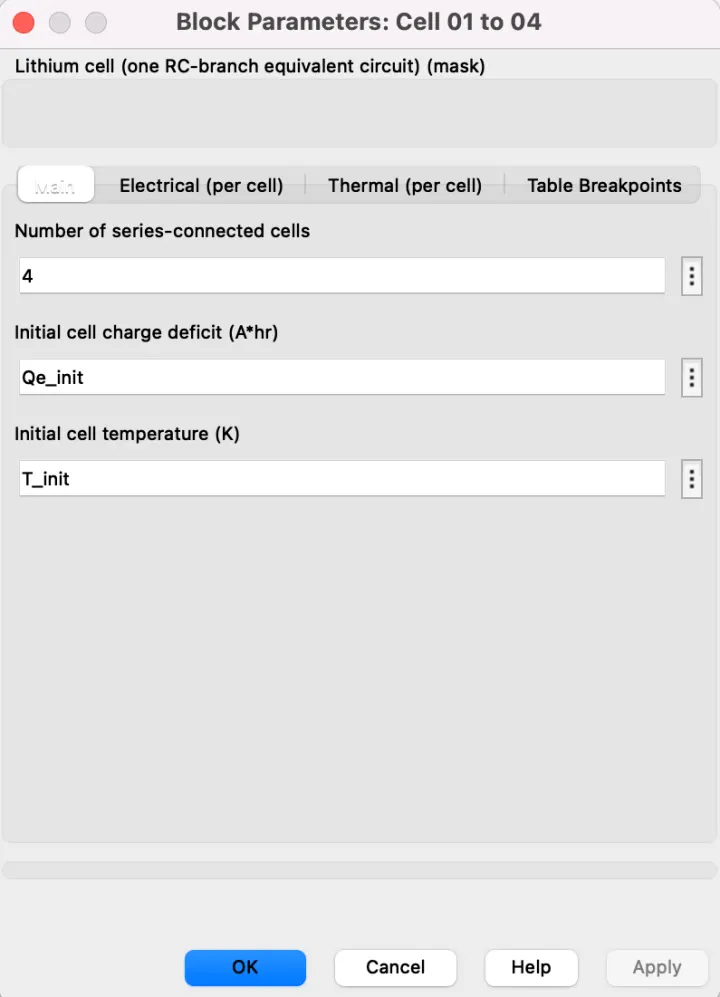
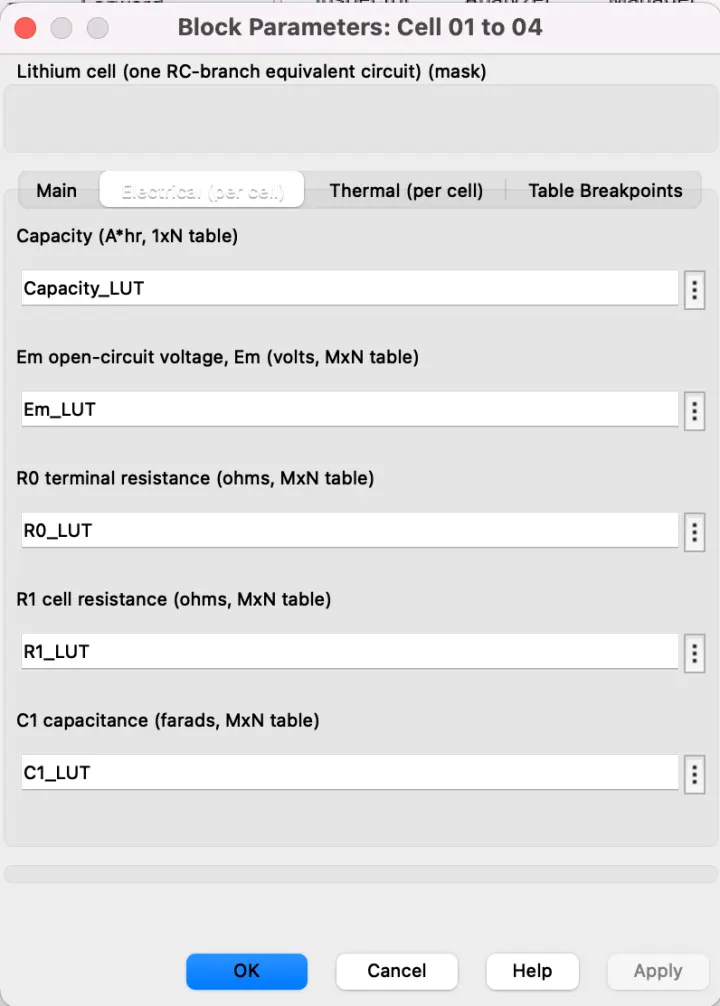
- Lithium Cells: The Lithium cell block represents an ideal lithium-ion cell used in a battery pack with thermal ports.
Connections '+' and '–' are electrical conserving ports through which the cells are inserted into the circuit. The Thermal port used for further thermal network connections.
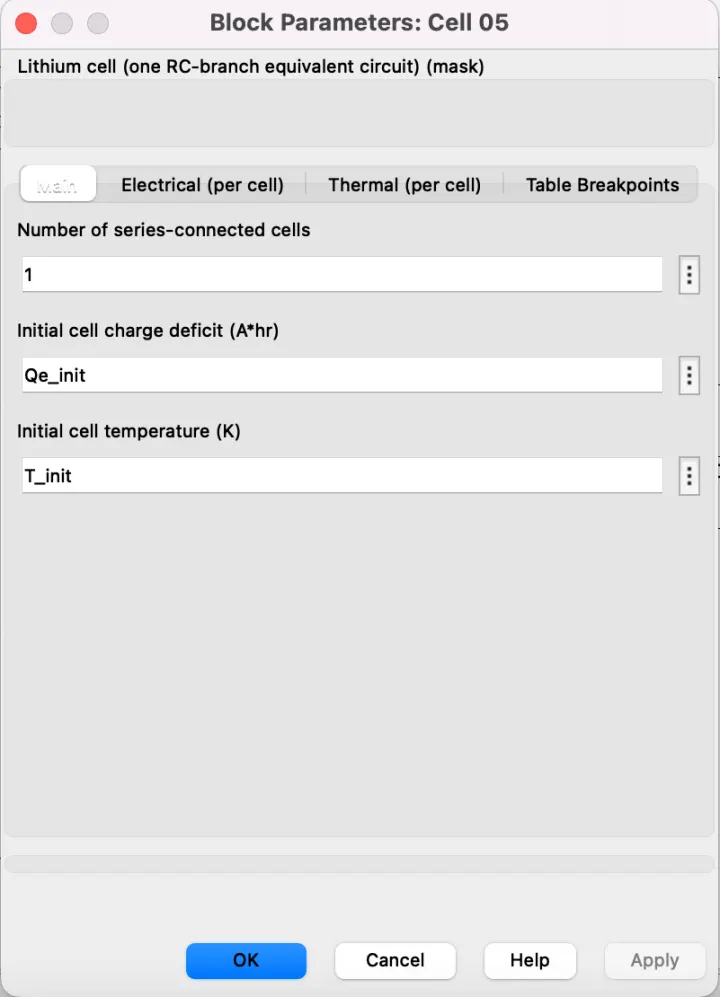
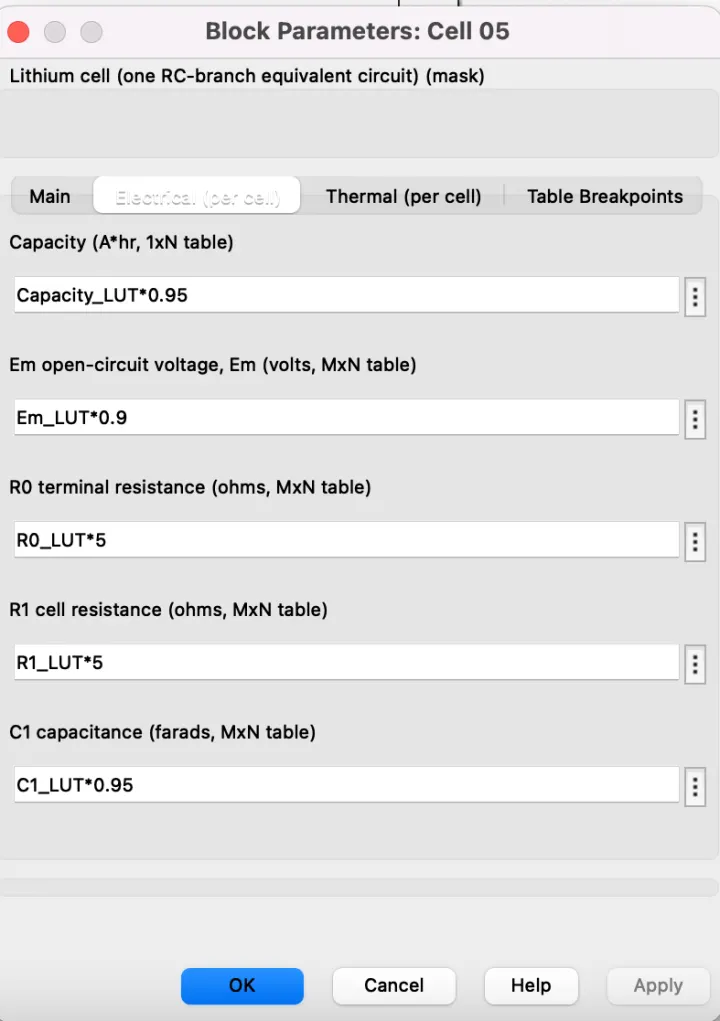
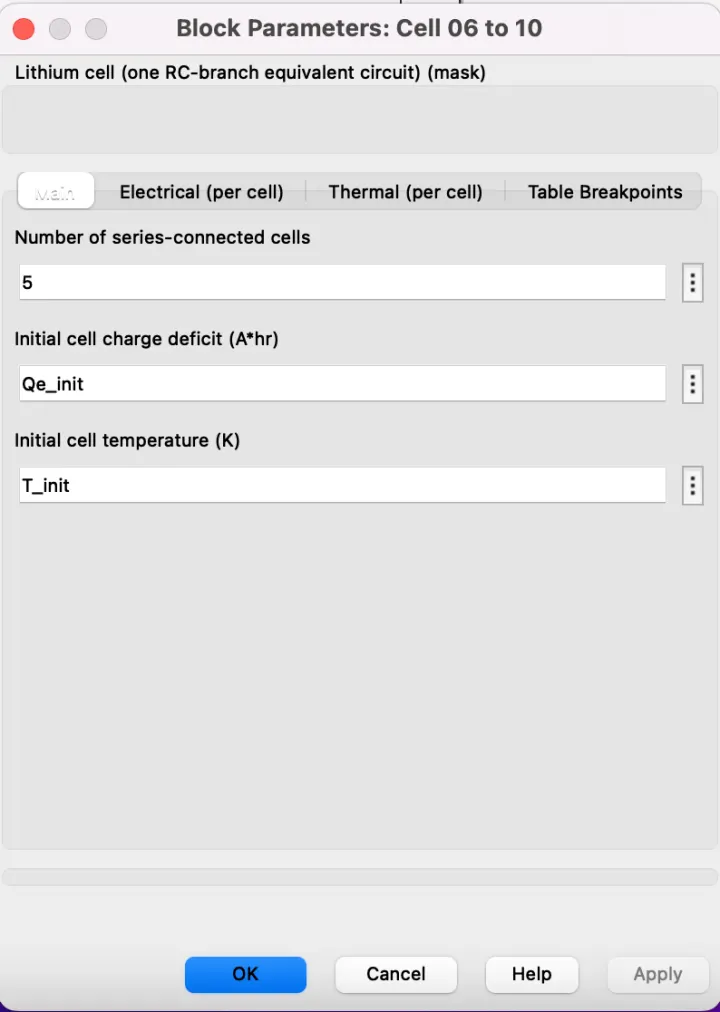
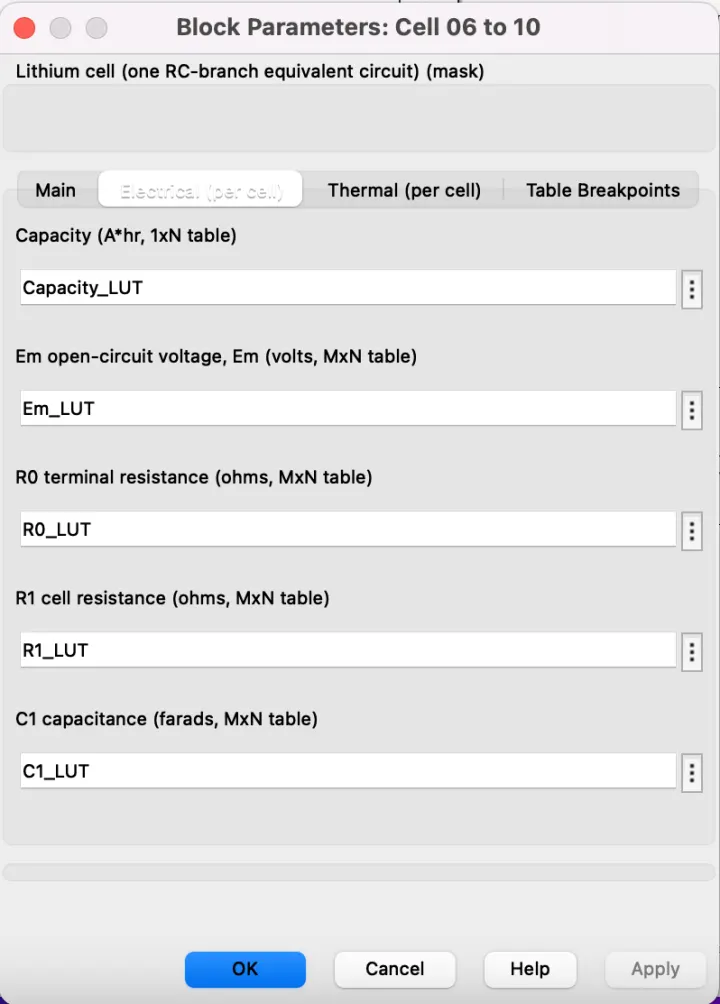
Here, the Cells pack 1-4 and 6-10 are normal and healthy cells, whereas Cell 5 is the faulty cell.
- Temperature Sensor: The Temperature Sensor block represents an ideal temperature sensor, that is, a device that determines the temperature differential measured between two points without drawing any heat. Connections 'A' and 'B' are thermal conserving ports that connect to the two points where the temperature is being monitored. Port 'T' is a physical signal port that outputs the temperature differential value.
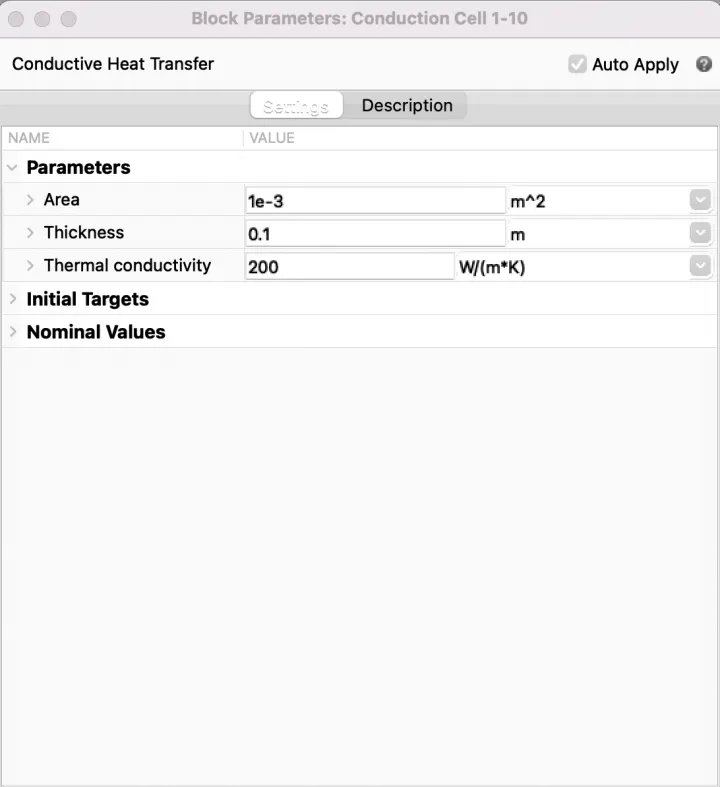
- Conductive Heat Transfer: The Conductive heat transfer blocks models heat transfer in a thermal network by conduction through a layer of material. The rate of heat transfer is governed by Fourier's law and is proportional to the temperature difference, material thermal conductivity, area normal to the heat flow direction, and inversely proportional to the layer thickness.
- Convective Heat Transfer: The Convective heat transfer block models heat transfer in a thermal network by convection due to fluid motion. The rate of heat transfer is proportional to the temperature difference, heat transfer coefficient, and surface area in contact with the fluid.
- Temperature Source: The Temperature source block represents an ideal energy source in a thermal network that can maintain a constant absolute temperature at the port regardless of the heat flow rate.
- Rate Transition: Rate Transition block transfers data from the output of a block operating at one rate to the input of another block operating at a different rate. The Rate Transition block's parameters allow you to specify options that trade data integrity and deterministic transfer for faster response and/or lower memory requirements.
- Discrete-Time Integrator: The Discrete-Time Integrator block implements discrete-time integration or accumulation of the input signal. The block can integrate or accumulate using the Forward Euler, Backward Euler, and Trapezoidal methods.
- Electrical Reference, Thermal Reference, Solver Configuration, Scope, Display, Gain, Constant, Add, PS-Simulink Converter, Simulink-PS Converter, Goto tag, and From are the miscellaneous blocks used in this model.
The three subsystems used in this model for the respective cells pack are as below.

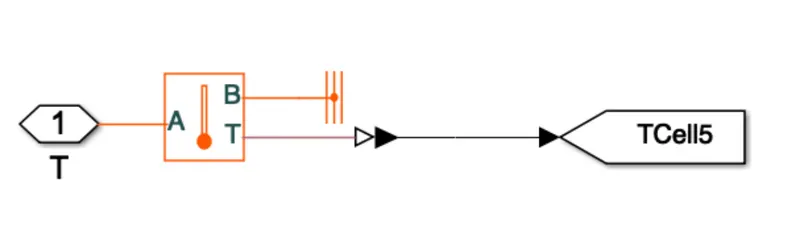

They are all named 'T' and the output of all the subsystems are given to the Goto tags which will show the temperature curves using a Scope.
Model parameters
From workspace
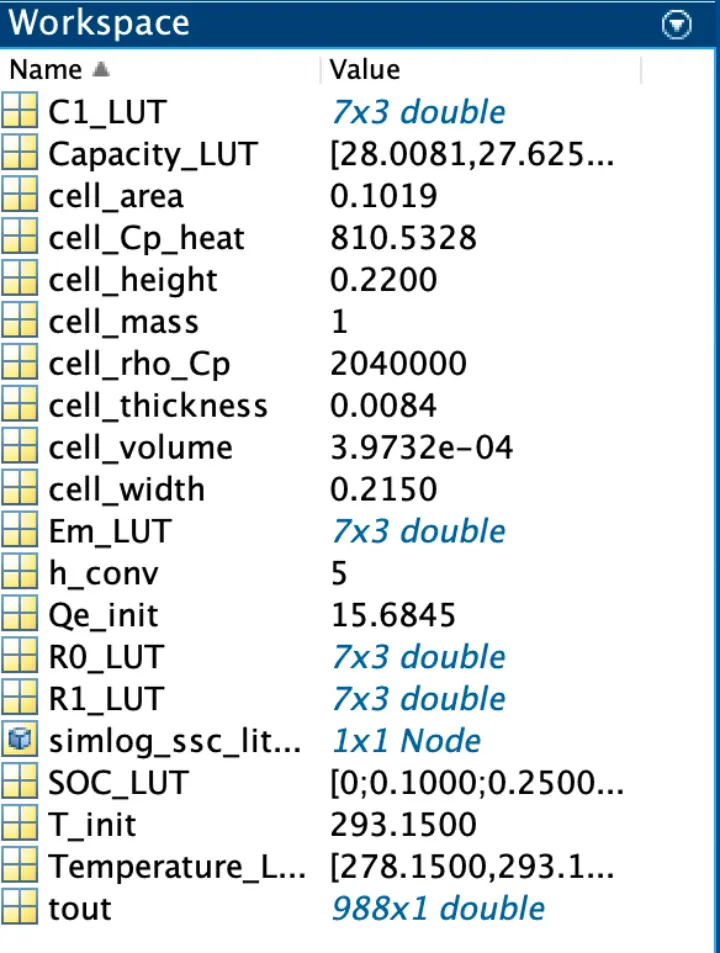
AC current source
Lithium cells
For cells 1-4
For cell 5
For cells 6-10
Conductive heat transfer
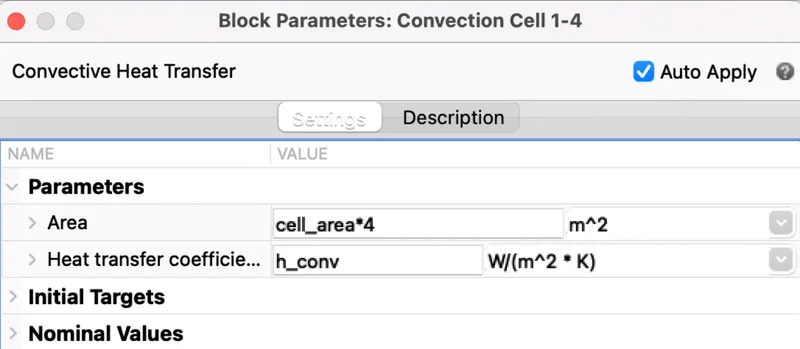
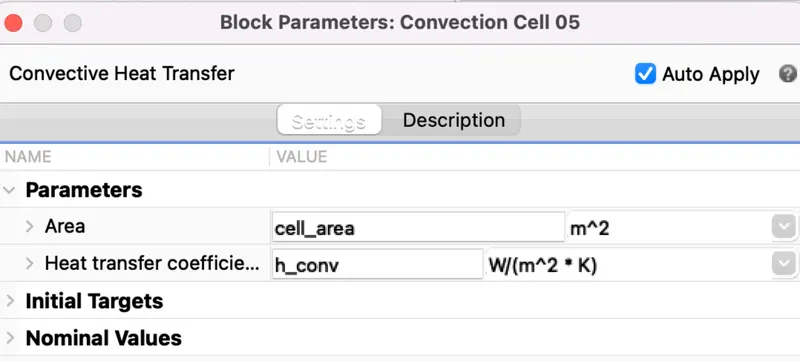
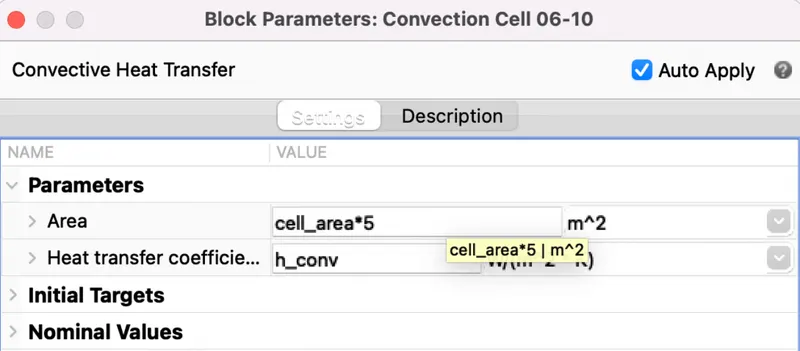
Convective heat transfer
Modeling for calculation of SOC:
- To find Soc we need to find how much charge has been stored and dissipated, this can be done by finding out the charge.
- The charge can be calculated from the value of the current.
- If we integrate the current over a certain time, we will get the charge stored or dissipated (depending on the direction of the current) through a certain time.
- We need to connect a current sensor to find the current and multiply it with a gain of 1/10000 and then we integrate it. subtract it from zero.
- The Convective heat transfer block represents a transfer of heat in a thermal network by convection due to fluid motion.
- The rate of heat transfer is proportional to the temperature difference, heat transfer coefficient, and surface area in contact with the fluid.
- We need to model this parameter for the batteries.
For cells 1-4
For cell 5
For cells 6-10
Results:
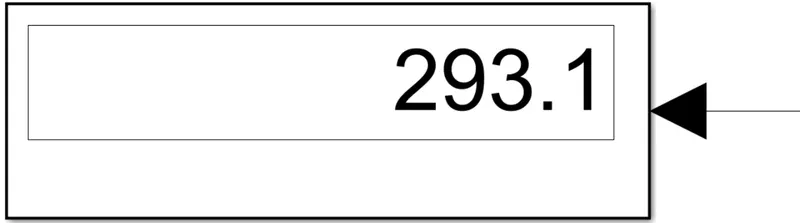
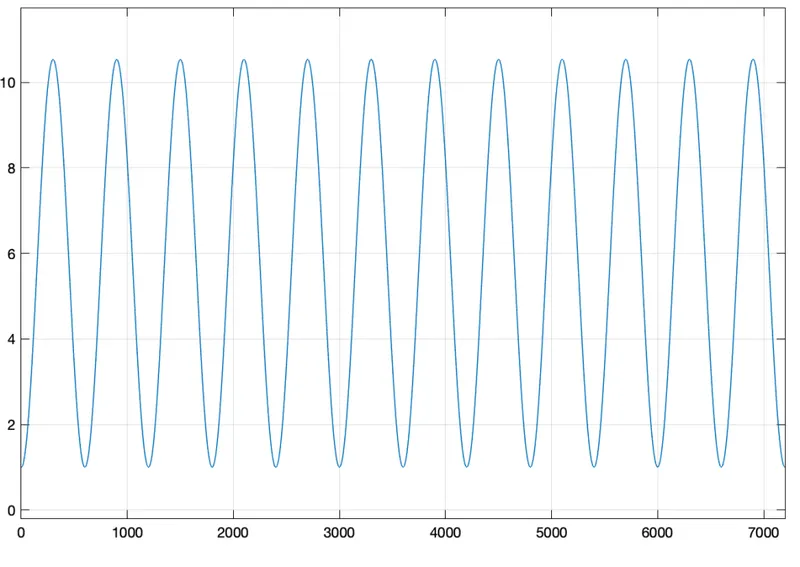
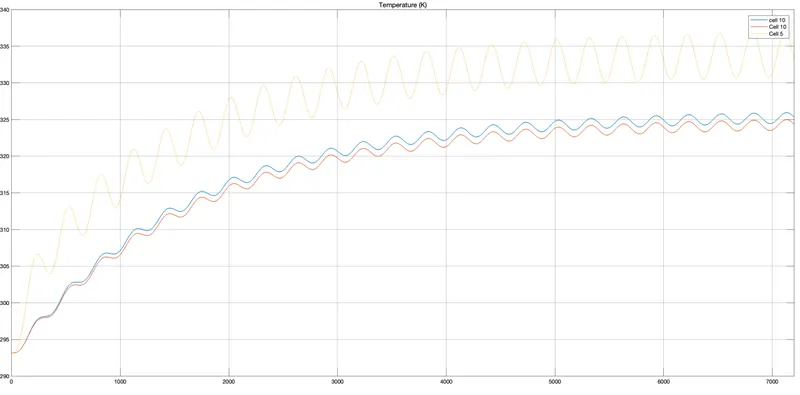
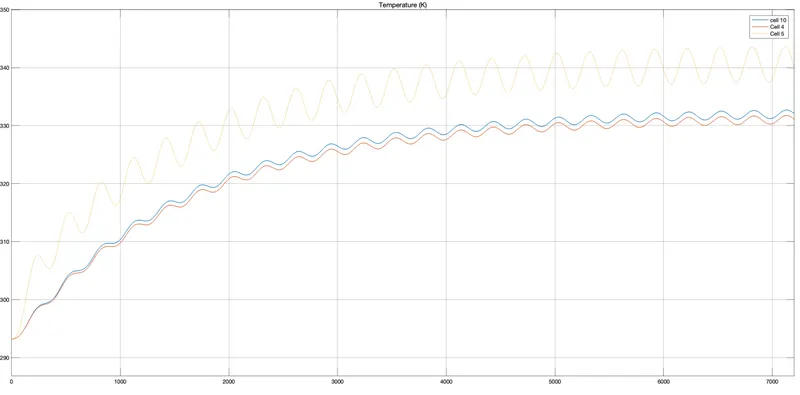
After running the simulation for 7200 secs, we get the following results for test 1 at 293.1k
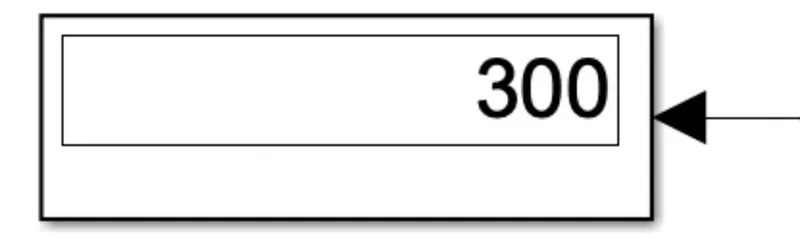
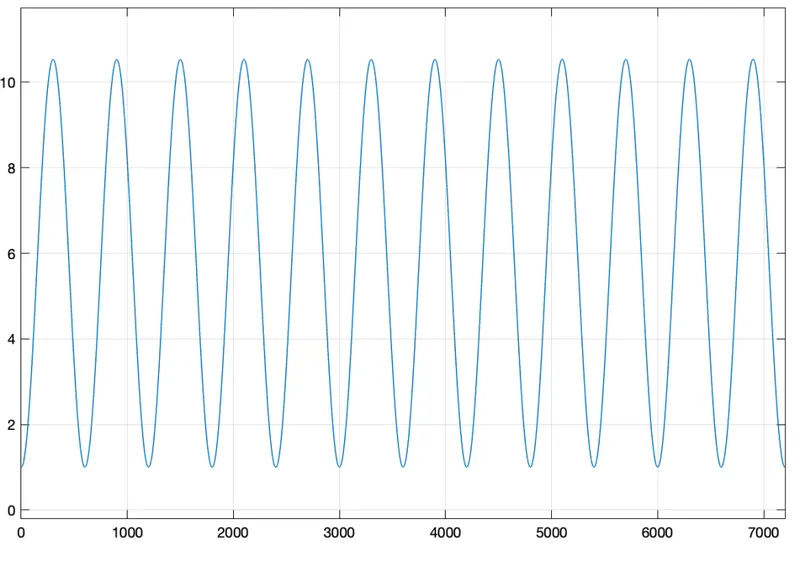
The following results for test 2 at 300k
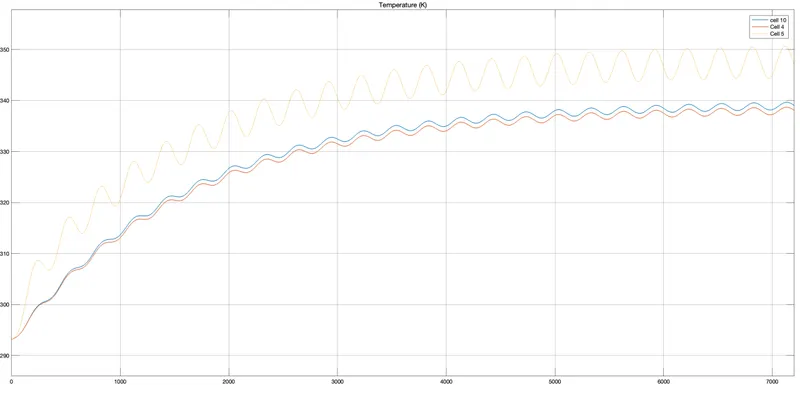
The following results for test 3 at 307k
Observations:
We applied different temperatures of 293K and 300K and 307K.
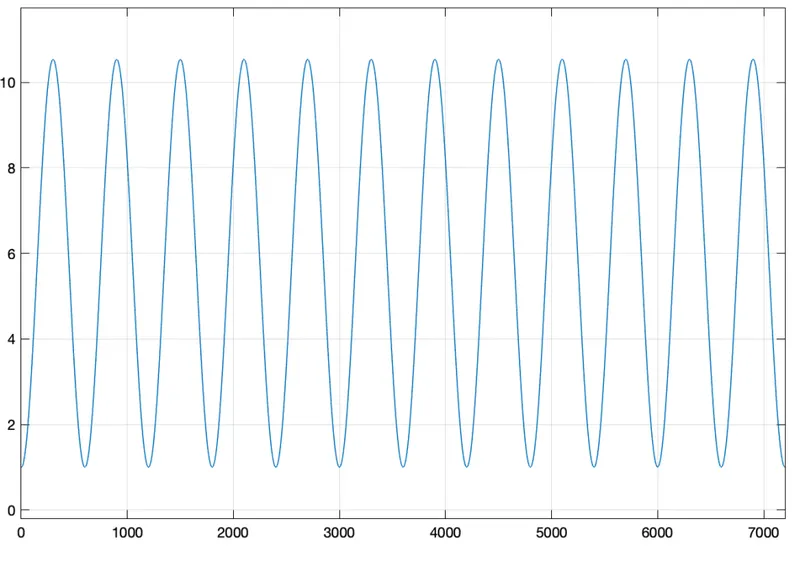
We found the variation in temperature of faulty cell with the remaining cells, and the charging and discharging curve of the battery pack.
There is not much difference in the no. of cycles at each temperature.
There is a 7.5K temperature difference is there between healthy and faulty cell temperatures.
As we set fault in cell-5 and we can see that there is lots of fluctuation and temperature rise in cell-5 as compared with other cells connected in series.
SOC for all different temperature is same, there is no changes in SOC
As charging and discharging go on the temperature of the overall battery pack is increasing over time.
if we increase the temperature source value the rate of increase of temperature is also raised.
At 293K, the healthy cells reach 325K and faulty cells reach 337.5K.
At 300K, the healthy cells reach 332.5K and faulty cells reach 343K.
At 307K, the healthy cells reach 337.5K and the faulty cell reaches 350K