Project 2 Thermal modeling of battery pack
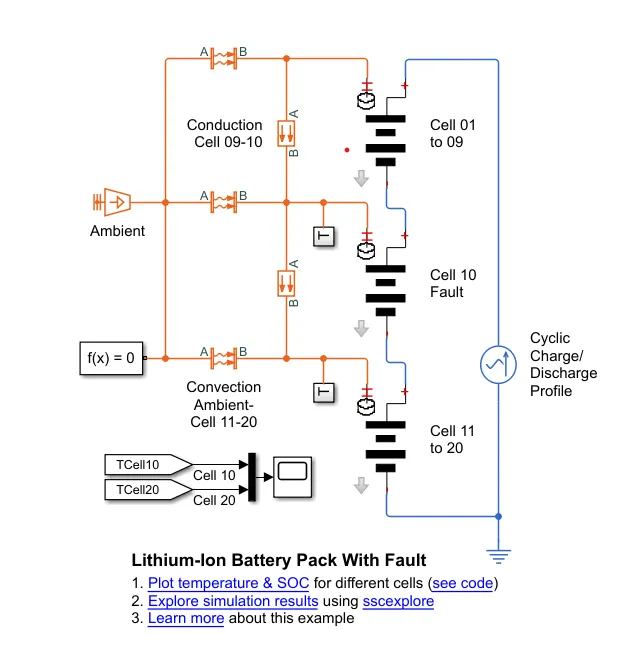

Description
The Temperature Source block represents an ideal source of thermal energy that is powerful enough to maintain specified temperature at its outlet regardless of the heat flow consumed by the system.
The source generates constant absolute temperature, defined by the Temperature parameter value.
 \
\
Thermal Elements

Description
The Convective Heat Transfer block represents a heat transfer by convection between two bodies by means of fluid motion. The transfer is governed by the Newton law of cooling and is described with the following equation:
Q=k·A·(TA−TB)
where
| Q | Heat flow |
| k | Convection heat transfer coefficient |
| A | Surface area |
| TA,TB | Temperatures of the bodies |
Connections A and B are thermal conserving ports associated with the points between which the heat transfer by convection takes place. The block positive direction is from port A to port B. This means that the heat flow is positive if it flows from A to B.

Description
The Conductive Heat Transfer block represents a heat transfer by conduction between two layers of the same material. The transfer is governed by the Fourier law and is described with the following equation:
Q=k·AD(TA−TB)
where
| Q | Heat flow |
| k | Material thermal conductivity |
| A | Area normal to the heat flow direction |
| D | Distance between layers (thickness of material) |
| TA,TB | Temperatures of the layers |
Connections A and B are thermal conserving ports associated with material layers. The block positive direction is from port A to port B. This means that the heat flow is positive if it flows from A to B
Electrical Sources

Description
The AC Current Source block represents an ideal current source that maintains sinusoidal current through it, independent of the voltage across its terminals.
The output current is defined by the following equation:
I=I0⋅sin(2π⋅f⋅t+φ)
where
| I | Current |
| I0 | Peak amplitude |
| f | Frequency |
| φ | Phase shift |
| t | Time |
The positive direction of the current flow is indicated by the arrow.
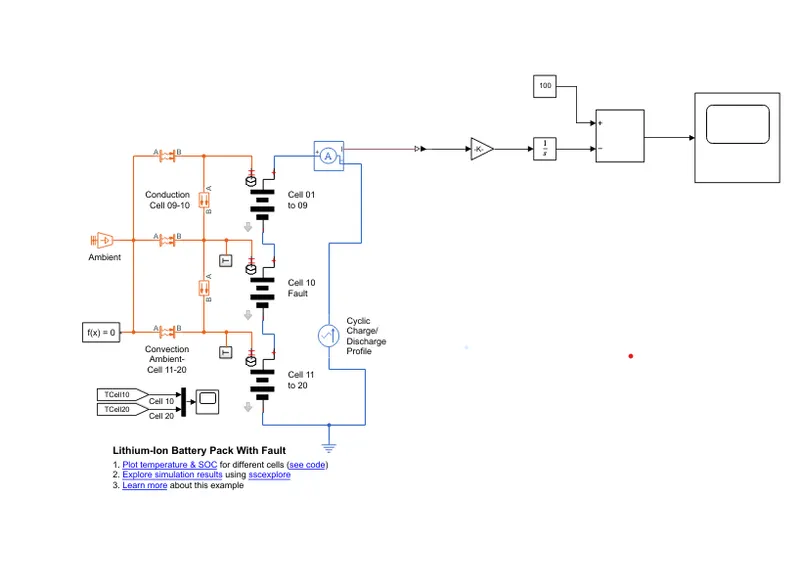
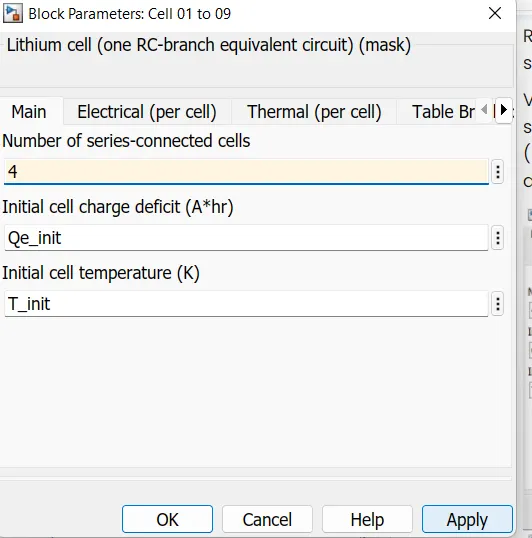
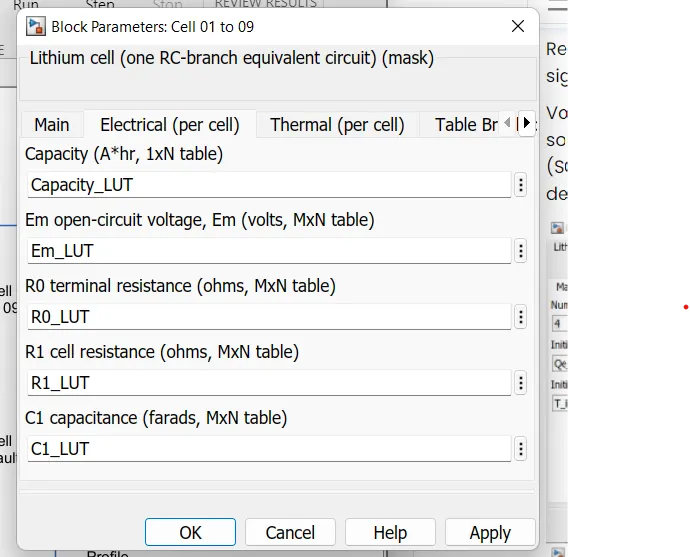
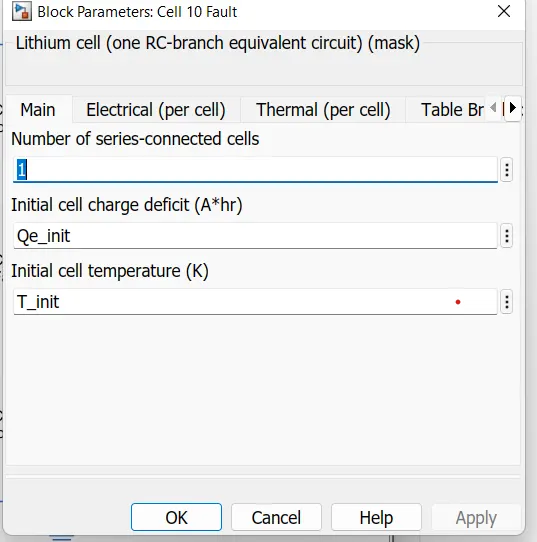
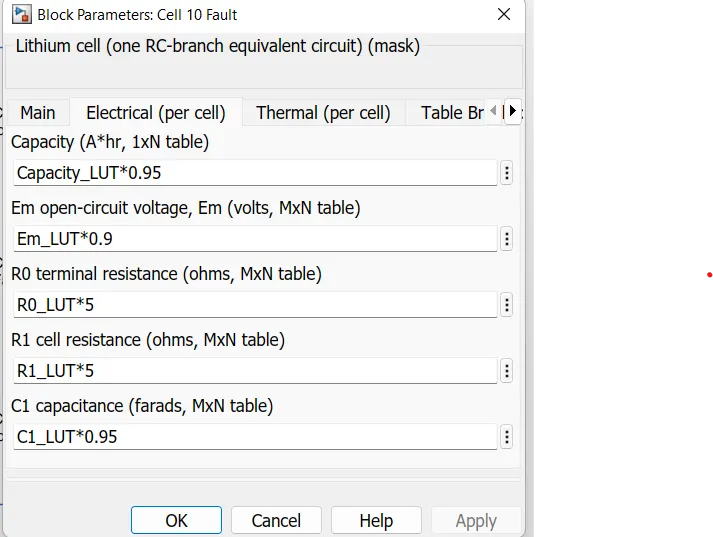
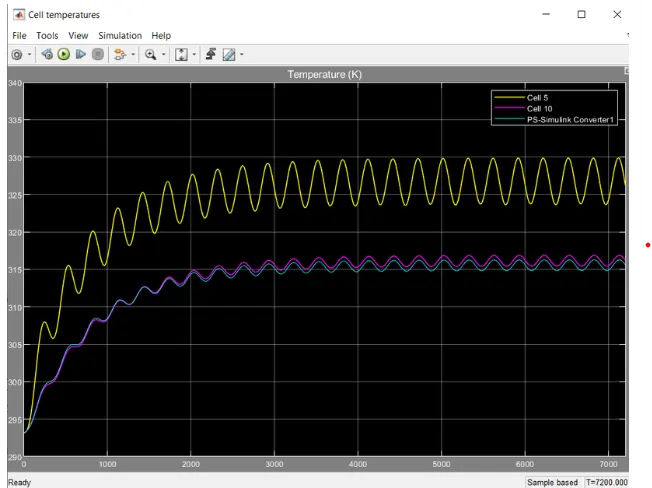
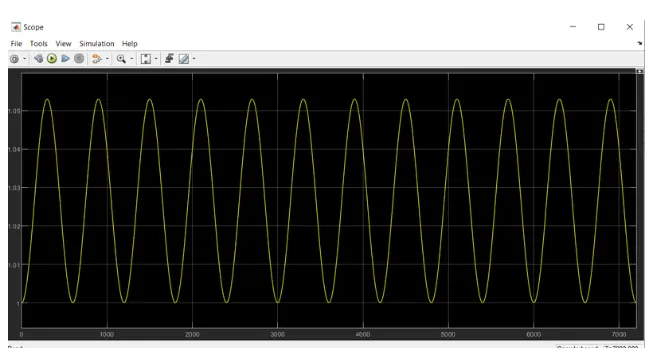
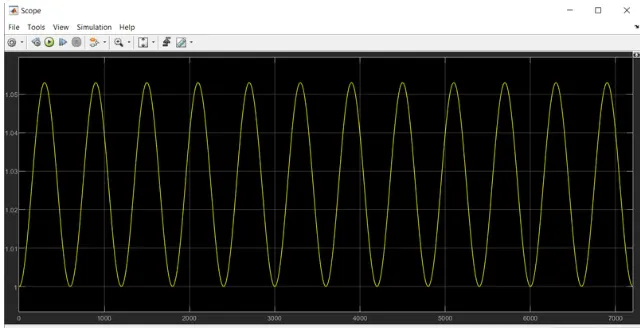
2)scope results at 310k
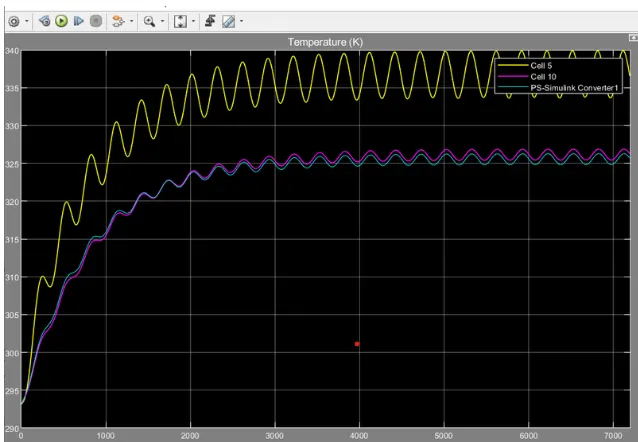
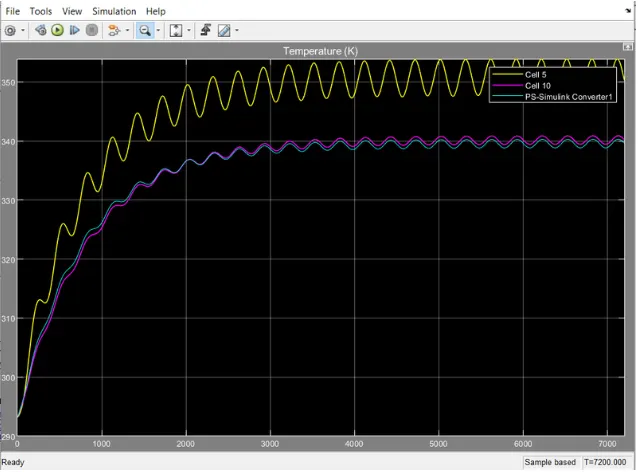
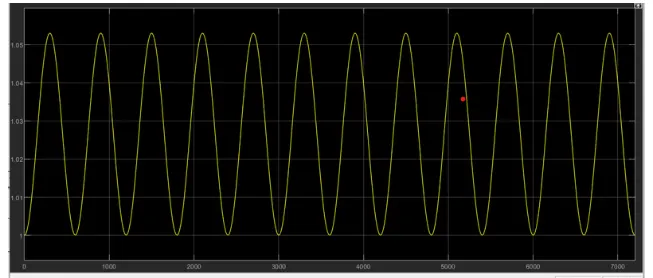
3)results at 324k
 conclusion:
SIMULATION of thermal effect and comapred at various tempretures faulty cell tempreture rise more than normal cell charger and discharge cycle and due to tempreture rise it can damage the cell and reduce the performance of the battery.