Project 2 Thermal modeling of battery pack
The Model is taken out of ecample models present in the help menu
This example shows how to simulate a battery pack consisting of multiple series-connected cells in an efficient manner. It also shows how a fault can be introduced into one of the cells to see the impact on battery performance and cell temperatures. For efficiency, identical series-connected cells are not just simply modeled by connecting cell models in series. Instead a single cell is used, and the terminal voltage scaled up by the number of cells. The fault is represented by changing the parameters for the Cell 10 Fault subsystem, reducing both capacity and open-circuit voltage, and increasing the resistance values.
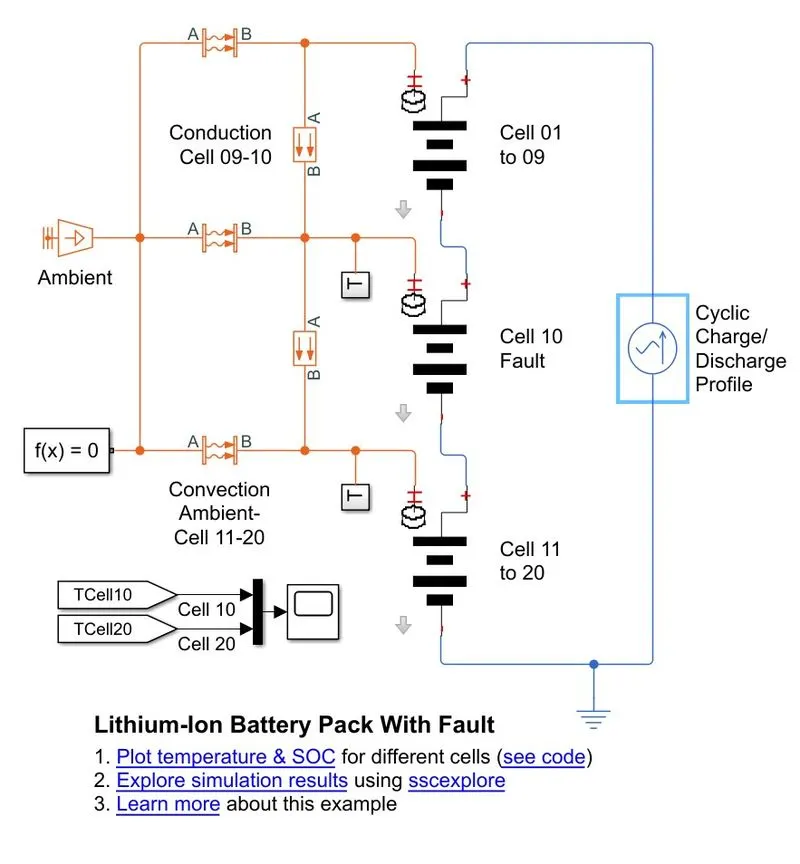
To the above default model , some changes are made to solve the requirements of the question.
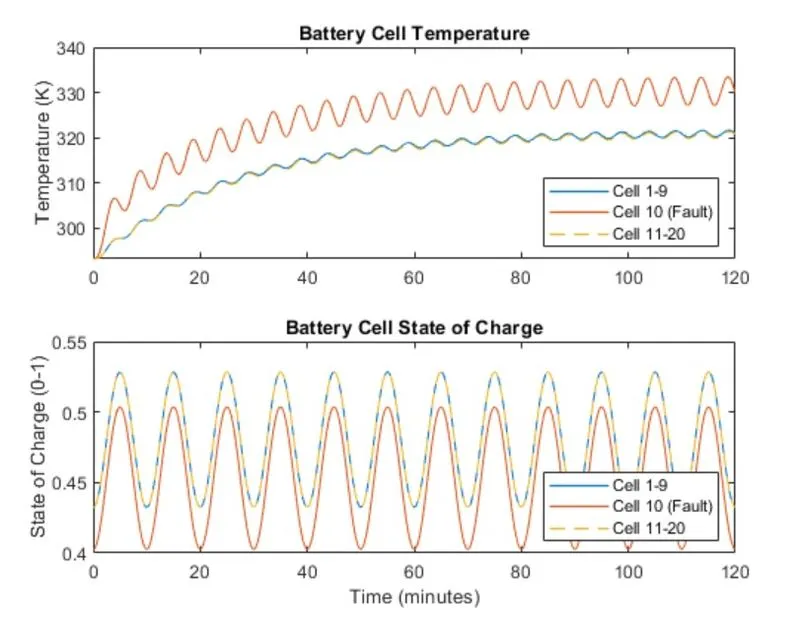
From the above graphs , we can study and understand how the model is simulated and analised for a faulty cell . we can see how the SOC levels drop and the temperature fluctuations.
Methode:
- 10 lithium ion battery cell availabe in the labrary are connected.
- 3 packs are made out of which one is maded to be a defective cell.
- this is done by changing cell configuration of the cells to model a defective one .
- the heat transfer between the packs is observed
- T subsystem is attached to ever cell. this is used to detect the temperature .
- The T subsystem is modified to plot the temperature plots also .
- the battery pack is connected to an AC power supply and the observations are made for cyclic charge and discharge .
- The plots are also made. using the scope to plot the SOC and cell temperatures .
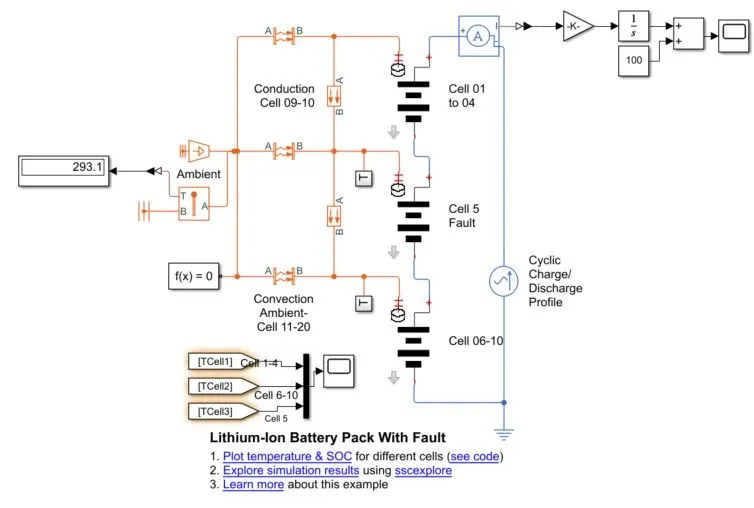
description of tools used:
T sub system :
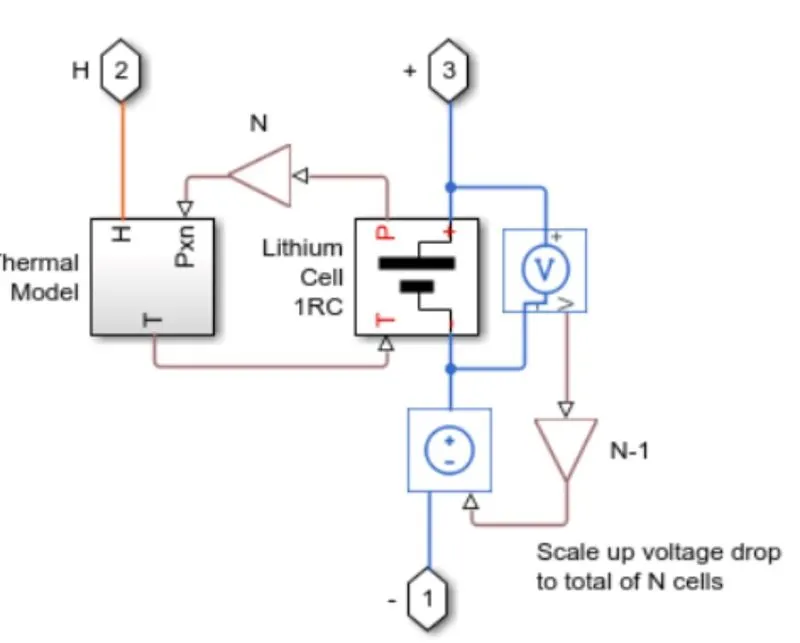
To make up for the defective cell a voltage block is simulated to cause fulctauations .
The system consists of , thermal model, lithium cell, voltage control and a thermal model sub system , and gains.
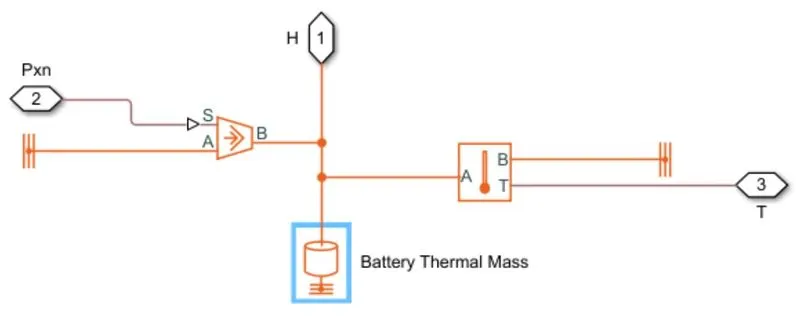
Thermal model block this is the same as in the orginal model . it contains the temperature sensor, source and the thermal reference and the input from the batteries, to this in addation the previous sub system is connected .
Thermal reference:

This is used to indicate a point with absolute 0
Control heat flow:

The specific heat flow is given and is the ideal temperature source.
Thermal mass:

This represents the ablity of the material to store the internal energy.
Temperature sensor.
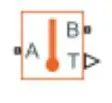
This is like the device that is measuring the temperature and is an ideal sensor
temperature source:

This represents the constant source of the thermal energy.
Heat transfer:

The methode by which heat transfer occures can be specified
Electrical source:

The AC current source is represented hear.
Electrical sensor:

The ideal current sensing element . it detects the flow of current in amps , or the voltage sensor is used for detemining the potential flow of current.
Electrical reference :

This represents the ground for the current flow .
Lithium ion cells:

this represents the cell that will be used. the voltage current and fault indications can be configured .
SOC calculation:
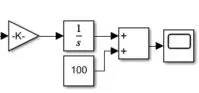
This system is used to make the State of charge calculations. gain is the current/capacity and that integrated gives the % value of the soc
Modeled parameters:
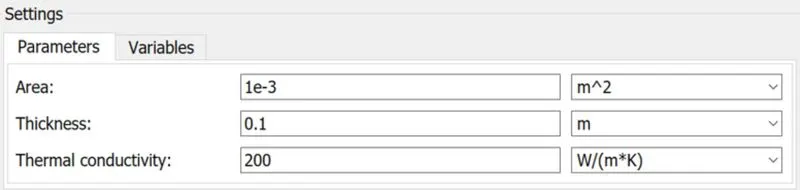
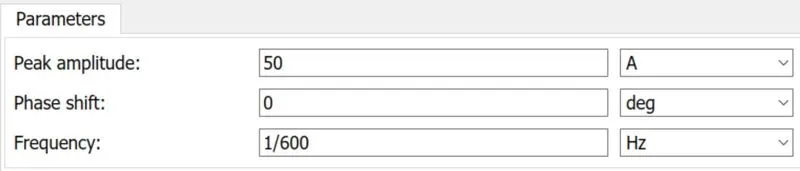
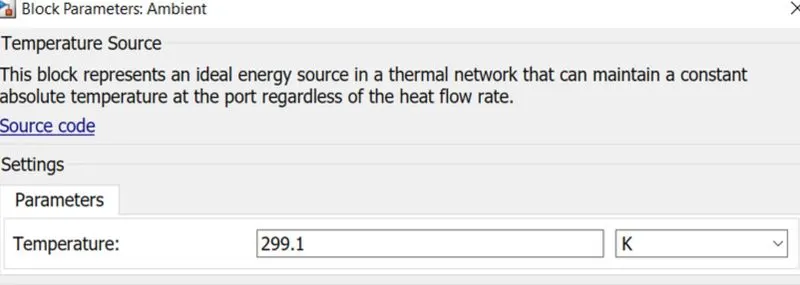
Cell stack(1)
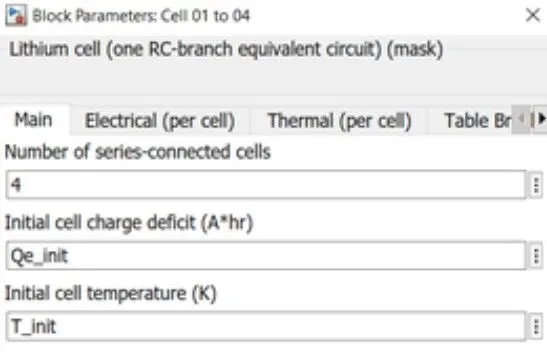
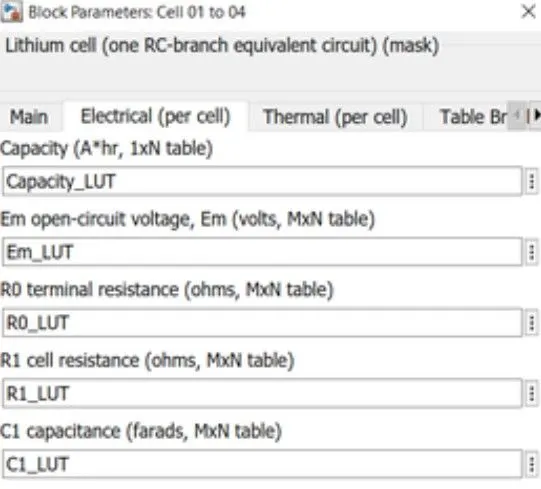
Cell stack(2)
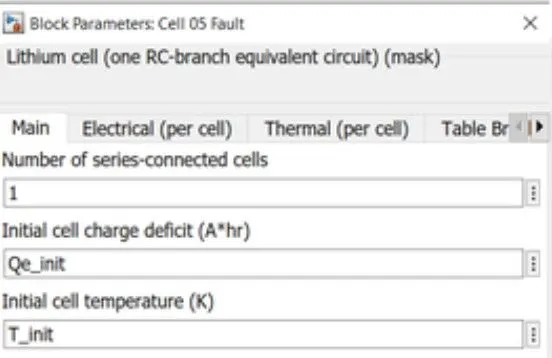
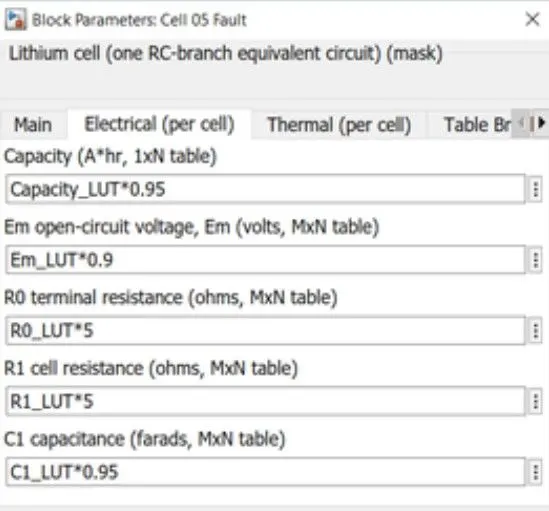
Cell stack(3)
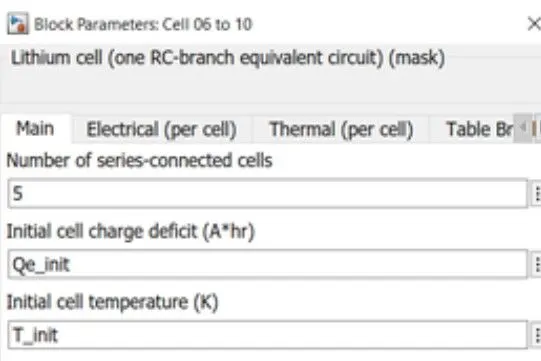
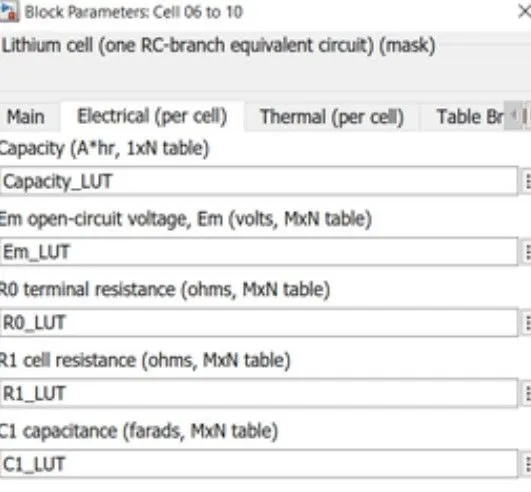
Results :
cell temp 299
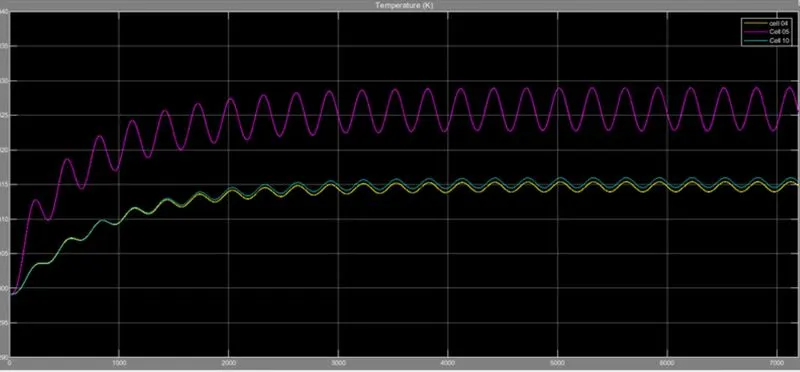
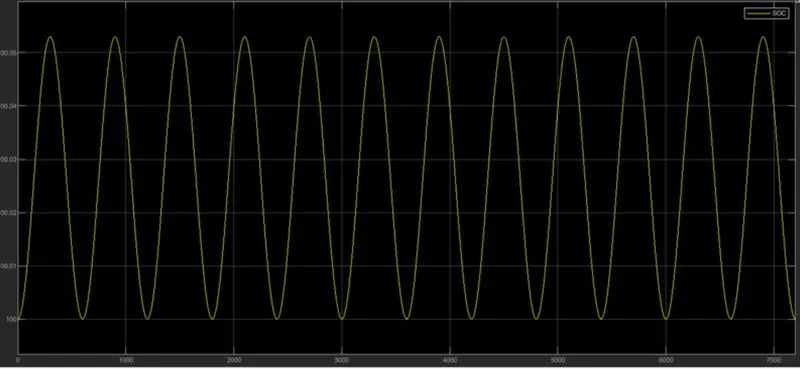
cell temp 310 cell temp 350
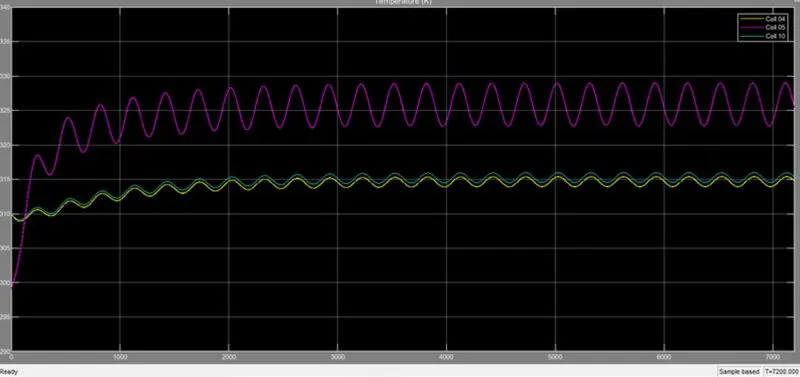
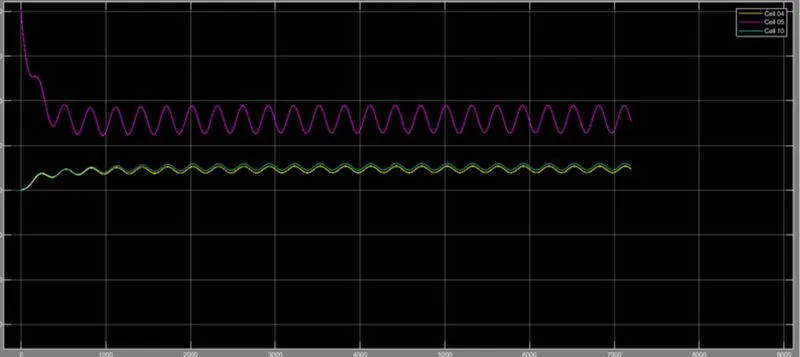
From the above graphs, all the cell start off at the same temperature.
Then as the analysis progresses, in a few seconds after , cell no 5 which is set to be faulty statrts to oscilate and unlike the other two stacks which are fairly stable and follow a similar oscilation patter withing the same range .
Thus we see that after about 20 to 30 min we see that the temperature goes as high as 330 K .
Based on the known relations of the flow of current and its effects of heat .
There is a decrease in the flow of heat at the constant and min temps .
There are no significant canges for the SOC value