Project 2 - Supply and Demand Gap Analysis
Project Cab Services
Aim:
The primary aim of the "Cab Services" project is to conduct a thorough analysis of Uber ride-sharing data to identify patterns and optimize service efficiency. The overarching goal is to increase the profitability of the cab services by leveraging data-driven insights. Through comprehensive analysis and strategic recommendations, the project aims to enhance operational efficiency, reduce service disruptions, and ultimately contribute to the financial success of the cab service business.
Introduction:
The "Cab Services" project is geared towards optimizing Uber ride-sharing operations through data analysis. With a focus on increasing service efficiency and profitability, this initiative dives into the wealth of data generated by Uber. The project aims to uncover patterns and trends that can inform strategic decisions, ultimately elevating the overall quality of cab services. This introduction sets the stage for exploring the project's significance, methodology, and the user-centric approach adopted to enhance the ride-sharing experience.
Problem Statement:
Inefficiencies in Service Delivery:
- Suboptimal allocation of resources leading to increased waiting times and potential revenue loss.
Cancellation Rates:
- High cancellation rates impacting both user satisfaction and the service provider's earnings.
Unmet Demand
- "No Cars Available" scenarios during peak hours, causing a potential loss of revenue and user dissatisfaction.
Addressing these challenges is crucial for improving the overall efficiency and profitability of cab services. The "Cab Services" project aims to pinpoint and resolve these issues through a targeted, data-driven approach.
Methodology:
Data Collection:
· Gather comprehensive Uber ride-sharing data, encompassing trip details, user interactions, and service performance metrics.
Data Cleaning and Preprocessing:
· Cleanse and preprocess the data to eliminate inconsistencies, missing values, and outliers.
Exploratory Data Analysis (EDA):
· Conduct EDA to unveil patterns, trends, and correlations within the data.
Hourly Analysis:
· Segment data into hourly intervals to pinpoint peak demand hours and operational challenges.
Performance Metrics Calculation:
· Calculate key metrics, including completion rates, cancellation rates, and instances of "No Cars Available."
User Behaviour Analysis:
· Analyse user behaviours during different hours, emphasizing preferences and factors contributing to cancellations.
Pattern Recognition:
· Utilize advanced analytics to identify patterns and anomalies in the data.
Strategic Recommendations:
· Develop actionable recommendations based on insights derived from the analysis to enhance service efficiency and drive profitability
Analysis:
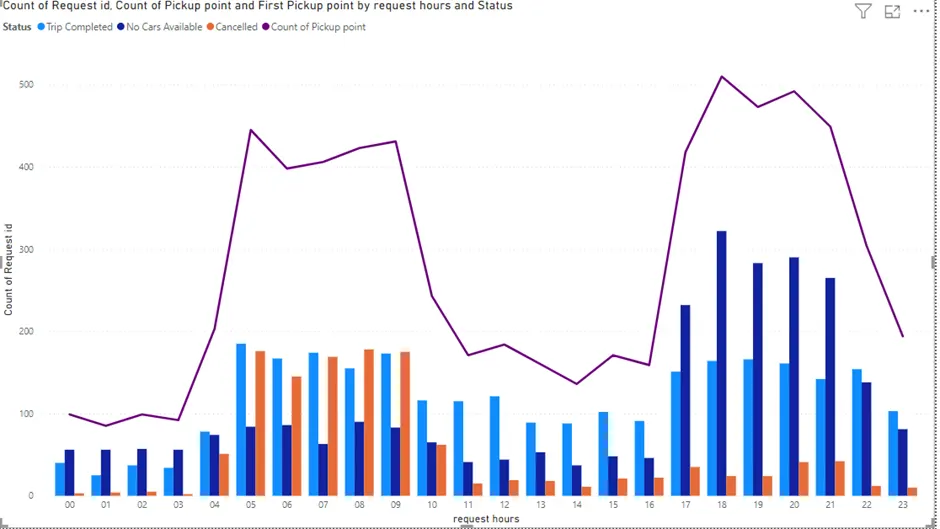
Distinct Patterns by Hour:
· The analysis reveals specific patterns during different hours, impacting service dynamics.
00-03 Hours:
· Fewer cancelled trips suggest a period of lower demand during these early hours.
04-10 Hours in the City:
· High demand observed with a balanced completion and cancellation rate in city areas.
10-16 Hours:
· Requests are decreasing during these hours, indicating a potential need for further investigation into factors influencing demand.
17-23 Hours at the Airport:
· Significant demand identified at the airport during evening hours.
· Low cancellations highlight genuine demand, but a critical issue of "No Cars Available" poses a challenge.
These hour-specific insights lay the foundation for targeted recommendations to address challenges and capitalize on opportunities for improvement within the cab services.
Insights:
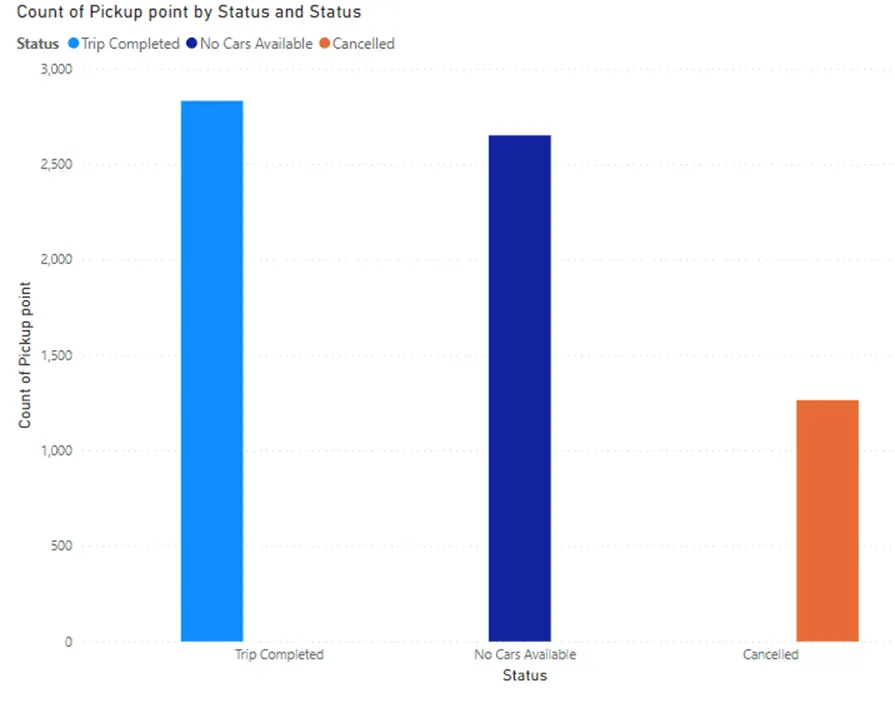
Hourly Demand Patterns:
· Introduction of the "request hours" column allows for a nuanced analysis of varying demand patterns throughout the day, emphasizing the need for hour-specific strategies.
City Demand Surge (04-10 Hours):
· City areas witness a substantial surge in demand during 04-10 hours, creating an opportunity for optimizing service utilization in these high-demand periods.
Decreased Requests (10-16 Hours):
· The observed decrease in requests during 10-16 hours signals a potential need for further investigation into underlying factors such as user behavior or market dynamics affecting demand.
Airport Demand Challenges (17-23 Hours):
· The significant demand at the airport during evening hours is overshadowed by the critical issue of "No Cars Available," highlighting a service coverage gap that needs addressing.
Efficient Resource Allocation (04-10 Hours in the City):
· Balanced completion and cancellation rates during high-demand city hours suggest efficient resource allocation, indicating a well-managed service operation.
Low Cancellation Rates at Airport (17-23 Hours):
· Low cancellation rates at the airport during evening hours indicate genuine demand, underscoring the importance of addressing the challenge of "No Cars Available" to meet this demand effectively.
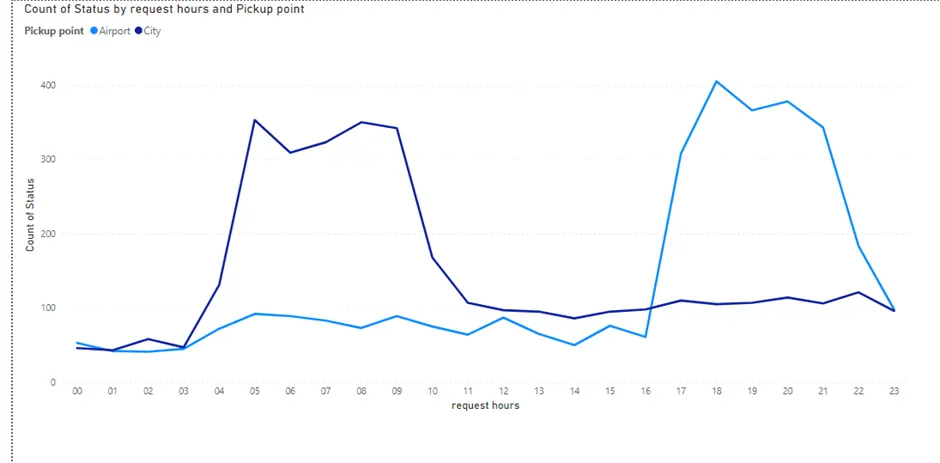
User-Centric Demand Shaping:
· Insights emphasize the pivotal role of user preferences and behaviours in shaping demand patterns, signalling the importance of user-centric strategies.
Strategic Fleet Management in Peak Hours:
· The data strongly emphasizes the strategic management of the fleet, particularly during peak hours, as a key factor in meeting user demand and maximizing overall service efficiency.
These insights lay the groundwork for data-informed decision-making and the development of targeted strategies to enhance the overall performance and profitability of the cab services.
Recommendations:
· Provide incentives for airport trips during peak time.
· Assigning few extra cabs specially to the airport trips.
· Fixing a base price for drivers idle time in the airport or to come back to the city without any passenger.
· Impose penalty for cancellation of requests by the drivers. Set a threshold for the maximum cancellation per day.
· Promote continuous trip to airport with incentives.
· Promote advance booking to airports and at the same time keeping drivers updated with the flight schedule will help them plan their work and they can accept the request as per their work plan.
Conclusions:
The analysis of Uber ride-sharing data underscores the significance of hourly insights for strategic decision-making. City areas witness increased demand from 04-10 hours, suggesting an opportunity for optimized service utilization. However, challenges persist at the airport during 17-23 hours, marked by the critical issue of "No Cars Available."
Efficient resource allocation is evident from balanced completion and cancellation rates in high-demand city hours, emphasizing the importance of strategic fleet management. User-centric strategies are crucial, recognizing the impact of user preferences on demand patterns.
In conclusion, actionable recommendations include dynamic fleet management, driver incentives, and real-time user notifications. Continuous monitoring and collaboration with drivers are essential for ongoing improvements, aiming to enhance service efficiency and profitability in the cab services domain.