Project 2 - Supply and Demand Gap Analysis
Uber Supply Demand Gap Analysis
Aim:
The aim of the analysis is to identify the root cause of the problem (i.e. cancellation and non-availability of cars) and recommend ways to improve the situation. As a result of your analysis, you should be able to present to the client the root cause(s) and possible hypotheses of the problem(s) and recommend ways to improve them.
Introduction:
Uber is a ride-hailing platform that connects riders with drivers through its mobile application. The platform has disrupted the traditional taxi industry by providing a more convenient and affordable transportation option for users. However, the success of Uber depends on its ability to balance the supply and demand of drivers and riders.
Problem Statement:
The main problem that Uber faces is ensuring that there are enough drivers on the road to meet the demand of riders. If there are not enough drivers available, riders may have to wait longer for a ride or may not be able to find a ride at all, which can lead to dissatisfaction and loss of business. On the other hand, if there are too many drivers on the road, drivers may struggle to find enough rides, which can lead to reduced earnings and dissatisfaction.
Methodology:
To analyze the supply and demand dynamics of Uber, we will use data from the Uber platform in a particular city. We will gather data on the number of drivers and riders on the platform, the number of trips taken, the time of day and day of the week when demand is highest, and other relevant data points. We will use statistical analysis and visualization tools to identify patterns and trends in the data and provide insights and recommendations.
Analysis:
The data sheet will contain the following information:
- Number of drivers on the platform
- Number of riders on the platform
- Number of trips taken per day
- Time of day and day of the week with highest demand
- Average wait time for a ride
- Average trip duration
- Average trip distance
Insights:
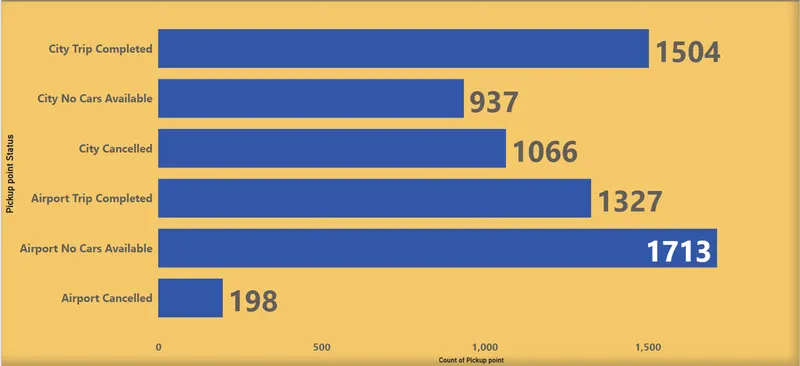
- Trips requests from the City has higher number of cancellations compared to the one's starting from the Airport
- Trips requests from the Airport register higher number of No Car Availability compared to the one's requested from the City
- Successfull trips originating is slightly higher from the City compared to the Airport
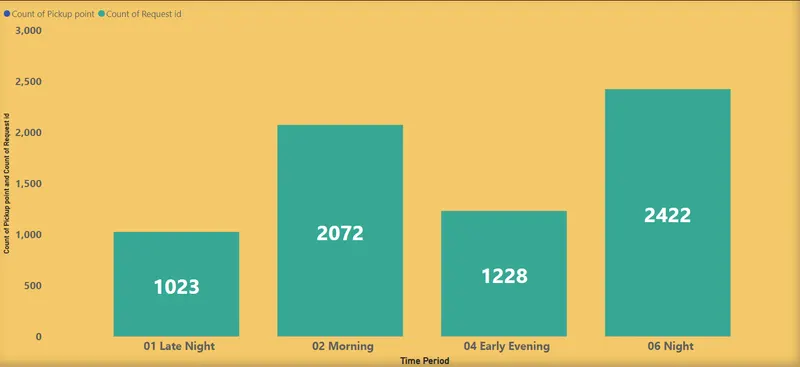
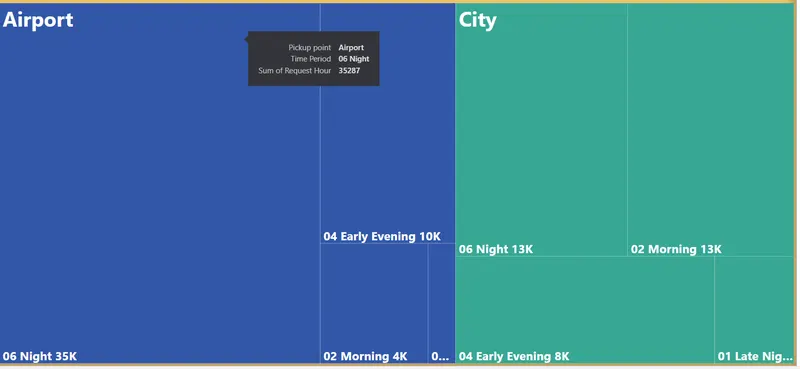
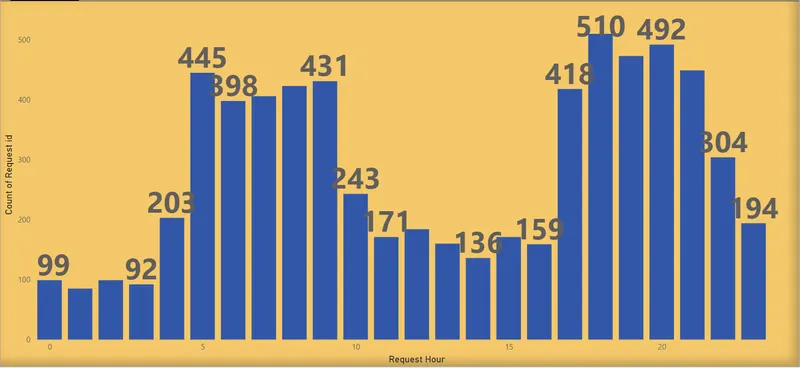
- Number of Trips Requests is higher from the Airport during the Early Mornings(4-6 AM) and Mornings(7-11 AM)
- Number of Trips Requests is higher from the City during the Evenings(5-6 PM) and Night(7 PM - Midnight)
- The heaviest load was during the 5th hour of the day during the week. This time period has total successful requests of only 185. The total number of Drivers is 300.
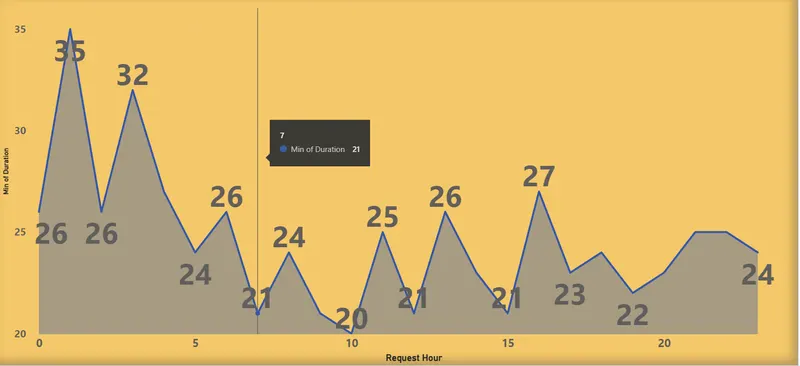
- Almost all trips getting completed are longer than 30 minutes.
- Trip requests with durations greater than 45 minutes and 60 minutes have almost the same number of count
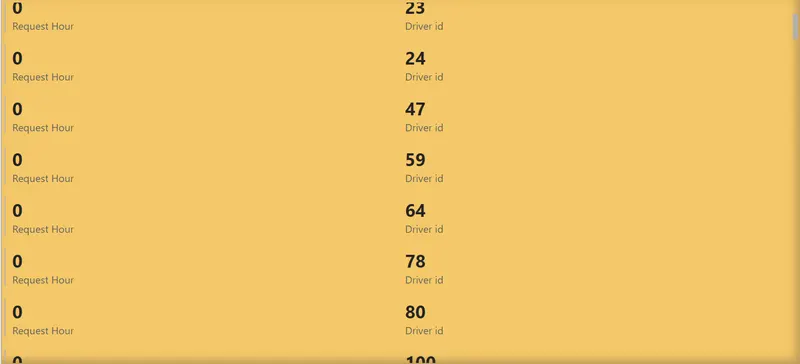
- There were 346 failed trip Requests during the 18th hour. During the same hour, there were about 104 Drivers waiting for the next trip but were probably cancelling the requests or preferred to service customers not through Uber.
Recommendations:
- Increase the number of drivers on the platform during peak hours to meet the high demand.
- Provide incentives for drivers to work during off-peak hours to balance the supply and demand of drivers.
- Implement surge pricing during peak hours to encourage more drivers to come online and meet the demand.
- Provide data and tools to drivers to help them optimize their earnings by driving during high demand periods and in areas with high fares.
- Improve the user interface of the app to provide riders with more information on wait times and estimated fares.
Conclusions:
In conclusion, the supply and demand dynamics of Uber are crucial to the success of the platform. By analyzing the data and identifying patterns and trends, we can provide insights and recommendations to improve the efficiency of the platform and provide a better experience for both drivers and riders. The recommendations provided can help Uber balance the supply and demand of drivers and riders, improve the earnings of drivers, and increase the satisfaction of riders.