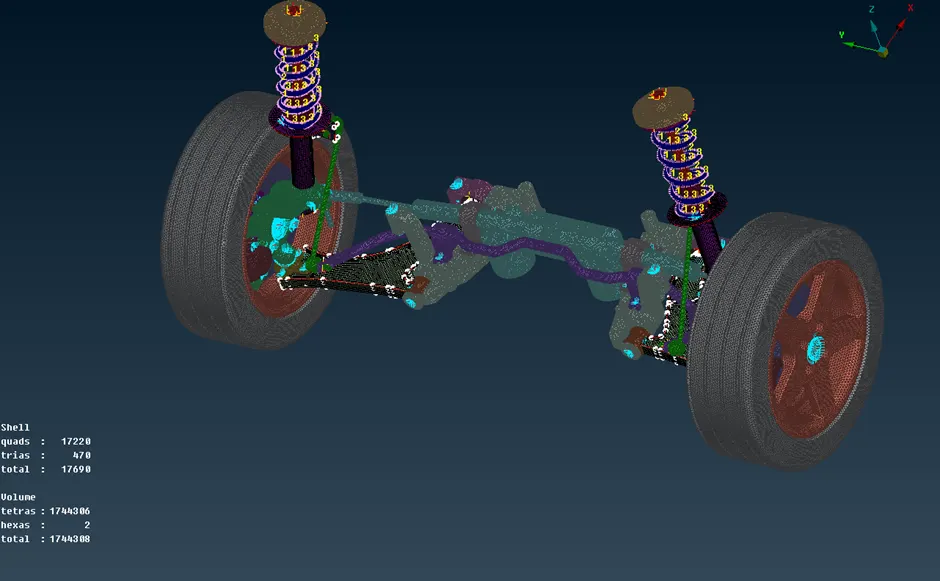
Project - 2 - Meshing on the suspension Assembly
AIM:
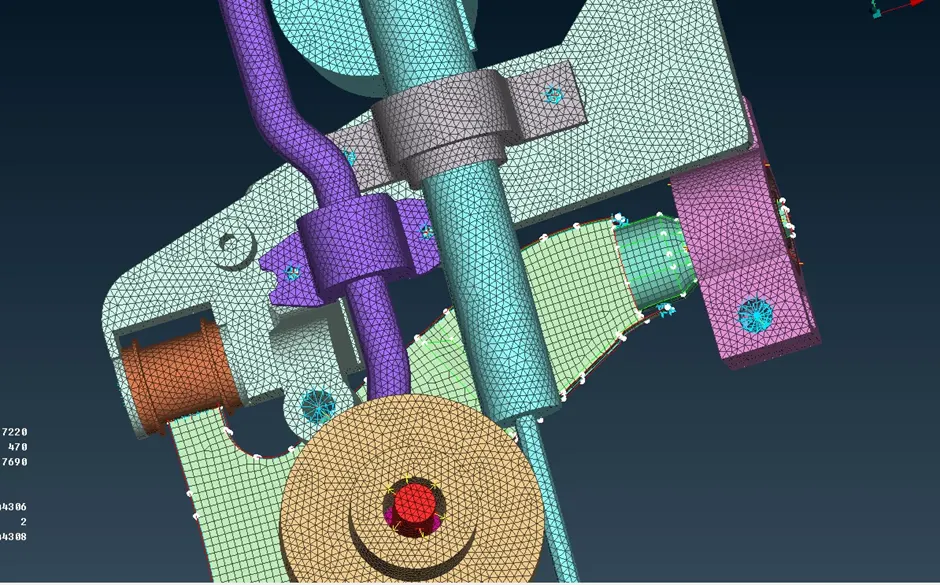
Extracting FE Model from given suspension system CAD model and deploying required connection to connect all sub-assemble part for NVH Analysis from NASTRAN Deck module.
OBJECTIVE:
- Geometry clean-up and fixing topological errors of model
- Assigning PID to all different of model.
- Construction line adjustment and defeaturing.
- Mid surface extraction for components having uniform thickness less than 5mm.
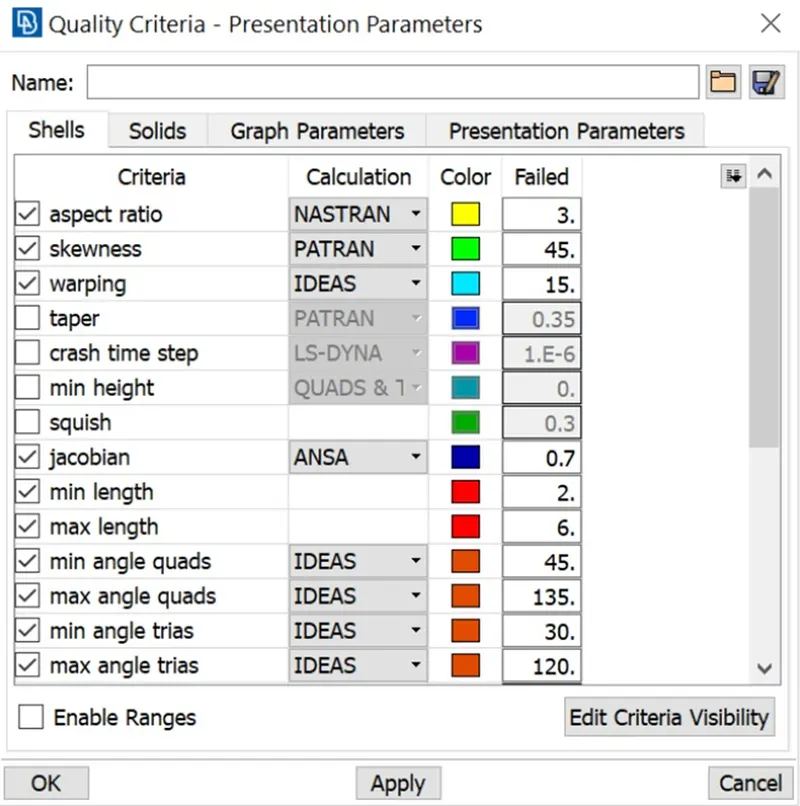
- Quality criteria and mesh parameter setup.
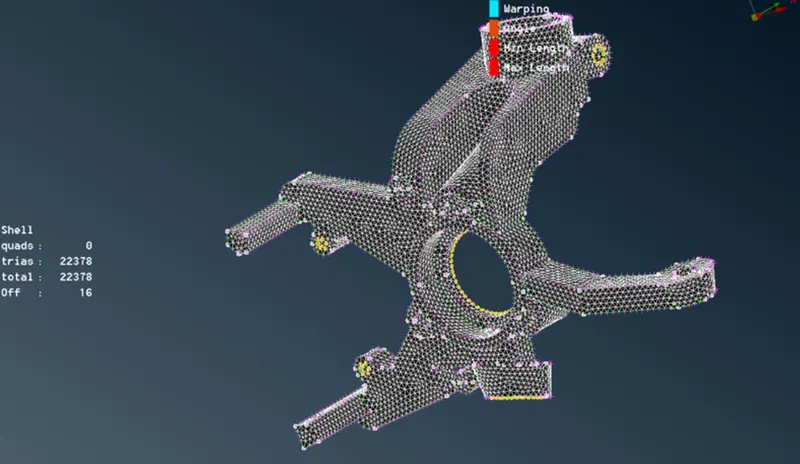
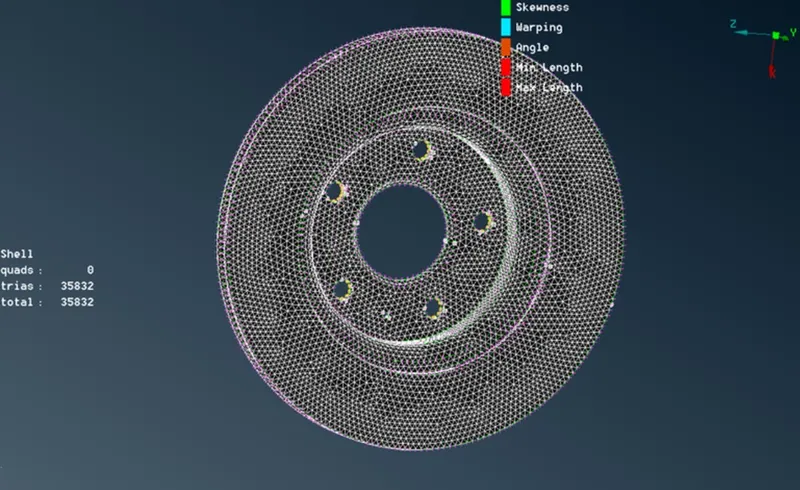
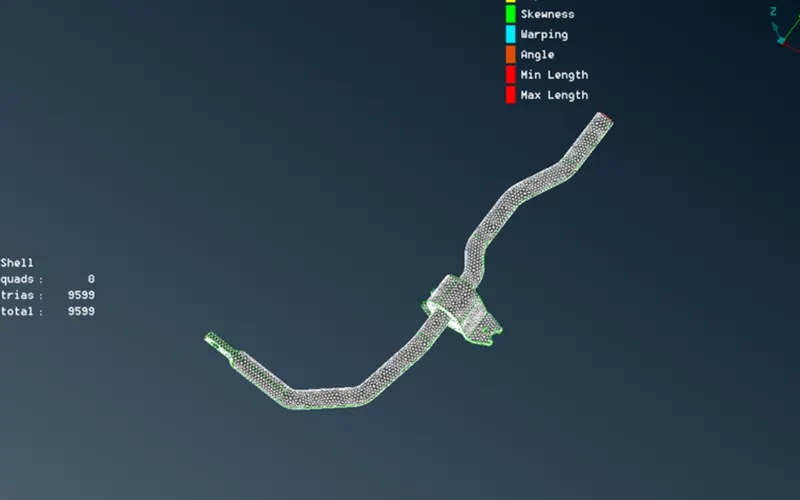
- 2D mesh Generation and thickness assignment.
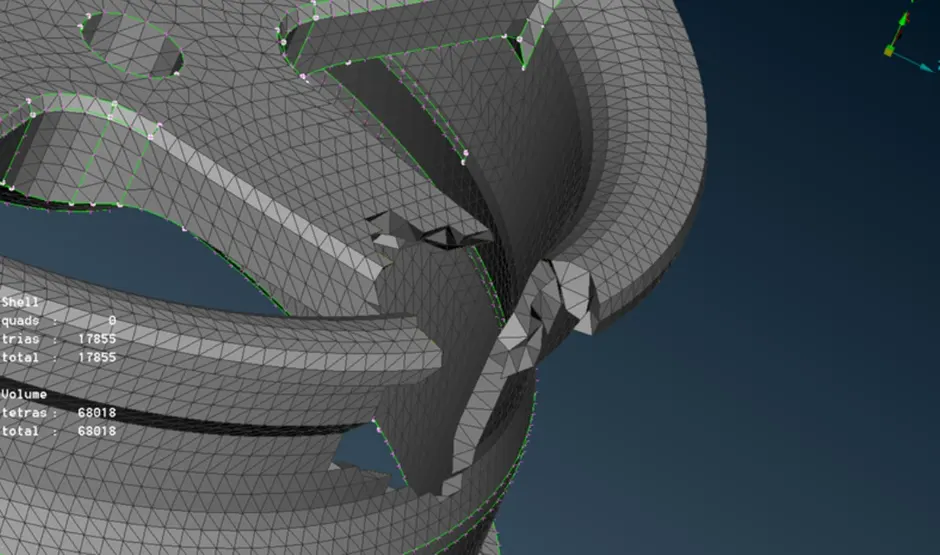
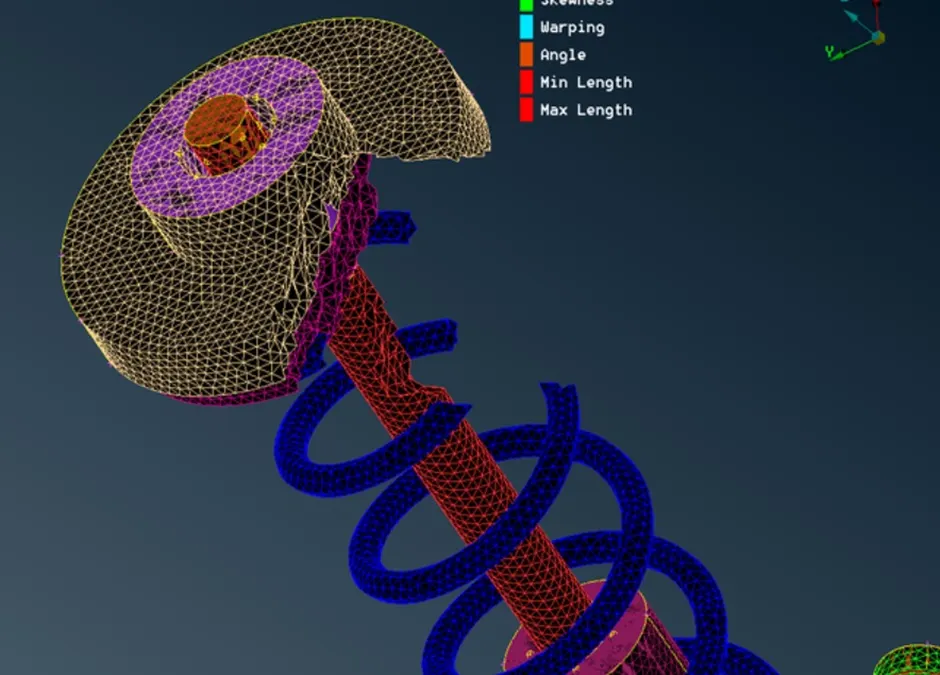
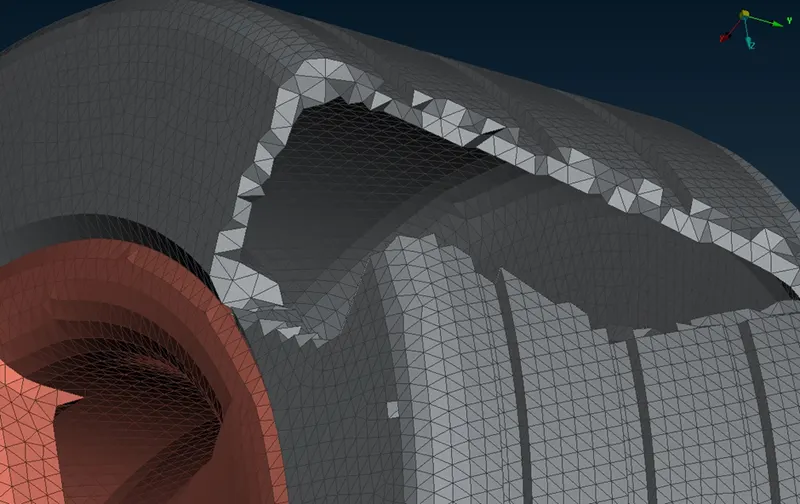
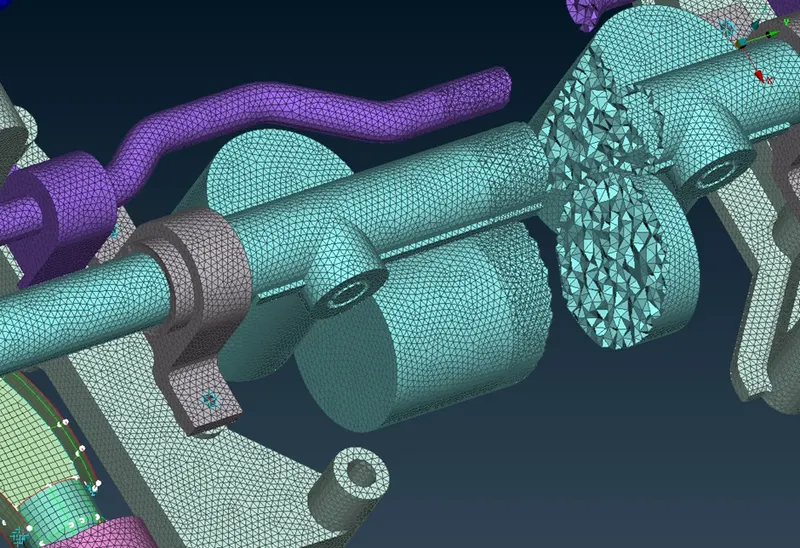
- Defining close volume and 3D Mesh generation.
- Implementation of connection wherever required with respect to CAD details.
QUALITY PARAMETERS
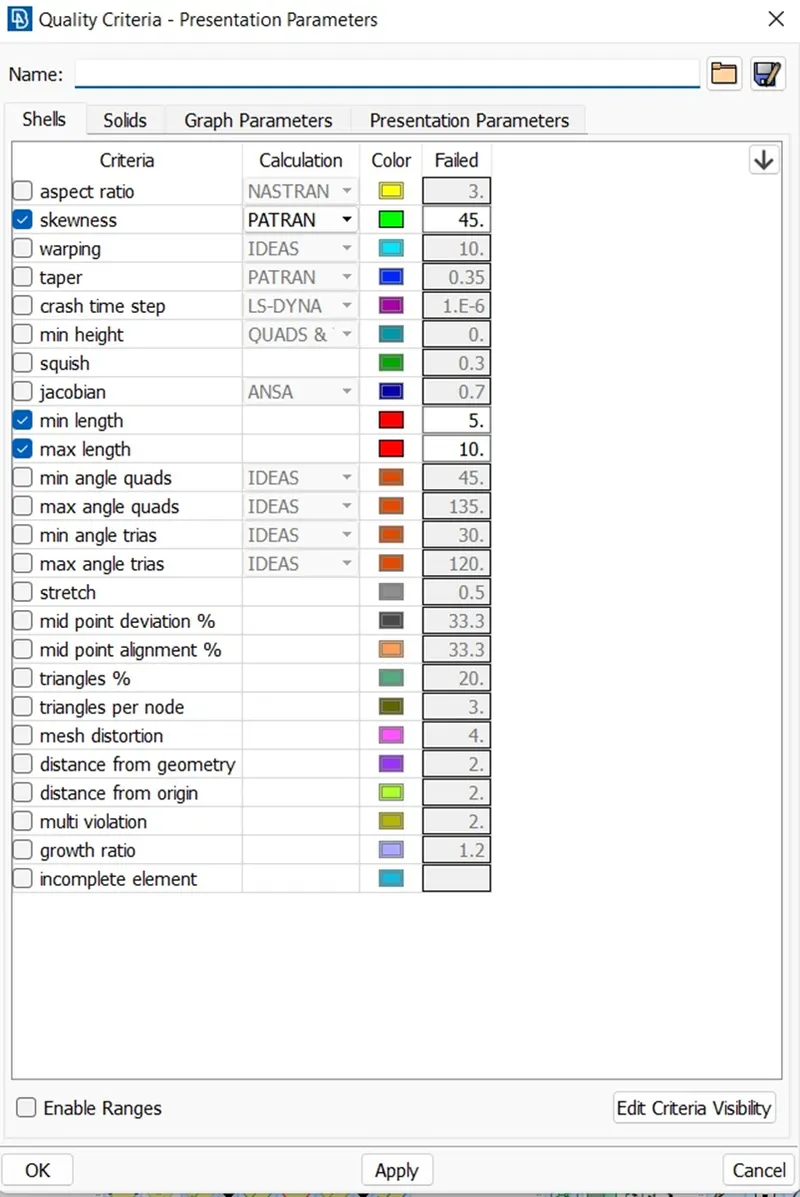
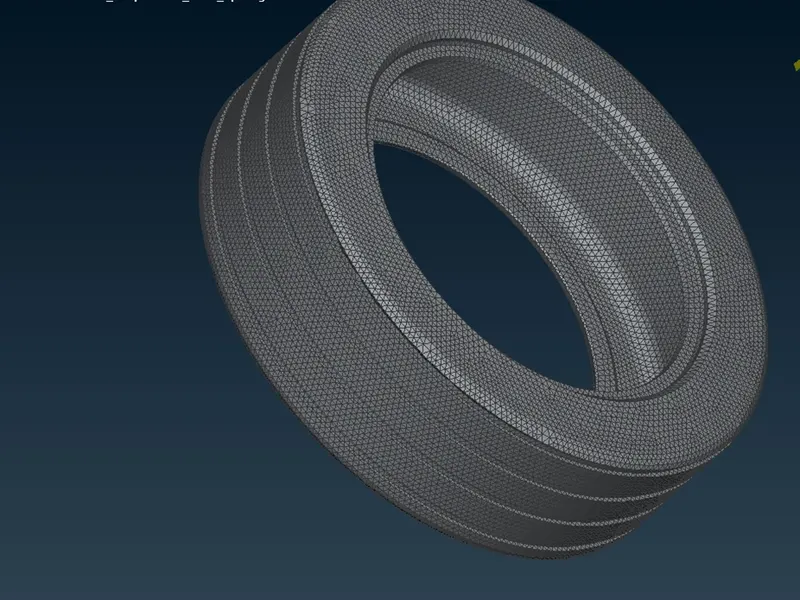
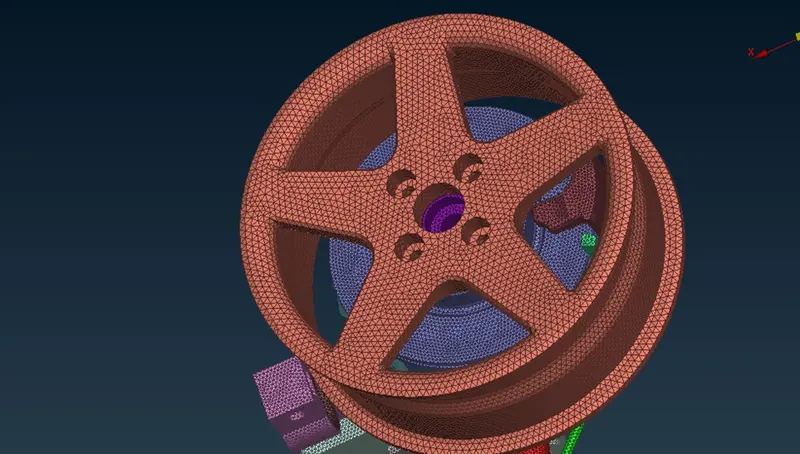
Quality Criteria for Surface Meshing of Tyre and Rim (Element type: Tria) :
|
S.No |
Quality Criteria |
Value |
|
1 |
Target/Average length |
6.5 |
|
2 |
Minimum Length |
5 |
|
3 |
Maximum Length |
10 |
|
4 |
Skewness |
45 |
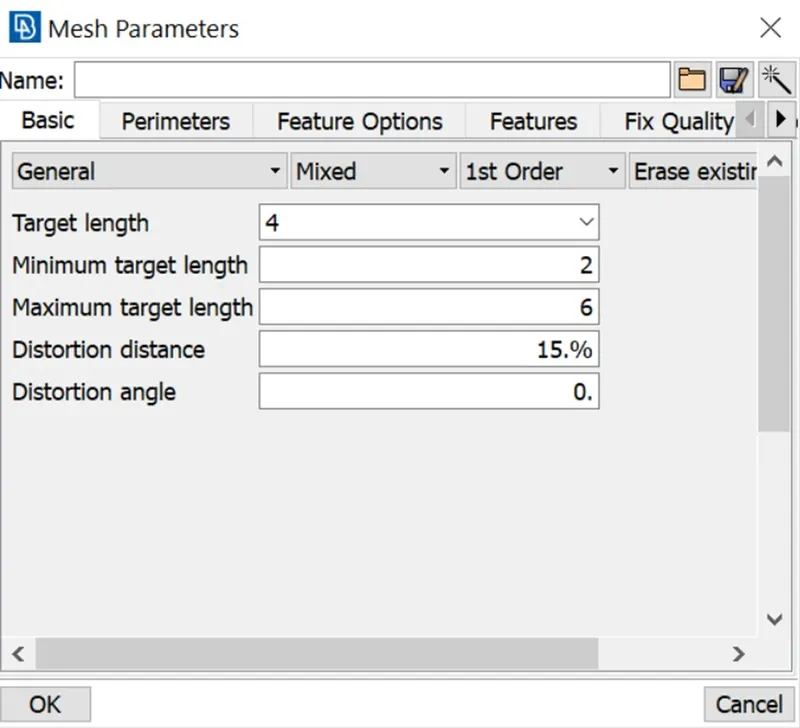
Quality criteria for Surface Meshing of Non Uniform thickness components other than Tyre and Rim (Element type: Tria) :
|
S.No |
Quality Criteria |
Value |
|
1 |
Target/Average length |
4 |
|
2 |
Minimum Length |
2 |
|
3 |
Maximum Length |
6 |
|
4 |
Skewness |
45 |
Quality Criteria for Volume meshing of all Non Uniform thickness components (Element type: Tetra Elements):
|
S.No |
Quality Criteria |
Value |
|
1 |
Tet-collapse |
0.2 |
Quality criteria for Mid surfacing of Uniform thickness part which has thickness less than 5 mm (Element type: Mixed elements) :
|
S.No |
Quality Criteria |
Value |
|
1 |
Target/Average length |
4 |
|
2 |
Minimum Length |
2 |
|
3 |
Maximum Length |
6 |
|
4 |
Aspect |
3 |
|
5 |
Warpage |
15 |
|
6 |
Skewness |
45 |
|
7 |
Jacobian |
0.7 |
|
8 |
Minimum Quad Angle |
45 |
|
9 |
Maximum Quad Angle |
135 |
|
10 |
Minimum Tria Angle |
30 |
|
11 |
Maximum Tria Angle |
120 |
INTRODUCTION
What Is A Suspension?
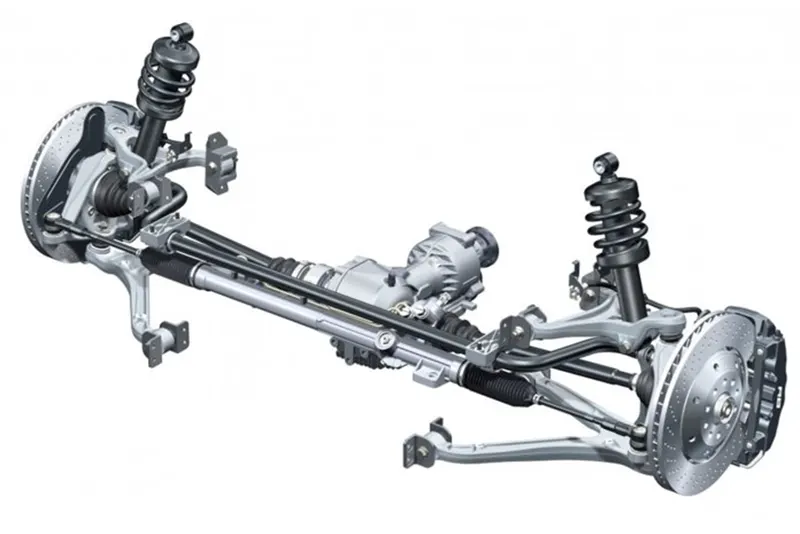
Car suspension system
Simply stated, its a part of an automobile that negates most of the forces that the car gets from driving on the road making sure the cabin stays still. It can be small rocks on the road to big potholes, suspension deals with them all. This is a normal understanding we have that the job of a suspension is to only provide a cushion when a bump or a crack appears on the road. It does much more than that. Frankly, it makes it easier to drive a car. What are the other things that a suspension does?
Job Of A Suspension
The work of a suspension is to provide comfort to the cabin, make sure the car stays in contact with the ground and that the driver has control over the tires at all points which is just achieved by having contact with the road. How does it do this? That’s gonna take a while to get because before we go into the job of a suspension we need to understand all three factors that it helps in i.e Comfort, Contact and Control.
How Does A Suspension Provide Comfort
We will go in length on how suspension provides comfort to the driver and people inside a car by discussing how a suspension works. The working will also help explain the other two factors, Contact and control play into a suspension.
Working Of A Suspension
A suspension works on the principle of force dissipation which involves converting force into heat thus removing the impact that force would have made. It uses springs, dampers and struts to achieve this. A spring will hold the energy while a damper will convert it into heat. Below we have shown how they perform this step.
Spring To Store The Energy
The job of a spring in a suspension system is to store the energy that is generated when the car goes through a bump. A spring or a coil stores energy by compressing its size thus making any type of force into energy. The amount of energy spring can hold depends on a multitude of factors. Including and not limited to the length, the material of the spring and the coefficient of spring. The material is included because some springs might be able to hold more energy but with a non-durable material, the spring might falter.
There are two types of springs used for suspension a coil spring and a leaf spring. A coil spring is a common one which most you might have seen. A leaf spring is used on a solid axle so basically in trucks and has very high energy storing capacity compared to a coil spring.
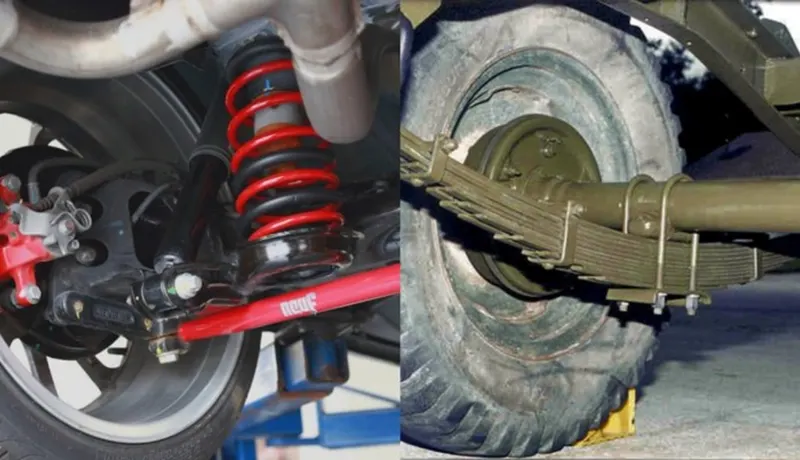
Coil spring and leaf spring | Car Suspension Explained
Spring is good for providing a cushion however your car will keep on bouncing around giving you absolutely no control over it which is not a good thing. When you speed up your car or when you take a corner having only springs in your car will make it keep on moving back and forth
To help springs and keep your car in control dampers are necessary.
Dampers To Convert The Energy
The energy stored by the springs need to go somewhere else it will be released by the springs again with some minor transfer loss and your car will keep on jumping around at every crack in the road. After the spring stores the energy, the dampers or shock absorbers start working. Inside a damper is a piston with small holes in it and some pressurised oil. When the spring transfers the energy to the damper the piston moves through the pressurised oil by using the energy of the spring. Passing through the oil generates heat, successfully converting the energy of the bump in the road into heat energy and negating any energy left which would have caused the car to jump.
One thing about the new dampers is that they react to high speeds. The faster your car the better your cushioning. That doesn’t mean you should drive headfirst into portholes at 80km/hr as that will kill your underbody.
Struts
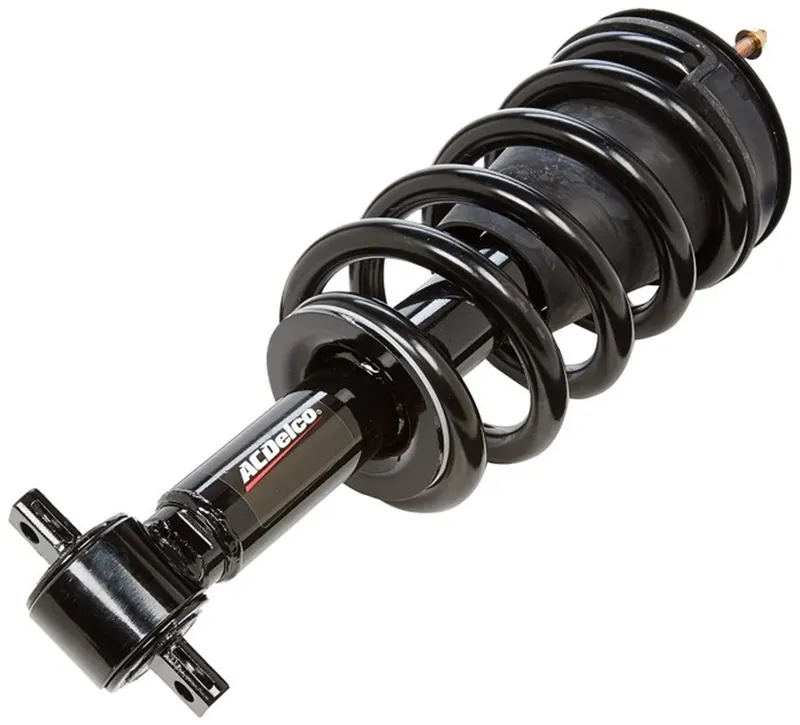
Strut | Car suspension explained
A combination of both struts is basically a damper wrapped in a coil spring. It is a structural component of a car nowadays. Its working is no different than a coil spring and dampers so there is not much to discuss.
All Of The Components Together
We have talked about how the parts work alone now we will discuss how they work in tandem and ensure you have comfort, contact and control over your car.
The car is called a sprung weight as it is supported by the suspension. There are some components that are not in between the car and the suspension thus they are not supported by the suspension. These unsprung components include axles, hubs bearings and any part of the suspension. Tires can also be considered unsprung weight however the rubber the have as some sort of cushioning so we will not consider it.
Consider the following situation. A front right side tire goes into a porthole this will cause the spring on that tire to store the energy that would have caused the car to bounce. This energy is taken by a damper and converted into heat. If there was no damper present the spring will bounce the car on the right side which will cause the left spring to absorb the force and the car will just keep on bouncing till the force dies of normal loss.
This is how the components of the suspension work and the basic principle behind the working of one. It, however, doesn’t end here as there are multiple types of suspensions that employ the use of wheel alignments to work and provide control to a car. We will discuss wheel alignment and those types below.
How Does Suspension Provide Control?
The control is just a bonus thing suspensions do because of keeping tire contact on the ground at all times. This is because keeping the tire on the ground at all times actually amounts to having control on the car anyways.
As we studied above every car suspension provide comfort and makes sure that all the tire are equally on the ground and not being uneven causing tire wear and less contact on the ground. Having this contact on the ground means more surface area which in turns more control over the car and its movement as bigger the surface area of something they easier it is for it to keep balance. This can be explained using the centre of mass.
Physics states that an object always has all of its mass on a point and not evenly distributed like we usually think it is. Sounds absolute lies right? You can try this with a small 15cm scale or a normal pencil. Try to balance them on your finger and you will notice a point where you can balance them without it falling. For a 15cm scale, it is around the 7cm mark.
What it means that the bigger the contact patch the easier it will be to balance the car. And the bigger patch is provided by the various suspension systems we discussed.
This covers everything you need to know about Automobile Suspensions.
PROCEDURE
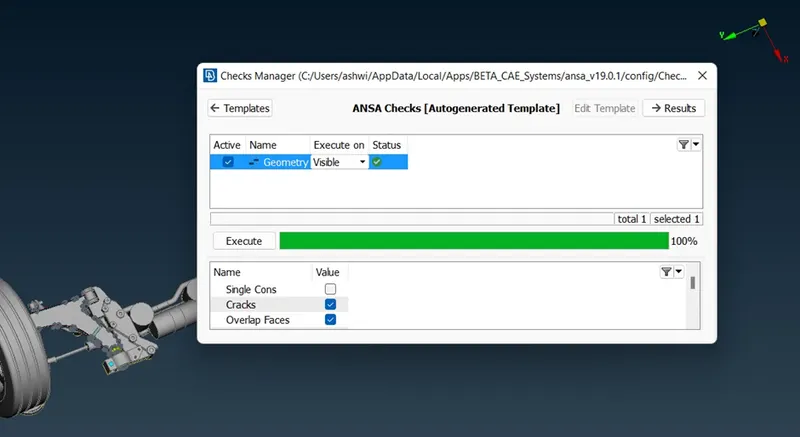
STEP 1: Import CAD geometry in ANSA Window and perform geometry clean-up and topological operation.
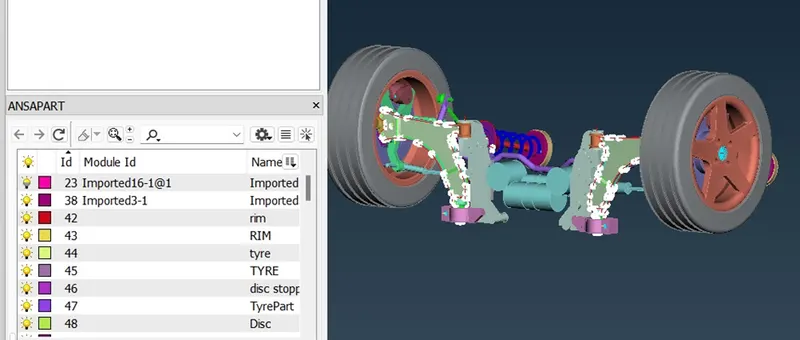
Assign PID to all different sub-assembly components.
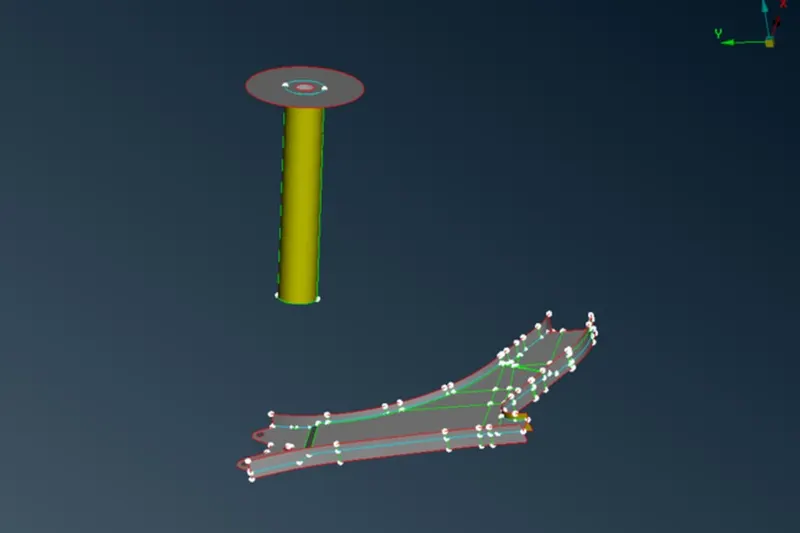
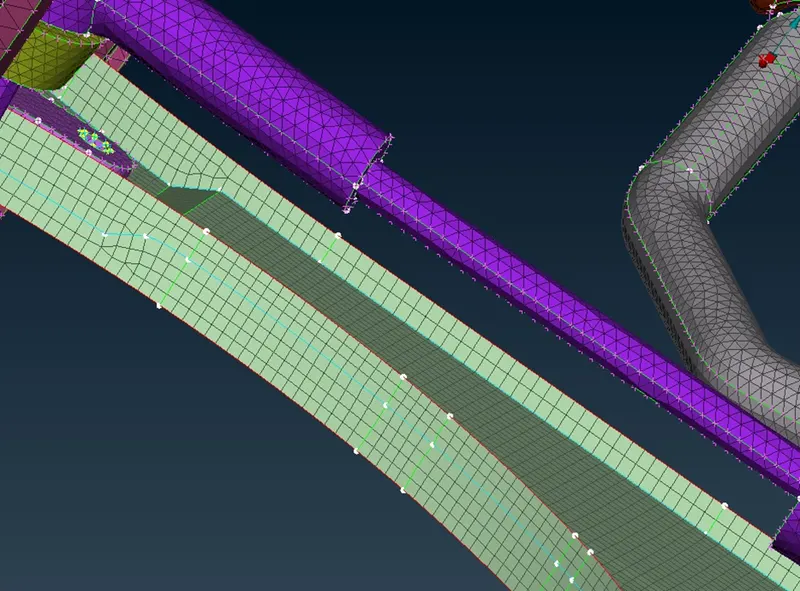
STEP 2: Mid- surface extraction for components having uniform thickness then 5mm.
STEP 3: MESH GENERATION PROCESS
Construction line adjustmest and defeaturing.
Defeature and toggle off few construction line to capture geometry efficiently by mesh elements.
Resetting nodal perimeter length to target element length.
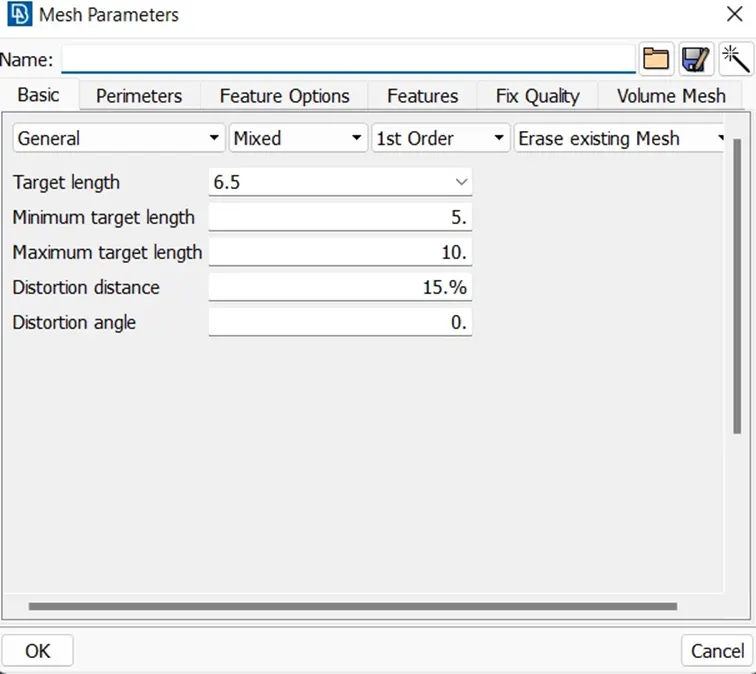
Setting up quality criteria and mesh parameters.
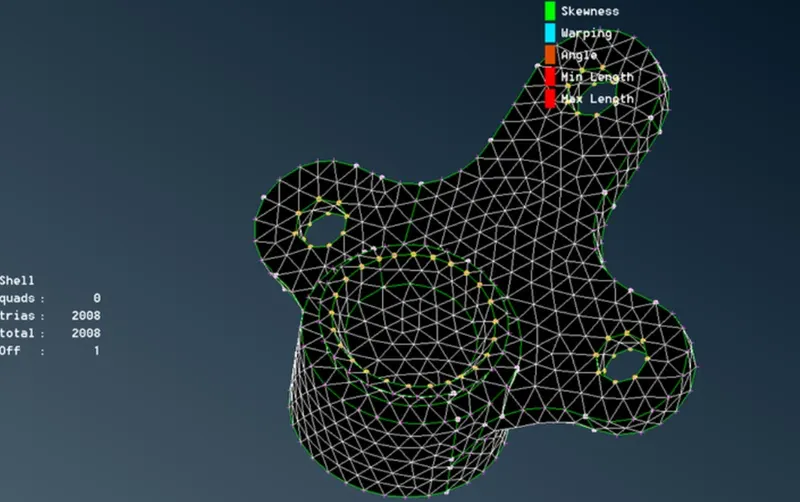
Quality Criteria for Surface Meshing of Tyre and Rim (Element type: Tria) :
|
S.No |
Quality Criteria |
Value |
|
1 |
Target/Average length |
6.5 |
|
2 |
Minimum Length |
5 |
|
3 |
Maximum Length |
10 |
|
4 |
Skewness |
45 |
Quality criteria for Surface Meshing of Non Uniform thickness components other than Tyre and Rim (Element type: Tria) :
|
S.No |
Quality Criteria |
Value |
|
1 |
Target/Average length |
4 |
|
2 |
Minimum Length |
2 |
|
3 |
Maximum Length |
6 |
|
4 |
Skewness |
45
|
Quality criteria for Mid surfacing of Uniform thickness part which has thickness less than 5 mm (Element type: Mixed elements) :
|
S.No |
Quality Criteria |
Value |
|
1 |
Target/Average length |
4 |
|
2 |
Minimum Length |
2 |
|
3 |
Maximum Length |
6 |
|
4 |
Aspect |
3 |
|
5 |
Warpage |
15 |
|
6 |
Skewness |
45 |
|
7 |
Jacobian |
0.7 |
|
8 |
Minimum Quad Angle |
45 |
|
9 |
Maximum Quad Angle |
135 |
|
10 |
Minimum Tria Angle |
30 |
|
11 |
Maximum Tria Angle |
120 |
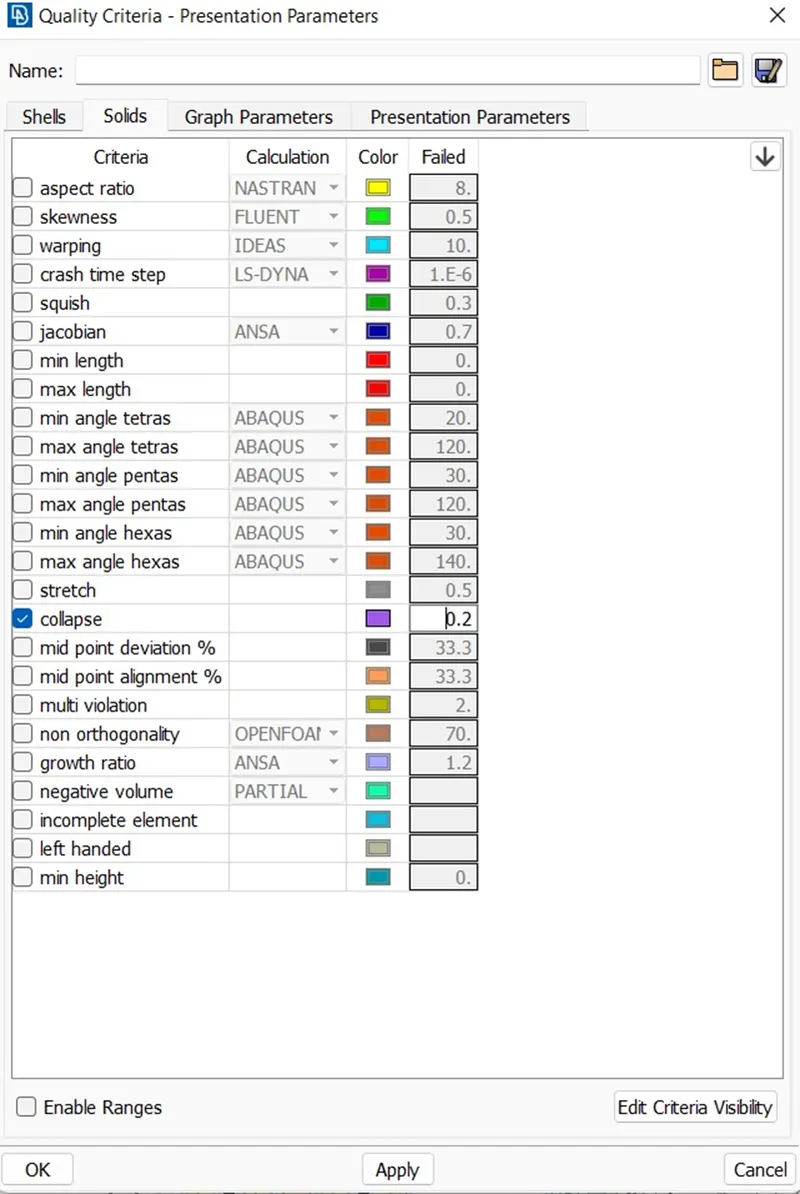
Quality Criteria for Volume meshing of all Non Uniform thickness components (Element type: Tetra Elements):
|
S.No |
Quality Criteria |
Value |
|
1 |
Tet-collapse |
0.2 |
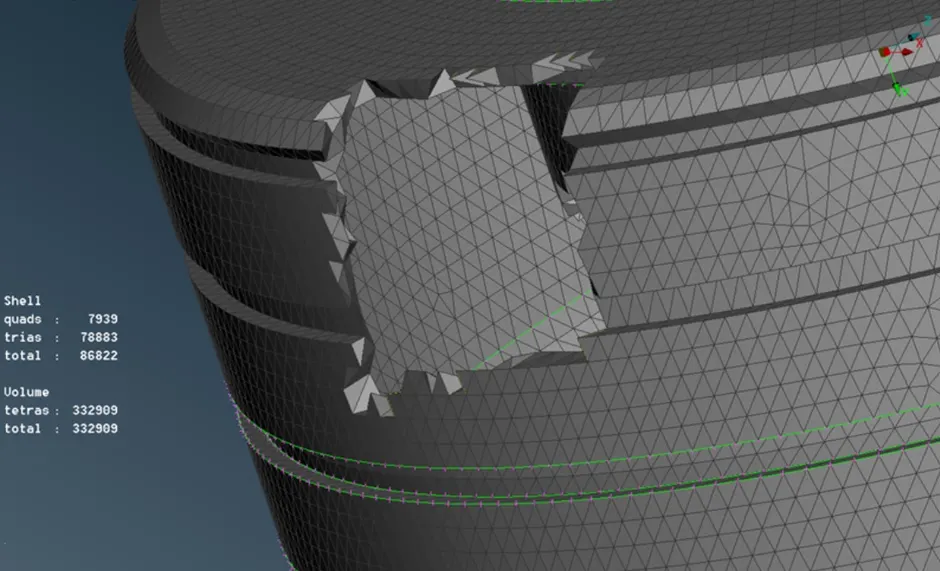
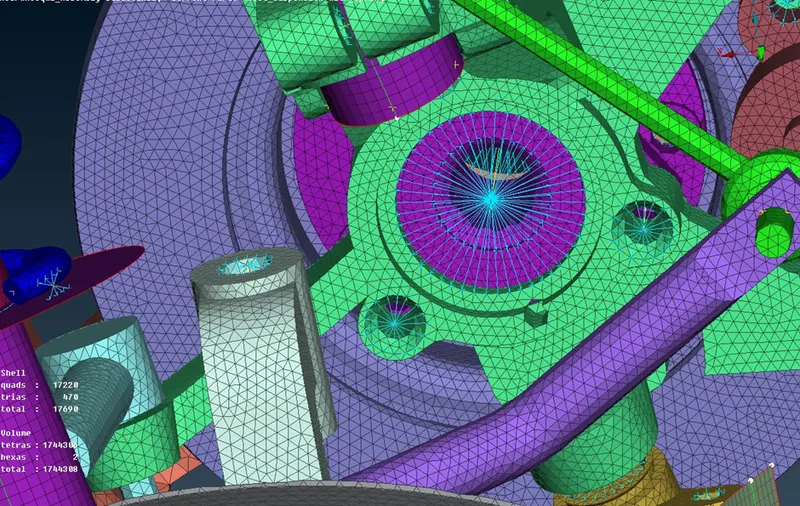
Defining closed volume to generate 3D tetra elements.
STEP 4:
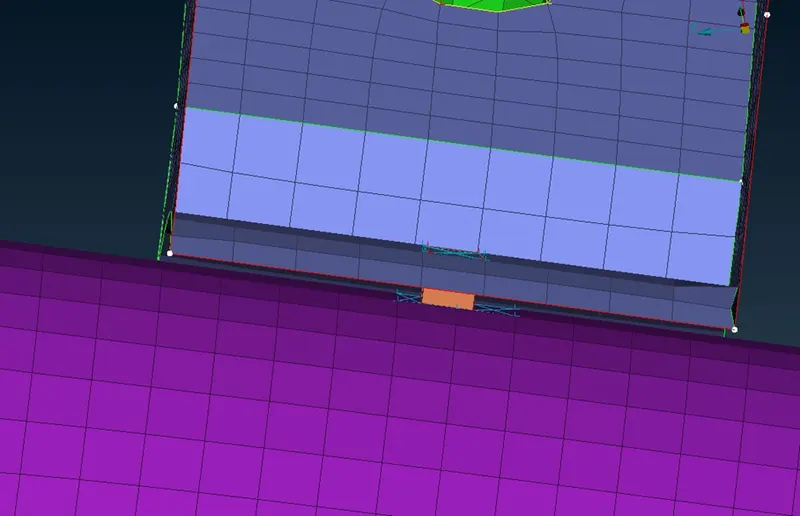
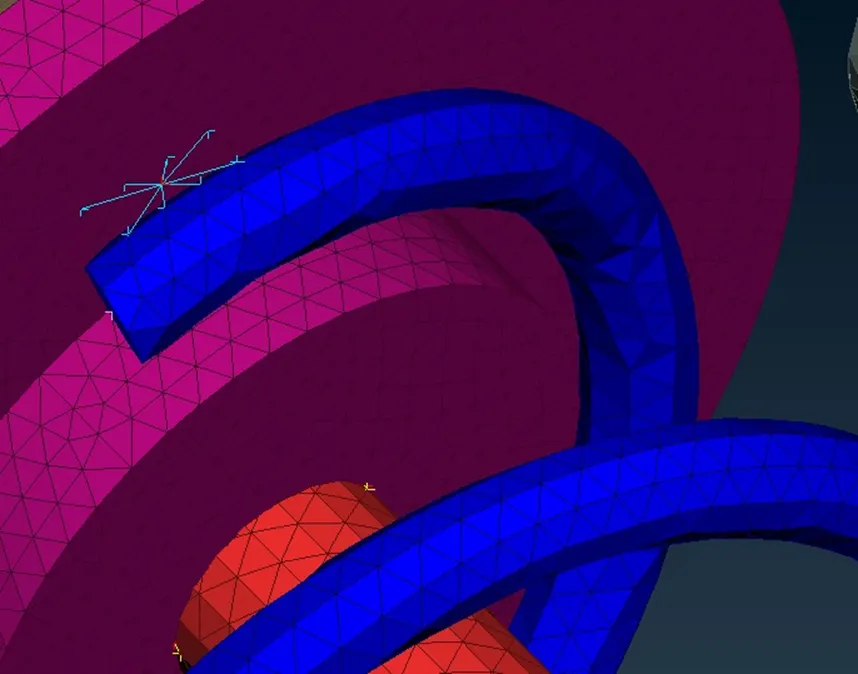
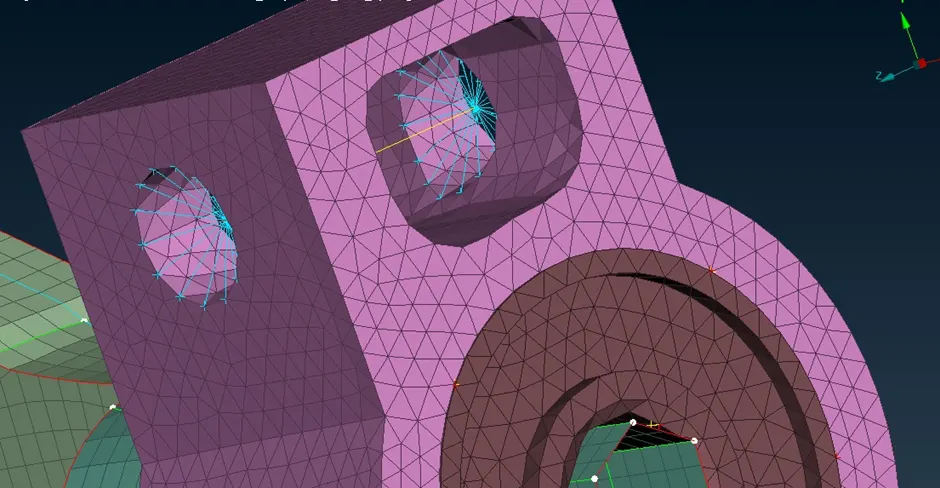
Implementing connections on required area.
LEARNING OUTCOME
Develops better clarity in context of application of ANSA TOOLS with respect to required criteria of defined function.
Conclusion:
FE Model is successfully extracted with respect to given parameters and connections were deployed on required area.