Project - 2 - Meshing on the suspension Assembly
Objective:-
- Importing rearwheel suspension geometry into ANSA
- Geometry clean up of the to remove geometrical error
- Extract mid-surface for hollow part with thickness less than 5mm
- Mesh mid-surface and assign thickness
- Volume mesh for solid and thick part
Introduction
The rear suspension of a vehicle performs the same general function as front suspension, but the specific construction is typically quite different. The ideal suspension for a vehicle depends a lot on the vehicle's body style and performance requirements. Modern vehicles have a rear suspension system composed of several varying components, including linkages, shock absorbers and springs. These components must perform distinct functions that often require the rear suspension to have different properties.
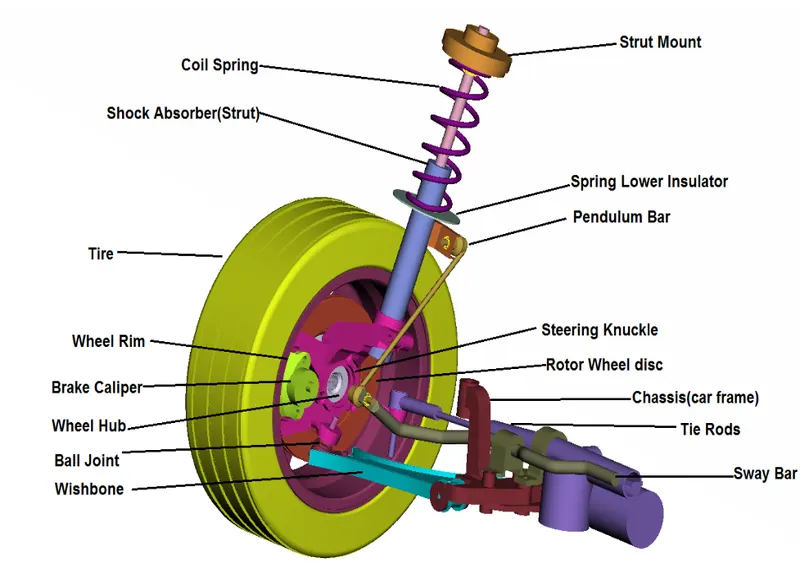
There are two types of suspension system. They are dependent suspension system and independent suspension system.
- Dependent suspension system:- It has a solid axle that goes across the width of the frame. It allows the wheels on both the left and the right side to be connected and operate together as a team. If one side of the car bends to a given direction the other side will follow along because of the dependency. It is on rough terrain that dependent suspension system really earns its worth.
- Independent suspension system:- It does not have a single connecting axle. Each wheel of an independent suspension system has a different reaction to road conditions, meaning that a bump on one side is not to cause a reaction on the other. The attraction of the independent suspension system is the driving quality it affords. It is a much more comfortable way of getting around.
Procedure:-
- Import geometry in ANSA and check for geometry. Clean the geometry, check for tripple cons, needle face, overlapped faces, craks, single cons etc. using check manager.
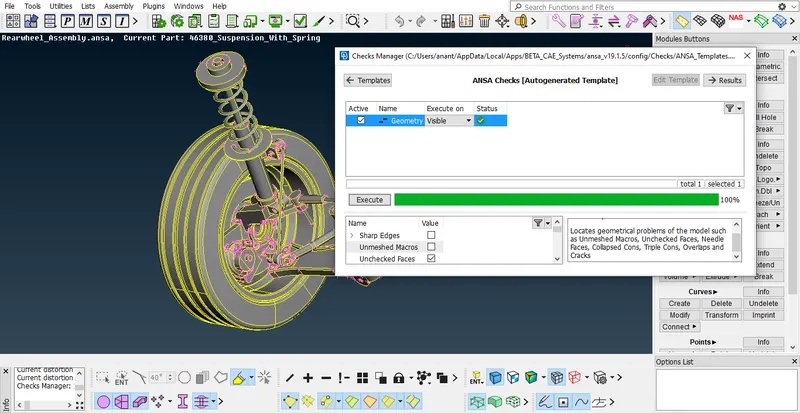
2. Topo Clean Up
Defeaturing of geometry is done by removing cons which violates the minimum length quality criteria.
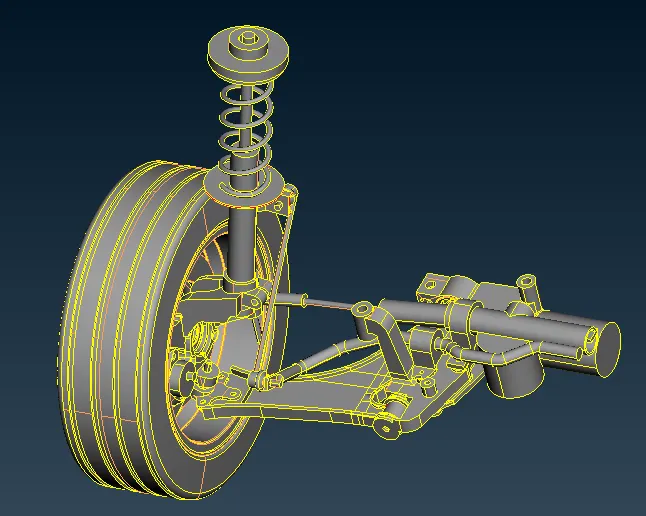
3. Mesh Generation
Mid surface is extracted for those part which has uniform thickness less than 5mm. Quad and trias mesh is applied for these mid surface.
Part with mid surface is applied thickness and then meshed
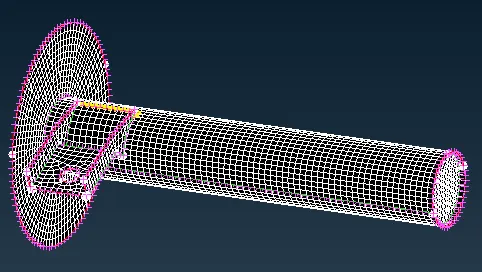
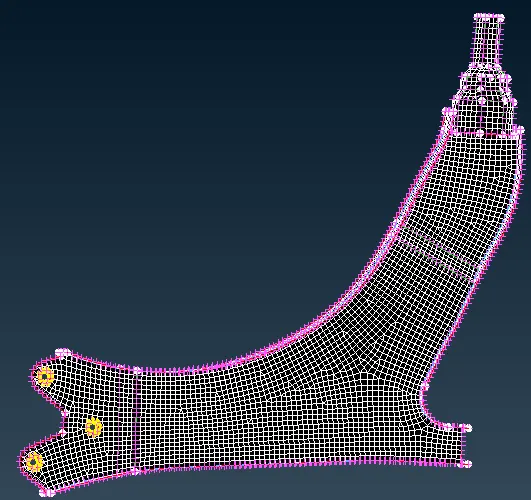
Rest part of the spension assembly is meshed with tertas and then rapid tetra solid mesh is generated.
Rim and Tyre
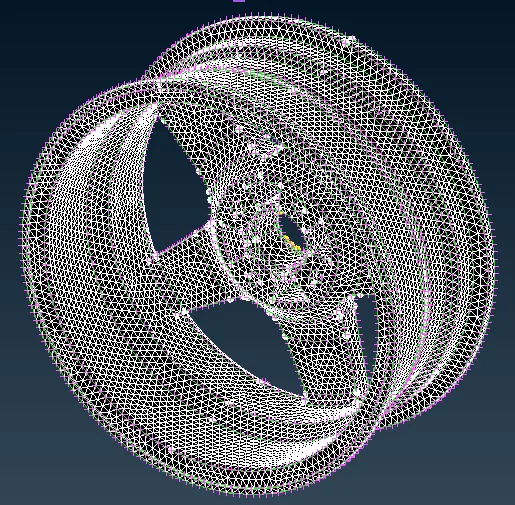
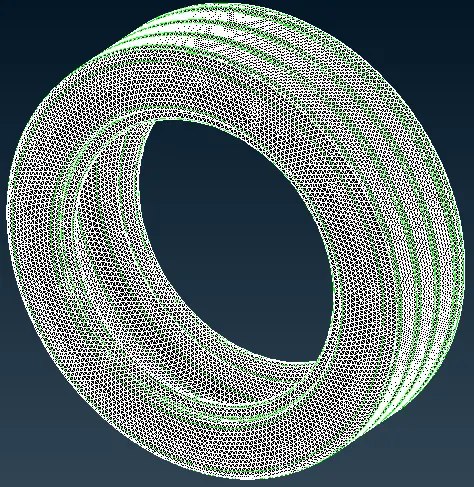
Volume mesh generation of is applied other part of suspention too using terta rapid mesh.
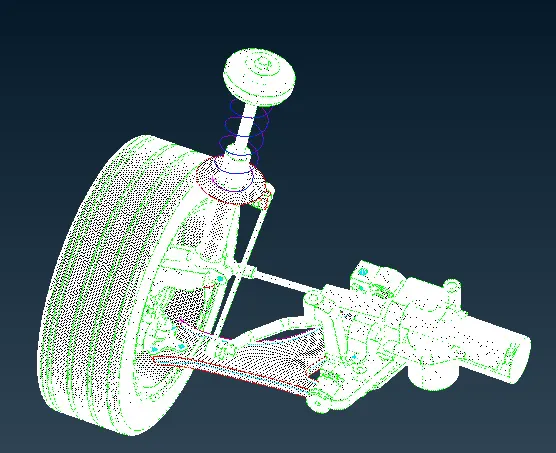
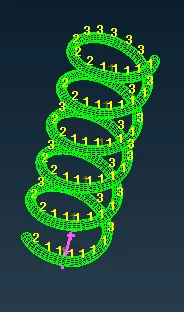
Meshing of Spring
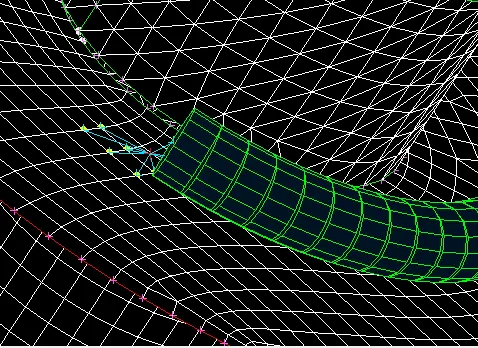
Curve is created and curve is converted to FE using CBAR.
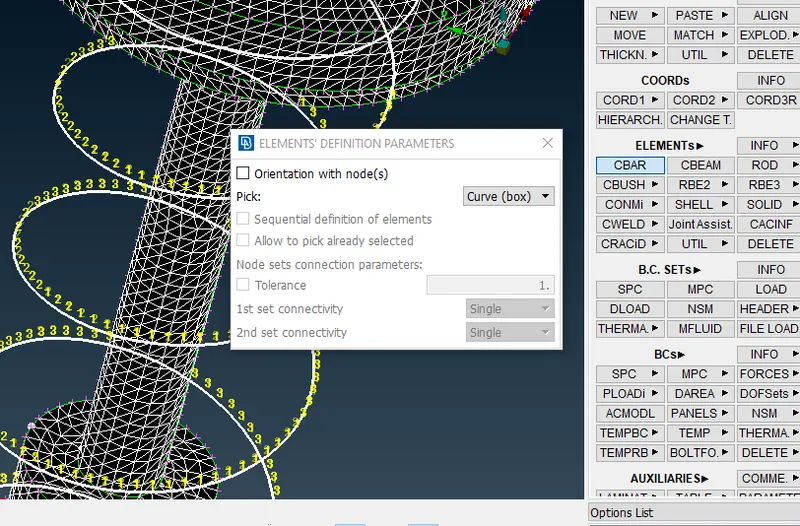
The curve will look like spring when we applyline elements coss-section as solid
4. Deploying Connection
Connection should be applied where connection is requied between two parts.
Weld connection
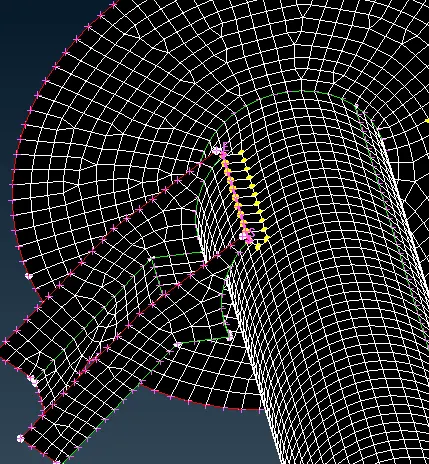
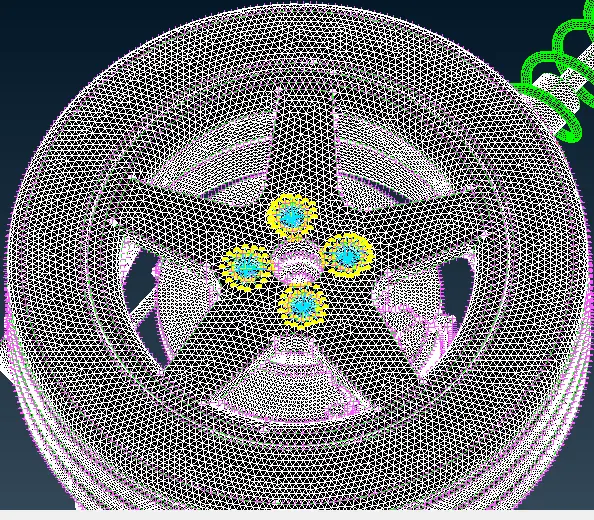
RBE2 connection (bolt connection and cluster)
Learning Outcomes :-
1. 2-D Off element can be ignored once volumesh is generated
2. Cluster RBE2 connection can be given where there is bolt connection but only one part is present in geometry.
3. 2-D mesh is generated for uniform part with thickness less than 5mm.
4. Learnt to mesh spring usning curve and appying CBAR.
Conclusions:-
In this project, we generate mesh for rear suspension wheel of an automotive. Combination both two dimestional and volume mesh is required to mesh real life mechnical part with different thickness which may be uniform or non uniform. Proper connection is required to deployed in order to simulate model with real life conditions.