Project 2-Highway Assistant-Lane Changing Assistant
AIM:The main aim of this challenge is to create a model for the Highway lane changing assistant with the help of given requirments and all the signals given in the requirment.
Objective:
- Creating a model for the Highway lane detection assistant feature.
- Create an sldd file and upload all the input signals into the file.
- Creating an stateflow model as per the requirment.
- Creating an report for the MAB guidelines checks.
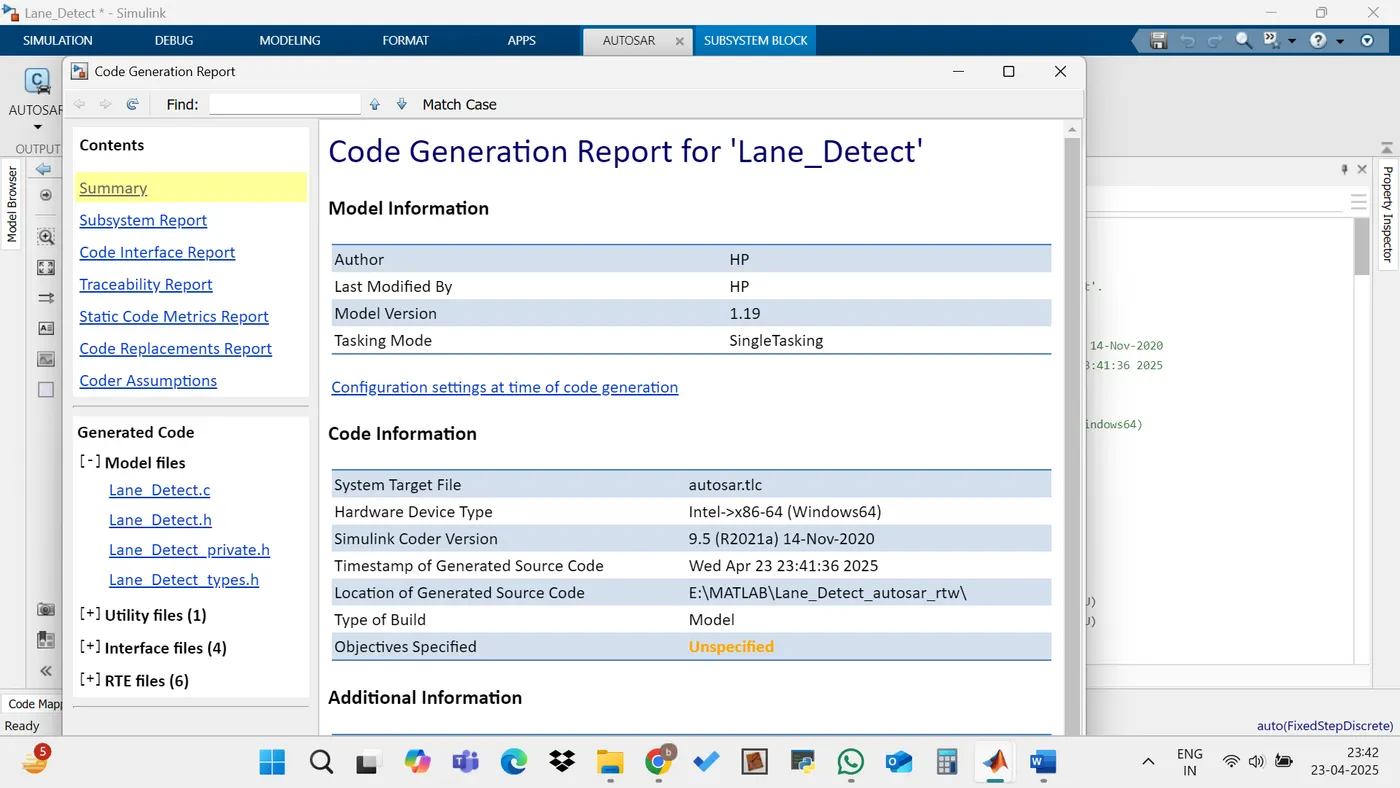
- Generate code using AUTOSAR code runner.
The Highway Assistant supports the driver and takes over the longitudinal and lateral guidance of the vehicle in monotonous driving situations on highways. The partially automated function can automatically start, accelerate, brake as well as steer the vehicle to a certain extent. The driver has to permanently supervise the system and be ready to take over the complete control of the vehicle at any time.
Drivers are taught to assess surrounding traffic before changing lanes by checking their rearview and side mirrors and looking over each shoulder. However, even for those who follow this sequence of checks, the vehicle's blind spot – the area alongside and just behind the vehicle – is a constant source of danger and often the cause of serious accidents. Even vehicles approaching quickly from behind can pose a risk. To make changing lanes safer, this feature has been developed.
Basic Working Principle:
Highway Assistant is a partially automated driving function for a speed range of up to 180 km/h (112 mph) on highways. It combines the radar-based longitudinal guidance of Adaptive Cruise Control (ACC) with the video-based lateral guidance of lane keeping support in one system. Highway Assistant can be supplemented by an automatic lane change initiated and monitored by the driver in a speed range of 60 – 130 km/h (35 – 80 mph).
The lane Change Assistant works by using two mid-range radar sensors that are concealed in the rear bumper – one on the left, one on the right. These two sensors monitor the area alongside and behind the car. Powerful control software collates the sensor information to create a complete picture of all traffic in the area behind the vehicle.Whenever another vehicle approaches at speed from behind or is already present in the blind spot, a signal such as a warning light in the side mirror alerts the driver to the hazard. Should the driver still activate the turn signal with the intention of changing lanes, the system issues an additional acoustic and/or haptic warning
First of all the below figures shows the images of the models that are created as per the requirments.
The first subsystem represents the first requirment and second shows the second requirment and third one as well.
Each requirment is buid in three subsystems to simplify the system.
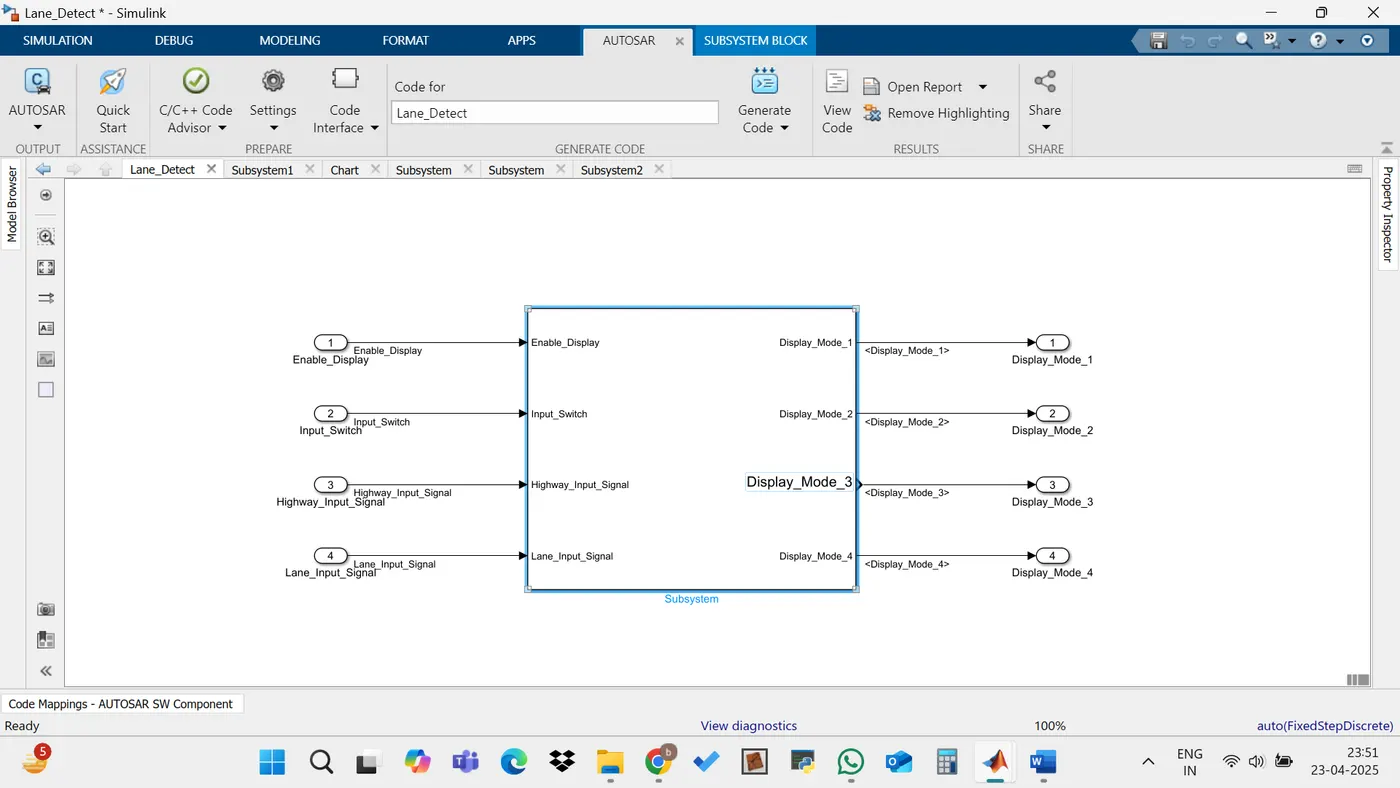
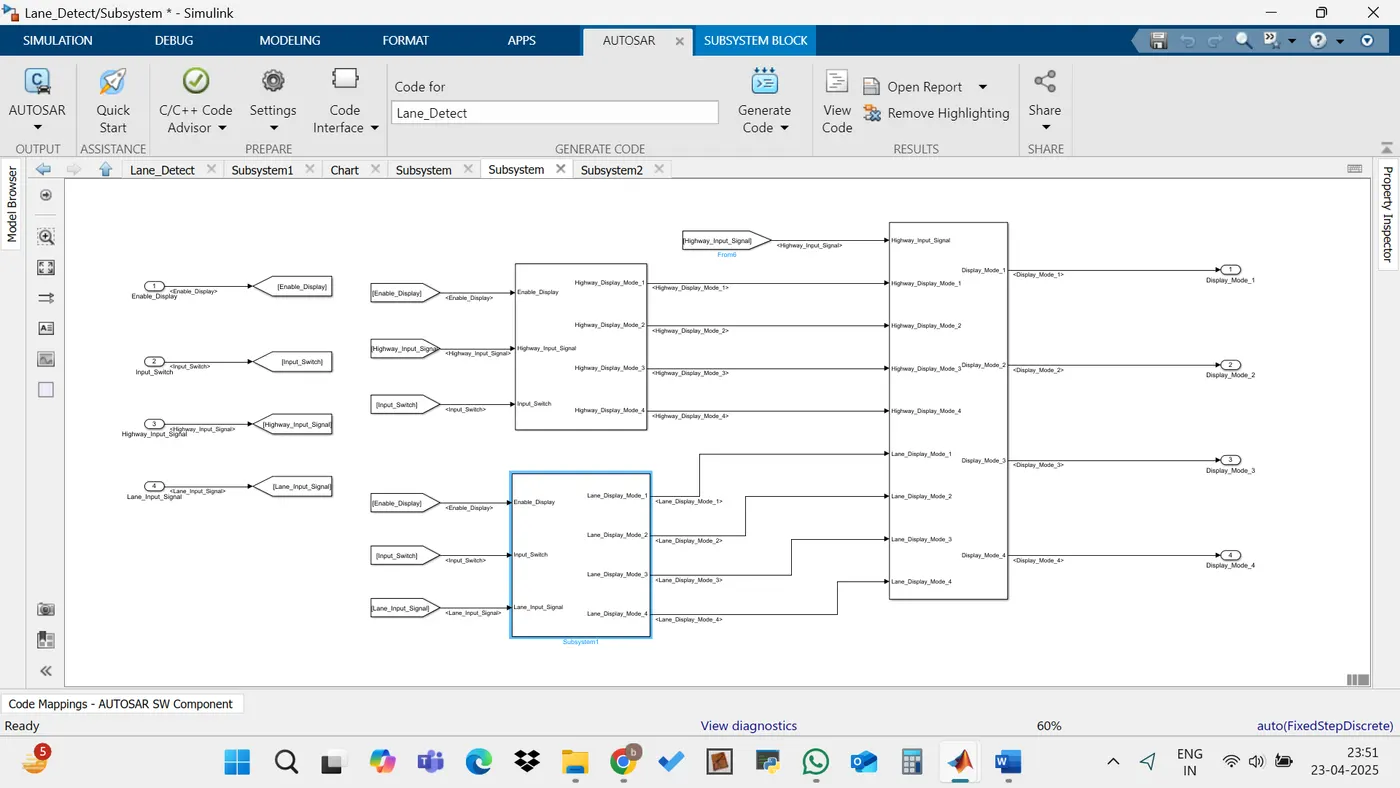
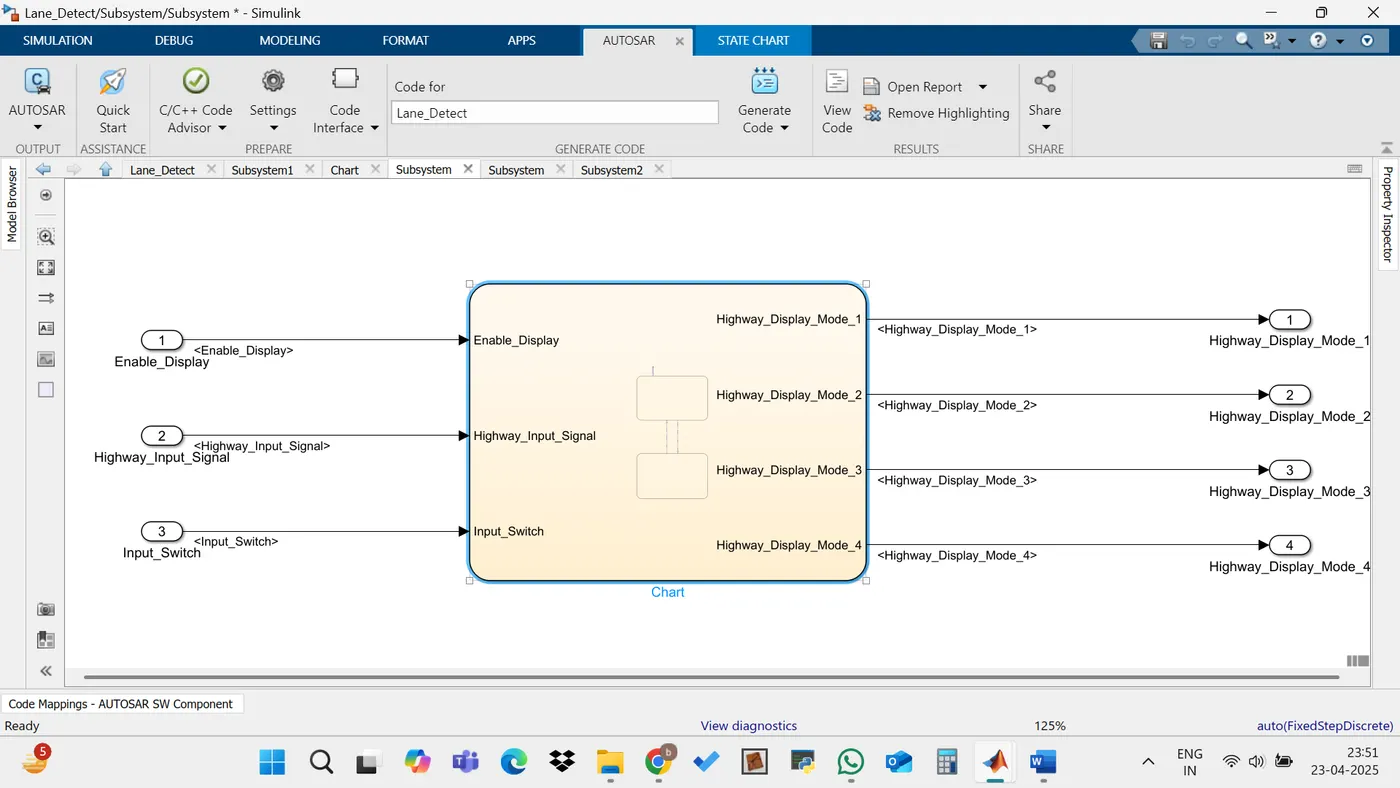
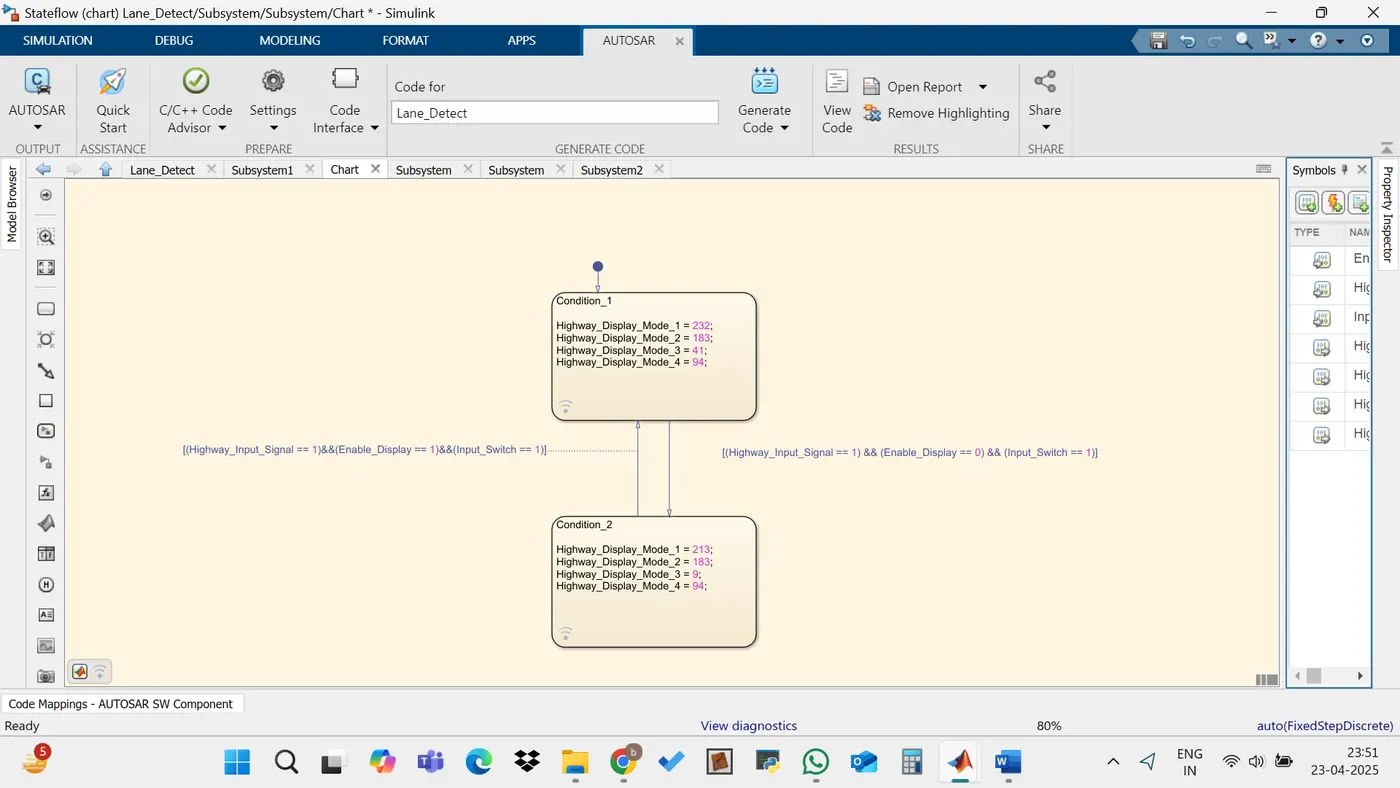
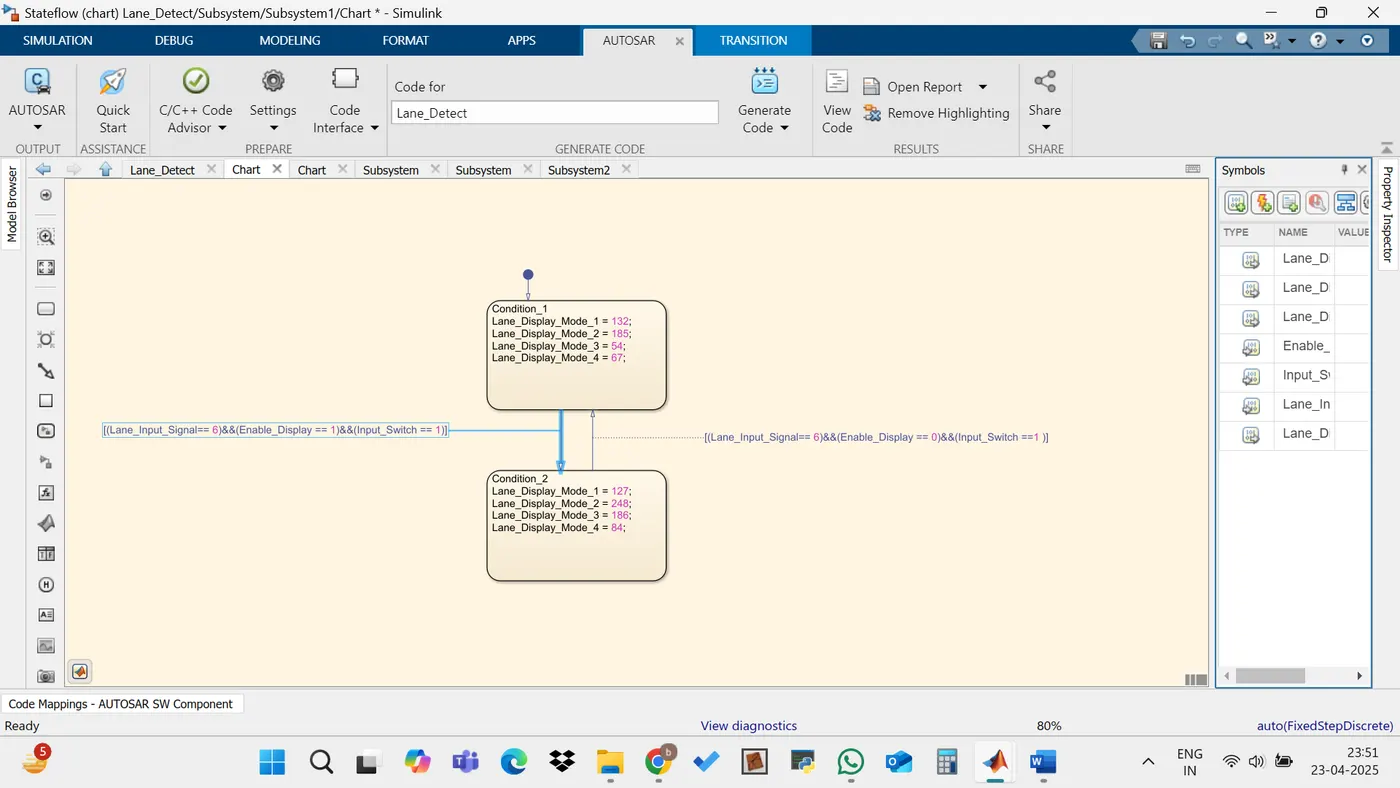
These are the blocks that are used to create the model.
After Creating all the model and successfully running it generting all the required reports for the model includes MAB guidelines report and Code grneration reports.
All the reports are attached below.
Hence successfully created the model and run the model as per the requirments by following all the MAB guidelines.