Project 2: Emission characterization on a CAT3410 engine
Aim: To setup and perform a simulation of combustion process with open-w-piston and omega piston using converge cfd software.
Objective:
- To create sector mesh of the open-w-piston and omega piston using their bowl profile.
- To characterize the emissions of open-w-piston engine and omega piston engine obtained from the simulation.
- To explain the results obtained using necessary plots and animation.
Introduction:
The compression ignition engine is the major consumer of fuel energy. Hence, it becomes very important to design the engines for high performance and lower emission. The design of combustion chamber plays vital role in achieving better performance and emission characterics in compression ignition engines. On the other hand better performance, combustion and emission characterics is only achieved when high degree of air swirl and turbulence takes place in combustion chamber during suction and compression strokes. In order to generate high degree of air swirl and turbulence in combustion chamber during suction and compression stroke, the bowl profile of the piston plays an important role. In this project, combustion and emission characterization is done for direct injection diesel engine with open-w-piston and omega piston and the case setup and results are discussed below.
Case setup:
Creating sector mesh of open-w-piston using the piston bowl profile
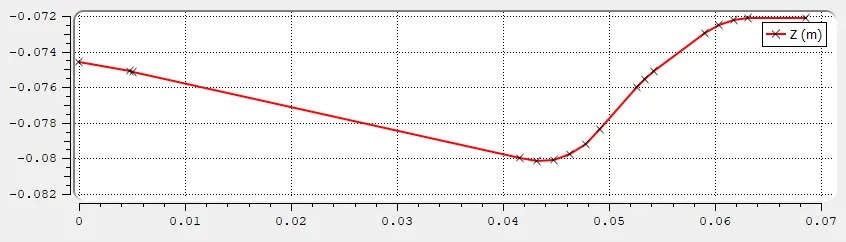
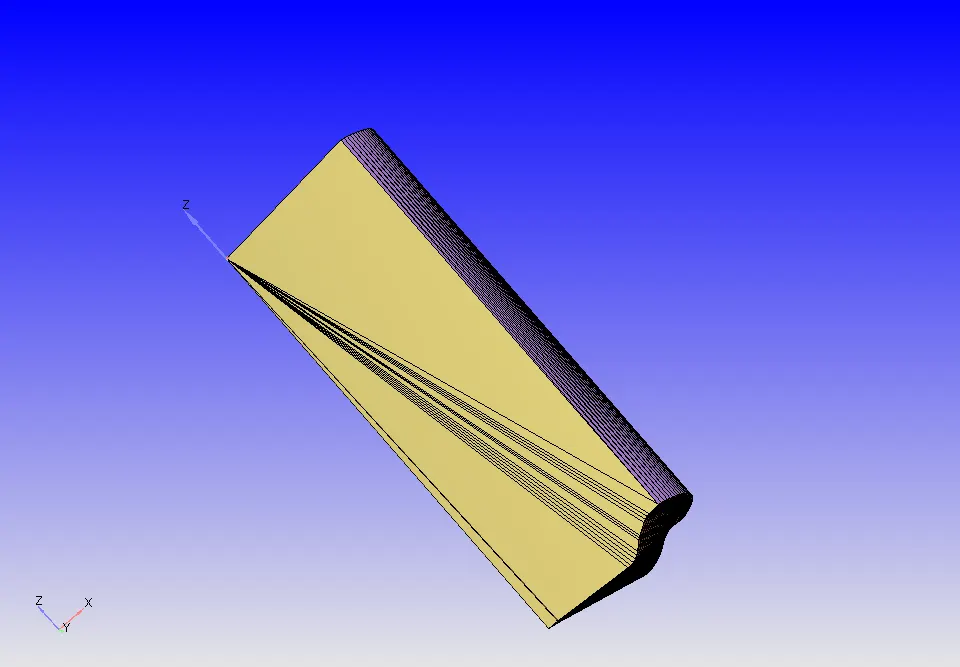
Creating sector mesh of omega piston using the piston bowl profile
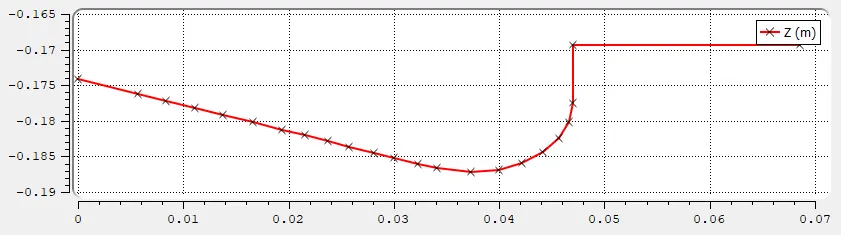
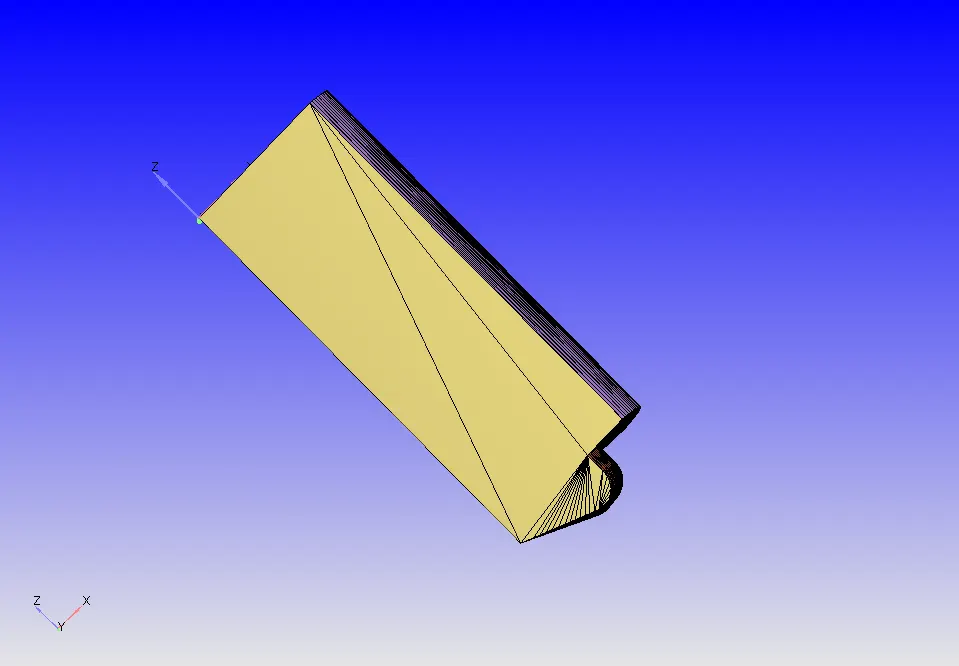
The given engine cylinder model is symmetrical and hence, a sector or a section of the geometry is taken for analysis which increases the computational efficiency. To create a sector of geometry converge offers a utility called make surface, where the bowl profile of the piston is obtained after reading surface.dat file and sector geometry of the engine cylinder is created. The above fugures shows the bowl profile of open-w-piston and omega piston. The case setup remains same for both the diesel engines with open-w-piston and omega piston.
Engine parameters
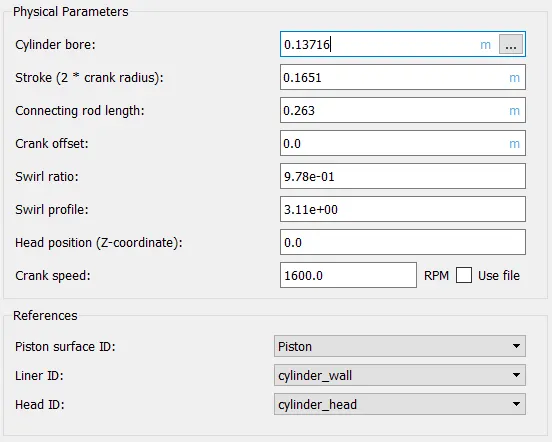
The engine parameters such as cylinder bore diameter, stroke length, connecting rod lenth and crank speed are specified in the physical parameters tab as shown in above picture. The reference ID are added for piston, liner and cylinder head.
Materials
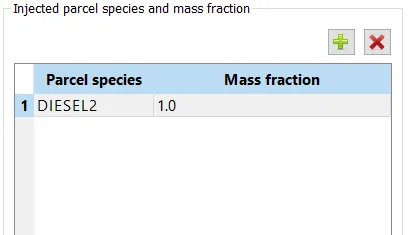
The Therm.dat file which contains the gas properties is imported into the gas simulation. The Mech.dat file which contains the reaction data of the species in the simulation is imported into the reaction mechanism. And the diesel-2 is provided as species for parcel simulation which has similar properties as diesel.
Simulation parameters
Transient solver
Full hydrodynamic simulation mode
PISO N-S scheme solver
Density based N-S solver
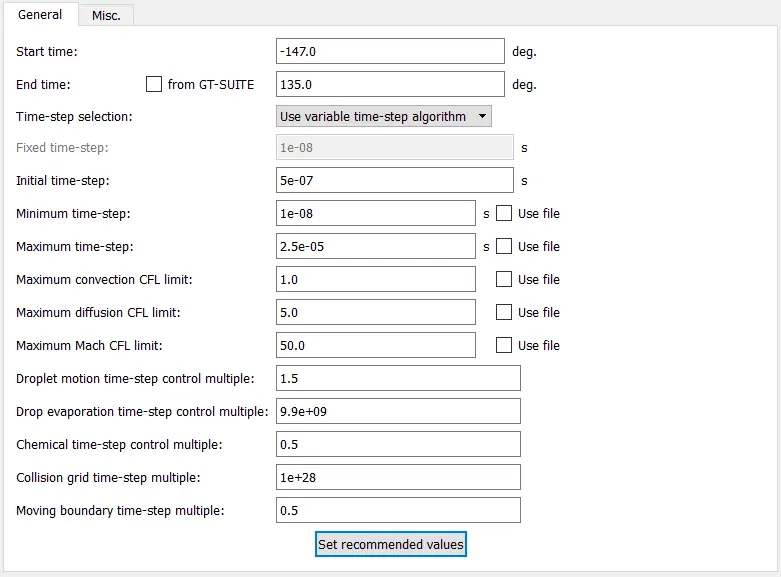
The transient state solver is used as the solver with full hydrodynamic simulation which solves the CFD equations to predict desired output quantities and the position os valve, combustion process is captured as time progresses. The simulation start time is at -147 deg crank angle and end time is at 135 deg crank angle. The PISO is used as the solver scheme which provides stable solution and faster solution convergence. The density based solver is used, as the fuel density changes with respect to time and is high speed compressible flow.
Boundary condition
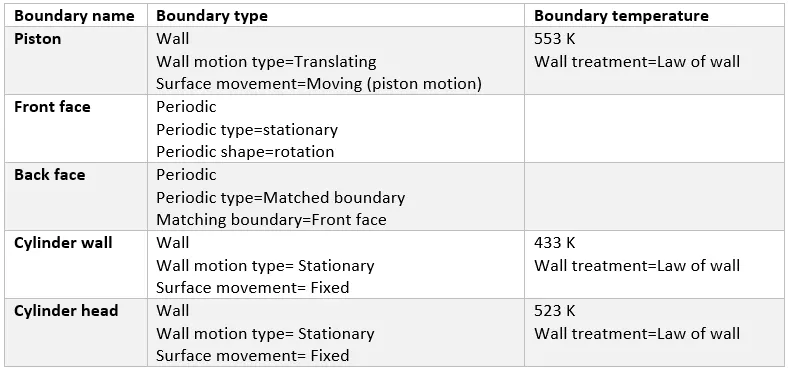
The boundary conditions for different parts diesel engine combustion chamber is specified as described in the above table. The piston boundary type is translating moving wall which follows the piston motion and its temperature is specified. The wall temperture of the stationary wall boundaries is specified as described in the table. The periodic boundary condition is used to simulate a portion of the geometry which saves computaional energy.The values of each boundary condition of the front face period boundary is copied to its matching boundary which in this case is the back face boundary. Thus, the boundary conditions for different parts of the diesel engine combustion chamber is setup.
Regions and initialization
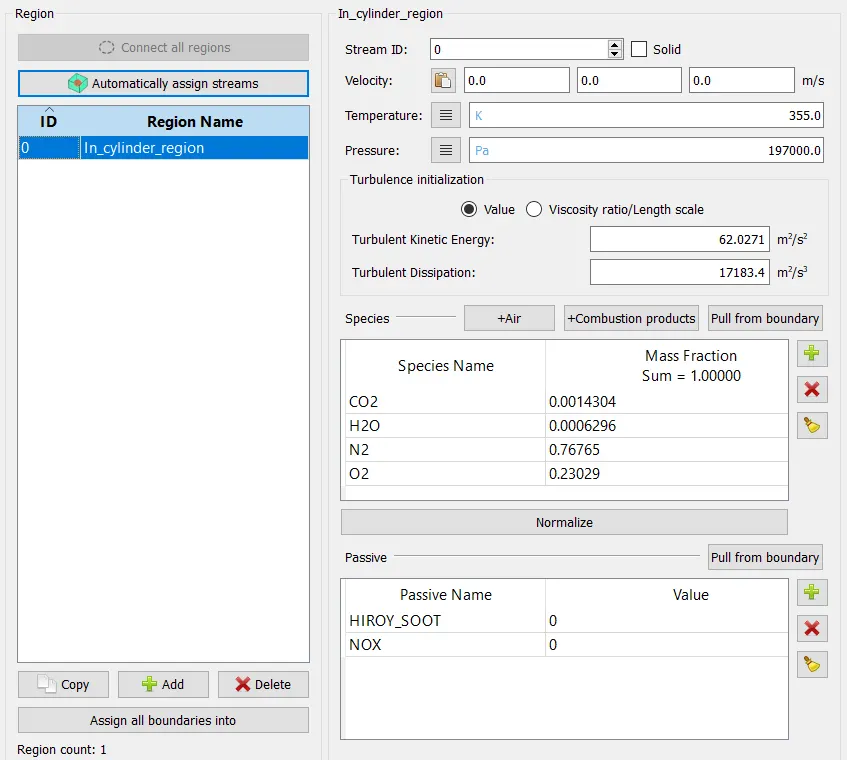
The cylinder region is initialized with temperature 355 K and pressure 197000 Pa and CO2, H2O, N2, O2 with appropriate mass fraction is added as the species. Hiroy-soot and NOx is added in passive as the scalar quantities which is transported along with fluid flow and helps in postprocessing the soot and NOx formation.
Spray modeling
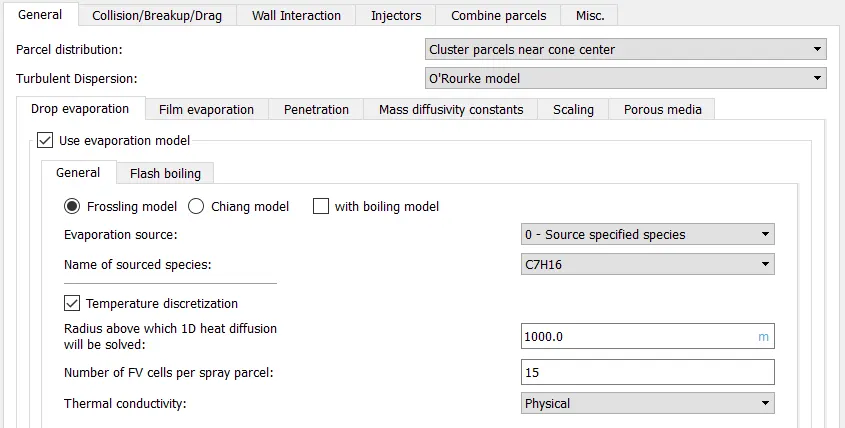
The simulation of spray accurately inside the engine is impossible as the time consumption to solve such equations is very high. Hence, spray modeling is used which helps in simulating the spray inside the IC engine with certain mathematical approximation. The converge uses eulerian solver for gaseous sparay and lagrangion solver for liquid spray. The converge assumes the spray to be conical and the parcel distributed evenly throughout the cone. The frossling model is used as evaporation model where the droplets are divided into a number of shperes to solve heat equation.
Collision/breakup/drag
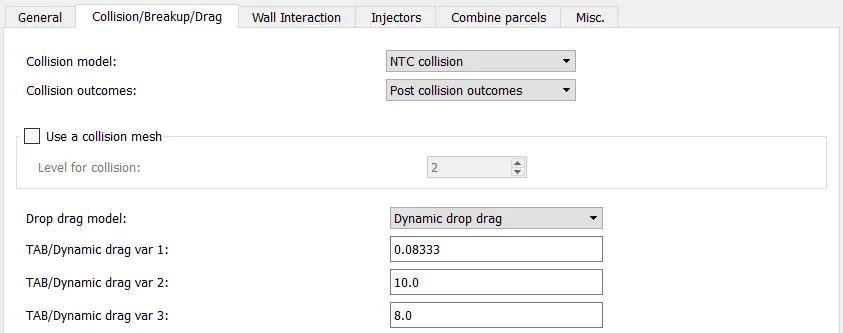
The NTC collision which is also known as no time counter method is used as the collision model which estimates the number of droplets and their outcomes. The collision mesh is used which enables the parcels to collide across the grid cells. During the injection process, the fuel experiences drag due to the presence of surrounding air, the drag effect is captured using the dynamic drag model.
Wall interaction
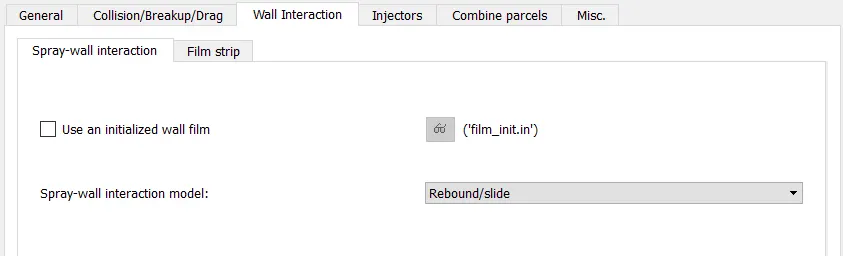
The interaction of liquid droplets with engine solid surface is assumed to rebound/slide. The rebound/slide spray-wall interaction model which is based on the weber number of the incomming drop is used to capture the droplets behaviour near the wall of the engine.
Injector species and Injector rate shape
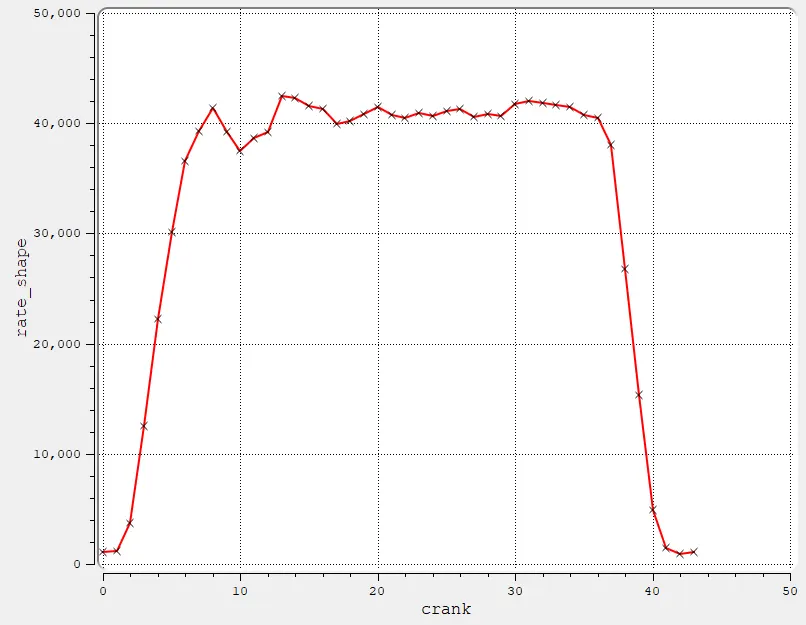
The injector rate shape is spcified according to the crank angle. The profile of the injector shape is described in the above graph. The injector rate shape is provided which injects the fuel mass according to the injector rate shape within specified time interval.
Injector models
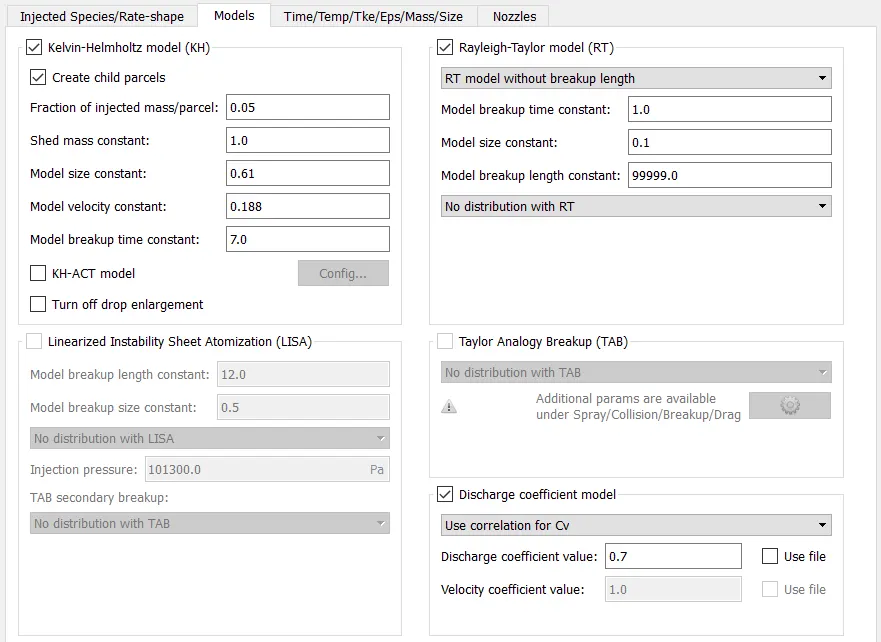
The kelvin helmholtz model and rayleigh taylor model is used as injector models which helps in predicting the size of fuel parcels. These models are used if the spray is solid cone and if the fuel used is either gasoline or diesel.
Injector time/temp/mass/size
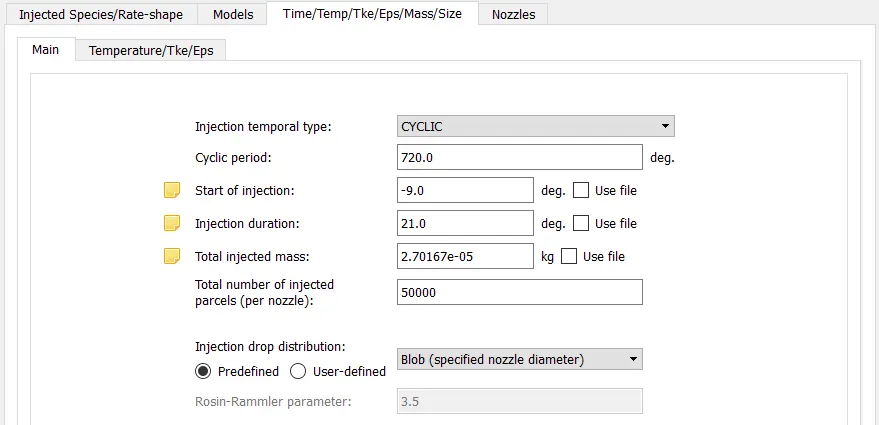
The start of injection and the duration of injection is specified as described in the above tab. The engine designers gives fuel flow rate and fuel mass injected per cycle has to be calculated.
Nozzle location and orientaion
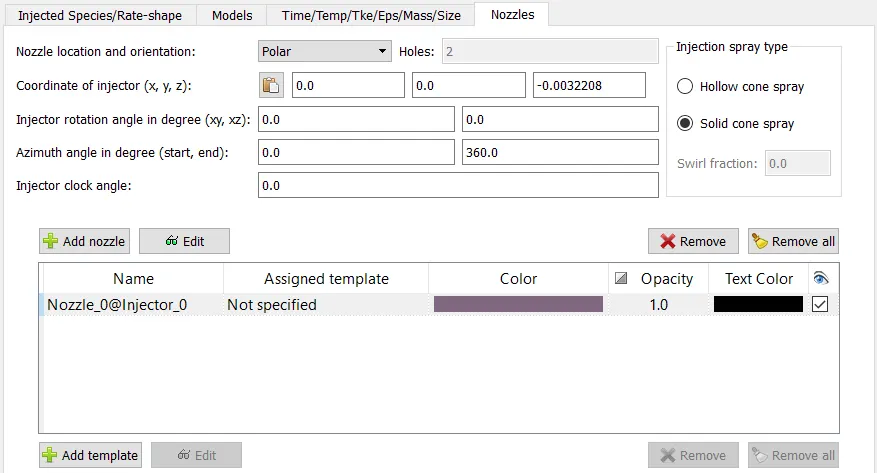
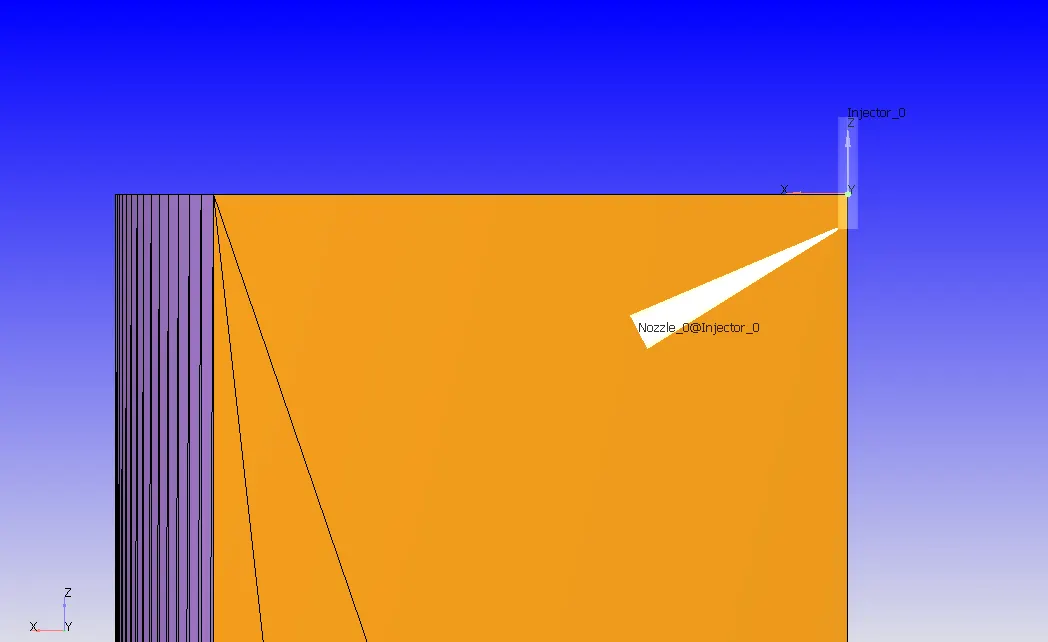
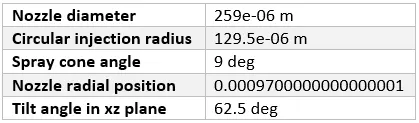
After completing the injector model setup, the nozzle location and orientation is specified. One nozzle is assigned for spraying the fuel into the engine cylinder, and the parameters of nozzles like nozzle diameter, circulation radius is specified in the nozzle tab. The above table briefs about the location and orientation of the nozzle.
Combustion modeling
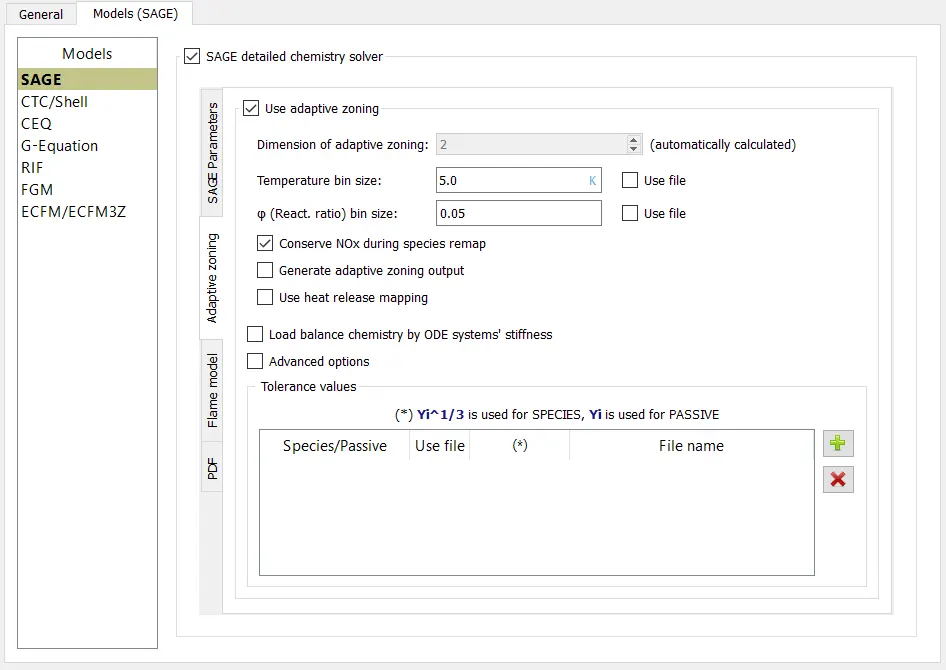
The combustion process produces mechanical power from chemical energy contained in the fuel. In order to capture the combustion process, the converge software needs to read a system of chemical rection of species. These chemical reaction mechanism of species is included in a file called mech.dat file in CHEMKIN format and is provided as the input file. Converge offers combustion modeling which reads these reaction mechanisms and solves the reaction rates of speacies. The SAGE detailed chemistry solver is one of the combustion models offered by the converge. This combustion model is the most predictive and accurate solver. The SAGE detailed chemistry solver ueses arrhenius rate law equation to calculate reaction rate. The converge reads mech.dat file which contains reaction mechanism and values of terms in arrhenius equation. These equations are in the form of a system of ODEs which is provided as the source term to the species transport equation which further predicts the physical behaviour of the species in the domain.
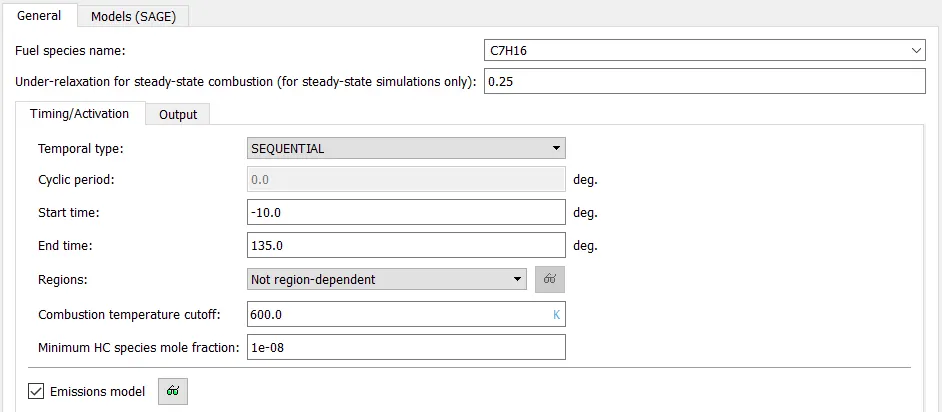
In general tab settings of combustion model, the species name, start time and end time of the combustion, and specific regions where the chemical solver needs to solve reaction rate to decrease the computation effort, minimum hydrocarbon species mole fraction is defined.
Emission modeling
It is very important to simulate production of NOx, soot and species of interest such as CO, CO2, unburned hydrocarbons from combustion process for emission characterization which helps for better engine design. The converge CFD software offeres many models to calculate the formation of such pollutants.
NOx model
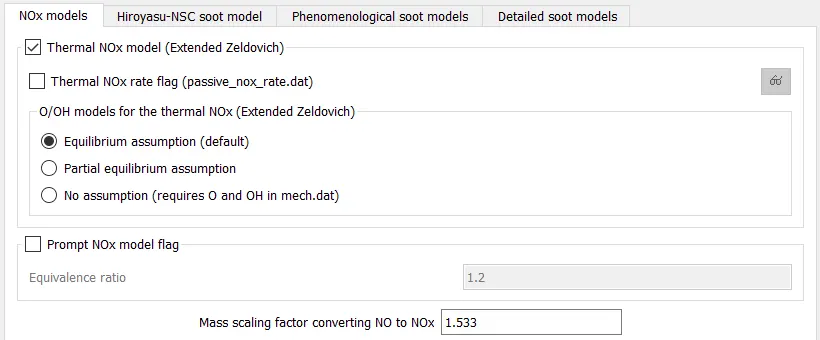
The thermal NOx model is used to predict the NOx formation where the reaction rate of NO is calculated using extended Zel'dovech mechanism.
Hiroyasu-NSC soot model
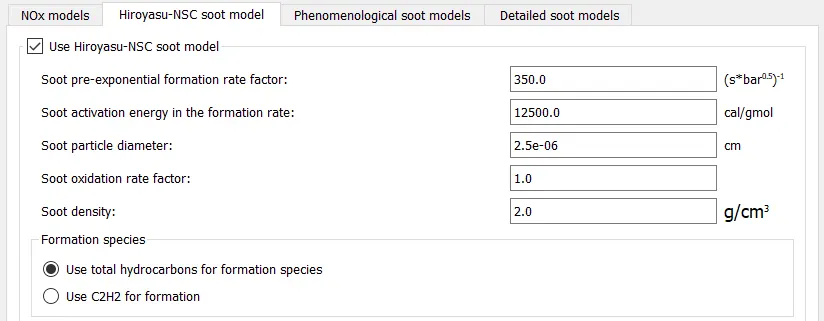
The hiroyasu model is coupled with NSC (Nagle and strickland constable model 1962) to simulate soot oxidation.
Turbulence modeling
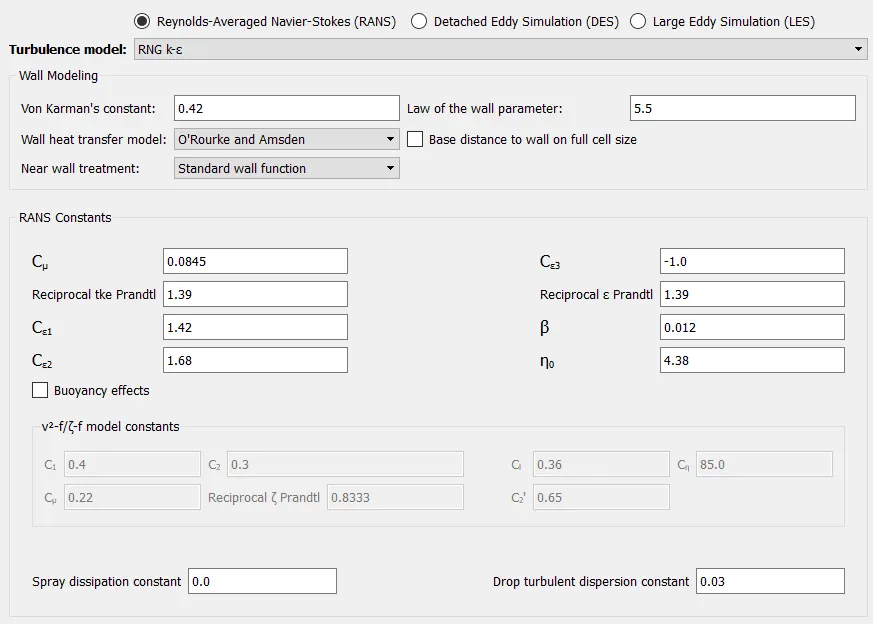
The RNG k-epsilon is used to simulate the turbulent flow of fuel in the combustion chamber.
Grid control
Base grid size
dx=dy=dz= 4 mm
Fixed embedding
1. Cylinder head embedding
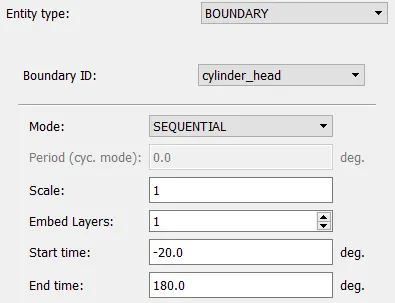
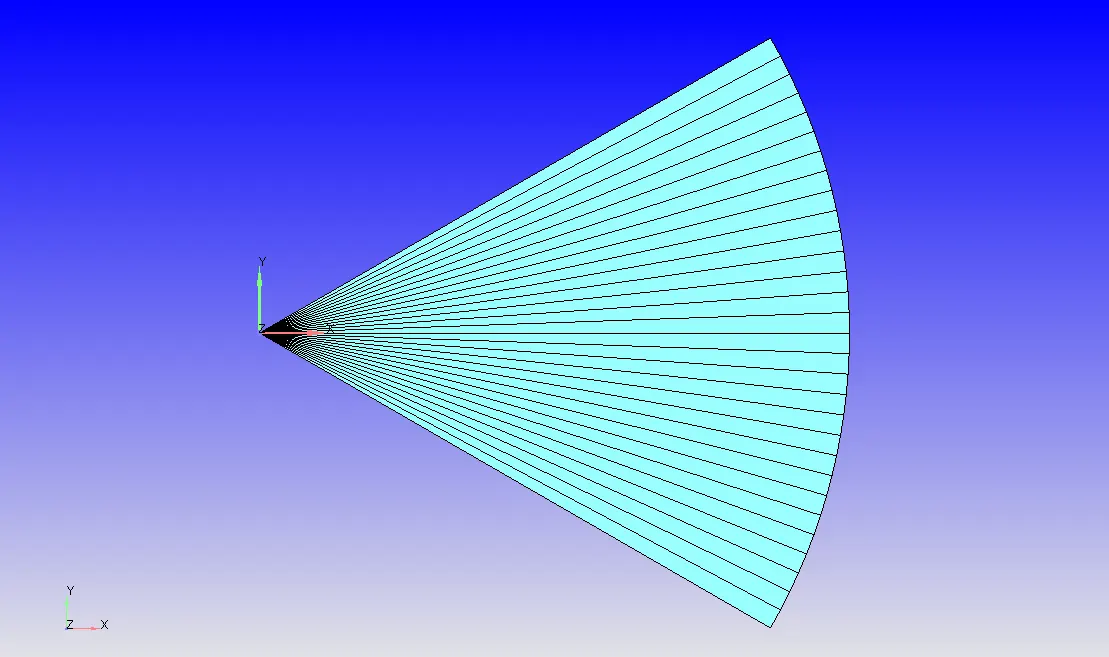
The grid cells near cylinder head is refined using fixed embedding with embed scale 1 and embed layer 1. The size of the refined cell near cylinder is given by,
refined cell size = base grid size/2^embed scale = 0.004/2^(1) = 0.002 m
2. Piston embedding
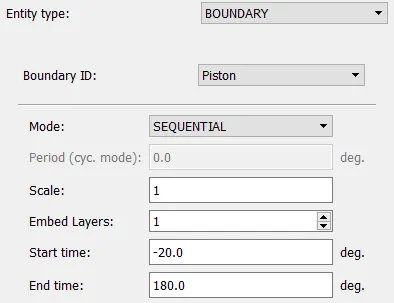
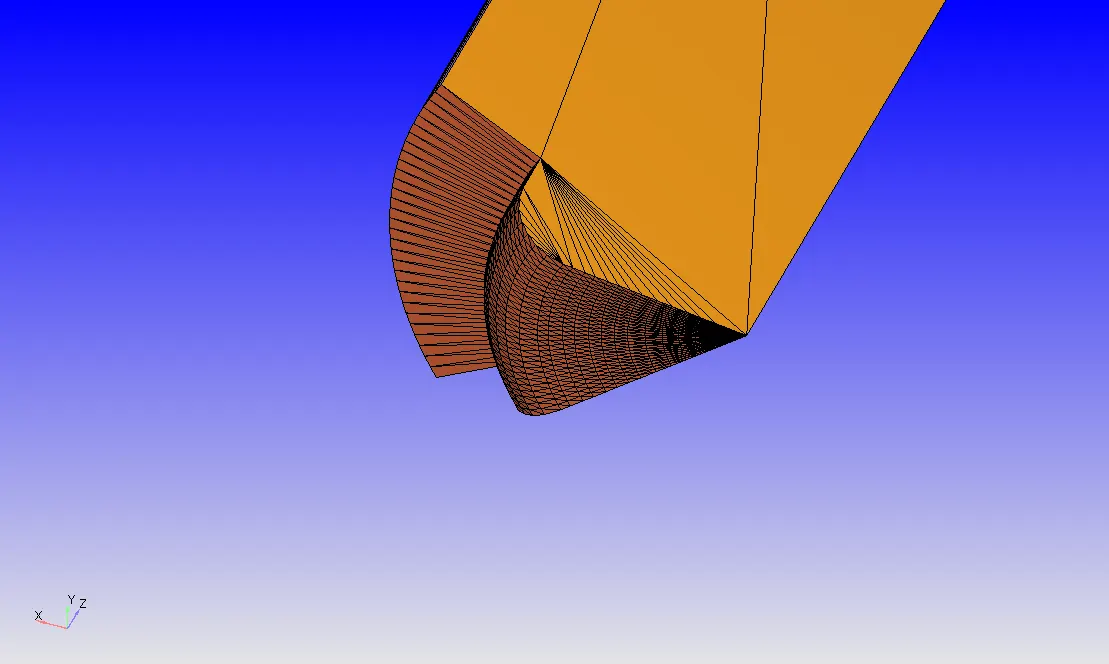
The grid cells near the piston is refined to capture the fuel flow accurately by using sequential fixed embedding from -20 deg crank angle to 180 deg crank angle with embed scale 1 and embed layer 1. The size of the refined cell near piston is given by,
refined cell size = base grid size/2^embed scale = 0.004/2^(1) = 0.002 m
3. Nozzle embedding
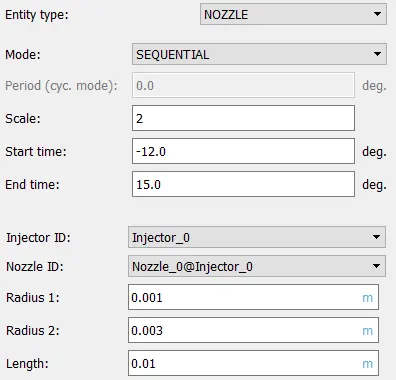
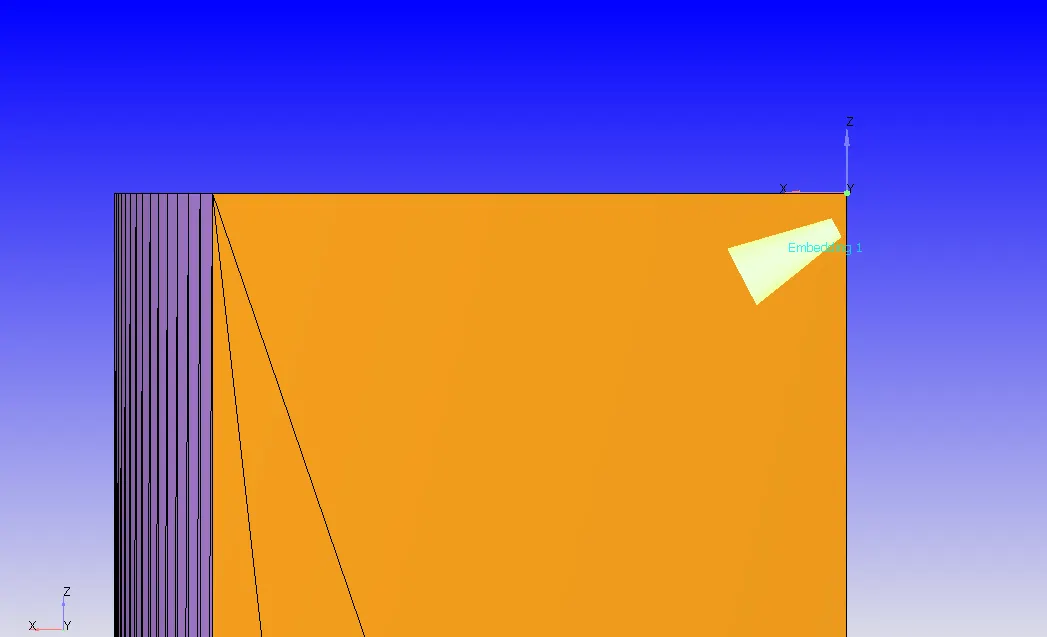
The grid cells in the nozzle region is refined to capture the fuel parcels flow accurately into the engine cylinder by using sequential fixed embedding with embed scale 2 from -12 deg crank angle to 15 crank angle. The size of the refined cell in nozzle region is given by,
refined cell size = base grid size/2^embed scale = 0.004/2^(2) = 0.001 m
Adaptive mesh refinement
Velocity AMR
Temperature AMR
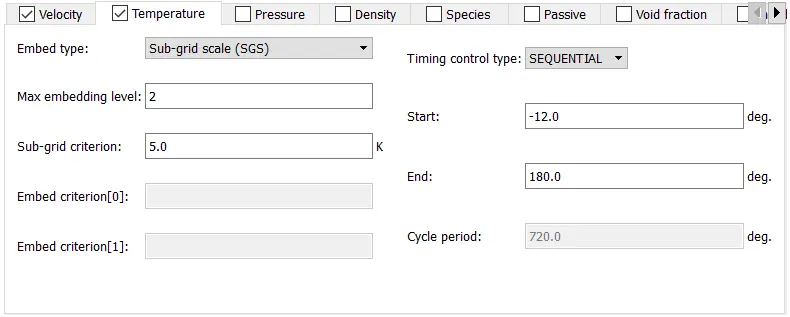
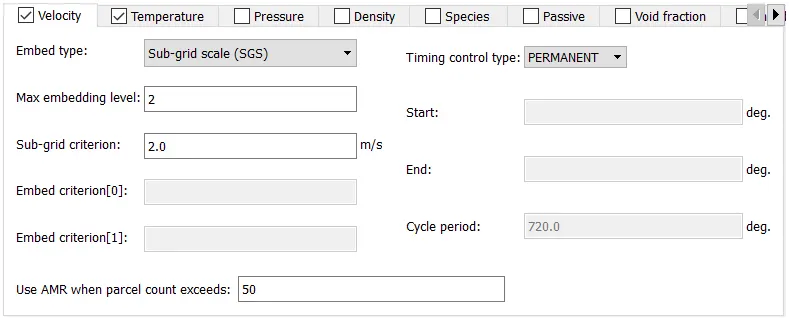
The adaptive mesh refinement is used to refine grids automatically based on the fluctuating and moving conditions such as velocity and temperature. The flame propagation causes high velocity flow of species and also causes rapid increase in the species temperature. These fluctuations of velocity and temperature causes gradient formation which is detected by the AMR(adaptive mesh refinement) and it refines the grid automatically so that simulation is not slowed down. The temperature AMR with 2 embed level and sub-grid scale of 5 K starts at the -12deg crank angle and ends at the 180deg crank angle. The velocity AMR is permanent with embed level of 2 and sub-grid-scale of 2m/s. The size of the cells in scaled grid is given by,
Scaled grid size = Base grid size/2^max embed level
Scaled grid size in velocity AMR = 0.004/2^(2) = 0.001 m.
Scaled grid size in Temperature AMR = 0.004/2^(2) = 0.001 m
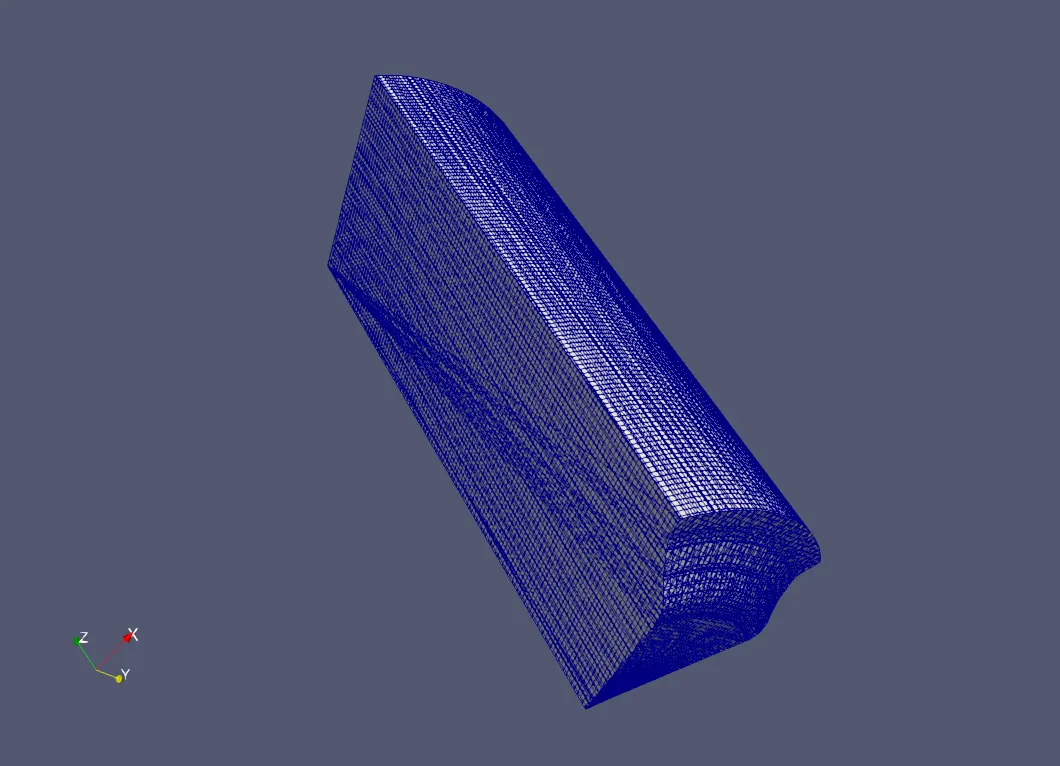
Mesh generated in engine cylinder with open-w-piston
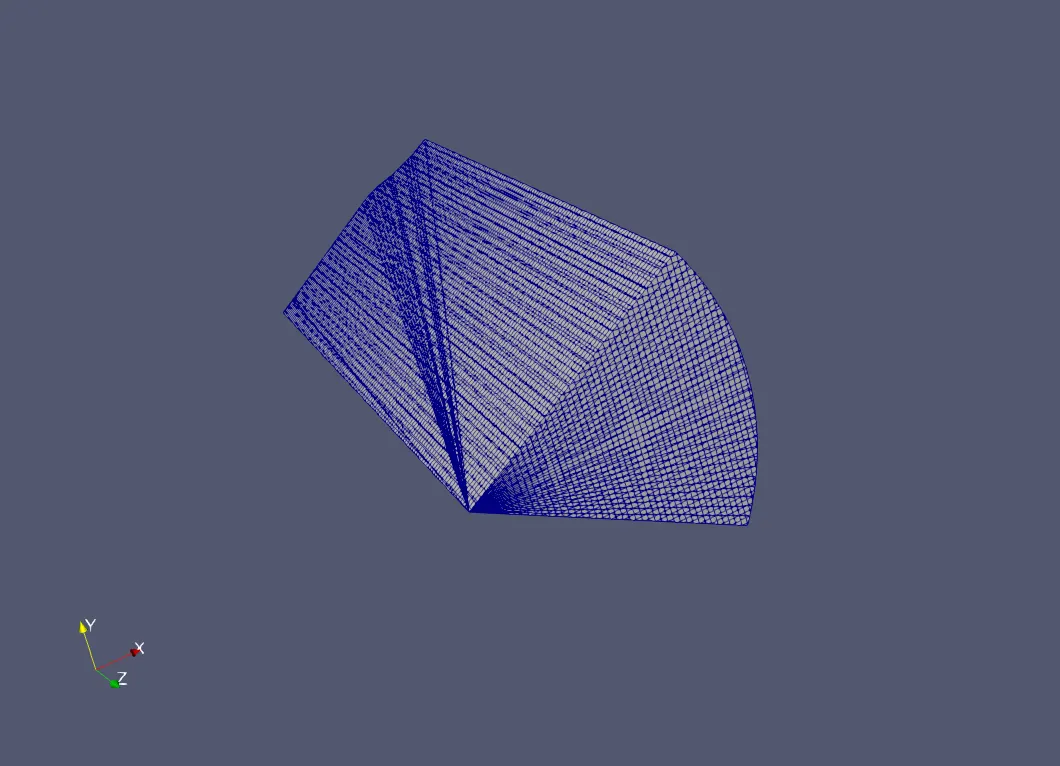
Mesh animation
Mesh generated in engine cylinder with omega piston
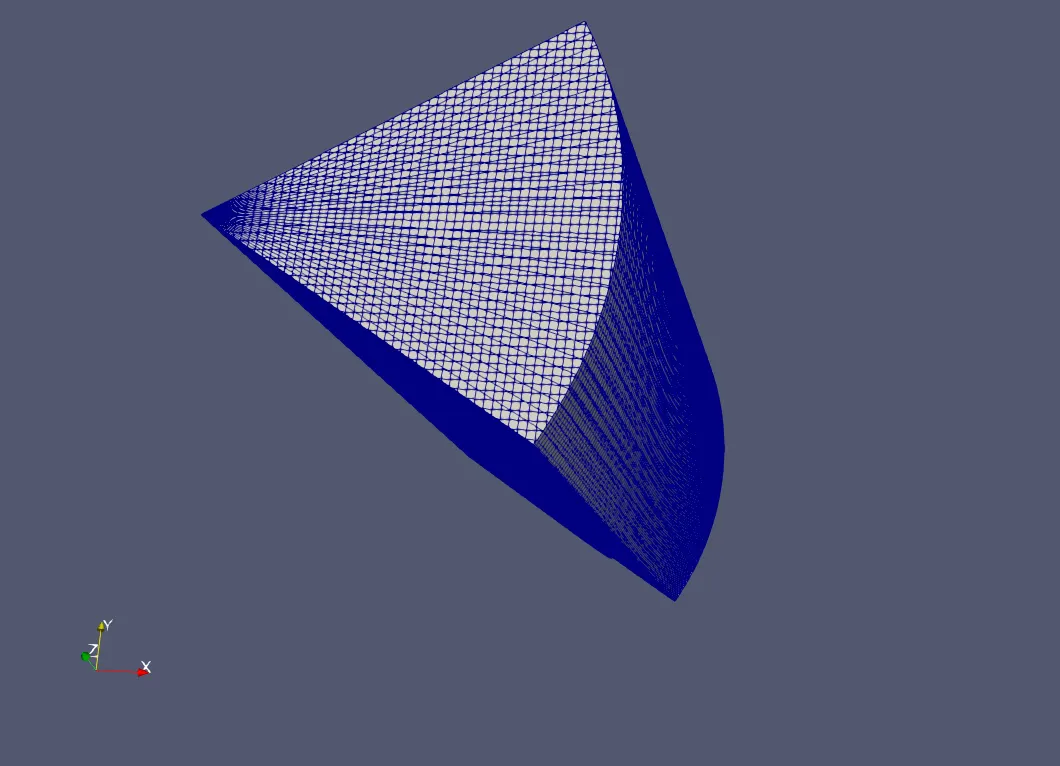
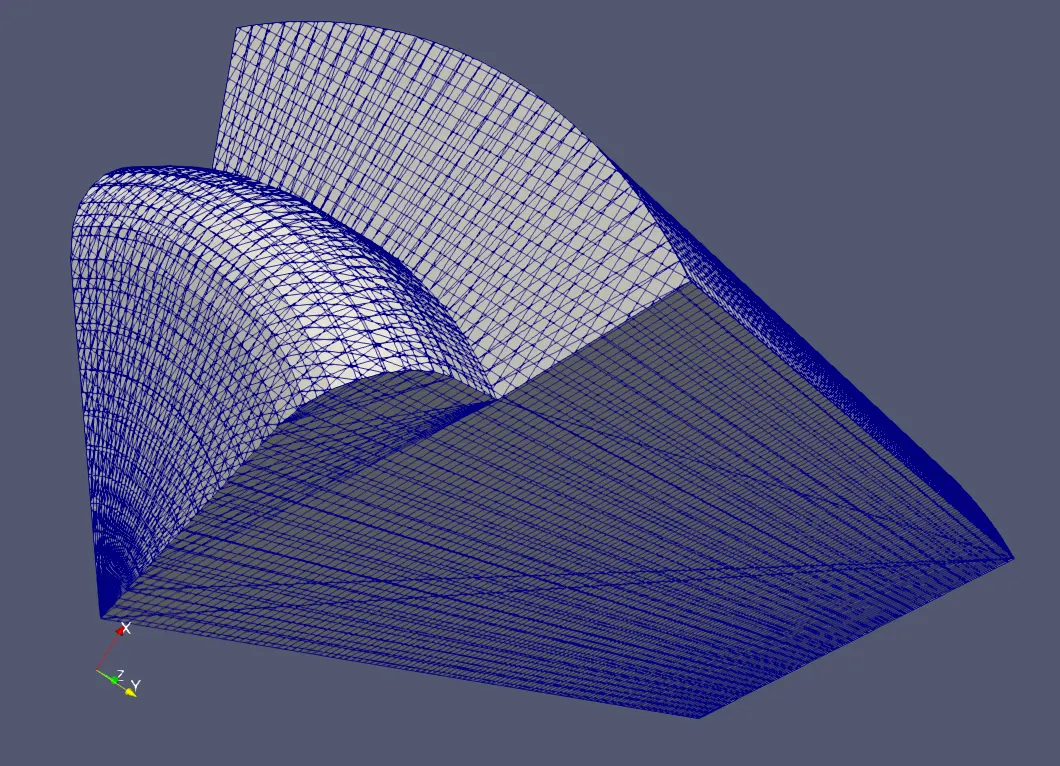
Mesh animation
Results
NOx formation in open-w-piston diesel engine and omega piston diesel engine
Soot formation in open-w-piston diesel engine and omega piston diesel engine
CO formation in open-w-piston diesel engine and omega piston diesel engine
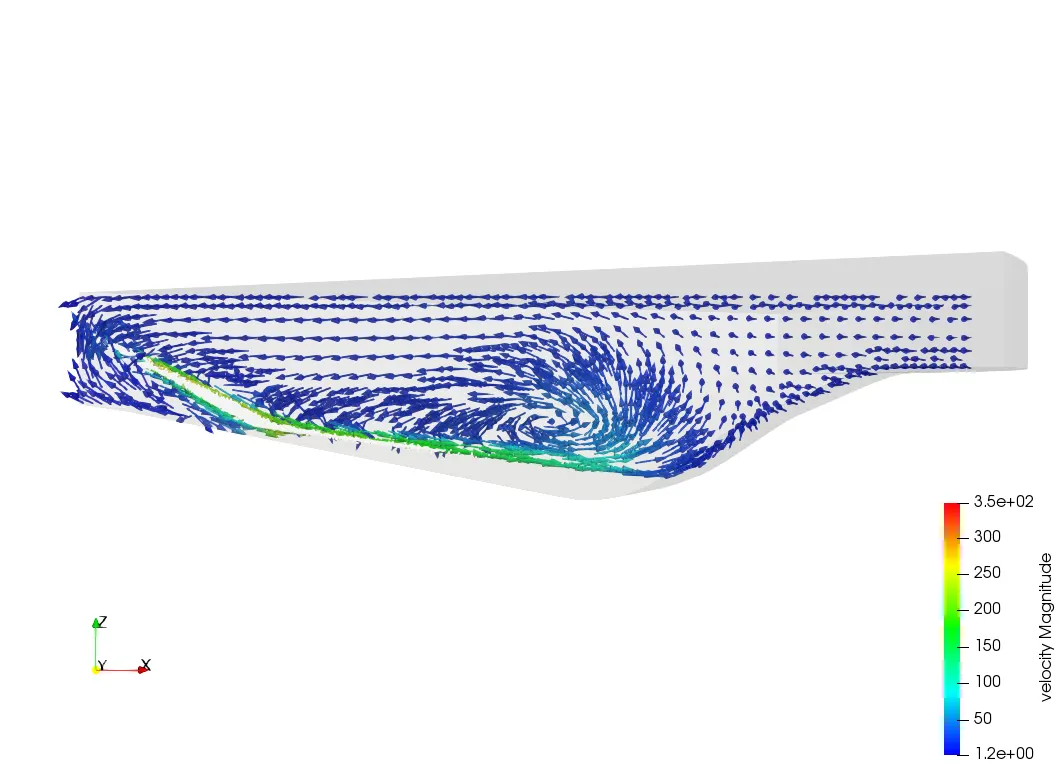
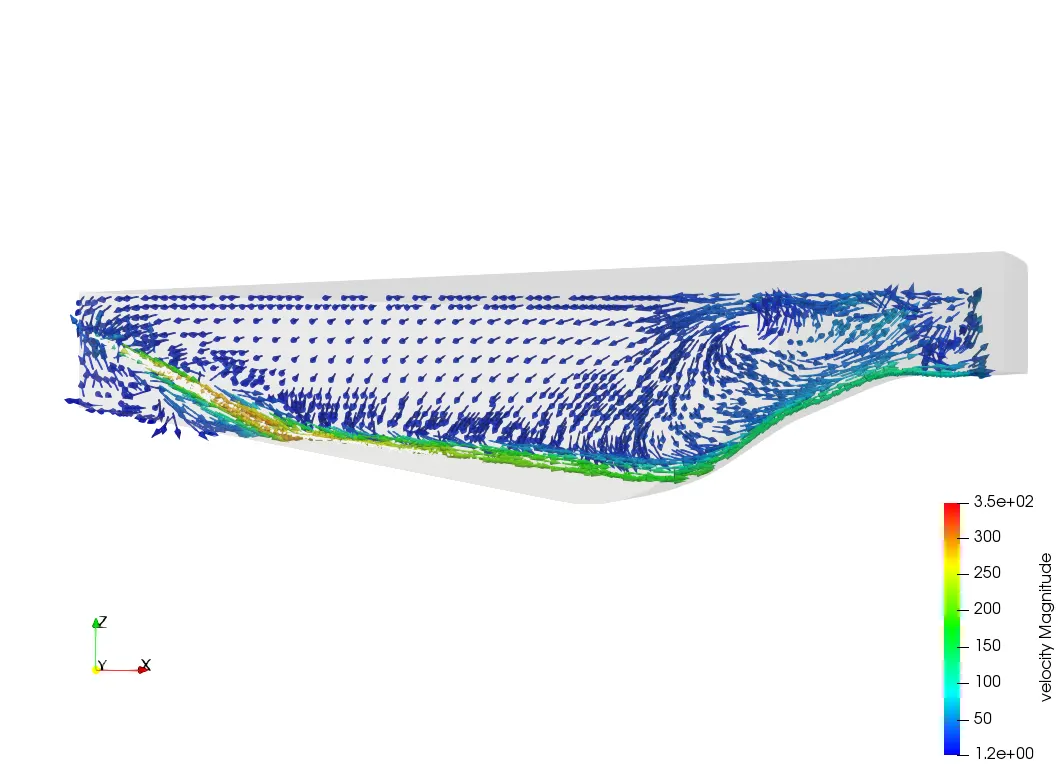
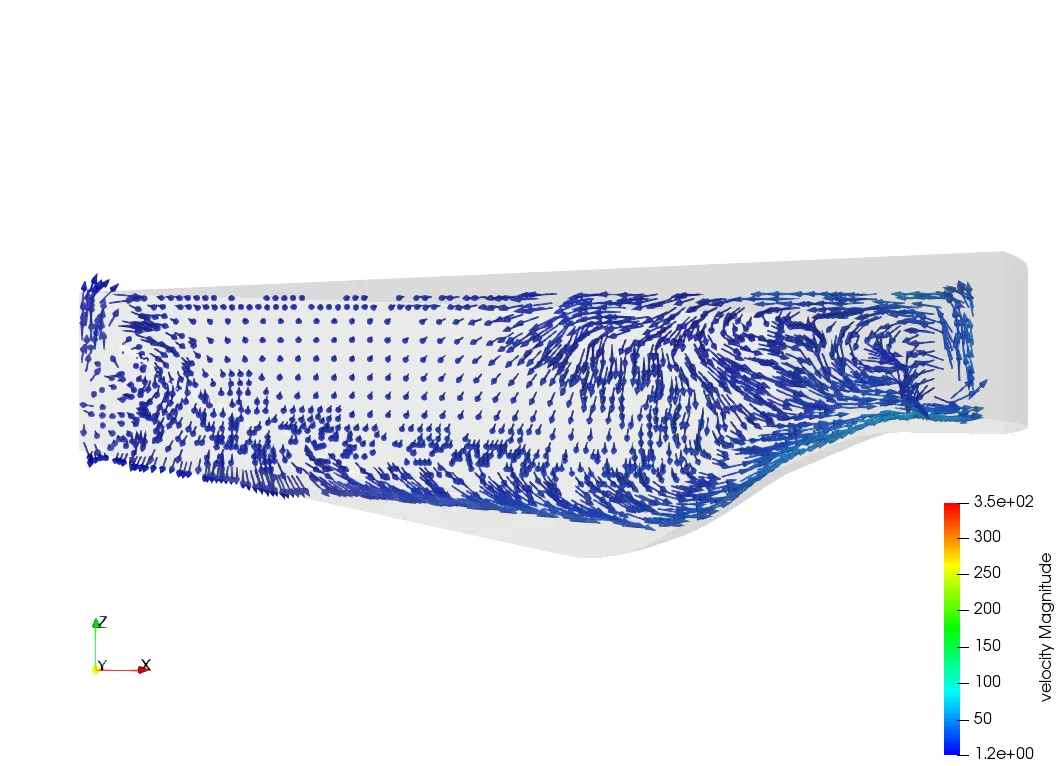
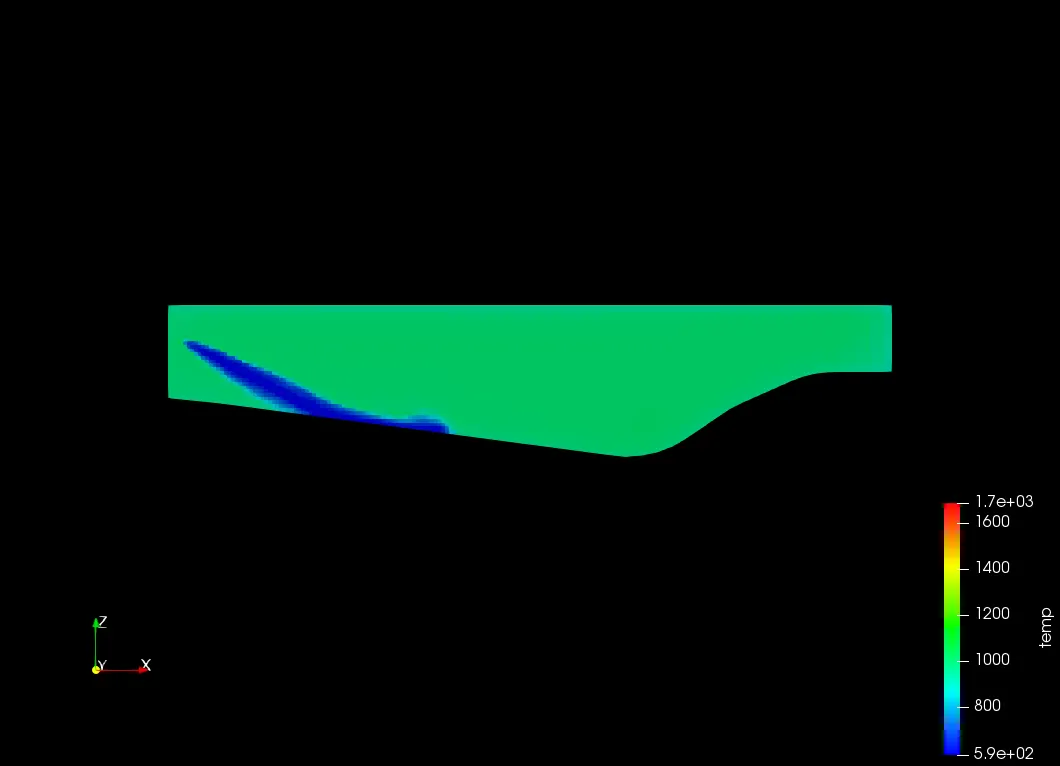
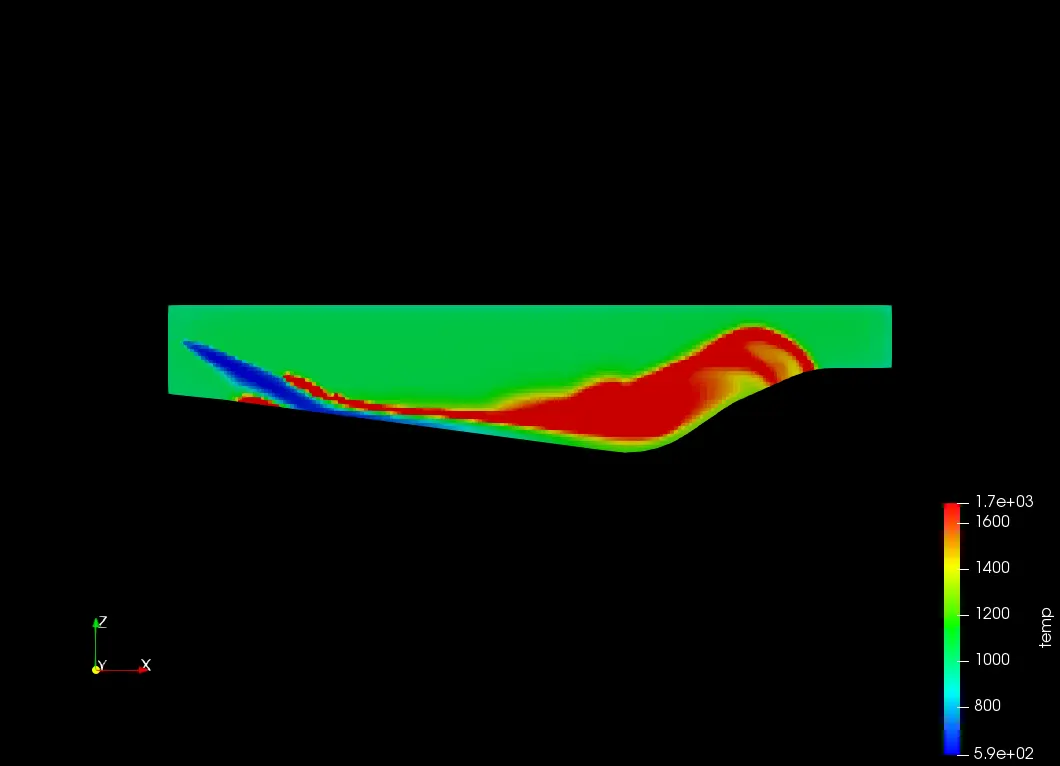
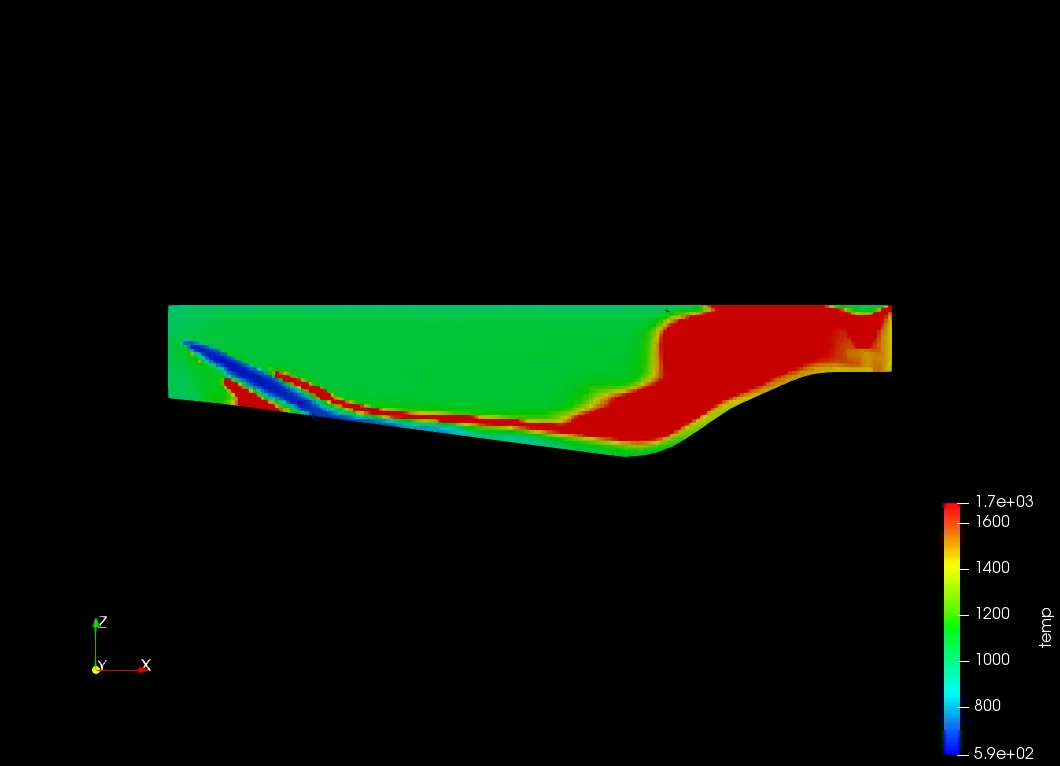
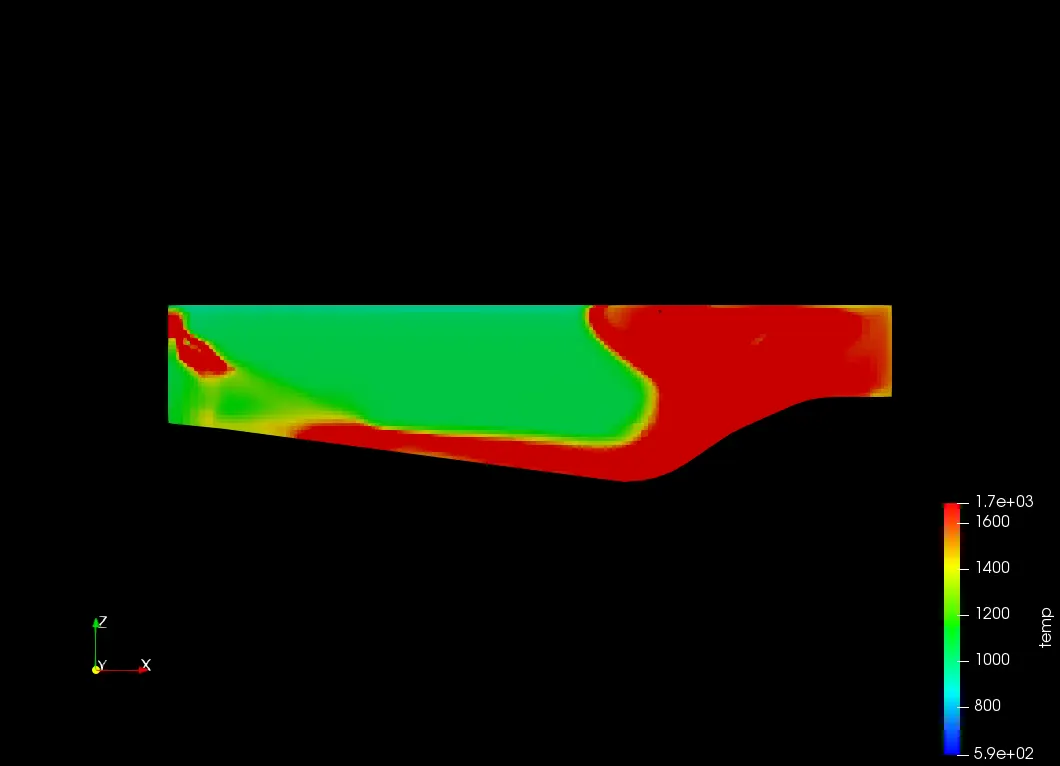
Swirl generation and flame propagation in open-w-piston diesel engine
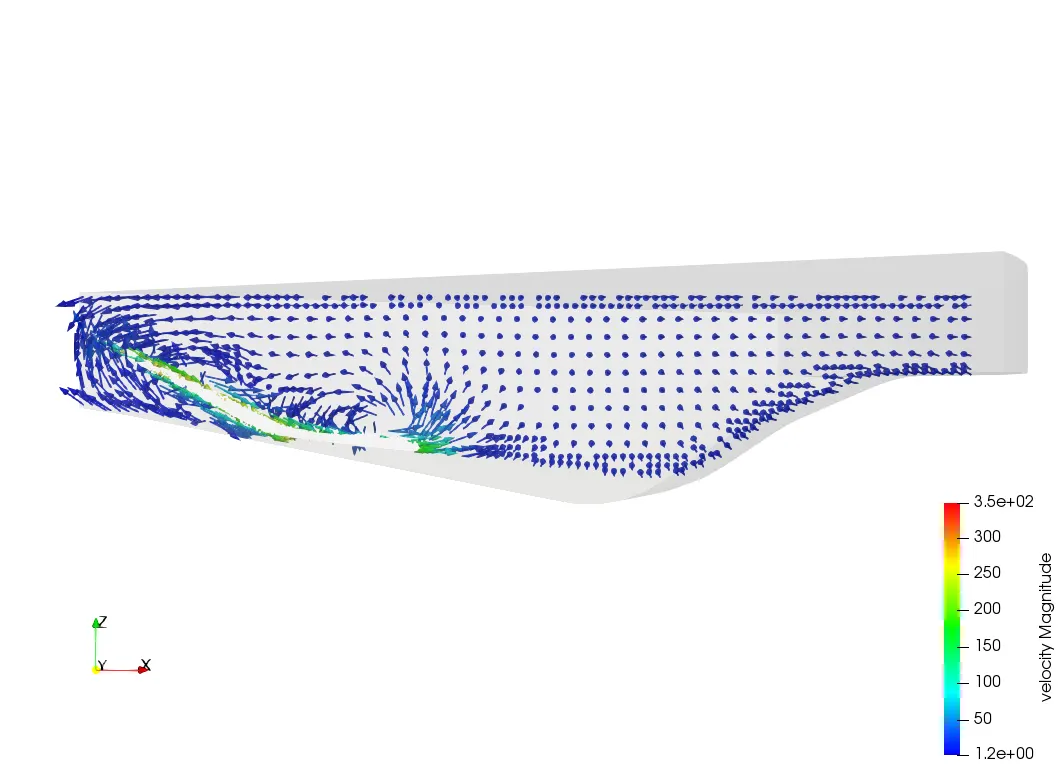
Swirl generation and flame propagation in omega piston diesel engine
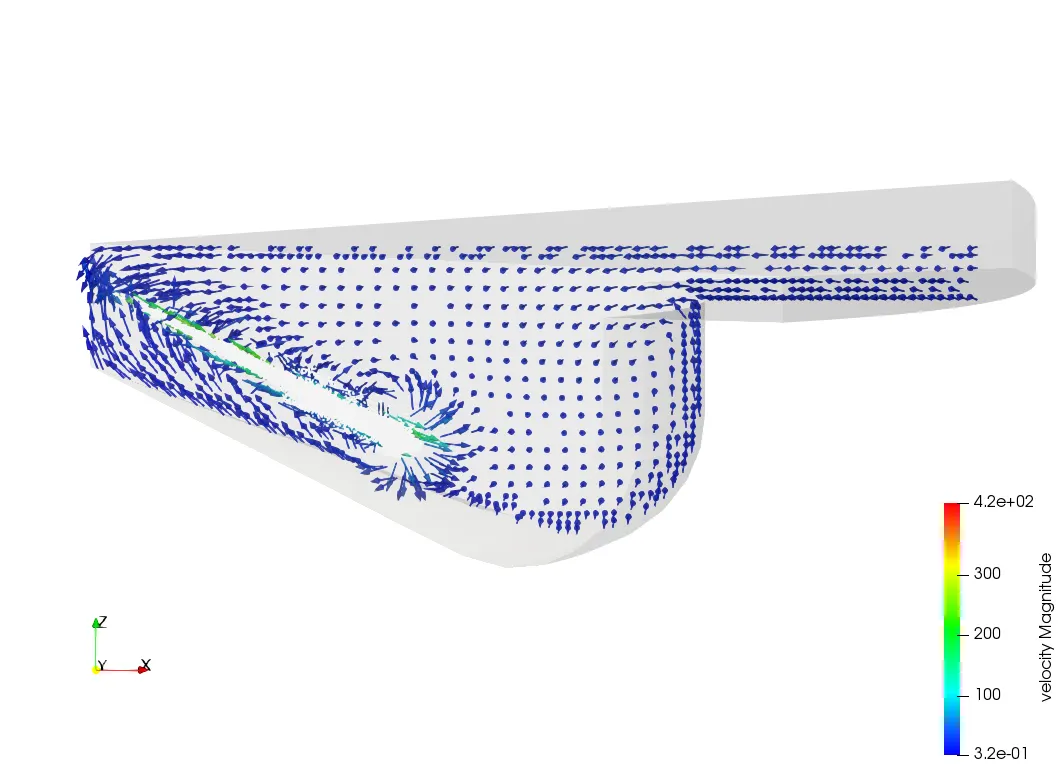
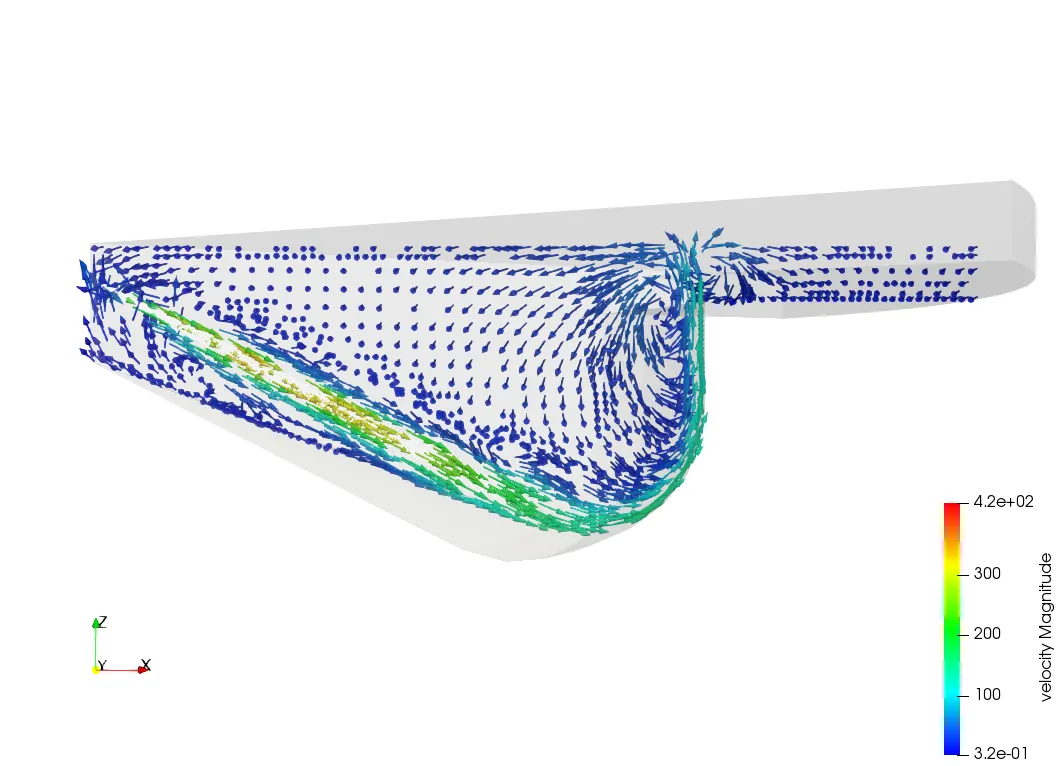
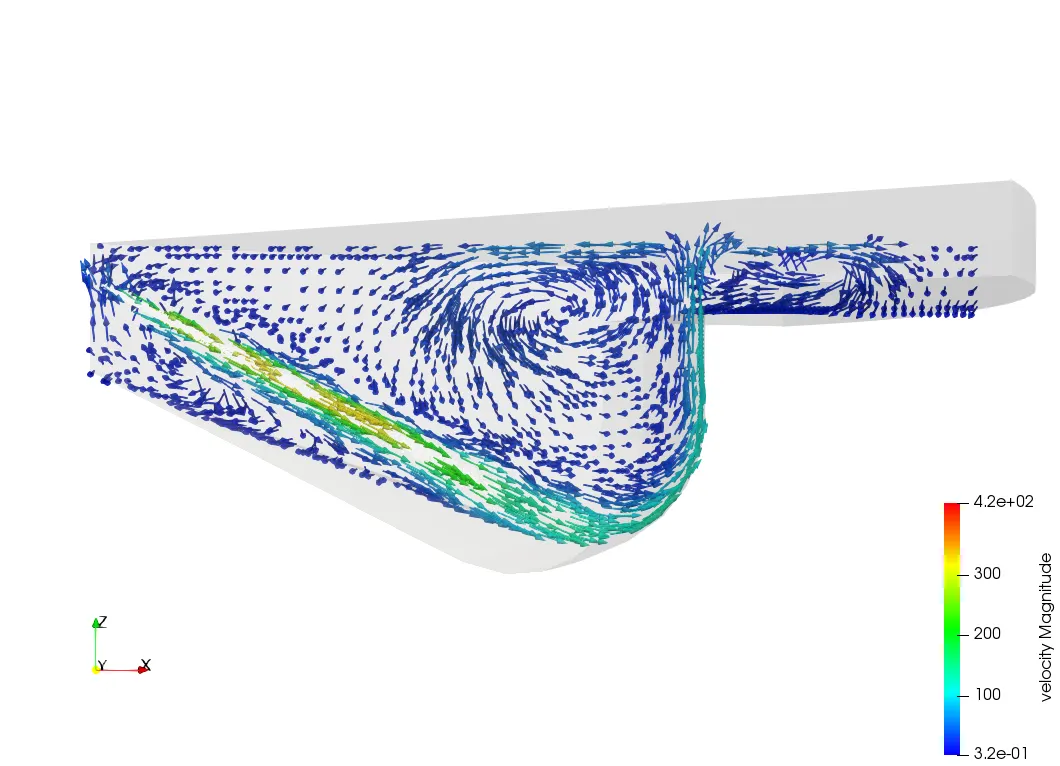
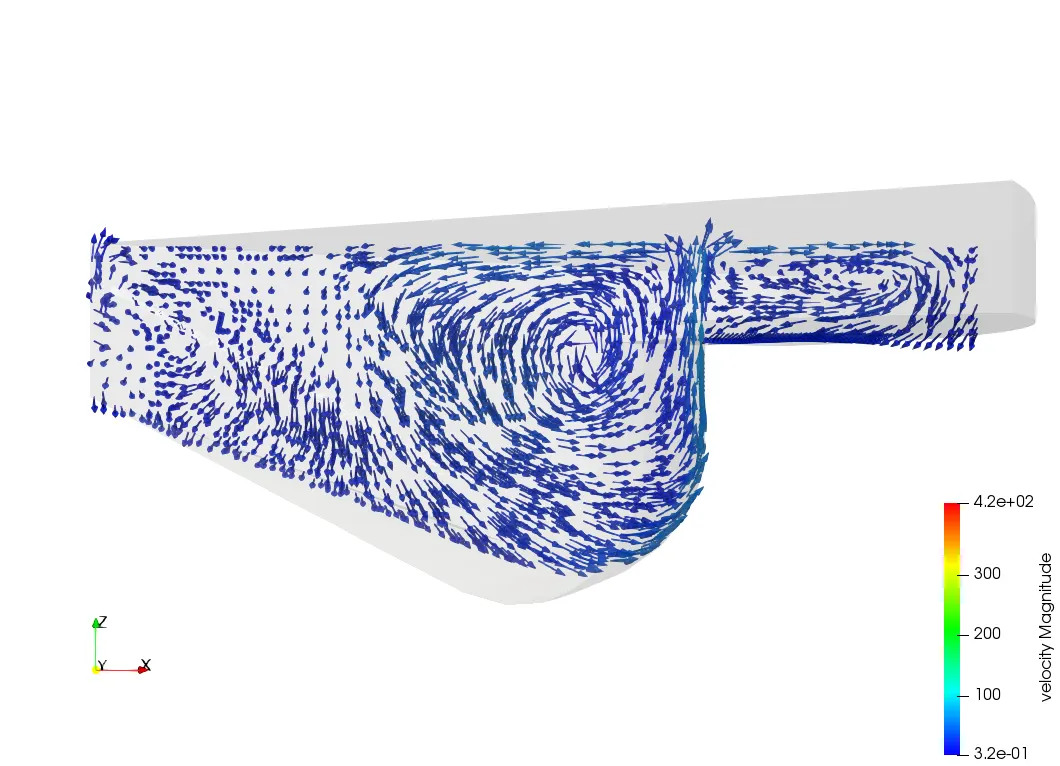
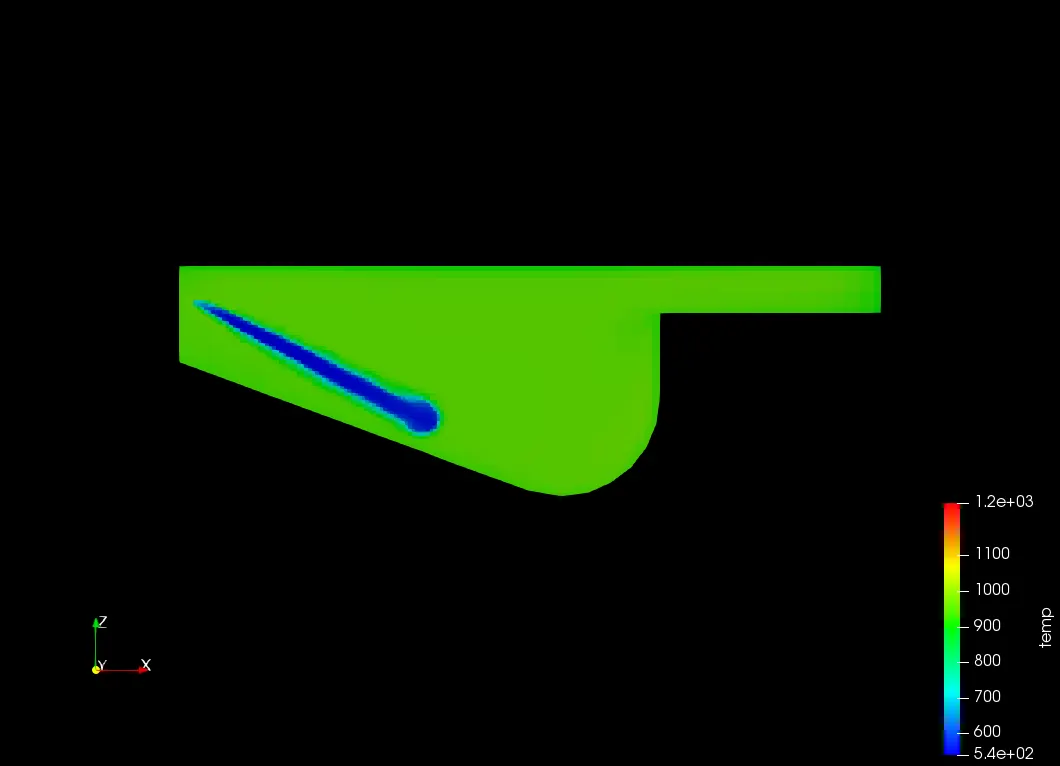
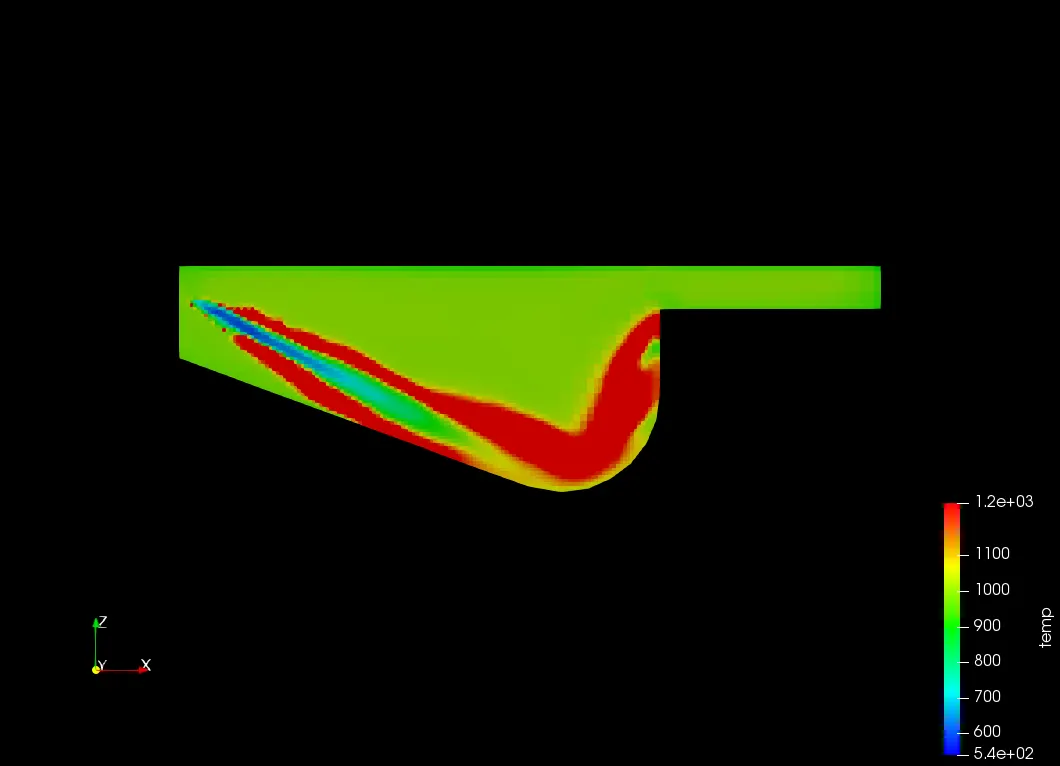
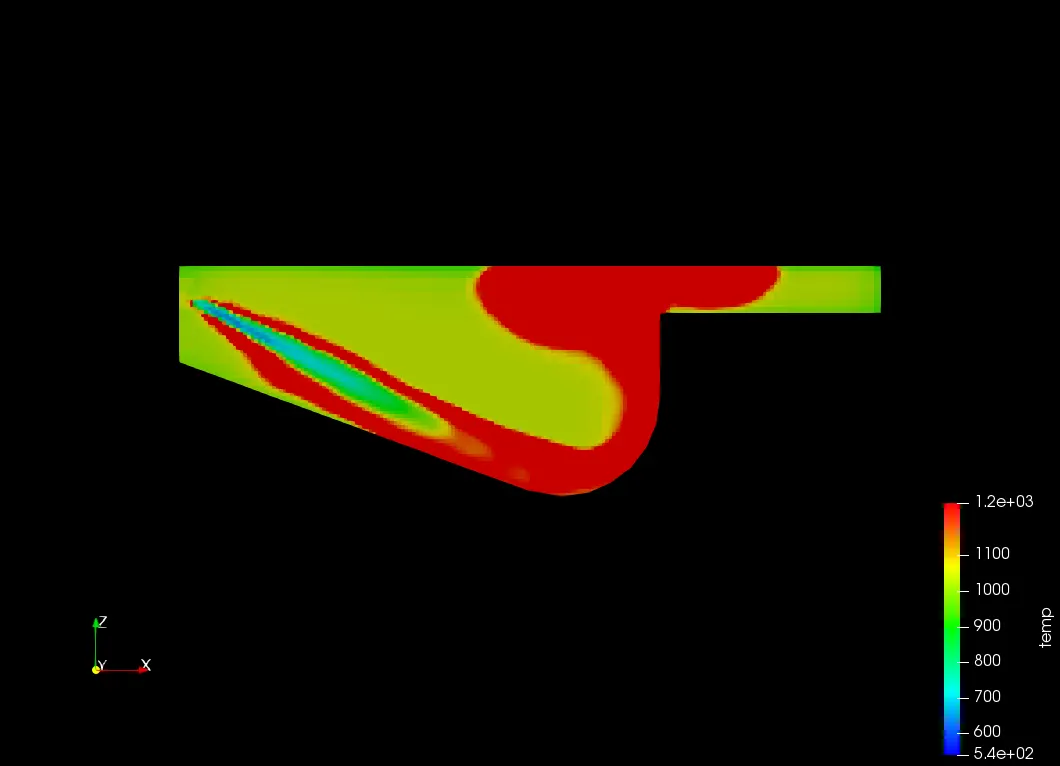
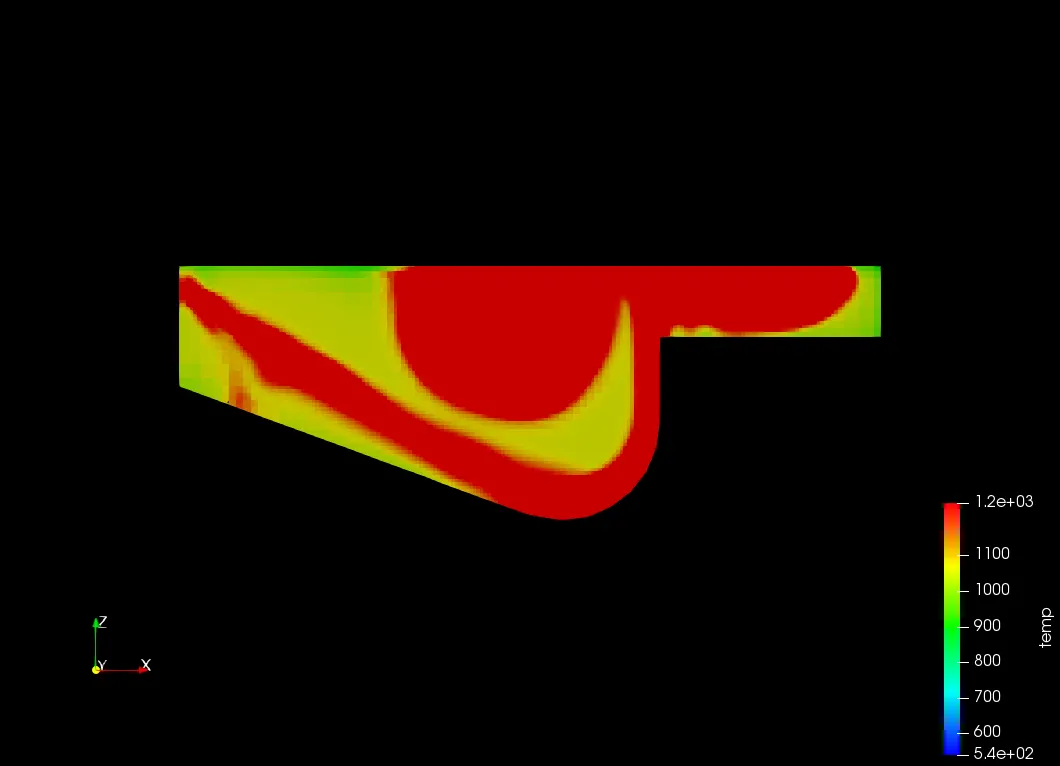
The air swirl in combustion chamber plays an imoprtant role in promoting rapid fuel air mixing and high speed flame propagation. By looking at above contours, it is clear that the bowl profile of omega piston generates high degree air swirl and turbulence which leads to proper fuel air mixing and high speed flame propagation. The above contours show that the air swirl generation in open-w-piston is of lower degree and lower turbulent flow in combustion chamber which results in combustion inefficiency due to the presence of unburnt fuel. Thus, the bowl profile of omega piston diesel engine gives improved air swirling and high speed flame propagation resulting in high temperature in engine cylinder which ensures proper burning of fuel injected into the combustion chamber.
Temperature plot
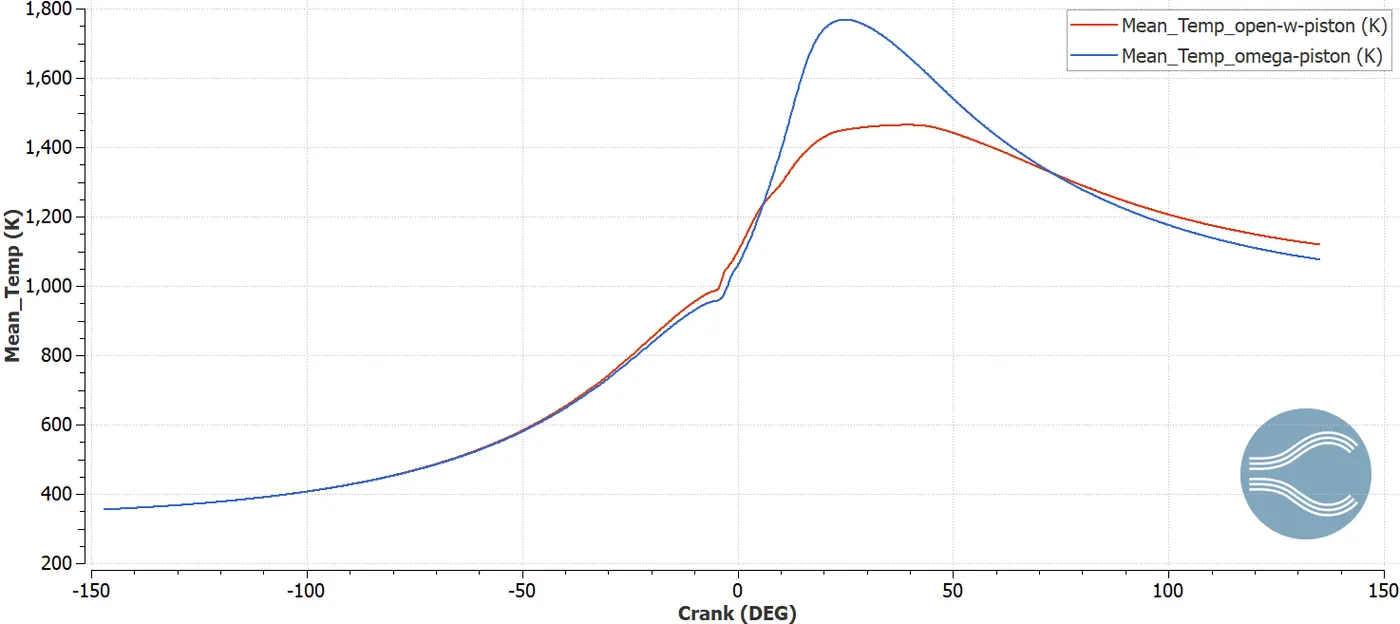
The above plot shows the temperature distribution in combustion chamber at different crank angles. It can be seen that the temperature of diesel engine combustion chamber with omega piston is greater than the diesel engine with open-w-piston. This is because of the improved swirling and turbulent effect offered by the bowl profile of the omega piston.
Volume
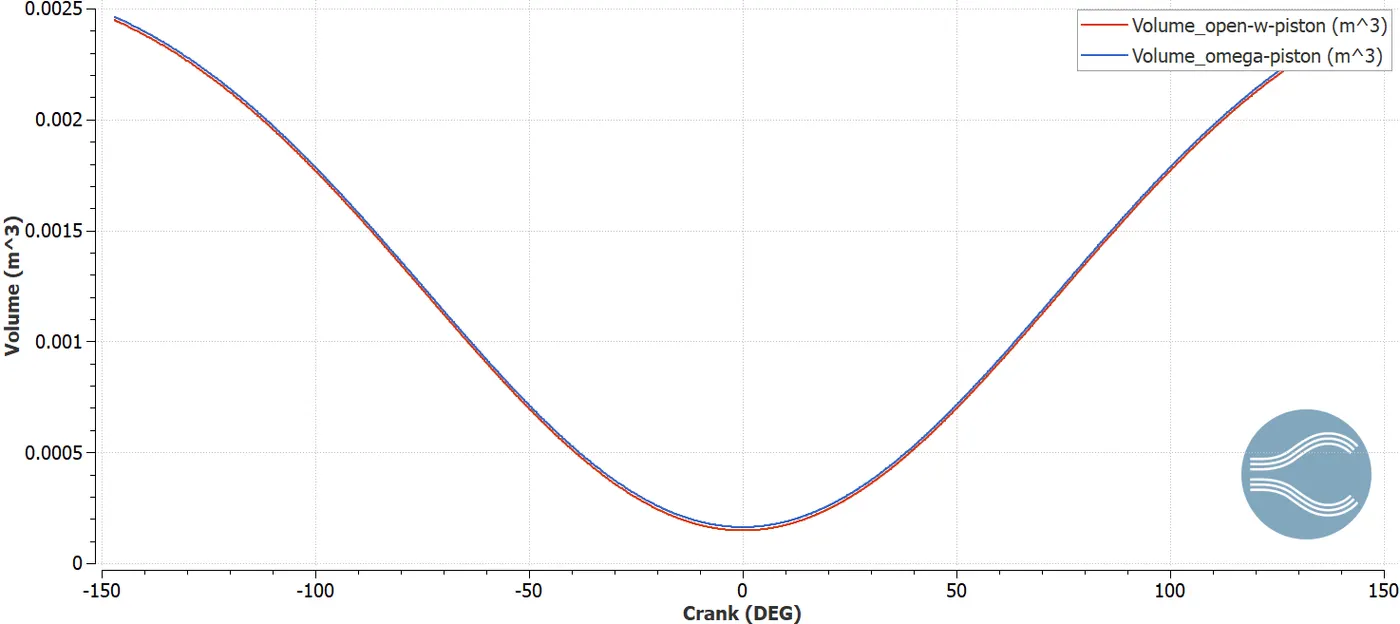
The above plot shows the volume of the combustion chamber for diesel engine with open-w-piston and with omega piston. It can be seen that the swept volume of diesel engine with omega piston is slightly more due to its bowl profile.
Heat release rate plot
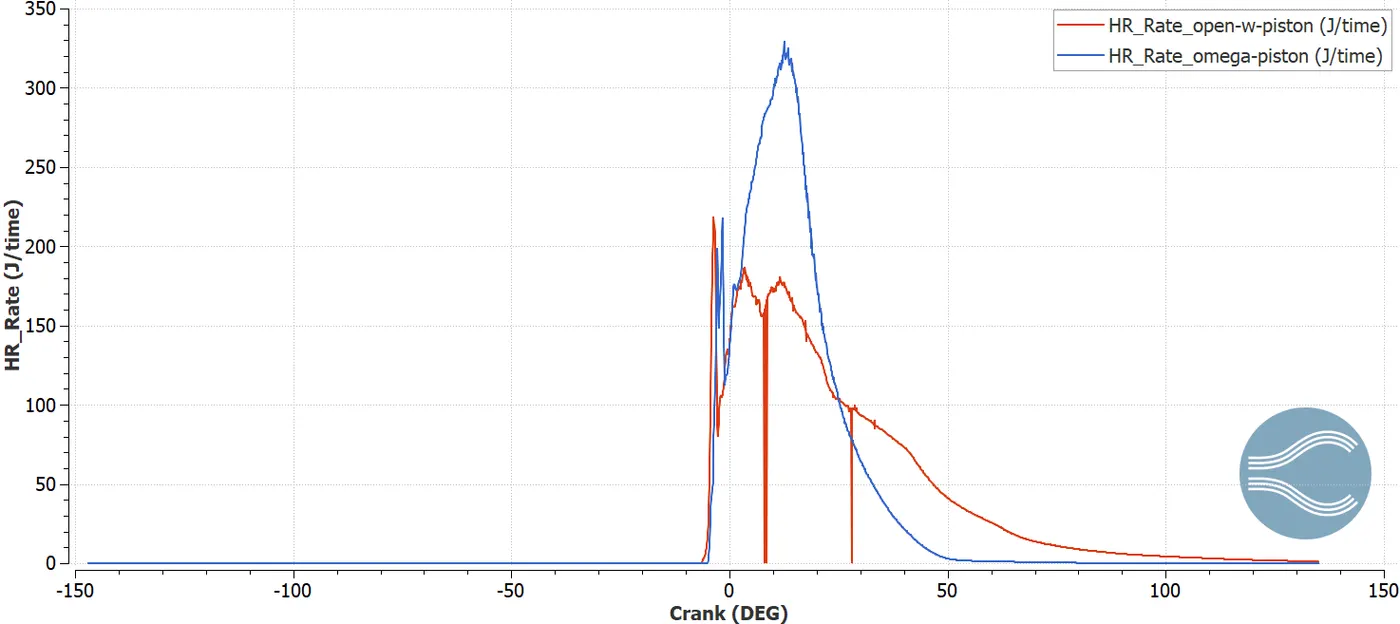
The above plot shows the heat release rate at different crank angles of diesel engine with open-w-piston and with omega piston. From the plot, it can be seen diesel engine with omega piston releases more heat compared to diesel engine with open-w-piston. This is because of better swirl generation by omega piston which ensures proper mixing of fuel-air mixtures.
Integrated heat release rate plot
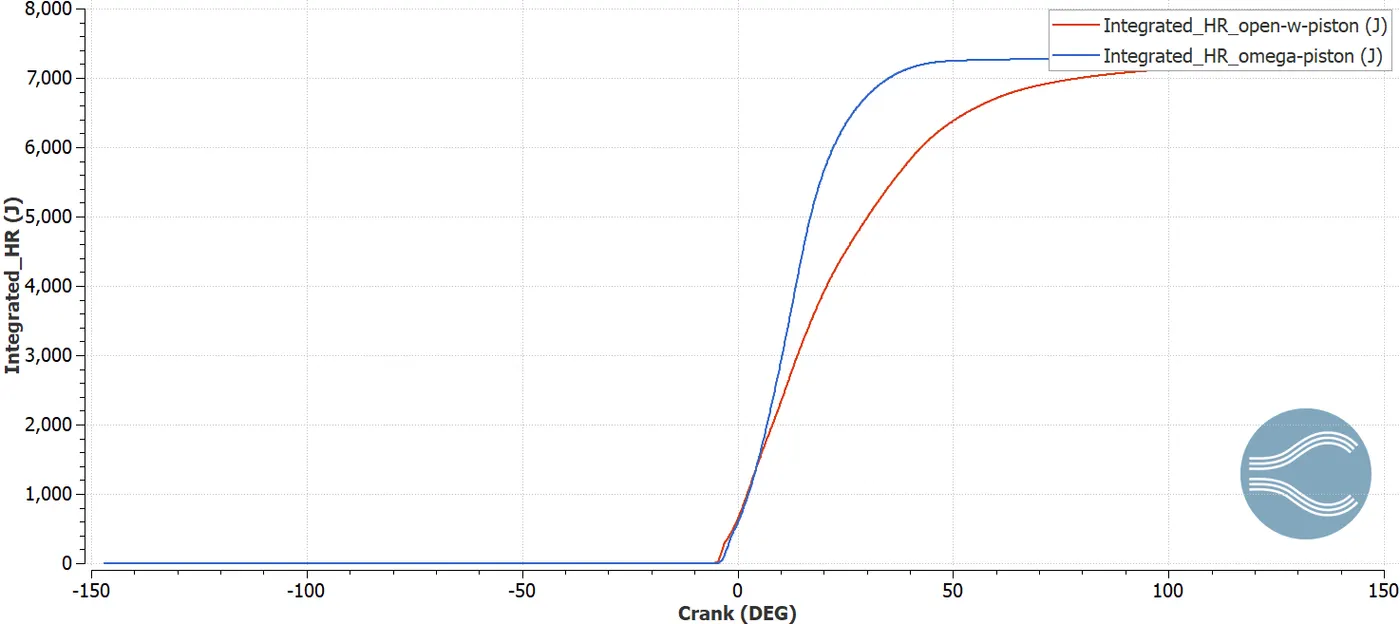
The above plot shows the integrated heat release rate of diesel engine with open-w-piston and with omega piston which gives the total amount of heat released during combustion process. The total amount of heat released by the diesel engine with open-w-piston is 7211.9 J and the total amount of heat released by the diesel engine with omega piston is 7279.46 J. It is observed that diesel engine with omega piston gives out 67.56 J more heat energy compared to diesel engine with open-w-piston. Thus, the amount of fuel corresponding to 67.56 Joules of heat energy is unburnt in the diesel engine with open-w-piston.
Soot plot
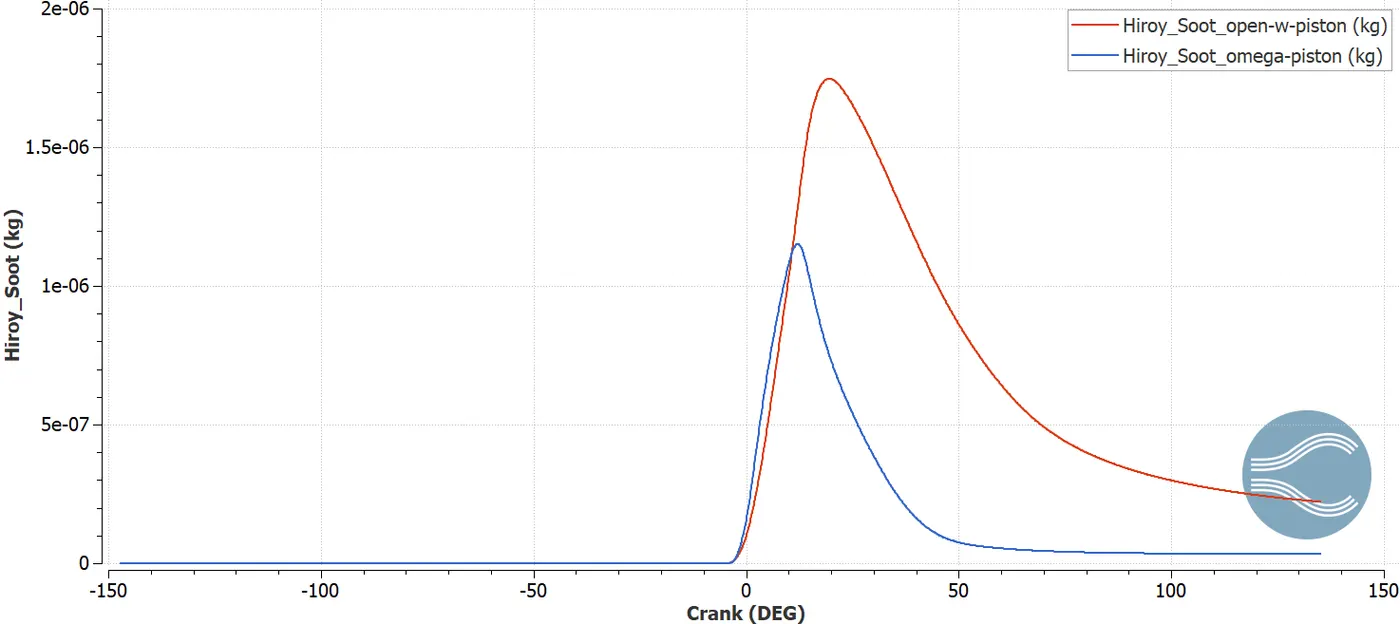
The incomplete combustion of fuel leads to formation of black smoke which is known as soot and it mainly contains carbon. The above plot shows the soot mass formed in the engine cylinder with open-w-piston and with omega piston. It can be seen that the engine with open-w-piston produces more amount of soot compared to engine with omega piston. This is due to lower cylinder temperature in open-w-piston engine which leads to incomplete combustion of fuel.
NOx plot
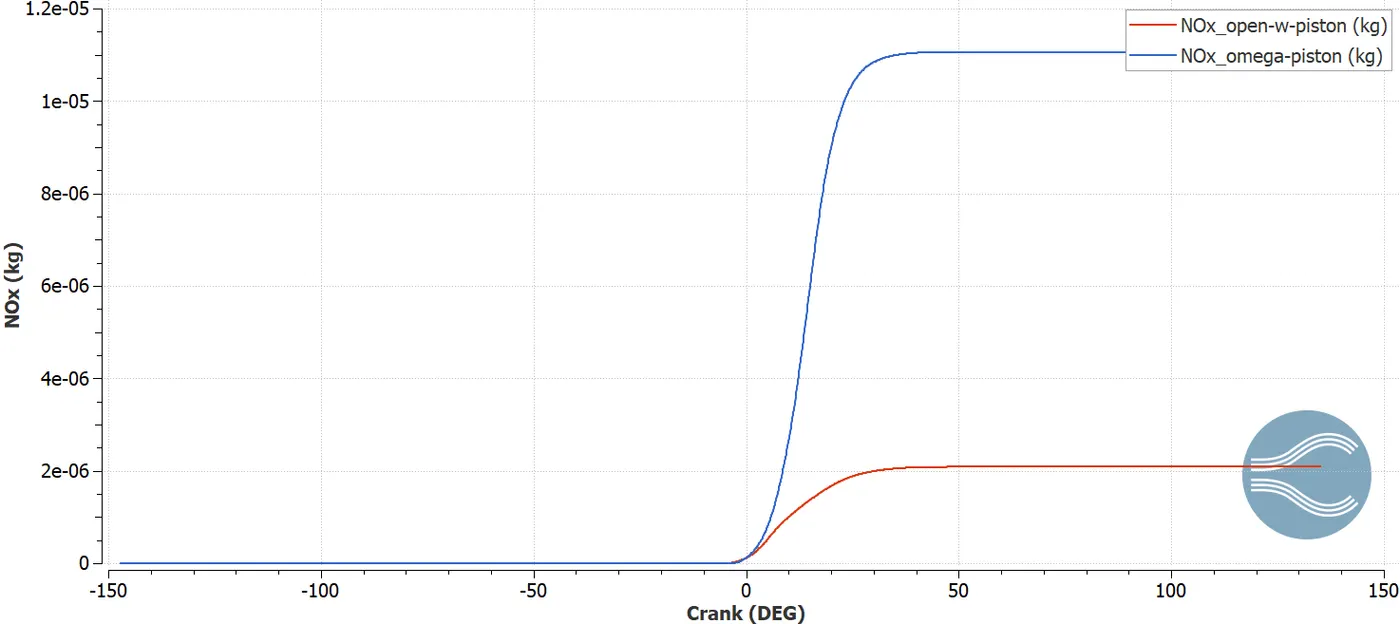
The production of NOx in engine cylinder depends on several factors like equivalence ratio, piston bowl geometry, high combustion temperature. The above plot shows the NOx mass produced in diesel engine cylinder. It can be seen that the NOx mass concentration is more in engine cylinder with omega piston. This is due to high combustion temperature and high peak pressure. From the animation it can be seen that the NOx is formed between the start of combustion and shortly after the occurance of peak cylinder pressure.
CO plot
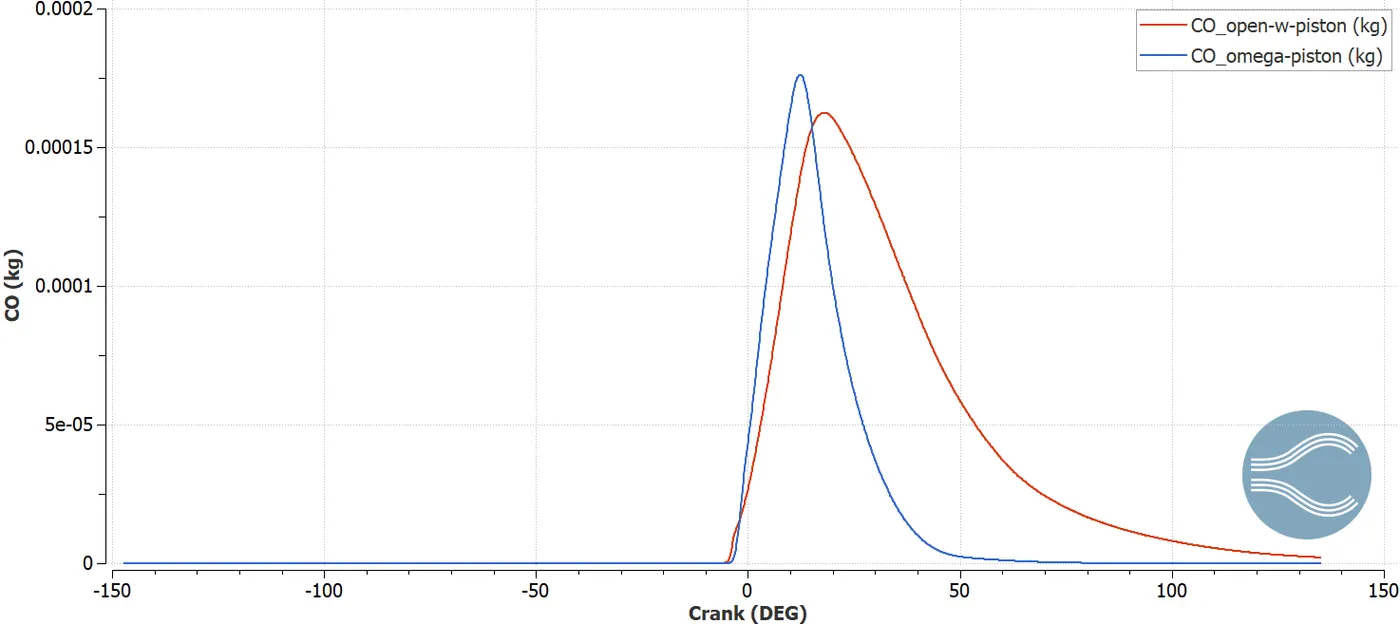
The formation of carbon monoxide is mainly because of incomplete combustion and improper mixing of air fuel. In the engine cylinder with open-w-piston improper mixing of fuel air mixture decreases the reaction rate, hence lower temperature is observed in open-w-piston engine cylinder. Because of such lower temperature flame propagation is not achieved which leads to incomplete combustion of fuel and thus, forming large amount of carbon monoxide.
Open-w-piston engine performance calculations

Power of open-w-piston diesel engine
Work done = 3028.53 N-m
Combustion duration = 270.156 deg
Crank speed = 1600 rpm = 26.66 rps
Number of degrees per second = 26.66*360 = 9597.6 deg per second
Time taken for one degree = 1/9597.6 = 0.000104 seconds per degree
Time taken for combustion = 270.156*0.000104 = 0.02814 seconds
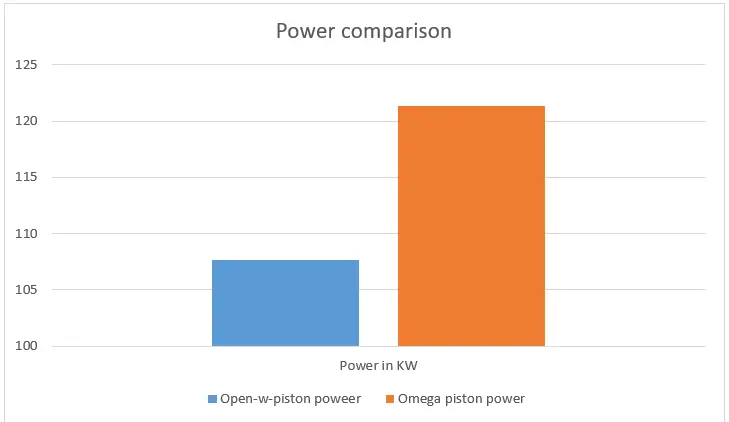
Power = work done/time taken for combustion = 3028.53/0.02814 = 107.62 KW
Omega-piston engine performance calculations

Power of omega piston diesel engine
Work done = 3409.28N-m
Combustion duration = 270.171 deg
Crank speed = 1600 rpm = 26.66 rps
Number of degrees per second = 26.66*360 = 9597.6 deg per second
Time taken for one degree = 1/9597.6 = 0.000104 seconds per degree
Time taken for combustion = 270.171*0.000104 = 0.028097 seconds
Power = work done/time taken for combustion = 3409.28/0.028097 = 121.33 KW
Comparing the power of open-w-piston diesel engine and omega piston diesel engine
Comparing the IMEP(indicated mean effective pressure) of open-w-piston diesel engine and omega piston diesel engine
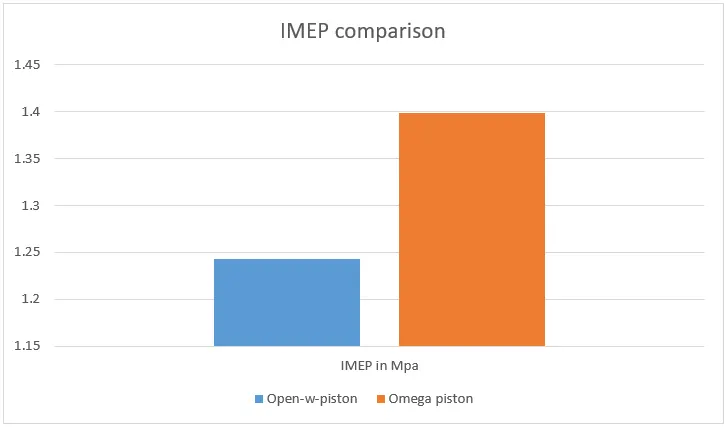
The power generated and indicated mean effective pressure of the engine with omega piston is more compared to the engine with open-w-piston. This is due to the fact that the engine with omega piston gives out more heat energy and highest combustion temperature is achieved, as its bowl geometry generates improved swirl which ensures proper mixing of the fuel air mixture which further decreases the amount of unburnt fuel mass in the engine cylinder.
Conclusion:
The combustion simulation is perfomed on the diesel engine with open-w-piston and diesel engine with omega piston which has different bowl geometries. The SAGE detailed chemistry solver is used to simulate combustion process and zeldovich thermal NOx model is setup to calculate the reaction rate of NO and Hiroyasu soot model is used to calculate the formation of soot in engine cylinder. It was observed that diesel engine with open-w-piston gives out lower heat energy and lower cylinder temperature is achieved which leads to slow burning of fuel and hence, soot formation is higher, NOx and UHC formation is lower. On the other hand, the diesel engine with omega piston gives out high heat energy and high cylinder temperature which leads to fast fuel burning and hence, lower soot formation and high NOx and UHC formation takes place in the engine cylinder. The power and IMEP of engine with omega piston is more compared to engine with open-w-piston. Thus, the diesel engine with omega piston is prefered when higher heat energy and lower soot formation is desired, where as the diesel engine with open-w-piston is prefered when slow fuel burning and lower mass of UHC is desired.