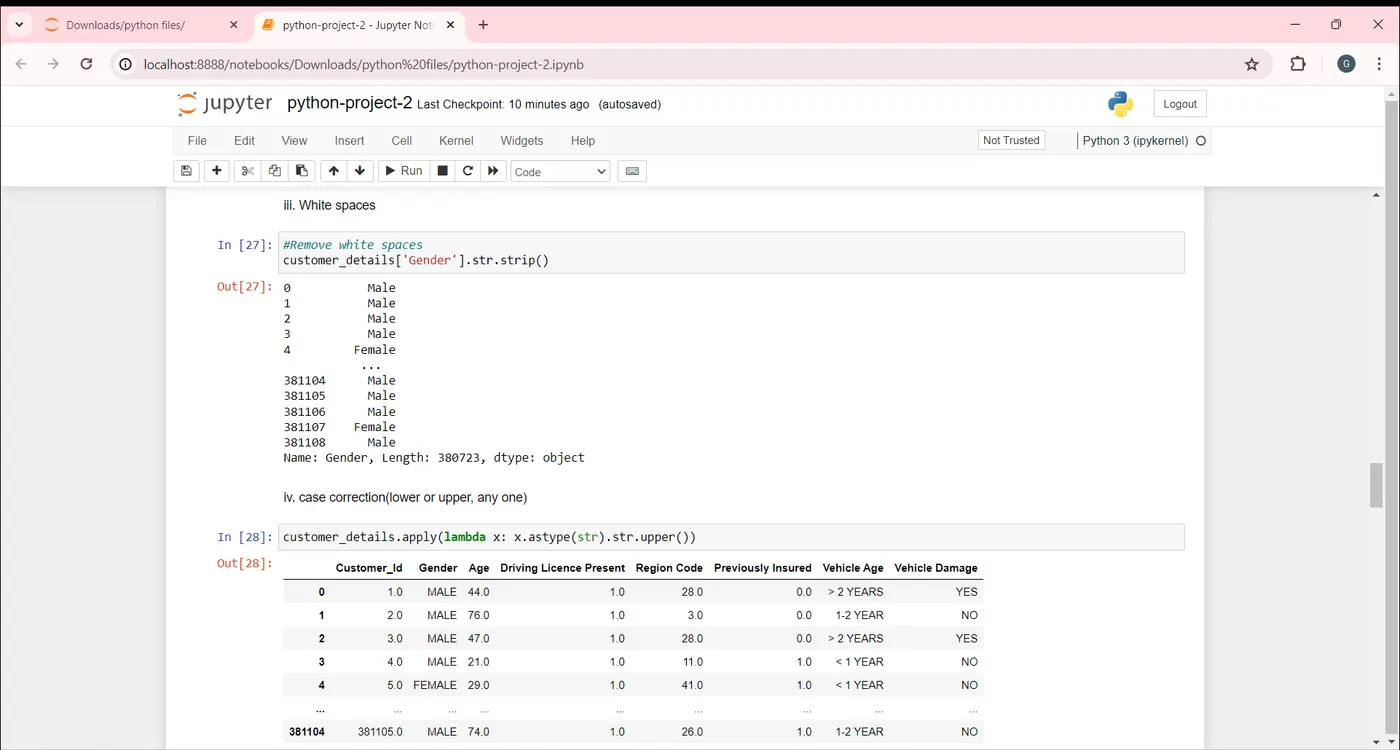
Project 2 - EDA on Vehicle Insurance Customer Data
Detecting null values and outliers is an essential part of data preprocessing in Python, especially before performing any statistical analysis or machine learning tasks. Here’s a brief guide on how to handle them:
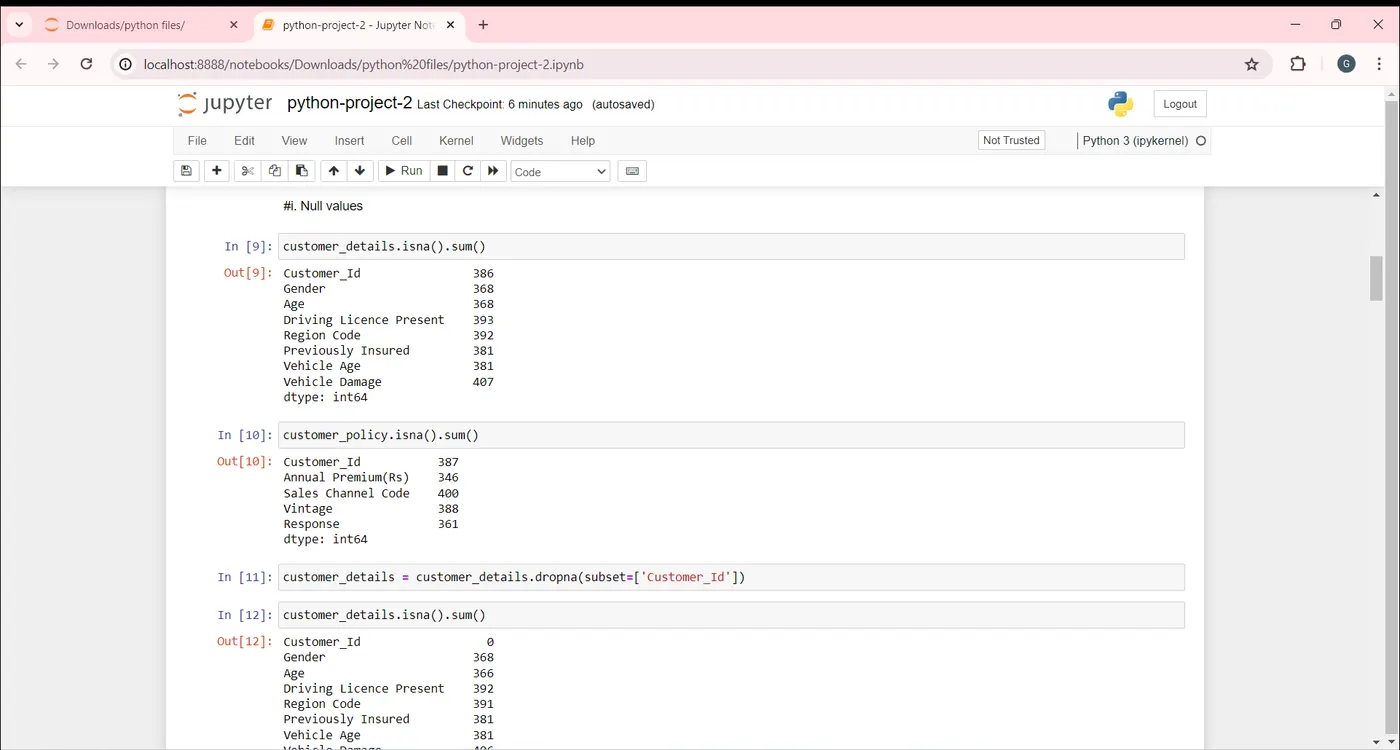
Detecting Null Values: To detect null values in a DataFrame, you can use the isnull() method combined with the sum() method to get a count of null values in each column.
Handling Null Values: You have options such as removing rows/columns with null values or imputing them with statistical measures like mean, median, or mode:
Handling Outliers: After detecting outliers, you can either remove them or cap them using a threshold: