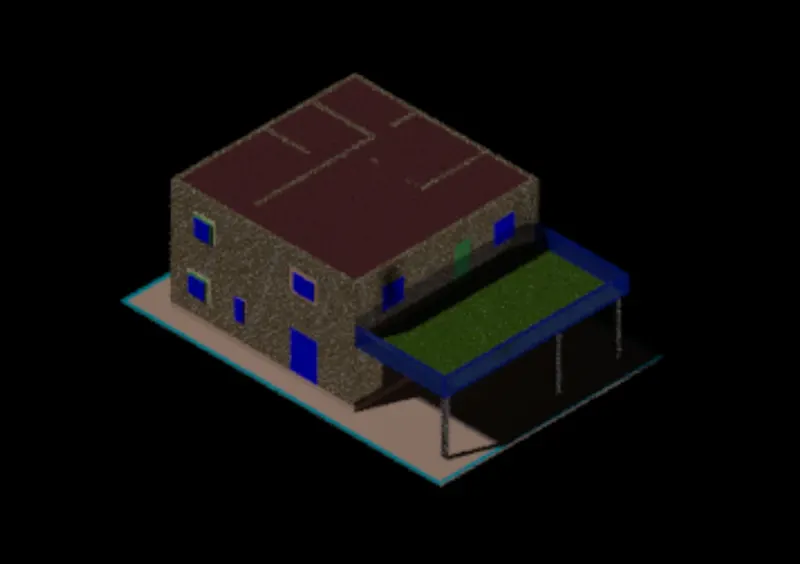
Project 2_Creating a 3D rendered model for a Residential Building in AutoCad
1. 3D rendered model for a Residential Building in AutoCAD:
AIM:
To create a 3D rendered model for a Residential Building using AutoCAD.
INTRODUCTION:
The following commands and tools are used in this Auto CAD drawing,
- Line: It helps to create a line between two points
- Xline: It helps to create infinite lines which is also known as construction lines.
- Rectangle: It helps to create a four-sided geometry with a desired length and width.
- Offset: It helps to offset an object at a particular distance.
- Move: It helps to move an already existing object from one point to the other by picking a base point.
- Copy: It helps to copy an already existing object from one point to the other by picking a base point.
- Erase: It helps to erase a selected object.
- 3DOrbit: It helps to view the 3Dobject in all direction.
- Fillet: It helps to create corner with or without radius
- Extrude: It helps to elongate an object and convert it into 3D object.
- Union: It helps to join the different 3D object in to single object
- Boundary: It helps to create the 2D object to connect by boundary to form a region
- Region: It helps to make 2D frame into 3D object
- Subtract: It helps to subtract an object from the bigger object.
- Explode: It helps to break an object in to different parts.
- Hatch: It helps to differentiate each object with its different patterns.
- Sweep: It helps to make 3D object out of 2Dobject by selecting the path
PROCEDURE:
- In the status bar set the setting as 3D modeling
- Enter Units and select type as Engineering and units as Inches
- Enter LIMMAX as 50’
- Create layers as soon below by clicking layer properties on the panel.
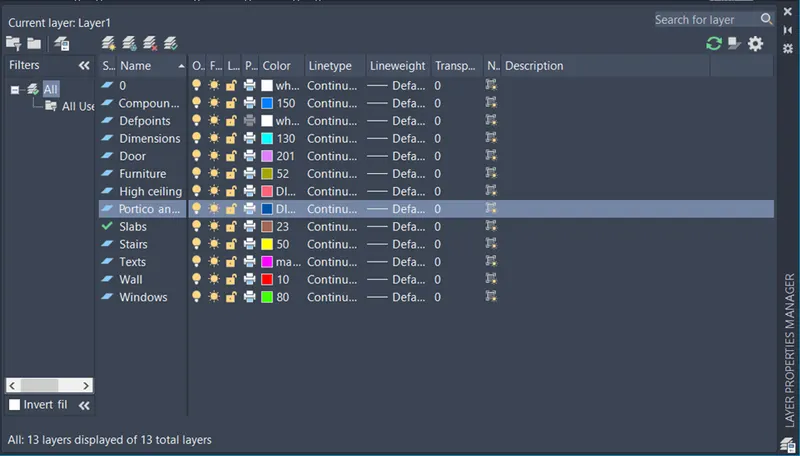
- Apply each layer respectively
- Keep view control in top and visual style control as 2D wireframe.
- Total plot size is 42’ x 60’
- Using line, XLine, offset commands draw the plan with wall thickness 9”.
- It’s a high ceiling G+1 residential building with west facing.
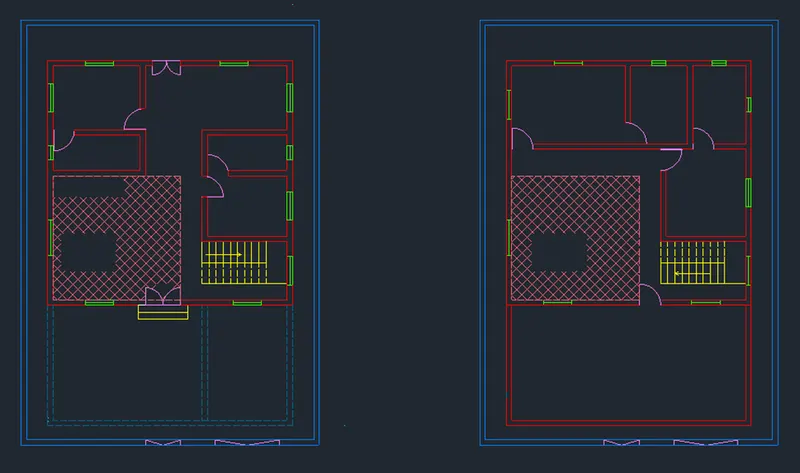
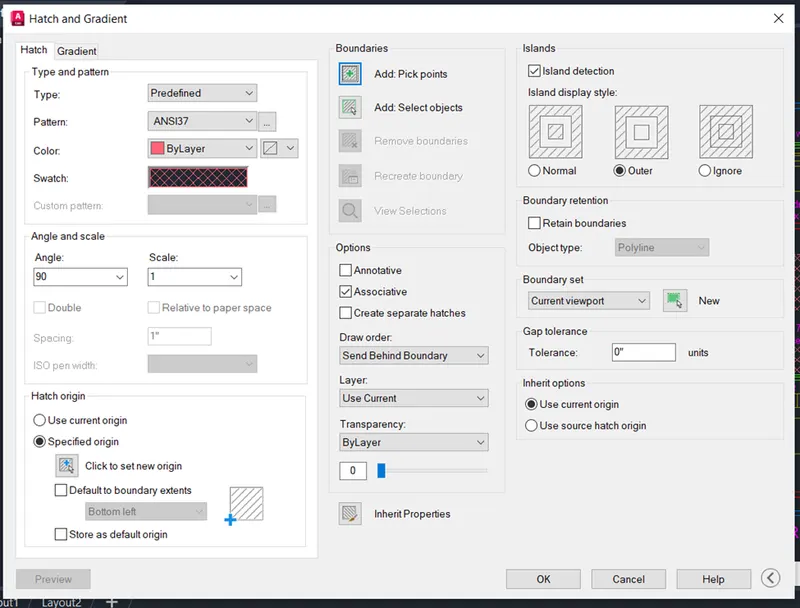
- Use Hatch to hatch the high ceiling area with the below setting
- Select dimension layer and click dimlinear from the Annotate tab and give dimension by pick the starting and end point.
- Select Text layer and Enter DT and MT to enter the text respectively.
- Select Furniture layer and draw the beds, wardrobes, countertop, dining table, Sofa and place them accordingly
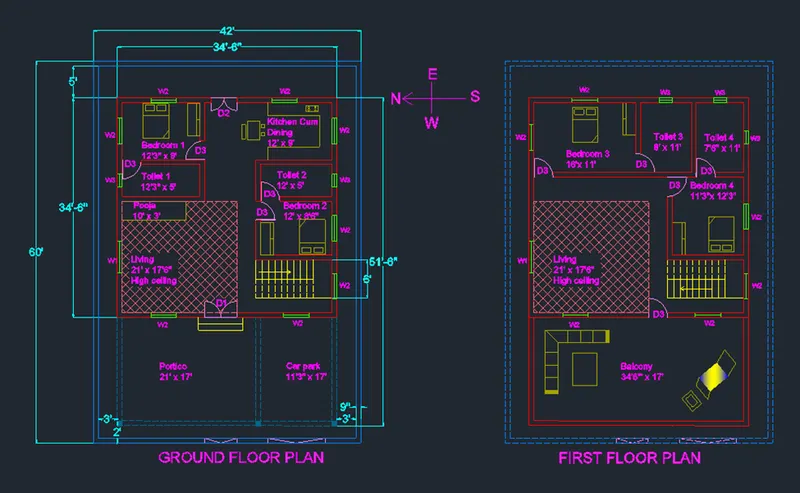
- Change view to SW Isometric view and 2D Wireframe
- Create boundary by entering Boundary on the command which will display the boundary creation popup
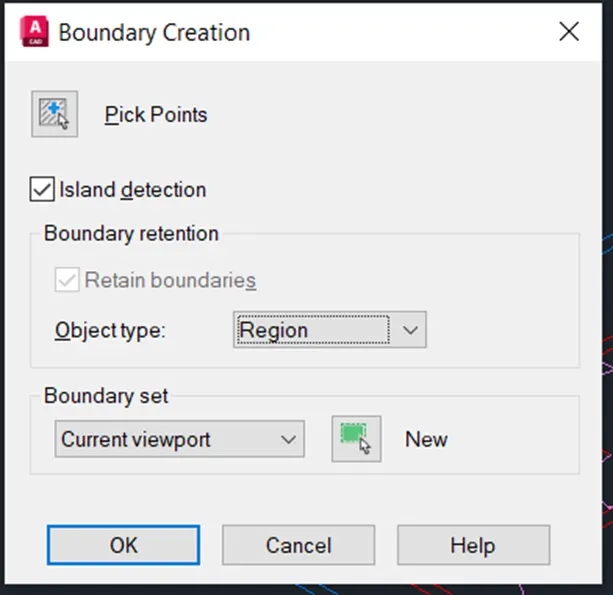
- Select region as object type and create boundary where ever needed.
- Put layer off on dimensions and texts.
- Create the ground floor level slab to 1’ and extrude the wall height to 3’
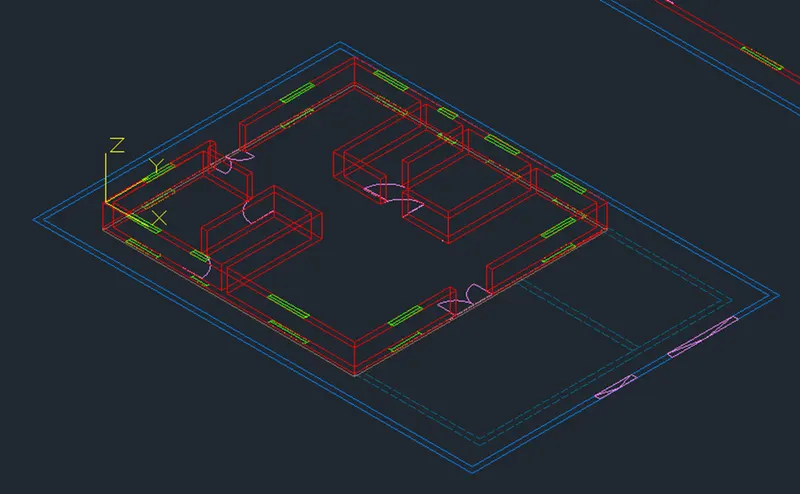
- Move the UCS face to the wall and extrude the wall to 7’ with out extruding the windows
- Enter rec and create rectangles on space between walls for creating lintel and extrude it to 3’
- Go to view and click new view and create a new view as ground floor
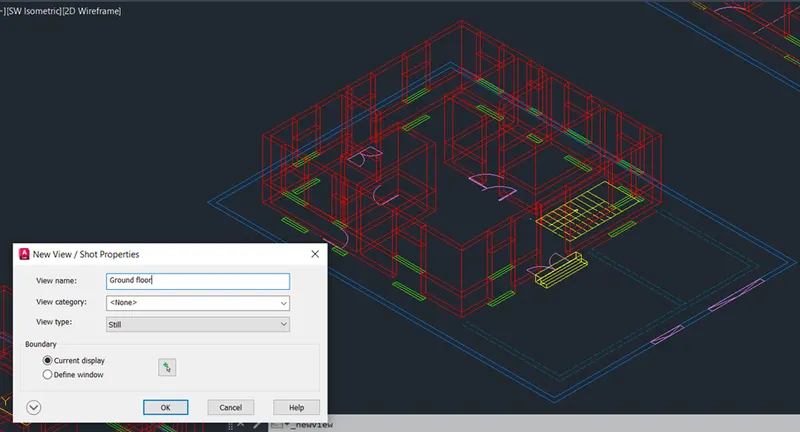
- Increase the living room window size by using rec, extrude and subtract command.
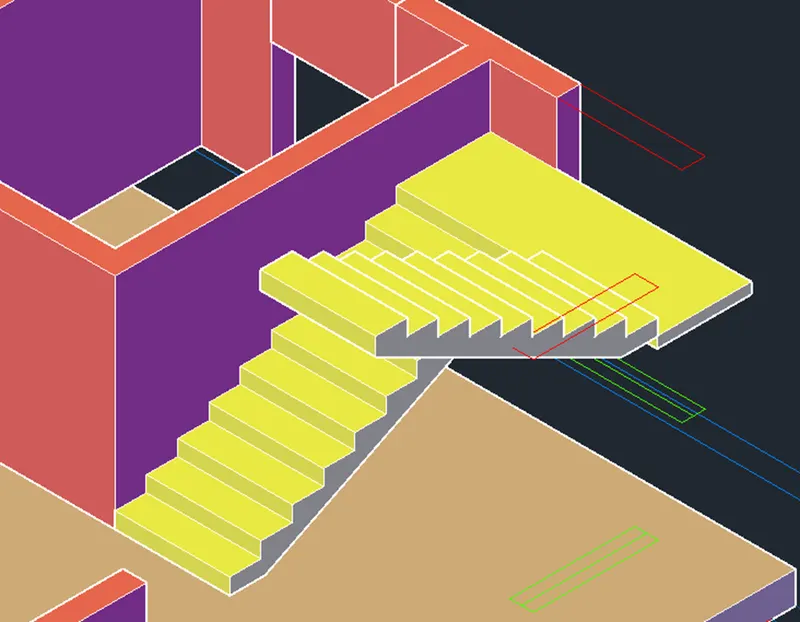
- Draw staircase separately outside the plan using the dimensions as mentioned in the plan with line, region and extrude command.
- Pick the point and place it on the plan
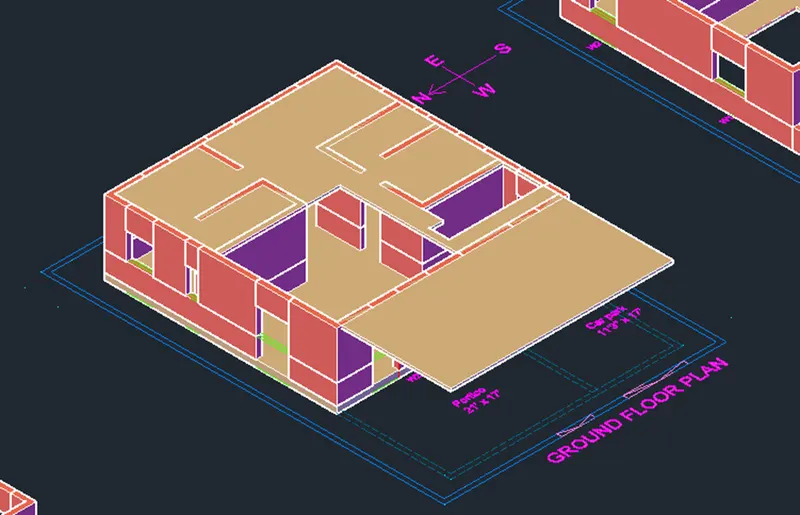
- Select slab layer and enter polyline and create pline inside the wall other than heigh ceiling and staircase area. Make region and extrude it to 4”
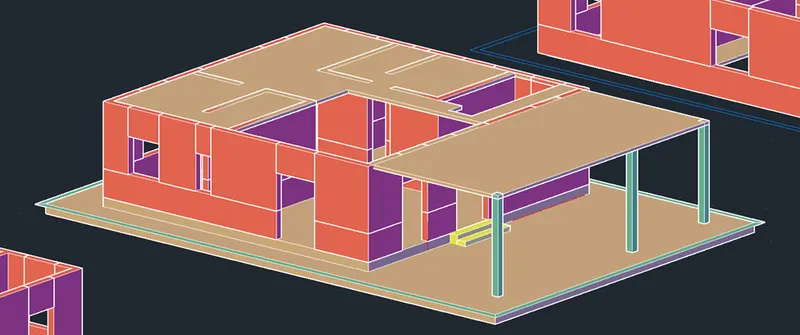
- Create portico column in front of 9”x 9” of height 10’7” using rec, region, extrude command
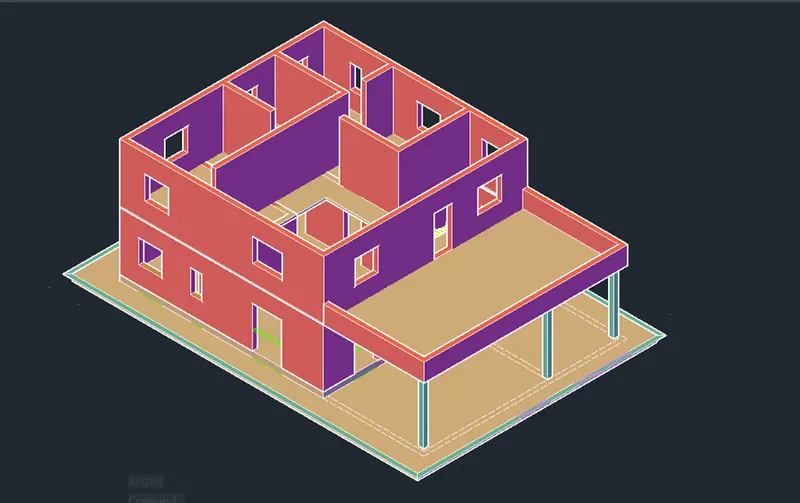
- Copy the first floor walls on the ground floor walls
- Create doors and window of W1 5’x7’, W2 4’X4’, W3 2’X4’ and door of D1 5’x7’, D2 4’x7’
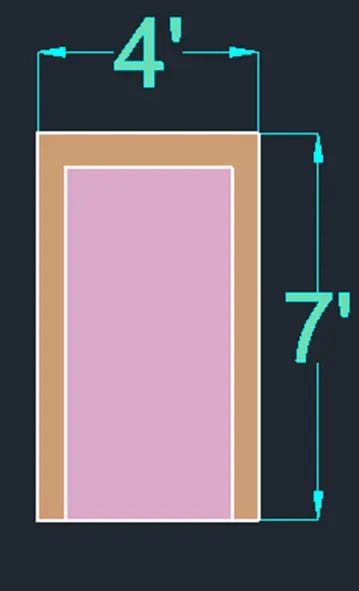
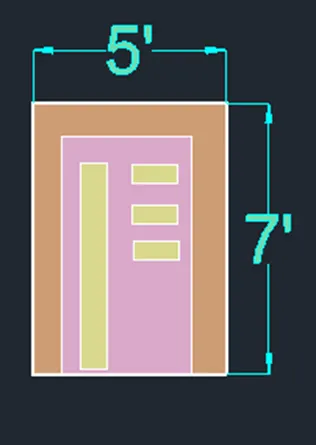
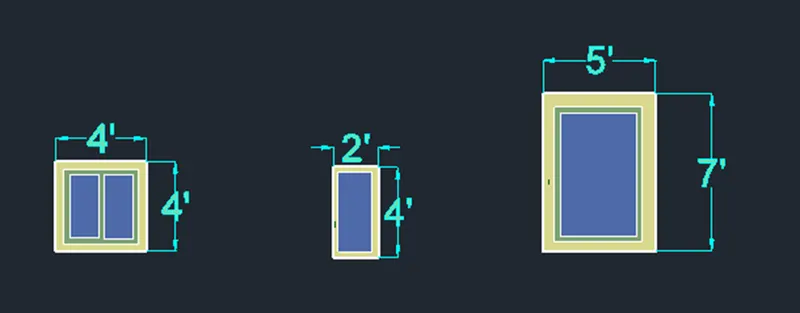
- Place it all on the window space
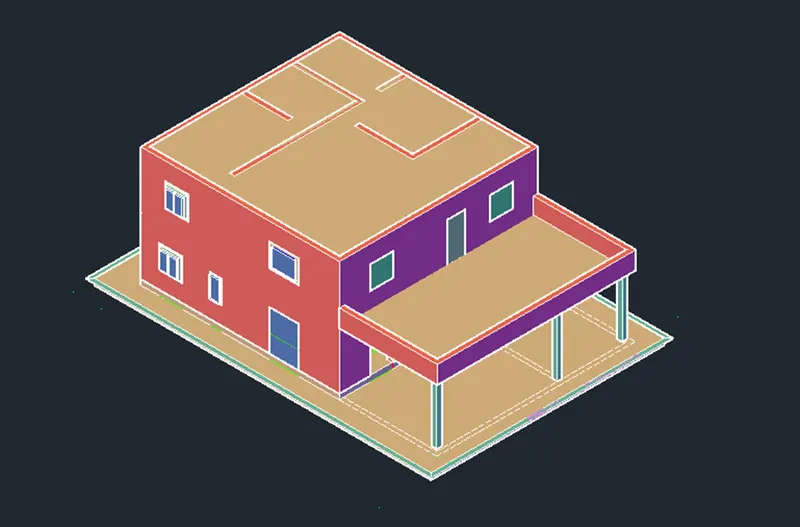
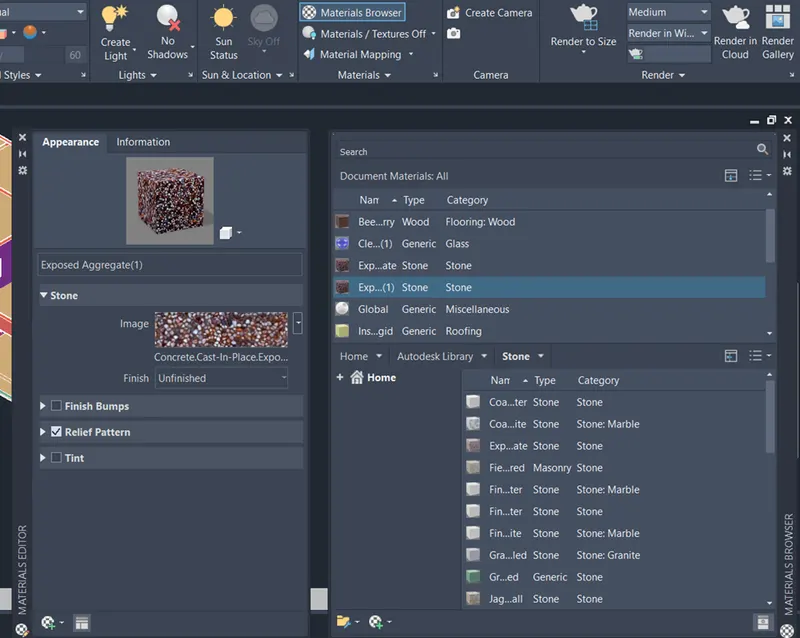
- Go to visualize and click material browser to select the materials
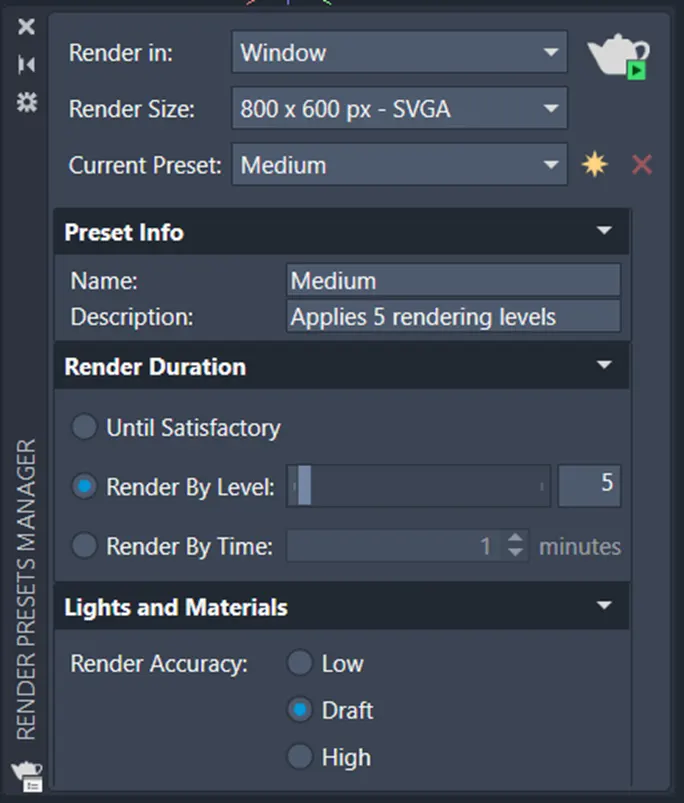
- Click render in the panel which displays the popup
Result:
- The result is obtained from the above steps
- Render view of the residential building