Project 2
Project 2
AIM:
Using MATLAB/simulink and the drive cycle from the attached excel sheet, find-
- The max heat generation of the battery
- The SOC of the battery at 2 *104second of the battery operation
| Time | Time Step | Battery Current |
| 00:00.4 | 0.1 | -0.9632 |
| 00:00.5 | 0.2 | -0.952 |
| 00:00.6 | 0.3 | -0.9072 |
| 00:00.7 | 0.4 | -0.9632 |
| 00:00.8 | 0.5 | -1.0304 |
| 00:00.9 | 0.6 | -0.9632 |
| 00:01.0 | 0.7 | -1.0304 |
| 00:01.1 | 0.8 | -1.008 |
| 00:01.2 | 0.9 | -0.9856 |
| 00:01.3 | 1 | -0.9632 |
| 00:01.4 | 1.1 | -0.9184 |
| 00:01.5 | 1.2 | -0.9296 |
| 00:01.6 | 1.3 | -0.9296 |
| 00:01.7 | 1.4 | -0.9296 |
| 00:01.8 | 1.5 | -0.9184 |
| 00:01.9 | 1.6 | -0.9408 |
| 00:02.0 | 1.7 | -0.896 |
| 00:02.1 | 1.8 | -0.9072 |
| 00:02.2 | 1.9 | -0.9072 |
| 00:02.3 | 2 | -0.9408 |
| 00:02.4 | 2.1 | -0.9296 |
| 00:02.5 | 2.2 | -0.9296 |
| 00:02.6 | 2.3 | -0.9968 |
| 00:02.7 | 2.4 | -0.9968 |
| 00:02.8 | 2.5 | -0.9408 |
| 00:02.9 | 2.6 | -0.9408 |
| Battery resistance | 2 milli ohm |
Consider the battery resistance is 0.5 mOhm, delta time is 0.1 and entropic factor is 2
heat generated = joules heat + entropy heat
joules heat
from ohms law we know that
V=IR
when the current flowing through a resistance, there is a heat dissipated inn the resistor this heat dissipation is called joules heating.
joules heating is also known as ohmic heating
power
P=V*I=I^2*R
heat
H=∫P.dt with the limits of time 0 to t
H=I^2*R*t
where,
P=power
V=voltage
I=current
R=resistance
H=heat
T=time
- a) Maximum heat generated = maximum joule heat + 2(maximum joule heat)
Imax = -0.896 A
tmax = 1.7 sec
Rint = 0.0005 ohm
maximum joule heat = (Imax)^2 * R * tmax
maximum joule heat = (-0.896)^2 * 0.0005 * 1.7 = 0.000682393J
Maximum heat generated = maximum joule heat + 2(maximum joule heat)
Maximum heat generated = 0.000682393J+2=2.000682393J
b.The SOC of the battery at 2 *104second of the battery operation
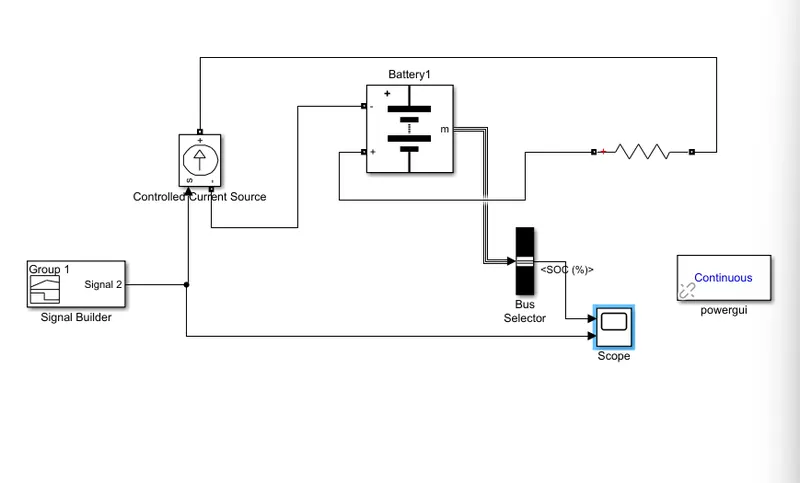
SOC stands for "state of charge" and it refers to the amount of energy stored in a battery. It is typically expressed as a percentage, with 100% indicating a fully charged battery and 0% indicating a completely discharged battery. SOC is an important measure of a battery's performance, as it affects the amount of energy that can be delivered to a load, the battery's lifespan, and the overall performance of the device in which the battery is used.
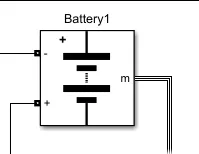
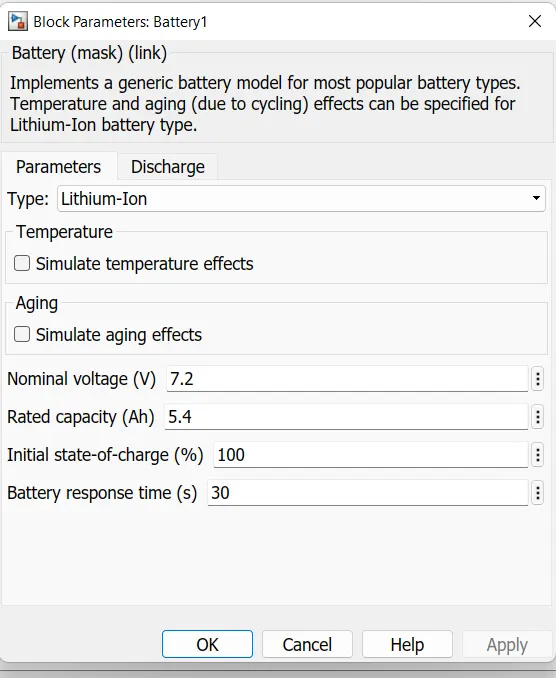
A lithium-ion battery is a type of rechargeable battery that uses lithium ions as the primary charge carrier. These batteries have a high energy density, which means they can store a large amount of energy in a small space. They also have a relatively low self-discharge rate, meaning they lose very little energy when not in use commonly used in portable electronics such as smartphones, laptops, and power tools, as well as in electric vehicles and renewable energy systems.
The lithium-ion battery has a cathode and an anode made of different materials. During discharge, lithium ions move from the anode to the cathode, creating a flow of electricity. During charging, the lithium ions move in the opposite direction, from the cathode back to the anode. This process can be repeated many times, allowing the battery to be recharged and used again.
One of the advantages of lithium-ion batteries is that they do not have the "memory effect" of some other types of rechargeable batteries, which means that they can be charged and discharged at any time without affecting their overall performance.
However, lithium-ion batteries can be affected by high temperatures and can be dangerous if they are overcharged, damaged or punctured. They also have a limited lifespan, which is affected by factors such as how deep they are discharged, how often they are charged and discharged, and the ambient temperature.
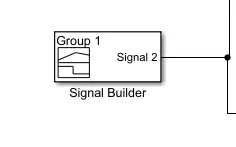
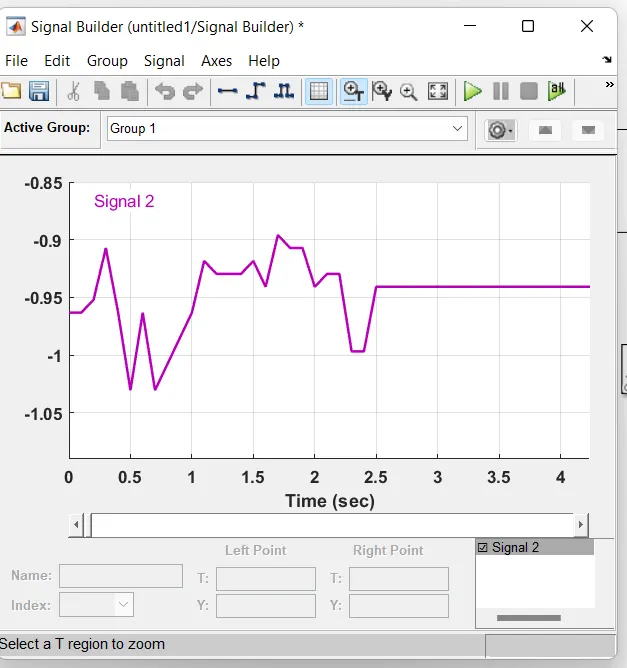
A signal builder is commonly used in simulation applications to generate input signals for a system or device being simulated. These signals can be used to test the performance of the system under different conditions, such as different input frequencies or amplitudes, and to simulate real-world scenarios.
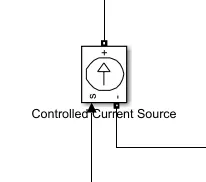
A controlled current source is a type of electronic circuit or device that is capable of maintaining a constant current flow through a load, regardless of changes in the load's resistance. The current level is determined by an external control signal and is kept constant by regulating the voltage across the load.
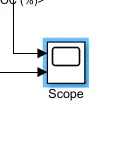
a scope is a block that can be used to display the output of a system or a signal in a graphical form. A scope block can be used to visualize the behavior of a system or signal over time, making it useful for analyzing and debugging the system.
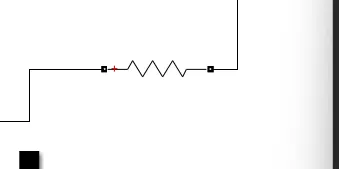
resistor is a basic electrical component that can be represented by a block. The resistor block models the electrical behavior of a real-world resistor, which is a passive component that resists the flow of electrical current. The resistor block can be used in a wide range of Simulink models, including electrical circuits, control systems, and communication systems.
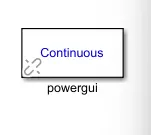
Powergui is a toolbox for Simulink that provides a set of blocks for modeling and simulating power systems. The main function of Powergui is to allow power system engineers to model and simulate the behavior of power systems under different conditions, such as different loading conditions, different renewable energy sources, and different power electronic converters. This can be useful for designing, testing, and optimizing power systems, as well as for studying the impact of different power system configurations on the power system's performance.
the scope output showns the state of charge of battery
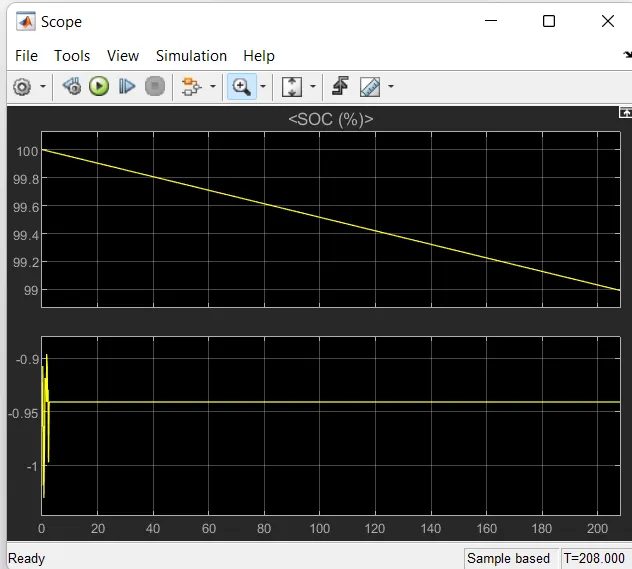
conclution :The Max heat generated in which the current flowing in and out i.e., charge and discharge due to internal resistance and chemical reaction during charging and discharging of the battery the heat is generates of 2.0006823936 Jouls.