Project 2
Back Door Wiring Harness Assembly
Aim:
-
To efficiently route the wiring harness within the car body and generate a flattened view drawing using CATIA V5, strict adherence to industry best practices and packaging rules is paramount. This involves meticulous placement of the wiring harness to optimize space utilization while ensuring compliance with safety and performance standards. Additionally, protective coverings are applied as necessary to safeguard the wiring harness from environmental hazards. Through the application of industry-leading design techniques, the process demonstrates a commitment to achieving optimal functionality, reliability, and manufacturability in the final product.
Introduction:
-
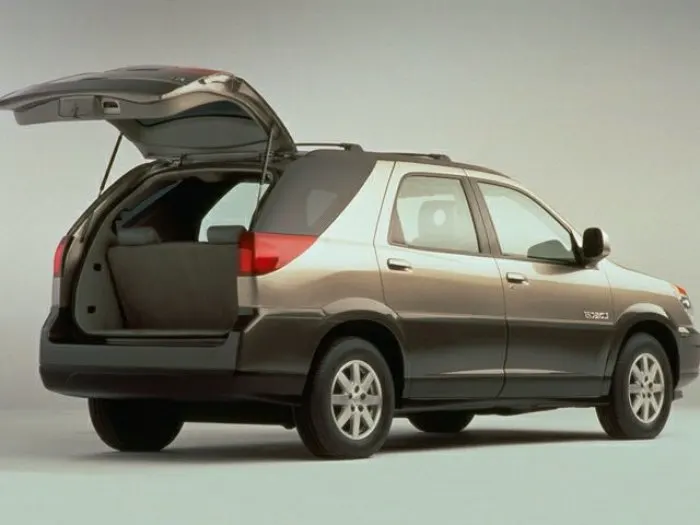
The tailgate/backdoor of a car serves as both a functional and aesthetic element, playing a crucial role in the overall design and utility of the vehicle. Positioned at the rear, it is more than just a barrier, offering convenience, security, and often, a touch of style. From traditional hinged designs to modern innovations like power-operated liftgates, the evolution of the tailgate reflects advancements in automotive engineering and design. Whether utilized for loading cargo, accessing storage compartments, or simply enhancing the vehicle's visual appeal.
-
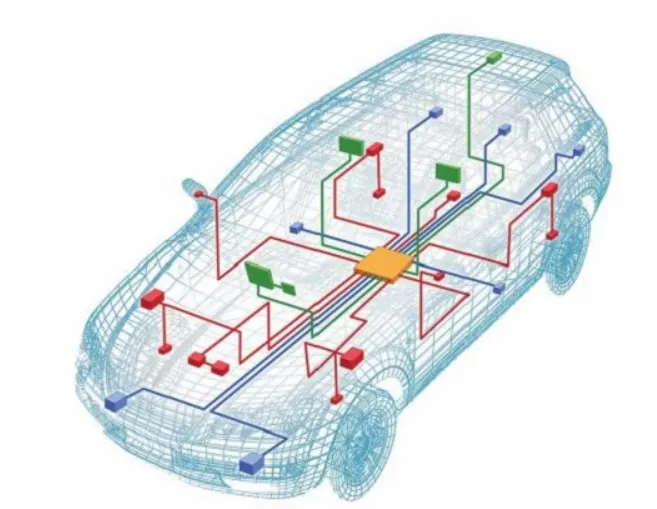
The rear door of a vehicle is equipped with a range of essential electrical components designed to enhance functionality and safety. These include the wiper motor, responsible for keeping the rear window clear in adverse weather conditions. Indicator lights, crucial for signaling turns and lane changes, are also integrated into the rear door assembly, ensuring visibility to other road users. Additionally, parking sensors are strategically placed to assist drivers in maneuvering their vehicle safely, providing alerts to potential obstacles while reversing. These electric components collectively contribute to the efficiency, convenience, and safety of the vehicle's rear door system.
-
All sensors and electric components embedded within the rear door are intricately interconnected with the Electronic Control Unit (ECU). This central hub governs and regulates the functioning of vital systems such as the wiper motor, indicator lights, and parking sensors. By channeling data and signals between these components and the vehicle's onboard computer, the ECU orchestrates seamless coordination, ensuring optimal performance and safety standards. Thus, the ECU serves as the neural center, efficiently managing the operation of all rear door functionalities in harmony with the vehicle's overall electrical system.
Procedure:
-
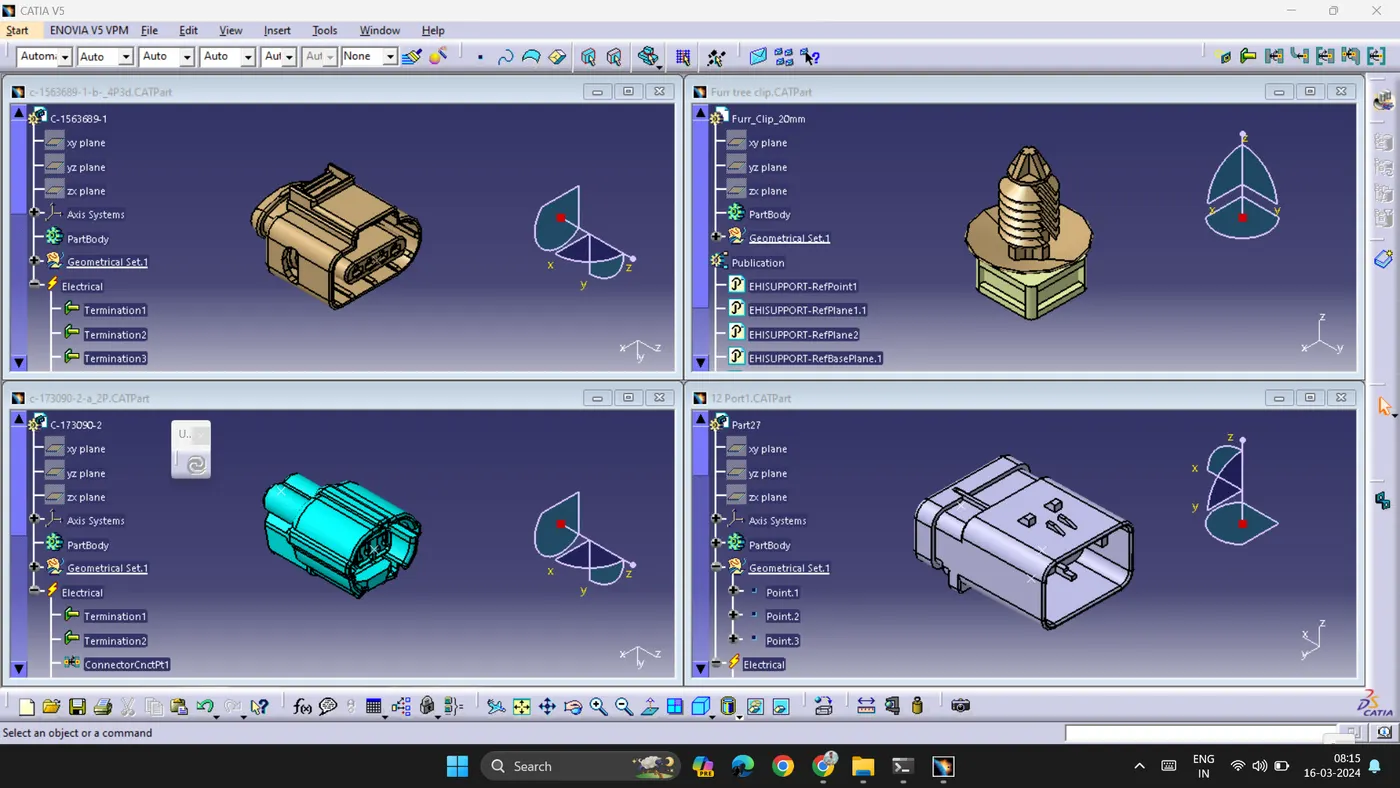
Upon downloading the 3D connector data and supporting devices from TE Connectivity, the next step involves importing the Back door/Tailgate STEP (Standard for the Exchange of Product model data) file into CATIA V5 to initiate the design process
-
Once imported, all connectors are meticulously defined electrically within the electrical part workbench of CATIA V5. This ensures accurate representation and integration of the electrical components within the design environment, facilitating seamless collaboration between mechanical and electrical aspects of the project.
To import the back door STEP (STandard for Exchange of Product) file into CATIA V5, follow these steps:
-
Launch CATIA V5 on your computer.
-
Open a new or existing CATIA V5 document.
-
Navigate to the "File" menu at the top of the interface.
-
Choose "Import" from the dropdown menu.
-
Locate the back door STEP file on your computer.
-
Select the file and click "Open."
-
Adjust import settings if needed, such as unit conversion.
-
Confirm the import by clicking "OK" or its equivalent.
-
Wait for CATIA V5 to import the file.
-
Review and work with the imported back door model as required.
-
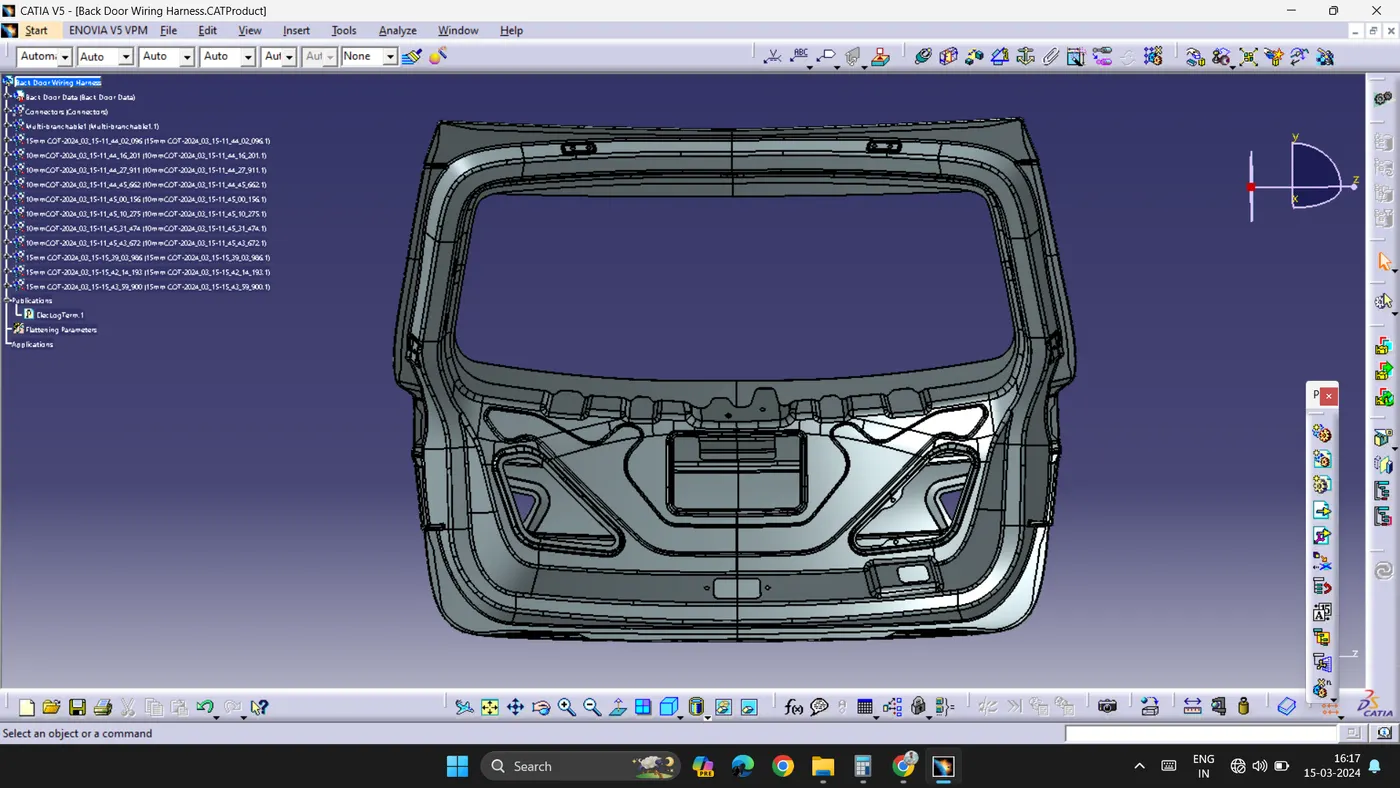
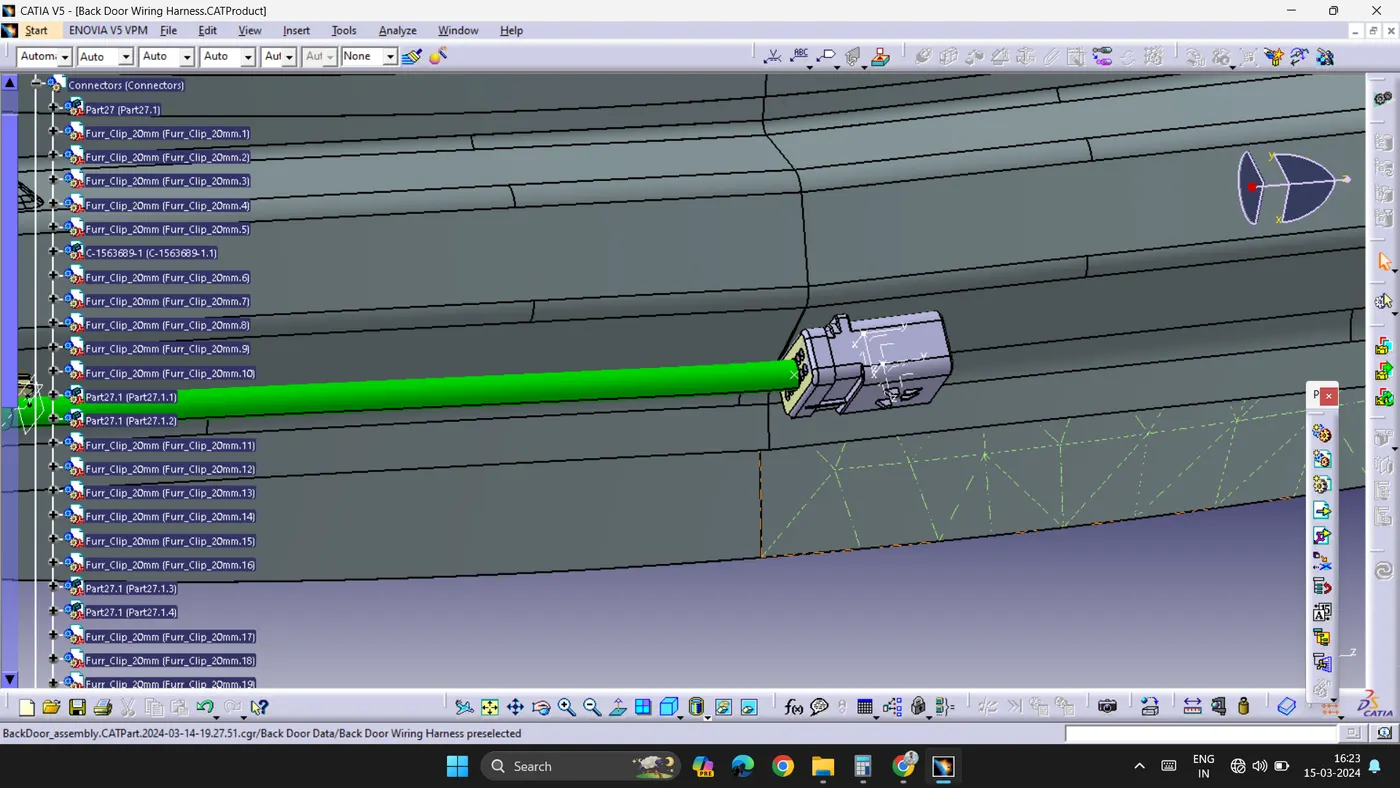
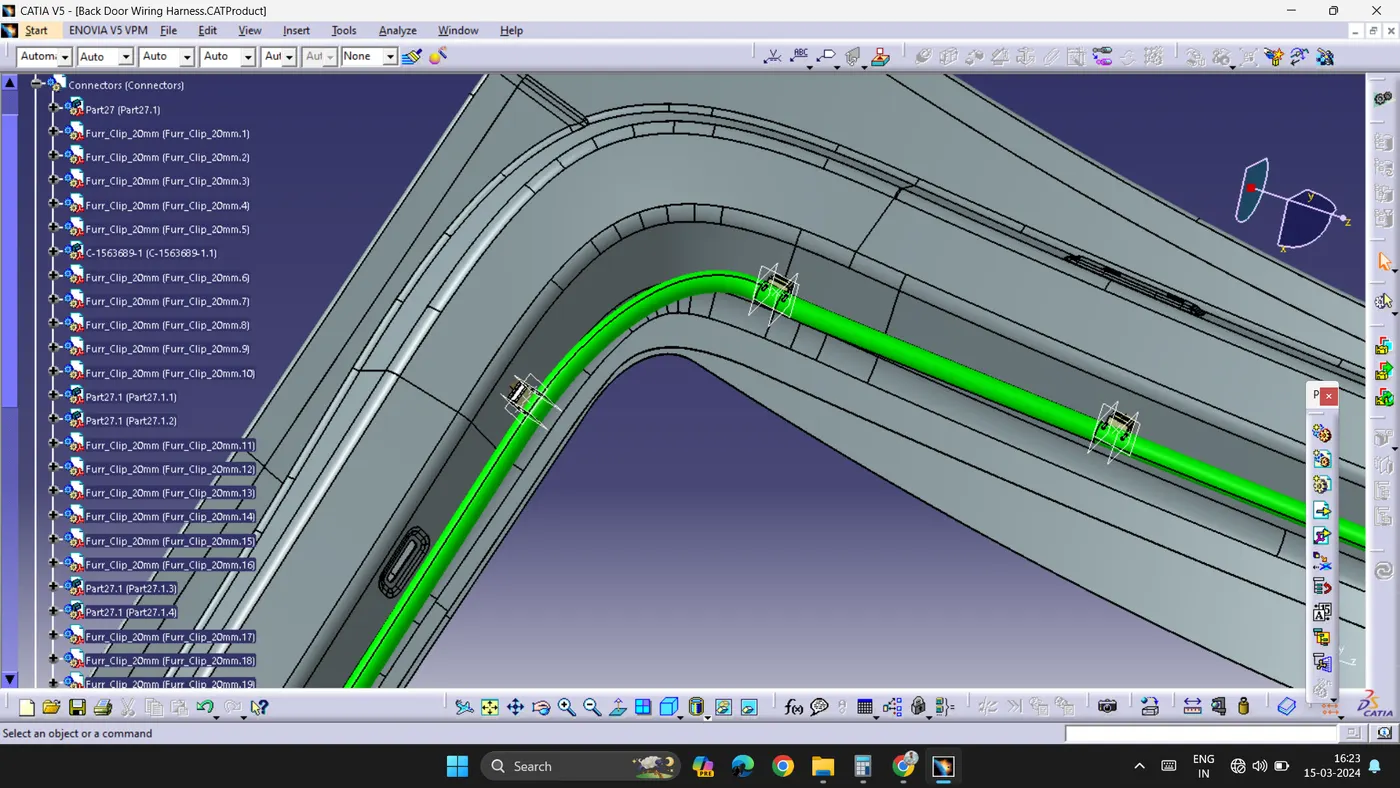
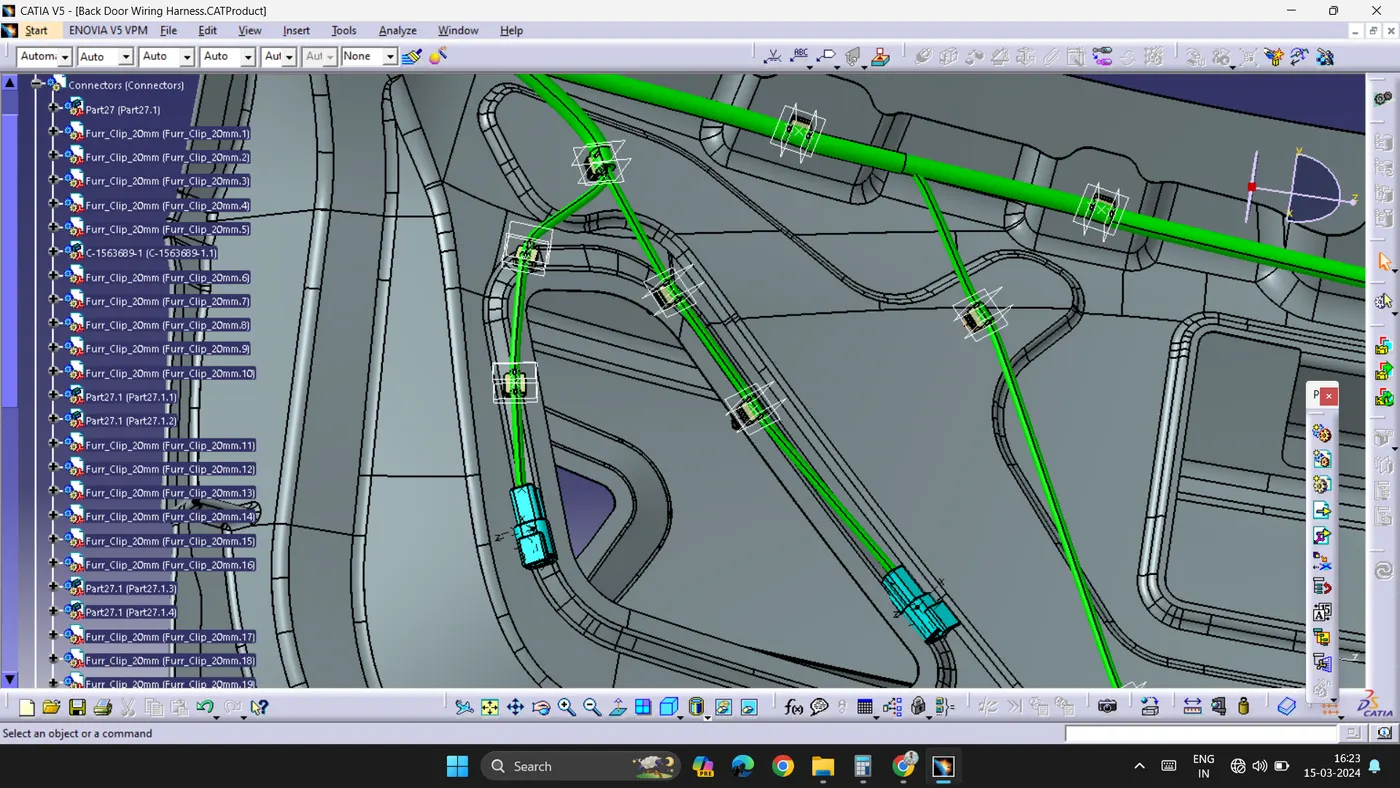
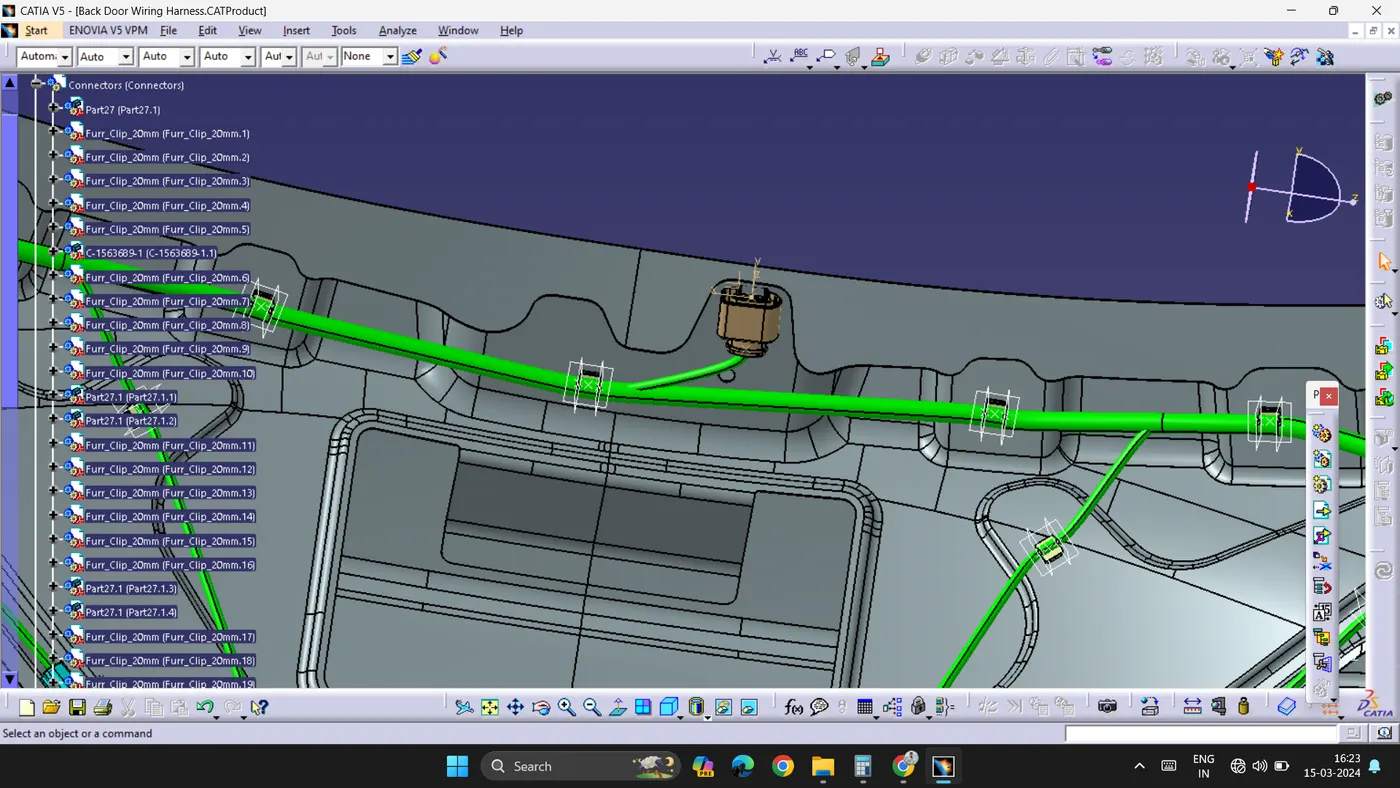
Position all connectors and clamps onto the back door assembly to facilitate the routing of the wiring harness within the Wiring Harness Assembly.
-
Now proceed to route the wiring over the connectors and clamps, ensuring proper alignment and secure attachment throughout the Wiring Harness Assembly.
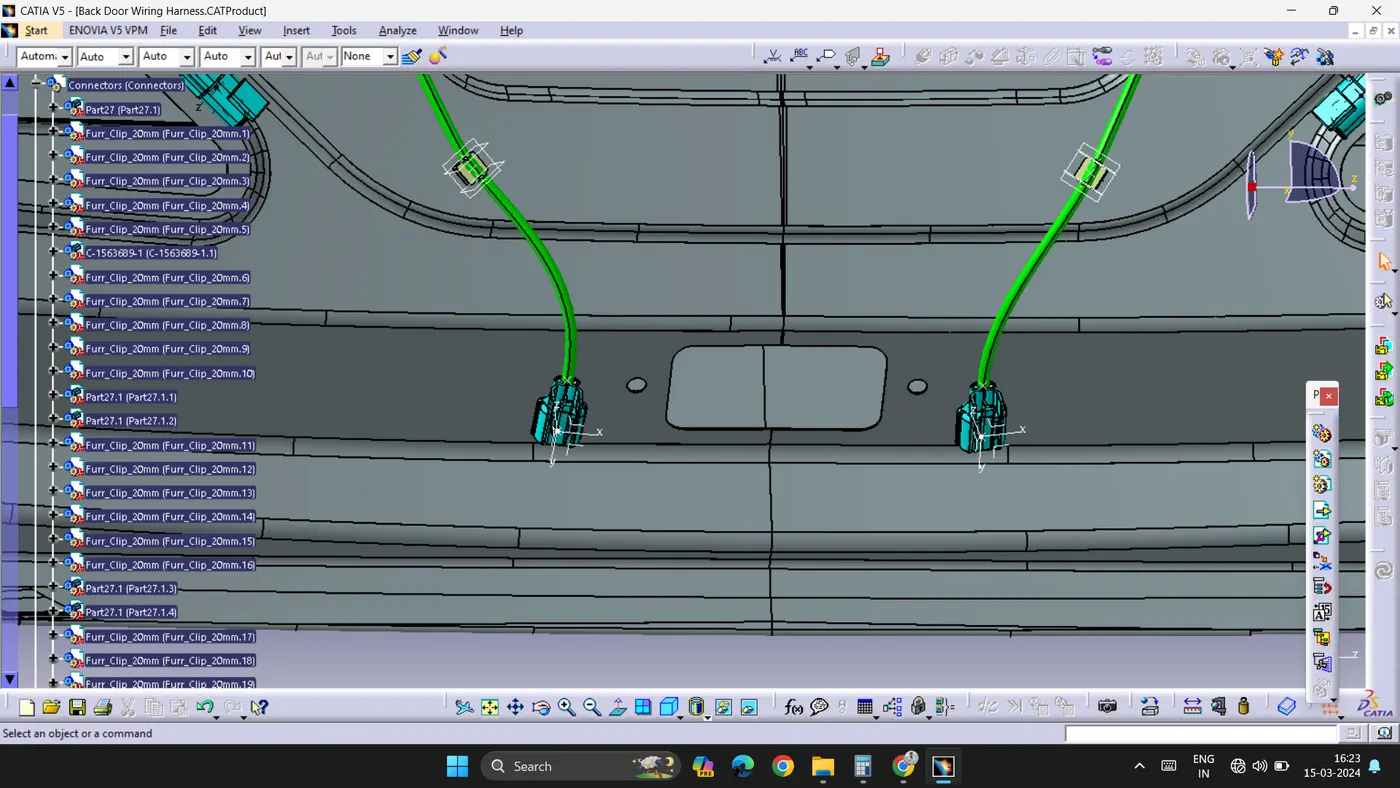
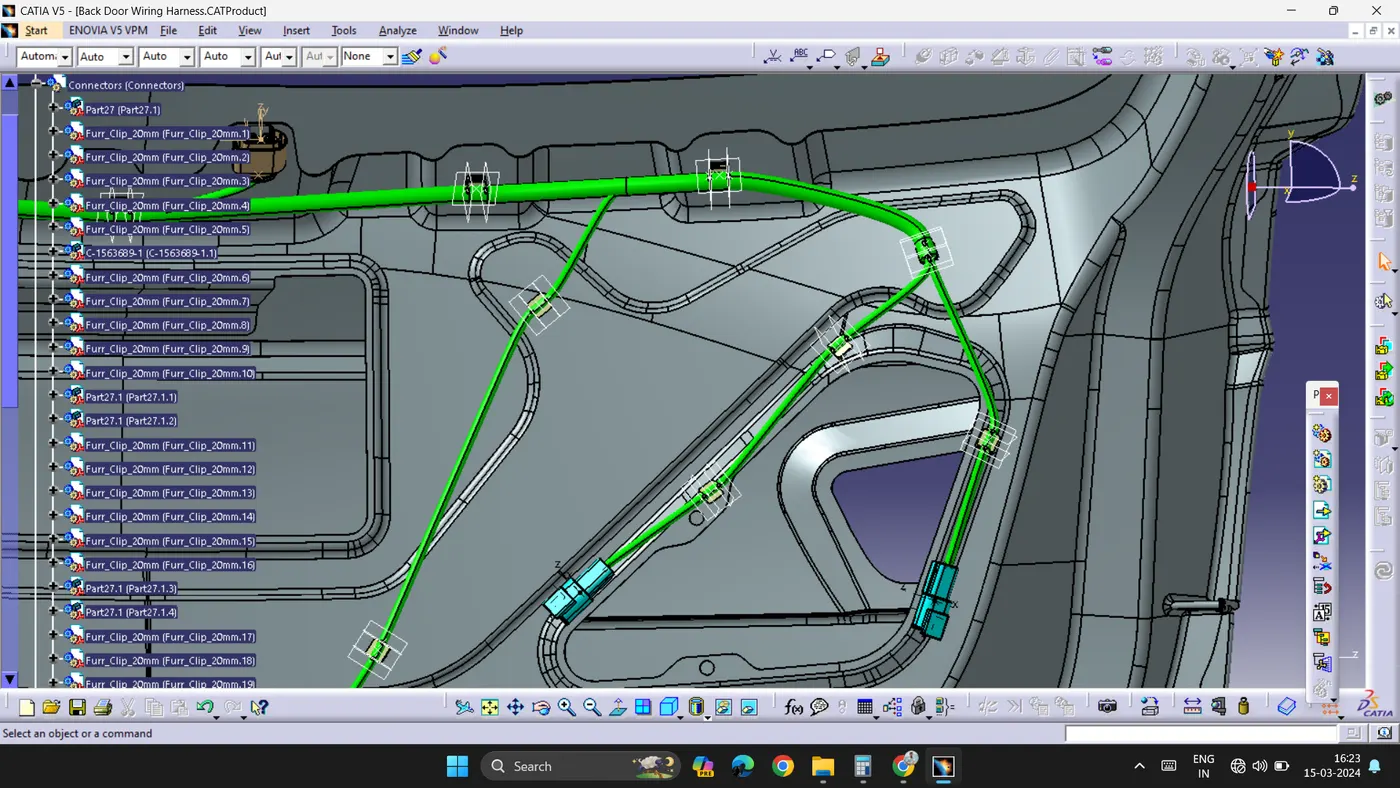
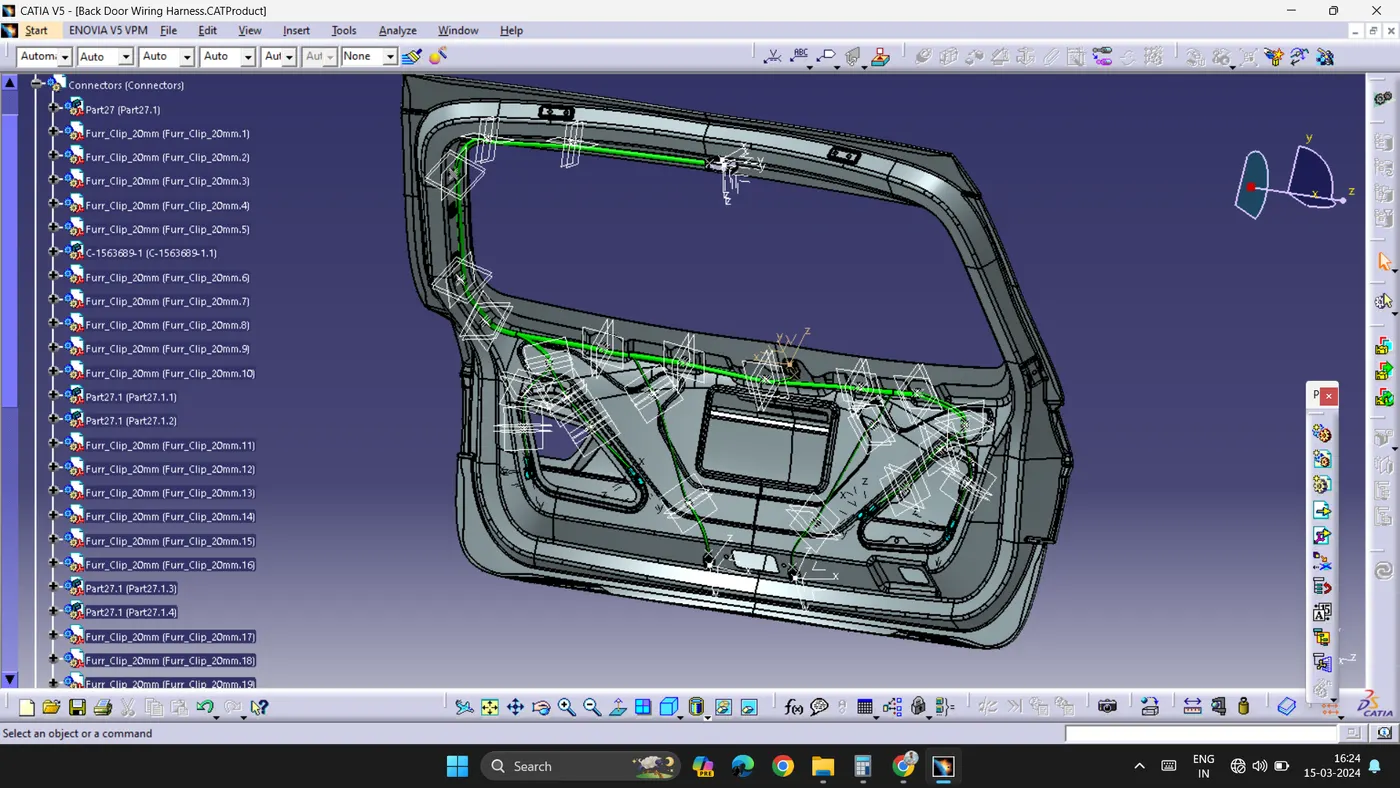
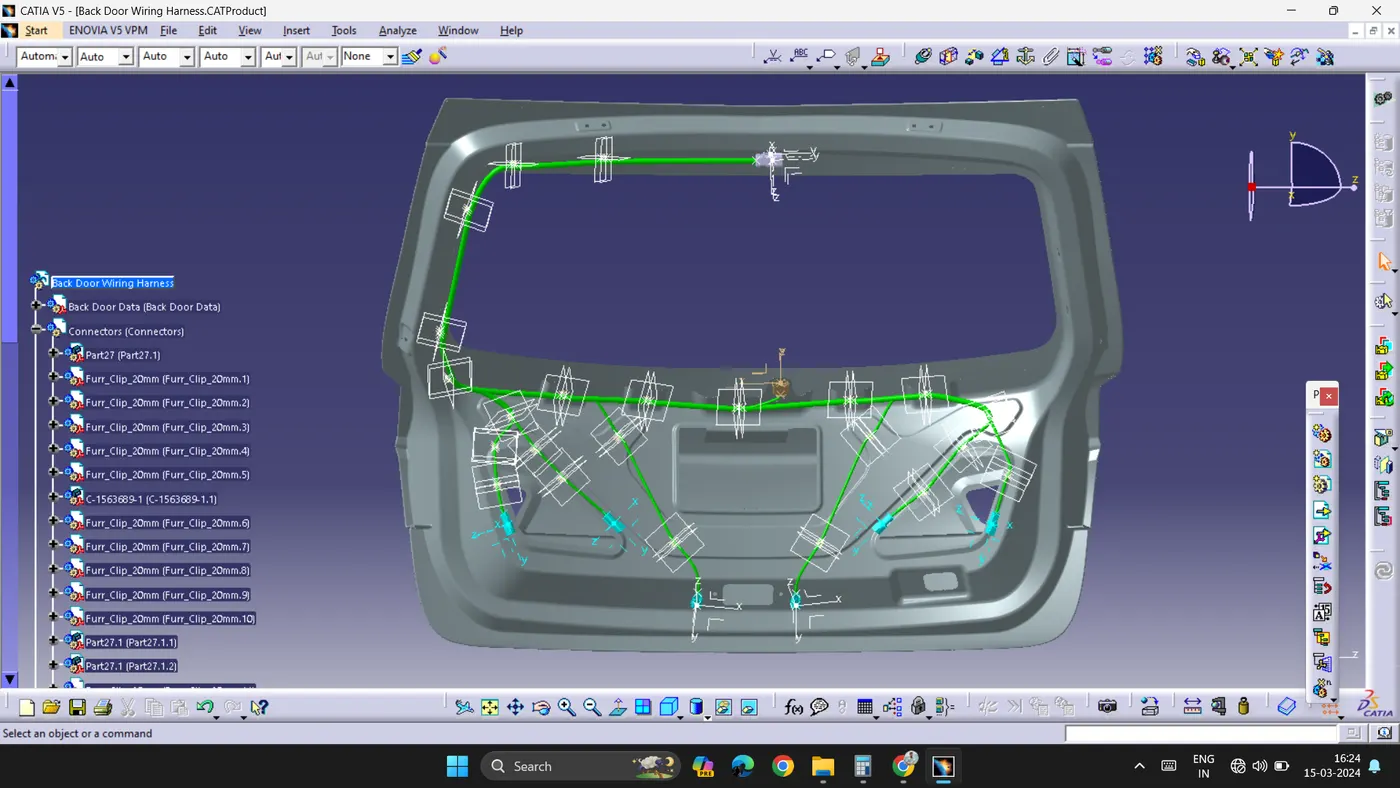
-
Following successful routing, thorough checks are conducted to ensure all connections are secure and properly aligned.
-
Subsequently, protective layers are applied to the wiring harness, ensuring durability and safeguarding against potential damage from environmental factors.
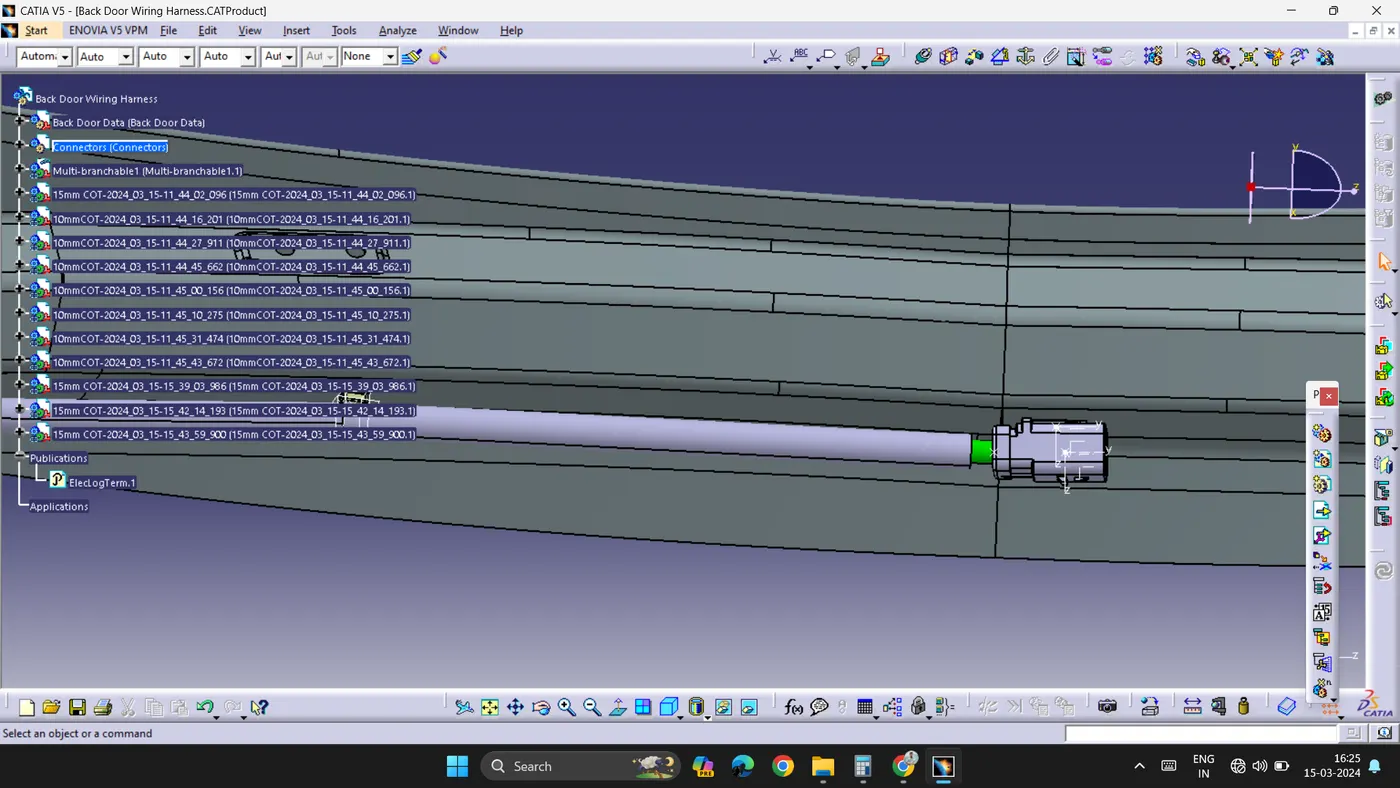
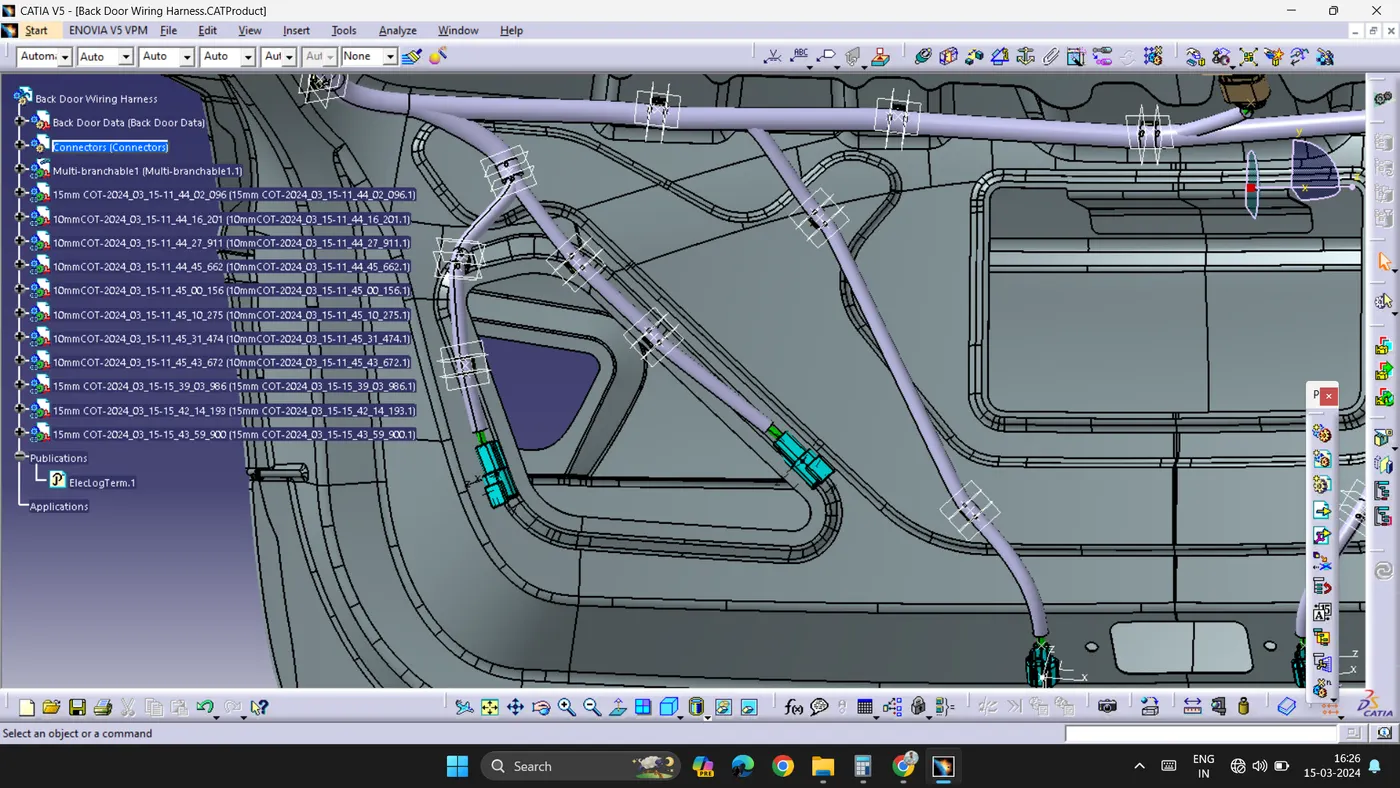
-
Continuing forward, the design progresses to the Wiring Flattening workbench where parameters are defined to facilitate the flattening process of the wiring harness design.
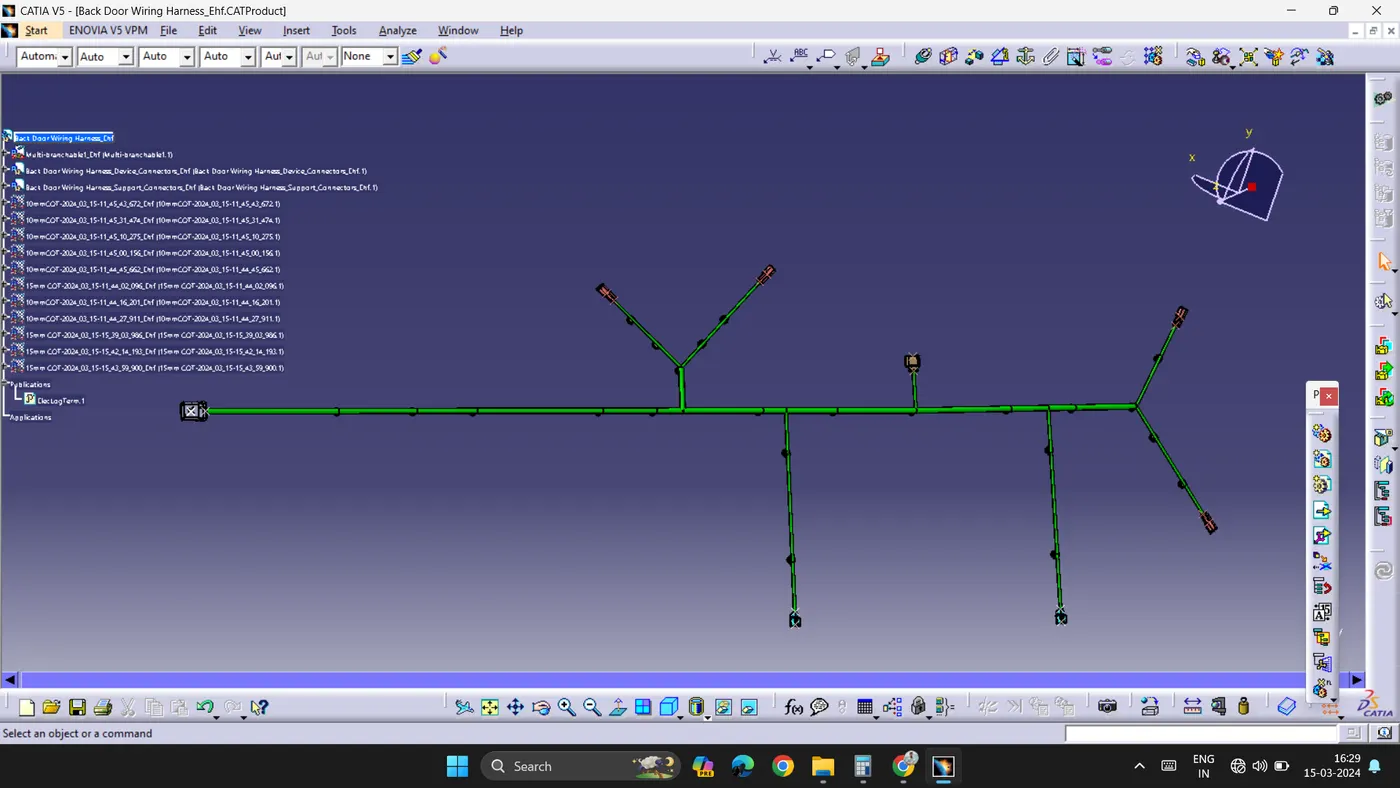
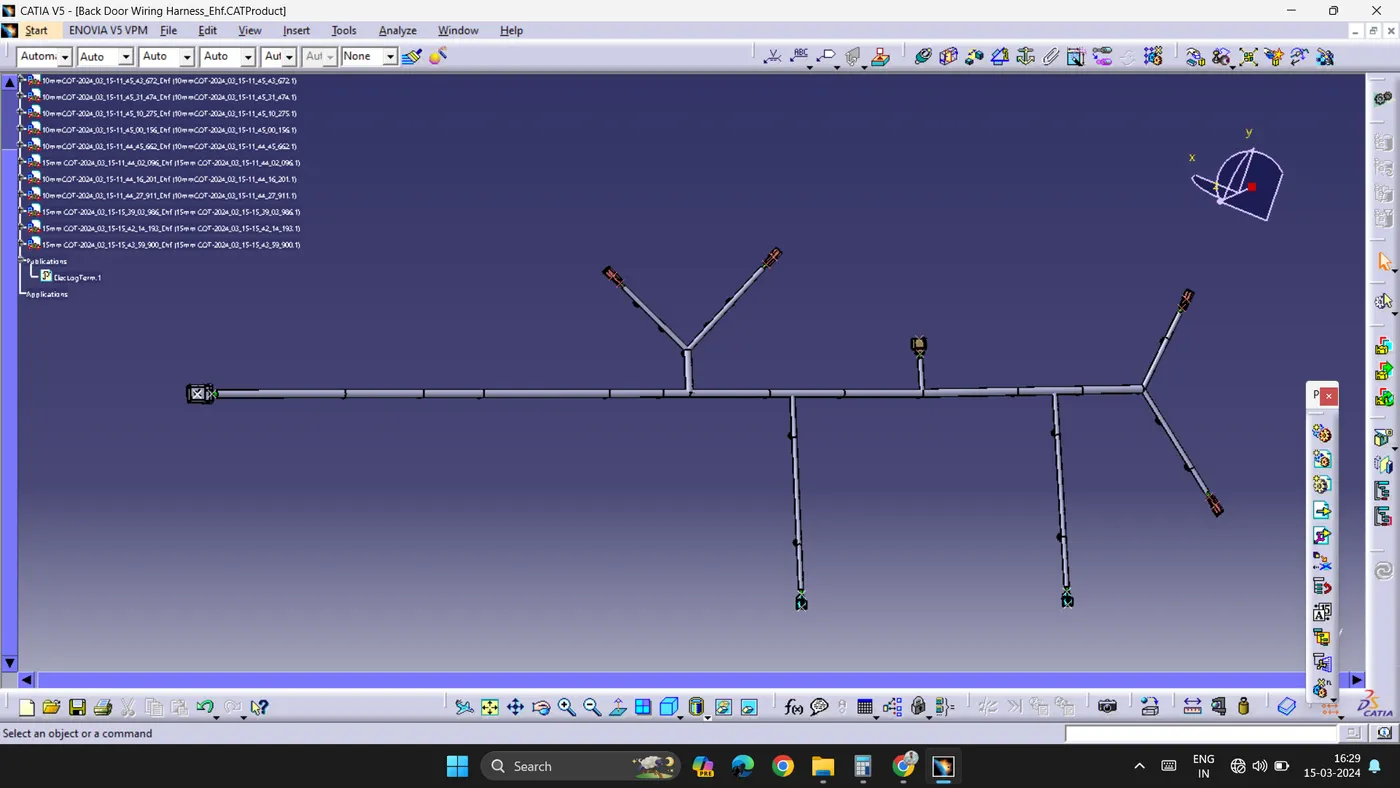
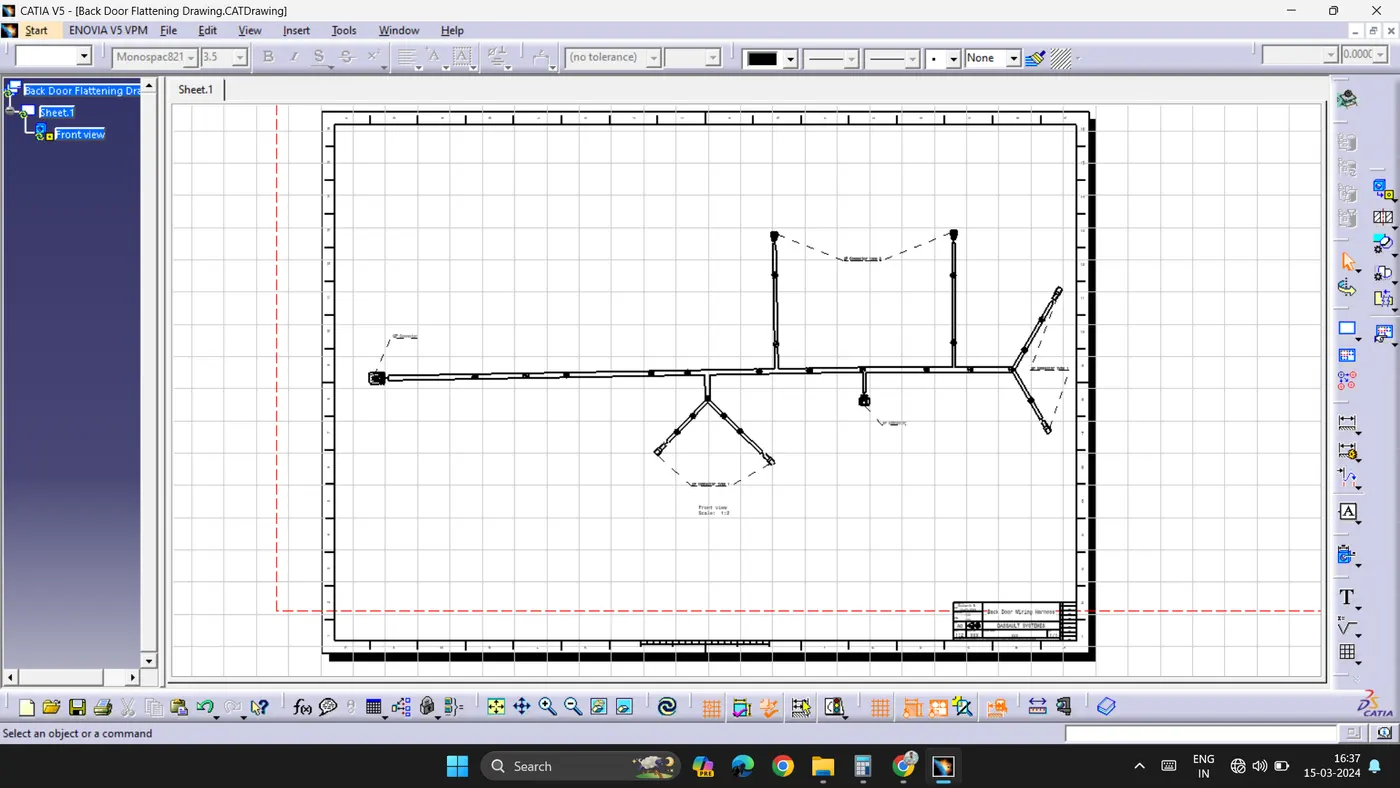
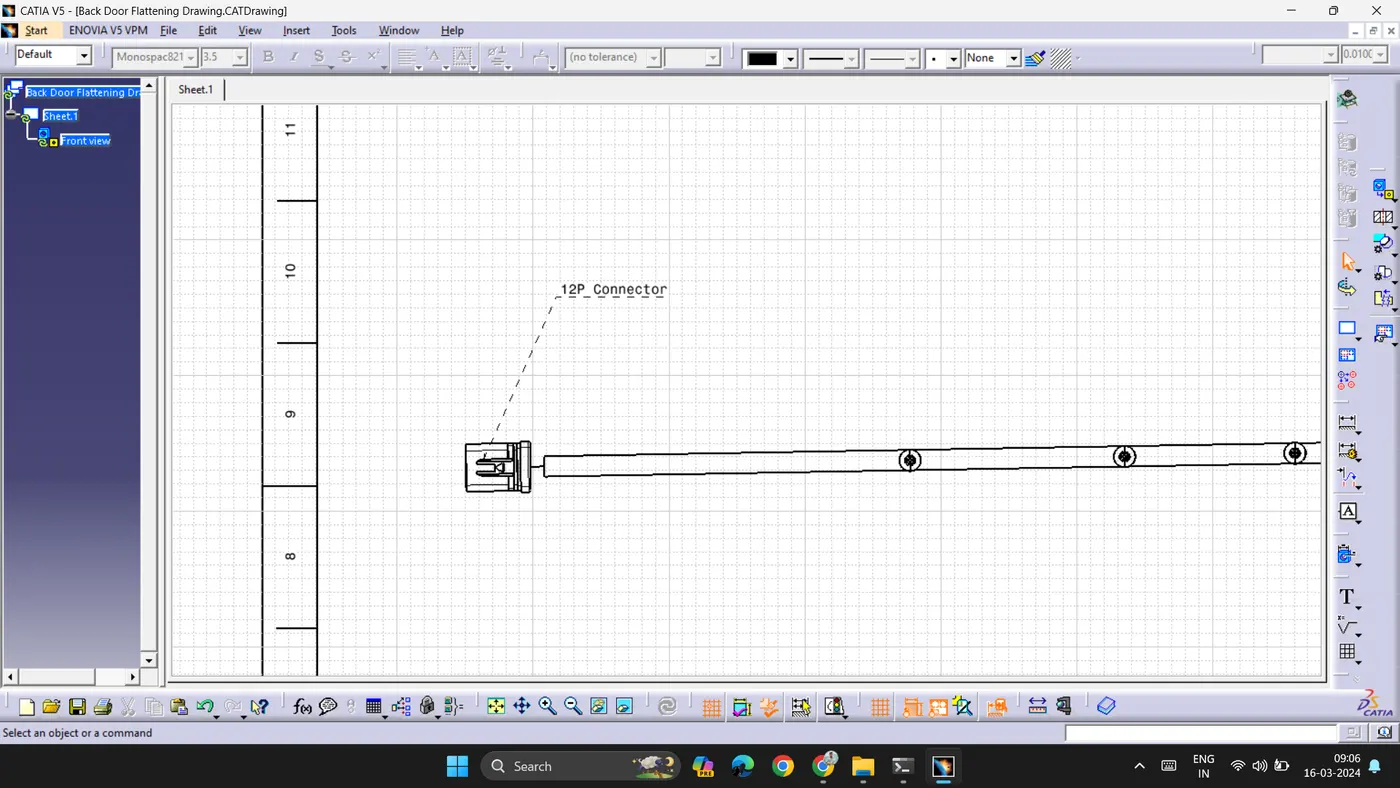
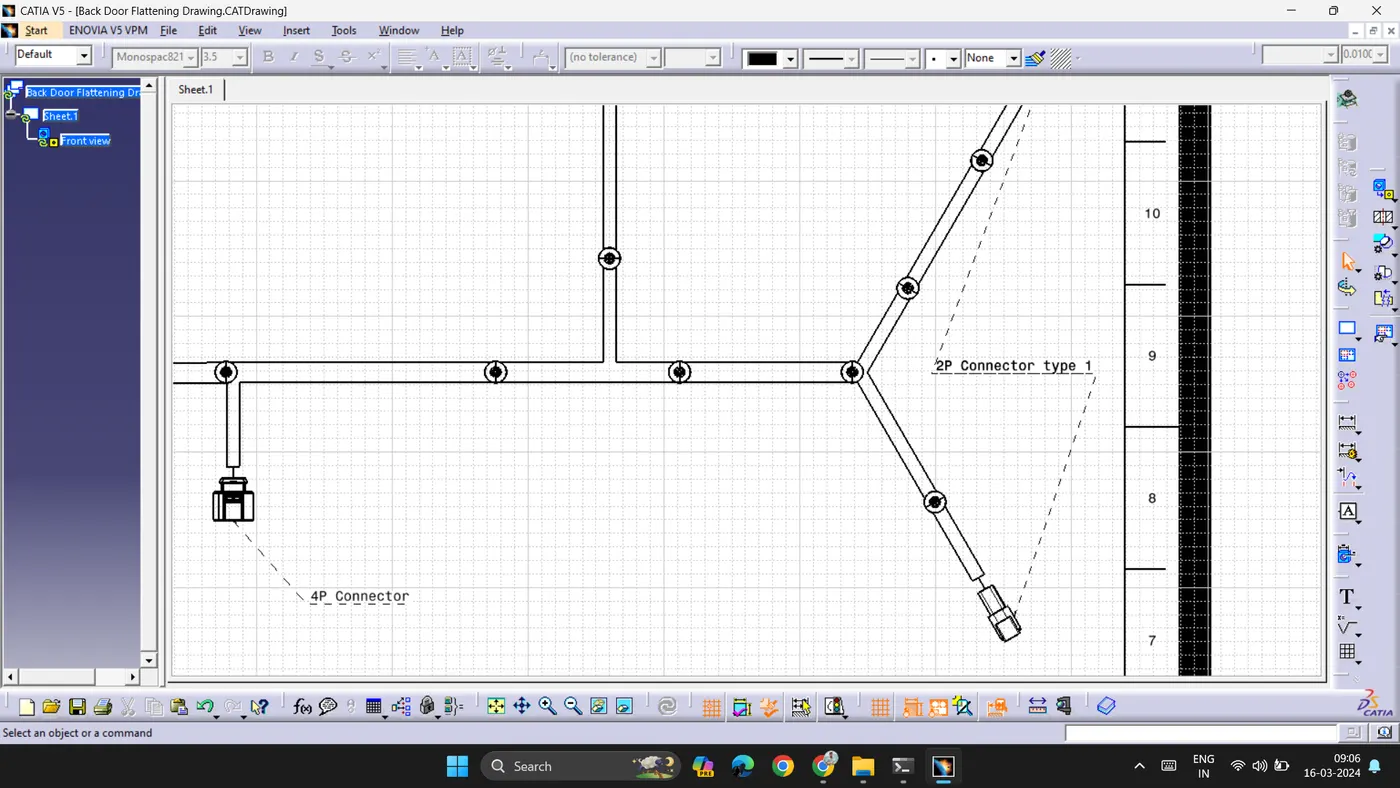
- Following the flattening process in the Wiring Flattening workbench, the flattened design is then translated into a detailed drawing, capturing all dimensions and specifications for documentation and manufacturing purposes.
-
Conclusion:
In conclusion, the process of designing and integrating a wiring harness within the back door assembly involves several critical steps and considerations. Beginning with the importation of the back door STEP file into CATIA V5, the subsequent placement of connectors and clamps facilitates the routing of the wiring harness. Following successful routing, thorough checks ensure the integrity of all connections. Subsequently, protective layers are applied to the wiring harness to enhance durability. Moving forward, parameters are defined in the Wiring Flattening workbench to prepare for the flattening process. Finally, the flattened design is translated into a detailed drawing, capturing all necessary dimensions and specifications for documentation and manufacturing purposes. Through meticulous attention to detail and adherence to best practices, this comprehensive process ensures the efficient and effective integration of the wiring harness within the back door assembly, contributing to the overall functionality and reliability of the vehicle.