Project 2
Part Files link:Gdrive
Project Report: Automotive Lighting Design in CATIA V5
1. Executive Summary:
The project focuses on the comprehensive design and development of automotive lighting using CATIA V5. It encompasses taillight design, considering safety, functionality, and aesthetic aspects.
2. Introduction:
2.1 Project Scope:
The project aims to Design a tail light by using given A surface of tail light. Create a housing and reflector by use of that
2.2 Objectives:
Develop aesthetically taillight designs.
Ensure compliance with safety regulations and standards.
Utilize CATIA V5 for 3D modeling, simulation, and analysis.
3. Literature Review:
Automotive tail lights play a crucial role in ensuring road safety, signaling intentions, and contributing to the overall aesthetics of vehicles. This literature review explores recent trends, advancements, and considerations in the design of automotive tail lights, encompassing both functional and aesthetic aspects.
1. Regulatory Standards:
Compliance with international safety standards, such as those defined by organizations like the United Nations Economic Commission for Europe (UNECE) and the Federal Motor Vehicle Safety Standards (FMVSS) in the United States, is paramount in tail light design. Studies emphasize the importance of meeting visibility, color, and intensity requirements to ensure optimal road safety.
2. LED Technology:
Recent advancements in lightemitting diode (LED) technology have significantly impacted tail light design. LED lights offer improved energy efficiency, faster response times, and greater design flexibility compared to traditional incandescent bulbs. Research highlights the benefits of LEDs in enhancing visibility and reducing energy consumption.
3. Dynamic Lighting:
The incorporation of dynamic lighting features, such as sequential turn signals and adaptive lighting systems, has gained attention in recent studies. These features not only enhance the aesthetic appeal of vehicles but also contribute to improved signaling, reducing the likelihood of accidents.
4. Light Distribution and Optics:
Tail light design involves intricate considerations of light distribution and optics. Research explores the use of advanced optics, including freeform surfaces and microstructures, to optimize light patterns, improve visibility, and ensure uniform illumination across the entire taillight assembly.
5. Aesthetic Considerations:
Tail lights are an essential component of a vehicle's exterior design. Studies delve into consumer preferences regarding tail light aesthetics, investigating trends in shapes, colors, and arrangements. The integration of design elements that align with brand identity and consumer expectations is crucial for market success.
6. Materials and Manufacturing:
In the realm of tail light design, materials selection and manufacturing processes play a vital role. Literature emphasizes the use of lightweight, durable materials, such as polycarbonate, and explores innovative manufacturing techniques, including 3D printing, to achieve complex designs while maintaining costeffectiveness.
7. Environmental Considerations:
As sustainability becomes a focal point in the automotive industry, tail light design is not exempt. Studies discuss ecofriendly materials, energyefficient lighting technologies, and endoflife considerations to reduce the environmental impact of tail light production and disposal.
8. Human Factors and User Experience:
Tail light design goes beyond technical specifications; it also considers human factors and user experience. Research examines how certain tail light designs influence driver perceptions, reactions, and overall driving experience, contributing valuable insights for enhancing safety and user satisfaction.
9. Integration with Vehicle Automation:
With the advent of autonomous vehicles, tail light design is evolving to integrate seamlessly with vehicle automation systems. Literature explores how tail lights can communicate with other vehicles and infrastructure, contributing to safer and more efficient transportation systems.
4. Methodology:
4.1 Conceptualization:
Brainstorm design concepts considering aerodynamics, energy efficiency, and styling.
Select final design concepts based on feasibility and project goals.
4.2 3D Modeling:
Utilize CATIA V5 to create detailed 3D model of taillight assemblies by using given A surface.
Implement design for manufacturability principles.
4.3 Simulation and Analysis:
Conduct simulations for draft analysis.
5. Taillight Design:
5.1 Components:
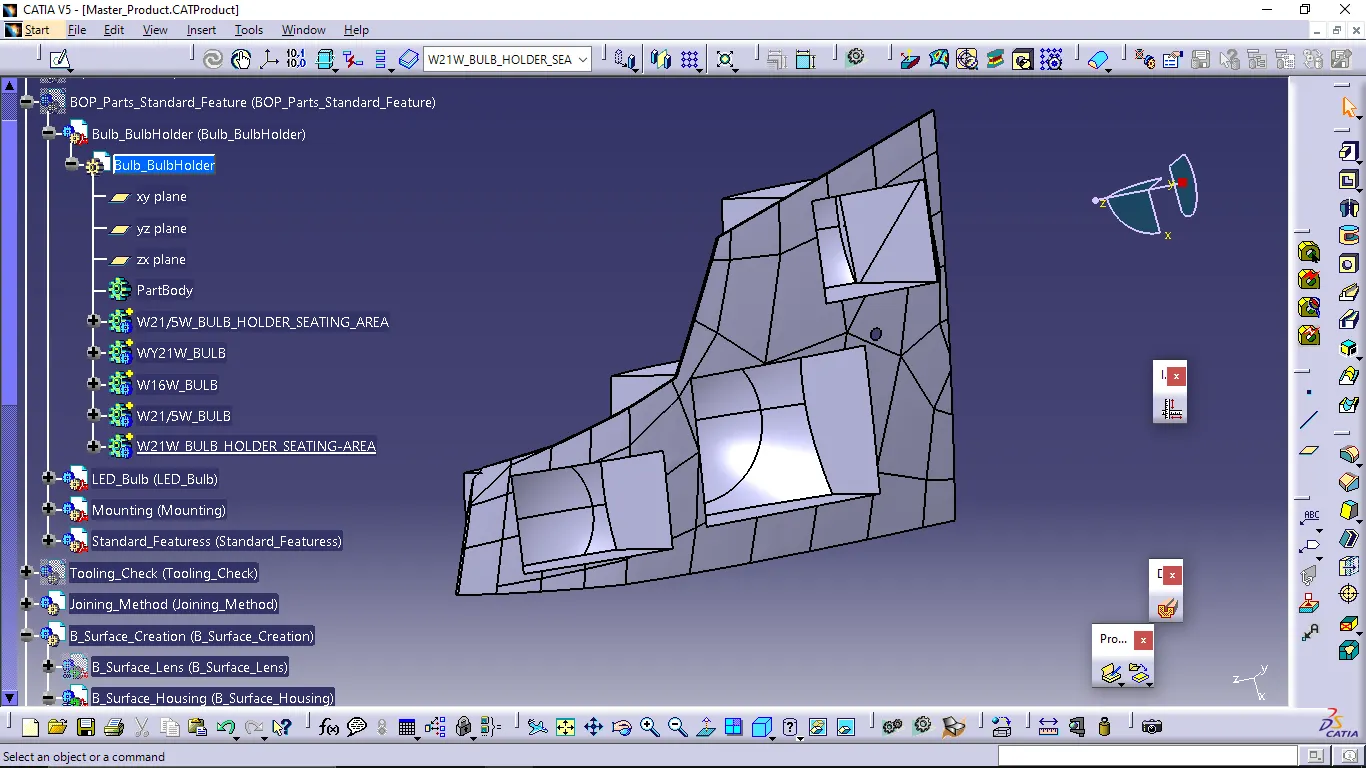
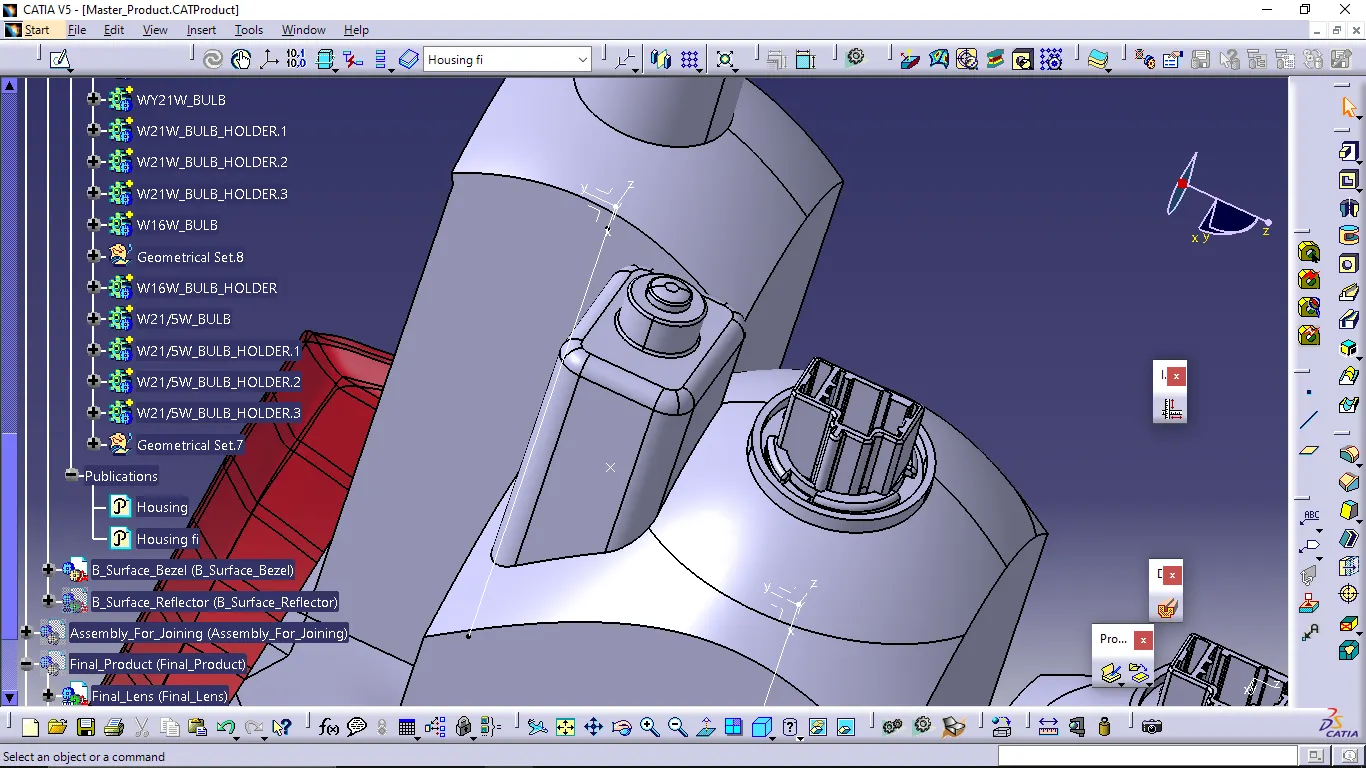
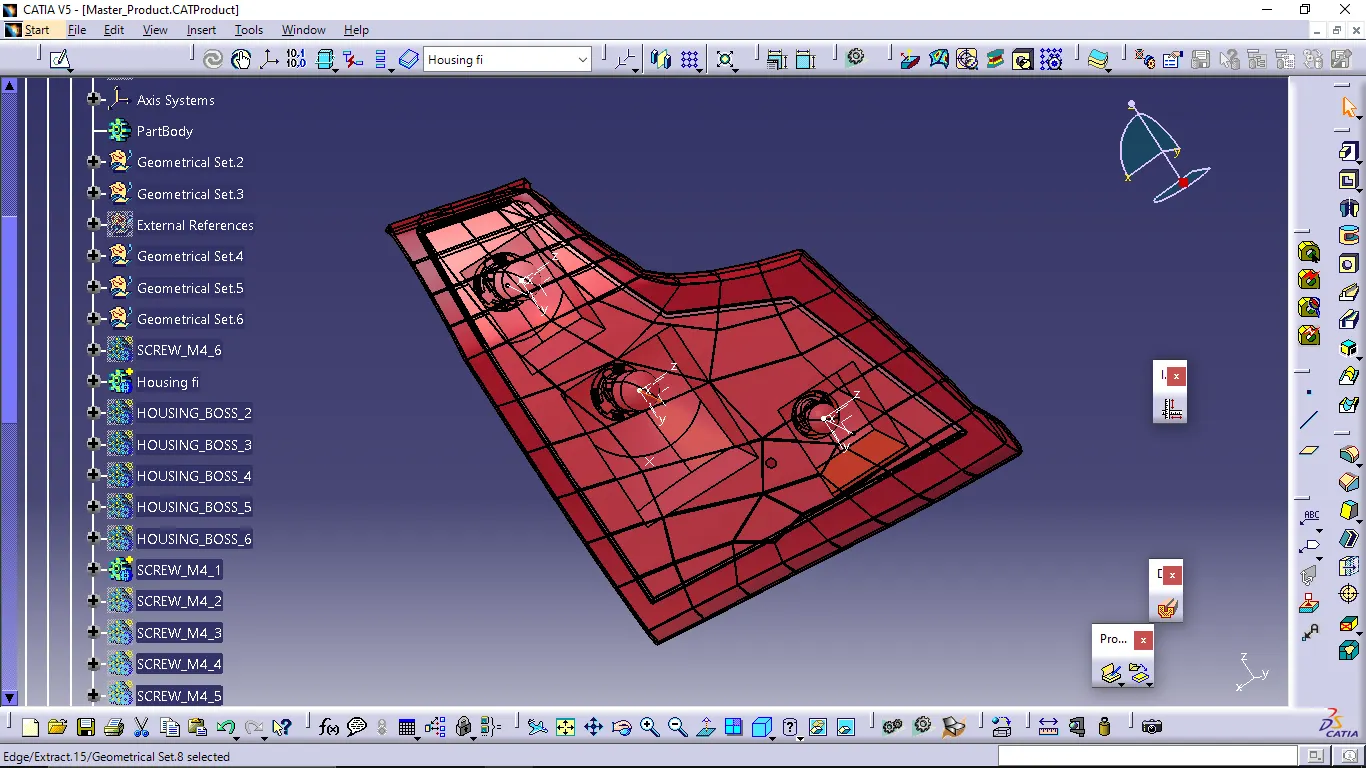
*Lens
*Housing
*Refelectors
6. Conclusion:
Tail light was designed by use of given a surface by designing the Lens, Housing, Refelectors B surfaces and assembly.