Project 2
Project Report: Solid Remastering in CATIA V5
Executive Summary:
This project focused on the remastering of existing solid models in CATIA V5 to enhance their quality, efficiency, and adherence to design standards. The primary objective was to identify and address any shortcomings in the given parts through systematic remastering techniques.
Project Background:
The existing solid models in CATIA V5 were deemed to have certain inefficiencies or inconsistencies that needed improvement. These issues could impact the overall design integrity, manufacturability, or simulation results. The project aimed to rectify these issues and ensure that the solid models meet industry standards.
Objectives:
1. Solid Model Assessment:
Evaluate the given parts to identify any modeling issues, incomplete features, or deviations from design standards.
2. Remastering Techniques:
Implement appropriate remastering techniques in CATIA V5 to rectify identified issues and improve the overall quality of the solid models.
3. Performance Validation:
Validate the remastered solid models against design requirements through testing and simulations.
Methodology:
1. Solid Model Assessment:
Conducted a comprehensive assessment of the given parts in CATIA V5.
Identified areas with incomplete features, geometric inconsistencies, or deviations from design standards.
2. Remastering Techniques:
Selected and applied suitable remastering techniques within CATIA V5, including:
Part Design modifications
Surface Refinement using Generative Shape Design
Topological optimization for structural integrity
3. Performance Validation:
Validated remastered solid models through:
Structural analysis using CATIA Analysis and Simulation tools.
Geometric validation against original design specifications.
Tools Used:
Part Design: Used for modifying and enhancing part features.
Generative Shape Design: Applied for refining and optimizing surfaces.
Analysis and Simulation: Utilized for structural analysis and performance validation.
Images:
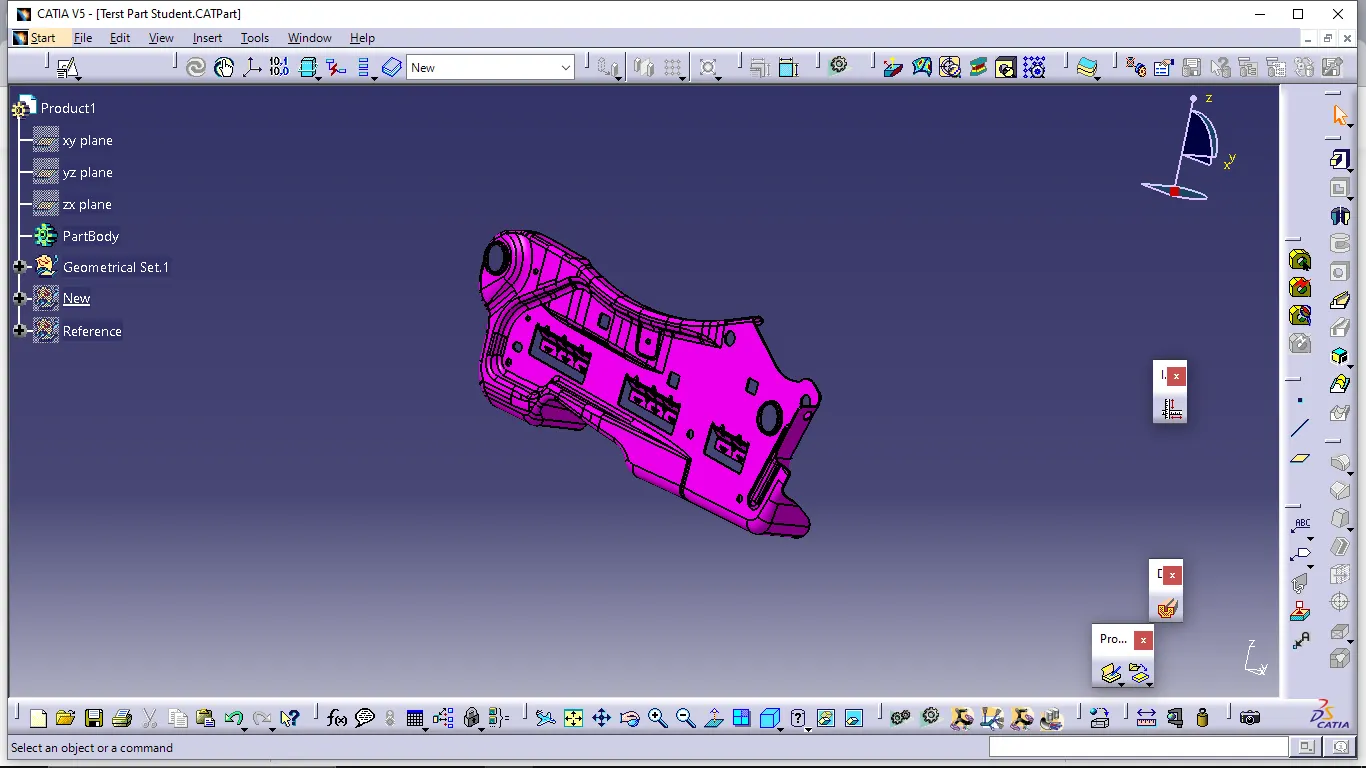
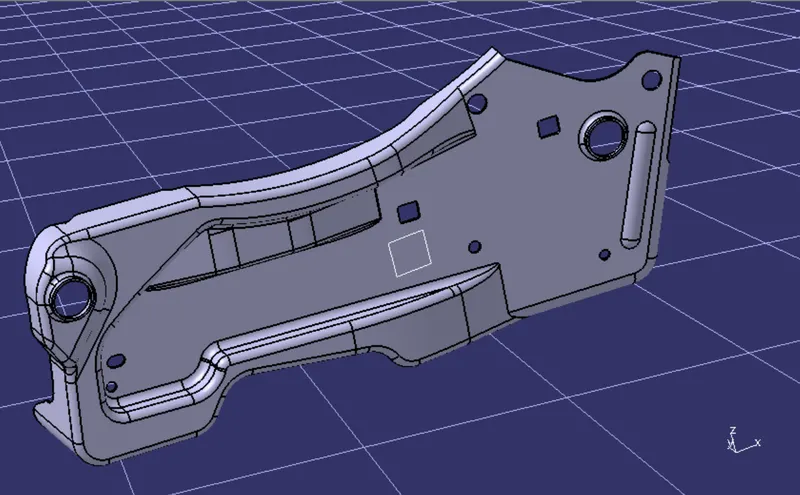
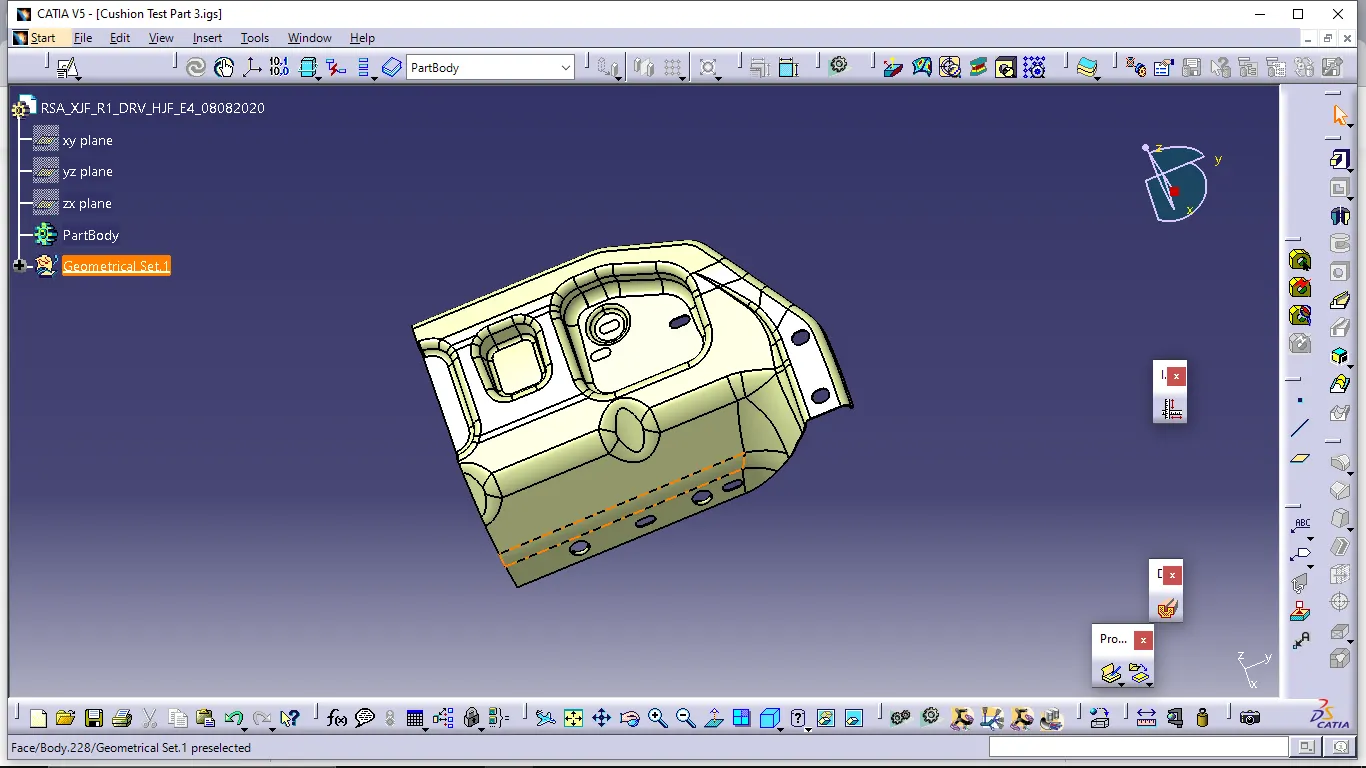
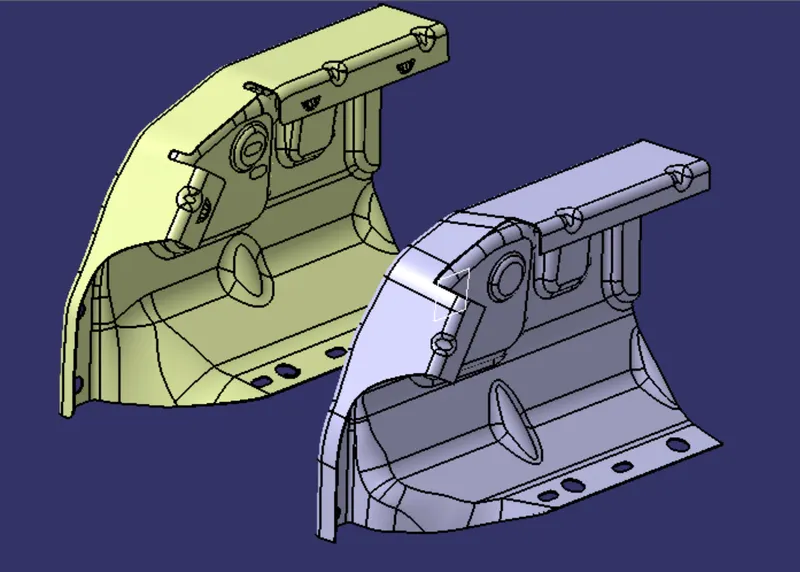
Results:
1. Improved Solid Models:
Highlighted improvements in the given parts through beforeandafter comparisons.
Demonstrated enhanced geometric accuracy and completeness.
2. Enhanced Performance:
Documented improvements in structural integrity and stability.
Achieved better simulation results and adherence to design specifications.
3. Validation Results:
Summarized positive results from structural analysis and simulation tests.
Ensured that remastered solid models meet or exceed design requirements.
Challenges Faced:
Geometric Complexity: Dealing with intricate geometric features required careful consideration and innovative solutions.
Interoperability: Ensured compatibility and seamless integration of remastered parts with existing assemblies.
Conclusion:
The project successfully addressed the identified issues in the given parts through systematic solid remastering techniques in CATIA V5. The enhancements made contribute to improved design quality, manufacturability, and overall performance.
3.
For seatbelt anchorage test, three loads are acting on seat. In which, F1 & F3 are seat belt load which are acting ontrack assembly. F2 is load of seat. Now, we want to calculate load on track under seat belts. Assume, track angle is 0° from horizontal. Also we can consider weight of seat 18kg.
Angle of shoulder belt load =3 degree
Angle of belly belt load = 3.7 degree
Assuming,F1= 1000 N
F3= 1000 N
F2= 20*18=360 kg = 360*9.81=3531.6 N
Distance from pivot to CG= 83 mm
Distance from pivot to F1= 95 mm
Distance from pivot to F2= 70 mm
L= Distance from CG to pivot point horizontally= 6 mm
Track peel out strength, Fp
FpL = (F1 sin α) 95 + (F3 sin β) 70 + F283
= (1000 sin 3)95+ (1000 sin 3.7)70 +3531.683
=20144.15
Therefore, Fp= 20144.15/L= 3357.4 N = 3.4kN