Project 2
Introduction of Wiring Harness,
In the automotive industry, a wiring harness refers to a standardized assembly of electrical wires, cables, and connectors that are used to transmit electrical power and signals between various components in a vehicle. It acts as a central nervous system, providing a secure and organized way to connect electrical and electronic components within the vehicle.
The wiring harness is crucial in modern vehicles, as it simplifies the electrical system's installation and maintenance processes. Instead of having individual wires running all over the vehicle, a wiring harness bundles and protects these wires into a single assembly. This makes it easier to manufacture, install, and repair vehicles in an efficient and cost-effective manner.
Components connected by a wiring harness may include:
<!-- [if !supportLists]-->1. <!--[endif]-->Engine components: Such as sensors, injectors, ignition coils, and the engine control module (ECM).
<!-- [if !supportLists]-->2. <!--[endif]-->Lighting systems: Including headlights, taillights, fog lights, and turn signals.
<!-- [if !supportLists]-->3. <!--[endif]-->Dashboard and instrument cluster: To connect various gauges, indicators, and buttons.
<!-- [if !supportLists]-->4. <!--[endif]-->Audio and entertainment systems: For speakers, radios, amplifiers, and navigation units.
<!-- [if !supportLists]-->5. <!--[endif]-->Transmission and drivetrain components: For sensors and control units related to automatic transmissions.
<!-- [if !supportLists]-->6. <!--[endif]-->Power windows and locks: Connecting switches and motors.
Wiring harnesses are typically designed and manufactured according to the specific requirements of a vehicle model or a range of models. This means that different vehicles will have different harnesses depending on their features and functions. The harnesses are made from various materials, including insulated wires, connectors, tapes, and protective sleeves, ensuring that the electrical connections are safe, reliable, and well organized.
Door Wiring Harness,
The door of the automobiles opens and closes, the wires bend. If you use the car every day, the door will open and close many times. In case of Back door, the trunk could be open and close many times in daily life. Backdoor wiring harness mainly introduced to connect the brake lights, number plate lights, rear wiper motor, defogger connections. The harness routing should be maintained properly with all the supporting components like clips, clamps with proper protective covers, rubber grommets.
Design Methodology & Packaging Rules,
- Distance between two clamps on a straight branch should be maximum of 160mm.
- The minimum branch length should be 50mm.
- To limit the number of branches from a single branch point to 4.
- Routing through small structural holes and openings shall be avoided. (reduces chaffing)
- The bend ratio for all the bundle segment is considered to be 1.4
- Minimum distance between clip and nearest branching point should be 25mm.
- The minimum distance between two straight connection points should be 200mm.
- The minimum distance between two breakout points should be 50mm.
BACK DOOR - Wiring Harness,
As per the challenge requirements i have designed the wiring harness,
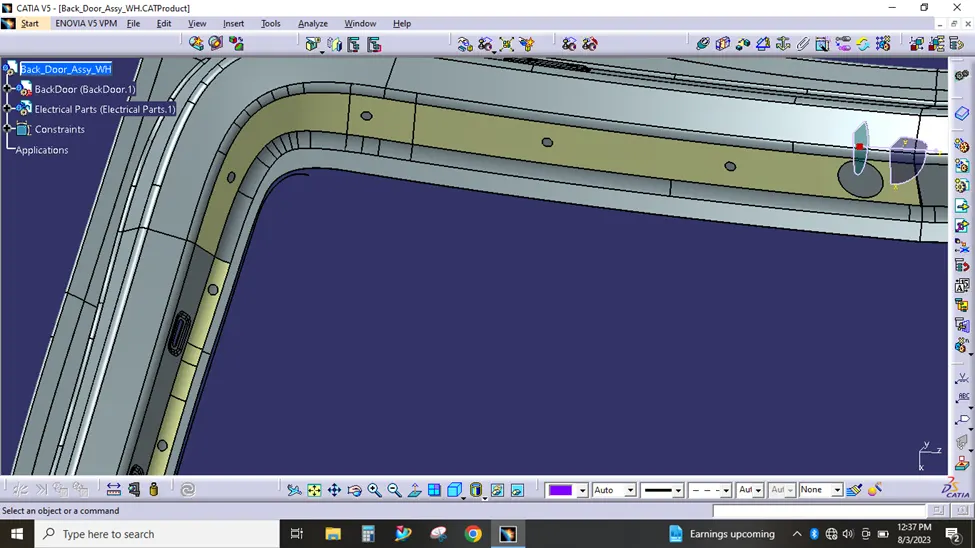
Given Back door assembly
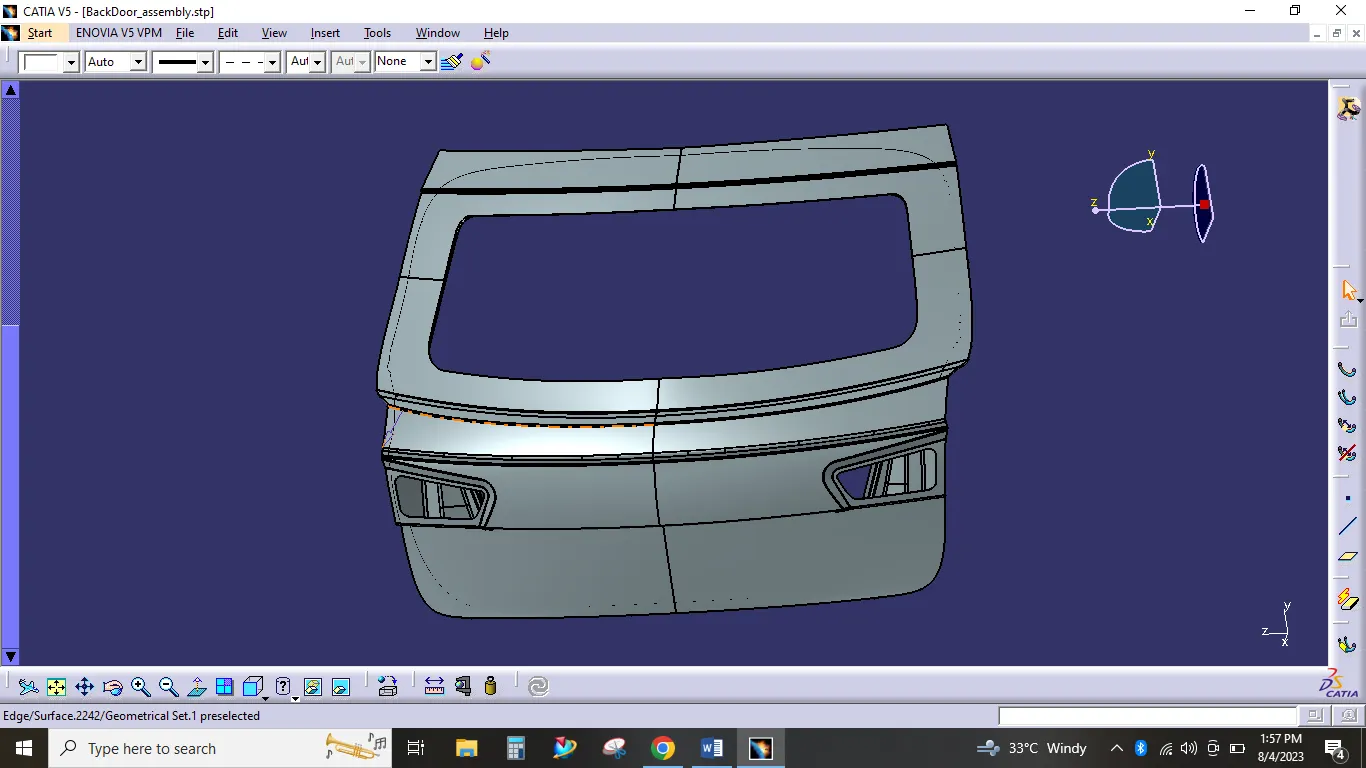
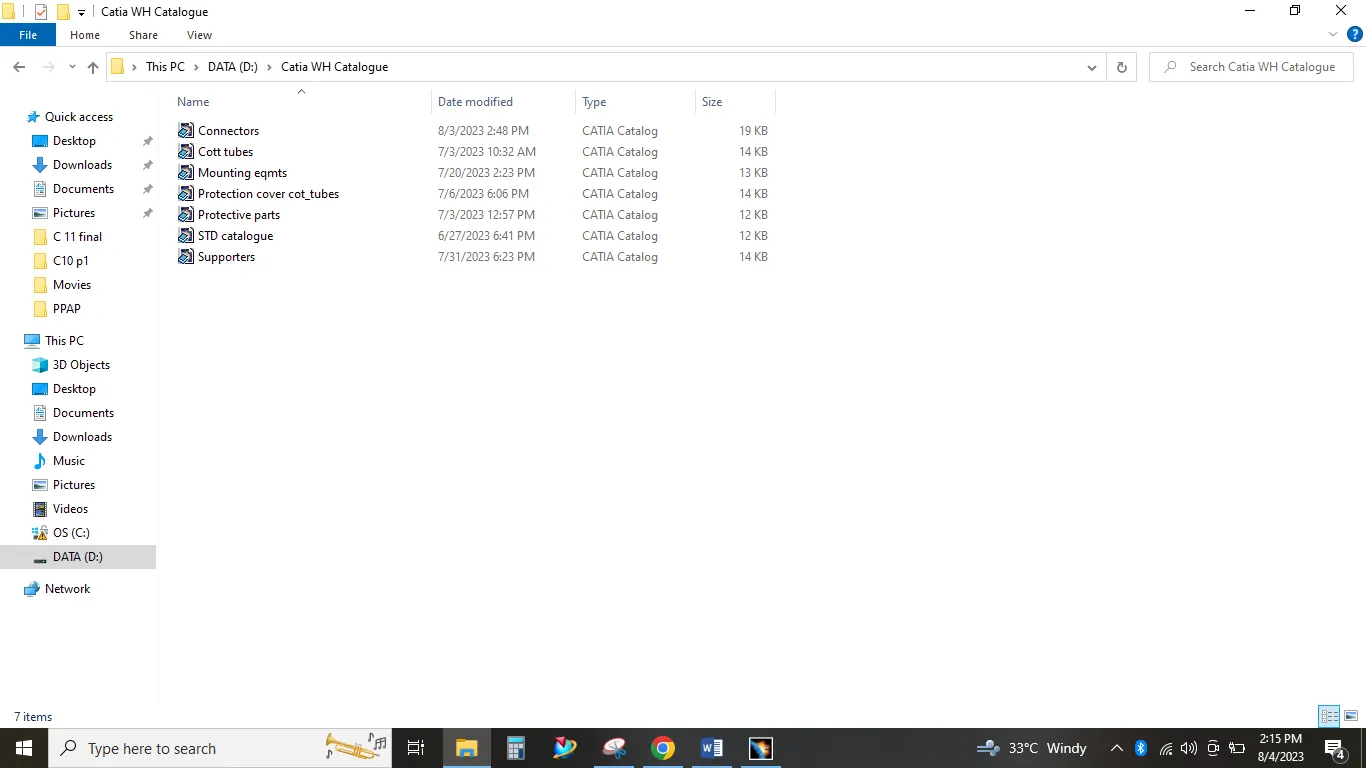
Defining electrically the required connectors and supports,
Before defining electrically - Creation of basic references has done ( Creation of point and axis system )
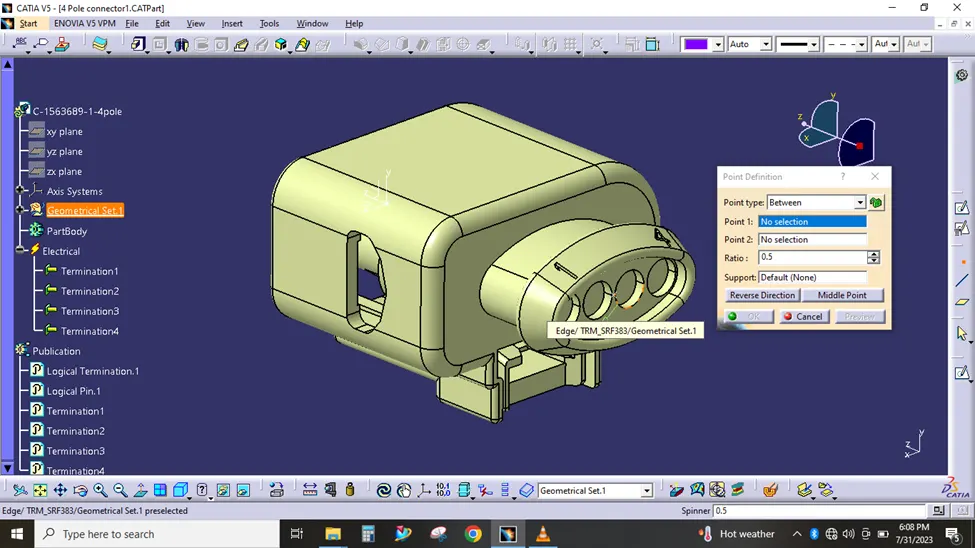
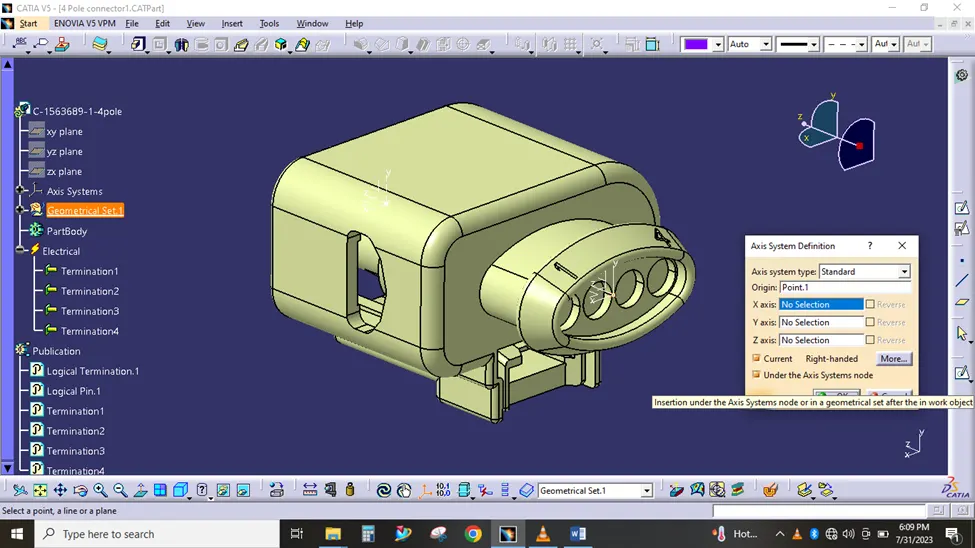
Defining bundle entry point,
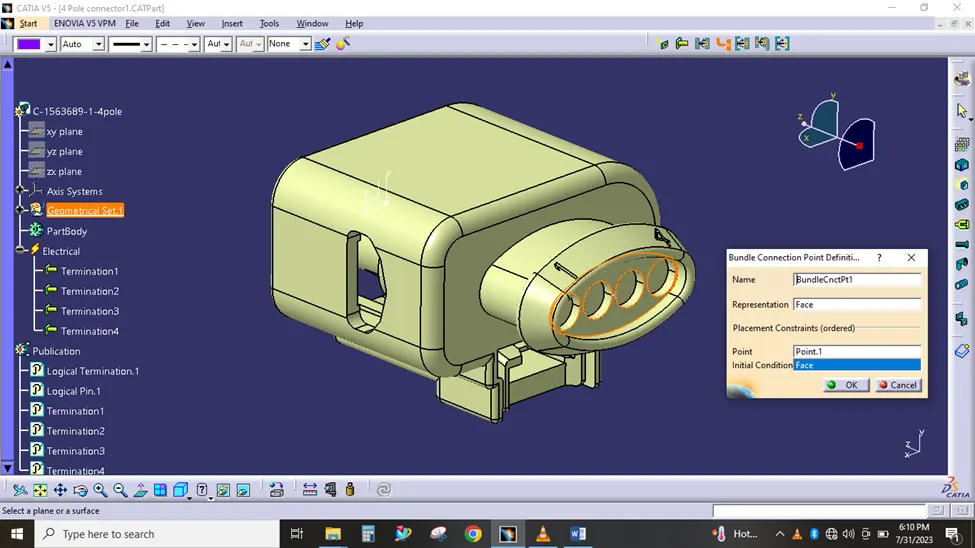
Defining connector connection point,
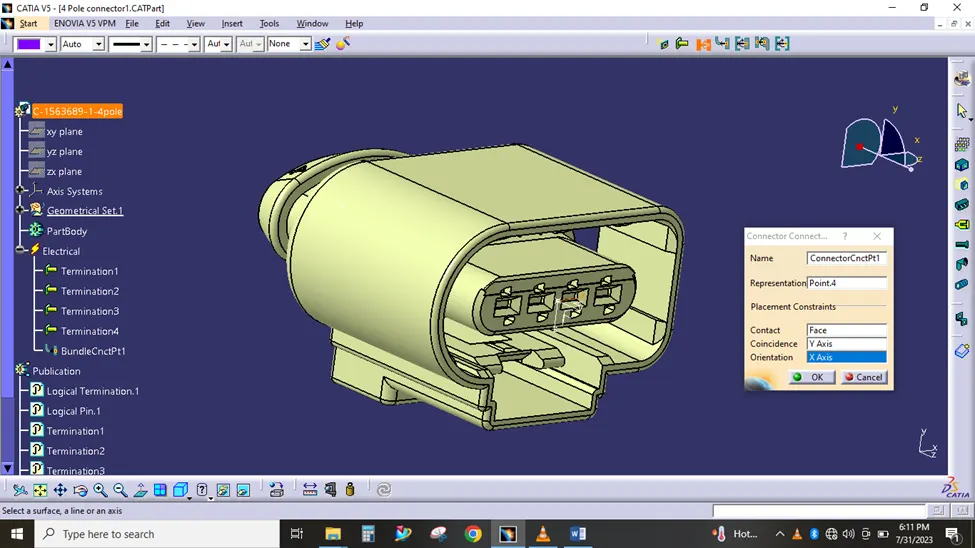
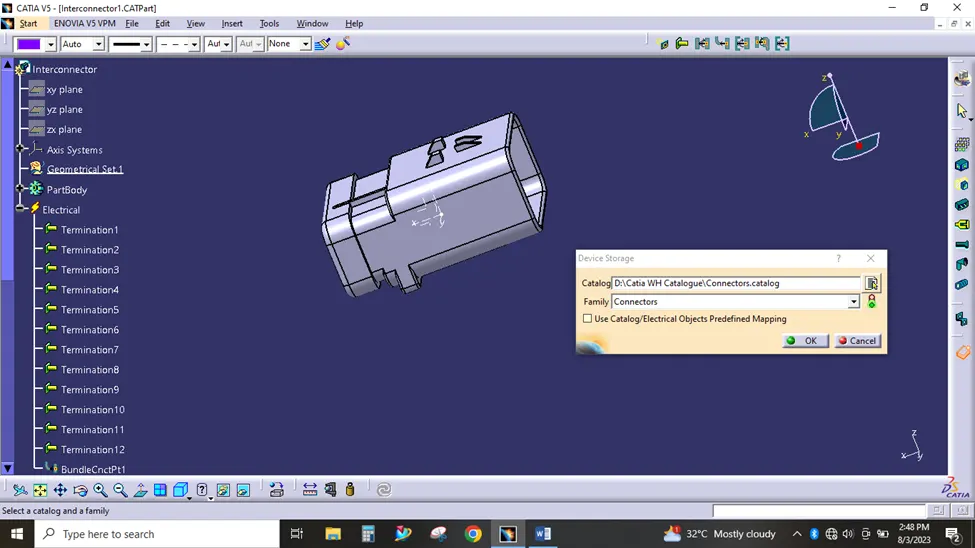
After defining electrically - The defined connectors and supports can be used for multi times at multiple places. so that the electrical device is stored in specfic catalogues.
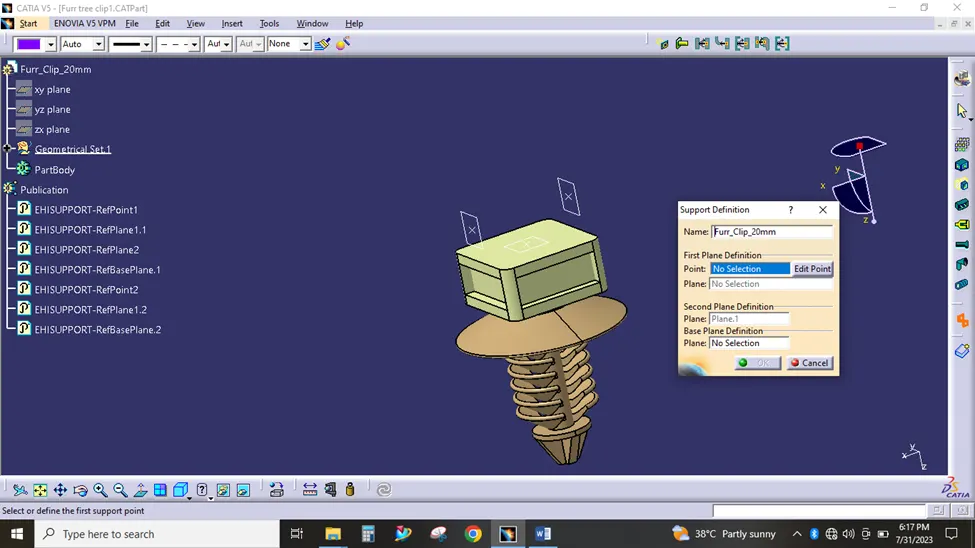
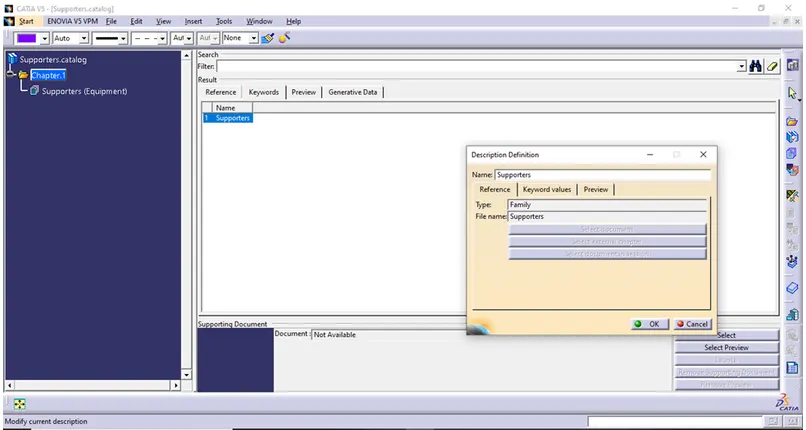
Defining support - As two ways of entry and exit,
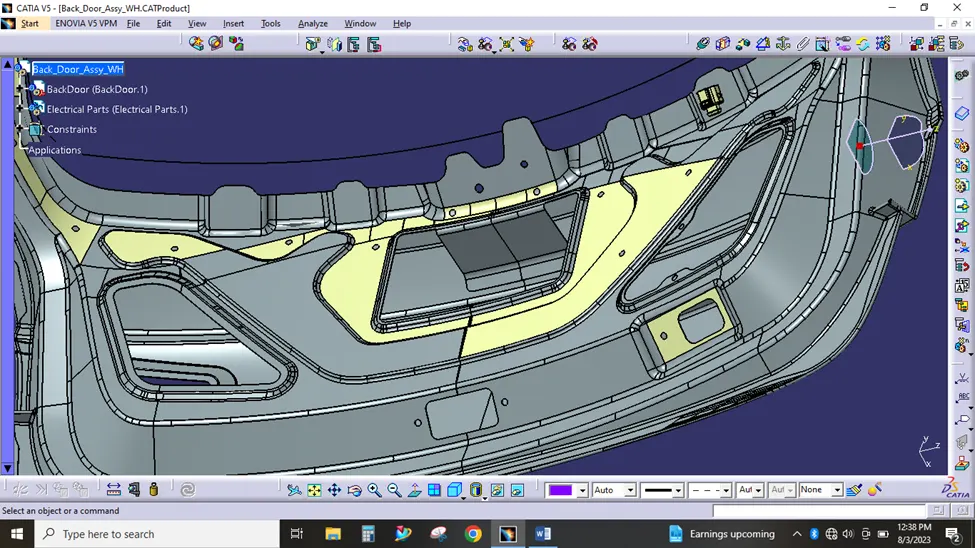
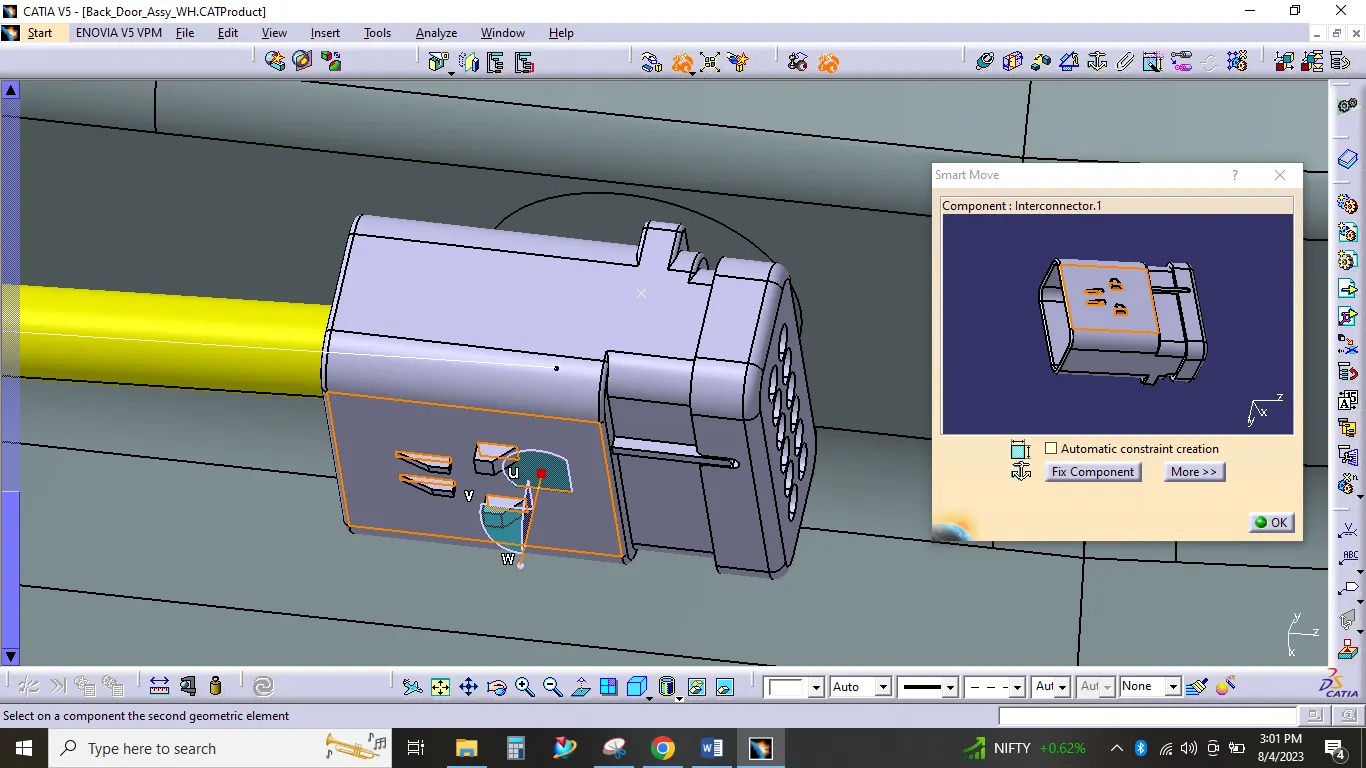
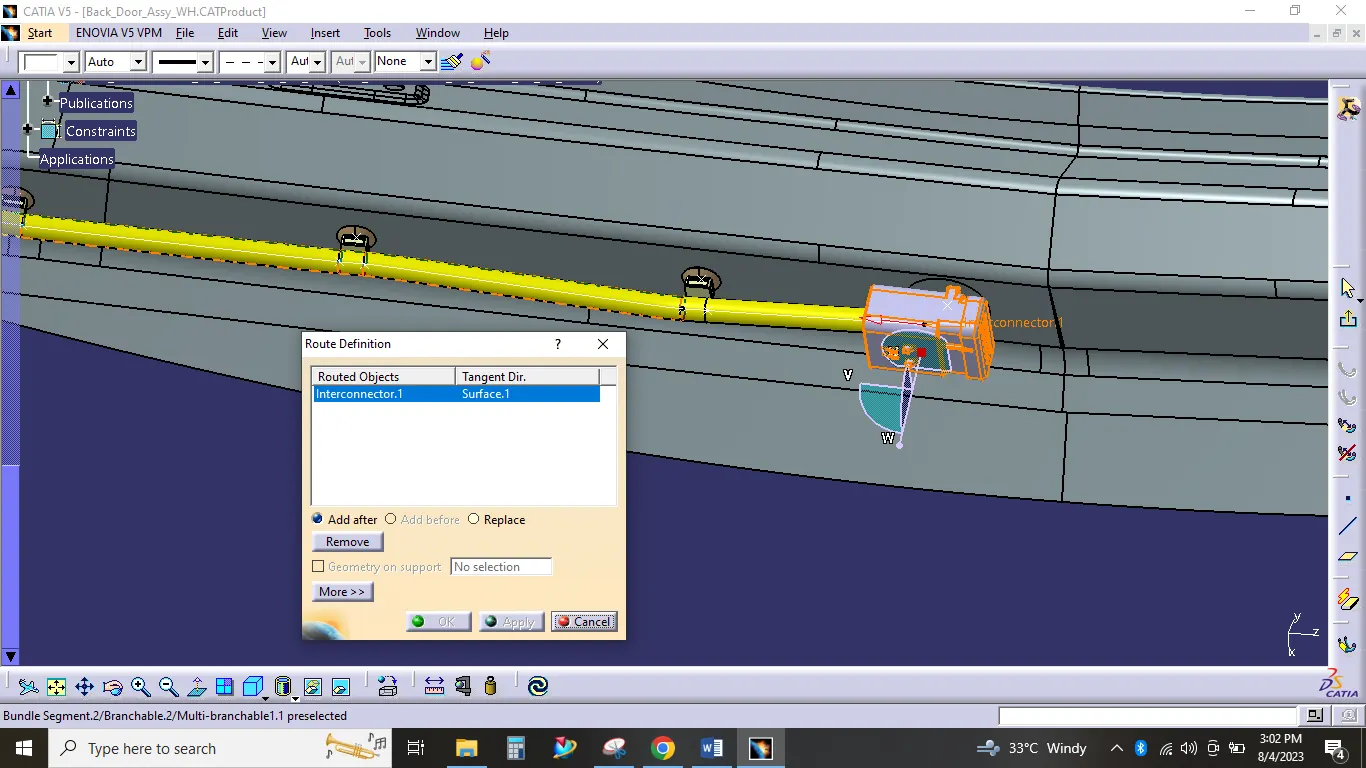
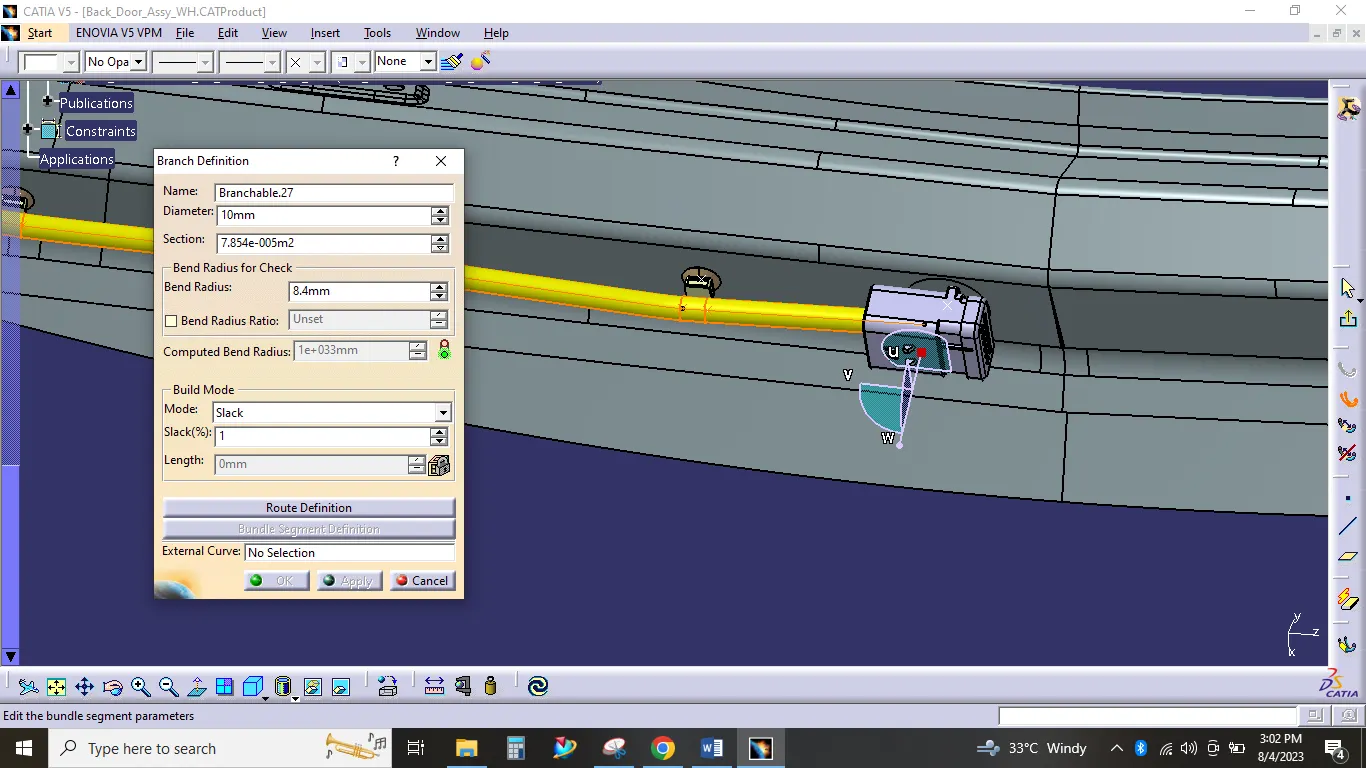
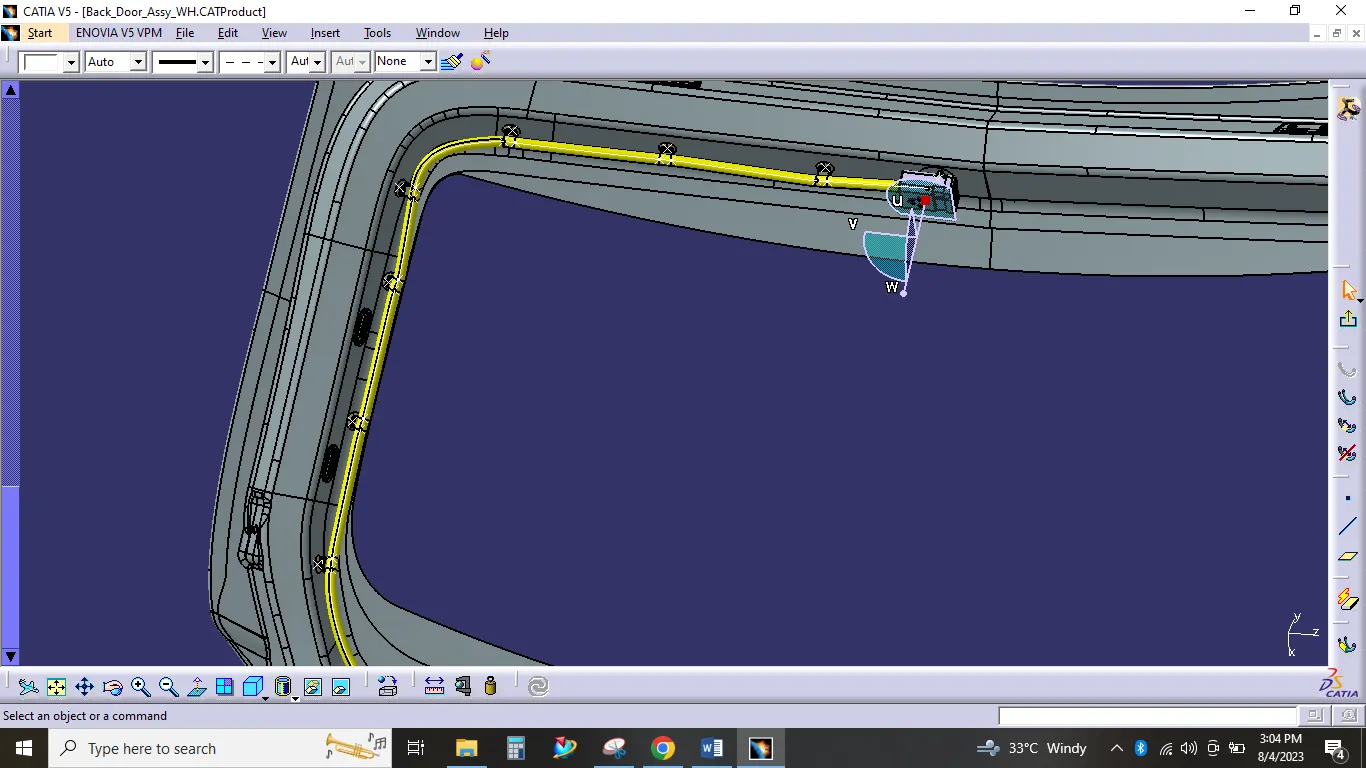
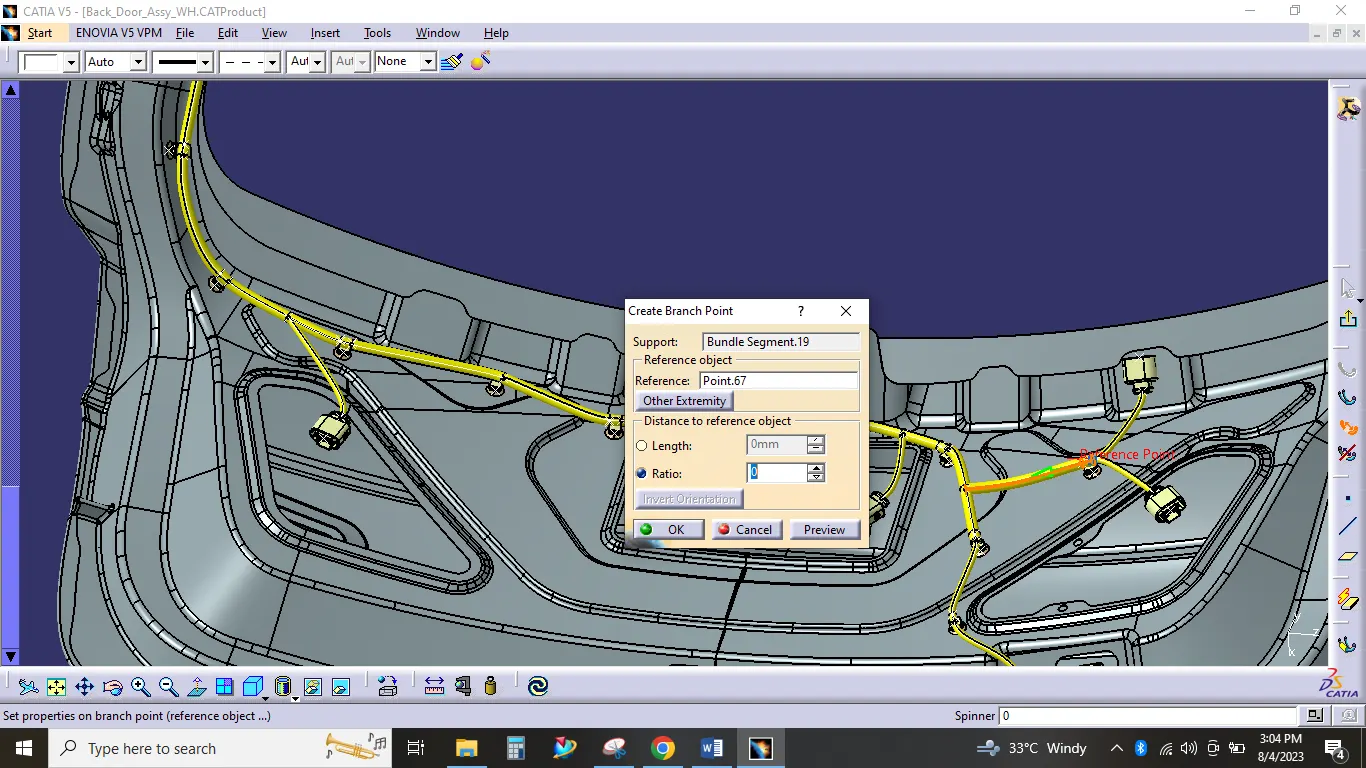
- I have routed the wiring harness for back light, back door lock indicator sensor, wiper motor connection, Auto door - open, close.
- Bundle errors - The most of the bundle error has cleared by "reverse tangent" option. After that the 4 pole connectors routed, the wire fouling can be avoided, here by providing enough amount of slack percentages ( 2% to 5% ) and also changing the branching point positions.
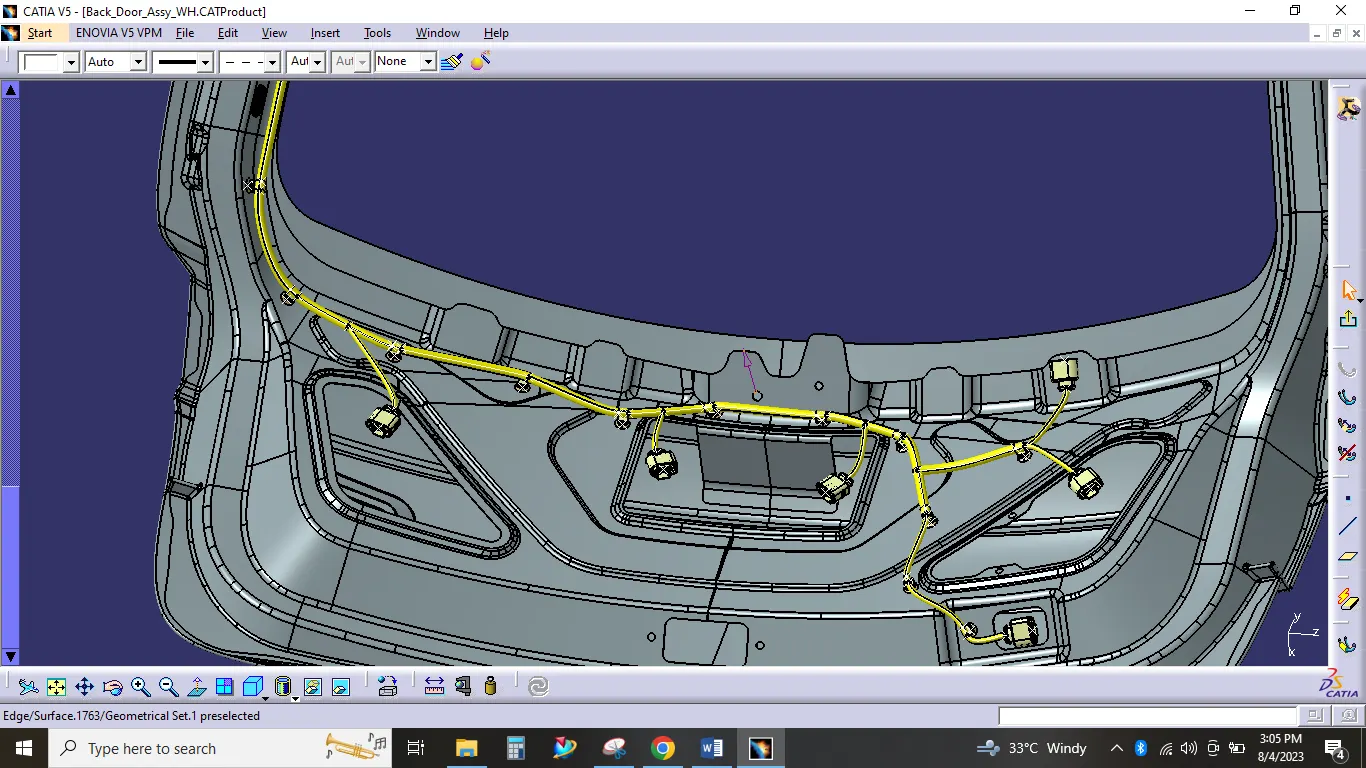
Protection covering,
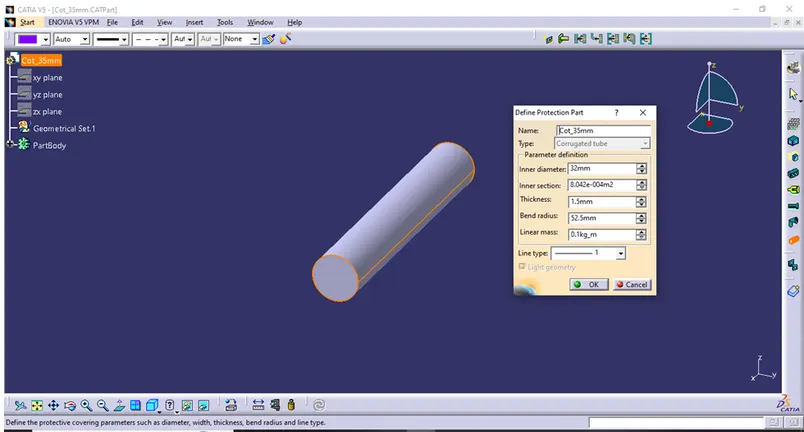
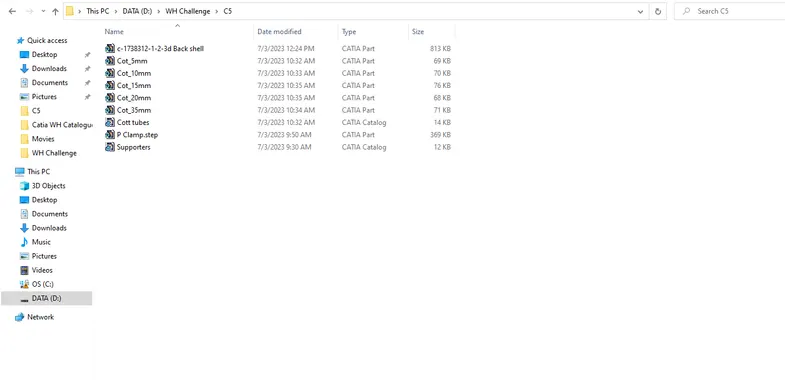
As per the assumed diameter of bundle, the desired protective cover (COT TUBES) has provided from the catalogue,
Yellow color - Wire Bundle
Dark brown Color - Protection covering
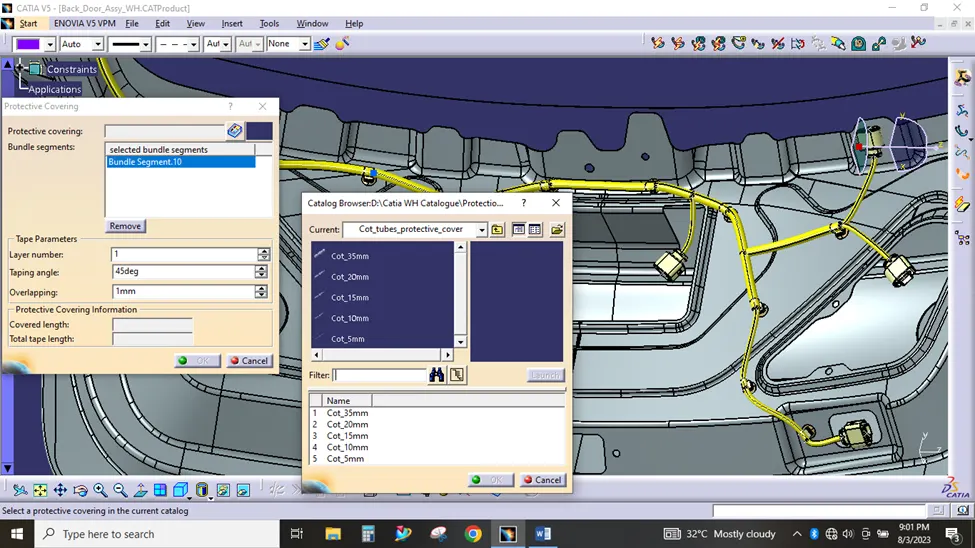
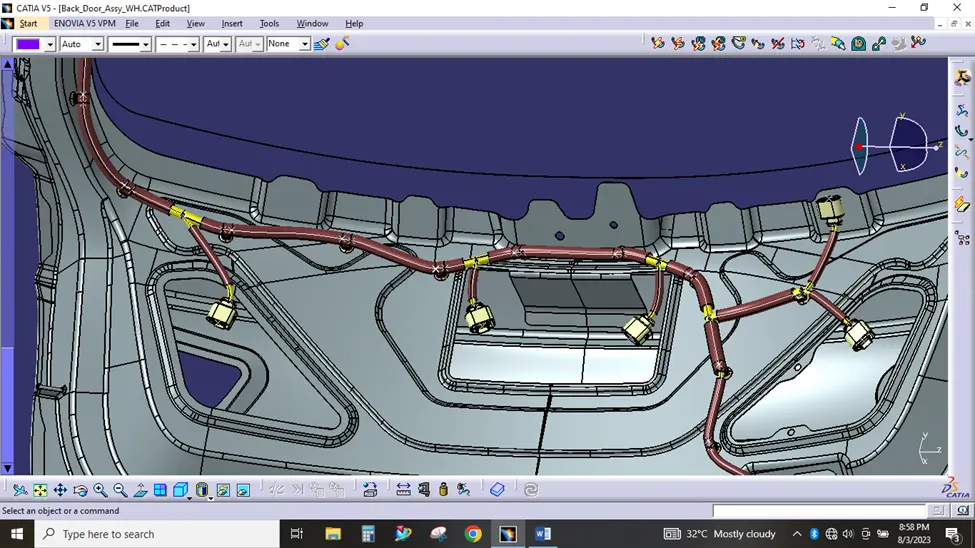
Final wiring harness,
I have maintained the main trunk dia. as 10mm and the branched dia. as 4mm to 6mm. One 12 pole inter connection connector used to start the routing, we can operate the total back door harness on/off by this connector connection.
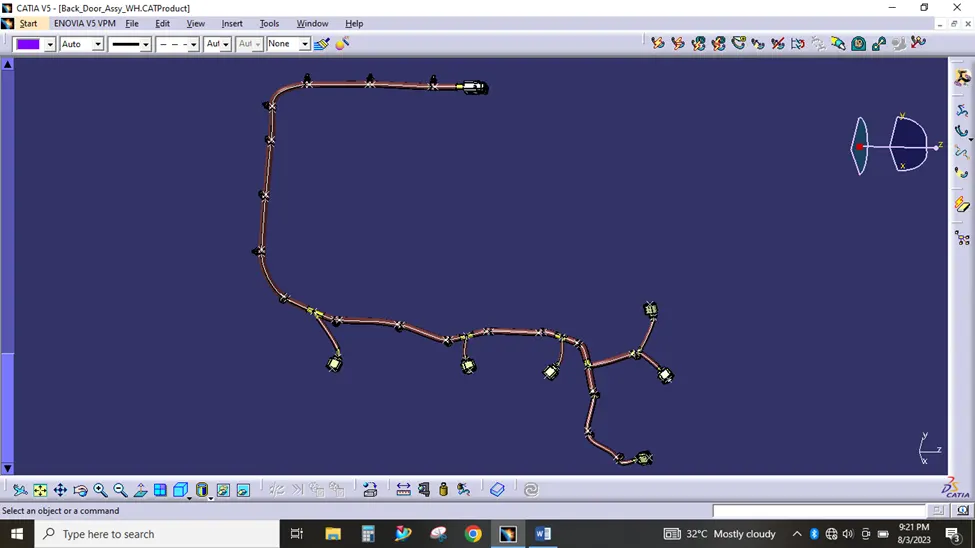
Bundle Connection checking,
Before flattening the WH we should check the bundle connection to get proper flattening.
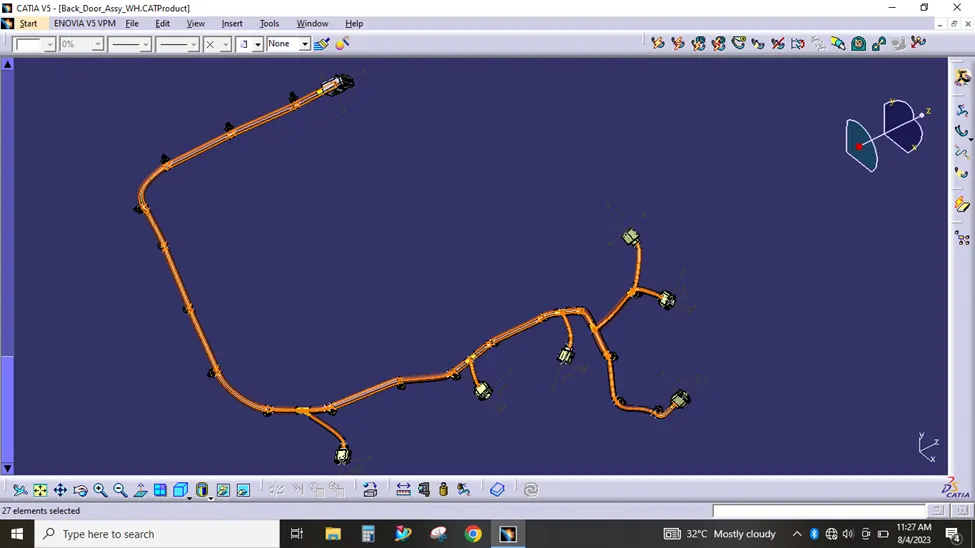
Final WH Assy.,
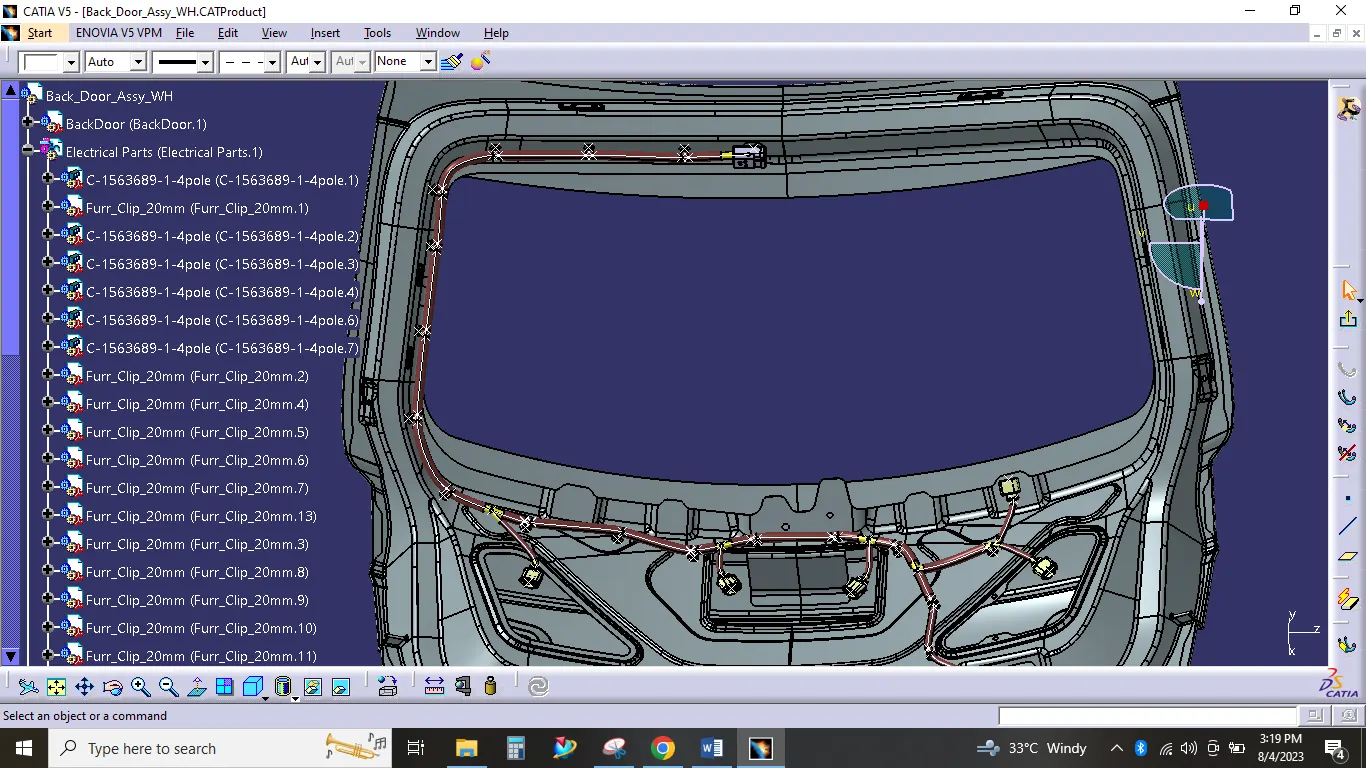
Harness Flattenning and Drawing snaps,
After the complete connection check, the flattening made,
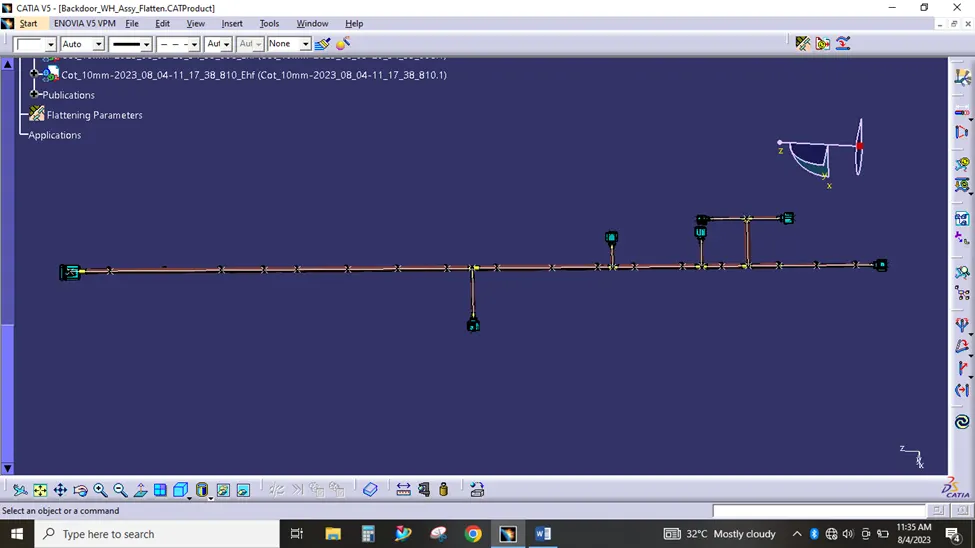
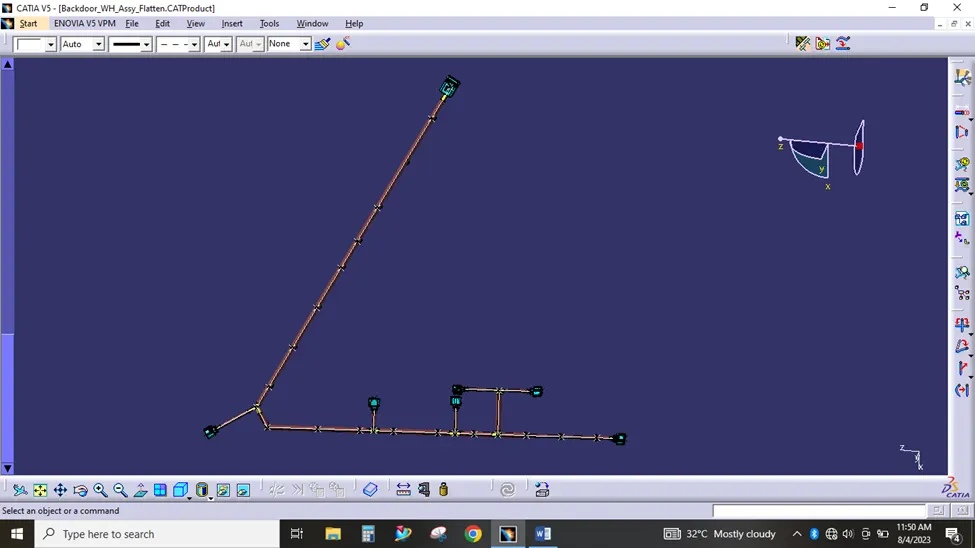
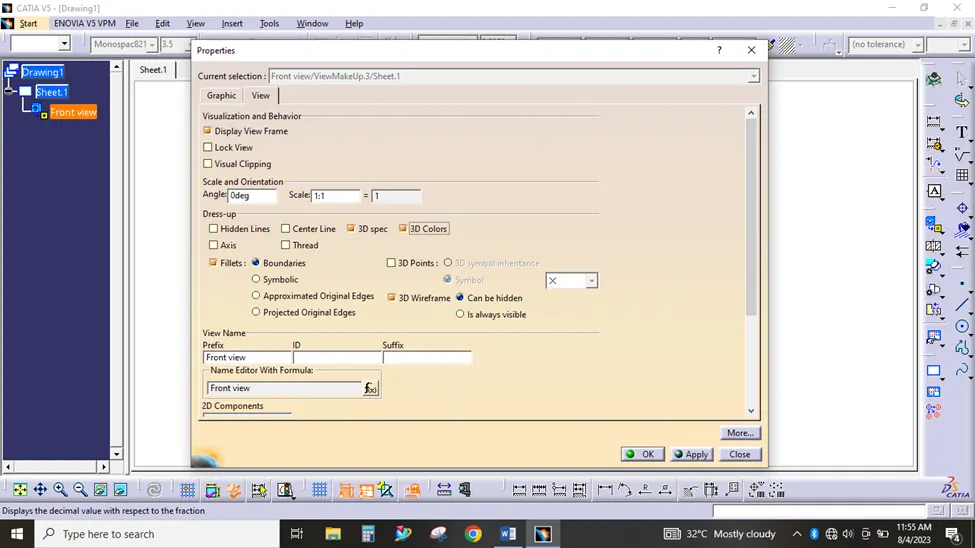
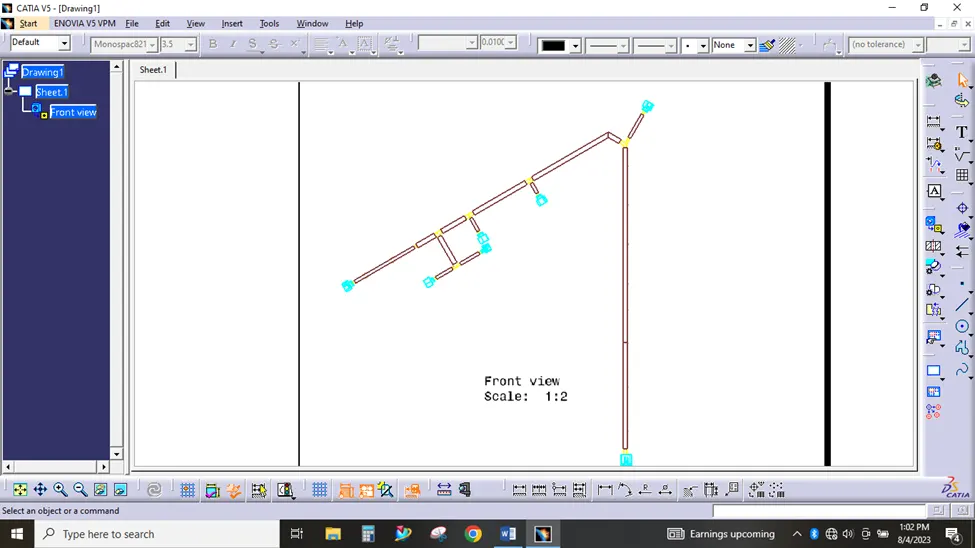
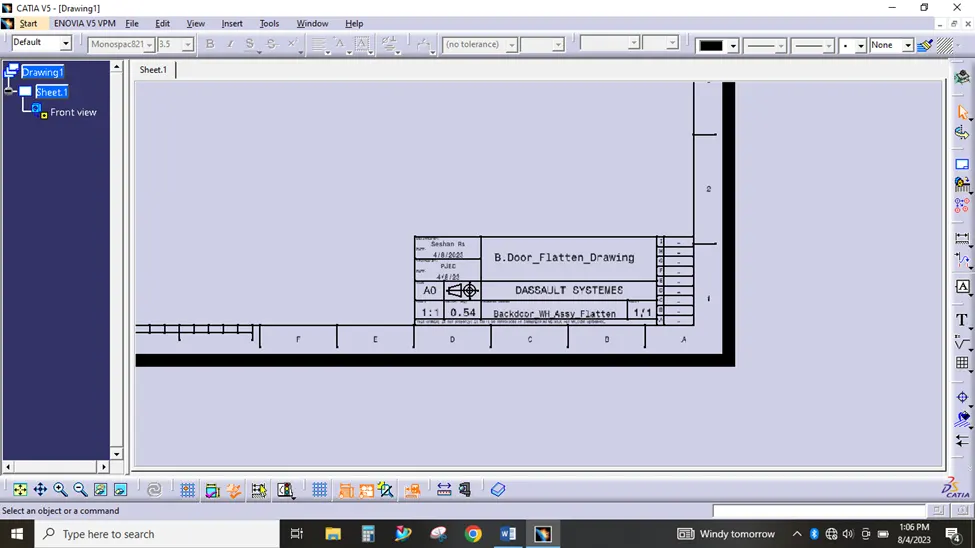
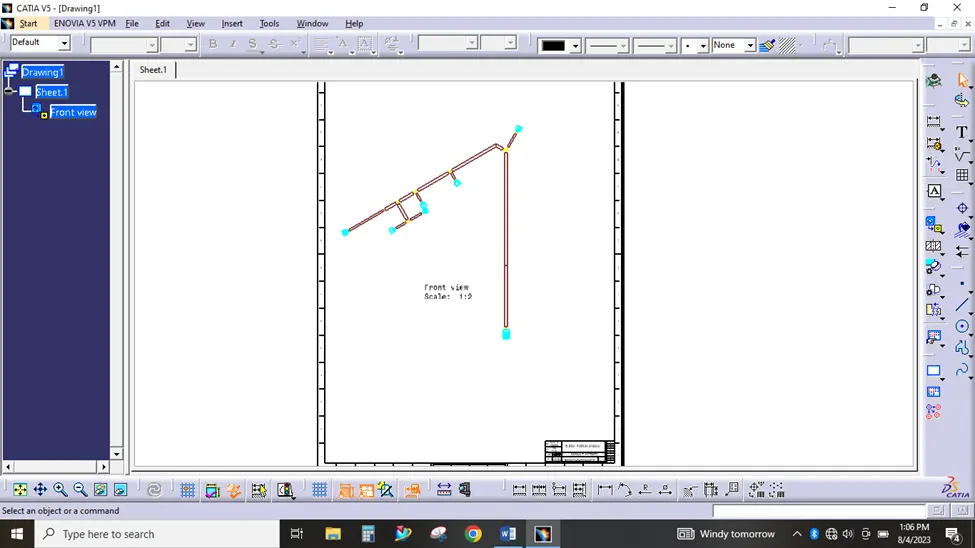
Thus the back door WH has routed with real time considerations. And i have attached the assembly files, part files, and multibranchable files, catalogues as a double zip file.