Study on BAJA All-Terrain Vehicle
Study on BAJA All-Terrain Vehicle
Aim:
Carrying out a system-level simulation of an all-terrain vehicle.
Overview:
The term ATV stands for All-Terrain Vehicle. It is also known as a quad or quadricycle-type vehicle. An All-Terrain motor-vehicle could have three, four, or even six wheels. Unlike a motorcycle, generally, ATVs have more than two wheels. This vehicle runs on low-pressure tires. However, it has handlebars instead of a wheel for controlling the steering. As the name indicates, an ATV is designed to handle a broader variety of terrain than regular vehicles. In some countries, it is a street-legal motor vehicle and licensed for use on public roads. However, it is not street-legal or roadworthy within some states, territories, and provinces of some countries.
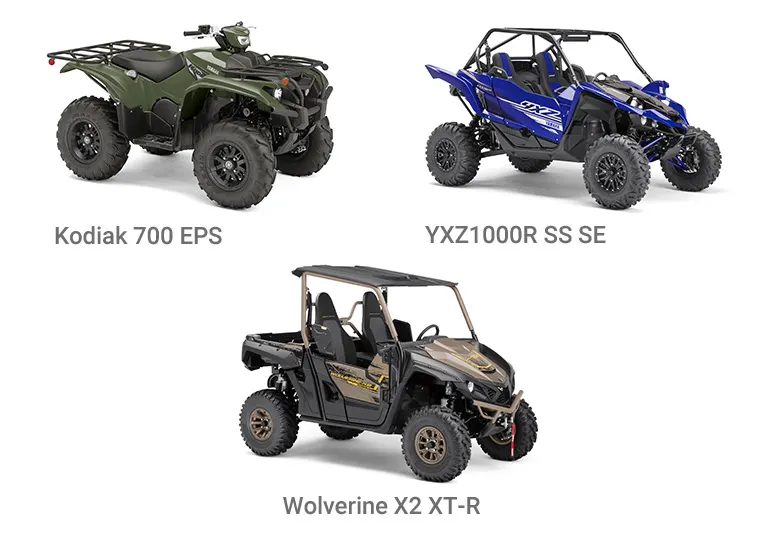
Fig: All-Terrain Vehicle
The riders ride an All-Terrain Vehicle by sitting on it just like a motorcycle. However, you don’t need much effort to balance it because extra wheels give more stability at slower speeds. Also, most dirt bikes are considered the ATVs because they are designed for off-road use only. Generally, most ATVs come with three or four wheels. However, some specialized applications require six-wheel models. Engine sizes of ATVs range from as low as 49cc to 1,000cc. However, the size of the engine depends upon the application.
Generally, the intended use of All Terrain Vehicles is by a single operator only. However, some manufacturers make ATVs for use by two. Of them, one is the operator and the other is a passenger. So, manufacturers refer to these ATVs as Tandem ATVs. The rider or main operator must wear a helmet just like a motorcycle rider. However, in some countries, it is not mandatory for the passenger to wear a helmet.
An all-terrain vehicle (ATV) is defined as a motorized off-highway vehicle designed to travel on four low-pressure or non-pneumatic tires, having a seat designed to be straddled by the operator and handlebars for steering control. ATVs are subdivided into two types as designated by the manufacturer. Type I ATVs are intended by the manufacturer for use by a single operator and no passenger. Type II ATVs are intended by the manufacturer for use by an operator and a passenger and are equipped with a designated seating position behind the operator. Similarly, riders must also consider the various ATV sizes.
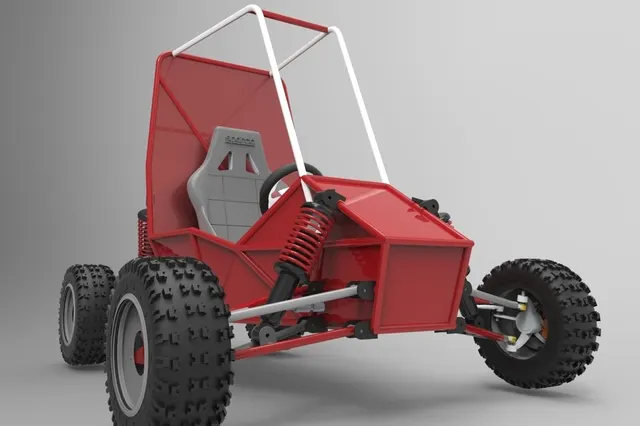
Fig: BAJA ATV
The above is one of the ATVs used in the BAJA competition.
Procedure:
The following is the BAJA ATV Model. The model consists of Vehicle Body, Simple Gear, CVT, Engine Sensor, Engine, and the throttle and brake input.
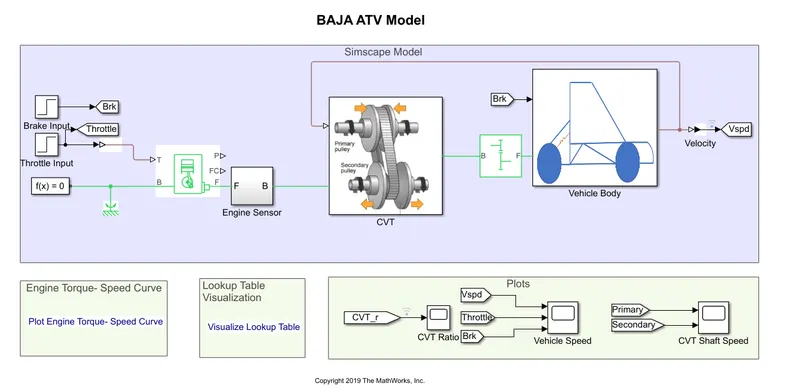
Fig: Simulink model of BAJA All-Terrain Vehicle
Here, CVT is the focal part of this model.
Continuously Variable Transmission.
A continuously variable transmission (CVT) is an automatic transmission that can change seamlessly through a continuous range of gear ratios. This contrasts with other transmissions that provide a limited number of gear ratios in fixed steps. The flexibility of a CVT with suitable control may allow the engine to operate at a constant RPM while the vehicle moves at varying speeds.
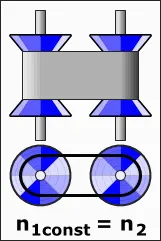
Fig: CVT
CVT uses two pulleys having variable diameters that help the transmission achieve infinite gear ratios. Thanks to this, the flow of power from the engine to the wheels is continuous and uninterrupted. With no mechanical gears & shafts, the speed transition is smooth while accelerating or de-accelerating. All of this means an effortless driving experience with a lot of comforts.
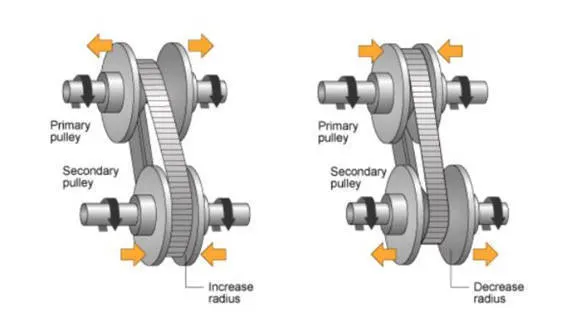
Fig: CVT working
In the CVT technology, there is a Transmission Engine Controller Unit in place to operate this hydraulic system. The function of this hydraulic system is to control the motion of one pulley to achieve the required speed ratio. The change of speed is managed by the cone-pulley position change which is gradual and smooth. An easy visualization is a set of two diametrically opposed cones, where the belt is always moving between the thick end and narrow end of the two cones to keep the engine in its optimum operating RPM (revolutions per minute). This gives the desired acceleration and power whenever you need it. Hence, you get both superior performance and matchless comfort.
In the model, there is two CVT representation. The primary is the input end, while the secondary is the output end. The Variable gear ratio adjusts the output as per the required torque and brake force applied.
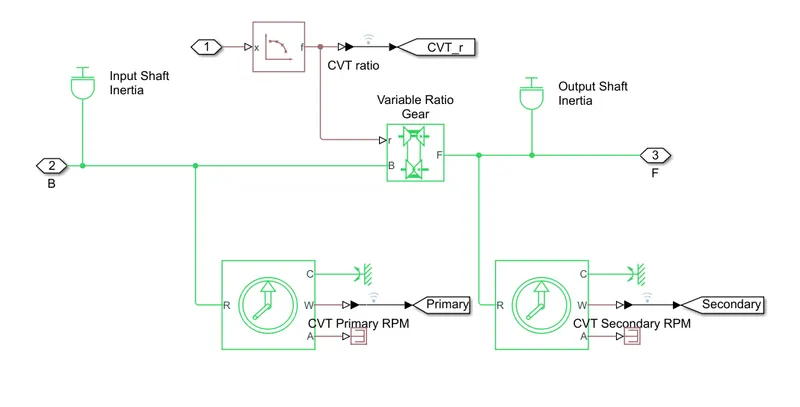
Fig: Primary & Secondary CVT
The Vehicle body consists of a Vehicle body block, connected with the wheel. The wheel and vehicle blocks are configured.
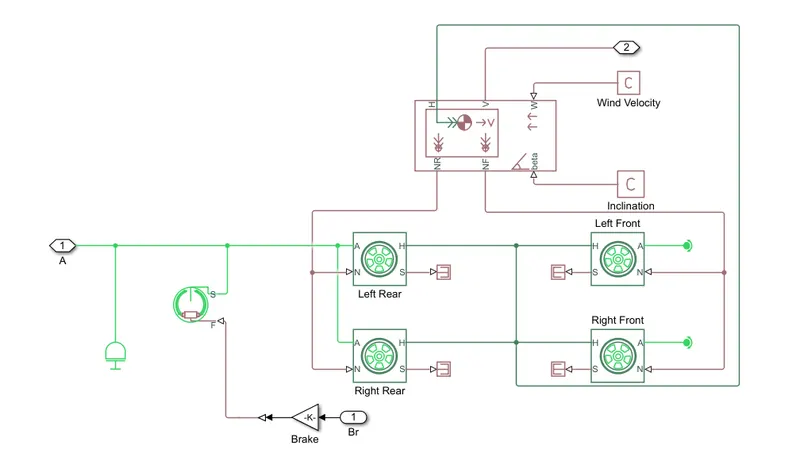
Fig: Vehicle Body
The engine sensor takes the input from the engine. This output end of the model is B. The other way the input goes is to the RPM sensor.
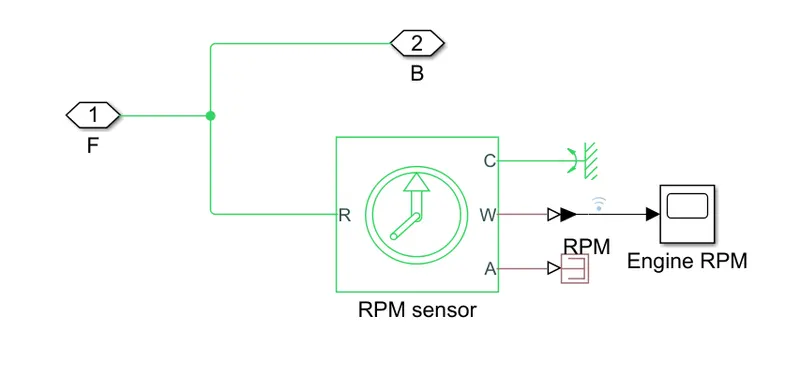
Fig: Engine sensor
The following is the set CVT gear ratio in the signal builder.
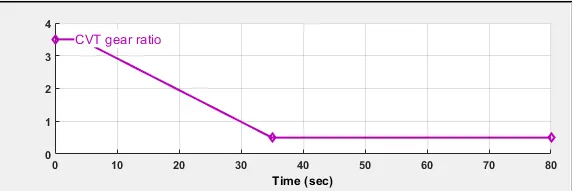
Fig: CVT gear ratio
The following is the model of the BAJA All-Terrain Vehicle during the simulation. During the simulation, the knob for brake and throttle input is altered to check for the result. The simulation is done for nearly 42539 seconds.
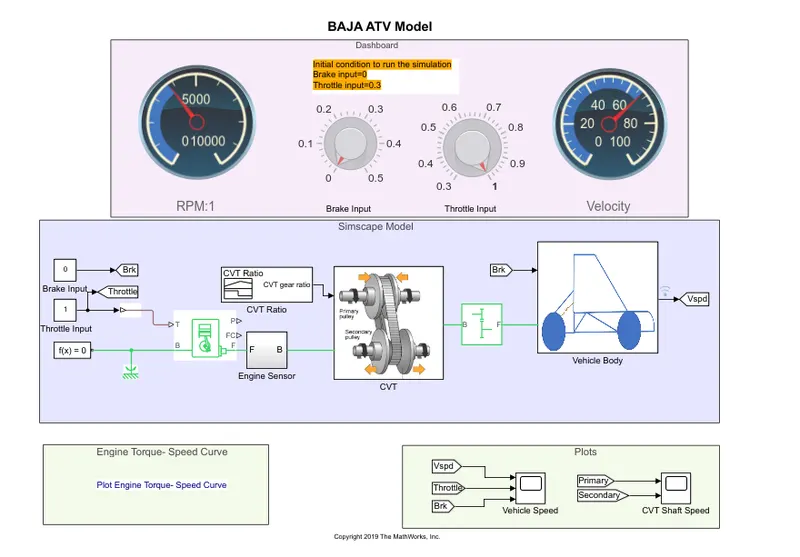
Fig: Simulink model of BAJA All-Terrain Vehicle with Dashboard input
Result:
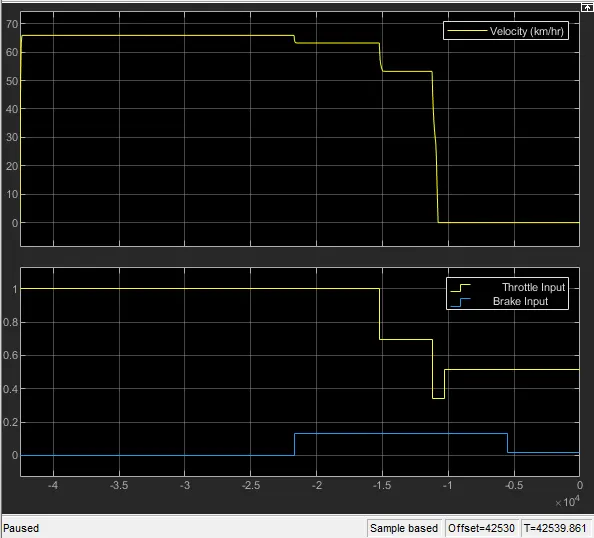
Fig: The effect of brake and throttle input on Vehicle Speed
It is evident that at the beginning, the velocity increases to nearly 64 km/hr. As the throttle input decreases the velocity decreases. The velocity further goes down due to a decrease in the throttle input.
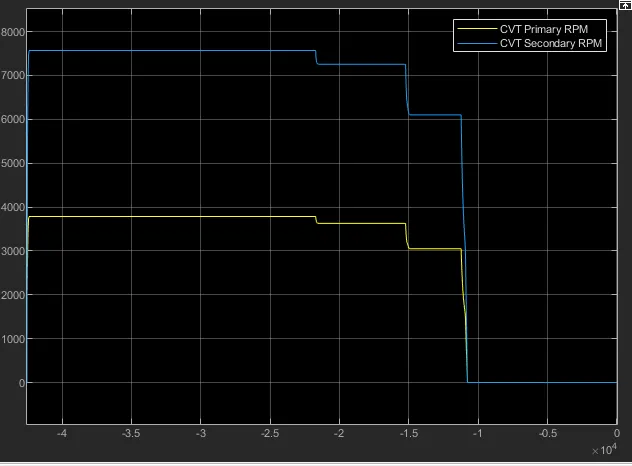
Fig: Primary & Secondary CVT output
It is clear that the speed of secondary CVT is higher than the primary CVT. As a result, the output speed is higher than the input. It stays the same throughout. As the throttle input decreases both the speed goes down to zero suggesting that the CVT is not working.
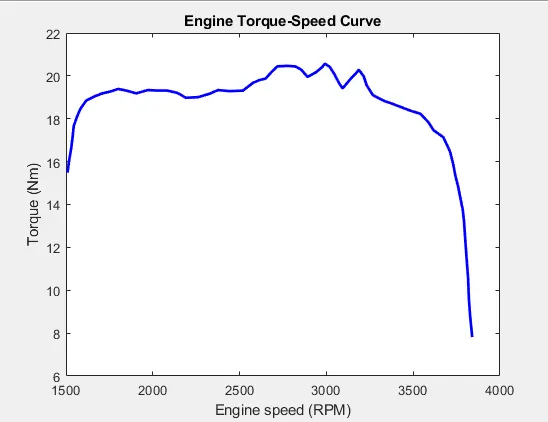
Fig: Torque v/s Engine Speed
The above graph shows the Engine Speed against the Torque. Even though the engine speed was high, the torque came down.
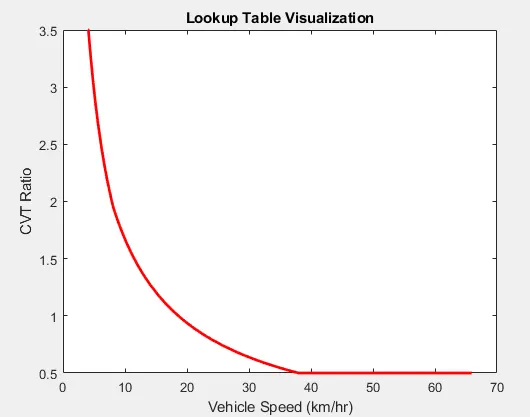
Fig: CVT Ratio v/s Vehicle Speed
The graph is a testament to the fact that at high speed, the CVT ratio decreases