Project 1 - Simulating a BTMS
1.
Diameter = 20mm
Length = 59mm
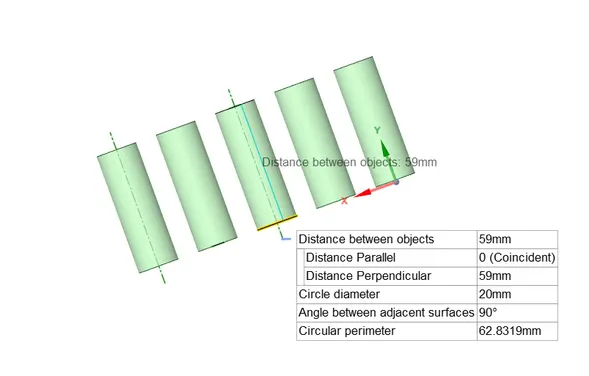
From the Li-ion battery charts (having similar dimensions),
Capacity = 2600 mAh
Discharge current = 0.5C mA
Charging time = 2 hrs = 7200s
Nominal Voltage = 3.7 V
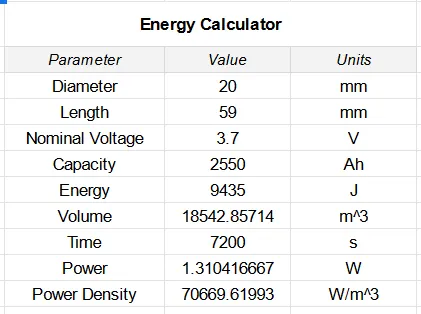
Energy Density (estimated using excel calculator) = 70.669 kW/m^3
References: Dimensions using Spaceclaim Li-ion Battery Chart Li ion Battery Indiamart
2.
It is ok to use solid state materials while performing steady-state simulation.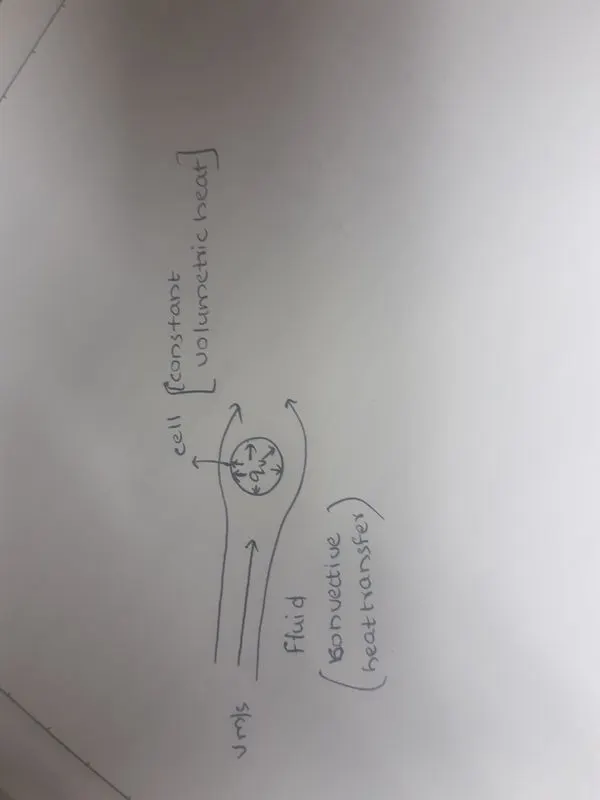
Fluid heat transfer equations involve convective transfer (where velocity comes into picture). If we are modelling solid cell boundaries as if it is producing constant heat, then we need not worry about properties of solid, or if we are using solid as well.
But if we need to know internal of the cell and model the chemical elements and temperature inside, then we need to know the material properties.
Hence material properties can be relevant or irrelevant depending upon what type of simulation we are doing.
3.
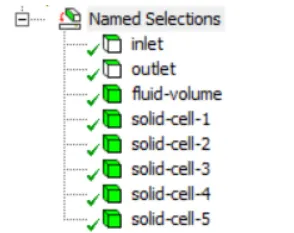
Each cell is setup in its own solid zone in the attached Ansys workbench file.
4.
| baseline element length | Iterations | Volume Average Temperature | Plot | Residual Plot |
| 12 | 810 | 302.56 | 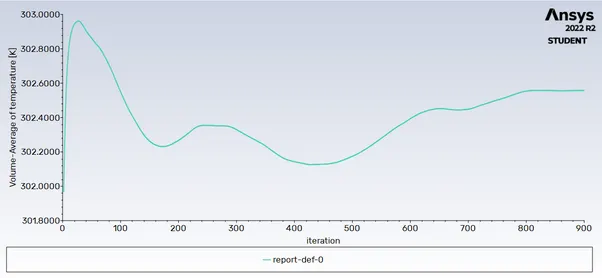 |
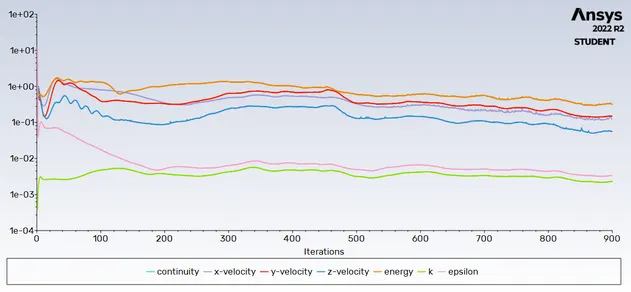 |
| 8 | 948 | 302.64 | 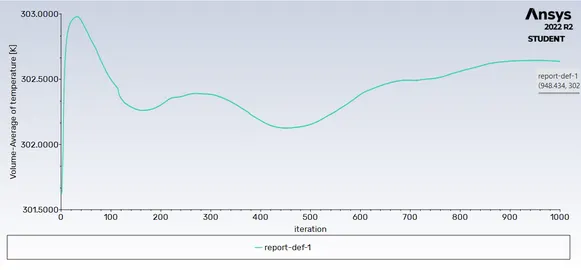 |
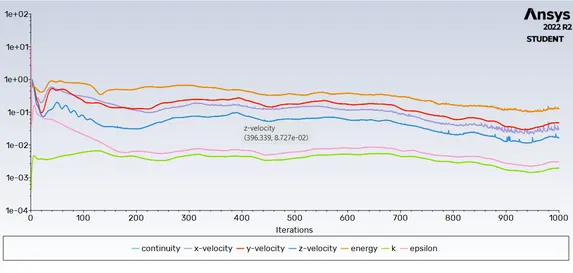 |
| 6 | 1013 | 302.53 | 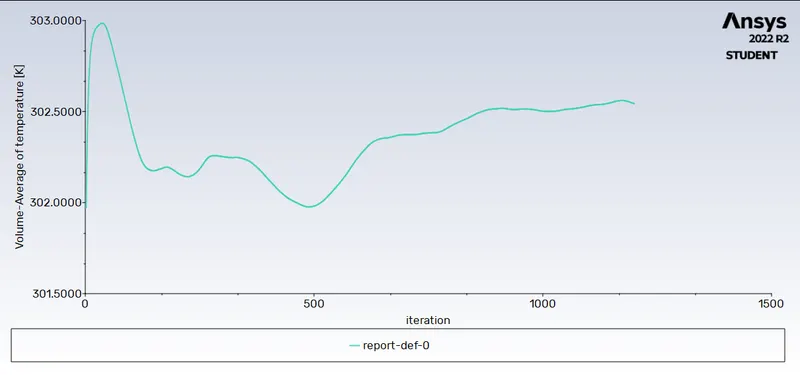 |
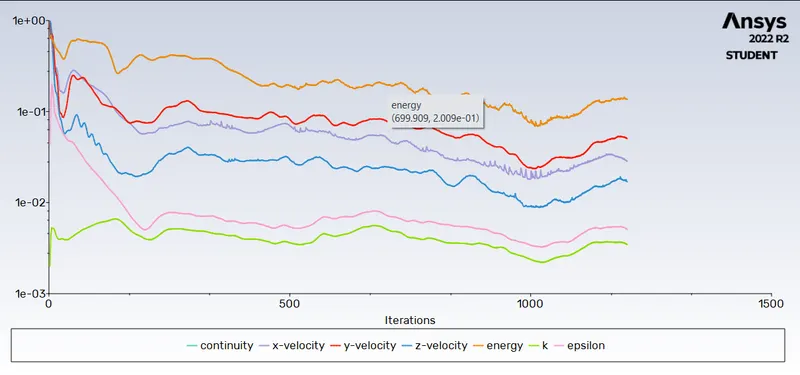 |
| 4 | 1278 | 302.52 | 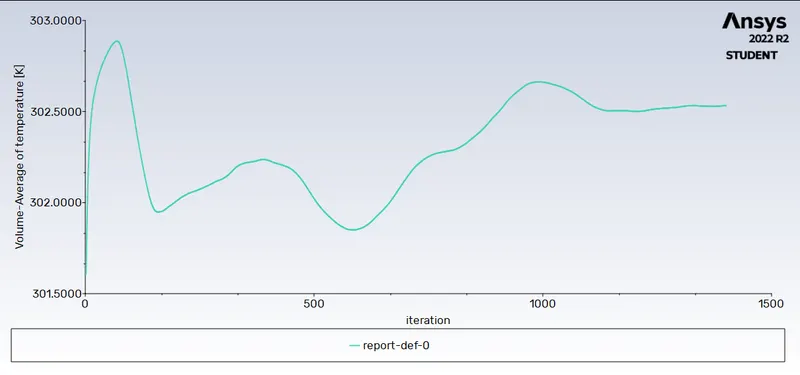 |
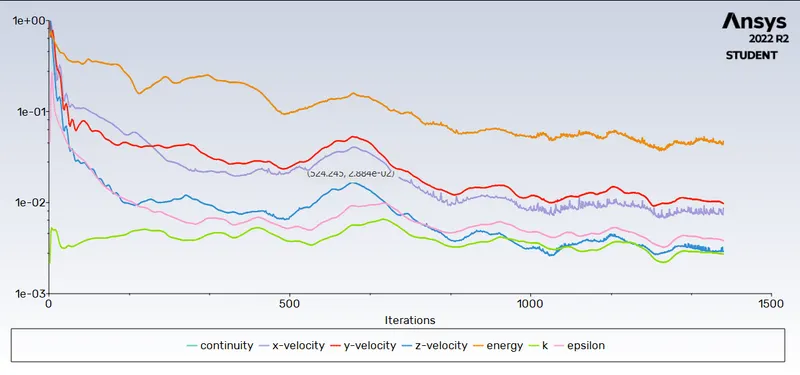 |
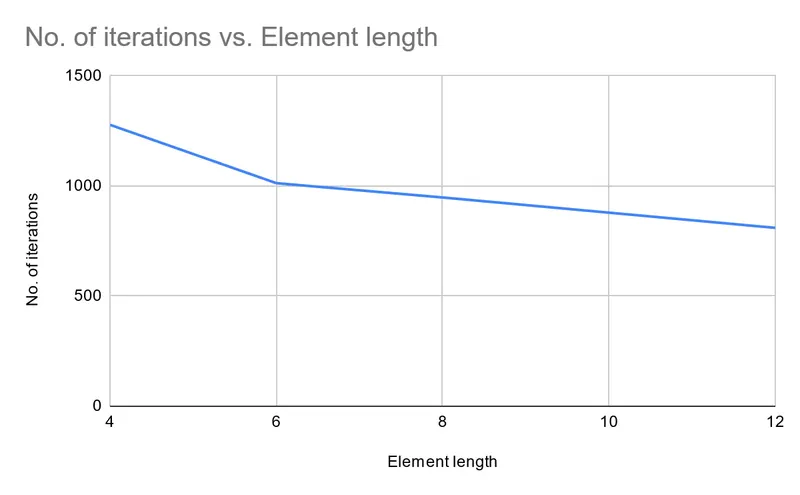
As the element length decreases, iterations required to converge increases. This can be explained byt the fact that less element length means more finite elements and nodes, hence more iterations for finding temperature and velocity accurately.
5.
Reduction of finite element size leads to more elements, which in turn leads to more nodes in the model. This makes sure that each finer aspect of temperature and velocity is measured more and more accurately. So using a baseline element length of 4mm helps. But this increases the length and time of computation.