Project 1 - Simulating a BTMS
Aim
The aim of this project is to simulate the flow inside a Battery Thermal Management System
Objectives
The main objectives are as follows
• Excel Calculator for Volumetric heat generation source
- Run the case for different mesh sizes-12.8.6 and 4 mm.
- Effect of element length on accuracy of results.
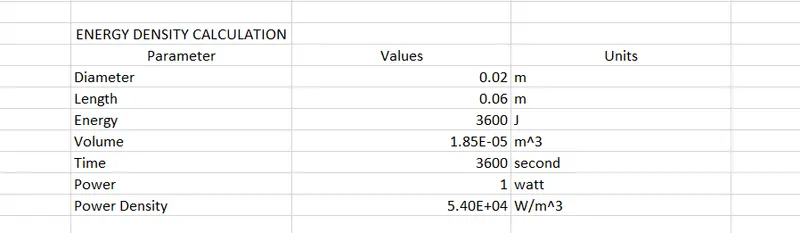
This is the excel sheet for energy density calculation
Battery Thermal Management System
For the simulation of BTMS we need to follow the following steps :
- geometry
- mesh
- solution
- setup
- results
Geometry
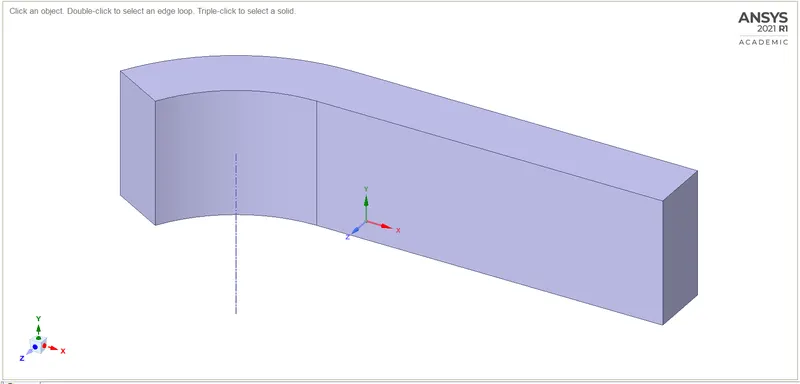
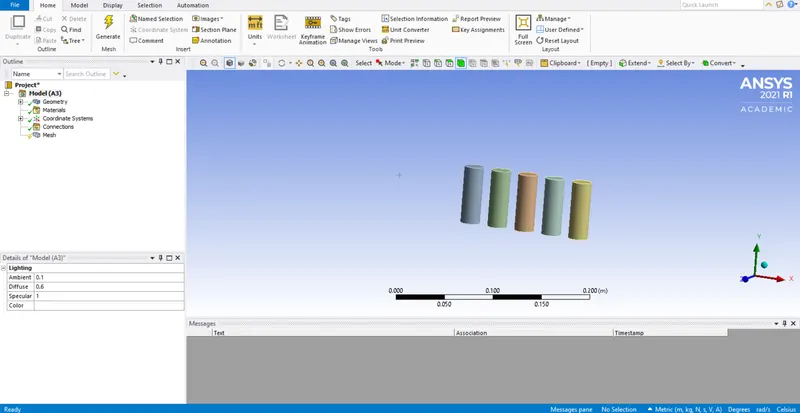
this is the cad model of the simple battery pack which consists of 5 cells and these cells are surrounded with fluid volume throughout the geometry .
mesh
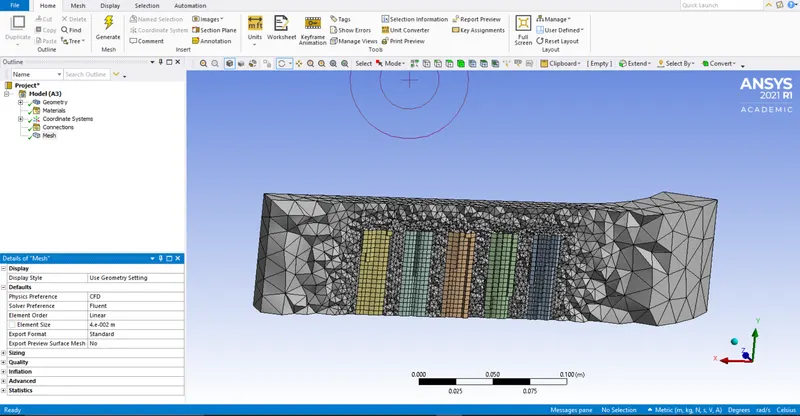
This is the meshing of the component, the element size that I've choosen is 0.04m
this the mesh for body:
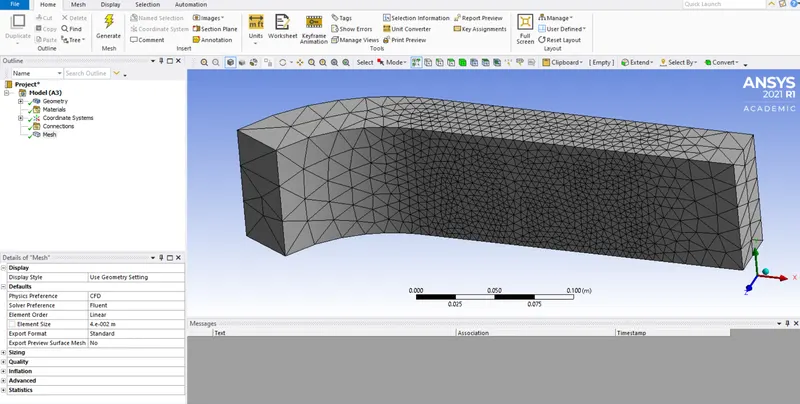
this is the mesh for the solid cells :
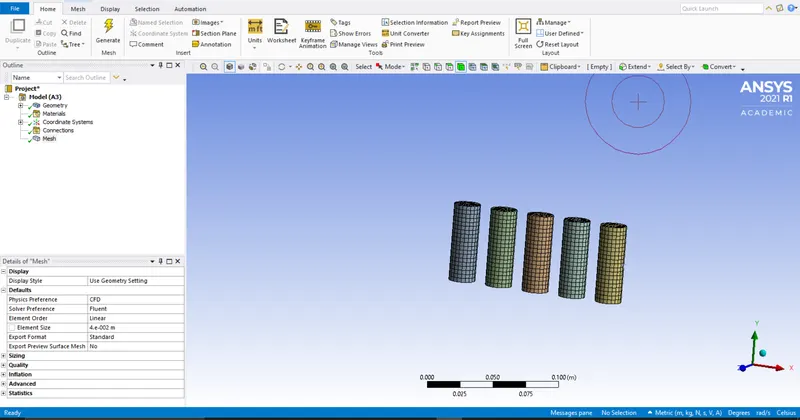
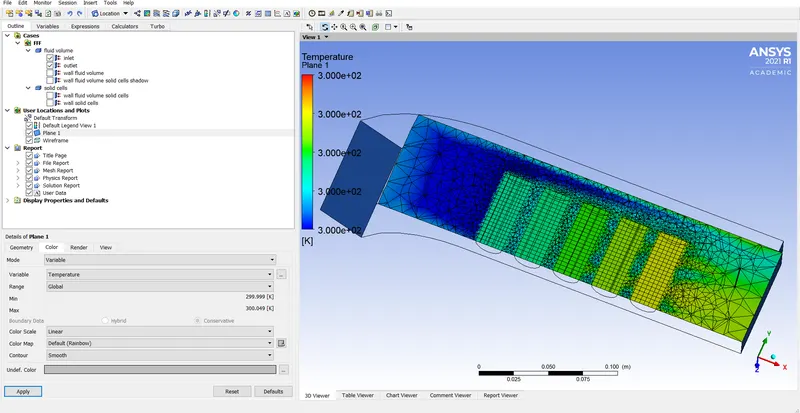
this is how the meshing inside(interaction surfaces of cells )look like . the solid cell are having hexa hedral meshing and fluid volume is having tetra hedral meshing
Setup
1. Solver-Density solver
2. Solver state - Steady state
3. turbulence Model - K-Epsilon Model
4. Inlet Velocity = 4m/s
5. Volumetric Heat source = 30000 W/m^3
6. Outlet Pressure = 0 Pascals
Residual Plots
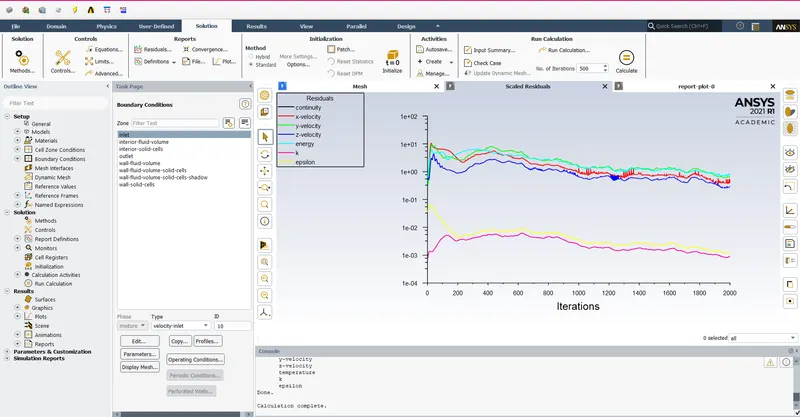
Here we can see that the simulation is done for 2000 iterations and the graph started to converge after 950 iterations.
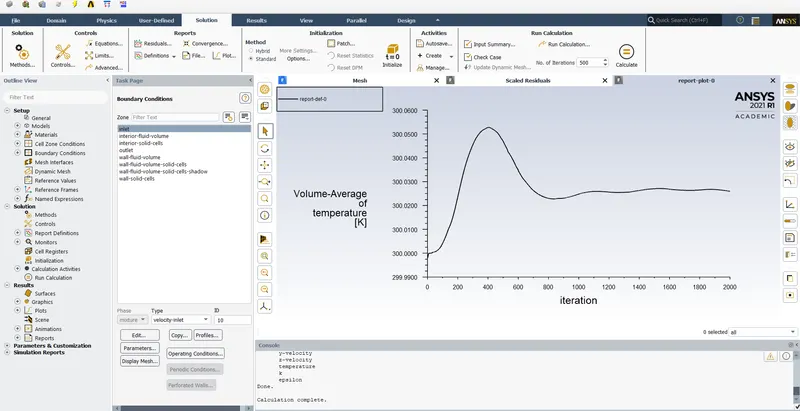
Volume Average Temperature Plot
Results
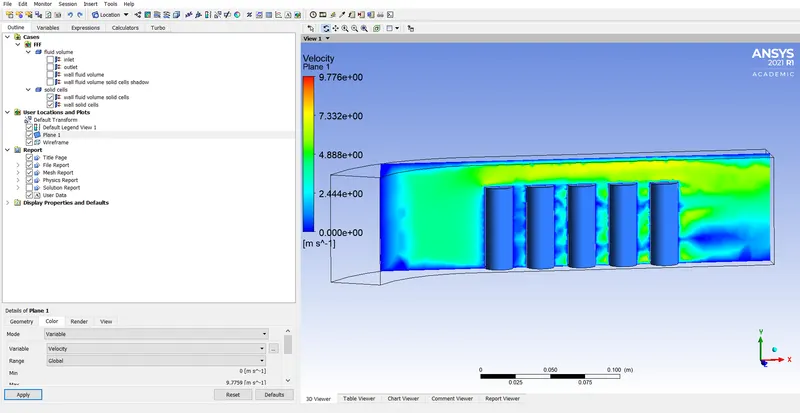
velocity control plot
velocity of cooling air
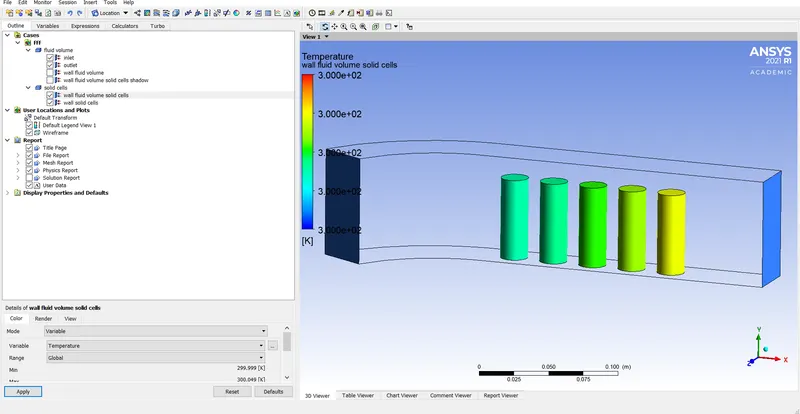
temperature control of cells
Temperature control over a plane with mesh
SIMULATION ACCURACY
As we compare all the 4 cases of the residual plot, and the various contour plots, we can observe that if we refine the mesh to fine level we see an increase in the accuracy of the results. But after a certain mesh size the accuracy almost remains constant
CONCLUSION
1. The flow over a BTMS is performed
2. The heat generation source term was derived based on battery specifications
3. The mesh size was varied and we see that there is a slight improvements in the results and plots.