Project-1: Powertrain for aircraft in runways
Project 1: Power Train for Aircraft Engines:
I)AIM:
To search and list out various types of Aircraft along with its gross weight respectively.
-Solution:
-Aircraft Gross Weight:
-As per federal aviation department, aircraft gross weight is defined as the total weight at any moment during flight or ground operation.
-The aircraft gross weight dicreases during flight due and oil consumption.In some case gross weight (aircraft) may vary due to drop in payload or inflight refueling,where as on the other hand when the brakes are released the gross weight will be equal to take off weight.
-During flight an aircraft gross weight will be refered as inflight weight.
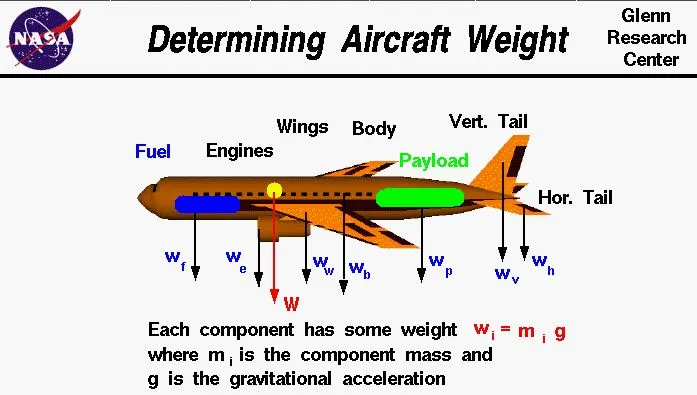
Types of aircraft weights are the following:
1)Manufatures empty weight:
-It includes the weight of aircraft of the entire flight with its intergal working parts,but excludes baggage ,passenger and fuels.
2)zero fuel weight:
-It includes total weight of aeroplanes including unuseable fuels but excludes total weight of useable fuel at board.
3)Payload:
-It is load carrying capacity of an aircraft which includes passenger ,cargo and fuels,But if it is in the case of cargo flight it determines the total load of logistics weight of the container which it needs to transport.
4)Maximum take off weight:
-This is the maximum weight at which the aircraft would be made to takeoff .
5)Regulated take off weight:
-Depending on different factors (flap setting,altitude,lenght of runway),RTOW varies for each take off,but can never be high for MTOW.
6)Maximum landing weight:
-It is maximum weight at which an aircraft is permitted to land.
7)Maximum Ramp weight:
-It is the maximum weight used for manuevering (towing) aircraft on the ground.
-Listed below are the types of aircraft with its weight:
Category MTOW(kg) MLW(tons)
Boeing 747-8F 447,700 346.091
Airbus A380-800 575,000 394
Concorde 185,000 111.1
Antonov An225 640,000 91.7
Vickers VC10 152,000 151.9
Fokker 100 46,000 39.95
Embraer 175(19) 37,500 32.8
Avro RJ-85 42,000 36.47
Tupolev Tu-154M 104,000 80
Boeing 777-300 299,370 237.683
--------------------------------------------------------------------------------------------------------------------
2)Difference between ground speed and Air speed:
*Ground speed:
-They are the airplane speed which is related to the ground.
-They are the speed which determines how fast the airplane will reach the detination.
-They are the calculated by summing up the airspeed and windspeed.
*Air speed:
-It refers to the speed which is relative to air it is flying in.
-They determine whether there is enough airflow around an aircraft to make it lift.
-They are independent of ground speed.
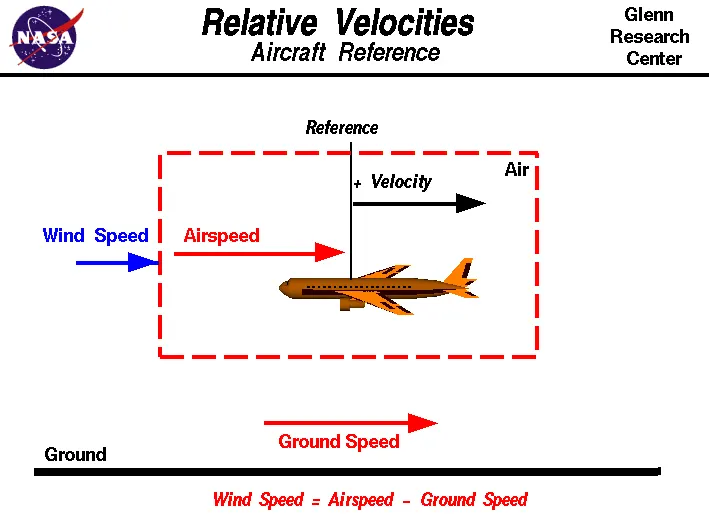
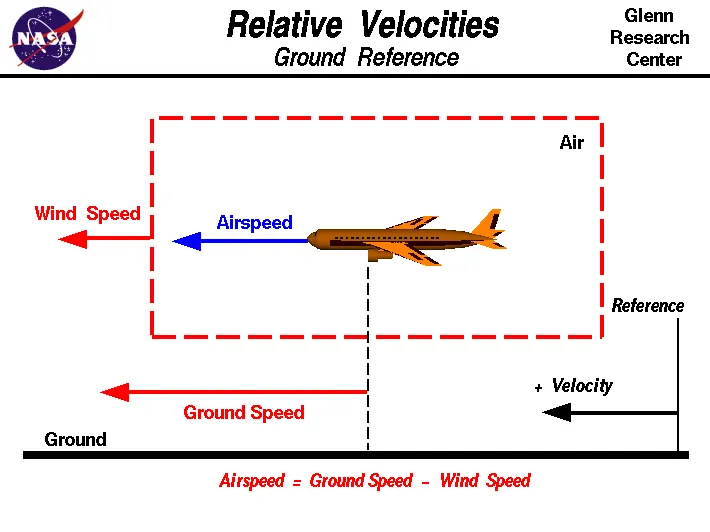
-The above two daigram relative velocity with respect to aircraft reference and ground reference.
-Here wind speed is the vector difference between ground and air speed.On a perfect still day the wind speed is zero and it is equal to the ground speed.
-If the measured air speed is greater than the observed ground speed the wind speed becomes positive.
--------------------------------------------------------------------------------------------------------------------
3)Why it is not recommended to use aircraft engines to move it on the gorund at airport?
-Generally most of the airplane can move itself in reverse manner by making use of reverse thrust technology.But in most of the practical it is not possible because when airplanes start using reverse thrust it will consume lot of fuels as well as causes lot of noise and also hazardous for the people working near by.
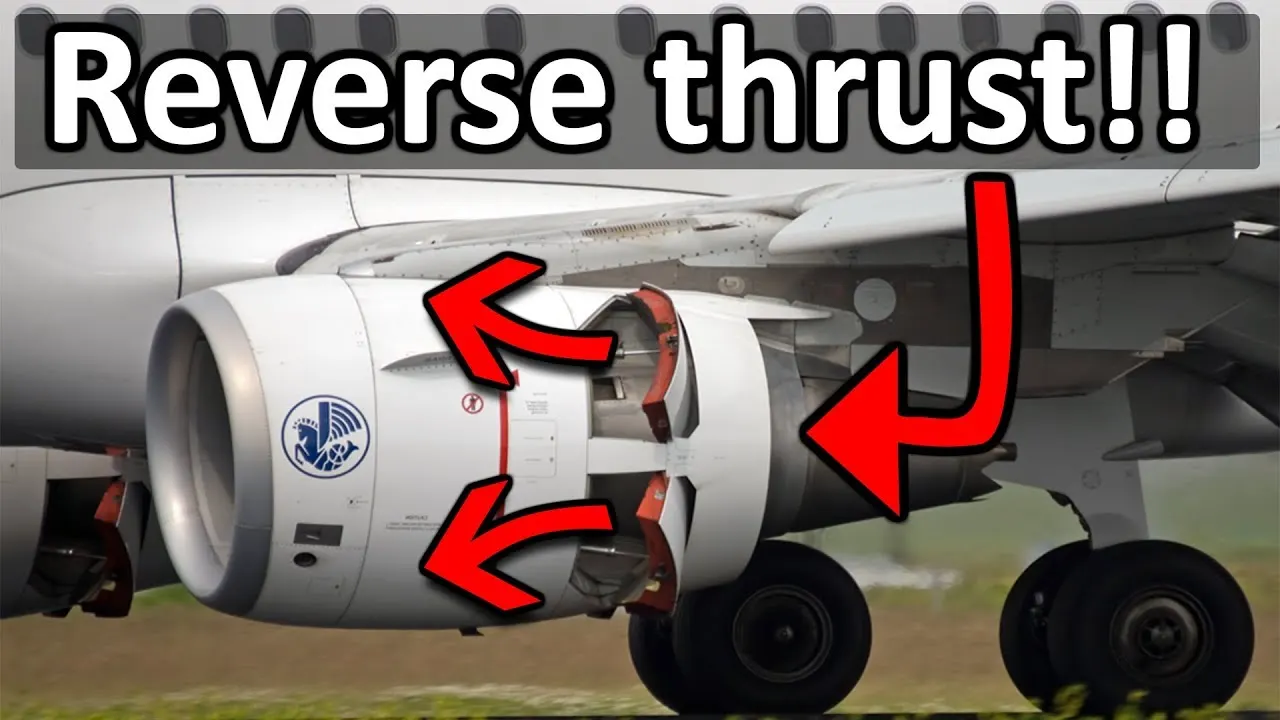
-The another for not using reverse thrust is that the jet blast can cause damage to terminal buildings or its equipments.Since the engine is also close to the ground it will blow off the sand and debreis forward and sucks it to the engine and causes damage to it.
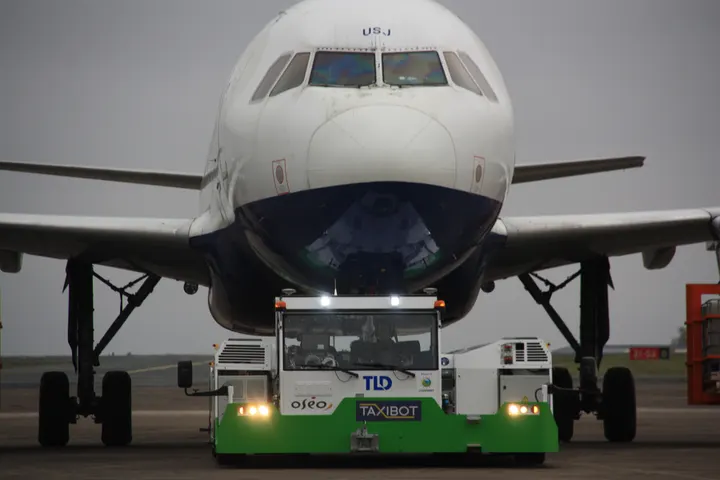
-To solve this kind of issue we use a towing vehicle which helps to tow the vehicle in reverse dierection and it eill be tugged until it reaches a safe place and from there onwards airplane will move by itself for further take off.
4)To learn about take off power,tyre design,rolling resistance,tyre pressure,brake froce when landing?
-Take off is the phase of the flight in which an aeroplane leaves ground and becomes airbone.For lighter aircraft full power is given durong take off where as on the other hand large cargo carriers aircraft make use of less power during take off inorder to inrease the life span of engine,reduce maintenance cost ,reduce engine heat and also for a smooth take off flight.
-The forces involved during take off are the following:
T=Thrust froce pushes the aircraft in forward dierection on the runway.
D=Drag force resist the forward motion of the aircraft.
F=Rolling resistance force when wheel comes in contact with the gorund during landing and take off.
-During take off on the runway the imbalance froce will cause an acceleration along the runway and it is given by the formula:
dvdt=T−D−Fmdvdt=T-D-Fm
-Now when the pilot is ready to take off the aircraft will accelerated to a speed which would be given by aircraft controlling department.Then after take off the flight will be elevated to a certain angle and hieght.then it will be made to stabilies in an equilibrium manner.
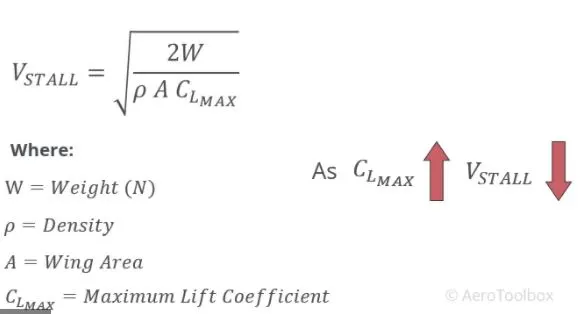
-Here safe speed or rotational speed is defined as Vr which act as a critical factor for determining take off performance.For safety reasons Vr is usually determined as 1.1*Vstall(lowest speed that aircraft can be flown before the air starts to seperate from the wings when the angle of attract becomes too great.
-Vstall can be calculated by using a formula given:
*Tyre design of an aircraft:
-An aircraft tyre are deisgned to withstand extreme heavy loads by absording shocks during and there by providing cushioning effect.
-The number of tires required for an aircraft depends on the total weight of aircraft as the weight needs to be distributed evenly.
-Aircraft tyre are designed to facillitate stability in high crosswind condition,to chanalize the water away for preventing skidding and helps to give a good braking effect.
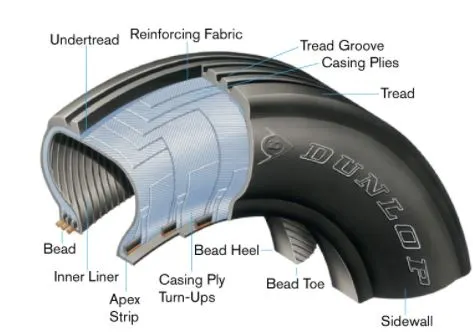
-Aircraft tires are usually inflated by nitrogen air inorder to reduce expansion and contraction from extrerme changes in ambient pressure and tempurature.This type of inert gases will eliminate the possibilty of tire explosion.
-Aircraft tire design are set into an aircraft based on its application and also suffeicient clearance with the ground for allowing tyre growth which happens when centrifugal force is at high speed.
*Rolling Resistance:
-Rolling resistance or rolling drag is the force resisting the motion when the body rolls on a surface and it is mainly caused by non elasticity that is not all the energy needed for deformation of wheel is recovered when the pressure is removed.
-The rolling resistance equation can be defined by the folowing equation:
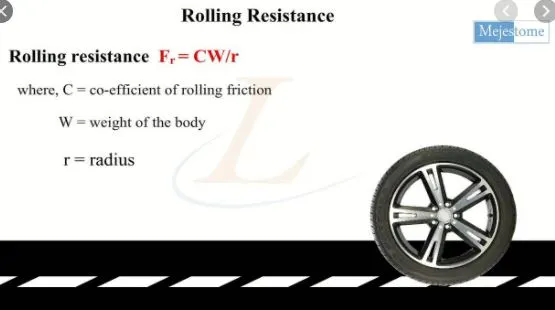
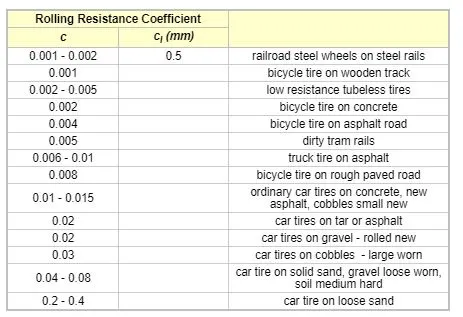
-Usually aircrafts have a very low rolling resistance coeffiecient of 0.06. Some other examples are as follows:
*Tyre Pressure:
-Aircraft tyres are designed to withstand heavy loads and shocks durong landing and take off and also needs to distribute weight evenly.
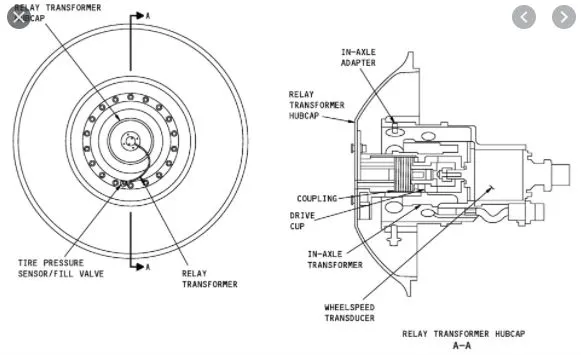
-As per research and testing it is found that aircraft tyres are able to sustain pressure upto 800 psi.Generally to note the tyre pressure of an aircraft a special type of sensors are used,its daigram is given below:
-There are 2 primary parameters which is hazardous to the aircraft tires:
I)Deflation:
Here the tire deflates in a controlled ma-nner with minimum dierect consequence to other system.
II)Explosive breakup:
In this case the tire deflates or bursts in an uncontrolled manner with a probablity of causing damage to other secondary system,which further can cause a major crash landing incidents.
*Brake forces:
-Braking an aircraft is a challenging job for most of the pilots especially during landing in a rainy and cross wind environment.
-Inorder to encounter this kinds of problem pilots usually make use of spoilers and reverse thust method inorder to have a safe landing so that the energy required to apply brakes on tires can be reduced and henceforth they do not skid.
-Now there is method which determines the brake force for aircrafts and they are as follows:
k=12mv2k=12mv2,where m= mass of aircraft and v=velocity of aircraft.A typical commercial landing speed will range between 150 to 165 MPH.And for passenger flight it is about 166 to 172mph.
6)Force and power required to pull or push an aircraft by a towing vehicle:
-The solution is given as below:
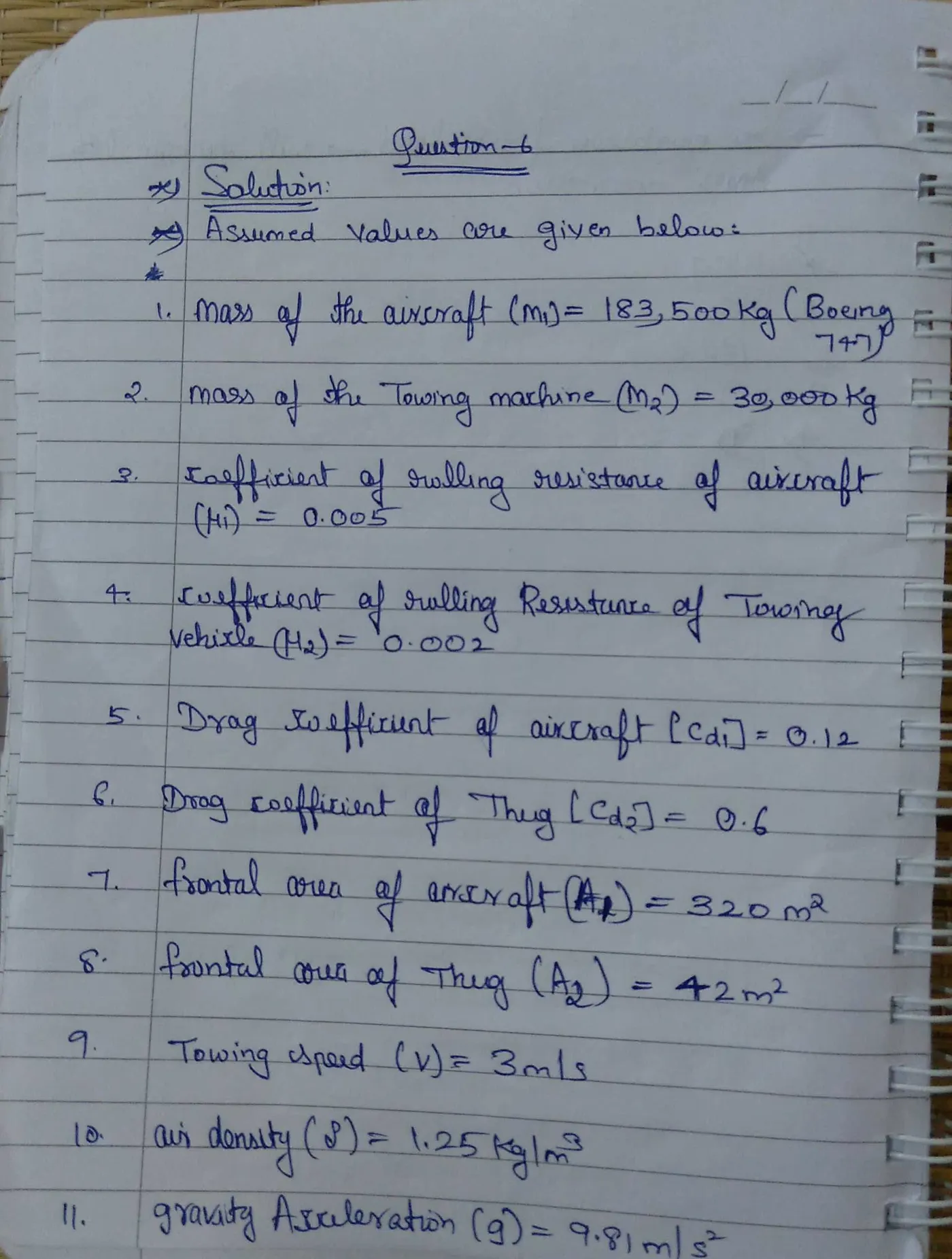
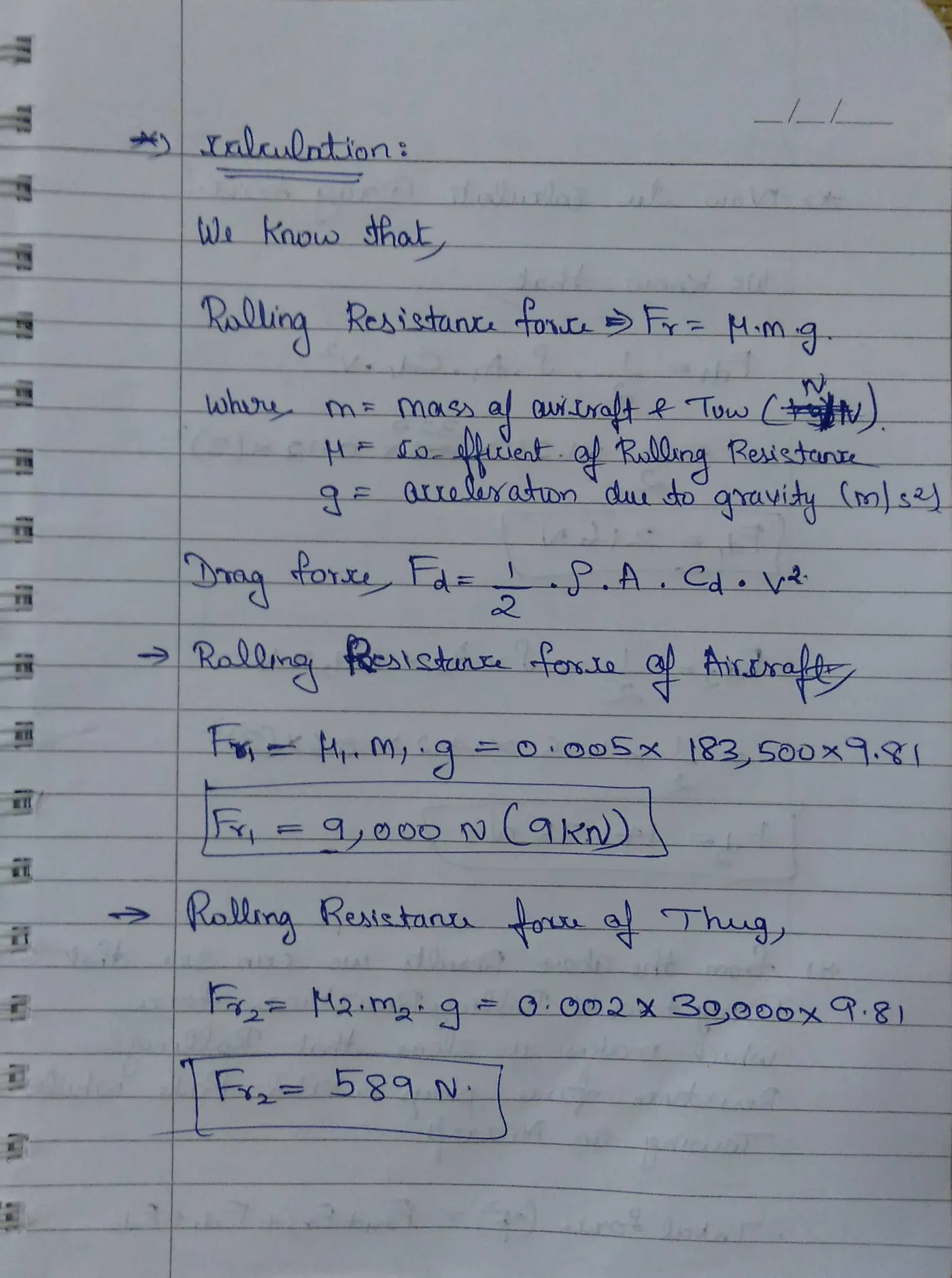
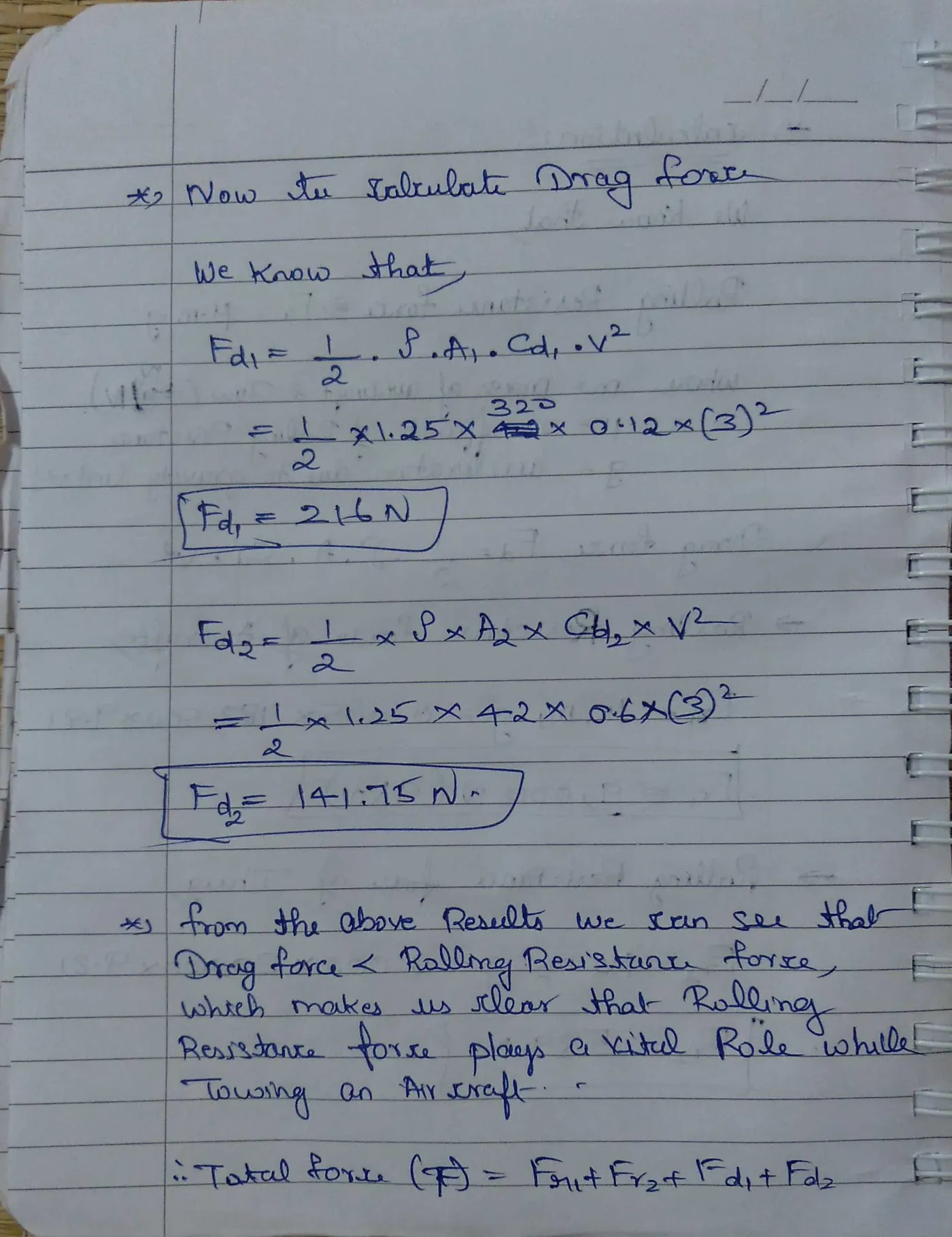
-The different forces involved while a plane bring moved by tow are the following:
1)Rolling resistance of friction force on aircraft (Fr1)
2)Drag froce on aircraft(Fd1)
3)Rolling resistance force on the thug (Fr2)
4)Drag force on thug(Fd2)
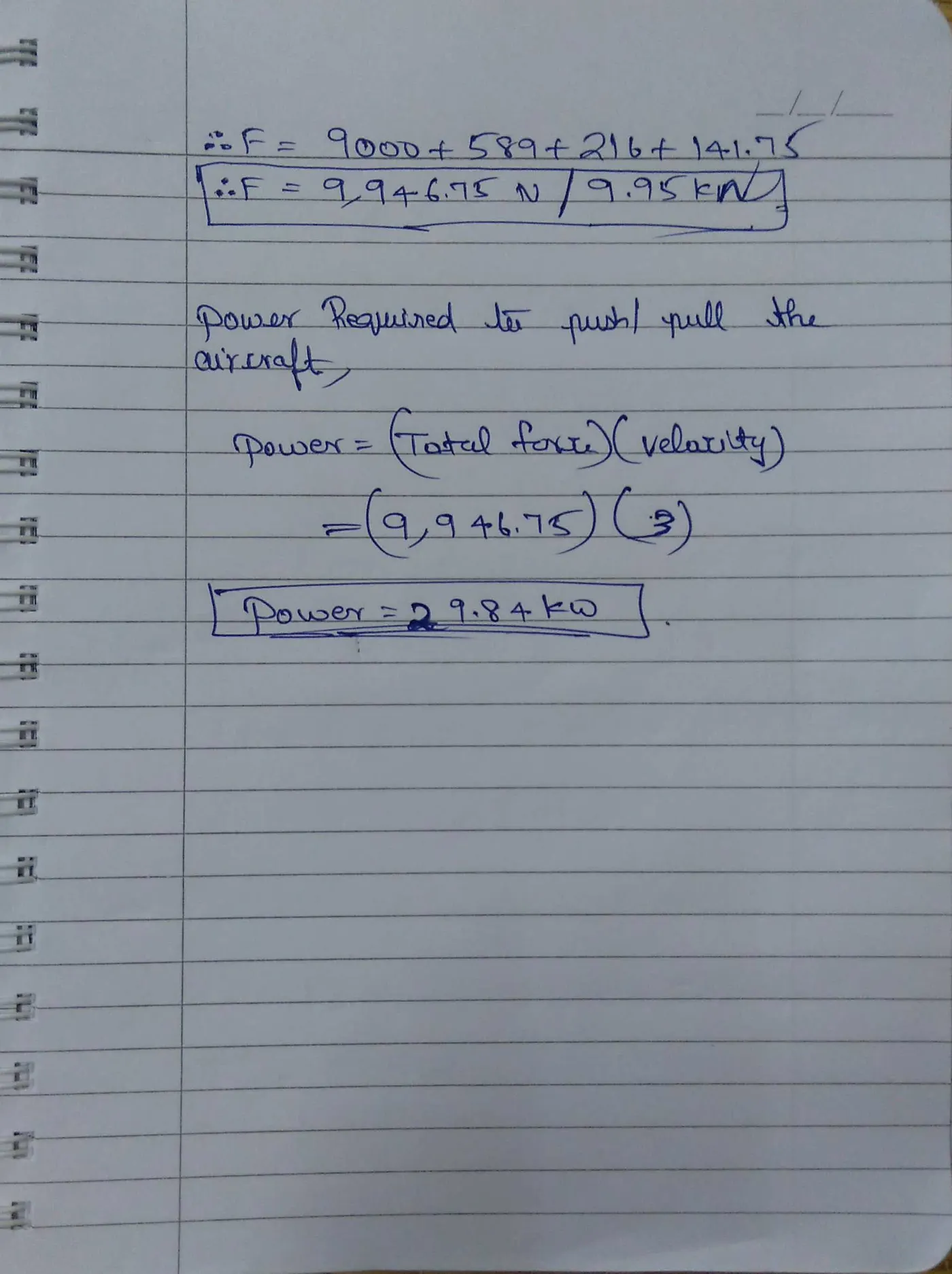
-The calculation is as follows:
7)To design an electric power train with type of motor,its power rating and energy required to fulfill aircraft towing application.Estimate the duty cycle range to control the aircraft speed from zero to highest .Make all required assumption also prepare a table of assumed paramter and draw powertain block daigram.
Soution:
-From the above calculation we came to know that Force required to push or pull the aircraft which is around 9.95KN and power required is around 29.84 KW.
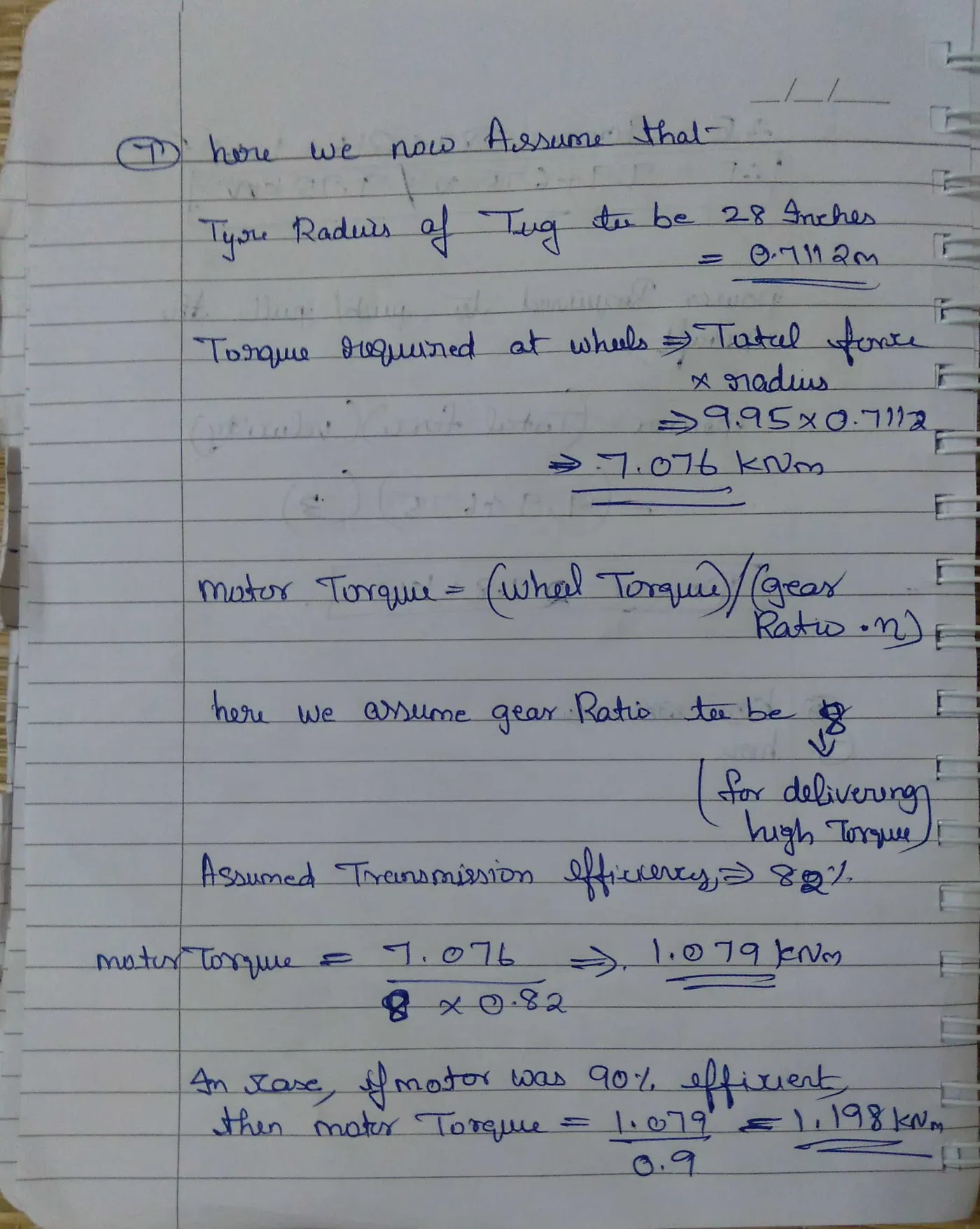
-Now we need to find out the torque required at thugs wheel,motor torque and its efficeincy and also its duty cycle.
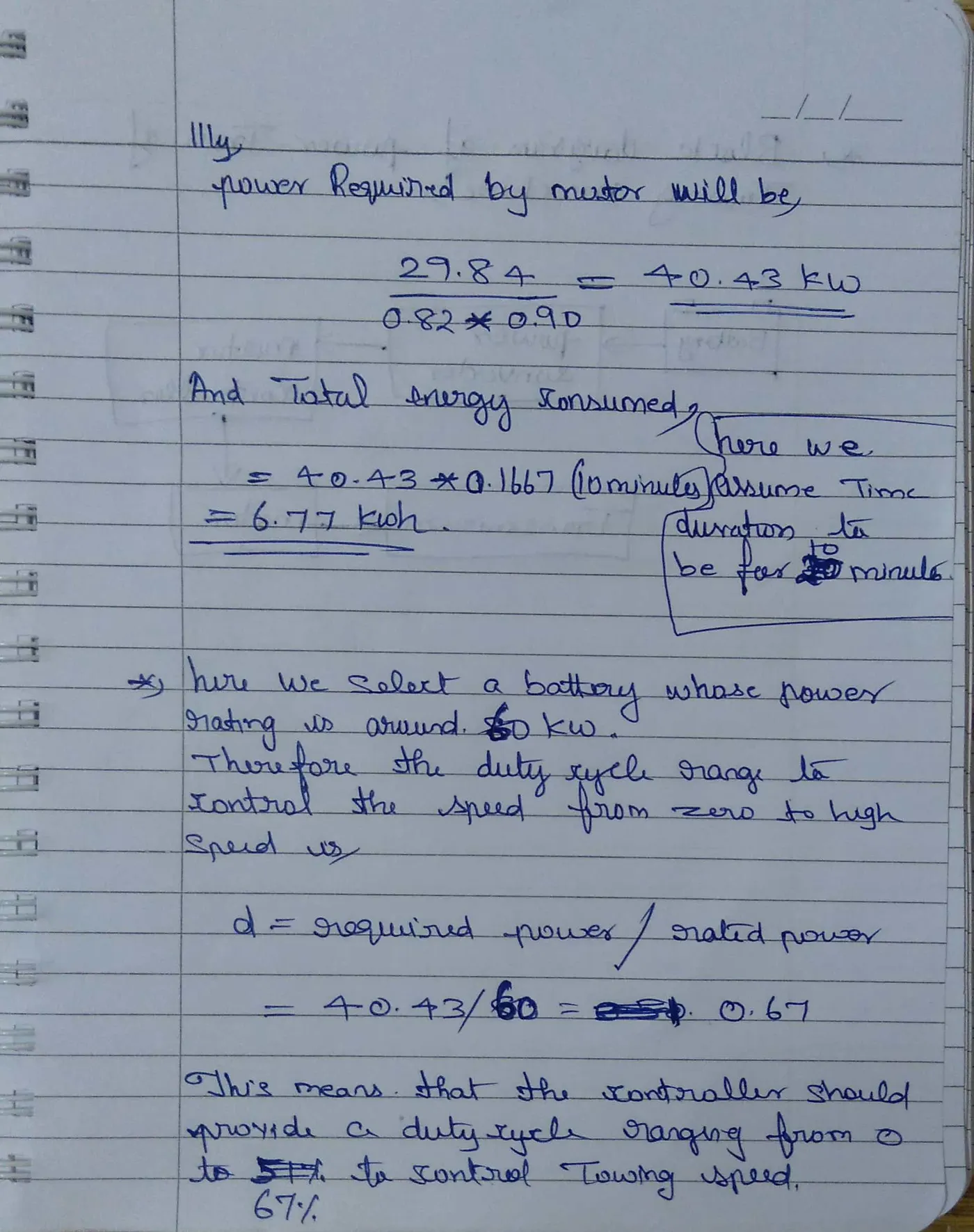
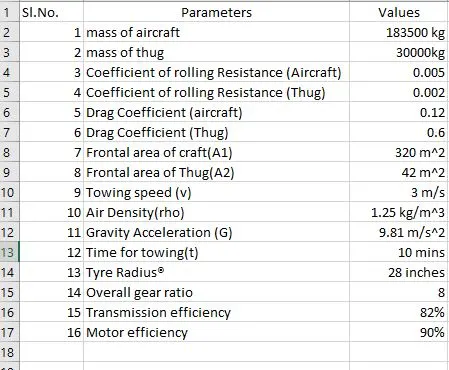
-Assumed parameter and their values are given in below parameters:
b.Tyre Design of aircrafts :
When it comes to safety, tyres are one of the most important components of aircraft. They help to absorb the shock of landing and provide cushioning. It also provides the necessary traction for braking and stopping of an aircraft.
An aircraft tyre is designed to withstand extremely heavy loads while landing, take off, taxing and parking. The number of wheels required for aircraft increases with the weight of the aircraft, as the weight of the aeroplane needs to be distributed more evenly.
Carcass plies are used to form the tire. They are sometimes called casing plies. An aircraft tyre is constructed for the purpose it serves.
Unlike an automobile or truck tyre, it does not have to carry a load for a long period of continuous operation. However, an aircraft tyre absorbs the high impact loads of landing and also it’s operating at high speeds for a short time when required.
Consider the powertrain with the following specifications :
Vehicle Drive: 2.0 HP, 36 VDC Traction Motor mated with High-Efficiency Helical Gear Dana Axle Assembly
Batteries: Six 6 VDC, 190 AMP-HR Batteries (6 hr rate), wired in series.
Vehicle Speed, Loaded: 3.6 mph / 5.8 kph
Lift Cradle Capacity: 1,500 lbs / 680 kg
Now this can be represented in simulink in the following manner :
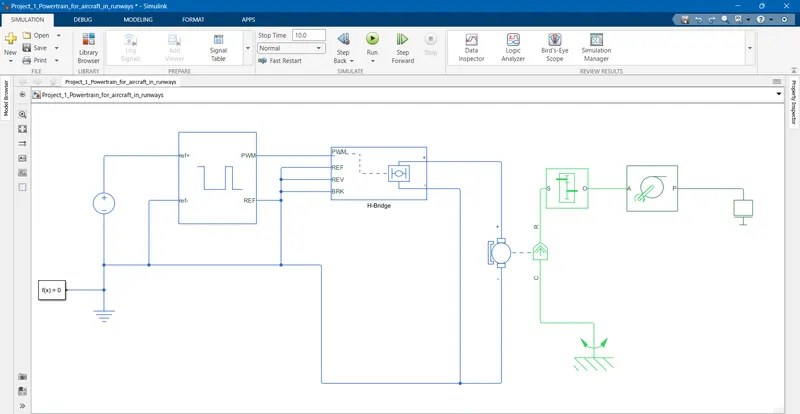
The following components were used :
1.PWM Module :
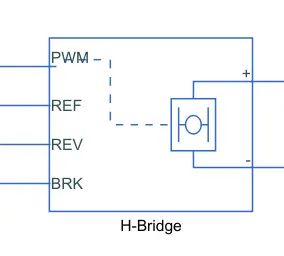
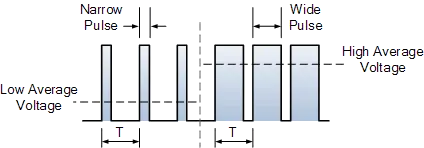
Pulse width modulation speed control works by driving the motor with a series of “ON-OFF” pulses and varying the duty cycle, the fraction of time that the output voltage is “ON” compared to when it is “OFF”, of the pulses while keeping the frequency constant.The power applied to the motor can be controlled by varying the width of these applied pulses and thereby varying the average DC voltage applied to the motors terminals. By changing or modulating the timing of these pulses the speed of the motor can be controlled, ie, the longer the pulse is “ON”, the faster the motor will rotate and likewise, the shorter the pulse is “ON” the slower the motor will rotate.In other words, the wider the pulse width, the more average voltage applied to the motor terminals, the stronger the magnetic flux inside the armature windings and the faster the motor will rotate and this is shown below.
2.Motor :
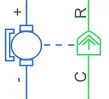
The motor is a dc motor having two terminals ,the rotor R and the case c which is fixed to a stationary frame .The motor produces the amount of torque required and gives it to the gearbox.
3.Gearbox,wheel axle and Mass
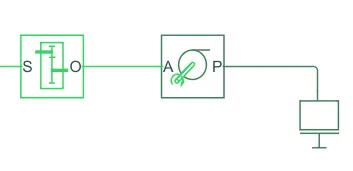
The gearbox input shaft is connected to the output of the motor and is given gear ratio of 10 to produce the required torque .The gearbox gives the required torque to the wheel axle which has the mass attached to it .
Results :
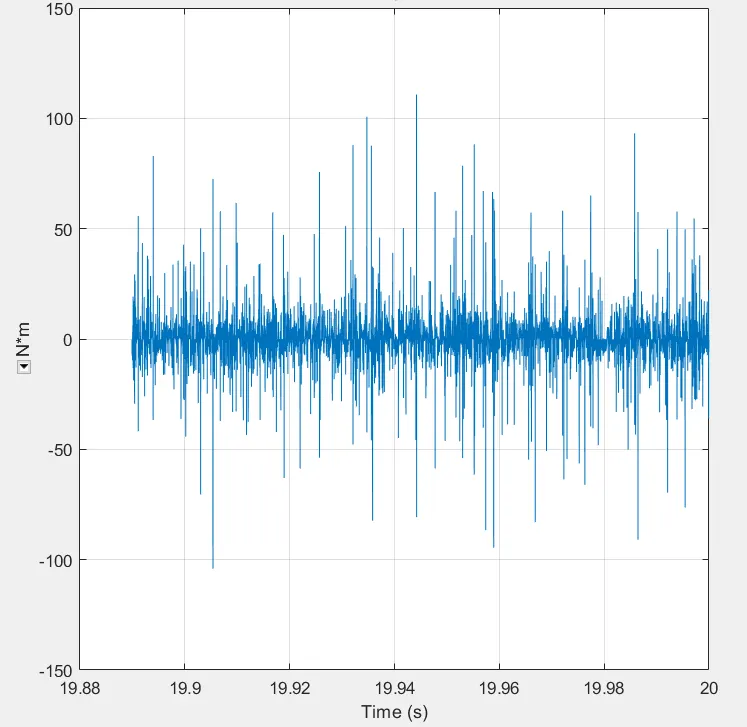
Torque produced at wheel axle for a mass of = 1000 kgs :
Retreading – Retreading is methods of restoring a worn tyre by renewing the tread area or by renewing the tread area plus one or both sidewalls. Repairs are included in the tyre retreading process.
Load Rating – Load rating is the maximum permissible load at a specified inflation pressure.
Ply Rating – Ply Rating is used to identify the maximum recommended load rating and inflation pressure for a specified tyre. It is an index of tyre strength.
Speed Rating – The speed rating is the maximum takeoff speed to which the tyre has been tested.
Skid Depth – Skid depth is the distance between the tread surface and the deepest groove as measured in the mould.
Aircraft tyres must have an approved speed and load rating and have sufficient clearance when retracted through landing gear to allow for tyre growth. Tyre growth is the increase in the size of the tyre due to centrifugal forces at high speed.
c.Rolling Resistance :
Rolling resistance, sometimes called rolling friction or rolling drag, is the force resisting the motion when a body (such as a ball, tire, or wheel) rolls on a surface. It is mainly caused by effects; thnon elastic at is, not all the energy needed for deformation (or movement) of the wheel, roadbed, etc., is recovered when the pressure is removed. Two forms of this are hysterisis losses , and permanent plastic deformation of the object or the surface (e.g. soil). Another cause of rolling resistance lies in the slippage between the wheel and the surface, which dissipates energy. Note that only the last of these effects involves friction, therefore the name "rolling friction" is to an extent a misnomer.
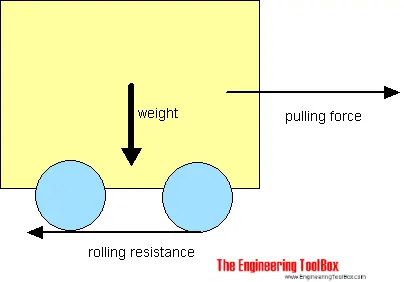
The rolling resistance can be expressed as
Fr = c W (1)
where
Fr = rolling resistance or rolling friction (N, lbf)
c = rolling resistance coefficient - dimensionless (coefficient of rolling friction - CRF)
W = m ag
= normal force - or weight - of the body (N, lbf)
m = mass of body (kg, lb)
ag = acceleration of gravity (9.81 m/s2, 32.174 ft/s2)
| Rolling Resistance Coefficient | ||
|---|---|---|
| c | cl (mm) | |
| 0.001 - 0.002 | 0.5 | railroad steel wheels on steel rails |
| 0.001 | bicycle tire on wooden track | |
| 0.002 - 0.005 | low resistance tubeless tires | |
| 0.002 | bicycle tire on concrete | |
| 0.004 | bicycle tire on asphalt road | |
| 0.005 | dirty tram rails | |
| 0.006 - 0.01 | truck tire on asphalt | |
| 0.008 | bicycle tire on rough paved road | |
| 0.01 - 0.015 | ordinary car tires on concrete, new asphalt, cobbles small new | |
| 0.02 | car tires on tar or asphalt | |
| 0.02 | car tires on gravel - rolled new | |
| 0.03 | car tires on cobbles - large worn | |
| 0.04 - 0.08 | car tire on solid sand, gravel loose worn, soil medium hard | |
| 0.2 - 0.4 | car tire on loose sand | |
d.Tyre Pressure :
Car tyres aren’t just unsafe when they’re old and worn out – you need to ensure you know what tyre pressure you have in your tyres when you drive it because there are critical safety and economic implications.
Car tyre pressure is a measurement of how much air is in your pneumatic tyre, and ensures the tyres wear evenly and maintain the correct level of grip on the road surface. This is commonly expressed as PSI, or pounds-per-square-inch.
5.Force and Power required to push / pull an aircraft by a towing vehicle.
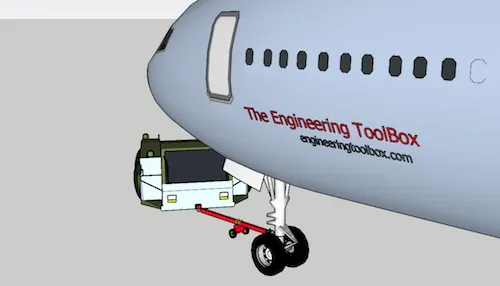
The force to move an air plane on an absolute flat runway with no wind at constant low speed is equal to the rolling resistance between the plane and the tarmac.
The rolling resistance for the air plane can be calculated as :
Fr = c mr ag (1)
where
Fr = rolling resistance (N, lbf)
c = rolling resistance coefficient
mr = rolling mass (kg, lbm)
ag = acceleration of gravity (9.81 m/s2)
The friction force for the puller can be calculated to
Ff = μ W
= μ mf ag (2)
where
Ff = frictional force (N, lb)
μ = friction coefficient
W = weight (N, lbf)
mf = friction mass (kg)
The drag force acting on the tow will be :
The drag force D exerted on a body traveling though a fluid is given by
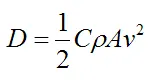
C is the drag coefficient, which can vary along with the speed of the body. But typical values range from 0.4 to 1.0 for different fluids (such as air and water)
ρ is the density of the fluid through which the body is moving
v is the speed of the body relative to the fluid
Now the tractive force or the pulling force required by the tow will be
Pulling force = Drag force + friction force + Rolling resistance force
Now let us consider aircrafts with the following specifications :
Now as we have seen that various kinds of planes have different weights ,the amount of pulling force also will be different .Therefore we will consider a range of weight :
Range of weight = 200 kgs - 250000 kgs '
The towing speed considered is 5 m/s
Area range : 50 - 100 m^2
Coefficient of rolling resistance : 0.02
Coefficient of friction : 0.01
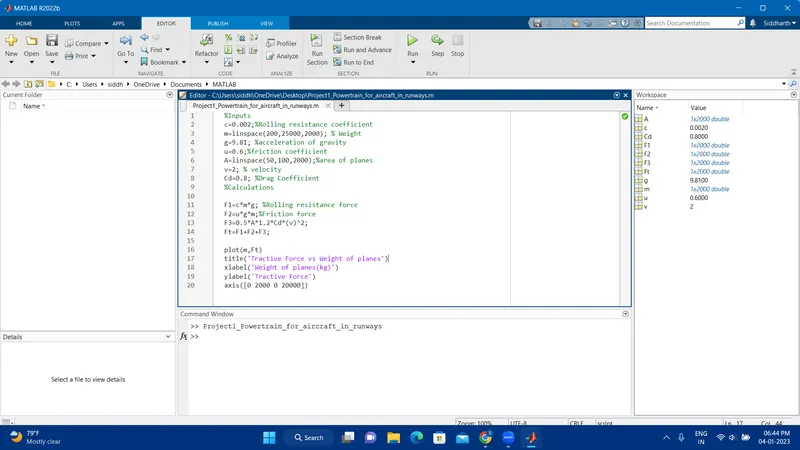
Now we use a script from matlab which will help us calculate the pulling force required :
clc
clear all

%Inputs
c=0.002%Rolling resistance coefficient
m=linspace(200,25000,2000) % Weight
g=9.81 %acceleration of gravity
u=0.6%friction coefficient
A=linspace(50,100,2000)%area of planes
v=2 % velocity
Cd=0.8 %Drag Coefficient
%Calculations

F1=c*m*g %Rolling resistance force
F2=u*g*m%Friction force
F3=0.5*A*1.2*Cd*(v)^2
Ft=F1+F2+F3

plot(m,Ft)
title('Tractive Force vs Weight of planes')
xlabel('Weight of planes(kg)')
ylabel('Tractive Force')
axis([0 2000 0 20000])
Results:
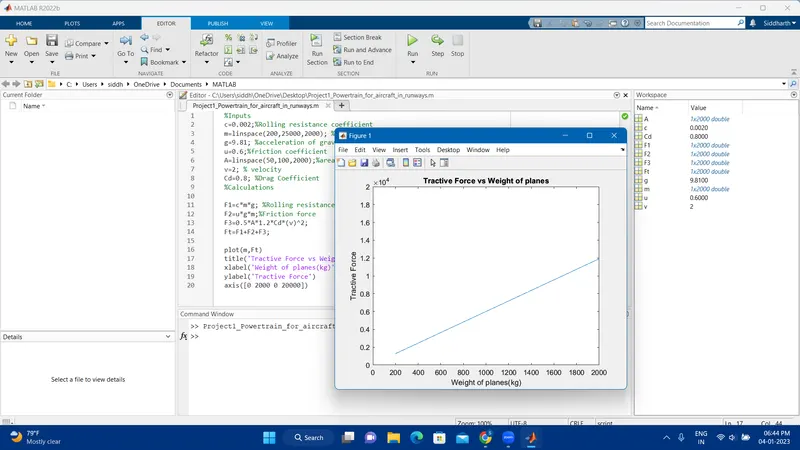
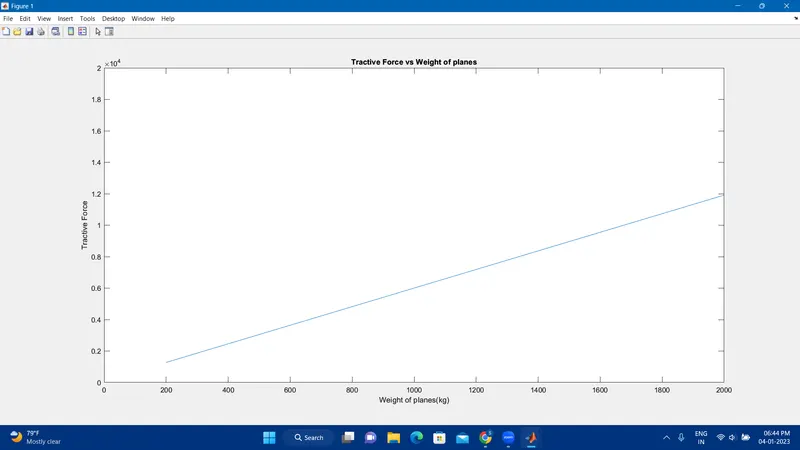
Output:
-The paramter values were assumed and the result was obtained for the towing vehicles force required to pull or push the aircraft.